
This guide contains affiliate links. If you book through them we earn a small commission at no extra cost to you. I only list ryokan I’d actually consider.
A proper ryokan night is not about the tatami. It’s not really about the futon either, or the yukata, or the wooden bath. What a ryokan night actually gets you is a deliberate pause: someone else decides what you eat, what time you eat it, what temperature the bath is, and in what order things happen. For about fifteen hours you stop making decisions. Afterwards you wake up sore from sitting on the floor and unable to remember what you were stressed about the day before.
This is a guide to the ten ryokan in Kyoto actually worth the money. Some are legendary 300-year-old family businesses that don’t list on Booking.com and take reservations by fax. Some are small modern boutique interpretations that update the format without losing the discipline. All of them do the classical two-meals-a-night sequence with proper kaiseki. None of them are the generic “ryokan-style hotel” variety you find attached to every Japanese chain.
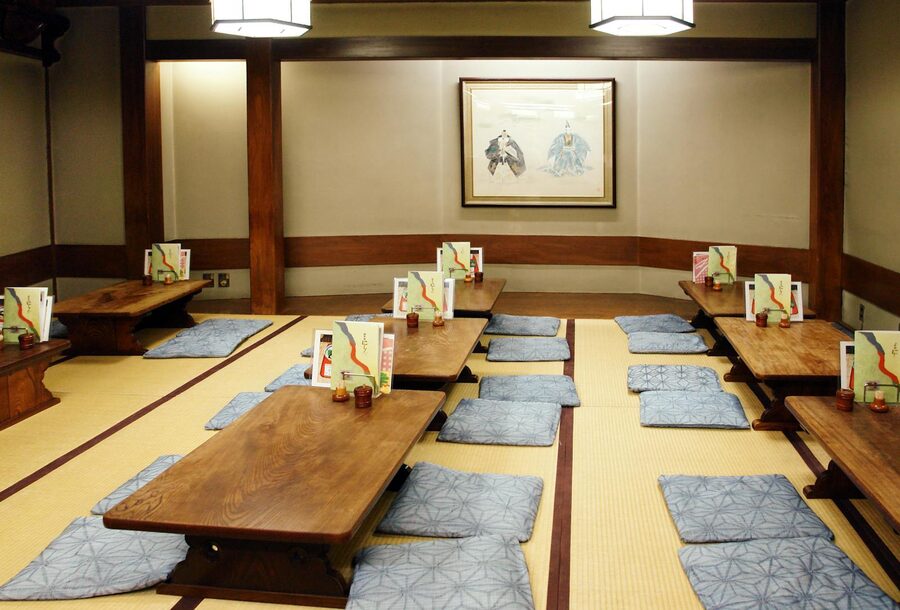
What One Ryokan Night Actually Involves
The sequence barely varies between the ¥20,000 economy ryokan and the ¥100,000 flagship. Prices change the quality; the choreography is the same.
- Check-in: usually 3pm or 4pm. Earlier is not possible at most places — staff are serving lunch and cleaning rooms until mid-afternoon. You leave shoes at the genkan (the recessed entrance step) and swap into slippers. A porter carries your bag to the room.
- Tea and a sweet in your room. Someone arrives with matcha and a seasonal wagashi. This is not optional — it’s the welcome. Take twenty minutes, look out the window, eat the sweet.
- First bath, 5pm. The communal bath is at its cleanest at opening. If it’s mixed-gender the evening will be split men/women on a timetable. Naked, rinse at the low showers outside the tub, get in. No soap in the water.
- Dinner, 6pm or 6:30pm. The main event. A kaiseki meal of 8 to 12 small courses — sashimi, grilled fish, simmered vegetables, rice, pickles, soup, a dessert. Served either in your room (classical flagships) or in a private dining room (modern ryokan). Takes about 90 minutes to two hours if you eat at the pace it’s served.
- Staff lay out the futon while you bathe again. You leave the room for ten minutes; by the time you come back, the low dining table has vanished and the futon is rolled out. This is the sleight-of-hand that defines the experience.
- Second bath, 9pm. Optional, but the bath is quietest between 9 and 10pm.
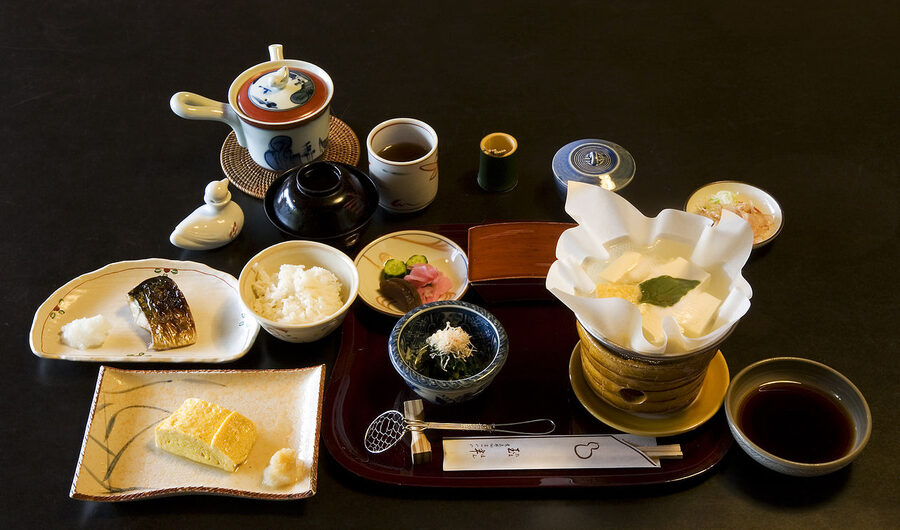
- Breakfast, 8am sharp. Seven or eight small dishes — grilled salmon, miso soup, rice, pickles, tamagoyaki, a whole fresh umeboshi. Heavier than you expect. No sleeping in.
- Check-out: 10am or 11am. You’re out before lunch service restarts.
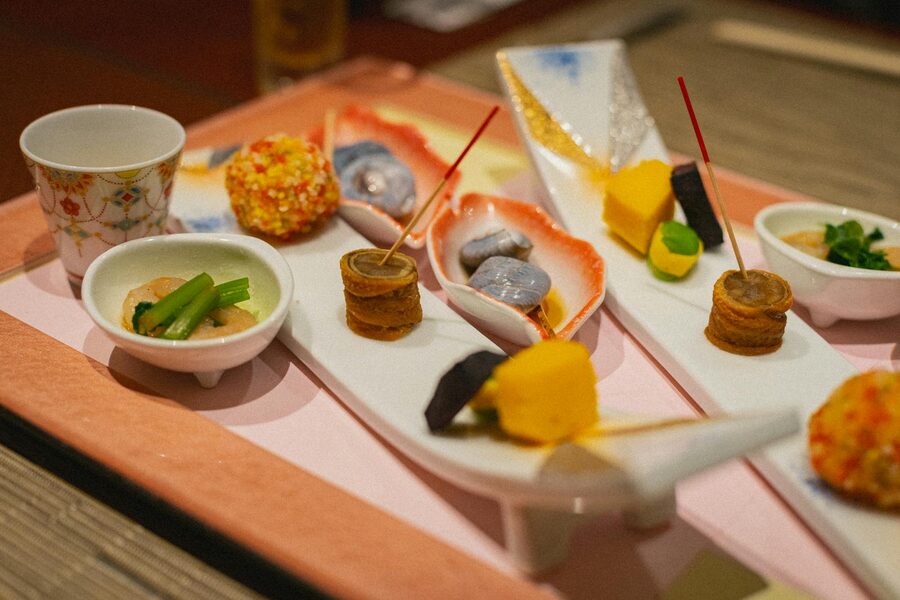
The Cost Ladder — What You Get at Each Tier
Kyoto ryokan prices span a factor of ten. Here’s what the tiers actually buy you:
- ¥15,000–¥25,000 per person (budget ryokan). Kaiseki is simpler — fewer courses, less ceremony, staff may serve dinner in a shared dining area rather than your room. Still authentic, still worth it if you just want the format.
- ¥30,000–¥50,000 per person (mid-tier). Proper in-room dinner, fuller kaiseki with seasonal specialties, private bath time. Sweet spot for a first ryokan stay.
- ¥60,000–¥100,000 per person (luxury). Private outdoor baths on many rooms, top kaiseki chefs, sometimes a second-meal option (lunch-style), very personalised service. This is Fufu, SOWAKA, modern luxury ryokan.
- ¥100,000+ per person (historic flagships). Tawaraya, Hiiragiya, Yoshida Sanso. You pay for the craftsmanship of the building and the staff continuity — ryokan where the same family has served guests for 200+ years. The food is exquisite but the real difference is the staff’s reading of you.
Doubling the rate does not double the pleasure. But the tiers genuinely feel different. A first ryokan stay at the ¥35,000–¥50,000 tier is probably the best value compromise.
The Historic Flagships
Tawaraya Ryokan — The Most Famous in Japan
Location: Downtown, Nakagyo-ku · Price: ¥120,000–¥250,000 per person including dinner & breakfast
Best for: A once-in-a-lifetime ryokan experience; serious travellers who have read about it for years
Book: Direct only — fax, phone or email via the ryokan’s website. Not on Booking.com, not on Agoda, not anywhere.
Tawaraya has been operating on the same block since roughly 1709. Emperor Akihito stayed here. Steve Jobs stayed here. Leonard Bernstein wrote part of a symphony in one of the rooms. All eighteen rooms are different; the oldest sections have cedar beams darkened by 300 years of smoke and are quietly lit like a film set. The current owner is the 11th or 12th generation of the same family.
What actually makes it different is the staff. At most ryokan the service is excellent but formal. At Tawaraya it’s personal in a way that’s hard to describe — the woman bringing your tea remembers what kind of tea you asked for on a previous visit years ago. The garden view from the inner rooms is one of the quietest things in central Kyoto; you’re in the middle of Nakagyo-ku and yet you cannot hear a car.
Bookings are legendarily hard. The front desk doesn’t answer the phone instantly; they fax requests back; they prefer returning guests. If you want to try, write directly in polite English well in advance (six months is normal) and be flexible about dates. Check the Tawaraya website directly — the URL changes occasionally and there’s no Booking.com shortcut.
Hiiragiya Ryokan — Founded 1818
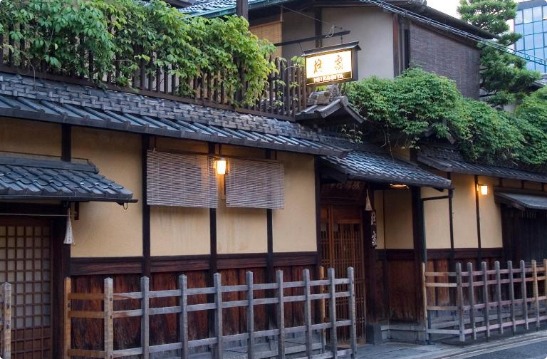
Location: Nakagyo-ku, across the street from Tawaraya · Price: ¥70,000–¥150,000 per person including dinner & breakfast
Best for: Classical ryokan experience at the top of the market, marginally more accessible than Tawaraya
Book: Direct or via Booking.com
Hiiragiya was founded in 1818 as an inn for samurai and nobility passing through the capital. Charlie Chaplin was a regular guest in the 1960s; most of the old rooms have their original cedar and bamboo fittings. The 28 rooms are split between the historic main building (choose this — the older the room, the better the craftsmanship) and a slightly newer annex.
Service level is on par with Tawaraya; the food has a lighter, slightly more delicate style. The bath is small but the water is heated to a proper Japanese temperature (around 42°C, which first-timers will find hot). The rooms look onto a classical courtyard garden that’s lit subtly at night.
Check prices at Hiiragiya on Booking.com
Seikoro Ryokan — 1831, Gion-Adjacent
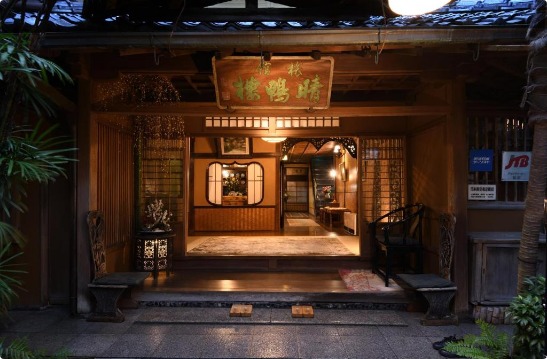
Location: Higashiyama, near the Kamo River · Price: ¥40,000–¥70,000 per person including dinner & breakfast
Best for: Historic ryokan without the ultra-luxury price tag
Book: Booking.com or direct
Seikoro has been operating since 1831 and is the third of the classical Kyoto flagships. Smaller than Hiiragiya (23 rooms) and more accessible — the location is on the quieter west edge of Higashiyama, ten minutes’ walk from Gion. Rooms look onto a small inner garden; the decor is properly traditional without veering into museum-piece territory.
Kaiseki here is regarded as the best of the classical three. The chef sources specifically from Kyoto wholesale markets for seasonal vegetables, and the soup stocks are made fresh in the morning. Dinner takes two hours. Breakfast is equally considered.
Service is slightly less formal than the top two flagships — the staff will chat in polite English if you start the conversation. Easier for a first ryokan stay.
Check prices at Seikoro on Booking.com
Michelin-Guide Picks and Small Luxury
Yoshida Sanso — The Imperial Hillside Villa
Location: Yoshida-yama, eastern Kyoto hillside · Price: ¥80,000–¥150,000 per person including dinner & breakfast
Best for: Honeymoon, aesthetic travellers, garden obsessives
Book: Direct only — not on Booking.com or Agoda
Yoshida Sanso was the Kyoto residence of the Higashifushimi branch of the imperial family until the late 1940s, when it was converted to a ryokan. It sits on the wooded slopes of Yoshida-yama in eastern Kyoto, about a 15-minute drive from the city centre. Only six rooms, each looking onto the gardens or the forested hillside. The main-building suite has the Emperor’s original bath — a deep cypress tub that hasn’t been replaced in 80 years.
The Michelin Guide recommends it specifically for its garden and its kaiseki. Dinner is served in a private adjoining dining room in the imperial style — the presentation is formal, the food is seasonal, and the chef will appear briefly to explain the more unusual dishes. Breakfast is equally careful. Service is among the best in Kyoto.
No public transport within walking distance. Book a taxi or ask the ryokan to arrange a car.
Nanzenji Sando Kikusui — Garden Temple View
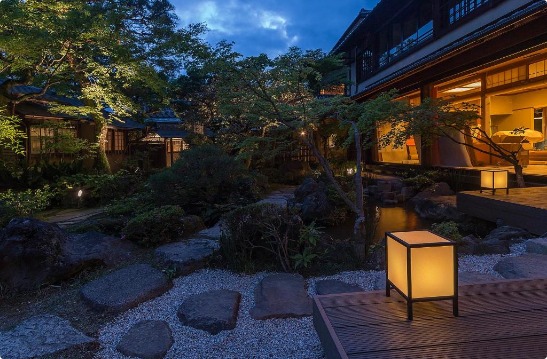
Location: Keage, north-eastern Kyoto on the approach to Nanzen-ji · Price: ¥45,000–¥80,000 per person including dinner & breakfast
Best for: Temple visits, garden-focused trips, repeat visitors
Book: Booking.com or direct
Kikusui sits on the sando — the approach road — to Nanzen-ji, one of Kyoto’s five great Zen temples. The building is a 1895 teahouse converted to a small ryokan with a classical chisen-kaiyu stroll garden at the back; the rooms on the east side look directly onto a pond with carp. Morning light through the maple trees above the garden is the photograph most visitors take.
Dinner is a creative kaiseki with Michelin recognition. The ryokan runs a small tea ceremony in the garden pavilion if you book ahead. The location means you can walk to Nanzen-ji in two minutes after breakfast — before the tour groups arrive — and continue up the Philosopher’s Path to Ginkaku-ji if the weather’s good.
Check prices at Nanzenji Sando Kikusui on Booking.com
Kifune Ugenta — The Mountain Stream Ryokan
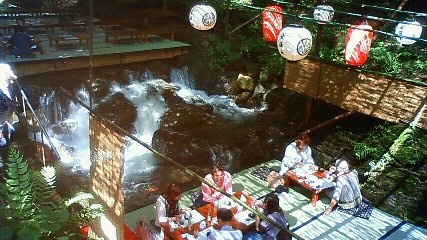

Location: Kibune, a mountain valley 45 minutes north of central Kyoto · Price: ¥60,000–¥100,000 per person in summer (kawadoko season)
Best for: Summer visits, nature escapes, couples
Book: Direct only
Ugenta is the smallest of the Kifune-valley ryokan — only two suites — and the one the Michelin Guide singles out. Kifune sits in a narrow ravine along a mountain stream about 45 minutes by train and taxi from central Kyoto. In summer (May to September) the valley’s ryokan and restaurants build kawadoko platforms over the river: you eat dinner directly above the water, cooled by the stream, in an environment that’s about six degrees cooler than the city.
A night at Ugenta in late July is one of the best luxury experiences in Japan. You arrive in the afternoon heat, bathe, and then are led down to the kawadoko platform at dusk. The kaiseki is served directly over the stream. You sleep with the sound of water all night. In winter the kawadoko is retracted and dinner moves indoors — still excellent but less theatrical.
Note: Kibune also has a few non-ryokan restaurants offering kawadoko lunch if you don’t want to commit to an overnight stay. Ugenta takes overnight guests only.
Modern Luxury Ryokan
Fufu Kyoto — Private Outdoor Bath in Every Room
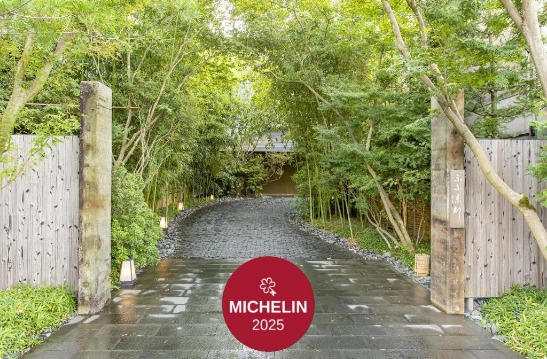
Location: Nanzen-ji area, Okazaki · Price: ¥80,000–¥150,000 per person including dinner & breakfast
Best for: First ryokan stay at luxury level, honeymoon, travellers who want a private bath
Book: Booking.com or direct
Fufu is a 40-room modern ryokan that opened in 2020 and gets the format closer to right than most modern attempts. Every room has a private outdoor bath — the signature of the brand — and the suites have genuinely large hillside gardens as private terraces. Rooms mix traditional tatami sections with western beds (futon optional), which sounds compromise-y but in practice works well for travellers who’ve never slept on the floor.
Kaiseki is Michelin-starred and runs for about two hours. The chef uses Kyoto vegetables almost exclusively and refuses to serve food out of season. There’s a small hot spring water source piped in, which is genuinely rare inside central Kyoto — most city “onsen” are just heated mineral baths. Here it’s the real thing.
If you can afford exactly one ryokan night in your life and don’t have time to chase Tawaraya reservations, this is the recommendation.
Check prices at Fufu Kyoto on Booking.com
SOWAKA — Ochaya-Style Boutique in Gion
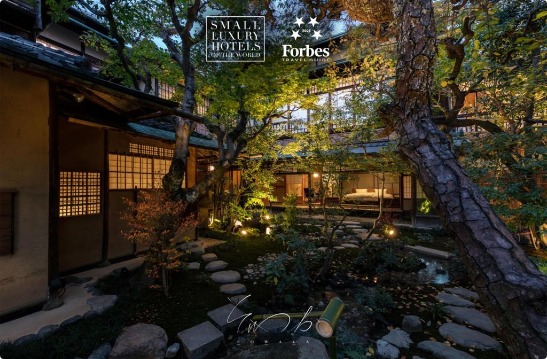
Location: Gion, near Yasaka Shrine · Price: ¥55,000–¥95,000 per person including dinner & breakfast
Best for: Combining a ryokan night with a Gion focus
Book: Booking.com or direct
SOWAKA occupies a renovated ochaya (traditional Gion teahouse where geisha and maiko entertained clients) plus a newer annex. The 23 rooms span two buildings; the main house ones have the most character, with some of the original maiko-era interior panels preserved. There’s a small onsite restaurant (La Bombance) that’s separately Michelin-listed for modern Japanese.
The staff does the full ryokan sequence — tea, bath, kaiseki, futon turndown — but with slightly more contemporary tonal notes. Breakfast is western or Japanese by request, which matters more than you’d think on day three of a ryokan-heavy trip. You’re three minutes from Yasaka Shrine and five from Shirakawa canal; this is the most convenient ryokan in Kyoto for the classical sightseeing corridor.
Check prices at SOWAKA on Booking.com
Traditional Ryokan in Gion and Pontocho
Gion Yoshiima — Family-Run on the Gion Edge
Location: Gion, near Hanamikoji · Price: ¥35,000–¥55,000 per person including dinner & breakfast
Best for: First ryokan experience at the moderate luxury tier, couples who want Gion atmosphere
Book: Booking.com or direct
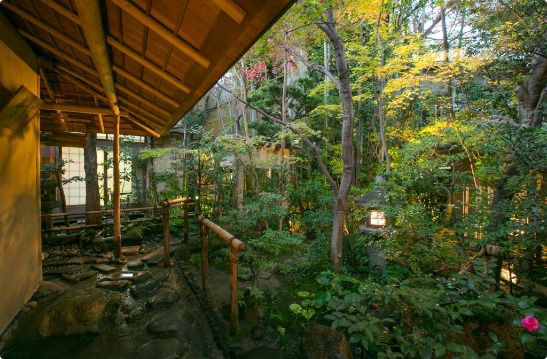
Yoshiima is a small fourth-generation family-run ryokan on a side lane at the edge of Gion. 16 rooms, all tatami, most looking onto an inner courtyard garden. The kaiseki is good but not Michelin — traditional Kyoto home cooking with a few set pieces (sashimi, grilled fish, seasonal vegetables). Breakfast is served in your room in the classical way.
The reason to stay here over SOWAKA is the price-to-experience ratio. You get the full ryokan format at 60% of the SOWAKA rate, and the location is still walkable to Hanamikoji and Shirakawa. The rooms are older and less designer-perfect; the charm is the continuity.
Check prices at Gion Yoshiima on Booking.com
Ishibekoji Muan — Eight Rooms on the Quietest Lane
Location: Ishibe-koji, Gion · Price: ¥45,000–¥75,000 per person including dinner & breakfast
Best for: Couples wanting a very small, atmospheric ryokan
Book: Booking.com or direct
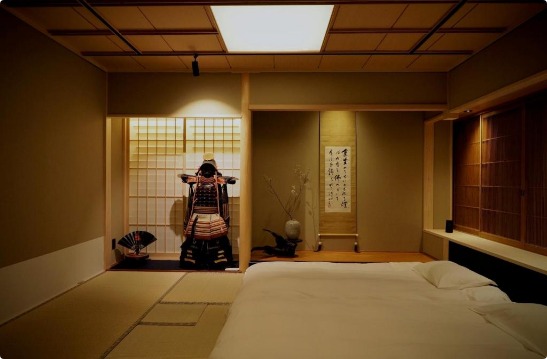
Muan occupies a restored merchant house on Ishibe-koji, a narrow stone-paved lane that runs parallel to Hanamikoji and escapes the worst of the Gion tourist traffic. Only eight rooms. The place is run by a husband-and-wife team and has the feel of a private home — you’ll almost certainly see the owners directly rather than being handed off to staff.
Kaiseki is served in a shared dining room with other guests, which sounds worse than it is — the setting is intimate and the atmosphere is quiet. The bath is private (booked by appointment). This is the ryokan for people who want the format without the grandeur.
Ishibe-koji itself is worth the stay — it’s the Gion lane most guides miss and most residents prefer. Walk it at 10pm and you may be the only person on it.
Check prices at Ishibekoji Muan on Booking.com
Ryokan Etiquette — The Four Things You Need to Get Right
Most ryokan etiquette is flexible for foreign guests — staff will gently correct you without the embarrassing fuss. Four things actually matter:
- Shoes at the genkan. The recessed step at the entrance is the line between outside and inside. Step up out of your shoes, not down into slippers. Facing your shoes toward the exit when you take them off is a small courtesy the staff will appreciate but not require.
- Bath protocol. Wash and rinse at the low showers outside the tub before getting in. No soap in the water. No towel in the water — fold the small towel and balance it on your head if you must take it with you. Tattoos are sometimes an issue at older ryokan; ask in advance if you have visible ones.
- Dinner timing. If staff ask whether you want dinner at 6pm or 6:30pm, they’re not asking for you — they’re scheduling. Don’t say “any time”. Pick one and arrive five minutes early in your yukata.
- Tipping. Don’t. It’s not done. If you want to mark a particular service, a small gift (a box of sweets, a bottle of sake) given to the head maid on departure is the local form.
The yukata is worn with the left side over the right (right-over-left is how corpses are dressed). The ryokan staff will fix it for you if you get it wrong.
Booking Tips — Getting a Room
Three categories of ryokan in this guide have different booking dynamics:
- Booking.com-listed (Hiiragiya, Seikoro, Kikusui, Fufu, SOWAKA, Yoshiima, Ishibekoji Muan): book 3–6 months ahead for standard dates, 6–12 months for sakura or koyo weekends. Payment policies vary — read the fine print on cancellation.
- Direct-only, accessible (Tawaraya, Hiiragiya direct, Kikusui direct): email the ryokan directly through their website contact form. Polite English is fine. Include exact dates, number of guests, dietary requirements, and approximate arrival time. Expect a reply within 48 hours.
- Direct-only, difficult (Tawaraya, Yoshida Sanso, Kifune Ugenta): the only-real-way is an email well in advance (nine months for peak dates) with a courteous paragraph introducing yourself. Returning guests and hotel concierge introductions go to the front of the queue. First-time foreign guests without a relationship should be flexible about dates.
If you’re staying in one of the regular hotels from our Kyoto hotel guide and want to add a single ryokan night, the concierge at the luxury-tier hotels (Ritz, Four Seasons, Park Hyatt) can often call on your behalf with more success than you’d have yourself.
One Night Is Enough
Three nights at a ryokan is two nights too many. The format is beautiful at day one, slightly repetitive at day two, and exhausting by day three — the early breakfasts, the precise dinner timings, the constant attention of staff who are very good at their jobs but never quite leave you alone. Treat a ryokan night as a highlight experience rather than a stay.
One night at a ryokan combined with two or three nights at a good hotel in Downtown or Gion gives you the best of both: the ryokan as theatre, the hotel as base. The main Kyoto hotel guide covers the hotel options; for the broader “what kind of accommodation is right” question, our forthcoming luxury hotel guide covers the five-star alternatives and the onsen guide covers ryokan with real hot-spring baths in and near the city.
If you want the ryokan experience with a genuine outdoor onsen and can make a separate trip, Kinosaki Onsen (2.5 hours by train from Kyoto) is the traditional alternative — a whole town of ryokan built around seven public bathhouses. Outside the scope of this guide but worth knowing about.
For the Kyoto-prefecture ryokan directly linked to here, the Japan National Tourism Organization keeps a useful official overview of what a ryokan is in case you want a cross-reference on any of the cultural terms. But the most useful thing you can read beforehand is nothing at all — just show up, do what the staff suggest, and let the format do its work.