A lantern you make yourself in Arashiyama. You start with a bamboo forest walk and then move into Noriko-san’s workshop to cut and build your own bamboo LED lantern. This is an intimate class with close attention, not a factory-style demo.
I love the small-group format, capped at up to 6 people, which keeps the pace calm and the instruction actually usable. I also like that you get real choices for your souvenir, including options beyond just a lantern, like a sake cup or smartphone holder.
One thing to plan for: the class uses fresh green bamboo, and there was an issue reported with mould when bamboo was packed before it dried fully. If you want your lantern to last, follow the teacher’s storage/drying guidance and be a little patient after class.
In This Review
- Quick hits
- Bamboo Forest Walk First, Then You Craft the Souvenir
- The 2pm Plan: Where to Meet and How the Time Flows
- Stop 1: The Bamboo Forest Trail (What You Actually Learn)
- Enter Noriko-san’s Workshop: Pick Bamboo, Then Pick Your Pattern
- Cutting, Drilling, and Tool Safety (Especially If You’re With Kids)
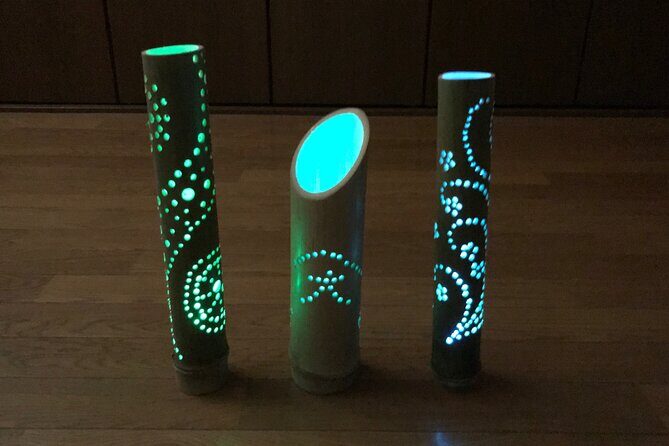
- Your Bamboo LED Lantern: What You’ll Take Home
- A practical aftercare note about fresh bamboo
- Price and Value: Is $79.26 a Good Deal?
- Who Should Book This (And Who Might Prefer Something Else)
- Who might skip it
- Practical Tips to Make Your Session Smooth
- Should You Book This Bamboo Lantern Class?
- FAQ
- How long is the bamboo lantern making experience?
- Where does the experience start, and where does it end?
- What kinds of items can I make?
- Is lunch included?
- What’s included in the ticket price?
- Is there a cancellation option for a refund?
Quick hits
- Small-group class (up to 6) keeps the workshop personal and questions welcome
- Noriko-san leads the bamboo forest walk before you craft, adding context you can’t get from photos alone
- Pick your design and bamboo piece using provided patterns, then make it yours
- Tools get used for real work, including drill presses, with safety support
- Take-home souvenir: a finished bamboo LED lantern (and sometimes other bamboo crafts depending on what you choose)
- Fresh bamboo needs drying time before long-term storage
Bamboo Forest Walk First, Then You Craft the Souvenir
Kyoto’s bamboo forest can feel like a postcard that moves too fast. This experience flips the script. Instead of rushing past the stalks, you get a guided walk through the Arashiyama bamboo area, then you slow way down in a workshop where bamboo becomes your project.
The vibe is simple: you learn, you make, you leave with something you can actually use. In the workshop, you’re not just decorating—your hands do the work. That’s what makes the souvenir feel earned, not bought.
It also helps that Noriko-san is part guide, part teacher, and part host. Several people highlighted her friendly approach and the way she answers questions in clear English, which matters when you’re using tools and trying to follow steps.
A few more Kyoto tours and experiences worth a look



The 2pm Plan: Where to Meet and How the Time Flows
The session starts at 2:00 pm at Saga-Arashiyama Station (11-1 Sagatenryūji Kurumamichichō, Ukyo Ward, Kyoto). It ends back at the same meeting point. So you don’t need to worry about some mystery drop-off location or figuring out public transit afterward.
The total time is about 3 hours. That’s a sweet spot for a craft class in Arashiyama: long enough to make a real souvenir, short enough that you can still do other sights in Kyoto the same day.
A practical note: because it’s afternoon, it can be a good choice if your morning is already packed with temples and gardens. It’s also a nice way to balance the heavy walking you might do in Arashiyama. One review called the workshop relaxing after a long day on foot, and I get that.
Stop 1: The Bamboo Forest Trail (What You Actually Learn)
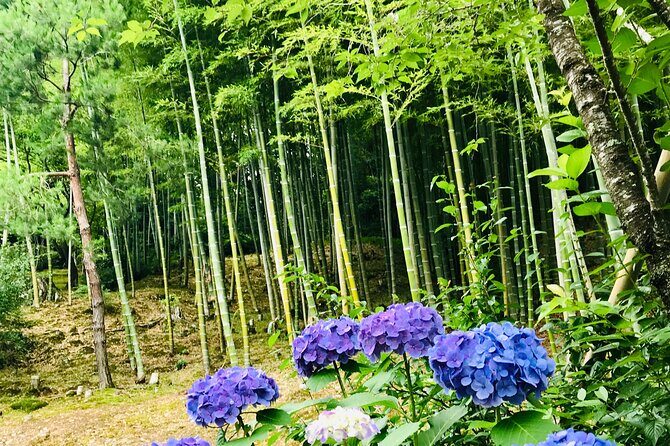
This part isn’t only about seeing bamboo. It’s about understanding it. On the trail, you walk and get explanations about bamboo—how it grows, what makes it special in the Arashiyama area, and how this plant fits into local life.
Arashiyama’s bamboo forest is famous, so it’s tempting to treat it like a checklist stop. I like that this experience treats it like a starting point. When someone tells you what you’re looking at, the bamboo stops being background scenery.
You’ll also be moving on foot through the area, with time to notice things at a human pace. In the workshop-leading reviews, people talked about walking through the bamboo and then heading into nearby neighborhood lanes, sometimes passing a shrine or temple along the way. You may see those kinds of landmarks depending on the route your host uses that day, but the key idea is the same: you get local context, not just bamboo selfies.
Enter Noriko-san’s Workshop: Pick Bamboo, Then Pick Your Pattern
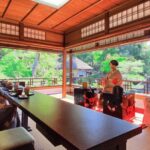
After the forest walk, you head to the workshop. The setting is described as clean and bright, which sounds minor until you’re the one cutting, drilling, and using tools. You want a workspace where you can focus and where safety feels real.
In the workshop, you choose what you’ll make. Bamboo LED lantern making is the headline, but the experience is flexible about what your final souvenir looks like. Options mentioned include an LED lantern, a sake cup, and even a smartphone holder. You’re not locked into one template.
You also choose your bamboo piece. Many people said they got to select the bamboo and then work from paper patterns. That choice step matters: when your souvenir starts with a bamboo section you picked, the final piece looks more like your souvenir and less like a standardized kit.
You can use the pattern as-is, or design with your own tweaks. One review specifically mentioned that paper patterns are provided but you can be creative with the design. That’s the kind of freedom that makes a craft class feel personal.
Cutting, Drilling, and Tool Safety (Especially If You’re With Kids)
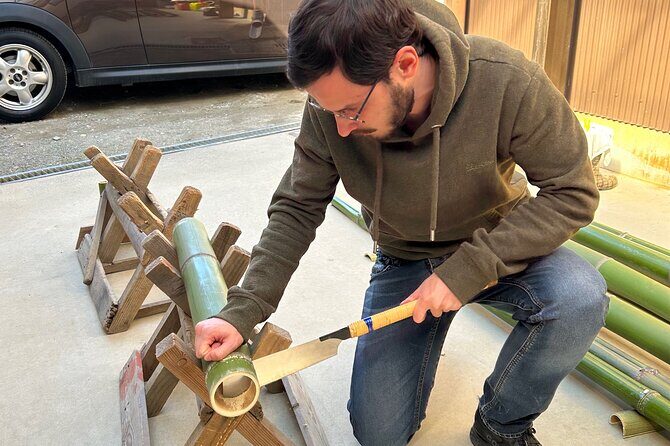
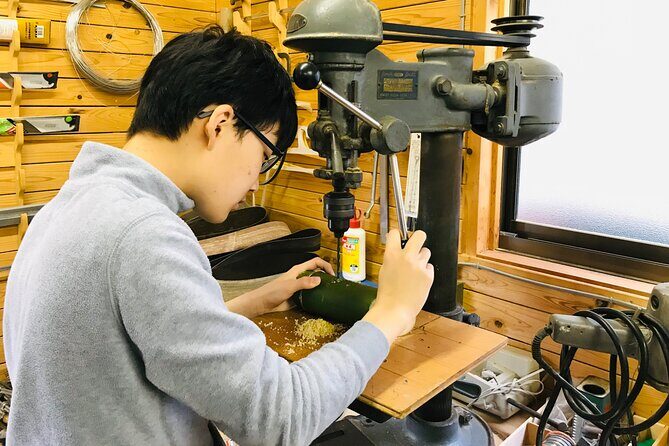
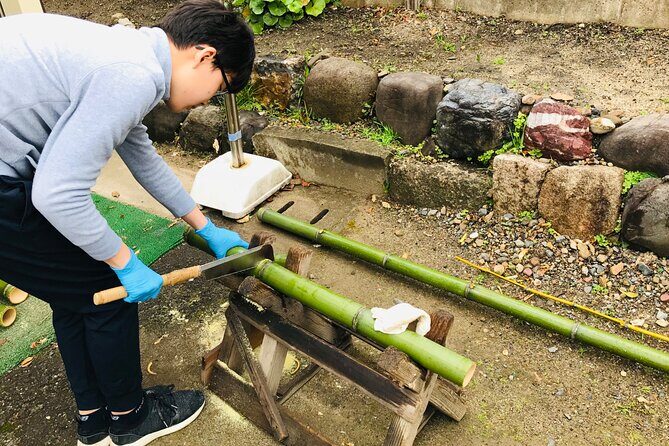
Here’s where this experience becomes more than a guided walk. The workshop includes materials plus the use of tools and machines. That means you’re doing real making, not just assembling decorative pieces.
The drill work is a big part of the process. Reviews praised how safety-conscious the instructors are, including supervision around the drill presses. One family mentioned that they even received some practice before starting on their own bamboo piece. That’s a smart approach for anyone who doesn’t spend their days in a tool shop.
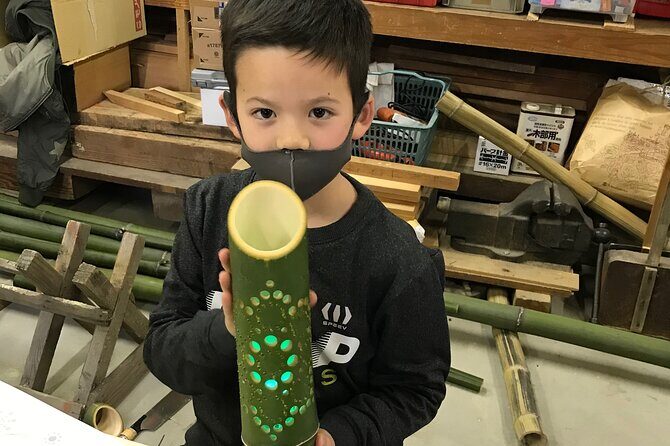
This is also why the class can work well for children. Multiple families described taking kids around the late elementary and early teen range. One review said a 13-year-old could operate the machines after a bit of instruction. Another described twin 11-year-old boys asking questions and being patiently guided. And one younger participant highlighted that the main lesson includes a chance to do sawing with support.
If you’re bringing kids, go in with the right mindset: they’ll be working with sharp and powered tools, but you’ll also get hands-on coaching. The workshop’s structure seems designed to keep that safe and paced.
If you’re an adult who’s not into crafting, you might still enjoy this because you’re not “artist-ing” your way through. The pattern and instruction guide you, and the result looks good without requiring years of experience.





Your Bamboo LED Lantern: What You’ll Take Home
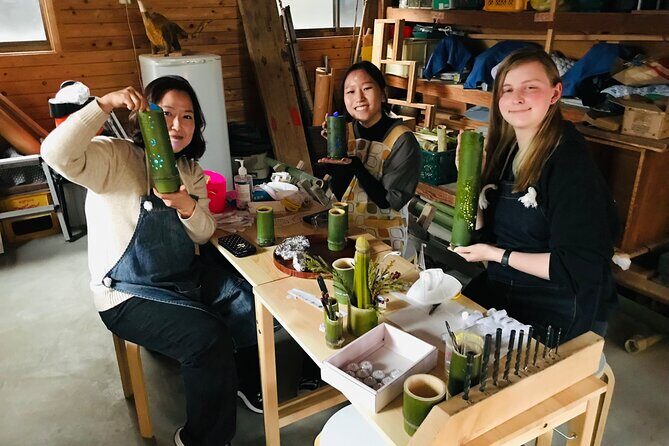
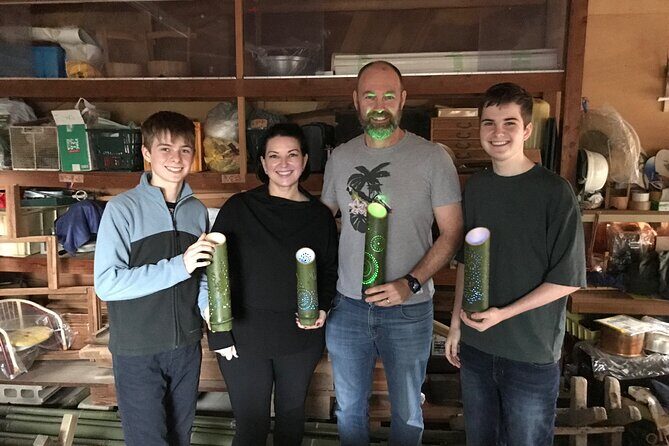
The main takeaway is your handmade bamboo lantern (LED lit). It’s the kind of souvenir that doesn’t just sit on a shelf. You can use it for mood lighting, which is a fun way to extend your trip at home.
What makes it memorable is that it’s tangible proof of time and effort. Reviews repeatedly called it an amazing souvenir and a highlight of Arashiyama. People especially liked that the souvenir feels unusual compared with the typical Kyoto shopping options.
Design-wise, you’re not totally freehanding from scratch. Provided patterns give you a solid base, and then your choices—bamboo piece selection and any design modifications—make the final lantern look distinctly yours.
A practical aftercare note about fresh bamboo
One review mentioned a mould problem after the bamboo was wrapped before it dried fully. The host responded that they use fresh green bamboo in the workshop and planned improvements to the wrapping approach. They also mentioned adding a new option using heated-dried bamboo for more stability and long-lasting results.
So what should you do? Be realistic about fresh bamboo. If your lantern arrives looking moist or green, treat it as “still finishing drying.” Follow whatever guidance the host gives you about drying or packing. And if you’re storing it, keep it in a dry place and give it time before you seal it up long-term. That simple step is what separates a great craft memory from a craft project that disappoints weeks later.
Price and Value: Is $79.26 a Good Deal?
At $79.26 per person for about 3 hours, this isn’t a casual add-on. You’re paying for four things at once:
- The guided bamboo forest walk with explanations
- A small-group workshop experience
- Materials and tool/machine access
- A take-home finished souvenir you actually made
What helps is the materials/tools part. Most “craft” activities that charge around this range still require you to buy supplies. Here, the class provides materials and tool use, so the price feels more straightforward.
Also, the small group matters. When the cap is small, you’re less likely to feel like a number in a line. And because the drill work can’t be rushed, the format protects quality.
One downside worth mentioning: you don’t get lunch. If you’re doing this after other Arashiyama stops, eat beforehand. Or plan a late snack afterward.
Who Should Book This (And Who Might Prefer Something Else)
This is ideal if you want:
- A break from temple lines and bamboo-photo crowds
- A hands-on souvenir that’s more interesting than a standard Kyoto trinket
- A calm, small-group experience in Arashiyama
- A family activity where kids can actively do the work (with safety supervision)
It’s also a good choice if you enjoy learning how things are made. The bamboo forest walk isn’t a throwaway—it adds context so your craft feels rooted in place.
Who might skip it
If your top priority is spending the maximum amount of time inside the bamboo forest itself, this may feel like you’re only “getting part of it,” because the class moves on to the workshop. Also, if you strongly dislike anything involving tools (even with guidance), you might find it more hands-on than you expected.
Finally, if you’re very picky about long-term durability right away, treat fresh bamboo drying as part of the deal. The host has been improving the process, and they mentioned more stable options, but bamboo craft does involve natural material behavior.
Practical Tips to Make Your Session Smooth
A few things will help you get the most out of the 2–3 hour window:
- Wear comfortable shoes for the walk plus workshop movement. Arashiyama can mean uneven footpaths and lots of steps.
- Go hungry in a smart way: lunch isn’t included, so eat beforehand and bring water if you need it.
- Think about your design first. You don’t have to pre-draw anything, but having a simple idea in mind can help you choose a pattern quickly.
- Plan for drying time after class. If your bamboo lantern needs time to dry, don’t rush to pack it for shipping or long-term storage.
- Ask questions during the walk. Noriko-san’s style seems conversational and responsive, and that’s when the bamboo explanations will actually stick.
One more gentle tip: this class is a craft in a real home workshop setting. You’ll get better value if you treat it like an experience you’re participating in, not just watching.
Should You Book This Bamboo Lantern Class?
I’d book this if you want a genuinely different Arashiyama memory—something hands-on, small-group, and take-home. The mix of bamboo forest context plus making your own LED lantern is the winning combo, and it’s especially strong for families who want kids to do real work with guidance.
Skip it only if you’re mainly after maximum bamboo-forest time, or if you don’t want to use tools at all. And if you care about long-term storage right away, plan for drying and follow the host’s instructions.
If your ideal Kyoto day includes fewer crowds, more craft time, and a souvenir you’ll actually use, this is a very solid bet.
FAQ
How long is the bamboo lantern making experience?
It runs for about 3 hours.
Where does the experience start, and where does it end?
You meet at Saga-Arashiyama Station (11-1 Sagatenryūji Kurumamichichō, Ukyo Ward, Kyoto) and the activity ends back at the same meeting point.
What kinds of items can I make?
You can choose options such as a bamboo LED lantern, a sake cup, a teacup, or a smartphone holder.
Is lunch included?
No, lunch is not included.
What’s included in the ticket price?
Materials and the use of tools and machines are provided.
Is there a cancellation option for a refund?
Yes. You can cancel up to 24 hours in advance for a full refund.