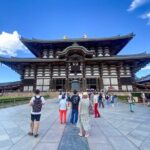
Kyoto can feel overwhelming fast. This small-group day strips it down to the big sights, with local color added along the way. You’ll start at Kyoto Station, ride out to Arashiyama, then work your way across the city to Gion and Fushimi Inari—without spending your morning figuring out transit. A guide like Indra also shares everyday culture bits, like why trash cans are surprisingly rare in Japan.
Two things I really like: the max 7-person group size makes stops feel calmer, and the pacing is built around walking and short photo moments at each landmark. You also get local tips on how to enjoy each area, plus a chance to learn a few Japanese phrases that actually help when you’re standing on the street.
One consideration: this is a walking tour with train and bus time, and the itinerary is packed. If you have knee/leg issues, or if you’re traveling late in pregnancy, it may feel like too much.
In This Review
- Key highlights to know before you go
- Kyoto Tower to Arashiyama: getting oriented fast
- Arashiyama Bamboo Forest: photos, timing, and cultural context
- Kinkakuji Golden Pavilion: worth the paid admission
- Shijo-Kawaramachi lunch + Shijo Bridge views
- Gion Shirakawa: the quieter side of Gion and the geiko/maiko lesson
- Fushimi Inari-taisha: torii gates and Shinto basics
- Back to Kyoto Station: a smooth wrap-up
- Value and price: is $165.17 a fair deal?
- Who this tour fits best (and who should skip it)
- Should you book this Kyoto highlights day?
- FAQ
- What time does the tour start?
- How long is the full-day sightseeing experience?
- How many people are in the group?
- What’s included, and what costs extra?
- How do you get tickets for the tour?
- Is this tour mostly walking?
- What happens if the weather is bad?
Key highlights to know before you go
- Max 7 travelers for less waiting, more questions, and easier photo help
- Arashiyama Bamboo Forest early enough to make the visit feel special, not rushed
- Kinkakuji Golden Pavilion plus a guide’s Buddhism and temple context (admission extra)
- Shijo-Kawaramachi + Shijo Bridge for shopping streets and city views in one stretch
- Gion Shirakawa for the quieter side of Gion and a lesson on geiko and maiko
- Fushimi Inari-taisha with thousands of torii gates and Shinto basics
Kyoto Tower to Arashiyama: getting oriented fast
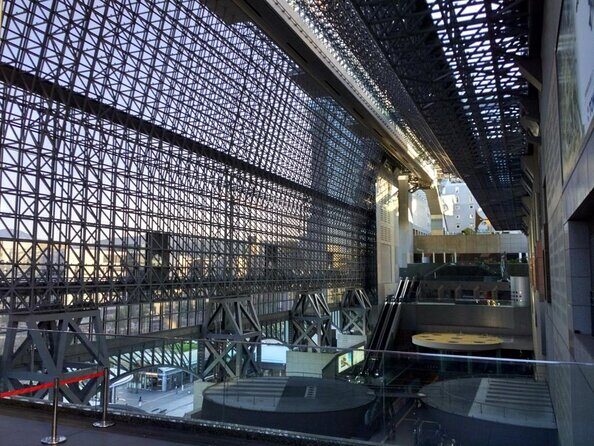
Your day starts in central Kyoto at Starbucks Coffee – Kyoto Tower Sando. From there, you head to Kyoto Station and meet at the left side of the main entrance. You get a quick intro, then you’re off by train to Saga Arashiyama, the jump-off point for Kyoto’s most famous nature stop.
I like this start because it solves the biggest first-day Kyoto problem: orientation. Kyoto can be confusing if you’re bouncing between neighborhoods. This tour uses public transit in a planned way, so you spend less time hunting platforms and more time looking up at bamboo, lanterns, and temple roofs.
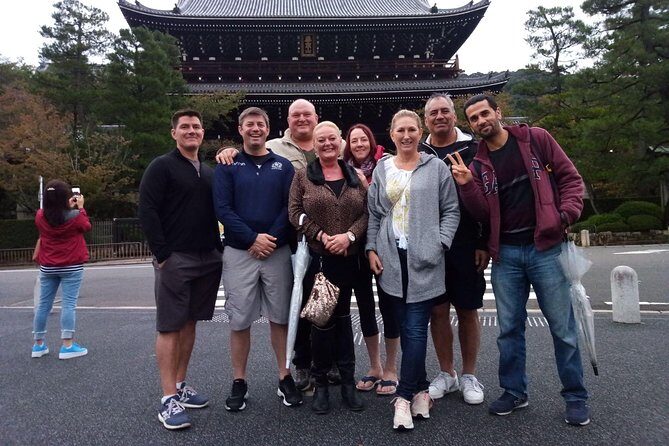
Group size matters here. With a maximum of 7, you’re less likely to get split up or stuck behind slower walkers at station gates. It also makes it easier to ask your guide something practical, like where to stand for a better view or how to handle the flow of crowds.
What to watch for: the day is scheduled tightly, and transit time is part of the experience. If you like long breaks with no structure, this tour may feel like a “move-to-the-next-place” kind of day.
A few more Kyoto tours and experiences worth a look

Arashiyama Bamboo Forest: photos, timing, and cultural context
Next comes the Arashiyama Bamboo Forest, where you get a solid block of time to walk the paths and absorb the scenery. Even if you’ve seen bamboo photos online, in person it hits differently—because your body is in it. The air feels cooler, and sound changes under the stalks. You also get guide-led context, including a cultural explanation style that ties the scenery back to everyday Japanese life.
One practical win: you’re not just dropped at a single spot. The guide’s job here is to help you understand what you’re looking at, so the bamboo forest becomes more than a background for selfies.
Also, plan for “photo stop energy.” This is one of those places where people constantly pause, turn, and back up for better framing. A small group and an attentive guide help you move without feeling like you’re constantly squeezing through crowds.
If you’re sensitive to walking distances, you’ll want comfy shoes. This portion is walking time on uneven ground in places, and later stops add more on foot.
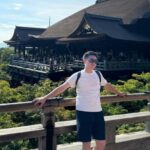
Kinkakuji Golden Pavilion: worth the paid admission
Then you shift toward Kinkakuji (Golden Pavilion). The temple itself is famous for a reason, and your guide will explain the Buddhist connection and the temple’s background while you’re there—so you don’t just see gold paint and call it a day.
Here’s the key logistics point: Kinkakuji admission is not included and is listed as ¥500 per person. Plan on adding that to your day budget. Even if you’re cost-conscious, this is one of Kyoto’s sites where paying the entry fee often feels like part of the deal, not an annoying add-on.
Timing and viewing also matter. You get a dedicated visit block with time for photos and for looking around rather than sprinting straight through. The tour also calls out photo time with the temple view, which is great if you don’t want to fumble your camera while everyone else is moving.
A balanced note: Kinkakuji is popular. Even with a timed visit, you may see busy periods. That’s normal in Kyoto. What helps is having a guide who knows how to steer you toward the best angles and how to keep the group moving.
Shijo-Kawaramachi lunch + Shijo Bridge views
After Kinkakuji, the day moves on toward Shijo-Kawaramachi, one of the best places to feel Kyoto as a living city. You get about 75 minutes here, with time to explore the shopping street and enjoy the view of the Japanese shopping arcade.
Lunch is scheduled during this stop. The tour doesn’t list lunch as included, so bring money and be ready to choose on the spot. The advantage of having lunch in the middle of the day is simple: you can actually fuel up before the walking ramps up again later.
I like this stop because it breaks the temple-heavy pattern. Kyoto has plenty of “look but don’t touch” sightseeing. Shijo-Kawaramachi lets you mix in shopping streets and street-level atmosphere—where you see locals moving through the day rather than only tourists in line.
Then there’s a short walk across Shijo Bridge, with time described as part of the stop. That bridge walk is a nice reset. You get a different perspective on the city before heading to the calmer, quieter world of Gion.
Consideration: shopping areas mean you’ll be around lots of pedestrians. If you’re traveling with someone who hates crowds, tell your guide your comfort level early and plan to stick close.
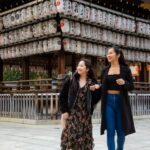
Gion Shirakawa: the quieter side of Gion and the geiko/maiko lesson
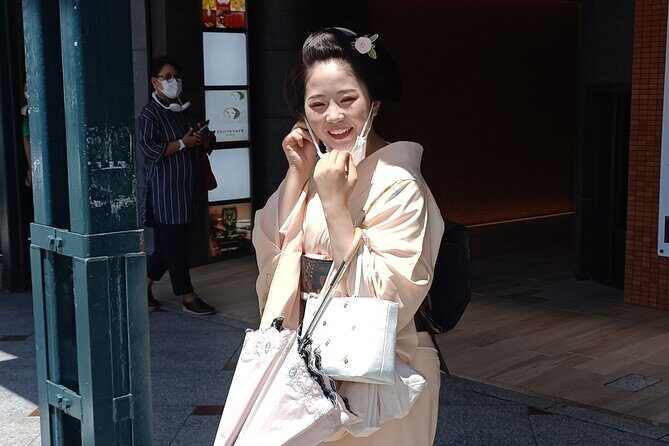
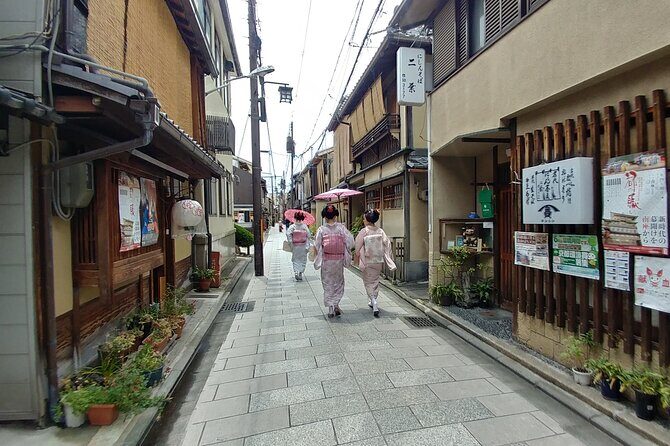
Next is Gion Shirakawa, described as the quieter side of Gion. This is the entertainment district vibe people imagine when they think of Kyoto, but your experience here is shaped by context: you’ll learn about geiko and maiko and how their world works, rather than only watching for famous faces.
This stop is a smart choice because it adds cultural understanding to the visuals. The guide’s role is to explain what you’re seeing and why certain traditions exist. If you’ve ever wondered why the same neighborhood can feel elegant and strange at the same time, this is where the explanation helps.
And yes, this is still a sightseeing area, so you’ll likely see residents and visitors around. The tour’s approach is to keep things grounded and low-stress—more walking and observation than rigid “line up here” moments.
One practical tip: bring your patience. Gion’s flow is slow on purpose. You’ll enjoy it more if you’re not trying to force everything into a photo in 10 seconds.



Fushimi Inari-taisha: torii gates and Shinto basics
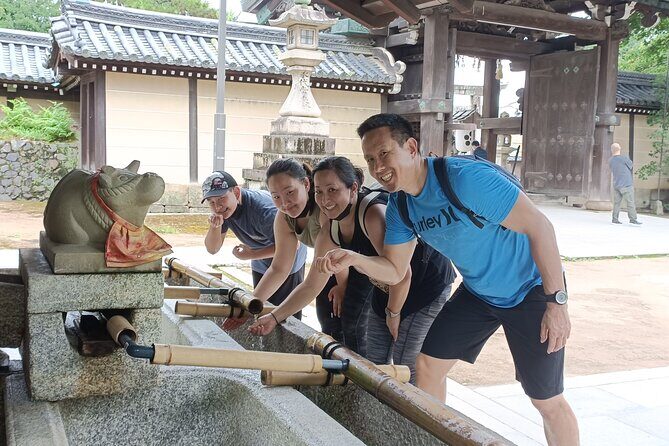
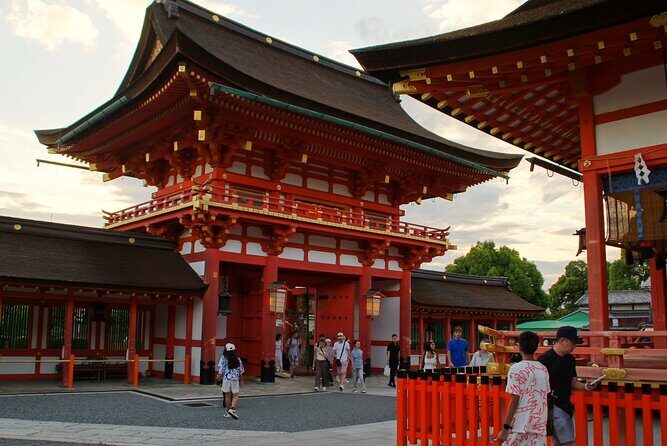
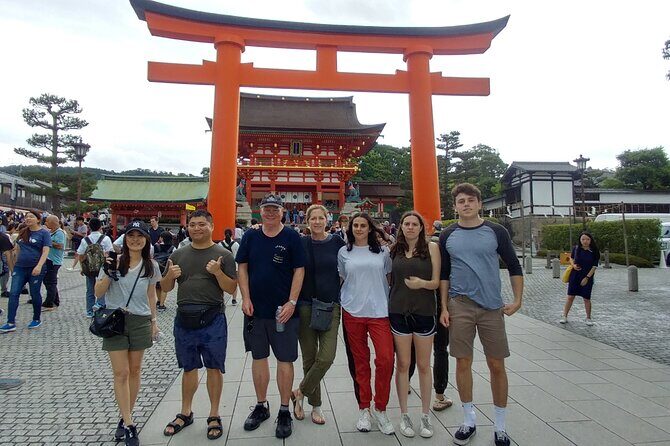
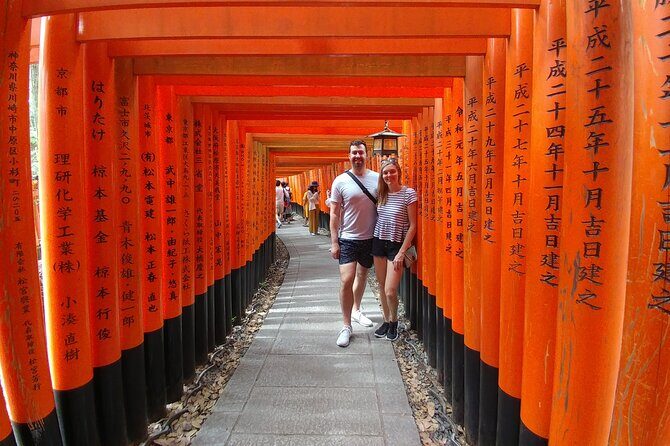
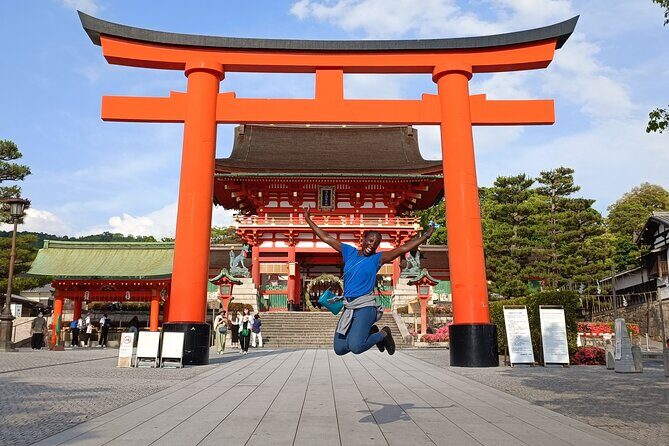
Your day’s big spiritual-and-iconic finish is Fushimi Inari-taisha, the number one tourist spot highlighted in the schedule. You’ll learn about Shinto and the shrine’s history while passing through thousands of vermilion torii gates.
This is the stop where the scenery and the lesson connect. The gates aren’t just decoration; they’re part of how the place works. With a guide, you’re not just walking through a famous corridor. You’re understanding the meaning behind what you see and why people treat the shrine with such attention.
You get about 50 minutes here, which is enough time to experience the torii tunnel effect without feeling like you’re stuck forever. If you like movement and atmosphere, this is a highlight.
Consideration: Fushimi Inari can feel physically tiring if you start in with fast expectations. You’ll walk and pause and turn. A 50-minute window is perfect for many people, but if you’re hoping for a long hike up every step, this tour’s focus is more about the core shrine experience than an extended climb.
Back to Kyoto Station: a smooth wrap-up
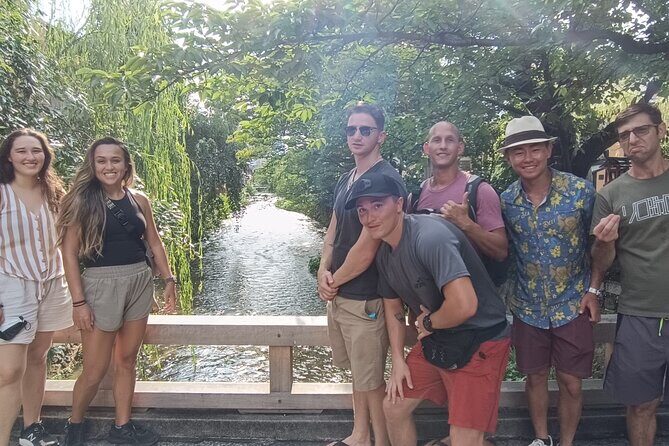
You end by riding back to Kyoto Station and returning to the meeting point. The final stretch is short—around 10 minutes—and it keeps the day from dragging out late.
I appreciate that the tour closes where it started. Kyoto can be easier when you know your “home base.” After a full day of trains, buses, bridges, and walking, it’s nice not to be dropped in some far corner with no obvious next move.
Because the tour uses a mobile ticket, you’re also less likely to waste time on paper confirmations. You can just show up, follow the group, and keep the day moving.
If you’re planning a dinner after this, consider eating close to where you’ll be staying. You’ll likely be tired in the best way—sightseeing fatigue with a smile.
Value and price: is $165.17 a fair deal?
At $165.17 per person, the main value isn’t the sites themselves. It’s the structure: small-group pace, a local guide, and a day that hits Kyoto’s biggest highlights without you building the routing puzzle.
But you should budget for two listed extras:
- Kinkakuji Golden Pavilion admission: ¥500 per person
- Public transportation: ¥1,510 per person
When you add those, you’re paying for convenience and guidance. The guide helps you move across neighborhoods efficiently, explains what you’re seeing, and keeps your time from evaporating on wrong turns or slow planning.
If you love temples, love culture explanations, and want a one-day overview that still feels personal, this price can make sense. If you’re an independent planner who already knows Kyoto transit well and doesn’t care about guided context, you could potentially do the stops on your own for less. Still, the small-group and coaching-from-a-local factor is where this tour justifies itself.
Who this tour fits best (and who should skip it)
This is a great match if you:
- Have only one day in Kyoto and want the big hits
- Enjoy walking but want it managed in sensible chunks
- Like learning why things are the way they are, not only where to take photos
- Want a calmer group size (max 7), which is especially helpful for solo travelers
It may not be ideal if:
- You have trouble with walking or leg comfort
- You’re traveling with pregnancy beyond the first trimester
- You’re chasing the kind of day where you linger for hours in one place
Good weather is required for the experience. If conditions are poor, the tour can be rescheduled or refunded.
Should you book this Kyoto highlights day?
Book it if your goal is fast clarity: get oriented, see Kyoto’s signature sights, and come away with cultural context you can carry into the rest of your trip. This is one-day efficiency done in a human way, helped by the small-group limit and guides who focus on stories, not just facts.
I’d pass or rethink it if your ideal Kyoto day is slow, detailed, and centered on one neighborhood. This tour is built for moving between Arashiyama bamboo, Kinkakuji, Shijo-Kawaramachi, Gion Shirakawa, and Fushimi Inari—so you get breadth, not deep single-site immersion.
One last call-out: if you book soon, you’ll have more options. The tour is commonly reserved about a month in advance on average.
FAQ
What time does the tour start?
It starts at 8:30 am, meeting at the Starbucks Coffee – Kyoto Tower Sando location.
How long is the full-day sightseeing experience?
The tour runs about 7 hours 30 minutes.
How many people are in the group?
The group is kept small, with a maximum of 7 travelers.
What’s included, and what costs extra?
Included are an experienced local guide and a walking experience. Not included: Kinkakuji admission (¥500 per person) and public transportation (¥1,510 per person).
How do you get tickets for the tour?
You receive a mobile ticket.
Is this tour mostly walking?
Yes. It’s described as a walking tour, and it’s not recommended for people with bad leg or limited mobility.
What happens if the weather is bad?
This experience requires good weather. If it’s canceled due to poor weather, you’ll be offered a different date or a full refund.