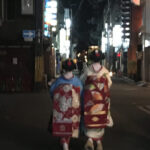
Tonight in Gion feels like stepping into a story. This tour is interesting because a guide leads you through Gion’s narrow, mostly unmarked alleyways at night, while you learn how Geiko and Maiko actually work in daily life. I love the Geiko vs Maiko cultural lessons, and I also like that the walk is practical, not just talk. The main thing to consider is group size: the tour can be up to 20 people, so if you want lots of one-on-one attention, pick the smaller-group option when you can.
You’ll start at 5:30 pm, follow the classic lanes near the Shirakawa River, and visit areas tied to Memoirs of a Geisha. At $19.82 for about 2 hours with a professional English-speaking guide, it’s one of those Kyoto nights that buys you clarity fast—so you spend less time guessing and more time noticing.
In This Review
- Key points worth your attention
- Entering Gion after dark: why this tour works
- Where the tour starts, and how to avoid arriving late
- The 2-hour walk you’ll actually enjoy (and why pace matters)
- Shirakawa River lanes and Memoirs of a Geisha filming areas
- Geiko vs Maiko: what you’ll understand while you walk
- Spotting Geiko and Maiko without being awkward
- Guide quality: why names like Mia, Mai, Cheko, and Mae show up
- Price and value: is $19.82 a smart Kyoto spend?
- When this tour is a great fit (and when it might not be)
- Should you book this Gion Walking Tour by Night?
- FAQ
- FAQ
- What time does the Gion Walking Tour by Night start?
- How long is the tour?
- Where do I meet the guide?
- Is the tour in English?
- Is there admission cost for attractions during the walk?
- What should I wear or bring?
- How big are the groups?
- Can children join?
- Is it okay for people with medical conditions?
- What if weather is bad?
- What is the cancellation policy?
Key points worth your attention

- A guide prevents the night “where are we?” problem in Gion’s tiny alley network
- Geiko and Maiko basics you can actually use while you’re walking around
- Shirakawa River streets and Memoirs of a Geisha filming areas make the scenery feel extra relevant
- Guides often work in a fun, story-led style (names like Mia, Mai, Cheko, and Mae show up a lot)
- You can upgrade to a private tour if you want quieter questions and more time
Entering Gion after dark: why this tour works

Gion at night has a real pull. The streets narrow. The lantern light turns corners into scenes. And if you’re trying to navigate on your own, you can burn time just figuring out where you are—and still miss the cultural context that makes the area click.
This is built to fix that. The biggest value is the simple fact that you’re not wandering blindly. Your guide leads you down streets that are easy to overlook in daylight maps, and they explain what you’re seeing as you go. That matters in Gion because a lot of what you want to understand is cultural, not architectural.
You also get a human layer. You’re not only hearing facts; you’re learning how the traditions show up in kimono choices, hairstyles, and daily routines. Even when you don’t spot Geiko or Maiko in the open, the explanations help you read the neighborhood like an insider.
The other practical win: it’s only about 2 hours. In Kyoto, that’s often the sweet spot. You get a proper evening without having to plan your whole night around a long, tiring activity.
A few more Kyoto tours and experiences worth a look


Where the tour starts, and how to avoid arriving late

Plan your timing with care. Reception starts at 5:00 pm and the tour begins at 5:30 pm. The guide can’t wait or respond if you’re late, so I suggest you arrive a few minutes early and get oriented before the group forms.
The meeting point is at 178 Tokiwachō, Higashiyama Ward, Kyoto, 605-0079. The tour ends back at the meeting point, so you don’t have to worry about getting back in the dark with no plan.
One more logistics note that matters in Kyoto: this tour is listed as near public transportation, which makes it easier to pair with dinner nearby. Also, you should have moderate physical fitness. It’s a walk on uneven pavement and along narrow streets, so comfortable shoes are not optional.
If you’re traveling with kids, they must be accompanied by an adult. And if you have serious medical conditions, this one may not be the best fit based on the tour’s guidance.
The 2-hour walk you’ll actually enjoy (and why pace matters)

This isn’t a marathon. It’s designed as a tight evening loop: enough time to move through multiple lanes, pause for context, and still have energy left for a final drink or dessert after.
In practice, the tour experience depends a lot on pace. The strong feedback you see around guides like Mia and Cheko often points to a comfortable walking speed and good storytelling rhythm. That’s a real quality marker. On a night walk, too-fast can leave you with photos and no understanding. Too-slow can turn into standing around.
So aim for a mindset of: you’re walking while learning, not stopping every 30 seconds. If you like frequent breaks and long Q&A, choose the smaller-group option (less than 12 guests guaranteed). It tends to make it easier to ask questions without shouting over the crowd.
One more thing to keep in mind: group size can be larger than what you personally prefer. The cap information includes up to 15 per booking and up to 20 travelers for the experience, so if you’re sensitive to crowds, book early and select the small-group option.
Shirakawa River lanes and Memoirs of a Geisha filming areas

The walk includes the classic streets by the Shirakawa River, which is part of why this experience feels cinematic. You’re not just walking by scenery; the guide ties what you see to the famous imagery you may recognize from Memoirs of a Geisha.
That connection is useful because it turns a simple river-stroll into a guided memory. You start noticing details you’d otherwise miss—street alignment, the way lanes open and close, and how the neighborhood’s layout supports the whole charm of Gion at night.
Even if you’ve never seen the film or read the book, this still works. The guide’s job is to give you context, so the area becomes legible: you learn what’s meaningful here, and you see the streets with a purpose.
And yes, the river-side streets are the kind of Kyoto you’ll want to photograph. Just keep your head up sometimes. Night in Gion is gorgeous, but it’s also narrow. Don’t let your camera walk you into the next wall.
Geiko vs Maiko: what you’ll understand while you walk

This is where the tour earns its keep.
A big part of the experience is learning the difference between Maiko and Geiko, and what those roles mean in real life. The guide also covers details you’ll likely never pick up from a simple brochure: kimono style, hairstyle, makeup, and how the daily rhythm fits together with tradition and rules.
You’ll also hear about how education and training works, and how the wider tea-house world functions. The tour is set up to translate and explain Japanese terms too, so language barriers don’t freeze your curiosity.
A helpful way to think about this: Gion is full of visual signals. If you learn the basics, those signals stop being random aesthetics and start becoming readable culture. And when the guide points things out—like what to notice in appearance or behavior—you can apply that instantly as you walk.
There’s also an etiquette angle. Several guides (often described as funny and personable, like Mia or Mai) emphasize respect around the women who work there. That’s important. It keeps the experience enjoyable for you and considerate for the people living and working in the district.
Other walking tours we've reviewed in Kyoto






Spotting Geiko and Maiko without being awkward

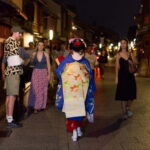
Let’s be honest: many people book this tour hoping to see Geiko or Maiko. There’s no guarantee stated, but you do get a better chance of noticing them because the guide knows where and when to look in a way a DIY wander usually misses.
What’s more valuable than the sighting itself is your ability to respond well. The guide helps you understand that these are working professionals with privacy. So even when you do spot someone in full refinement, you’re more likely to act appropriately—quiet, respectful, and not disruptive.
You may also hear the guide talk about how they head out for evening events. That context makes what you see feel less like a random coincidence and more like a part of the neighborhood’s evening routine.
If you get lucky and see them, you’ll feel that magic Kyoto can do—when the cultural story and the street scene line up.
Guide quality: why names like Mia, Mai, Cheko, and Mae show up

The tour runs with an English-speaking guide from WaRaiDo Guide Networks. Beyond the language skill, the experience quality comes from how the guide tells the story.
From the feedback patterns, guides named Mia and Cheko are often praised for being informative and entertaining, with a good sense of humor. Mai and Mae are also mentioned as strong guides who connect details to real-life practice. The consistent theme is simple: the guide makes you feel like you’re walking with someone who actually understands the district, not just someone reading a script.
That matters because Gion is easy to misunderstand. If you don’t have the cultural framework, you might see kimono and hairstyle and think you already get it. The guide’s job is to fill in what those choices mean and how daily life works around them.
In other words: the guide turns your photos into memories with context.
Price and value: is $19.82 a smart Kyoto spend?

At $19.82 per person for about 2 hours, this tour is priced like a “high value first night” activity. You’re paying for three things:
1) A local guide who can explain what you’re looking at
2) A route that reduces wasted time and wrong turns
3) Cultural translation support so you can ask questions without a language wall
Because the tour doesn’t include transportation or hotel pickup, you’re not paying a premium for logistics. You’re paying for the walking + explanations portion, which is exactly what you need in Gion at night.
The admission is free, too, so you’re not stuck waiting on ticket windows. That keeps the pacing smooth and the experience focused.
If you’re watching your Kyoto budget, this is one of the safer choices: you don’t need lots of extras, and you’ll still come away with real cultural understanding.
If you want an even tighter experience with more personalized attention, you can upgrade to a private tour.
When this tour is a great fit (and when it might not be)
This works best if you want:
- A guided way to explore Gion’s nighttime streets without getting lost
- Clear explanations of Geiko and Maiko differences
- A culture-and-etiquette evening, not just photo stops
It may not be the best match if:
- You hate crowds and need quiet space for questions (group size can reach up to 20)
- You strongly prefer DIY wandering with no structure (Gion is walkable on your own, but you’ll be trading cultural explanation for freedom)
- You have serious medical conditions, since the tour requires moderate physical fitness
If you’re unsure, choose the smaller-group option when it’s offered. It’s usually the easiest way to get more attention and a better experience.
Should you book this Gion Walking Tour by Night?
Yes, if you want your first Kyoto Gion evening to be practical and meaningful. This is the kind of tour that saves you from night navigation headaches and gives you cultural context you can’t easily recreate alone.
I’d book it if you’re curious about Geiko and Maiko and you like stories tied to what you’re actually seeing—especially with the Shirakawa River lanes and the Memoirs of a Geisha connections.
Skip it or upgrade if you need a quieter setting or lots of one-on-one time. In that case, go small-group or private.
Either way: wear comfortable shoes, plan to arrive before 5:30 pm, and treat it like a guided cultural walk through a working district.
FAQ
FAQ
What time does the Gion Walking Tour by Night start?
Reception starts at 5:00 pm, and the tour starts at 5:30 pm.
How long is the tour?
The duration is about 2 hours.
Where do I meet the guide?
You meet at 178 Tokiwachō, Higashiyama Ward, Kyoto, 605-0079, Japan. The tour ends back at the meeting point.
Is the tour in English?
Yes. It includes a professional, English-speaking guide.
Is there admission cost for attractions during the walk?
No. Admission ticket is free as listed, and the tour cost is for the guide experience.
What should I wear or bring?
Wear comfortable shoes. The tour is a walking experience on narrow streets and uneven ground.
How big are the groups?
The maximum is 15 passengers per booking, and the overall activity can have a maximum of 20 travelers. A small-group option (less than 12 guests guaranteed) is available for a different price.
Can children join?
Children must be accompanied by an adult.
Is it okay for people with medical conditions?
It’s not recommended for participants with serious medical conditions. The tour suggests moderate physical fitness.
What if weather is bad?
This experience requires good weather. If canceled due to poor weather, you’ll be offered a different date or a full refund.
What is the cancellation policy?
Free cancellation is available. You can cancel up to 24 hours in advance for a full refund, and within 24 hours there is no refund.