Kyoto in four tight hours. This private walking tour strings together Kiyomizu-dera, Sannenzaka/Ninenzaka, Yasaka Shrine, Gion, and Nishiki Market, so you get stories and practical tips right in the middle of the most-visited streets. I especially love the hands-on cultural coaching, like how to pray at Yasaka Shrine, and the way guides help you shop for matcha in Gion instead of wandering aimlessly. The main thing to plan for is the walking: it’s a solid half-day on foot, and Kiyomizu-dera involves stairs.
One more reason I’d pick this: the guide factor. People I’ve talked with mention guides such as Philip and Rika adjusting the pace, and guides like Karou and Hiro tailoring the walk around interests, sometimes sharing takeaway notes, maps, or even sending photos at the end. The only real drawback is that Kiyomizu-dera admission isn’t included, and hotel-to-Kiyomizu transport also isn’t included—so you’ll budget a little extra for that first leg.
For the price of $95.77 per person (3 hours 30 minutes), you’re paying for a local guide’s time plus a tight route that covers five big areas without needing a full-day schedule. It’s a great fit if this is your first time in Kyoto or you only have a short window.
In This Review
- Key Points Worth Noting Before You Start
- Why This Half-Day Kyoto Walk Works So Well
- Price and What You Actually Get for $95.77
- Before You Go: Shoes, Stairs, and a Moderate Pace
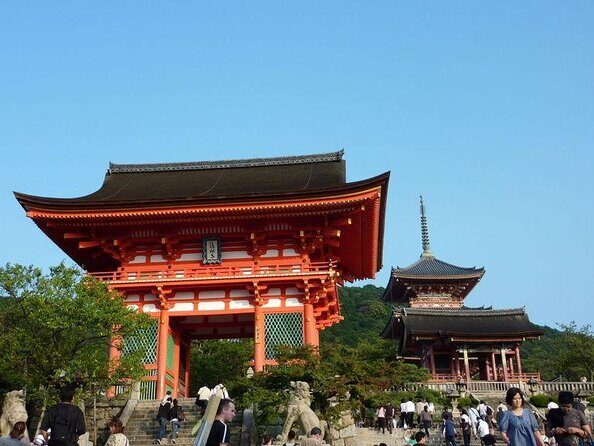
- Kiyomizu-dera: Otowa Falls, the Meaning Behind It, and a Focused Visit
- Sannenzaka and Ninenzaka: Old-Street Lanes for Souvenirs and Snack Stops
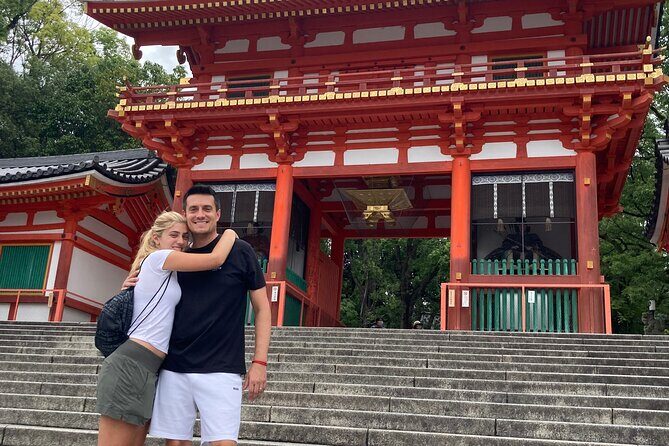
- Yasaka Shrine: How the Guide Teaches Prayer Etiquette in 10 Minutes
- Gion: Matcha Shopping Help, Izumo no Okuni, and Minamiza Kabuki
- Pontocho Street: A Quick Pass Now, a Night Return Later
- Nishiki Market: One Hour to Sample and Shop Like You Mean It
- The Real Win: Guides Who Adjust, Explain, and Help You Shop
- Should You Book This Private Kyoto Walking Tour?
- FAQ
- How long is the half-day private walking tour?
- How much does the tour cost per person?
- What places does the tour cover?
- Is pickup included?
- Is the Kiyomizu-dera entrance fee included?
- What’s included in the price?
- Are there any free admission stops?
- Is the tour private?
- Can service animals join the tour?
Key Points Worth Noting Before You Start
- A smart five-stop route across East Kyoto and down toward downtown snacks
- Kiyomizu-dera storytelling with Otowa Falls plus a focused visit (admission extra)
- Sannenzaka and Ninenzaka for shopping and food tastings in the same area
- Yasaka Shrine prayer etiquette coaching in a short, not-scary stop
- Gion guidance for matcha shopping and kabuki context around Minamiza
- Nishiki Market time for bite-sized sampling across seafood, pickles, fried snacks, and tea
Why This Half-Day Kyoto Walk Works So Well
This tour is built for people who want Kyoto’s highlight reel but don’t want to spend all day switching trains and hunting for directions. You cover the dramatic temple side (Kiyomizu-dera), the preserved old-street lanes (Sannenzaka/Ninenzaka), the shrine world (Yasaka Shrine), then you shift into the Geisha district atmosphere (Gion), and end in a food-and-shops corridor (Nishiki Market).
The pacing is also the point. Three-and-a-half hours sounds short until you remember Kyoto’s top sights are spaced across neighborhoods that feel like different cities. This route stitches them together into one walking story, so your brain stays oriented instead of bouncing from one “must-see” to the next.
And because it’s a private tour, you’re not stuck to a rigid script. Guides often tailor the focus—some lean more into architecture and legends, others into streets, food, and shopping—and that flexibility is a big reason this style of tour earns consistently strong scores.
Other walking tours we've reviewed in Kyoto


Price and What You Actually Get for $95.77
$95.77 per person is not “cheap,” but it’s not random pricing either. You’re paying for a guide (that’s the included cost) during a half-day window across multiple neighborhoods.
Here’s what you should treat as not included:
- Kiyomizu-dera entrance fee
- Transportation cost from your hotel to Kiyomizu-dera (pickup is offered, but this isn’t automatically covered)
So the best value happens when:
- you already planned to visit these places anyway, and
- you want a guide to save you time, explain what you’re seeing, and help you navigate the most confusing bits (shrines, old streets, and market snack logic).
Also, this is booked fairly far ahead on average (about 65 days), which is a clue that many people use this as a first-time Kyoto anchor. If you’re traveling around peak seasons, locking in a slot early is a safe move.
Before You Go: Shoes, Stairs, and a Moderate Pace
This is a walking tour for most of its length, with a moderate fitness level recommended. Bring comfortable shoes you can sweat in. Kyoto streets are uneven in spots, and Kiyomizu-dera alone can be stair-heavy depending on where you stop.
Also plan around timing. Kiyomizu-dera gets crowded, and old-street areas like Sannenzaka/Ninenzaka look best when you can slow down and look into side lanes. The tour’s stop lengths help with that: about an hour for Kiyomizu, then shorter blocks for the streets and shrine, then shopping time at Nishiki.
Quick practical tip: if you’re prone to sore feet, you’ll enjoy this more with thicker socks and a small refill of water. Even when the tour is “only half a day,” Kyoto can still wear out your legs.
Kiyomizu-dera: Otowa Falls, the Meaning Behind It, and a Focused Visit
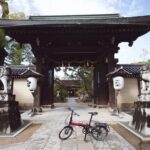
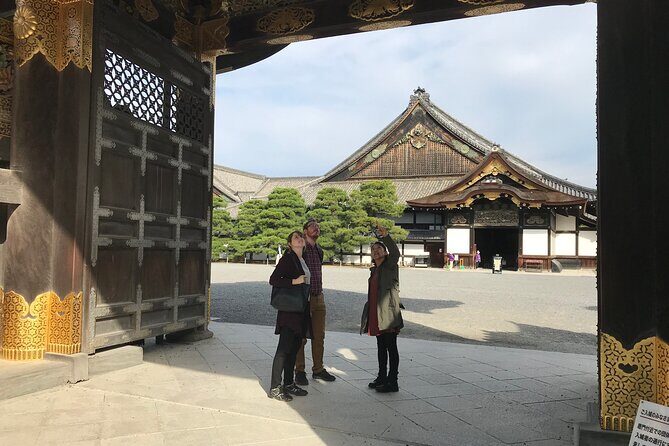
Kiyomizu-dera is the big opener. You’ll spend about 1 hour here, and the guide leads you through the meaning behind the famous Kiyomizu stage tradition. The guide will ask you what it means to jump off the stage, then you choose one of the Otowa Falls to visit.
Why that matters for your day: it turns a “photo stop” into an experience with context. Instead of just walking up, you’re learning what people are thinking about when they come to the falls and stage area. That makes the whole place feel less random.
Two practical notes:
- Admission isn’t included, so expect to pay at the site.
- The route involves stairs and walking on temple grounds, so keep your legs ready.
If you get even mildly interested in how Japanese religious sites blend nature, legends, and daily ritual, this stop will likely be one of the most memorable parts of the morning.
Sannenzaka and Ninenzaka: Old-Street Lanes for Souvenirs and Snack Stops
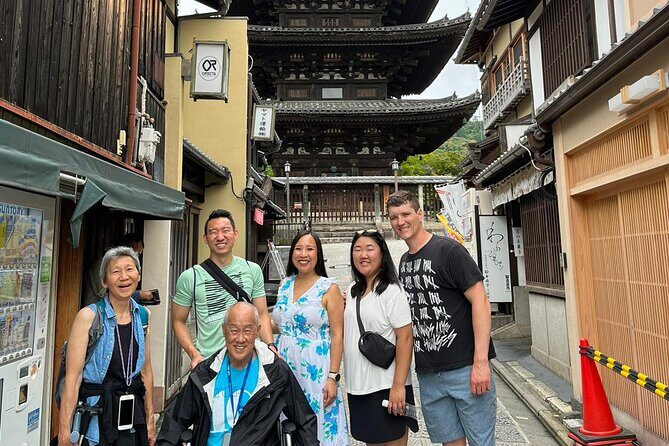
Next come Sannenzaka and Ninenzaka, with about 50 minutes to wander. This is where Kyoto looks like a postcard you can actually walk through: old streets, small shops, and the kind of food kiosks where you can pick a bite without committing to a full meal.
The tour’s value here is direction. If you go alone, it’s easy to get pulled into one shop and then realize you missed the better side lanes. With a guide, you can sample and shop with a plan—plus you’re less likely to waste time on stores that don’t match what you want (coffee vs. sweets vs. small ceramic souvenirs).
Admission is free for this portion, which means your money stays for what you choose to buy. If you like souvenirs but also like eating while you shop, this is your best payoff stop.
Other private tours in Kyoto



Yasaka Shrine: How the Guide Teaches Prayer Etiquette in 10 Minutes
Yasaka Shrine is short here—about 10 minutes—and that’s smart. You get a focused introduction without spending your whole morning stuck waiting for the right moment to watch others.
The guide shows you how to pray properly at the shrine. That one detail can make your visit feel respectful and confident instead of awkward. Shrines have their own rhythm, and once you know the basic steps, you can relax and pay attention to the setting: the clatter of visitors, the way people pause, and the quiet pockets between lanes.
Also, Yasaka sits at the eastern edge of the Gion area. That placement matters because it sets up your next stop: you’re moving into the streets where Kyoto nightlife and traditional culture overlap.
Admission is free for this stop.
Gion: Matcha Shopping Help, Izumo no Okuni, and Minamiza Kabuki
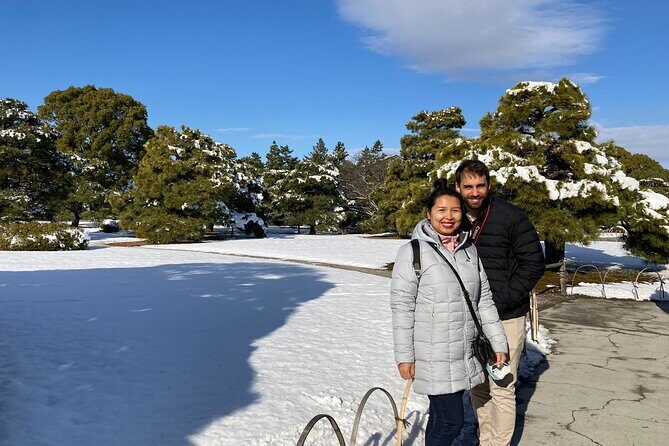
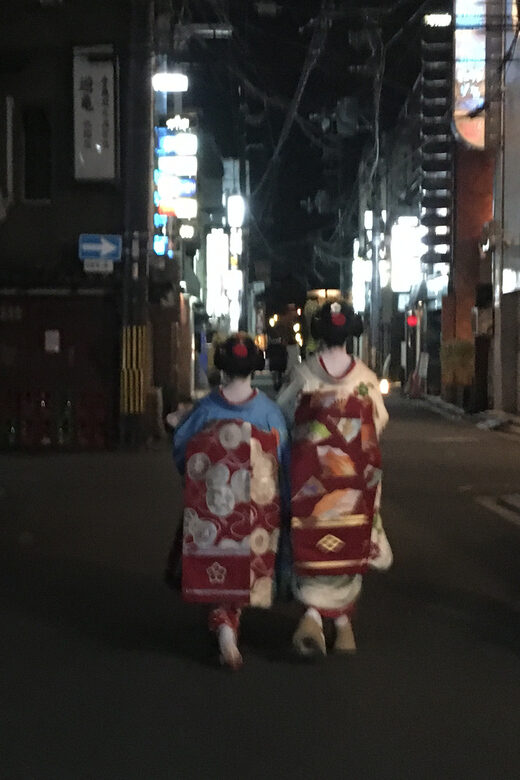
Gion is next, with about 30 minutes of time. This is where the tour shifts from temples and lanes into a district that’s both historic and still very much alive.
You’ll stop by local tea shops and get guidance on finding matcha for a souvenir. If you’ve ever bought tea in Japan and later wondered whether you paid tourist markup, you’ll appreciate having someone point you toward what to look for.
The walk also includes sights connected to performing arts:
- the statue of Izumo no Okuni, tied to the origins of kabuki, and
- the Minamiza kabuki theatre, where the guide shares context about kabuki and the life around maiko and geisha.
This portion is particularly good if you want culture that isn’t just “look at a building.” You’re learning how art forms and district life connect to the streets you’re walking.
Admission is free here, so your costs are mostly what you choose to buy.
Pontocho Street: A Quick Pass Now, a Night Return Later
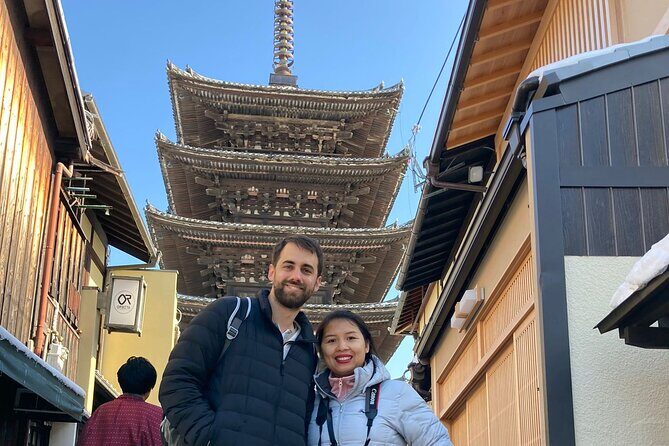
After Gion, you’ll walk past Pontocho Street, known for restaurants and bars. The tour doesn’t try to cram in nightlife in the middle of the day. Instead, it sets you up for a smart follow-up: you can come back at night on your own to catch the atmosphere and find food you actually want to eat after a long walk.
This is one of those travel-planning moves that saves your energy. Morning you focuses on photos and context. Night you focuses on eating and people-watching.
If you’re the type who plans meals based on what you’re craving, this is a good rhythm. If you prefer total structure, you can still use the tour to understand where Pontocho sits, then decide later what to do with it.
Nishiki Market: One Hour to Sample and Shop Like You Mean It
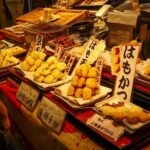
Then you head to Nishiki Market Shopping District for about 1 hour. This is the snack-and-stall zone in downtown Kyoto, and it’s famous for good reason: you can see a wide mix of food types in a small area.
You’ll find things like seafood, deep-fried snacks, Japanese pickles, karaage, takoyaki, spices, ice cream, green tea, and even egg-based options (the exact mix depends on what’s being sold that day).
Why this stop works inside a guided tour:
- A guide helps you navigate the density so you don’t get overwhelmed.
- You can sample more effectively because you’re not guessing what’s worth trying.
- You can also shop with less second-guessing.
My practical advice: budget Nishiki for small buys rather than one giant purchase. You’ll enjoy it more if you treat it like a guided “tasting map,” then let your stomach decide what you want to take home.
Admission is free for this portion.
The Real Win: Guides Who Adjust, Explain, and Help You Shop
What turns this from a checklist into a good trip is the guide relationship. Across different guides, there’s a pattern: they’re not just reading facts; they’re helping you function in Kyoto.
You’ll see examples of what that can look like:
- Karou customized the tour based on interests and shared specific recommendations, along with takeaway notes, maps, and Google pins for after the walk.
- Hiro tailored a solo visit and worked around personal interests while keeping the conversation going as you walked.
- Rika brought photos into the mix (with one group getting photos sent at the end) and helped people spot good options, even steering toward a coffee experience for extra Kyoto flavor.
- Hiro also showed up with practical touches like a hand towel to dry hands after water rinses at shrines, plus handmade maps with points of interest.
- Reiko and others were described as flexible, answering questions, and helping with next-day planning like locating tickets for an arts and dance show.
Also worth noting: one write-up mentions a guide being considerate with accessibility needs, and another mentions patience with extra time for pictures and questions. That’s not a small thing. In Kyoto, you will want extra time sometimes. A private guide gives you that breathing room.
Bottom line: you’re buying a walking route, but you’re really paying for interpretation and on-the-ground help.
Should You Book This Private Kyoto Walking Tour?
Book it if:
- you want a fast overview of Kyoto’s biggest “wow” areas without building a detailed itinerary yourself
- you like learning how to experience shrines properly, not just photographing them
- you enjoy walking and want your snack and souvenir stops guided (Sannenzaka/Ninenzaka and Nishiki are strong here)
- you’re traveling on a half-day window and want maximum payoff per hour
Consider skipping or upgrading your plan if:
- you hate walking or have trouble with stairs, since Kiyomizu-dera and old streets can be physically demanding
- you want transport and all entrances included (in this format, Kiyomizu-dera admission and hotel-to-site transport aren’t included)
- you’re looking for a deep, slow study of one site rather than a tour that spreads time across five areas
If your goal is to get oriented fast and leave with smart, usable tips (plus better shopping choices), this tour is a solid pick.
FAQ
How long is the half-day private walking tour?
The tour lasts about 3 hours 30 minutes.
How much does the tour cost per person?
It costs $95.77 per person.
What places does the tour cover?
It covers Kiyomizu-dera Temple, Sannenzaka and Ninenzaka, Yasaka Shrine, Gion, and Nishiki Market Shopping District (with a walk past Pontocho Street along the way).
Is pickup included?
Pickup is offered, but transportation cost from your hotel to Kiyomizu-dera is not included.
Is the Kiyomizu-dera entrance fee included?
No. The Kiyomizu-dera admission ticket is not included.
What’s included in the price?
The included item is the guide fee.
Are there any free admission stops?
Yes. Sannenzaka and Ninenzaka, Yasaka Shrine, Gion, and Nishiki Market are listed as having free admission.
Is the tour private?
Yes. It’s a private tour/activity, and only your group will participate.
Can service animals join the tour?
Yes, service animals are allowed.