The red gates are only the start. This small-group walk gets you inside Fushimi Inari Taisha at a human pace, with time on less-crowded routes and a real meal at a local soba spot. I love the way the guide connects what you see (torii history and shrine practices) to how the mountain path feels as you climb. I also like the included lunch setup, with soba plus Inari-style sweets. One drawback: it is still a hike, with uphill sections and some stairs, so comfortable shoes matter.
I like that you are not stuck in a straight line of crowd-traffic. You might tour with guides such as Ko and Go, Kenji, Yuya, Taishi, or Is, and the whole point is to help you move smart—out of the densest footpaths—and keep the experience relaxed. The group stays small (up to 10), so you can ask questions without shouting.
Plan on about 4 hours total, starting at the Great Torii Gate area near JR Inari Station, and wearing clothes you can move in. Tea and a boiled egg break happen in a mountain hut, plus you get snack stops along the way. Vegan options are available if you tell the team in advance.
In This Review
- Key things I’d bet on before you book
- Fushimi Inari beyond the postcard climb
- Starting at the Great Torii Gate: get your bearings fast
- The inside of the shrine: red gates, quiet holy spots, and a calmer tempo
- Bamboo-and-cedar forest walking: what to expect on your feet
- Going up to the summit shrine: short climb, big payoff
- Tea, boiled egg, and the Kyoto city viewpoint moment
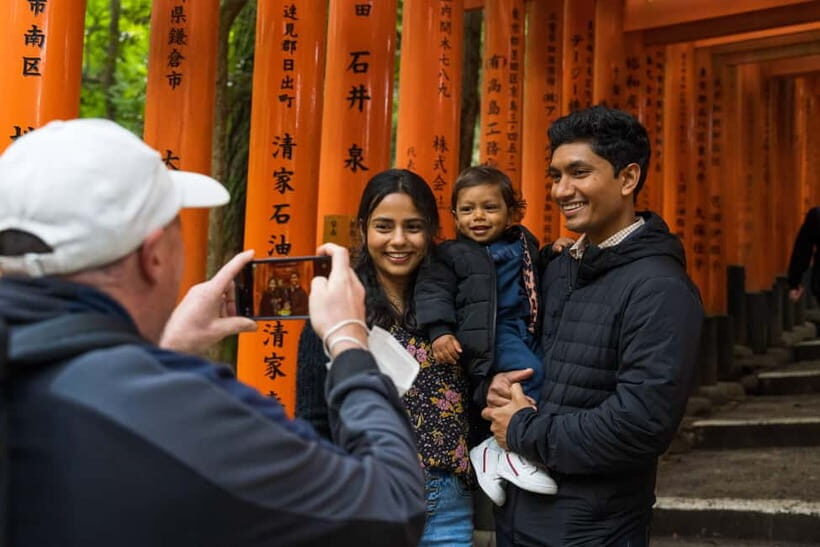
- Photo-shooting and the art of finding spots with breathing room
- Lunch at a local soba restaurant: what you actually get
- The $67 price: how it adds up for a 4-hour day
- Who this tour is best for (and who should skip it)
- Should you book this inside Fushimi Inari tour?
- FAQ
- FAQ
- How long is the tour?
- Where do I meet the guide?
- What time of day should I plan for?
- What’s included in the lunch?
- Are vegan options available?
- Is there a tea-and-snack stop during the hike?
- Does the tour involve hiking or stairs?
- What languages and group size should I expect?
Key things I’d bet on before you book
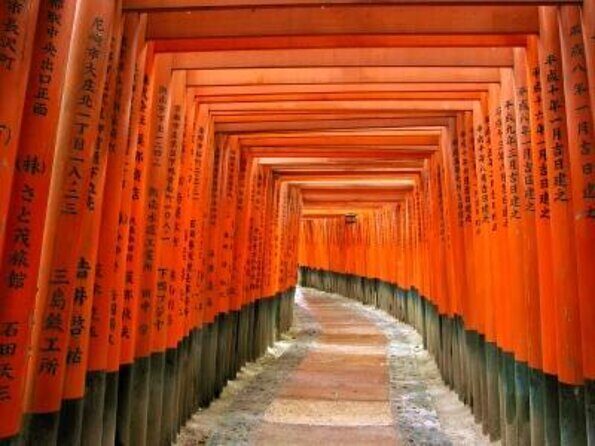
- Quiet paths with purpose: You’ll spend time away from the busiest lines and still hit the important shrines.
- A torii-gate maker stop: You can see how torii columns are made at a factory-style visit.
- Summit time (short climb): A ~20-minute uphill route brings you to the summit shrine area at 233m elevation.
- Tea-and-egg reset: A mountain-hut snack break helps you catch your breath before the best viewpoints.
- Photo-time that doesn’t feel rushed: The walk includes spots picked for pictures that are usually less crowded.
- Soba lunch that tastes local: Included meal is Japanese noodle soba plus fried sweet Inari-style sushi, with vegan options by request.
Fushimi Inari beyond the postcard climb
Fushimi Inari Taisha is famous for one thing: thousands of red torii gates marching up a hillside. But once the crowd density starts to take over, the site can feel like a long waiting game—step, shuffle, repeat.
This is a better way to experience it. The tour is built around slow discovery: the guide explains why the torii are arranged this way, what the shrine tradition means, and how the path changes as you go higher. That makes the climb feel like a story instead of a checklist.
The big win is you get the shrine experience and a local-meal payoff. After time on the mountain path, you sit down for soba at a traditional restaurant—plus Inari sweets—so your day ends with something you can actually taste, not just photos.
A few more Kyoto tours and experiences worth a look


Starting at the Great Torii Gate: get your bearings fast
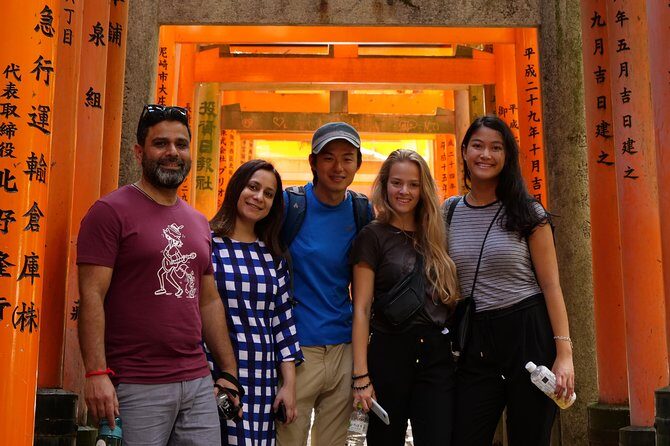
You meet at the Great Torii Gate area (大鳥居), at a stone pillar at the first gate across from the JR Inari Station exit. From there, it’s also worth knowing that you walk about 10 minutes from Fushimi-Inari Station on the Keihan line to the meeting point area.
That start matters more than it sounds. If you show up on your own, it’s easy to get swept into the most popular route immediately. With a guide, you’re set up to understand what you’re looking at before you get lost in the visuals. Early context helps you recognize shrine details later—like worship spots and smaller sacred areas you might otherwise skip.
Also: you’ll want a hands-free backpack for the hike. Even if the paths are organized, you do some stairs and uneven steps.
The inside of the shrine: red gates, quiet holy spots, and a calmer tempo
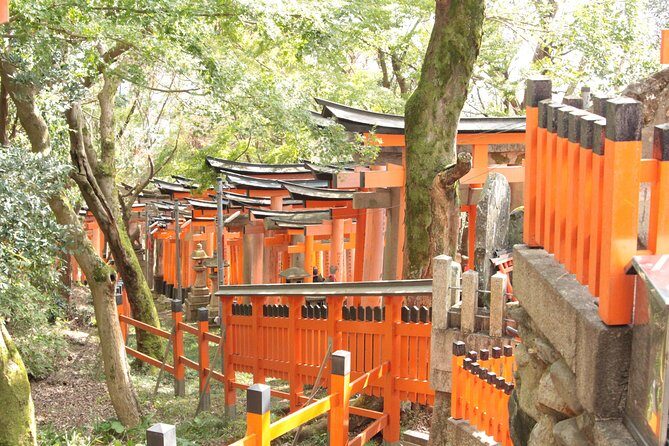
The core of the experience is exploring the main shrine and the long stretch of torii gates. The guide doesn’t just point out the gates; they give you the cultural background behind what you’re seeing and why so many gates exist in one place.
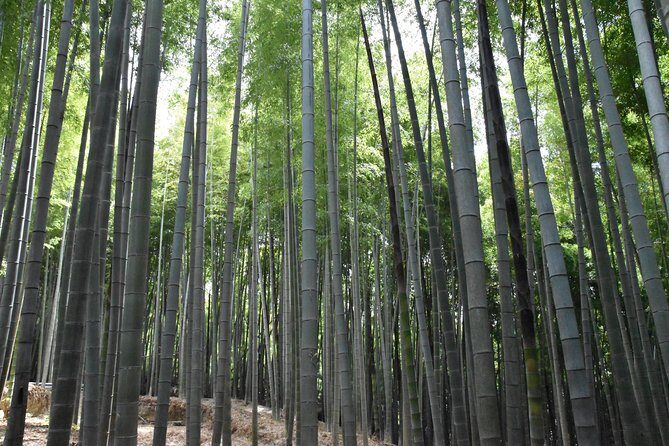
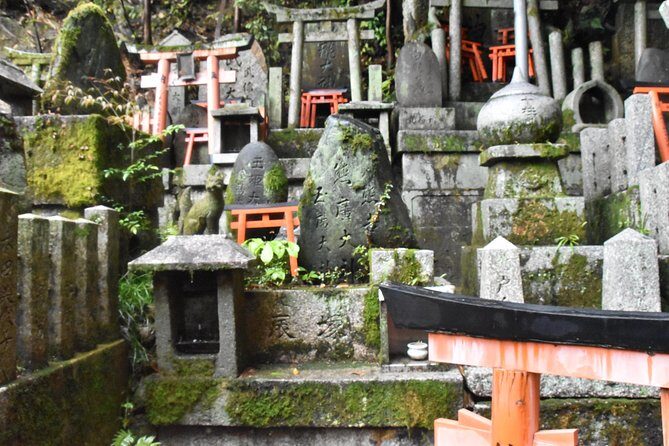
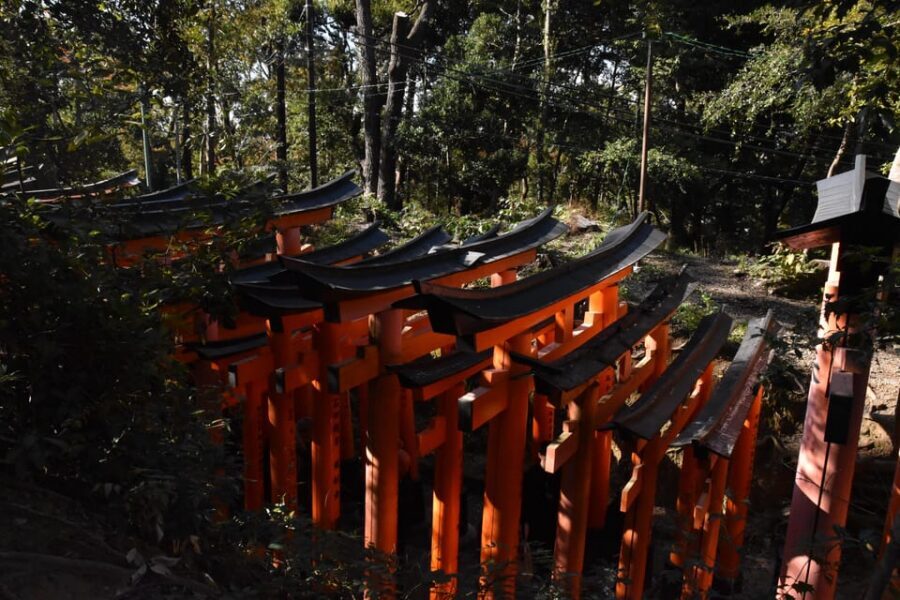
Then the route shifts into calmer scenery: a peaceful path through bamboo and cedar trees. This is where the mood changes. Instead of the high-visibility gate tunnel effect, you get a more shaded, slower walking rhythm, with small worship areas along the way.
Two stops that stand out in how the tour is described are:
- Worship stones, which help you understand that this shrine isn’t only about the gates. It’s also about small, specific spiritual markers.
- A waterfall spot, which adds that gentle soundtrack element and helps break up the climb.
There’s also a visit connected to torii creation at a factory. That adds something rare for this kind of shrine visit: you see the human craft behind the icons. One review even mentioned watching a master carve torii columns, which is exactly the kind of detail that makes the day feel less generic.
Bamboo-and-cedar forest walking: what to expect on your feet
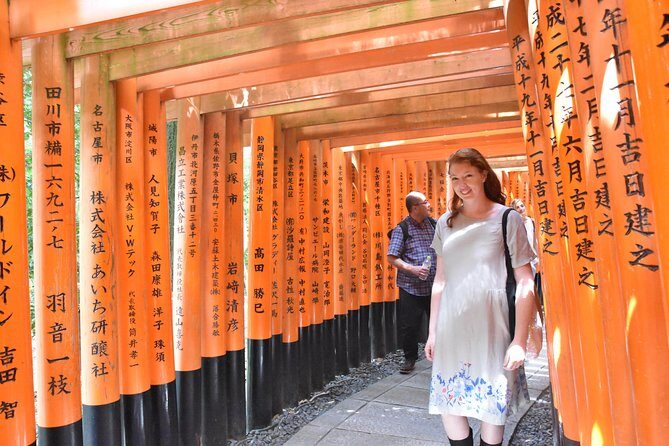
Once you leave the busiest gate lines, you’ll spend time hiking through organized forest paths. The tour is designed to feel “easy to moderate,” but it’s not a stroller walk. Think: steady uphill segments, stairs, and enough movement that you’ll feel it later.
Here’s what I’d plan for:
- Wear comfortable clothes and shoes with grip.
- Bring water if you’re someone who runs warm. (Tea is included later, but lunch drinks are not.)
- Use a small hands-free pack so your hands stay free for photos or holding your snack.
The pacing is a big part of why the reviews rate this so highly. The guides let you go at your own speed, which means you can pause for pictures without feeling like you’re slowing everyone down.
And because the tour is limited to 10 people, you don’t get trapped in a line that compresses every pause into one awkward moment.
Going up to the summit shrine: short climb, big payoff
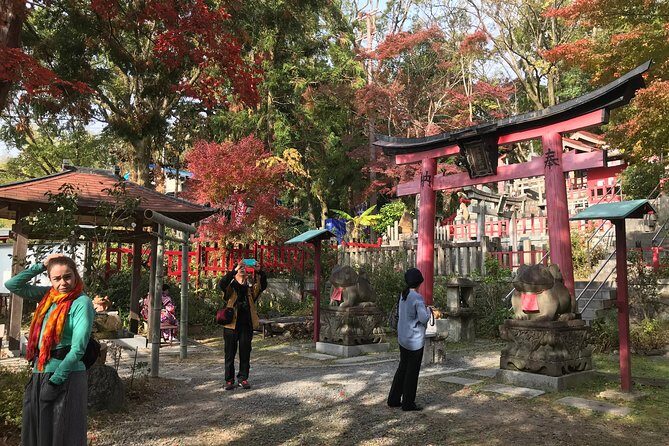
At some point, you switch to a forest route heading toward the summit shrine. The uphill time is described as about 20 minutes, and the summit area sits at 233m high. That’s a good chunk of elevation for a short climb, but it’s manageable with breaks.
The guide shows you around the summit shrine area, so you’re not just walking to a view—you’re understanding what the destination represents. When you’re higher up, you also see the gates and hillside pattern from a different angle, which changes the whole composition of the place.
What makes this part worth doing with a guide is that you’ll get to the summit without turning the day into a solo navigation puzzle. And once you’re there, you’re guided through the right angles for photos and attention to details you might miss.
A few more Kyoto tours and experiences worth a look




Tea, boiled egg, and the Kyoto city viewpoint moment
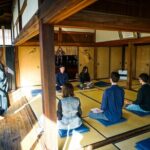
After the climb, you get a break in a mountain hut. The tour includes tea plus a boiled egg with salt. It’s a small thing, but it’s exactly the kind of pause that keeps the day from feeling like nonstop walking. You sit with a warm drink, taste something simple, and reset your legs.
Then comes a scenic viewpoint where you get a panorama view of Kyoto city. This is a nice contrast to the shrine-only focus. You go from red torii tunnels and forest paths to a wider sense of where you are in the city.
A tip that matters: if you care about photos, this is one of your best moments to slow down. The viewpoint is the kind of stop where you want time to breathe and frame shots without rushing to beat another group.
Photo-shooting and the art of finding spots with breathing room
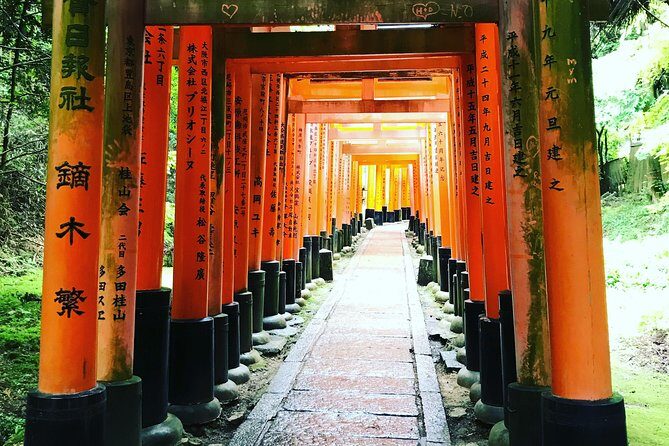
Fushimi Inari can be a photo challenge because everyone wants the same shots. This tour addresses that by building in a photo-focused part and adding stops with photogenic angles that are usually less crowded.
That’s why you’ll hear guide names repeatedly in the best feedback: guides like Ko, Go, Kenji, Yuya, Taishi, and Is are described as routing people through less busy lanes and helping with timing. The result is that you can actually photograph the place, not just witness it.
If you’re traveling solo or with friends who are fast walkers, having a guide to manage flow helps. You spend less time playing catch-up and more time enjoying the scenery.
Lunch at a local soba restaurant: what you actually get
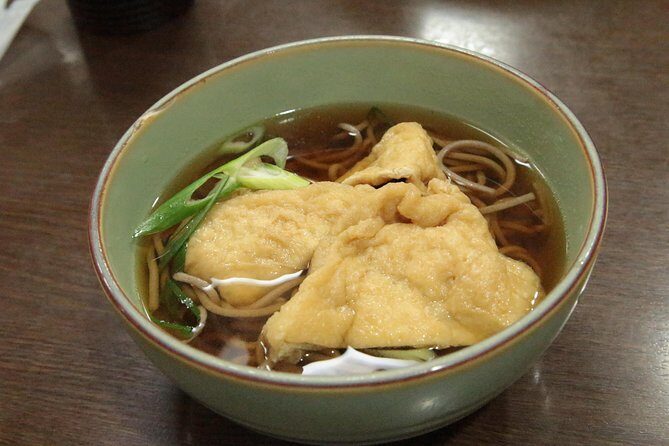
After working up your appetite on the mountain, you sit down for lunch. The included meal is Japanese noodle soba and fried sweet Inari sushi (Inari-style sweets). There’s also mention that offering staff are part of the experience, which fits the overall theme of shrine tradition and local practice.
A key value detail: drinks at the lunch restaurant are not included, so if you want tea, soda, or beer with your meal, budget for that extra cost.
The tour also supports dietary needs. Vegan options are available, but you must tell them in advance. That matters because Japanese restaurants can handle plant-based needs differently depending on what they prepare day-to-day.
This lunch stop is one of the main reasons the price feels fair. You’re not paying just for movement through gates; you’re paying for a guided day with a full food payoff at a real local restaurant.
The $67 price: how it adds up for a 4-hour day
At $67 per person for about 4 hours, it might sound high if you think of it as “just a guide walking with me.” But this experience is more than that.
You’re getting:
- a structured route through shrine and forest sections,
- summit access (with explanation and on-site guidance),
- a tea-and-egg break in a mountain hut,
- and an included lunch (soba plus Inari sushi-style sweets).
Also, you’re buying time and smoothing out the crowd problem. A guide helps you find less busy paths and less repetitive photo angles. That’s hard to recreate if you’re doing it on your own at peak hours.
So the real question is fit: if you enjoy walking and want context (history, shrine meaning, and craft behind torii gates), the price usually feels like value.
Who this tour is best for (and who should skip it)
This works especially well if you:
- want a deeper sense of Fushimi Inari than the basic gate photo run,
- like small-group walking tours with time for questions,
- enjoy Japanese food and want an included local meal, not a random convenience stop,
- prefer quieter routes and better photo timing.
You might hesitate if you:
- hate stairs or uphill segments (the tour has both),
- need a fully flat walking plan,
- or want a pure shrine-only experience with zero hiking.
Should you book this inside Fushimi Inari tour?
I’d book it if you want Fushimi Inari to feel human-sized: gates with meaning, forest paths with breathing room, a summit moment, and lunch that tastes like you planned your day. The small group size (10 max) and the route strategy make it far more satisfying than trying to solve the site alone during peak hours.
If you’re the type who walks slowly, stops to read details, and cares about craft and local food, this is a strong match. Just bring good shoes and expect some stairs.
FAQ
FAQ
How long is the tour?
The total duration is 4 hours.
Where do I meet the guide?
You meet at the Great Torii Gate area (大鳥居), at the stone pillar at the first gate across from the JR Inari Station exit.
What time of day should I plan for?
The schedule can vary by walking speed, but the tour includes a mountain hike portion plus two lunch/snack moments across the day’s 4-hour window. Check available starting times when booking.
What’s included in the lunch?
Lunch includes Japanese noodle soba and fried sweet sushi in an Inari style. Drinks at the lunch restaurant are not included.
Are vegan options available?
Yes. Vegan options are available, but you need to tell the team in advance.
Is there a tea-and-snack stop during the hike?
Yes. Tea and a boiled egg with salt are included, served in a mountain hut during the walk.
Does the tour involve hiking or stairs?
Yes. You’ll do walking through forest paths and go up and down some stairs, including a forest route to the summit shrine.
What languages and group size should I expect?
The guide is English-speaking, and the group is small, limited to up to 10 participants.