A scarf-making class in Kyoto hits different. This itajime shibori workshop turns a dye process into something you can actually do, then you take the results home. You’ll also get museum time so the craft doesn’t feel like random souvenir production.
What I like most is the hands-on guidance during the scarf-making steps. The small studio setup also makes it feel personal, with staff who focus on clear directions and making sure you finish with something you’re proud of.
One thing to plan for: the classroom is on the 2nd floor, and one visitor noted it isn’t super obvious from the street, so give yourself a few extra minutes to locate it.
In This Review
- Key highlights at Kyoto Shibori Museum
- Kyoto Shibori Museum: a craft class with museum time built in
- How the scarf-making class works in real time
- Choosing fabrics and getting results you can actually take home
- Kyoto Shibori Museum: what to do while your scarf dries
- Location and timing: easy to fit into an Kyoto afternoon
- Price and value: $43.60 for a handmade souvenir that teaches something
- Who should book this shibori scarf class (and who might not love it)
- Small practical tips before you go
- Should you book the Itajime Shibori Scarf Class?
- FAQ
- How long is the itajime shibori scarf class?
- Is the museum admission included?
- How much does it cost per person?
- What’s the group size limit?
- Is there a minimum age?
- Can I cancel for a full refund?
Key highlights at Kyoto Shibori Museum
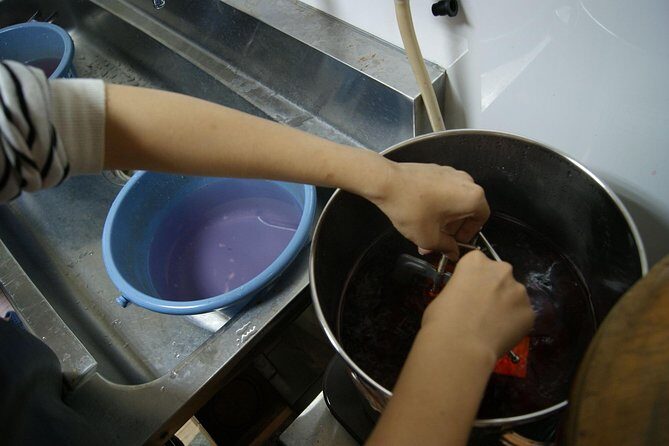
- 30–60 minutes of scarf-making that moves at a comfy pace
- Small group size with a maximum of 10 travelers
- Japanese fabrics to choose from before you start dyeing
- Museum admission included, so your wait time has a purpose
- Grand reveal moment when you see the pattern after dyeing and drying
Kyoto Shibori Museum: a craft class with museum time built in
Kyoto can overwhelm you with choices. This class is a simpler kind of win: you sit down, learn one traditional Japanese technique, and walk out with a wearable (and giftable) handmade piece.
The experience is based at the Kyoto Shibori Museum, and the flow matters. You’re not just making something and rushing out. You make the scarf, then you spend time on-site while it dries and you can explore the exhibitions. That structure turns the workshop into a mini cultural stop, not a quick factory-style activity.
The vibe also comes through in the reviews: people talk about kind staff, a calm atmosphere, and teachers who make the steps feel doable. One review even singled out an instructor named June for being patient and supportive, which is exactly what you want if you think you’re not artistic.
There’s also a practical side. The class runs about 30 minutes to 1 hour, and the museum visit is part of the plan (admission included). So you can slot it into an afternoon without needing to redesign your whole day.
A few more Kyoto tours and experiences worth a look



How the scarf-making class works in real time

This is a 30- to 60-minute itajime shibori scarf class. The teacher guides you through the process using traditional tools and fabrics, and you get to choose what you’ll work with before you start. That choice step is more important than it sounds: picking a fabric and deciding on your look helps the whole workshop feel like yours, not just something you pass through.
The process itself is hands-on. Reviews describe clear instructions and a very practical, step-by-step approach. People who thought they would struggle still finished with scarves they loved, which tells me the staff are good at explaining what matters and simplifying what doesn’t.
A few specific details show up in the feedback:
- You start dyeing and then your scarf needs drying time.
- There’s a fun reveal when you get to see what the pattern turned out like.
- The staff often check in to make sure you’re on track, not guessing.
If you’re traveling with kids or teens, that hands-on piece is the reason this class works. One review mentioned a 12-year-old enjoying it a lot, and another talked about a family experience where both kids and adults had a good time. With a maximum of 10 travelers, you’re also less likely to be lost in a crowd.
Choosing fabrics and getting results you can actually take home
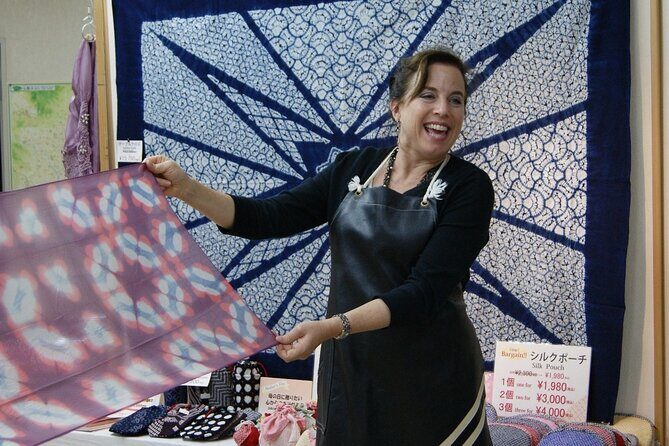
You don’t just learn about shibori; you make something to keep. The workshop ends with you taking your scarf home as a memento.
The fabric choice is part of the fun. The class offers Japanese fabrics to select from, which helps you steer the final look. Even if you’re not sure what pattern or color you want, you’ll at least have control over the starting point.
Also, the finished scarf feels like more than craft class homework. Several reviews highlight how people were genuinely pleased with the outcome, even those who weren’t “art people.” That’s a sign the instructor isn’t just teaching technique; they’re making sure your scarf reads well at the end.
One practical point: because dye and drying are involved, your scarf won’t be ready instantly. That’s not a downside if you see the museum as part of the deal—which is exactly how the experience is designed.
Kyoto Shibori Museum: what to do while your scarf dries
This is where the value stacks up. The museum time isn’t filler. It’s an actual part of the program, and admission is included.
The museum helps you understand shibori as a craft, not just a visual style. The most repeated idea in the reviews is learning the history and the process, plus seeing impressive finished works. People mention the second floor exhibits and even a movie showing the dyeing process while they waited.
That matters because shibori can look like tie-dye at first glance. But the craft has structure: patterns come from careful resist methods, and the results depend on how the fabric is handled. Seeing museum examples while your scarf dries helps you connect the steps you’re doing to the bigger art form.
One visitor called the museum exhibits beautiful and said there were incredible masterpieces displayed upstairs. Another person specifically said the upstairs museum had a movie on the process plus art worth waiting for. If you’re the kind of traveler who likes your activities to connect to culture, this pairing is a smart move.
There’s also a chance to buy related items. Some reviews mention shopping after the class, including shibori products like purses and charms. That means you can complement your scarf with a small accessory, as long as you budget for it.
Location and timing: easy to fit into an Kyoto afternoon
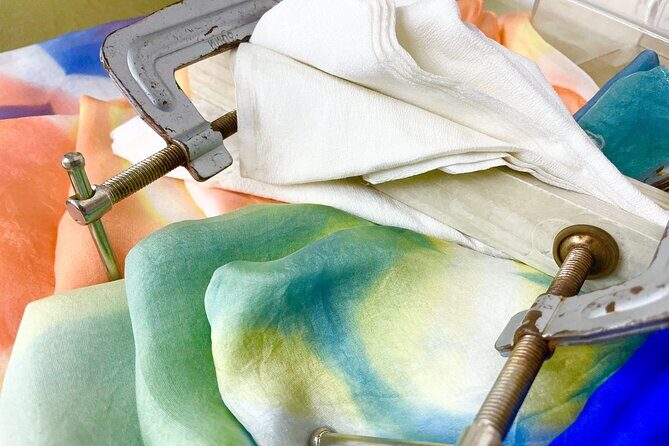
The workshop is near public transportation, which is a big deal in Kyoto. You don’t want one activity to cost you half a day in transfers.
Timing is also practical:
- Class duration is about 30 minutes to 1 hour.
- The museum stop is listed as about 1 hour, with admission included.
Because dyeing takes time, plan on a relaxed schedule rather than a tight hop-and-skip. If you’re trying to do it right, build in enough margin to explore the second floor while you wait for drying and finishing.
Group size is capped at 10 travelers. That can affect how quickly you get attention during the hands-on steps. A smaller group usually means more time with the teacher and fewer awkward moments when you don’t understand a step.
If you’re pairing this with sightseeing, you can. One review noted the museum is around a two-minute walk from the castle area, which is useful if you want an efficient “one neighborhood” plan.





Price and value: $43.60 for a handmade souvenir that teaches something

At $43.60 per person, this class sits in the category of “reasonable craft experience.” The key question is what you’re paying for, and here the answer is: instruction + materials + a finished wearable + museum admission.
Many souvenir purchases cost money but don’t add much context. Here, you’re paying for a process and a story you can explain to friends later. The museum stop helps you turn the scarf into a real cultural experience instead of just an item in your suitcase.
Also, the group is small, and the instruction is hands-on. Reviews repeatedly describe personal attention and kind staff, including mentions of one-on-one facilitation. You’re not just following a script at the speed of the slowest participant.
Is it the cheapest thing you can do in Kyoto? No. But it’s also not priced like a high-end private atelier session. It’s more like a well-run cultural stop that gives you something tangible for the same day.
Who should book this shibori scarf class (and who might not love it)

I’d point you toward this class if you want:
- A hands-on Kyoto experience that’s not physically intense
- A way to learn a traditional Japanese craft with a clear, guided structure
- A souvenir you can actually wear or give away
- Museum time included, so your wait doesn’t feel wasted
It also seems family-friendly in practice. The minimum age is 6, and reviews mention kids and teens enjoying the activity. That suggests the workshop can work across ages if everyone is ready to participate.
You might hesitate if:
- You only want quick, see-it-and-go sightseeing with minimal sitting
- You’re extremely sensitive to directions being a little hard to find (one visitor said the 2nd-floor classroom wasn’t well marked from the street)
The flip side is that with a little time buffer, the “where is it” issue becomes no big deal.
Small practical tips before you go
Here are the details that can make your day smoother, based on what’s been reported and what the format implies.
- Arrive with a couple extra minutes. The workshop is on the 2nd floor, and signage may not be obvious from street level.
- Wear comfortable clothes. You’ll be working with fabric and dye-related setup, and even if you stay clean, you don’t want to fuss.
- Think of the museum as part of the lesson. The drying time becomes useful exploration, especially on the second floor.
- Plan your outfit around the scarf. Many people like to enjoy the scarf as a new piece, and you’ll have it ready to take home afterward.
Should you book the Itajime Shibori Scarf Class?
Book it if you want a Kyoto activity that’s practical, cultural, and produces a real keepsake. The combination of hands-on itajime shibori scarf-making, a small group size, and museum admission included is the main reason this works. It’s not just a craft lesson; it’s a craft lesson with context.
Skip or rethink only if you’re chasing a super-fast, purely sightseeing day. This is an hour-or-so experience that rewards a slower pace and a curiosity about how traditional Japanese textiles are made.
FAQ
How long is the itajime shibori scarf class?
The class runs about 30 minutes to 1 hour (approx.).
Is the museum admission included?
Yes. The museum stop includes an admission ticket.
How much does it cost per person?
The price is $43.60 per person.
What’s the group size limit?
The experience has a maximum of 10 travelers.
Is there a minimum age?
Yes, the minimum age is 6 years. Adult pricing applies to all ages.
Can I cancel for a full refund?
Free cancellation is available up to 24 hours in advance for a full refund. If you cancel less than 24 hours before the start time, the amount paid won’t be refunded.