A great Arashiyama day starts here. This private walking tour lets you cover Arashiyama and Sagano highlights without guessing your way through Kyoto. I love having a government-licensed guide who can explain what you’re looking at as you go, and I love that you can choose 3–4 stops so the day fits your interests. The main drawback: this is still Kyoto on foot, so you’ll want solid shoes and a weather plan.
The best part is how the guides shape the day. Guides like Ken bring a one-page Kyoto history sheet, Tomo knows how to steer around crowds, and Kazuo even adjusted pacing for slower guests without shrinking the route. If you want more than just seeing bamboo for photos, this format is built for asking questions and learning the why behind the places.
Value is the big question at $157.82 per person. For a half-day of one-on-one time, it can be money well spent—especially when entrance fees, transport, and lunch are on you. You’re paying for guide time and smart routing, not for ticket-covered access.
In This Review
- Key things I’d watch for
- Why a government-licensed guide changes Arashiyama
- Price and what $157.82 actually buys you
- Arashiyama highlights you can plan around: bridge, bamboo, Tenryuji
- Sagano temple calm: Jojakkoji, Nisonin, Gioji, and moss views
- Imperial villa options: Shugakuin and Katsura Rikyū viewing rules
- Beyond Arashiyama: Kurama, Yoshimine-dera, Daikaku-ji, and Kibune
- How to choose your 3–4 stops for a no-waste 6 hours
- Practical tips so the day feels smooth (not frantic)
- Should you book this private Arashiyama & Sagano tour?
- FAQ
- How long is the Kyoto Arashiyama & Sagano tour?
- Is this tour private?
- What does the price include?
- Are entrance fees included?
- Is lunch included?
- Is transportation provided by vehicle?
- Can I choose which stops I visit?
- What if the weather is bad?
- Are service animals allowed?
- What ticket method is used?
Key things I’d watch for
- Government-licensed guide on a private route that keeps the day moving at your pace
- Choose 3–4 sites from a long Arashiyama and Sagano shortlist
- Bamboo groves plus temple stops gives you variety without constant transit
- Imperial villa rules (Katsura especially) affect timing and viewing
- Crowd-smart timing is a real theme in the best-guided days
- Mountain-side options like Kurama and Kibune can add “quiet Kyoto” if you pick them
Why a government-licensed guide changes Arashiyama
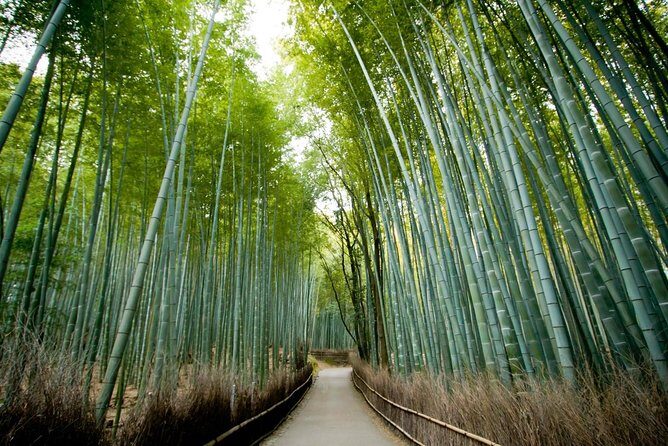
Arashiyama and Sagano can feel like two things at once: classic Kyoto beauty and a human traffic problem. With a private guide, you spend less time figuring out where to go next and more time actually enjoying what’s in front of you. The tour is designed as a walking experience, so the guide becomes your translator, navigator, and local explain-it-all person.
That “explain-it-all” part matters. Standing in a bamboo grove is fun, but understanding how bamboo has been used for centuries (baskets, cups, boxes, mats) makes the place stick in your head. The same goes for temples: it’s more satisfying when you know which sect it belongs to and why the site exists where it does.
The guides in the experience’s review stories also highlight something practical: they don’t just point. They manage time. Tomo’s crowd-avoidance approach is a good example, and Kazuo’s willingness to adjust pace shows the value of one-on-one. If your ideal day is calm, not chaotic, this guide-led setup helps a lot.
A few more Kyoto tours and experiences worth a look

Price and what $157.82 actually buys you
At $157.82 per person for about 6 hours, you’re paying for private guide attention—not for admission fees or transportation. Entrance tickets and meals are not included, and there’s no private vehicle. The pickup/drop-off is on foot, with the tour near public transportation.
So how do you judge value? I’d look at two things:
- How much you want to learn and ask questions. If you like context—temple background, cultural notes, why a garden looks the way it does—this format pays off.
- How you handle logistics. Arashiyama/Sagano are not difficult, but they’re spread out with lots of crowd waves. A guide who can route you efficiently saves time and reduces stress.
If you’re the kind of traveler who already has every stop mapped and doesn’t care about explanations, then the cost might feel heavy. But if you want a guided day that turns Kyoto into a story you can follow, this price starts to make sense.
Also note: guide entry fees are covered only for sights in the selected list. That means you should expect some sites to cost you separately, depending on what you choose.
Arashiyama highlights you can plan around: bridge, bamboo, Tenryuji
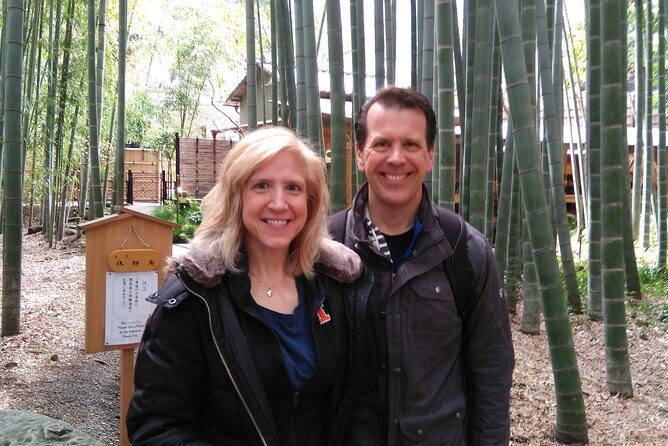
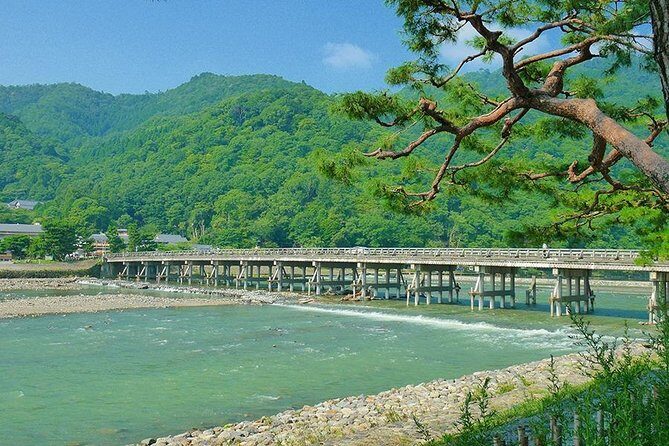
A strong Arashiyama day usually starts with the core icons, and this experience makes that easy. You’ll see Arashiyama’s central area and its most recognizable landmark: Togetsukyo Bridge. The bridge sits with forested mountains behind it, and there’s a riverside park nearby with dozens of cherry trees. The tour timing makes sense here because you can enjoy the photo spots without rushing.
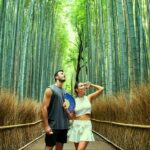
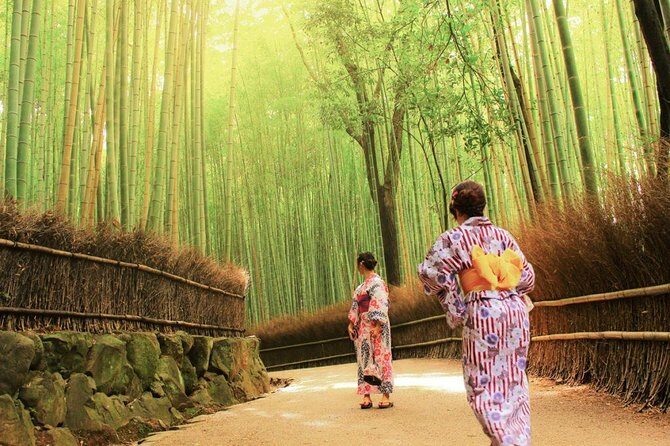
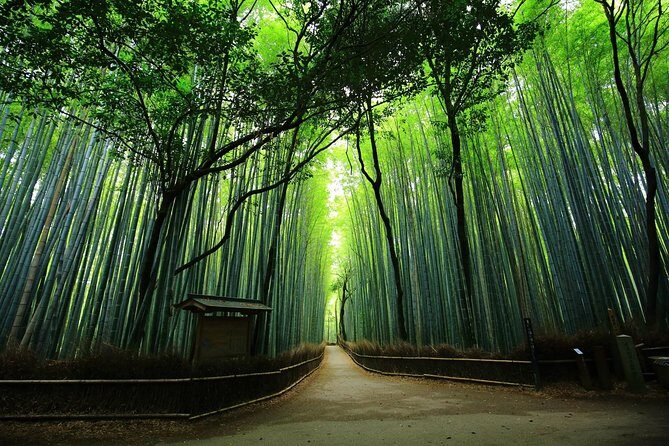
From there, the bamboo is the star turn. The bamboo forest street and the paths through the grove are where you slow down. The stalks sway when there’s even a light wind, and that movement is exactly what makes bamboo feel alive rather than like a backdrop. Bamboo also has that “Kyoto craft” angle—centuries of everyday items made from it—which a guide can connect to what you’re seeing.
Then comes Tenryu-ji Temple, one of Kyoto’s major Zen temples and also a UNESCO World Heritage Site. Tenryuji is often the anchor temple in Arashiyama because its gardens and walking paths give you space to breathe after bamboo crowds. Admission is not included in your tour price, but the experience of walking through a major Zen garden is usually worth budgeting for if it matches your interests.
Practical drawback: Arashiyama can be very crowded in peak seasons, and paths can be slippery if it’s wet. If you’re visiting during autumn colors or cherry blossom time, your best friend is a guide who can adjust timing and sequence. That theme shows up again and again in the guide stories.
Sagano temple calm: Jojakkoji, Nisonin, Gioji, and moss views
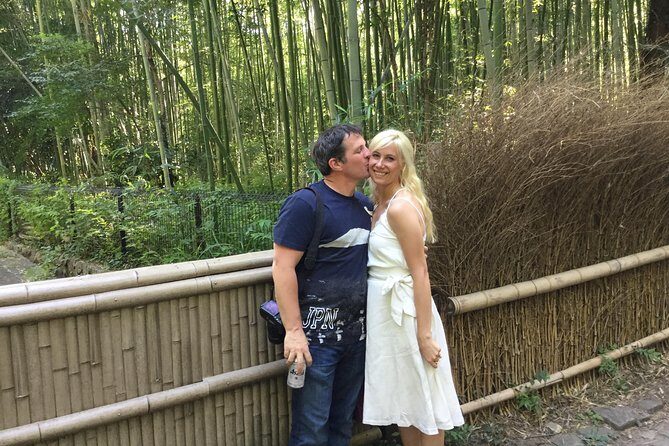
Sagano’s temple circuit is a different vibe than the bamboo area. Instead of souvenir shops and river activity, you get hillside buildings, moss gardens, and quieter viewpoints over Kyoto. This part of the tour is where you feel like you’re stepping “outside the postcard.”
One stop to know is Jojakkoji Temple. It’s founded in 1596 and has a quiet, understated atmosphere. Maple trees and moss sit near paths and stairs, and the grounds offer views over Kyoto from certain spots. If you want a temple that feels small and personal rather than monumental, Jojakkoji fits that.
Close by, you can add Nisonin, another hillside temple with slightly larger buildings. Overhanging trees along the approach help reduce the sense of exposure, and the upper grounds give you another look over the city.
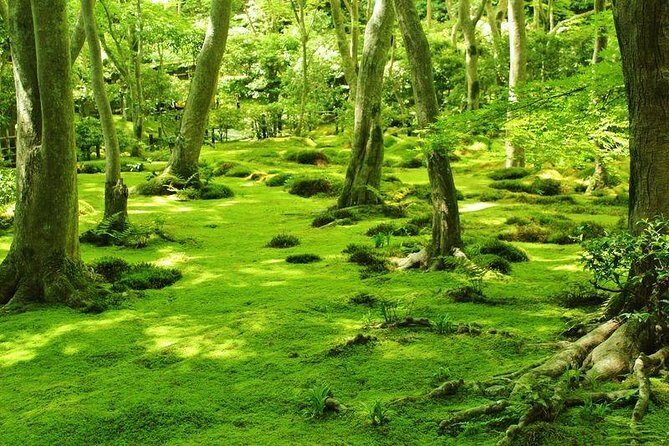
Next is Gioji Temple, which leans even more forest-y. It’s known for its moss garden punctuated by tall maple trees. The thatched roof main hall and the round window looking toward the garden give it a more intimate “Kyoto detail” feel.
Two practical tips here:
- Wear shoes with grip. Hillside paths can get slick when it rains.
- If you’re sensitive to crowds, ask your guide to sequence the stops to avoid the busiest angles.
This is also where you can feel the difference between being in Kyoto and actually reading Kyoto. With a guide explaining the temple setting and visual design choices, the day feels less like checklist tourism.
Imperial villa options: Shugakuin and Katsura Rikyū viewing rules
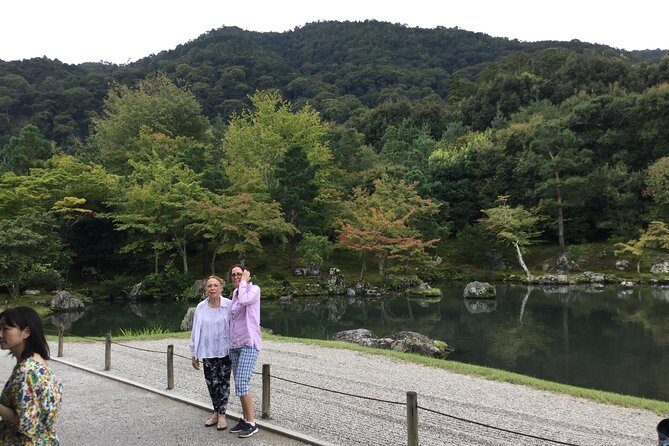
If you like gardens and architecture more than crowds, imperial villas can be the highlight of your half-day. This experience includes two villa choices, but they come with important viewing logistics.
Shugakuin Imperial Villa is a 17th-century site built by Emperor Gomizuno and managed by the Imperial Household Agency. It includes Upper, Middle, and Lower Villa areas with traditional imperial-style buildings and gardens. Expect this stop to be shorter (listed as about 20 minutes), but it offers a different side of Kyoto than the usual temple-bamboo circuit.
Then there’s Katsura Imperial Villa (Katsura Rikyū), which is one of the best-known garden-and-architecture complexes in Japan. Visiting requires joining a tour, and the experience includes those restrictions:
- You follow a circular walking trail around a central pond.
- Palace buildings can be viewed only from the outside.
- Photography is allowed only from designated spots.
- English tours are available.
The time listed for Katsura is about 30 minutes. That’s not long, so your expectations should match the format: you’re there to walk the trail, not to linger in every corner like it’s an open garden museum. If you’re a photographer, plan for the limited shooting zones, and treat the guided path as part of the experience.
If your priority is “quiet, designed space,” Katsura and Shugakuin are worth building around. If your priority is maximum variety, you might skip one villa and add a temple stop instead.
Other guided tours in Kyoto


Beyond Arashiyama: Kurama, Yoshimine-dera, Daikaku-ji, and Kibune
This tour can stretch past classic Arashiyama into Kyoto’s mountain-side villages and temple areas, which is where Sagano turns into something more rural.
Kurama-dera is in the northern mountains, less than an hour from the city center. The included time is short (about 15 minutes), but the payoff is the setting. Kurama also connects to hot spring culture: Kurama Onsen is in town, reached via a 10-minute walk from the station along the main road or a nature trail by the river. Daytrip bath access is listed at 2500 yen for all baths or 1000 yen for the outdoor bath (rotemburo). If you’re not planning a ryokan stay, you can still budget for a soak—just remember baths are not included by default.
Another mountain option is Yoshimine-dera in Kyoto’s western mountains. It’s a Tendai sect temple built along the mountainside, with buildings spread up the slope and views over Kyoto. This one is about atmosphere: spacious grounds, hillside placement, and a longer historical thread (it was established as a personal retreat in 1029, destroyed and later rebuilt).
Daikaku-ji Temple is a major Sagano-area Shingon temple. It traces back to the early 800s as Emperor Saga’s detached palace, then converted into a temple. If you like imperial connections and big-site history, this can be a satisfying choice. There’s also mention of retired emperors and peace talks between the Northern and Southern Imperial Courts after 50 years of civil war—so it’s not just scenic.
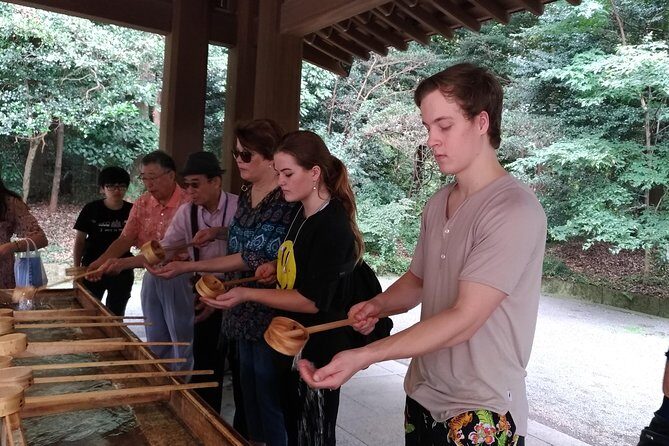
And if you want a nature and legend stop with a slightly different feel, consider Kibune River. Kibune is a forested valley town tied to Kifune Shrine. The story involves a goddess traveling by boat from Osaka up the river, with the shrine tied to where her journey ended. Kifune Shrine’s fortunes (omikuji) can be read by dipping paper slips into water, and Okunomiya is about a kilometer further up the valley with the boat stone rock.
These out-of-main-area choices are best if you want “Kyoto away from the crowds.” They also work well in shoulder seasons when the mountain air can feel like a reset button.
How to choose your 3–4 stops for a no-waste 6 hours
Because the tour is customizable to 3–4 sites, the real skill is picking a route that flows. You don’t want to spend half your time commuting between far corners of Arashiyama and Sagano. Instead, I’d group stops by mood.
Here are a few pairings that make sense based on how these sites relate:
- Classic Kyoto icons: Togetsukyo Bridge + bamboo grove paths + Tenryuji
- Temple serenity circuit: Jojakkoji + Nisonin + Gioji
- Designed garden day: Shugakuin + (maybe) a bamboo stop for contrast
- Architecture-and-timing focus: Katsura Rikyū plus one nearby hillside temple
If you’re chasing autumn leaves or cherry blossoms, choose fewer stops and give yourself breathing room. Crowds get thick fast around the bamboo and bridge areas, and hillside paths can become slow going.
If you want variety, you can also mix “big site” and “small quiet stop.” Tenryuji or Daikaku-ji for scale, plus Gioji or Jojakkoji for that moss-and-maple calm.
One more practical tip: ask your guide about temperature and walking tolerance before you finalize the plan. In the past, Kazuo has adjusted for a slower pace due to injuries. You’ll get a better day if you tell them what your body can handle that day.
Practical tips so the day feels smooth (not frantic)
This is a walking-focused day, so small choices matter.
Bring:
- Shoes with grip for hill paths and wet stone
- Water and a light snack plan since lunch is for yourself
- A small umbrella or rain layer if weather looks doubtful
Also, set expectations for viewing and photography. Katsura Rikyū has designated photo spots. Okochi Sanso (if you choose it) has buildings you can only view from outside, with the garden layout as the main point. Those rules affect how long you should budget at each stop.
Finally, don’t be afraid to lean on your guide’s instincts. The best-guided days in the experience’s stories are the ones where guests trusted the guide to shape timing—like Tomo avoiding crowds, or Ken building in kid-friendly highlights such as access around the Monkey Park area (mentioned in a guide response). If your interests include family-friendly breaks, tell your guide early and they’ll factor it in.
Should you book this private Arashiyama & Sagano tour?
Book it if:
- You want a private, guide-led day that explains temples, gardens, and culture as you walk.
- You want to see both “icon Kyoto” (bamboo, bridge) and “quiet Kyoto” (hillside temples).
- You value pacing control more than packing in 20 stops.
Skip it (or pick fewer sites) if:
- You’re comfortable self-guiding and only want quick photo stops.
- You don’t want to pay separately for entrance fees, or you’re trying to keep the trip strictly budget-only.
- Your day depends on zero walking. The route is on foot, and weather can change footing.
One more deciding factor: the experience notes it requires good weather, and if it’s canceled due to poor weather you’ll be offered a different date or a full refund. That’s a fair trade if you’re flexible.
For most people, I think this is a strong buy when you’re aiming for a meaningful Arashiyama and Sagano day—less wandering, more understanding.
FAQ
How long is the Kyoto Arashiyama & Sagano tour?
It runs about 6 hours.
Is this tour private?
Yes. It’s a private tour, so only your group participates.
What does the price include?
You get a licensed local English-speaking guide and a customizable walking tour where you choose 3–4 sites. Meet-up is in Kyoto, and pickup/drop-off is on foot.
Are entrance fees included?
No. Entrance fees are not included for your visits.
Is lunch included?
No. Lunch is not included, and you’ll handle it on your own.
Is transportation provided by vehicle?
No. Transportation fees are not included, and a private vehicle is not provided.
Can I choose which stops I visit?
Yes. The tour is customizable from the listed sites, and the plan is built around 3–4 stops you select.
What if the weather is bad?
The experience requires good weather. If it’s canceled due to poor weather, you’ll be offered a different date or a full refund.
Are service animals allowed?
Yes, service animals are allowed.
What ticket method is used?
You receive a mobile ticket.