To me, the coolest part of Kyoto is doing something hands-on. This onigawara workshop turns a lump of clay into a guardian-style roof tile, and you learn why these ogre-faced ornaments matter in Japanese architecture. It’s a small setting, and it feels more like working in a craft studio than rushing through a checklist.
I especially like that you leave with a one-of-a-kind souvenir you can’t buy off a shelf. Yuya-san (and the host team at 瓦工房you家) guides you step-by-step, and the results really vary even when you start from the same basic tile. One thing to plan for: your finished tile takes time to dry and is shipped later, and shipping costs aren’t included in the base price.
Key takeaways before you book
- Small-group class (up to 5): easier pacing, more help, and less waiting around.
- Real craft steps: you build a simple oni-face tile, then it’s fired at the kiln afterward.
- Different results on purpose: the same design template still turns into unique shapes and expressions.
- Mess is part of clay: wear clothes you don’t mind getting dirty.
- Shipping later is normal: your tile doesn’t arrive the next day.
In This Review
- Onigawara Roof Tiles in Kyoto: Why This Craft Feels Different
- Where You Start at 瓦工房you家 and What You’ll Do in the Time Window
- Getting Hands-On: The Step-by-Step Oni-Face Process (and Why Your Tile Looks Like Yours)
- Firing, Drying, and Shipping: The Part That’s Not in Your Hands
- Value for $89.17: What You’re Really Paying For
- Group Size, Timing, and English Help: What You Should Expect Day-of
- The Best Parts People Love: What to Watch For During Your Session
- Practical Tips So You Don’t Lose Time (or Your Shirt)
- Who This Kyoto Workshop Is For (and Who Might Want Something Else)
- Should You Book This Onigawara Workshop?
- FAQ
- How long does the onigawara workshop take?
- Where does the workshop start?
- Is the onigawara souvenir made onsite and taken home immediately?
- Are shipping costs included in the price?
- What should I wear?
- Is there a limit on group size?
- Can I get by with limited Japanese?
- Can I cancel and get a full refund?
Onigawara Roof Tiles in Kyoto: Why This Craft Feels Different
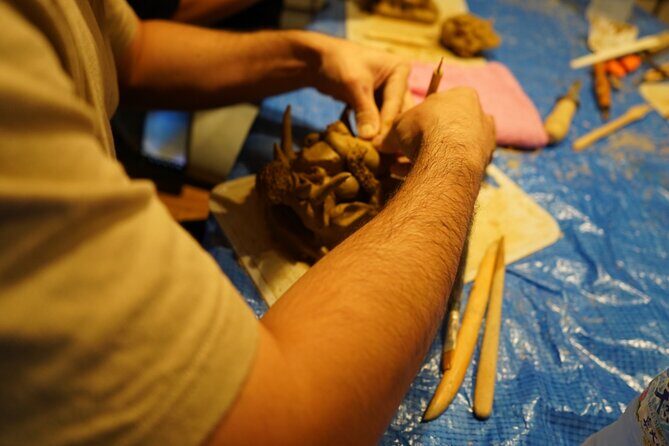
Kyoto has a way of making even simple things feel meaningful. Onigawara are those devil-faced roof ornaments you’ve probably spotted on temple buildings and older homes, usually along the ridge ends. In this workshop, you’re not just copying a cute craft project. You’re making a small version of a traditional protective tile—an object built for a job: warding off evil and handling rainwater through roof design.
What makes this workshop stand out (in the good way) is the pacing. You’re guided through each stage of forming the oni-face tile, so beginners aren’t left staring at clay and hoping for the best. The instructor also sets expectations up front: the original process is tricky, but you’ll use a procedure designed to help you get to a finished tile.
The result is personal in a way that typical postcards and keychains never are. You’ll be able to point to the details you shaped—face proportions, the expression, and the way the tile comes together as a guardian piece.
Where You Start at 瓦工房you家 and What You’ll Do in the Time Window
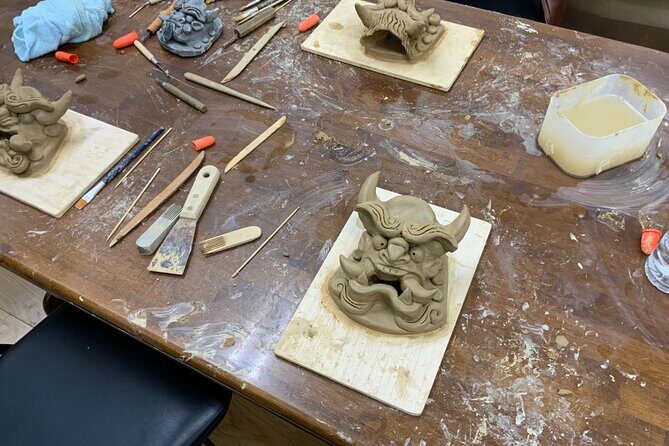
The workshop meets at 瓦工房you家 kawarakoubouyouya, 磨工房you家373-2 Yamazakichō, Higashiyama Ward, Kyoto. It’s a straightforward start and end: you return back to the meeting point when the class is done.
The class is listed at about 2 hours, but build in breathing room. Some groups finish closer to 3 hours when you’re still learning how to handle clay and keep your details crisp. Either way, the goal is that you complete the forming stage during class. The firing and final finishing happen afterward.
During the session, you’ll do the core work:
- learn about kawara (traditional Japanese roof tiles) and the ogre-faced design language
- form a small, simple onigawara demon-face tile from scratch
- follow a step-by-step build so your tile comes together rather than collapsing into a blob
You’ll also get bottled water included, and you’ll have a place to store your luggage mentioned in several experiences. That matters more than it sounds if you’re traveling with shopping bags or a backpack and don’t want to lug it around during a hands-on activity.
If you're still narrowing it down, here are other tours in Kyoto we've reviewed.



Getting Hands-On: The Step-by-Step Oni-Face Process (and Why Your Tile Looks Like Yours)
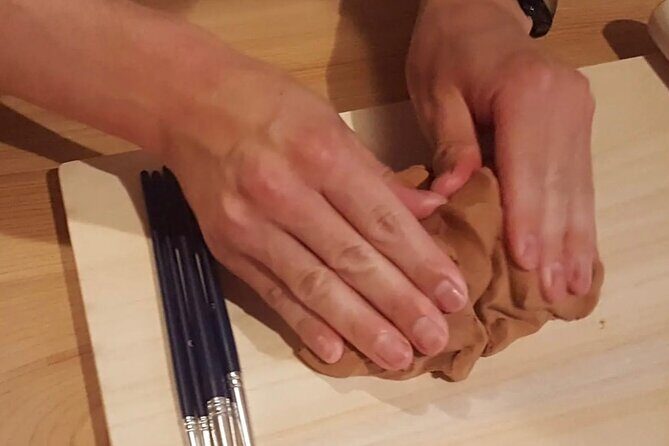
Here’s the promise this workshop is really making: you’ll build an onigawara from the basic lump of clay into something that looks like a demon guardian, even if your hands aren’t naturally artistic.
The instructor’s approach is practical. The build uses a set set of pieces and steps, but the face still has room for your choices. That’s why one tile might end up looking more fierce, another might look cheekier, and another might look oddly adorable (in a not entirely intentional way). You’ll also notice that people can start with the same method and still end up with very different results—sometimes even within the same small group.
If you’re a beginner, you’ll likely appreciate how the class treats errors. Several experiences describe that it can feel like the tile is going wrong mid-way. Then, with guidance, the shape comes together by the end. That’s a normal part of learning clay. The instructor makes sure you’re not left behind at the tricky stages.
One more thing: you’re working with soil/ceramic materials, so dressing matters. Expect the possibility of getting dirty, especially if your sleeves brush the work surface or you’re the type who touches your face while thinking. Bring clothes you can wipe off or that you don’t mind washing later. An apron isn’t included, so you might want to wear something long-sleeved or bring a lightweight layer you can sacrifice.
Firing, Drying, and Shipping: The Part That’s Not in Your Hands
Your onigawara won’t pop out of the kiln and arrive in your lap. After you finish the forming stage, the instructor fires your tile at the factory kiln. Then comes the waiting period—drying and curing time.
Based on the information shared from past sessions, you should plan for:
- drying time that can take around a month
- additional baking/cure steps that take several days
- shipping after the tile is fully ready
When people talk about the wait, they’re not complaining. They’re usually just surprised by how long it takes for clay to truly dry out before it can be safely shipped. This is the real craft side: you’re building something that will survive shipping and time, not something designed only for a photo.
Shipping costs are not included in the experience fee. One important practical note: in at least one case, shipping was paid separately later at the end of class and the cost was given in cash. Because the exact shipping figure isn’t listed in the base details, I recommend you bring cash just in case, and plan for an extra cost beyond the ticket price.
On the good side, multiple experiences report that the tiles arrived undamaged and were delivered without major drama. In one case, a finished piece arrived in the mail within a few weeks. In other cases, people were told to expect delivery after drying and curing.
Value for $89.17: What You’re Really Paying For

At $89.17 per person, this workshop doesn’t feel like a generic souvenir factory. You’re paying for three things you don’t get at a typical craft table:
- Instruction tailored to a challenging technique
Onigawara making is described as difficult in its traditional form, so the value is in the instructor’s procedure and guidance.
- Kiln work you can’t do yourself on-site
The firing happens at the factory kiln after your tile is formed.
- A meaningful, home-delivered keepsake
Even if you love ceramics already, it’s still special to receive a tile made from scratch that connects to Kyoto architecture.
Now the cost reality check: shipping isn’t included. And you’ll need time for the tile to dry and cure. If you’re counting on walking away with a finished object in your hand, this is not that style of class. But if you’re okay with waiting for a thoughtful souvenir, the price feels fair for the quality of the process and the uniqueness of the result.
Also, there’s currently a special opening discount for the class price. If you can swing the timing, that discount can make the overall value even better.
Group Size, Timing, and English Help: What You Should Expect Day-of

This is built as an intimate workshop with a maximum of 5 travelers. That small size isn’t just for comfort—it affects your ability to ask questions and get corrections before your tile gets too far along.
English support is practical rather than casual. Past experiences describe Yuya-san’s English as clear enough for instructions, even if he isn’t always doing small talk. You don’t need fluent Japanese to follow the build steps.
Class structure also matters. Several experiences mention step-by-step guidance and that the instructor adjusts pace so you complete the project in the allotted time. One note from a different set of experiences: a group with more adult participants still took close to the full hours, showing that you should plan around the full session rather than expecting it to feel super fast.
If you’re traveling in a larger group, the organizer notes that groups of 5 or more are accepted (up to 40), and the location can change for group bookings. If you’re in a big party, you’ll want to confirm where the workshop is happening and whether the format stays as similar.






The Best Parts People Love: What to Watch For During Your Session
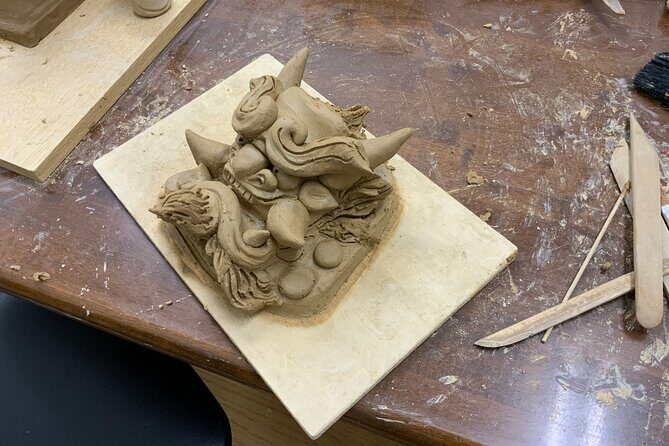
A lot of the praise clusters around the same few themes. Here are the ones that matter for you when you decide if this is your kind of activity.
Patient, clear teaching (Yuya-san)
The instructor is repeatedly described as patient, with clear step-by-step directions that beginners can follow. If you’re worried you’ll ruin the clay, this matters.
Creative freedom inside a guided structure
You follow a process, but your tile still becomes yours. It’s like learning the rules of a language and then writing your own sentence.
A calm break from walking
Even when Kyoto is busy, this workshop gives you a stationary activity. You get to sit, focus, create, and slow your day down.
A finished souvenir with meaning
Since onigawara are tied to roof protection and traditional architecture, your tile isn’t random craft. It’s a cultural object you can keep and explain.
Shipping that actually works
The big fear with home-shipped ceramics is breakage. Multiple experiences say the tile arrived undamaged.
Practical Tips So You Don’t Lose Time (or Your Shirt)
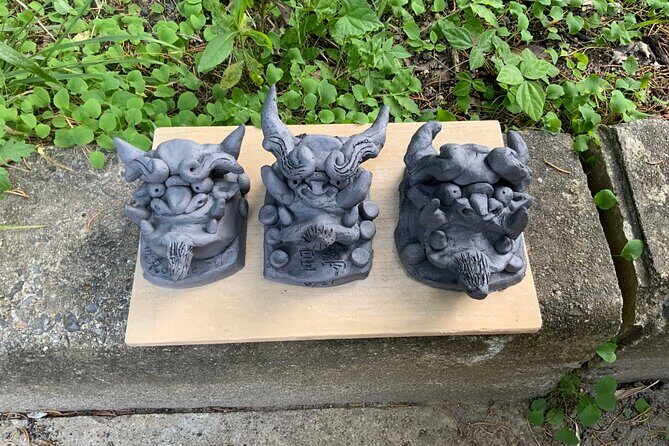
Here’s how to set yourself up for a smooth workshop day:
- Wear clothes you can get dirty. Soil/clay work is part of the experience.
- Skip the fancy outfit. This is a craft, not a gallery.
- Plan for time. Even if it’s listed at 2 hours, treat it as around 2 to 3 hours depending on your pace.
- Bring cash for the likely extra shipping cost. Shipping is not included, and one experience notes payment in cash at the end.
- If you’re traveling with luggage, look for storage at the workshop. Several experiences mention having a place to store bags.
- Don’t stress about imperfect results. Everyone’s onigawara looks different, and that’s part of the point.
If you want a smoother experience for kids or teens, this class can work well because the instructor breaks down complicated steps into manageable parts and helps you finish. Still, remember you’re handling clay and using a structured process—so keep an eye on sleeves and hands.
Who This Kyoto Workshop Is For (and Who Might Want Something Else)
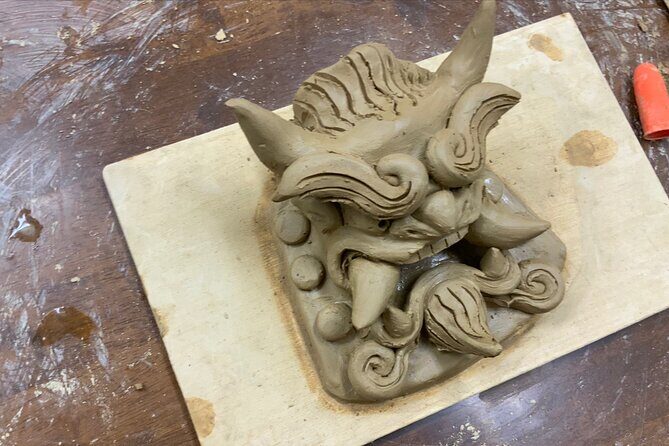
This is a strong fit if you:
- want a cultural craft connected to Japanese architecture, not just a random souvenir
- like hands-on work and don’t mind waiting for delivery
- enjoy learning process and making something with a story
- travel with family or teens who can focus for a few hours
It’s also a good choice if you’re trying to balance Kyoto’s walking-heavy sightseeing with something calmer and more seated.
You might reconsider if:
- you need a finished object to carry home the same day
- you hate the idea of extra shipping costs later
- you’re very sensitive to getting clay on your clothes
Should You Book This Onigawara Workshop?
If you want a Kyoto experience that feels personal and grounded in a real craft tradition, I’d book it. For the money, you get a real process: guided sculpting, kiln firing afterward, and a meaning-rich souvenir that arrives by mail. Just don’t treat it like a quick craft. Plan for the waiting period, and budget for shipping since it’s not included.
If you’re traveling with a group under the class limit, the small-group format can make the difference between a frustrating afternoon and a calm, successful one. And if you’re a beginner, the teaching style described around Yuya-san is exactly what you want: clear steps, patience, and help when the tile feels like it’s going off track.
FAQ
How long does the onigawara workshop take?
The workshop is listed at about 2 hours, though you may want to plan closer to 2–3 hours depending on your pace and how long the class takes to complete the steps.
Where does the workshop start?
It starts at 瓦工房you家 kawarakoubouyouya in Higashiyama Ward, Kyoto, and the activity ends back at the meeting point.
Is the onigawara souvenir made onsite and taken home immediately?
You make the tile during the workshop, and it is fired in a kiln at the factory afterward. Shipping is arranged later, so you should not expect to carry a finished tile home the same day.
Are shipping costs included in the price?
No. Shipping costs are not included in the experience fee.
What should I wear?
Because the workshop uses soil/clay, wear clothes that you don’t mind getting dirty. An apron is not included.
Is there a limit on group size?
Yes. The experience has a maximum of 5 travelers for the workshop setting described. The provider also mentions that larger groups of 5+ can be accepted, up to 40, with the location changing for groups.
Can I get by with limited Japanese?
Most travelers can participate, and the instructor provides clear step-by-step guidance. English instruction is described as clear enough for following the process.
Can I cancel and get a full refund?
Yes. You can cancel up to 24 hours in advance of the experience start time for a full refund. If you cancel less than 24 hours before, the amount paid won’t be refunded.