Kyoto in four hours is a sprint.
This private guided run through the city hits big classics and quieter stops in one smooth loop, starting at Fushimi Inari-taisha and ending in Gion. I like that you get a mix: shrine steps for the iconic torii “forest,” major viewpoints at Kiyomizu-dera, a Zen temple pause at Kennin-ji, then a food-and-stroll finish with Nishiki Market, Pontocho, and Gion.
The best part for most people is the human factor: guides such as Julian, Riccardo, Oscar, Robert, Andrea, Johannes, Diego, and Ken earned praise for clear English, city know-how, and adapting the pace when needed. One drawback to weigh carefully is reliability—there are multiple reports of guides or operators not showing up and poor contact afterward, so I’d treat confirmation and meeting-point timing as serious business.
In This Review
- Quick Hits Before You Go
- A Short Private Route Through Kyoto’s Sacred East
- Pickup, Mobile Tickets, and the Real-Life Time Budget
- Stop 1: Fushimi Inari-taisha and the Fox-Guarded Torii Trail
- Stop 2: Kiyomizu-dera’s Terrace Views and UNESCO-Grade Views
- Stop 3: Kennin-ji Temple and a Breather of Zen Calm
- Stop 4: Yasaka Shrine and the Energy of Kyoto’s Tradition Streets
- Stop 5: Nishiki Market Shopping District for Smart Kyoto Food Stops
- Stop 6: Pontocho District Along the Kamogawa River
- Stop 7: Gion’s Historic Lanes and the Geisha-Era Streets
- Price and Value for 4 Hours of Private Kyoto
- What You Can Expect From the Guides
- Who This Tour Fits Best (and Who Should Rethink)
- Should You Book This Kyoto Private Tour?
- FAQ
- How long is the private guided Kyoto tour?
- Is this tour private or shared?
- Do you offer pickup in Kyoto?
- Are admission tickets included for the stops?
- Is there a mobile ticket?
- Is the tour near public transportation?
- What if the weather is bad?
- What happens if the minimum number of travelers isn’t met?
- Can I cancel and get a full refund?
Quick Hits Before You Go
- Fushimi Inari-taisha first: early start at one of Kyoto’s most recognizable shrine spots, with time set for your entrance and walk.
- Kiyomizu-dera included: you’ll spend enough time to reach the main terrace area at a UNESCO site.
- A real Zen moment at Kennin-ji: a contrast to the crowds elsewhere, with a calmer temple feel.
- Food stop at Nishiki Market: a focused, guided way to taste without turning your day into a snack scavenger hunt.
- Pontocho + Gion finish: river-adjacent evening-style streets and Kyoto’s historic lanes to end on atmosphere.
- Private format: only your group participates, so you can move at a comfortable pace and ask questions nonstop.
A Short Private Route Through Kyoto’s Sacred East
This tour is designed for people who want to understand Kyoto fast, not just check boxes. You’ll cover seven stops in about four hours, with short visits that still give you time to get oriented, take photos, and hear the story behind what you’re seeing.
Because it’s private, you’re not stuck behind a large group shuffling at the pace of the slowest walker. It also helps that pickup is offered, which matters in Kyoto where it can be easy to miss a street turn and lose time.
The route leans toward east Kyoto. That’s a good thing if you want a concentrated sampler: major shrine, a headline temple, a Zen stop, then cultural streets and market energy. If you’re hoping for a deep, hours-long visit at one temple, you may find the timing tight—but that’s also what makes this doable in half a day.
Other guided tours in Kyoto


Pickup, Mobile Tickets, and the Real-Life Time Budget
The tour includes pickup offered and uses a mobile ticket, which can reduce the stress of figuring out paperwork and entry lines. It also lists admission tickets as included at the stops, which is a big value boost—when everything lines up.
Here’s the practical catch: Kyoto is busy, and a four-hour window means small delays add up. Add the fact that some reports describe disorganization around meeting details (like mismatched start times, hard-to-reach contact numbers, or the guide not arriving), and I think it’s smart to be proactive.
My advice: confirm the exact meeting point the day before (and again on the morning of, if possible). Save screenshots of what’s included, including admission ticket coverage, so there’s less room for confusion if a guide’s info isn’t perfectly synced.
Stop 1: Fushimi Inari-taisha and the Fox-Guarded Torii Trail
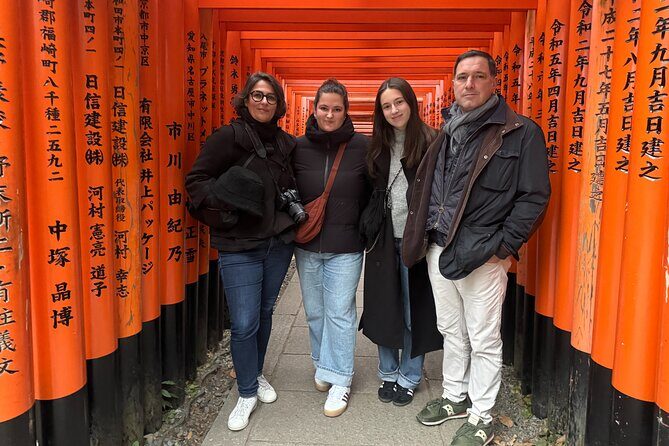
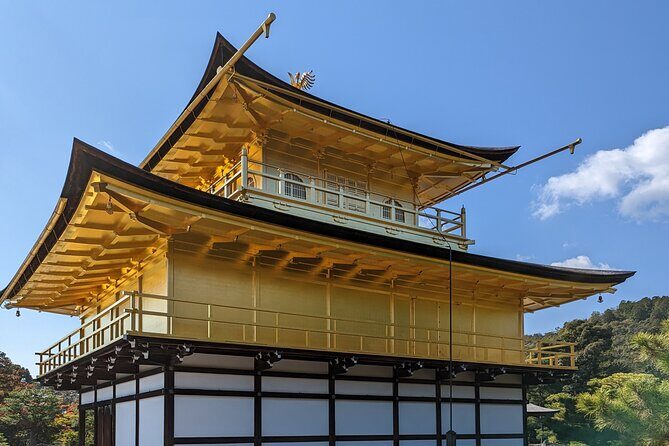
You start at Fushimi Inari-taisha, one of Kyoto’s most photographed places for a reason. The shrine is set at the base of Mount Inari, and the experience most people want is the long walk through the torii gates that create a tunnel of color and repetition.
A guided stop here is useful because it helps you connect what you see with why it exists. You’ll get context on the shrine’s role, how worship is organized, and what you’re supposed to notice as you move along the paths.
The visit time is about 30 minutes. That’s enough to enter, see the major flow of gates, and understand the layout. It’s not enough to do every side path all the way up, so keep your expectations realistic: think of it as the signature “first pass,” not a full hike to the summit.
Stop 2: Kiyomizu-dera’s Terrace Views and UNESCO-Grade Views
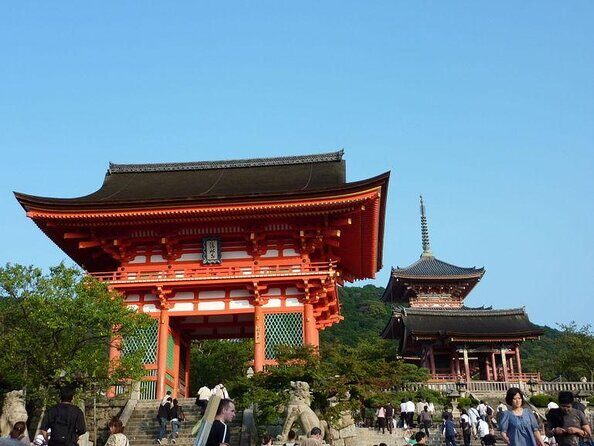
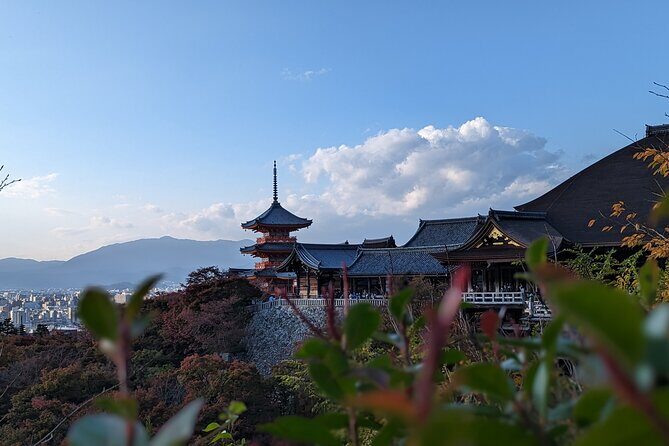
Next comes Kiyomizu-dera, the temple that’s basically Kyoto’s poster child. You’ll have around 30 minutes, which lets you reach the main terrace area where the temple’s layout and construction details become part of the story.
This stop works well with a guide because Kiyomizu-dera is visually striking but easy to misunderstand if you only see it from the viewpoint crowd. You’ll want someone explaining what makes the architecture significant and what the terrace represents in the temple’s role.
A quick note: if you’re visiting in peak season, crowds can slow you down. With only about half an hour here, you’ll want comfortable shoes and a ready-to-go rhythm—no long breaks in the busiest photo spots.
Stop 3: Kennin-ji Temple and a Breather of Zen Calm
Then the tour shifts tone at Kennin-ji, a Zen Buddhist sanctuary in central Kyoto. This is the stop that gives your day contrast. After stepping through shrine energy and headline temple sightlines, Kennin-ji often feels like a pause button.
The value of a guided stop is how they frame Zen spaces. Even if you don’t read Japanese, you can learn how to look: what rituals imply, how buildings and gardens are meant to support reflection, and why this place matters historically.
Time here is also about 30 minutes. You won’t be doing a long meditation session. But you should leave with a better sense of Kyoto’s spiritual atmosphere beyond the most famous gates and platforms.
Other private tours in Kyoto



Stop 4: Yasaka Shrine and the Energy of Kyoto’s Tradition Streets
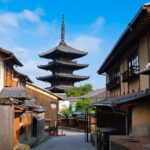
At Yasaka Shrine, you’re back in a more lived-in spiritual center. This isn’t only about scenery—it’s about atmosphere. The shrine is known for its traditions and the way it pulls people into the rhythm of Kyoto life.
A good guide makes this stop more than a photo break by pointing out what’s going on and how it connects to local customs. You’ll walk away with a clearer sense of Shinto practice, plus the feel of the surrounding area.
With a 30-minute visit, you’ll get the key sights without letting it swallow your whole morning or afternoon. Still, if you’re sensitive to crowd flow, pay attention to pacing. Let your guide decide when to slow down and when to move.
Stop 5: Nishiki Market Shopping District for Smart Kyoto Food Stops
Next is Nishiki Market, and this is where your day shifts into appetite mode. The tour gives you about 30 minutes here, which is ideal for sampling without losing track of time—or your budget.
The advantage of having a guide at a market is simple: they can help you pick what’s worth it and what’s more for show. A guide can also steer you toward smaller tastings, so you’re not stuck buying one giant meal before you’re ready.
Important: entry fees are listed as included, but market spending is still on you. Think of Nishiki as guided tasting + shopping support, not an all-inclusive lunch. If you’re traveling with dietary needs, this is one of the best times to ask questions because you’ll be right there in the food environment.
Stop 6: Pontocho District Along the Kamogawa River
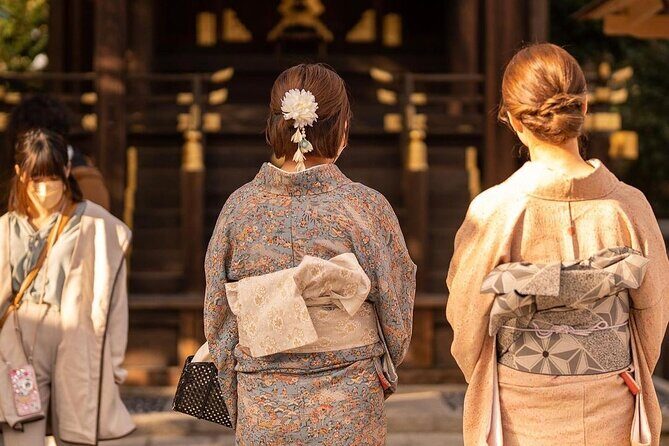
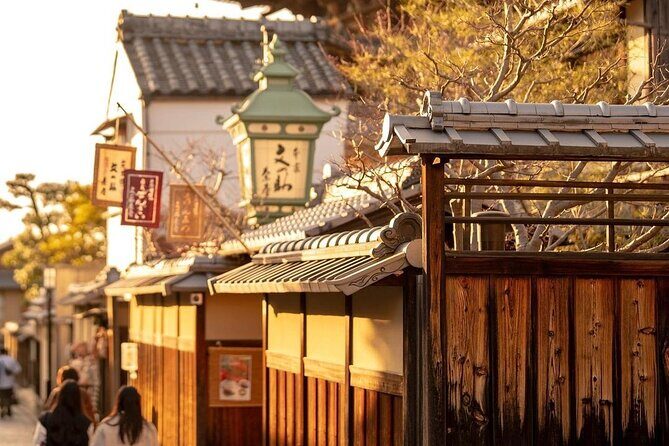
After the market, the tour heads to Pontocho District, alongside the Kamogawa River. This is one of Kyoto’s most atmospheric street settings, especially because the lanes feel traditional and a little theatrical—narrow streets, old structures, and that river-side calm.
The time here is longer—about 1 hour—which gives you a better chance to slow down and actually take in the setting. If you like walking photography or street details, this is a highlight. If you only want monuments, it can feel like a “bonus” zone, but it often becomes the part you remember most.
A guide helps because Pontocho can be easy to pass through without knowing what you’re seeing. You’ll get tips on where to look, what details matter, and how the district fits into Kyoto’s broader cultural layout.
Stop 7: Gion’s Historic Lanes and the Geisha-Era Streets
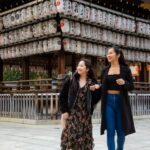
Finally, you reach Gion, Kyoto’s famed historic district associated with geisha culture. You’ll spend about 30 minutes here, which is just enough for the atmosphere and the main lanes without letting your day end too late.
I like that the tour doesn’t promise a guaranteed geisha sighting. Instead, it treats Gion as a place to understand: how historic districts are organized, why the streets feel the way they do, and what the culture around them has meant over time.
This stop is also where timing matters for your photos. If the light or crowd flow isn’t great, a guide can often adjust your route slightly within the time window so you still get good views.
Price and Value for 4 Hours of Private Kyoto
At $85 per person for about 4 hours, this tour sits in the “good value for a time-crunched private plan” category. You’re paying for three things: a local guide, a tight route that covers major east Kyoto highlights, and the convenience of pickup plus mobile tickets.
The value improves if the admission tickets truly are covered smoothly at each stop. A handful of accounts in the past show confusion when entry costs weren’t aligned with the guide’s expectations. That doesn’t mean you should expect problems—but it does mean I’d come prepared with confirmation details and a calm mindset.
Is it the cheapest way to see these places? No. Is it one of the best ways to see a lot with meaning in one half-day? Often yes. For many visitors, the big “return” is not the sights themselves—it’s learning how to connect them into a Kyoto story while you’re moving.
What You Can Expect From the Guides
This is where the experience can swing from excellent to frustrating, because the guide quality and local communication really matter. Multiple guides earned strong praise, including Julian, Riccardo, Oscar, Robert, Andrea, Johannes, Diego, and Ken.
The common positives in those stories were consistent:
- clear explanations of cultural and historical meaning
- strong English
- adapting pace for different group needs, including older visitors
- adding useful restaurant ideas after the tour
So yes, the guide can make this feel like Kyoto comes alive. But I need to balance that with the other side of the record: there are also several reports of no-shows and poor responsiveness by the operator. That’s not a small issue when you’re spending a half-day on a planned route.
If you book, I strongly recommend you do two things: confirm the meeting details early and keep a backup plan for the day if contact becomes difficult.
Who This Tour Fits Best (and Who Should Rethink)
This tour is a great match if:
- you have about half a day and want a strong overview of east Kyoto
- you like walking and prefer understanding the sites over just taking pictures
- you value private time with a guide who can answer your questions
- you want market + temple + historic streets in one route
It might be less ideal if:
- you want long, unhurried temple time (Kiyomizu and Inari deserve more if you’re detail-focused)
- your schedule is razor tight with zero flexibility
- you’re the kind of traveler who panics when plans change at the last minute
Because the itinerary is compact, it rewards people who travel light, wear comfortable shoes, and keep moving. Kyoto is not a place for a “stop every 5 minutes” plan if you only have four hours.
Should You Book This Kyoto Private Tour?
I’d book it if you want a structured half-day that hits the most important Kyoto anchors—Fushimi Inari, Kiyomizu-dera, a Zen temple break, and the street atmosphere of Nishiki, Pontocho, and Gion—with the benefit of a guide.
I’d think twice if you’re worried about last-minute changes or you can’t afford delays, because there have been credible reports of guide/operator no-shows and tough communication. If you do book, be smart: confirm the meeting point details in advance, save your mobile ticket, and have a short backup plan (like knowing which nearby station stop you can pivot to).
If you’re comfortable with a brisk but rewarding city sampler, this tour can be a very efficient way to get your Kyoto bearings fast—and then enjoy the rest of your time exploring on your own.
FAQ
How long is the private guided Kyoto tour?
It’s listed as about 4 hours.
Is this tour private or shared?
It’s a private tour/activity, so only your group participates.
Do you offer pickup in Kyoto?
Pickup is offered.
Are admission tickets included for the stops?
The stops listed show admission tickets included.
Is there a mobile ticket?
Yes, the tour includes a mobile ticket.
Is the tour near public transportation?
Yes, it’s near public transportation.
What if the weather is bad?
The experience requires good weather. If it’s canceled due to poor weather, you’ll be offered a different date or a full refund.
What happens if the minimum number of travelers isn’t met?
If it’s canceled because the minimum isn’t met, you’ll be offered a different date/experience or a full refund.
Can I cancel and get a full refund?
Yes. You can cancel up to 24 hours in advance for a full refund. Confirmation is received at the time of booking.