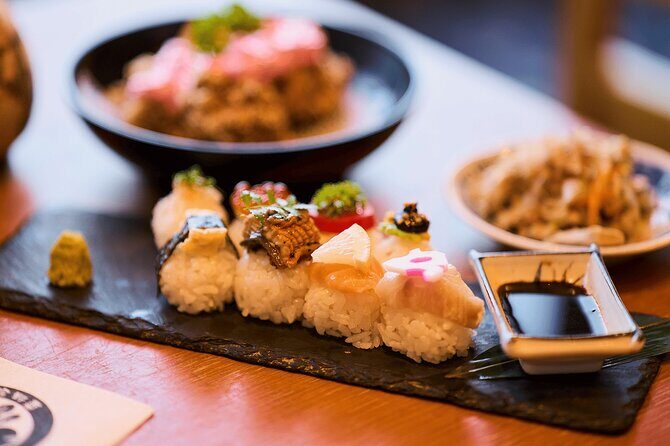
Here’s the thing about taking a sushi-making class in Kyoto: you will not come out the other end as a sushi chef. Real itamae spend ten years learning to form nigiri properly, and even longer on the knifework. What you will get is a good two hours understanding why the rice matters more than the fish, how to hold a kitchen knife without embarrassing yourself, and a pretty strong nine-piece platter you made with your own hands. If you manage your expectations around that, it’s one of the more memorable things you can do in an afternoon in Kyoto.
This guide covers the private and small-group sushi-making classes actually worth booking — the ones run by working chefs rather than tourist operators. Most of the good ones are in and around Downtown or Gion, book up a week or two ahead, and cost between ¥8,000 and ¥18,000 per person.
In This Article
- What Actually Happens in a Kyoto Sushi Class
- The Best Kyoto Sushi Classes — What to Book
- Musubu — Private Sushi Lesson With a Working Chef
- Atelier SUSHI — Gion-Based Atelier Class
- AirKitchen Home-Studio Classes — Small Group in a Local Kitchen
- Kyoto Uzuki — Obanzai-Plus-Sushi Class
- Haru Cooking Class — Family-Friendly Near the River
- How to Choose the Right Class
- Booking and Practicalities
- Where to Fit This Into Your Itinerary
What Actually Happens in a Kyoto Sushi Class
Most sushi classes in Kyoto run to the same broad two-hour format, with the quality varying wildly between operators. The standard sequence is:
- Rice work (15 minutes). Cooked sushi rice is already warm and waiting when you arrive — few classes take you through the actual cooking, since that takes another 40 minutes and would cut into the fun parts. What you do get is the shamoji paddling and the vinegar-fanning — the slow fold-and-cool that turns plain cooked rice into sushi rice. This bit matters. Most home sushi attempts fail here.
- Knife work (20 minutes). The chef demonstrates the single long draw-cut used for fish, usually on a block of tuna or salmon. You practice with a cucumber first, then step up to the real fish. The better classes hand you a proper yanagiba sashimi knife; the cheaper ones use western chef knives, which are fine but lose some of the authenticity.
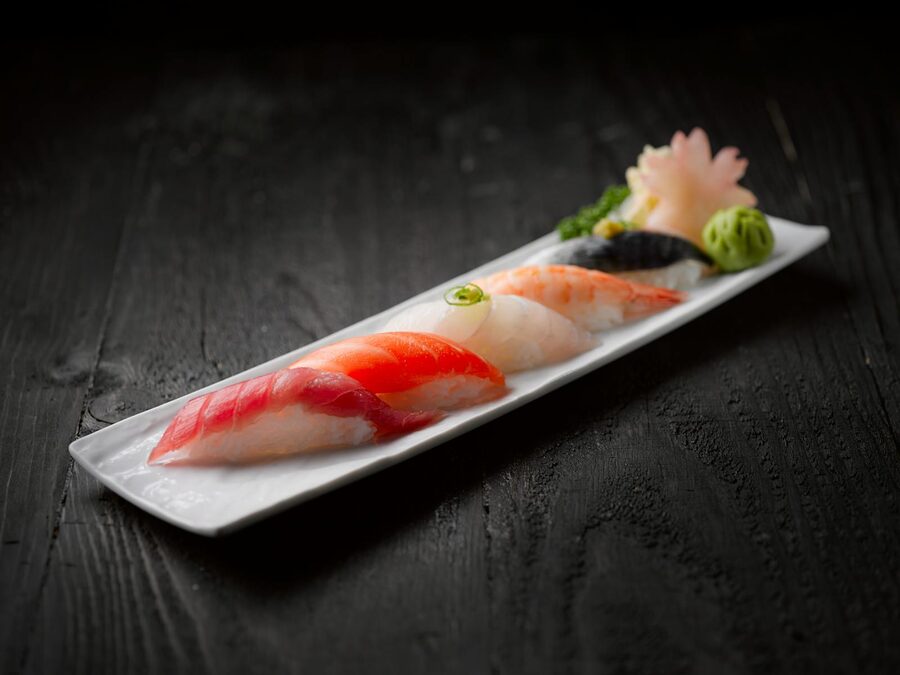
- Nigiri forming (30 minutes). You make about 6 to 9 pieces — standard toppings are maguro (tuna), sake (salmon), ebi (cooked shrimp), and tamago (egg). The egg is usually handed to you pre-cooked; the rest you press with the fish you just cut. Your first three will be embarrassing. Your last three will surprise you.
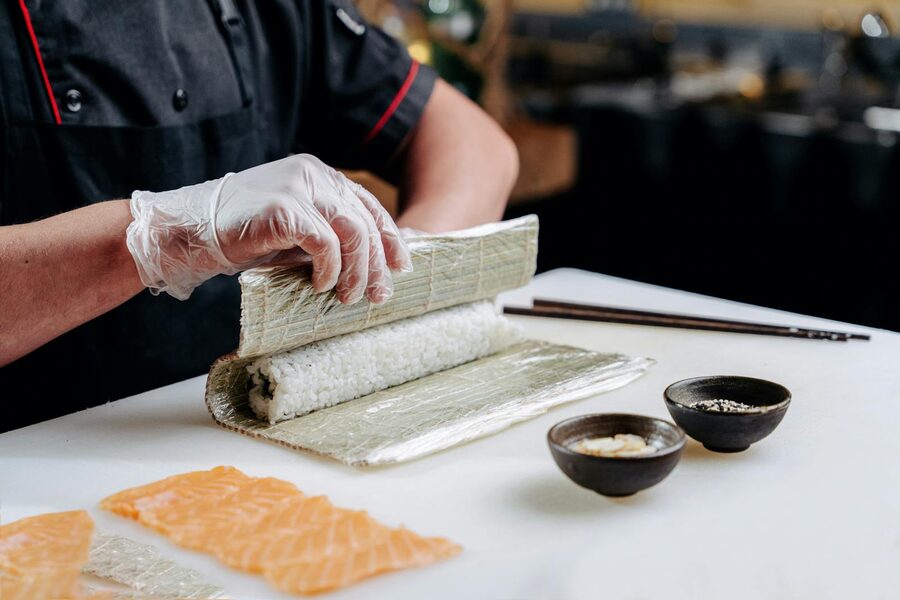
- Maki rolls (20 minutes). One or two thin rolls and a bigger futomaki. You learn how much rice to put on the nori (less than you think) and the bamboo-mat press technique. This is the easy part.
- Eating (20–30 minutes). The best part. You plate and eat what you made, often with a small miso soup and a complimentary sake or matcha.
The two-hour classes cost more because they feel like small dinner parties. The 90-minute ones cost less because the eating portion gets compressed. If you can spare the extra half-hour, pay for the longer one.
The Best Kyoto Sushi Classes — What to Book
Musubu — Private Sushi Lesson With a Working Chef
Location: Shimogyo-ku, near Kyoto Station
Duration: 2 hours
Group size: Up to 6 (private bookings only)
Price: ¥13,000–¥15,000 per person
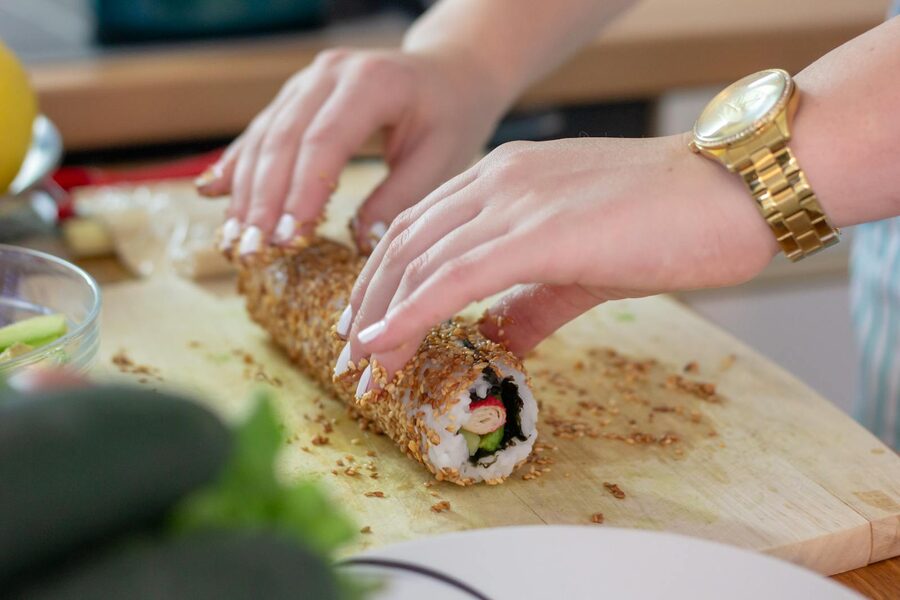
Musubu is the small, expert-run option. The teacher is a working sushi chef who has trained in a Kyoto kaiseki kitchen; classes are held in his professional workspace rather than a tourist studio. You get proper equipment, a longer rice-handling segment than most, and he’ll actually teach you to shape the shari rice rice-ball the way apprentices learn it. No kids’ menus, no group-tour pace. Book on his Tripadvisor listing or via Klook — see the booking note below about affiliate URLs.
Who this is for: adults or older teens who care about the craft. If you’re a serious home cook, this is the one to book. Not ideal for families with small children — the pace is more patient than playful.
Atelier SUSHI — Gion-Based Atelier Class
Location: Gion
Duration: 2 hours
Group size: Up to 10
Price: ¥10,000 per person
Atelier SUSHI runs out of a small kitchen studio in the Gion area. The location is the draw — you do the class and then walk out into Shirakawa canal and Hanamikoji without needing a subway. The class itself is slightly more production-line than Musubu because the studio accommodates bigger groups, but the chef has a good pace and the nigiri portion is well-structured.
Best fit: travellers on a Gion-focused day who want to combine the class with a temple walk and an evening in Higashiyama. The evening 4pm session often gets you finishing right as Gion is moving into its golden-hour window.
AirKitchen Home-Studio Classes — Small Group in a Local Kitchen
Location: Various — typically home studios in Downtown or Central Kyoto
Duration: 2 to 2.5 hours
Group size: 2 to 6
Price: ¥8,000–¥12,000 per person
AirKitchen is an Airbnb-for-cooking-classes platform. Unlike the studio operators, their Kyoto sushi classes are taught by home cooks in their own homes — typically mothers or grandmothers who run three to five sessions a week. The production values are lower, but the experience is more genuinely a meal with a local family. Pick the teacher, not just the class — look for 4.8+ ratings, 100+ reviews, and English marked as “fluent” in the host profile.
Who to book: couples and families wanting a warmer, more informal experience. Skip if you’re looking for technical depth; AirKitchen hosts are enthusiasts, not professional chefs.
Kyoto Uzuki — Obanzai-Plus-Sushi Class
Location: Marutamachi area, near the Imperial Palace
Duration: 3 hours
Group size: Max 4
Price: ¥9,000–¥11,000 per person
Uzuki is interesting because sushi isn’t their main thing — they’re best known for obanzai (Kyoto-style home cooking) but offer a combined session covering both. If you only have time for one cooking class in Japan and want the broadest introduction, this gets you a multi-dish menu (rolled egg, miso soup, one obanzai side, and a basic sushi platter) in three hours. The fish isn’t as good as at a specialised sushi class, but the overall lesson is more useful if you’re taking home a general Japanese cooking technique rather than a sushi-specific one.
Haru Cooking Class — Family-Friendly Near the River
Location: Higashiyama, near the Kamo River
Duration: 2.5 hours
Group size: Up to 8
Price: ¥10,000 per person (kids under 12 at ¥6,000)
Haru is the class I’d send a family to. The host speaks excellent English, the studio has step-stools and kid-sized aprons, and the pace accommodates a mix of adults and children without dragging for either. The sushi content is more basic than at Musubu, but the overall experience is better for a family outing. They finish with everyone eating together at one long table.
How to Choose the Right Class
Four questions to ask before booking:
- Is the teacher a working chef or a hobbyist? Not a value judgement — both can teach a great class, and sometimes a local home cook’s enthusiasm beats a professional’s disinterest. But you should know which you’re getting. Chef-led classes (Musubu, Atelier SUSHI) lean technical; home-cook classes (AirKitchen) lean warm.
- What’s the group size? Anything over 8 and the hands-on time shrinks to the point where you’re watching the instructor work more than working yourself. For a real class, 4–6 is the sweet spot.
- Is the fish sashimi-grade? A good class uses fresh wholesale-market fish. A cheaper one will use frozen portions. The chef should say on the booking page what grade of fish they use and usually where they source it — Kyoto Central Wholesale Market is a strong signal.
- Is the rice pre-cooked? Most classes pre-cook the rice before students arrive — fine, but ask about the vinegaring step. A class that lets you mix the sushi vinegar into the rice yourself is giving you the most important part of sushi-making. One that hands you already-vinegared rice is skipping the lesson.
Booking and Practicalities
Most Kyoto sushi classes take bookings 2–3 weeks ahead in normal season and 4–6 weeks during sakura (late March to early April) and koyo (November). Private classes book up fastest — Musubu often has a 4-week wait for weekend slots. Cancellation policies vary, but most chef-run operators ask for 48 hours notice; tourist-platform listings (Viator, Klook, GetYourGuide) are typically 24 hours.
A few practical notes:
- Dietary requirements — every class I’d recommend can accommodate vegetarian (no fish, just tamago and kappa-maki) or pescetarian. Full vegan is harder; the rice is made with fish-flake vinegar at some operators. Ask.
- Allergies — Kyoto is careful about these, but get the specific Japanese words for your allergen on paper if it’s serious (e.g., 小麦 wheat, 甲殻類 shellfish).
- What to bring — nothing. All classes supply the apron, the knives, the boards, and the takeaway container if you end up full. You will not be full.
- Photos — all operators allow photography. The AirKitchen and Atelier SUSHI teachers will actively take photos of you working and send them afterwards. The chef-led classes won’t pause for photos but are fine if you work them in.
- Dress code — nothing you’d mind getting soy sauce on. Aprons protect but not miracles.
For booking, the operator-direct options almost always give you a better price than the third-party platforms. Musubu and Atelier SUSHI both have direct booking forms on their own sites. If you want the convenience of a single platform that bundles the cancellation policy, Klook and Viator both list the main operators and occasionally run 10% booking discounts.
Where to Fit This Into Your Itinerary
A sushi class sits best as a lunch-slot activity on a day when you don’t have big walking plans afterwards. The 11am or midday session gets you out at 1pm or 2pm and still leaves the whole afternoon open. Don’t try to fit a class around Kiyomizu-dera in the morning and Fushimi Inari in the afternoon — you’ll feel rushed at the class and tired after.
If you’re building a structured multi-day Kyoto trip and want to work the class into something planned, our four-day Kyoto itinerary slots a class into day two (after a morning at Arashiyama and before a leisurely Pontocho dinner). If you’re still deciding on a base, the Kyoto hotel guide covers which area puts you within a short taxi of each of the major cooking studios. And if you’re on a longer trip and wanting a countryside break from the city, the Miyama day trip is a good palate-cleanser for the day after.
Post-class, the obvious pairing is a proper sushi dinner somewhere in town — you’ll notice every technical choice the chef makes after two hours in a kitchen. Standing-room counters around Pontocho are the best use of that new pattern-recognition; just the act of watching someone form a perfect piece of nigiri in three seconds when yours took ninety becomes its own form of education.