Sword practice in Kyoto, minus the stress.
This hands-on class at Kembu Kyoto Dojo focuses on the foundations of samurai movement: bowing, drawing and returning a sword to its scabbard, and training in kenbu (samurai performing arts). You’ll also get a short 3-minute film to set the style and context before your class time kicks in. The big idea is simple: you learn a few things you can feel in your body, not just read about.
I love that you get direct, English-speaking instruction while working the sword basics (including bowing and the tricky draw-and-sheath action). I also love the costume photo session that turns the lesson into a real memory you can take home, along with a completion certificate and a tenugui towel.
One consideration: the overall experience includes a performance component, and it can run long enough that you should plan your day with extra slack, especially if you are tight on time.
In This Review
- Key points to know before you go
- Finding the Kembu Kyoto Dojo at GOZAN (and what to do first)
- The 3-minute film and the class vibe: bowing sets the tone
- Getting suited up: what the uniform includes and why your clothing matters
- Drawing and sheathing: the katana skill that feels most real
- Kenbu training: what you’re really practicing beyond the sword
- Samurai photo session, certificate, and the tenugui towel
- Standard session vs. longer upgrade: what changes in the second half
- The performance piece: plan for timing so you do not feel rushed
- Group size and attention: why max 10 matters for learning sword skills
- Price and value: does $66.32 make sense?
- Who this Samurai School fits best (and who might want to skip)
- Should you book Samurai School in Kyoto (Samurai for a Day)?
- FAQ
- How long is Samurai for a Day?
- Where does the class start in Kyoto?
- Is the tour in English?
- What do I learn in the basic lesson?
- What’s included in the photo and souvenir items?
- What does the optional longer practice add?
- What should I wear?
- What’s the group size?
- What is the cancellation policy?
Key points to know before you go
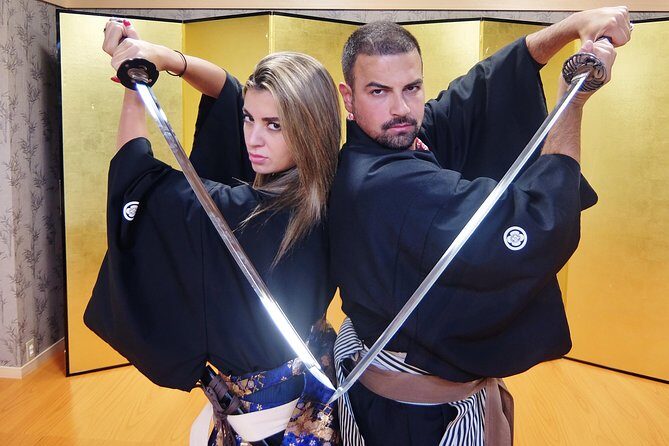
- Katana fundamentals in a safe, structured lesson: bowing, drawing, sheathing, and basic striking practice
- Costume + photo time is part of the experience, not an afterthought
- Kenbu training can include walk work and folding fan (if you choose the longer option)
- You’ll see a performance component as part of the overall format, so schedule buffer helps
- Small group size (max 10) keeps things from feeling rushed
Finding the Kembu Kyoto Dojo at GOZAN (and what to do first)
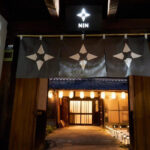
The experience starts in Kyoto Higashiyama Ward, at a meeting point in the GOZAN building area. When you arrive, go to the first basement floor, using the stairs on the right side. It’s clearly marked in your confirmation, and the location is described as near public transportation, which matters in Kyoto when routes and sidewalks can eat your time.
Plan to arrive 10 minutes to 3 minutes early. That isn’t just “be polite.” It gives you time to settle in, put on your exercise-friendly clothes, and be ready for costume changes without feeling rushed. The whole session depends on moving through steps in sequence, from filming and fitting to sword basics and photos.
You’ll also receive a mobile ticket, so have it ready on your phone. This is a good sign for a smooth start: no complicated paperwork hunt in the hallway.
A few more Kyoto tours and experiences worth a look

The 3-minute film and the class vibe: bowing sets the tone
Before you pick up anything sharp or dramatic, you watch a short 3-minute film about the basic practices of the samurai. It’s not meant to replace real instruction. It’s meant to give you a common starting point so you’re not guessing what your instructor expects from your posture, timing, and respect for the movements.
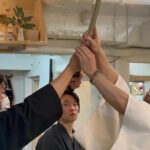
Then you meet the instructor and the class begins with the respectful structure that’s central to sword arts: bowing. You learn the proper way to bow before you handle the training sword sequence. It sounds ceremonial, but it’s practical too. Bowing helps establish your stance, balance, and control, which matters because the next step is the draw-and-sheath technique.
This is one place where the small-group setup helps. You can usually tell when an activity is going to be chaotic. This doesn’t feel that way, because the class is built around clear steps.
Getting suited up: what the uniform includes and why your clothing matters
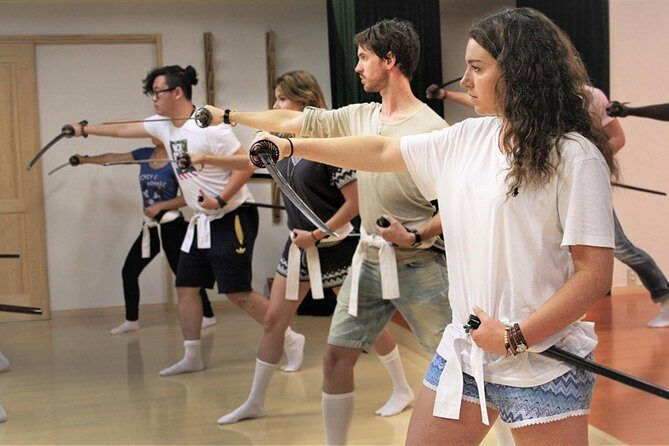
After the initial film and instructor intro, you suit up in a traditional-style outfit for training. Included in the experience are the samurai uniform elements you’ll wear during the workshop: a white belt and Japanese-style socks, plus the sword you train with during the class.
Here’s the part that can trip people up: clothes that don’t work for changing. You’re told to wear clothes suited for exercise and moving around, and that wearing something like a single hoodie or tights is not suitable for costume changes. That’s a very Kyoto-specific warning, because many casual travel outfits don’t translate well once you need to get into a uniform quickly and comfortably.
So, treat this like a workshop where you’ll be moving, not like a quick photo stop. Pick something you can move in and that won’t make costume transitions awkward.
Drawing and sheathing: the katana skill that feels most real
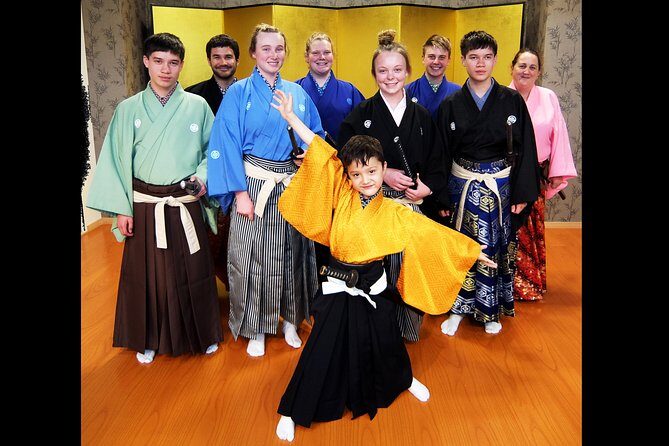
This is the core of the experience. You start your sword training with two foundational skills:
1) drawing the sword, and
2) replacing it in its protective scabbard.
The draw-and-sheath sequence is tricky, and you’re guided through it rather than thrown into it. The instructor helps you with the mechanics of the motion and the timing of when to move your body and when to keep control. That control is the difference between performance and practice.
As you work those basics, you also test methods of striking the sword and practice controlled movements. You’re not just pretending to be a samurai. You’re learning a repeatable motion pattern, which is exactly what you want from a one-and-a-half-hour class.
Safety matters here. The experience notes that for safety reasons, you should follow the instructor’s instructions on the day. That’s not generic boilerplate. It’s the entire reason the class can offer sword training at all.
Kenbu training: what you’re really practicing beyond the sword
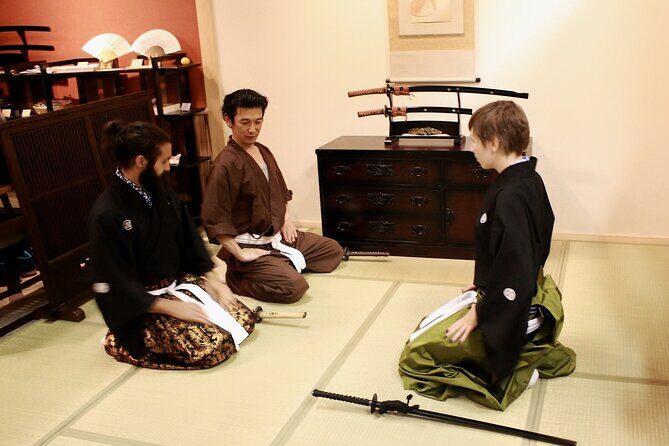
The class centers on kenbu, described as a samurai performing art. “Performing art” can sound like pure choreography, but in this format it’s paired with technique and discipline.
What makes it more than a gimmick is that you’re practicing stylized movements that connect to real martial concepts: posture, controlled action, and the idea of movement against a potential opponent. You’ll learn how to wield the sword against a possible opponent, which means you practice direction, control, and timing, not just wrist motions.
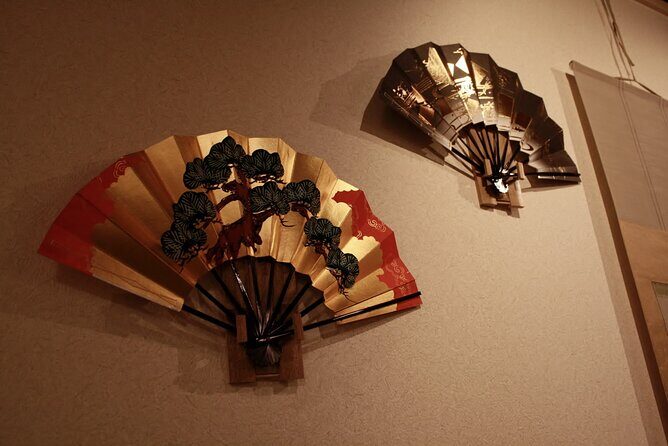
If you choose the longer option, you’ll also continue with more stylized movement work, including how to walk and how to use the folding fan. You then finish with more challenging kenbu choreography that you perform on stage, accompanied by a poem and music.
That longer option is great if you want your “samurai for a day” feeling to become “I actually learned a sequence.” If you’re short on time, the standard session still gives you the essentials: bowing, draw and sheath basics, and core striking practice.




Samurai photo session, certificate, and the tenugui towel
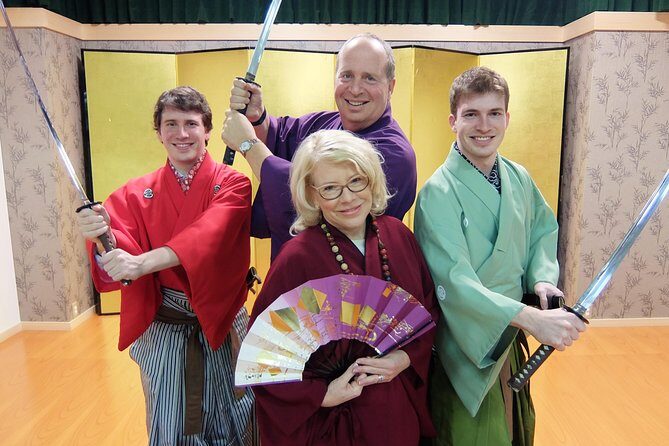
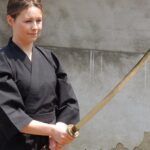
After sword practice begins, there’s a photo moment where you dress in a traditional samurai costume for a short photo session. This is one of the most universally loved pieces of the workshop. It turns the lesson into something tangible, especially because you’re photographed in a full look: uniform/costume plus the sword setup your training is built around.
You also receive:
- a lesson completion certificate
- a tenugui towel (a Japanese traditional towel)
This is good value because it gives you a memento that isn’t just a random postcard. And it supports the learning experience. You’re not only practicing movements; you’re marking completion in a way that matches the theme of discipline and respect.
One practical heads-up: photos can be a mixed experience depending on timing. The format includes a photo shoot, but if you’re hoping for very posed, slow, studio-style portraits, you may be better off planning to use your own camera sparingly or expecting the session to be efficient.
Standard session vs. longer upgrade: what changes in the second half
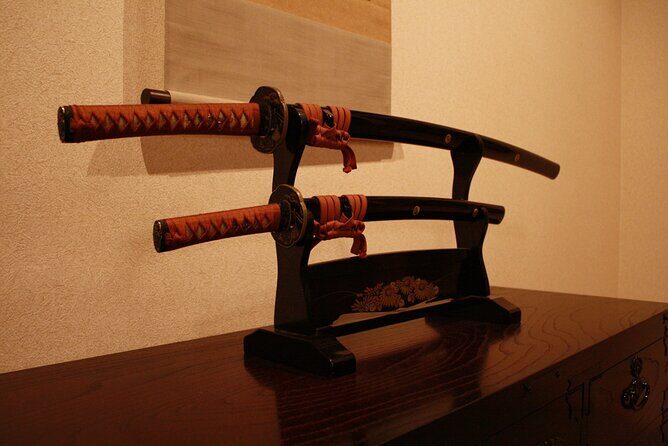
Your experience length depends on the option you choose. The baseline duration is about 1 hour 30 minutes. After your training, there’s a respectful bow to your instructor, and then the shorter session ends. You grab your photos and certificate and head back to the meeting point area.
If you upgrade to the longer lesson, you keep going after the initial fundamentals. The longer practice adds:
- stylized movements like walking
- folding fan techniques
- more challenging kenbu choreography
- a stage performance component with poem and music
Think of it like this: the shorter session teaches you the “start here” skills. The longer session gives you enough structure to feel like you completed a full mini-arc of learning and performing.
The performance piece: plan for timing so you do not feel rushed
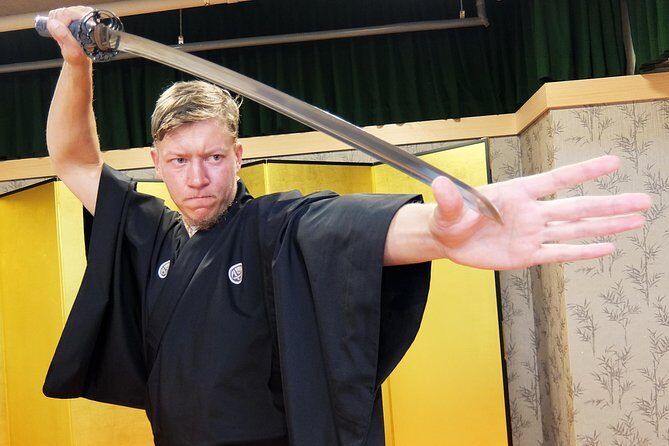
The experience includes a performance component, and it can affect how your day feels. Some people found the performance segment long enough that they wished they had planned more buffer time. Others felt it paired well with the lesson because it helped them appreciate what the instructor and performers do.
So my practical advice is simple: don’t book another tight commitment right after. Leave room for the show piece and the flow of the class.
Also remember: class start times and the exact sequence can vary a bit based on your selected option. The workshop format is structured, but the “when do I see what” can shift within the overall plan.
Group size and attention: why max 10 matters for learning sword skills
The tour/activity has a maximum of 10 travelers. That number is important here because the workshop involves body movement, timing, and instructor feedback. Sword arts don’t work well when groups are huge. You need space and you need corrections when your posture or draw motion isn’t clean.
A smaller group also tends to mean a calmer pace. And calm pace is how people actually absorb new technique in a short session.
If you’re traveling with a friend or family group, you’ll likely find it easier to coordinate expectations. The workshop is designed for manageable participation rather than a large crowd spectacle.
Price and value: does $66.32 make sense?
At $66.32 per person, this is not a budget activity. But it can be strong value depending on what you want from Kyoto.
Here’s what you’re paying for, practically:
- hands-on sword training basics (not just watching)
- an English-speaking instructor to guide technique
- the costume photo session
- a completion certificate
- a tenugui towel
- and (if you upgrade) additional fan work and stage kenbu choreography with poem and music
If your ideal Kyoto day is learning by doing—especially if you’re interested in martial arts or Japanese history presented through movement—then this price can feel fair. You’re buying instruction time plus a themed “be part of it” memory.
If you mainly want a quick cultural look with lots of free time afterward, you might feel you are spending on a guided experience rather than self-exploration. In that case, you may want to compare it to other Kyoto activities that leave more unscheduled time.
Who this Samurai School fits best (and who might want to skip)
This works especially well for:
- people who like hands-on training instead of museum-style listening
- anyone with martial arts interest or curiosity about how movement traditions are structured
- families with older kids who can handle a strict learning environment and costume changes
- adults who want a short activity that still feels like you learned something concrete
It’s also noted that participants should have moderate physical fitness level and follow safety instructions. You don’t need to be an athlete, but you should be comfortable moving and doing controlled practice.
There’s one more key note: if participants are between ages 5 and 11, it’s preferable that they attend some kind of class or martial arts school. That suggests younger kids can do it, but the experience is more like training than casual play.
Should you book Samurai School in Kyoto (Samurai for a Day)?
Book it if you want a short, structured, hands-on samurai experience that teaches real basics: bowing, drawing and sheathing, and controlled sword striking. Add the longer upgrade if you want more than fundamentals and you’re excited by the idea of folding fan work and kenbu choreography on stage with poem and music.
Skip or reconsider if you are very tight on time. The activity includes a film and a performance component, and the overall pacing can run longer than you expect. Also think twice if you dislike costume changes or you don’t want to follow a clear safety-and-instruction format.
If you’re aiming for an activity that feels authentic, active, and easy to understand in English, this is the kind of Kyoto experience that gives you a memorable story without requiring weeks of training.
FAQ
How long is Samurai for a Day?
The duration is approximately 1 hour 30 minutes, and your class time can vary depending on the length and option you select.
Where does the class start in Kyoto?
The meeting point is in Kyoto, Higashiyama Ward, at Sanchōme 35, and on the day you go to the first basement floor from the stairs on the right side of the GOZAN building.
Is the tour in English?
Yes. The experience includes an English-speaking local guide/instructor.
What do I learn in the basic lesson?
You learn how to bow and how to draw a samurai sword and replace it in its protective scabbard, plus methods of striking the sword and basic choreography movements.
What’s included in the photo and souvenir items?
You get a photo shoot, a lesson completion certificate, and a tenugui towel (Japanese traditional towel). You also dress up in a samurai costume for the photos.
What does the optional longer practice add?
The longer lesson adds more stylized movements, including how to walk and use the folding fan, and it ends with challenging kenbu choreography performed with your sword on stage with a poem and music.
What should I wear?
Wear clothes suited for exercise and moving around. A hoodie or tights in a single layer are not suitable for costume changes.
What’s the group size?
The experience has a maximum of 10 travelers.
What is the cancellation policy?
Free cancellation is available up to 24 hours in advance for a full refund. If you cancel less than 24 hours before the start time, the amount paid is not refunded.