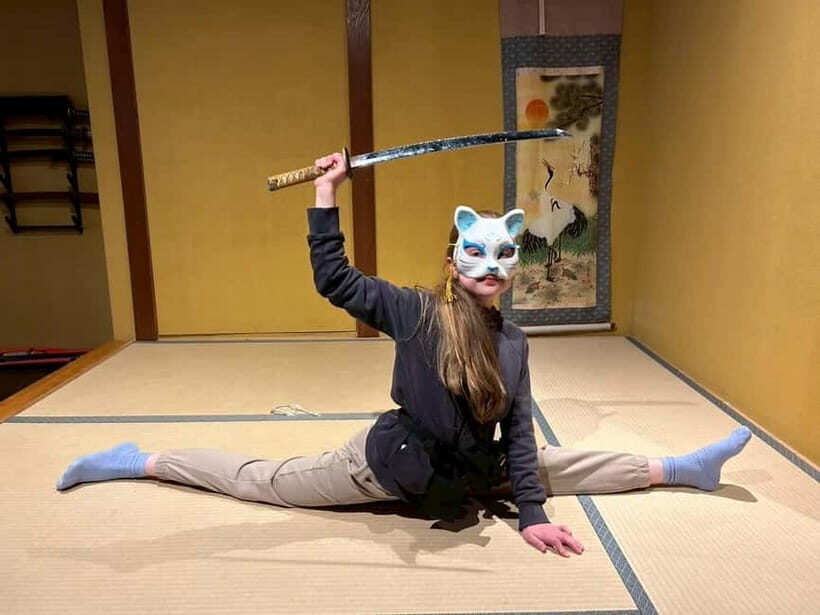
Samurai training in Kyoto can feel like a show. This one is built like hands-on dojo practice, led by Sensei Yushin and his team, with real etiquette, real forms, and a proper atmosphere. I also like that you learn practical sword skills step by step, not just poses for photos.
Two things I really like: first, you get fitted into traditional training clothing like a dōgi, obi, and hakama, which makes the whole session feel authentic from minute one. Second, the class includes a formal kata lesson and then a two-katana performance that many Kyoto experiences don’t offer. One possible drawback: mat cutting with a real katana is not currently offered, so if that’s your main goal, check what’s included on the day.
In This Review
- Quick Hits Before You Go
- What This Kyoto Samurai Session Really Gives You
- Meeting Point and Getting There Without Stress
- Step-by-Step: What Happens During the Class
- 1) Dressing in Samurai Training Gear
- 2) Samurai Culture + Swordsmanship Basics
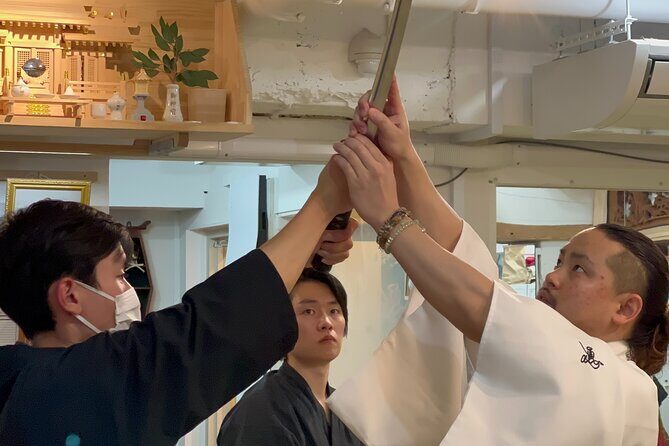
- 3) Draw, Sheath, and Wield Practice
- 4) Learn an Actual Katana Kata (Form)
- 5) Watch the Master’s Katana Performances
- Real Sword Training: Iaito, Safety, and What Is Not Offered
- The Dojo Atmosphere: Why This Feels Different in Kyoto
- Group Size, Pacing, and Who Will Enjoy It Most
- Price and Value: Is $132.65 Worth It?
- Practical Tips So You Get the Best Session
- Should You Book This Samurai Training With Modern-day Musashi?
- FAQ
- How long is Samurai Training with Modern-day Musashi in Kyoto?
- Where do we meet for the experience?
- What should I expect to wear during the training?
- Do I get hands-on practice with the katana?
- Is real katana mat cutting included?
- How big are the groups?
- Is there an age requirement?
- Do I need to be very athletic?
- Is the class available in English?
- Can I cancel for a refund?
Quick Hits Before You Go
- Small group training in a real dojo setting, with a cap of 9 travelers (often closer to 6).
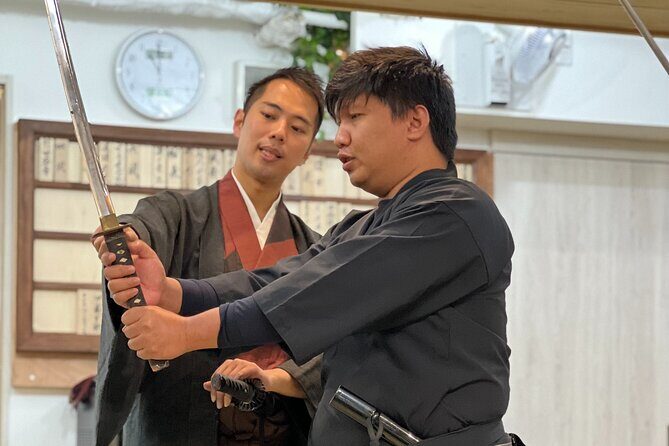
- Dress the part in dōgi, obi, and hakama, then learn sword basics with guidance.
- Katana kata instruction: draw, sheath, wield, then practice an actual form.
- Sensei-led demonstrations, including the master’s two-katana performance.
- Iaido-focused safety: training emphasizes correct handling and control, not risky tricks.
What This Kyoto Samurai Session Really Gives You
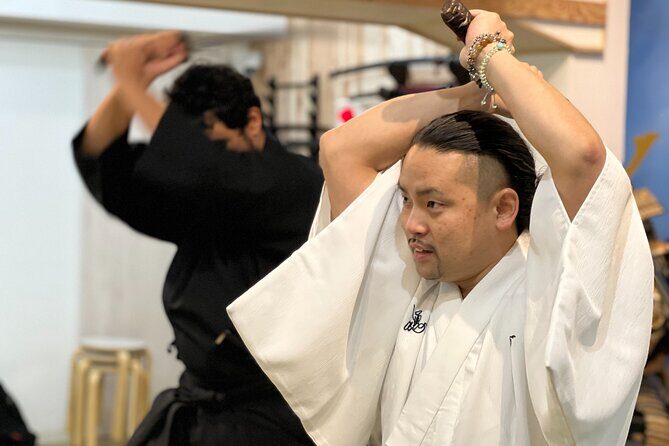
This experience is in Kyoto, and it’s designed around the rhythm of iaido training: stand, move, draw, control, and finish with precision. You’re not just watching martial arts. You’re learning the structure behind it, which is why this feels more “dojō life” than “tour stop.”
The setting matters here. You train in an actual dojo run by a master (listed as Modern-day Musashi) with over 20 years of experience. That’s not just marketing fluff. In real training spaces, instructors correct your form, keep everyone moving safely, and treat etiquette like part of the curriculum.
What you’ll do over about 1.5 to 2 hours:
- Get dressed in traditional gear
- Learn sword basics: draw, sheath, and wield
- Practice a kata form designed for real training
- Watch the master’s performances with two katanas
So you leave with more than a story. You get a mental map of the art: how it starts, how it flows, and how it ends with discipline.
A few more Kyoto tours and experiences worth a look
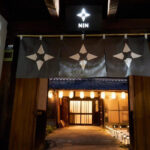

Meeting Point and Getting There Without Stress
The meeting point is at 452-4 Matsugaechō, Nakagyo Ward, Kyoto, 604-8034, Japan. The good news: it’s near public transportation, so you don’t need to plan around taxis or long walks.
Here’s how to think about timing. Kyoto can be confusing if you’re switching lines and streets all day. I’d treat this as a “be early” kind of class. Since the session runs about 1 hour 45 minutes (approximately) and ends back at the meeting point, arriving with cushion time helps you avoid feeling rushed during dressing and setup.
Also, you’ll have a mobile ticket. If your phone is your navigation tool, keep it charged. No drama, just good travel hygiene.
Step-by-Step: What Happens During the Class
The class has a clear sequence. That’s important, because sword training works best when you learn the steps in order and get correction early.
1) Dressing in Samurai Training Gear
You start by getting dressed in traditional training clothing: dōgi, obi, and hakama. It’s not just costume. Wearing the gear affects how you sit, stand, and move your body, and it helps instructors teach posture and control.
If you’ve never worn hakama before, don’t worry. You’re guided through it, and the experience is built to handle mixed experience levels.
2) Samurai Culture + Swordsmanship Basics
Next comes lessons about samurai culture and swordsmanship. In a dojo setting, culture isn’t “extra.” It’s how the training is framed—why discipline matters, how etiquette works, and what the sword meant historically.
You’ll also get practical instruction from instructors who speak English and Japanese. In the reviews, you’ll see names like Jordan and John alongside Sensei Yushin, and that mix of language support is a big reason this class works for international visitors.




3) Draw, Sheath, and Wield Practice
Then it gets physical in a controlled way. You learn how to:
- draw the sword
- sheath it correctly
- wield it with safe, clean movement
This is where you’ll feel the difference between a tourist demo and real training. Real instruction means you’re not guessing. You’re following cues, then getting corrected when something is off.
A key point: this is listed for people with moderate physical fitness. You don’t need to be an athlete, but you should be comfortable standing, moving through kata practice, and paying attention to body mechanics.
4) Learn an Actual Katana Kata (Form)
After the foundations, you learn an actual katana kata form. “Kata” matters because it’s not random movement. It’s a structured way of training technique, timing, and posture.
You’ll likely practice enough to understand the sequence and feel the discipline behind it—rather than simply copying an instructor for one minute.
5) Watch the Master’s Katana Performances
At the end, you watch the pros. This includes a two-katana performance by the master, Modern-day Musashi. The overview specifically calls this out as something you won’t see in every Kyoto dojo experience.
Reviews also mention demonstrations showing different cuts, and showing the sword itself and parts of the blade. Even if those details vary by session, the core experience is consistent: you learn, then you see technique at expert level.
Real Sword Training: Iaito, Safety, and What Is Not Offered
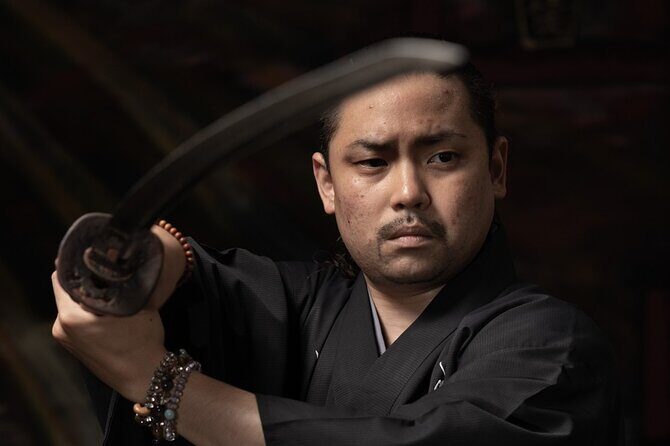
This is where you should calibrate expectations before you book.
The experience description clearly says: mat cutting with a real katana is not currently offered. That’s a big deal for some people, because lots of samurai-themed activities sell the fantasy of cutting targets.
So what do you get instead?
- controlled practice of draw and sheathing
- kata instruction and form work
- demonstrations by the master
Reviews also mention safe training using iaito (a training sword that supports safe practice). That lines up with the idea that the class prioritizes correct handling over risky cutting.
There’s another angle too. Some reviews reference Japanese law affecting cutting demonstrations, and in one case mention frustration that real katana cutting couldn’t be used at the time. Combined with the current note about no real-katana mat cutting, the pattern is clear: this is a training-forward experience, not a target-cutting show.
If your goal is technique, safety, and kata form, this should match your expectations well. If your goal is specifically to cut mats with a live blade, you may be disappointed unless the offering changes later.
The Dojo Atmosphere: Why This Feels Different in Kyoto
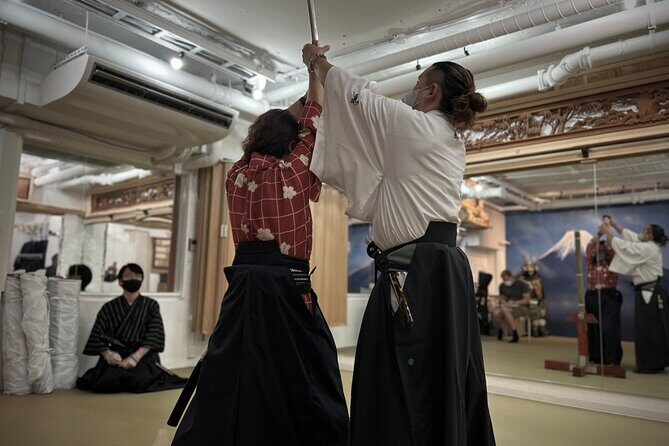
Kyoto has its share of samurai-themed tourist entertainment. What makes this experience stick is the dojo culture.
From the reviews, you can see details like:
- the class takes place in a real dojo space
- instructors correct form and emphasize safety
- the energy feels welcoming but serious about practice
One review even mentions a Shinto shrine inside the dojo complex, and that students’ names appear on wooden plaques on the back wall. Those are the kinds of cues that tell you this is a working practice space, not a staged set.
And you’ll feel it in how the instructors teach. People consistently mention warmth, attention to detail, and interactive instruction. That matters because when you’re learning something unfamiliar—sword handling plus traditional movement—clarity is your safety net.
Group Size, Pacing, and Who Will Enjoy It Most
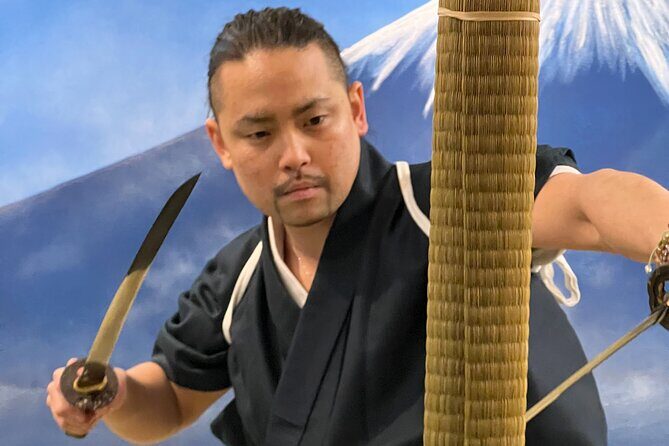
This experience caps at maximum of 9 travelers, and the overview says only 6 participants per class for a more personal experience (with a disclaimer that it may be more if there are only a small number of parties). In practice, that small-group format is one of the main reasons you can learn something real in 1.5 to 2 hours.
Smaller groups mean:
- more chances for correction
- less waiting
- better instructor feedback while you practice draw and form
In terms of fit, this is listed for travelers 12 years or older and with moderate physical fitness. That makes it a good option for:
- families with older kids (teens especially)
- couples wanting a shared activity
- travelers who like culture-with-a-hands-on edge
- anyone who’s curious about iaido but doesn’t know where to start
Some reviews also highlight that it works across ages, with kids and teens enjoying dressing up and learning basics, while adults enjoy the deeper instruction and history context.
Price and Value: Is $132.65 Worth It?
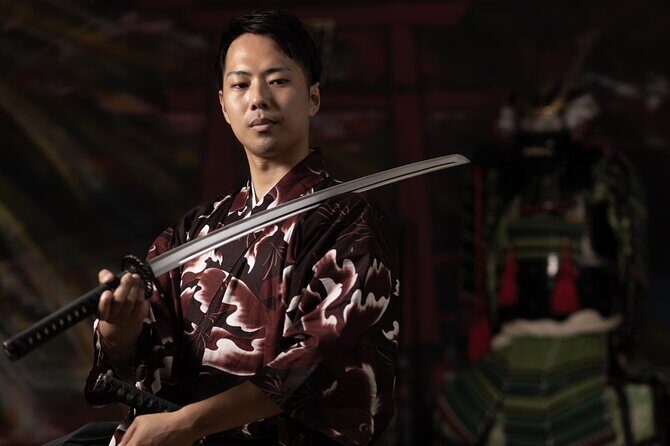
At $132.65 per person, it’s not the cheapest activity in Kyoto. But here’s why I think the value can still be strong.
You’re paying for:
- a real dojo setting (not a rented stage)
- instructor time from a master with 20+ years of experience
- traditional gear fitting (dōgi, obi, hakama)
- hands-on sword instruction plus a kata lesson
- a master’s performance with a two-katana element
If you compare this to typical short demonstrations, you’re buying time with instructors plus actual structured practice. The small group size also matters. You’re not one face in a crowd.
The big value test is your personal interest. If you want:
- safe, formal technique
- dressing up and learning etiquette
- a guided introduction to iaido structure
then it can feel worth the price.
If you mainly want action like mat cutting with a real blade, the current policy (no real-katana mat cutting) could make it feel expensive for what you receive.
Practical Tips So You Get the Best Session
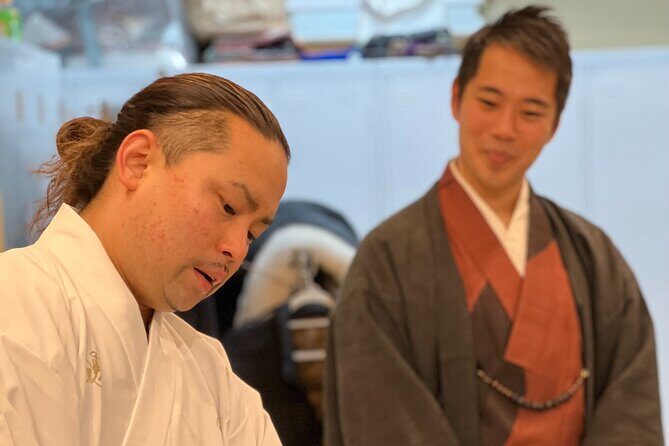
You can make this smoother with a few common-sense moves:
- Wear comfortable clothes you can change from easily. You’ll be dressed in gear, so think clothing that won’t be a wrestling match.
- Arrive a bit early. Dressing and setup take time, and you’ll want calm focus before sword practice.
- Bring your phone and be ready for photos/video if allowed on the day. Reviews mention you can video and take photos during the kata practice and demonstrations.
- If you’re nervous about safety, lean into the safety briefing. The class emphasizes learning safe handling and correct form, and that’s part of why many people rate it 5 stars.
Also: if you have shoulder, knee, or balance limitations, consider your own comfort with moderate physical fitness. You’re not doing extreme athletics, but you are moving through kata practice.
Should You Book This Samurai Training With Modern-day Musashi?
Book it if you want an authentic dojo-style experience where you learn technique, dress in traditional training gear, and finish with a master performance featuring two katanas. It’s especially worth it if you care about structure: draw, sheath, wield, kata, then demonstration.
Skip or reconsider if your top priority is real-katana mat cutting. The current information says that’s not offered, even though some past sessions and reviews mention cutting when conditions allowed.
My bottom line: this is a strong choice for travelers who like hands-on culture and want more than a quick show. If you’re curious about iaido and samurai discipline, you’ll probably leave with a lot to think about—and a better sense of how the movements are supposed to work.
FAQ
How long is Samurai Training with Modern-day Musashi in Kyoto?
The session is about 1 hour 45 minutes, and it may run 1.5 to 2 hours depending on the number of participants.
Where do we meet for the experience?
The meeting point is 452-4 Matsugaechō, Nakagyo Ward, Kyoto, 604-8034, Japan. The activity ends back at the meeting point.
What should I expect to wear during the training?
You’ll be dressed in samurai training gear, including a dōgi, obi, and hakama.
Do I get hands-on practice with the katana?
Yes. You’ll learn how to draw, sheath, and wield a katana, and you’ll practice an actual katana kata (form).
Is real katana mat cutting included?
No. The experience notes that mat cutting with a real katana is not currently offered.
How big are the groups?
There is a maximum of 9 travelers. The experience says classes are designed for up to 6 participants, with a note that it may be more if there are only a small number of parties.
Is there an age requirement?
Yes. You must be 12 years or older to participate.
Do I need to be very athletic?
The experience says travelers should have a moderate physical fitness level.
Is the class available in English?
Reviews mention that instructors speak English and Japanese, and that instruction is interactive.
Can I cancel for a refund?
Yes. There is free cancellation. You can cancel up to 24 hours in advance for a full refund. If you cancel less than 24 hours before the start time, the amount paid is not refunded.