A calm tea room beats most Kyoto speed runs. At SHIUN AN, you get a small-group matcha lesson near Daitoku-ji, with a tea master guiding the ritual step by step in a way that actually sticks. I like the hands-on part where you mix and learn, not just watch. And I like how the room details matter, from the scrolls and flower arrangement to how everything is set out.
The big consideration is logistics. This is in a quiet residential area, and the site involves stairs that can be a hassle if you have limited mobility or trouble getting down to the tatami-level. If that’s you, it’s still often manageable, but it’s smart to plan ahead.
In This Review
- Key points before you go
- Why this Kyoto tea ceremony feels closer to Zen than tourism
- The 45-minute flow: what happens from welcome to your own bowl
- Entering the tea room: scrolls, flowers, and room layout that teach you how to look
- Utensils, socks, and the little items that make the lesson click
- Matcha and sweets: what you’ll taste and how it’s taught
- Making matcha yourself: the hands-on moment that turns facts into skill
- Location math: how to pair Daitoku-ji and Kinkaku-ji with your tea time
- Price and value: why about $33 makes sense here
- Who should book (and who should think twice)
- Practical tips to make your matcha session smoother
- Should you book SHIUN AN tea ceremony?
- FAQ
- How long is the tea ceremony?
- How big is the group?
- Where does the tea ceremony take place?
- What’s included in the price?
- Do I need pickup or drop-off?
- Is there a mobile ticket?
- Can I bring a service animal?
- What if I have a food allergy?
- How does the ceremony end?
- What’s the cancellation rule?
Key points before you go
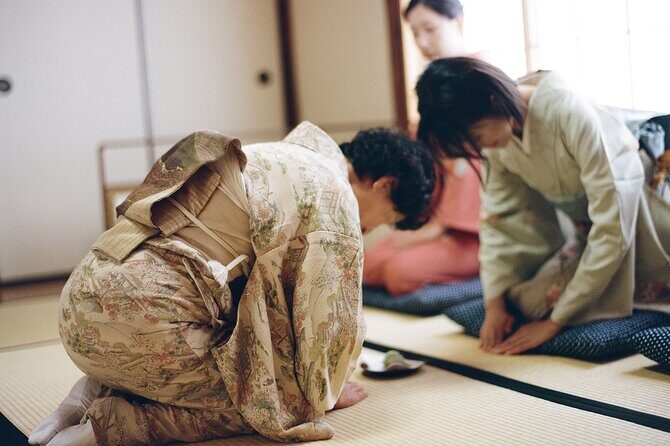
- Tea master-led, small-group format: max 6 per session, sometimes up to 8 in peak season
- 45 minutes, focused and paced: you’ll watch the process, taste, then make matcha yourself
- Taste two rounds of matcha plus two kinds of sweets: paired with the lesson so it’s not just one big sip
- You’re taught the whole setup: utensils, room decoration, and the meaning behind the steps
- Included extras that make it feel real: white socks and a fold fan, plus the tools you use
Why this Kyoto tea ceremony feels closer to Zen than tourism
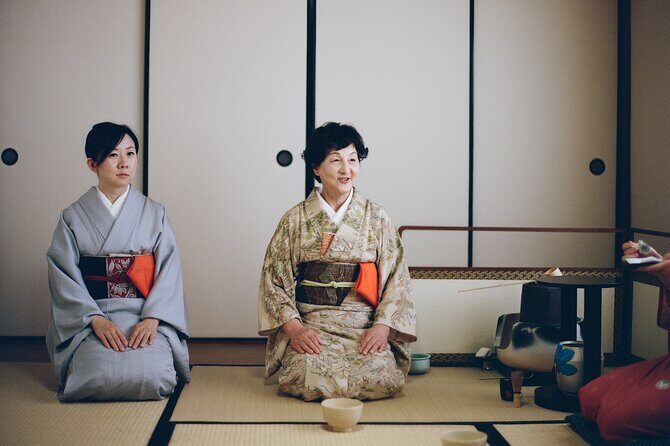
Kyoto can be loud. Even when you’re doing the classic stuff, you sometimes feel like a stop on a conveyor belt. This ceremony at SHIUN AN is different because it runs like a ritual, not a show. The setting is near Daitoku-ji Temple, a Zen hub that historically shaped tea culture in Japan. That matters. Tea in Japan isn’t only a flavor. It’s manners, attention, and a kind of quiet mental workout.
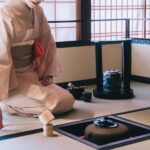
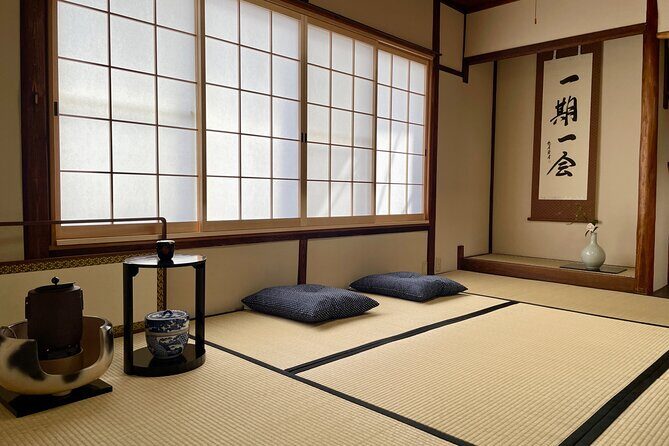
You’ll start by stepping into the tea room itself, before any matcha hits your lips. The host brings you up close to the hanging scrolls and flower arrangement, then explains what you’re seeing and why it’s part of the ceremony. That gives the whole experience context, so when the utensils come out, nothing feels random.
Also, the format keeps it personal. The session is limited to 6 people, and in peak seasons it can go to 8. Either way, you’re not shouting over a crowd.
A few more Kyoto tours and experiences worth a look


The 45-minute flow: what happens from welcome to your own bowl
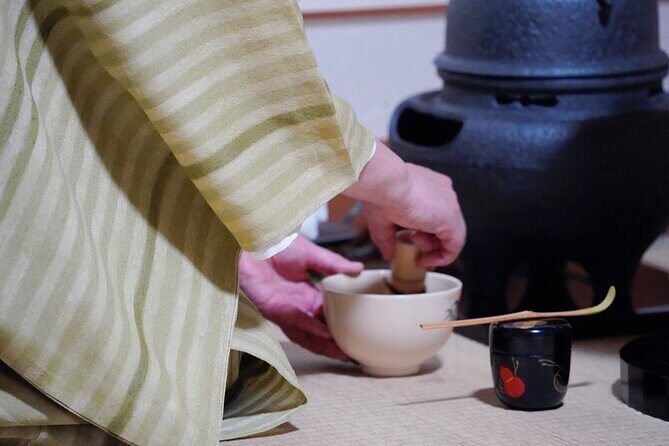
The ceremony is short on paper (about 45 minutes), but it’s built in the right order so you can follow it without feeling rushed.
First, the host leads you into the tea room and points out the decor. You’ll learn what the hanging scroll and seasonal flower arrangement are doing in the space. You also get a clear explanation of the steps ahead of time, plus the utensils used and how the layout of the room matters.
Next comes the tasting portion. You’ll enjoy a seasonal sweet with matcha while watching how the tea is served. Then you’ll get to enjoy two bowls of matcha during the ceremony, spaced along the demonstration so you can notice differences in how it feels and tastes.
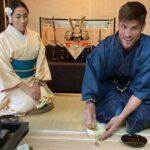
Finally, you move from observer to participant. The experience ends with each person making their own bowl of matcha, learning the basics of tea preparation firsthand. This is a big deal. Many Kyoto tea experiences stop at polite watching. Here, you get the muscle memory of whisking and the practical steps that turn matcha from a drink into a craft.
Entering the tea room: scrolls, flowers, and room layout that teach you how to look
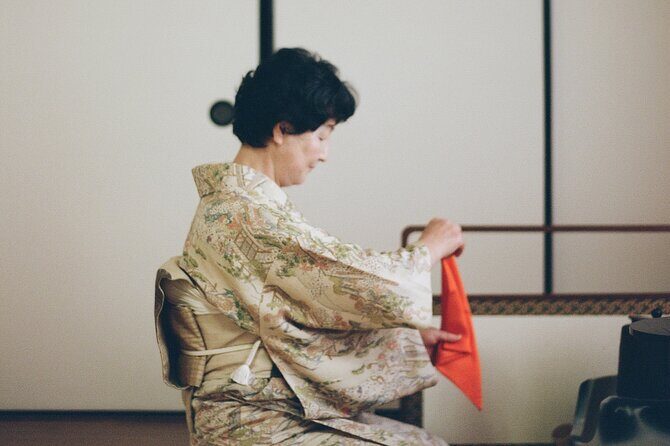
This is where I think SHIUN AN earns its strong rating. The ceremony starts with perception, not performance.
The host takes you into the tea room to admire what’s already there—hanging scrolls and flower arrangements—before the whisking begins. Even if you don’t know the meaning of every symbol, you learn the idea: seasonal beauty and thoughtful placement aren’t decoration. They set the mindset. You’re practicing noticing.
You’ll also hear why the room layout is important. In tea culture, positioning is etiquette. It guides how you move, where you place your hands, and how you receive the bowl. That’s one reason the experience feels calm and structured: everyone knows what they’re supposed to do next.
Utensils, socks, and the little items that make the lesson click
Part of the value here is that you’re not handed a script. You’re given the real tools.
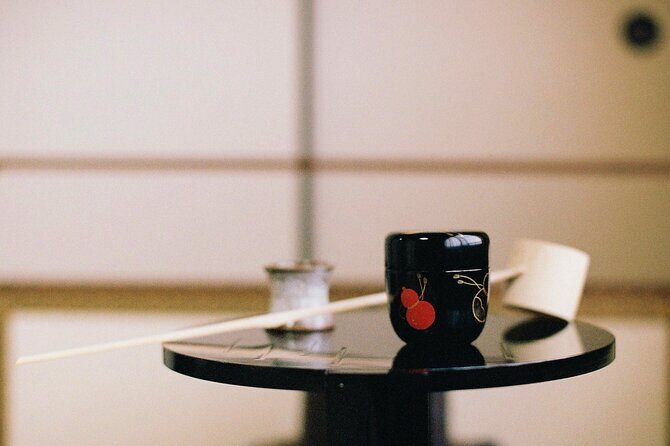
You’ll be provided with the tea container, tea bowl, tea scoops, and tea whisks. The host explains how each utensil is used, so when you later make matcha, it’s not guessing. Your hands learn the sequence.
Two included extras help you feel like you’re actually inside the culture:
- White socks for the tatami-floor setting
- A fold fan as part of the ceremonial feel
If you’ve been to a lot of Kyoto activities, you’ll notice that some are more about photos than process. This one pays attention to practical details. The utensils and floor etiquette don’t just add charm; they help you understand that this is a disciplined practice.
Matcha and sweets: what you’ll taste and how it’s taught
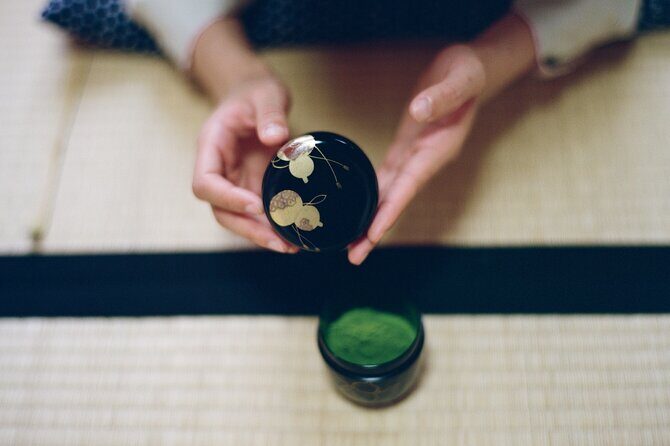
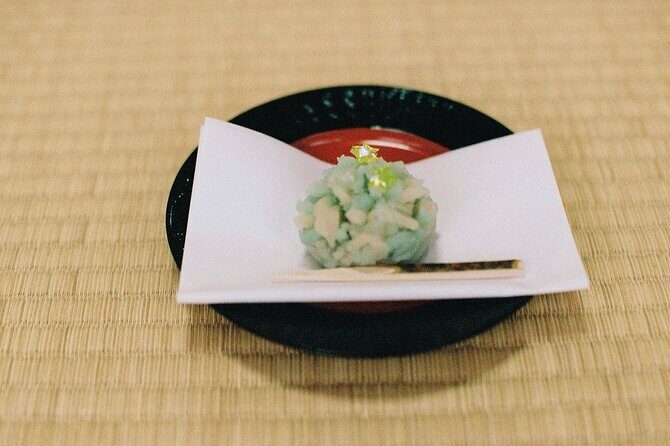
You’ll get Japanese sweets alongside your matcha, including seasonal sweets during the serving portion, and two kinds of sweets overall. The goal isn’t only sweetness. It’s contrast and pacing—something to help you appreciate matcha’s bitterness and texture.
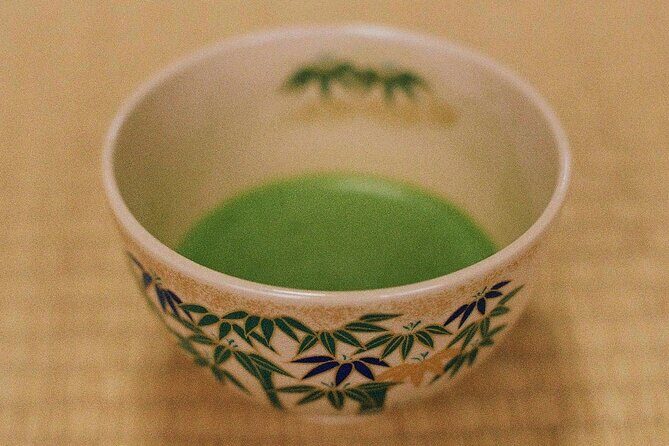
Then comes the matcha itself. You’ll enjoy two bowls of matcha during the ceremony. That repetition is useful. First taste teaches you the baseline. Second taste lets you focus on how the whisking, serving style, and your attention affect the experience.
Also, the host frames matcha in a way that connects to the broader tea-culture tradition near Daitoku-ji. If you’re a matcha fan, this is the moment where your interest becomes understanding. You start noticing why matcha preparation is so exact, and why precision is part of respect.





Making matcha yourself: the hands-on moment that turns facts into skill
This is the part I think most people remember after they leave Kyoto streets behind.
At the end, each participant has the chance to make their own bowl of matcha. The host guides you through the basics so you’re not just copying motions. You learn the steps, what you’re aiming for, and how the whisking should feel.
One practical tip: matcha preparation rewards calm focus. The session is designed so you can slow down, listen, and try without feeling like you’re being graded. If you do your whisking gently and follow the instructions, you’ll get a bowl that feels correct, not chaotic.
And yes, there’s a reason everyone keeps saying it’s relaxing. When you’re doing something physical and precise with your hands, your brain stops sprinting through your to-do list.
Location math: how to pair Daitoku-ji and Kinkaku-ji with your tea time
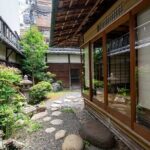
The ceremony takes place near Daitoku-ji Temple (a Zen monastery complex). That puts you in the quieter north-Kyoto vibe, not the main crush area. It also means you can build a meaningful morning or afternoon around the theme.
You’re also not far from Kinkaku-ji, the Golden Pavilion Temple—about four bus stops away. That’s a great pairing: tea first, then a visual landmark after, or flip it if you prefer the crowd first and the calm second.
The main caveat is getting there. The meeting point is listed at 955-1 Idachō, Kamigyo Ward, Kyoto. The area is residential, and some people find it a bit tricky to locate quickly. Give yourself extra time, and use your maps app rather than guessing.
Price and value: why about $33 makes sense here
At $33.03 per person, this is not the cheapest Kyoto activity. But it’s also not priced like a mass-market show.
You’re paying for:
- A small group limit (6, sometimes 8)
- Tea master-led instruction with a formal teaching qualification (the host has a tea name, described as full professor qualification)
- Real equipment and tools provided for you to use
- Two bowls of matcha plus two kinds of Japanese sweets
- Included comfort items: white socks and a fold fan
When you compare that to typical entry-fee-only cultural experiences, the value is solid because you actively do something with guidance, not just watch a demonstration. And because the duration is about 45 minutes, you’re not losing a full chunk of a sightseeing day to logistics.
Who should book (and who should think twice)
This experience is ideal if you want a Kyoto activity that feels grounded and quiet. You’ll likely enjoy it most if:
- You like learning a craft step-by-step
- You care about cultural meaning, not only taking pictures
- You want a break from crowded neighborhoods
It may be less ideal if:
- You need very easy access, because the venue involves stairs and tatami-level seating
- You hate finding places that are not in the main tourist grid, since it’s in a residential neighborhood
On the bright side, the format is small and the host/translator support people well. One of the strengths you’ll notice in the experience style is that the ceremony can be adjusted in practice if someone has seating limitations—ask questions ahead if you’re unsure about your comfort level.
Practical tips to make your matcha session smoother
- Arrive early. Even if you use public transport, allow time to locate the meeting spot without stress.
- Wear clothing that lets you sit comfortably on tatami floors.
- If you have food allergies, tell the team ahead of time so they can guide you.
- Service animals are allowed, which is good to know if you travel with an animal.
The ceremony also runs with a translator support element, so you’re not stuck piecing together meaning. You’ll get explanations of utensils, steps, and room decor, which helps you understand what you’re doing while you do it.
Should you book SHIUN AN tea ceremony?
Yes—if you want an authentic, teacher-led Kyoto experience that’s built around meaning and hands-on practice. The combination of a small group, real utensils, two matcha rounds, and a guided chance to make your own bowl is a strong mix for the time and price.
I’d only hesitate if stairs and floor seating would be a real problem for you, or if you want a location in the most central tourist area. If that’s not you, book it and treat it like a calm reset between bigger Kyoto sights.
FAQ
How long is the tea ceremony?
The experience lasts about 45 minutes.
How big is the group?
It’s a small-group experience with a maximum of 6 people per session. During peak seasons, it can increase to a maximum of 8.
Where does the tea ceremony take place?
The meeting point is at 955-1 Idachō, Kamigyo Ward, Kyoto, 602-8302, Japan, and the activity ends back at the meeting point.
What’s included in the price?
You get tea bowls, a tea container, tea scoops, and tea whisks, plus white socks and a fold fan. You’ll also have matcha tea and Japanese sweets.
Do I need pickup or drop-off?
No. Pickups and drop-offs are not included.
Is there a mobile ticket?
Yes. The experience uses a mobile ticket.
Can I bring a service animal?
Yes, service animals are allowed.
What if I have a food allergy?
Let the operator know about any food allergies. The team asks you to share that information ahead of time.
How does the ceremony end?
The experience ends with each participant having the opportunity to make their own bowl of matcha.
What’s the cancellation rule?
Free cancellation is available up to 24 hours before the start time for a full refund. If canceled less than 24 hours before, the amount paid is not refunded.