Kyoto slows down for an hour. This traditional washi papermaking class turns raw materials into a paper souvenir, with seasonal botanicals and hands-on guidance in a small Kyoto studio-house. Instructors like Hiro and Junko keep things clear in Japanese and English.
I love that you are not just watching. You’re making the paper and then designing what you take home, from postcards to practical items like a table mat. I also love the calm pace: there’s a short info video during downtime so you understand what you’re doing, not just the steps.
One thing to consider: you’ll need to handle your own transport to the address, and you may feel tempted by the optional add-on hour of unlimited paper making, which is at your expense.
In This Review
- Key Takeaways Before You Go
- A Kyoto Morning In A Traditional House Workshop
- Finding PaperTO和 Near Shijo and Karasuma Oike
- The Hands-On Core: Making Washi From Raw Materials
- Decorating With Cherry Blossoms, Maple Leaves, and Cut-Outs
- Your 1-Hour Craft Block (Plus The Optional Unlimited Add-On)
- What You’ll Take Home, and Why It Feels Special
- Is It Good Value at $33.03 Per Person?
- Who This Washi Workshop Fits Best
- Should You Book This Kyoto Washi Papermaking Class?
- FAQ
- How long is the washi papermaking class?
- What’s included in the price?
- Do I need to bring anything?
- Is the instruction available in English?
- What can I make during the class?
- Is this workshop suitable for children?
- How many people are in a group?
- Where is the meeting point?
- Can I cancel for a full refund?
Key Takeaways Before You Go
- Small group max 4 means more attention while you work.
- Bilingual instruction (Japanese and English) from the team, including Hiro and Junko.
- Pressed cherry blossoms, maple leaves, and paper cut-outs for seasonal designs.
- You choose your take-home item like postcards, a table mat, or a wraparound lampshade (some options may cost extra).
- A relaxing break from Kyoto crowds, with a short educational video during drying time.
A Kyoto Morning In A Traditional House Workshop
This is one of those Kyoto experiences that feels like a secret door. You trade temple lines for a quiet room where the focus is your hands, your choices, and the slow craft of paper. The class runs about an hour, and by the end you should walk out with a finished handmade souvenir you designed.
The setting matters. You meet at 345 Sanjōchō, Nakagyo Ward, in a traditional Japanese-style house. That kind of space does something to your brain: it lowers the volume, even if Kyoto outside is doing its usual rush.
And the teaching style helps too. The instructors speak both Japanese and English, and the whole experience is built around clear step-by-step support, not just a quick demo you have to keep up with.
A few more Kyoto tours and experiences worth a look


Finding PaperTO和 Near Shijo and Karasuma Oike
You can get here without stress if you like public transit. The workshop is near two convenient stations:
- About a 9-minute walk from Shijo Station (#24 exit) on the Kyoto Metro Karasuma Line
- About a 6-minute walk from Karasuma Oike Station (#6 exit) on the Kyoto Metro Karasuma Line
It’s also near Karasuma Station on the Hankyu Line.
My practical advice: plan your route, then give yourself 5 extra minutes. Kyoto streets can be straightforward, but the walk is short enough that you don’t want to rush, especially when you’re about to start a craft.
If you’re pairing this with morning sightseeing, aim to arrive a little early. Being calm helps you enjoy the process instead of thinking about your next train.
The Hands-On Core: Making Washi From Raw Materials
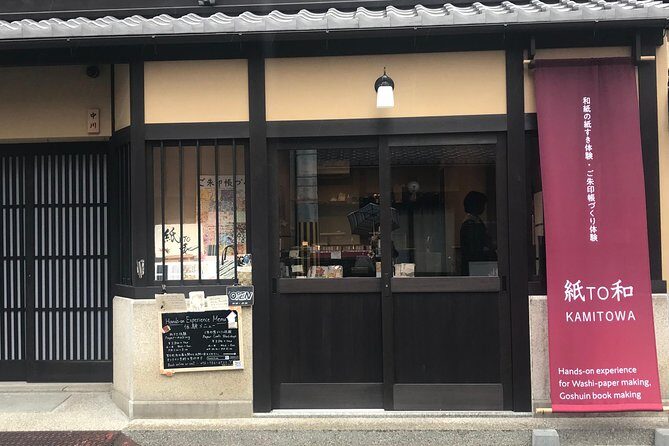
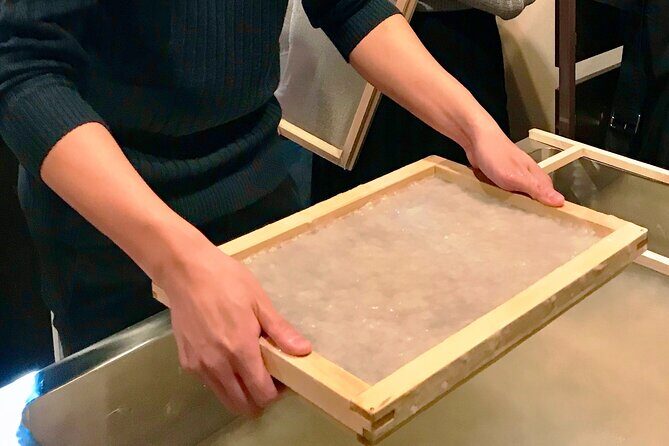
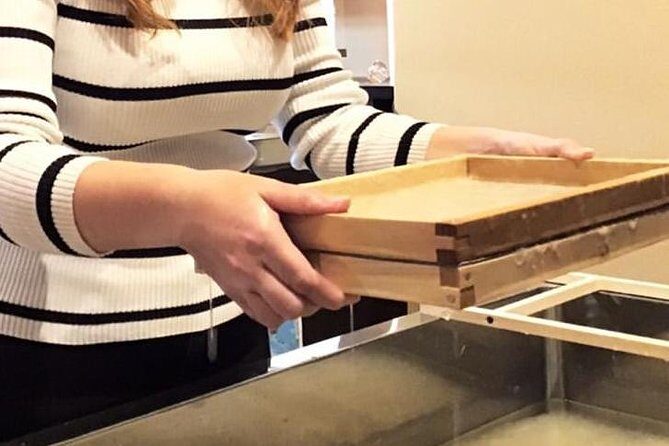
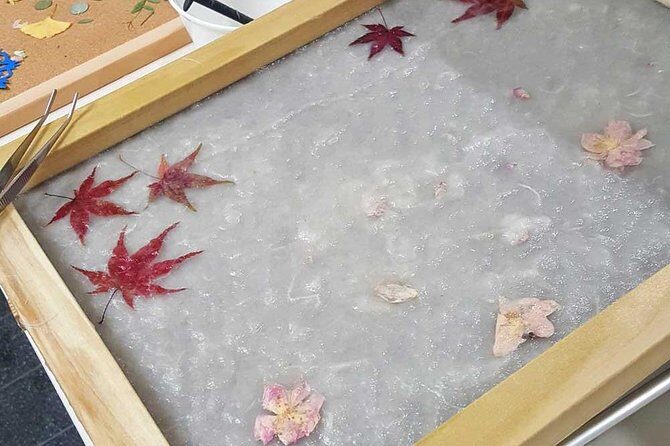
The heart of the workshop is exactly what it sounds like: you make traditional washi paper from raw materials. You’ll go through the process under the instructor’s watch, with explanations as you build.
What I like about this approach is that it gives you the full arc. You’re not just doing one decorative step. You’re part of the making—learning how the paper comes together and how the work you do affects the final look.
You’ll also spend part of the time designing and arranging your chosen materials on the paper. That blend—technical steps plus creative decoration—is why this class tends to land so well for different personalities. If you love crafts, you’ll be happy. If you’re more curious than crafty, you’ll still appreciate the skill and logic of the process.
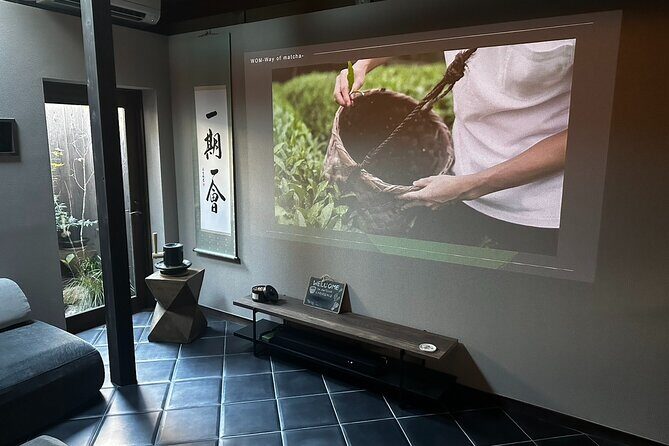
One detail that shows up again and again in the experience: during drying time, there’s an informational video about papermaking. It’s short, useful, and it helps you connect the steps you just did to the wider craft tradition.
Decorating With Cherry Blossoms, Maple Leaves, and Cut-Outs
Here’s where the experience turns from instruction into personal art.
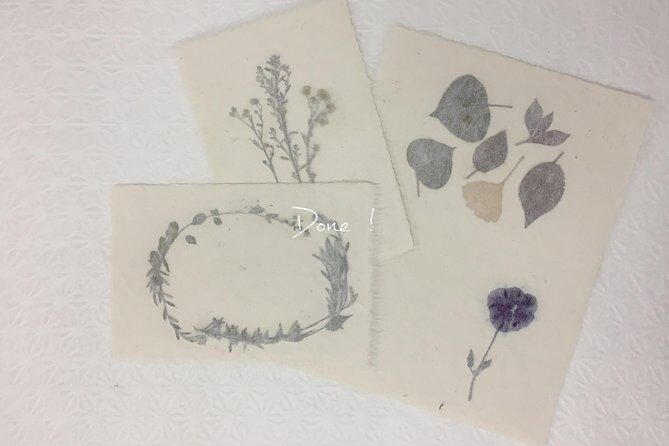
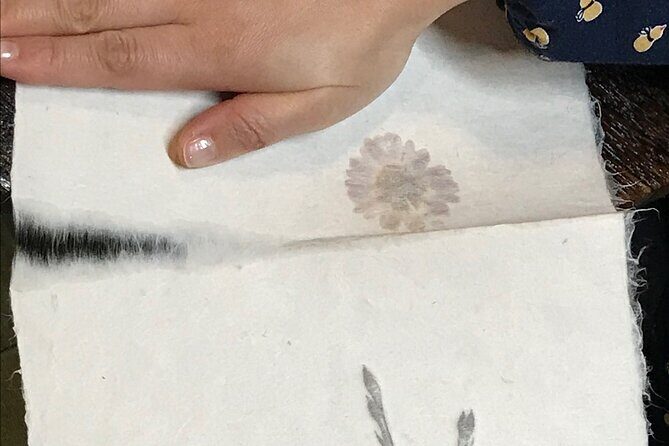
You’ll use seasonal pressed flowers and leaves, including cherry blossoms and maple leaves. You can also work with paper cut-outs to build your composition. The idea is simple: you’re designing with materials that already have character. The leaves and blooms add texture and tone in a way that plain paper can’t.
And the fun part is choosing what you want to make. The workshop gives options such as:
- postcards
- a table mat
- a wraparound lampshade
- a tapestry panel
Some options may come with an extra fee (for example, one option discussed is a lantern-style piece). If you’re trying to keep costs steady, pick the main set you’re interested in first, then consider upgrades only if you’re sure.
For me, the best strategy is to think about what you want to display at home. A postcard set is easy to package and send. A table mat is practical and shows off your handiwork every day. A lampshade can look especially gorgeous once light passes through the paper, but it’s also a statement piece.
Your 1-Hour Craft Block (Plus The Optional Unlimited Add-On)
The standard class is about 1 hour. That time is long enough to learn the method, make a sheet (or sheets), and finish a take-home project.
The workshop is also small. It has a maximum of 4 travelers, which matters more than people expect. With fewer people in the room, you get quicker help when you need it, and you can ask questions without feeling like you’re slowing everyone down.
There’s also an optional additional hour of unlimited paper making. You pay for that add-on yourself. If you’re the type who thinks, I could make one more, one more will be tempting. It can also be a good move if you’re buying gifts and want more than one item without rushing to get everything done in the base session.
My suggestion: do the standard hour if you want a focused cultural craft with one great souvenir. Add the extra time if you want variety—like making extra postcards for friends or creating multiple designs.






What You’ll Take Home, and Why It Feels Special
You should be able to take home a unique handmade souvenir by the end of class. That’s the key value here: your work becomes the product, and the design elements (seasonal botanicals and cut-outs) are part of the story.
From the way the experience is run, you’ll also get support with getting your piece finished and ready to bring home. People describe the items being packaged well, which is exactly what you want in Kyoto—short trip, no stress, no accidental damage in your bag.
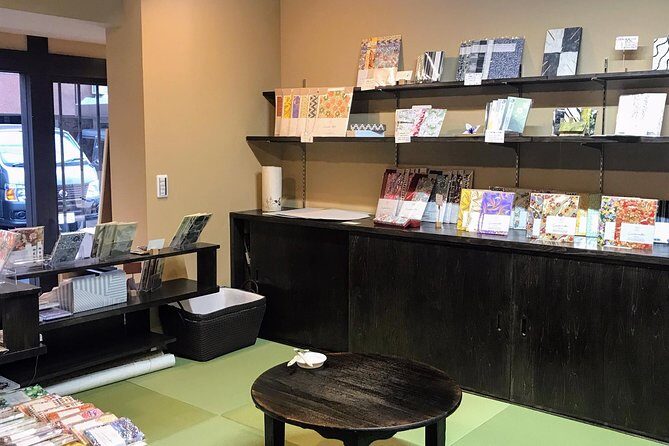
Then there’s the extra layer that makes this feel complete: the studio/shop is part of the experience. After class, you can browse paper goods made locally. The best part is that it’s not pushy. If you want a quick look and a calm exit, you can do that.
There’s also a reassuring human element. One person shared that they left something behind and the hosts helped them retrieve it the next day. That kind of follow-through tells you the workshop is run by people who care about your experience, not just the craft.
Is It Good Value at $33.03 Per Person?
For $33.03, you’re paying for a lot more than an art lesson. You’re paying for:
- a hands-on traditional skill (not just decorating)
- bilingual instruction
- a small-group setting
- materials and the process itself, plus the taxes/fees included in the listed price
Where the value gets real is the souvenir outcome. You’re not bringing home a generic shop item. You’re bringing home paper you made, with the specific seasonal materials used for that session.
Compared with big-name tours that give you photos but not skills, this is a better trade if you want something tangible and meaningful. It’s also a good use of time if you’re trying to balance sightseeing with something slower and quieter.
One caution on value: if you add the unlimited extra hour, your total cost rises. That said, it can still be a smart use of money if you’re making multiple gifts and want to avoid buying souvenirs that feel too generic.
Who This Washi Workshop Fits Best
This workshop fits best if you like any of these ideas:
- learning a traditional craft with real process steps
- making something you can use, not just hang once
- enjoying a quiet, indoor activity between Kyoto walks
- traveling with kids who can sit for a structured, hands-on lesson
People mention that it’s accommodating for children when an adult is present, and kids can handle it because the instruction is gentle and the pace is manageable.
It may be less ideal if:
- you hate crafts or get frustrated when things require patience
- you only want fast, photo-only activities
- you’re already tight on time and can’t afford the full 1-hour block
Should You Book This Kyoto Washi Papermaking Class?
If you want a Kyoto experience that’s calm, small, and genuinely hands-on, I’d book it. It’s a fair price for a bilingual workshop that gives you a finished handmade souvenir made with seasonal materials like cherry blossoms and maple leaves. The video during drying time and the step-by-step coaching help you understand what you’re doing, which makes the result feel earned.
I’d think twice only if you’re not interested in making or you’re unwilling to get yourself to the workshop location by foot and transit.
If you do book, choose your take-home item based on how you’ll use it back home. Pick the one that matches your life after Kyoto—postcards for easy gifting, a table mat for everyday use, or a lampshade if you want something dramatic and light-catching.
FAQ
How long is the washi papermaking class?
The class is about 1 hour.
What’s included in the price?
The price includes all taxes, fees, and handling charges. Transportation to and from the workshop is not included.
Do I need to bring anything?
The workshop is set up as a guided activity, and you’ll be working with the provided materials during the class.
Is the instruction available in English?
Yes. The instructors are bilingual and speak Japanese and English.
What can I make during the class?
You can choose among items such as postcards, a table mat, a wraparound lampshade, or a tapestry panel made from washi paper. Some options may cost extra.
Is this workshop suitable for children?
Children must be accompanied by an adult, and most travelers can participate.
How many people are in a group?
The workshop has a maximum of 4 travelers.
Where is the meeting point?
The meeting point is 345 Sanjōchō, Nakagyo Ward, Kyoto, 604-8205, Japan. It’s near Shijo Station and Karasuma Oike Station exits on the Kyoto Metro Karasuma Line.
Can I cancel for a full refund?
Yes. You can cancel for free up to 24 hours in advance of the experience start time for a full refund.