Kyoto changes when someone points at the details. This private stroll ties together Gion traditions, old theatre roots, and the Shinto-and-Buddhist feel you’ll notice everywhere in Higashiyama. I love that it’s built for time-tight days, so you still walk away with a clear sense of the place instead of just photos.
What I also like: you’re with a real local host who helps you navigate the backstreets and understand what you’re seeing (not just where to stand). The one thing to consider is simple: there’s no hotel pickup, and you’re on foot for a full route, so wear comfortable shoes and plan your meeting spot time.
In This Review
- Key highlights at a glance
- A private Gion-and-shrines walk that fits a tight Kyoto schedule
- Meeting at Kawabatacho and finishing near the Yasaka viewpoint
- How the route tells Kyoto’s arts-and-faith story
- Stop-by-stop: kabuki origins, theatres, and Gion lanes
- Statue of Izumo no Okuni (kabuki’s origin story)
- Minamiza Theatre (early Edo roots)
- Gion (what “preservation” actually means on the street)
- Tatsumi Daimyojin Shrine (Shinto + Buddhism, explained)
- Shinbashi Dori (the banquet-lane side of geisha culture)
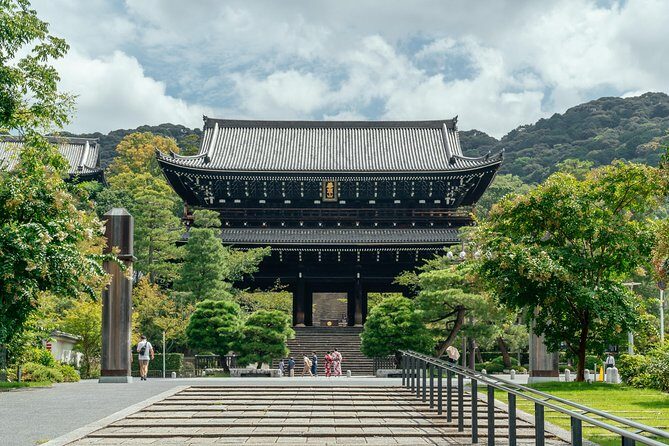
- Chion-in Temple (steps, views, and a garden-feel pause)
- Maruyama Park (the path from temple to neighborhood)
- Shrines, street names, and the Yasaka-area finish
- Yasaka Shrine (legend timing tied to Emperor Seimei)
- Shijo Dori (the ancient capital’s street grid in plain language)
- Nene-no-Michi (named for Nene; linked to Kodaiji)
- Yasaka Shrine area finish with a five-story pagoda viewpoint
- What $135.45 per person buys you (and when it’s worth it)
- The biggest “you’ll be glad you did this” moments
- Practical tips: shoes, manners, and how to take photos without being rude
- Who should book this private Treasures of Kyoto tour?
- Should you book Treasures of Kyoto: Geishas & Traditions?
- FAQ
- How long is the Treasures of Kyoto: Geishas & Traditions private tour?
- Is this tour private, and will other people join?
- Where do I meet the tour, and where does it end?
- What’s included in the price?
- Are there admission tickets or extra entrance fees for the stops?
- Is food included during the tour?
- Can I cancel for a full refund?
Key highlights at a glance
- A true private tour just for your party, so you can ask questions and set the pace
- Kabuki origin story at the Statue of Izumo no Okuni, linked to the roots of kabuki theatre
- Gion on the ground level with context about the district’s preservation areas and history
- Shinto-meets-Buddhism at Tatsumi Daimyojin Shrine, explained as a mixed tradition
- Banquet-lane geisha culture around Shinbashi Dori and what those spaces were for
- A scenic finish near the Yasaka area with a five-story pagoda viewpoint and time to stop at a nearby cafe
A private Gion-and-shrines walk that fits a tight Kyoto schedule
If Kyoto is on your list, you already know the big hits: temples, shrines, and the Gion area that sits in everyone’s imagination. The trick is that Kyoto is also a city of side streets. Without a guide, you can miss how the pieces connect.
This tour is designed for exactly that problem. In about 2.5 hours, you go from arts history (kabuki) into classic theatre spaces, then into Gion lanes, and finally toward the Yasaka Shrine area for views. You don’t just collect landmarks—you get the “why” behind them, which makes everything easier to remember.
I also like that it feels like a neighborhood walk. You’re not trapped in a bus loop, and you’re not forced to move every five minutes. The best version of this experience is when your host steers you through the quieter corners and talks as you walk, not when you sit and listen.
There’s one more practical win: the tour uses a mobile ticket, and the meeting and end points are walkable within Higashiyama. That keeps your day from turning into a scavenger hunt.
Other private tours in Kyoto
Meeting at Kawabatacho and finishing near the Yasaka viewpoint
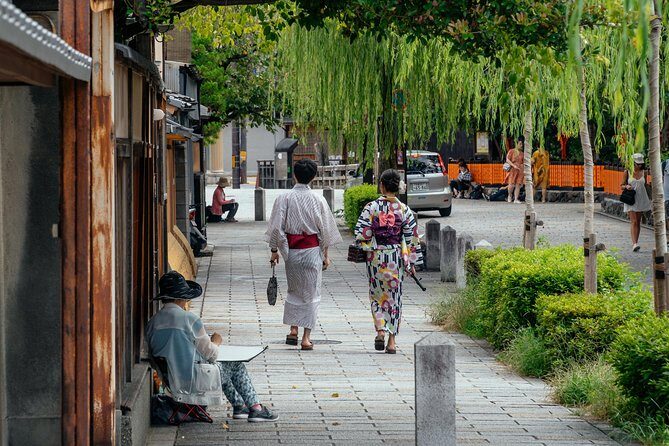
You start in Kawabatacho, Higashiyama Ward. That’s a handy area to access on foot or by public transit, and it’s close enough to the action that you won’t waste time crossing the city.
At the end, you finish in Yasaka Kamimachi. The tour notes a finish near Yasaka no To (the temple/pagoda viewpoint area). You even get a natural off-ramp to relax, since the tour finishes in a local cafe nearby.
Because there’s no hotel pickup or drop-off, you’ll want to arrive a few minutes early and be ready to start on time. Bring a small water bottle if you get thirsty on walks, and keep your phone charged for maps and photos. There’s no mention of food being included, so think of this as a walk-and-learn outing, then decide where you want to eat afterward.
How the route tells Kyoto’s arts-and-faith story
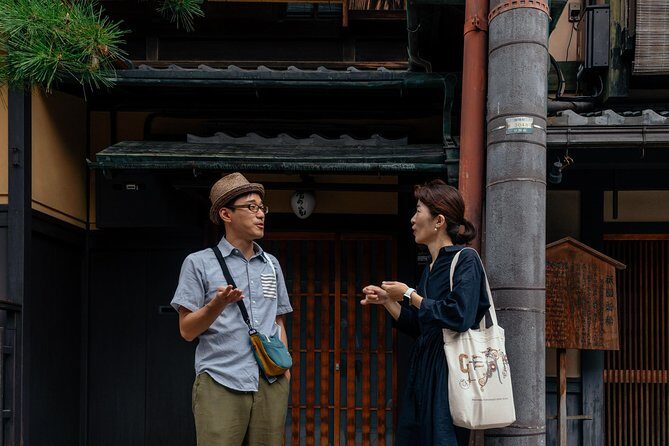
This is a “connections” tour. Each stop explains a different layer of Kyoto’s identity, and the order matters.
You begin with the arts. The Statue of Izumo no Okuni anchors the story of kabuki’s origins. Then you move into Minamiza Theatre, tied to the early Edo period. From there, you land in Gion, where the city’s performance culture blended with everyday life—especially through the entertainment spaces that once served visiting customers.
Next, the tour shifts to faith. You visit a shrine that’s described as a mix of Shinto and Buddhism, then you continue through temple territory and the park area near Maruyama. Finally, you return to the Yasaka Shrine zone, where legends and views help you feel how spiritual places sit inside daily city life.
If you like history, you’ll enjoy the pacing. If you don’t, you’ll still benefit, because you’ll be able to interpret what you’re seeing. For example, a shrine isn’t just “a shrine” here—it’s a place with explanations tied to older eras and shared religious ideas.
Stop-by-stop: kabuki origins, theatres, and Gion lanes
The first part of the walk moves fast but stays understandable. You’re usually out for around 10–20 minutes per stop, with enough time to look, read the scene, and ask questions.
Statue of Izumo no Okuni (kabuki’s origin story)
You start at the Statue of Izumo no Okuni. The big point: Okuni is described as the originator of kabuki theatre. That’s a clever opening, because it reminds you that Kyoto’s culture isn’t only temples and gardens. It’s also performance.
If you’ve seen kabuki before, you’ll recognize the bigger theme—class, entertainment, and public storytelling. If you haven’t, this stop is an easy entry. It doesn’t require you to know anything first.


Minamiza Theatre (early Edo roots)
Next up is Minamiza Theatre, connected to the early Edo period (1596–1615). This stop is short, but it sets context for how long theatrical culture has been part of the Kyoto world.
I like this kind of stop for first-time visitors. It gives you a time frame. After that, when you reach Gion, the entertainment history feels less random.
Gion (what “preservation” actually means on the street)
Then you enter Gion. The tour description calls out that the area around Gion Shinbashi is a traditional business preservation area, while the south of Shijo Street is a historical scenery preservation area.
That matters because it explains why the streets feel how they do. Gion isn’t just pretty. It’s protected. Your host can help you connect the visible buildings and street layout to that preservation idea, which makes your photos more meaningful.
Tatsumi Daimyojin Shrine (Shinto + Buddhism, explained)
At Tatsumi Daimyojin Shrine, you hear about Japanese religion with a focus on mixture: it’s described as combining Shinto and Buddhism.
This is one of the best learning points on the route. Kyoto is famous for this blending, but many visitors experience it as confusing instead of interesting. A short, guided explanation turns confusion into clarity fast.
Also, shrine visits are a good reset. You’ll slow down, look up at the details, and catch your breath before the next stretch.
Shinbashi Dori (the banquet-lane side of geisha culture)
Now you hit Shinbashi Dori. This is where the tour gets very practical about geisha culture. You stand outside traditional banquet buildings where geisha would have entertained customers, and you learn more in-depth about the culture behind that setup.
Even if you never see a geisha in person, this stop helps you understand the spaces where entertainment happened. That’s the difference between spotting costumes and understanding why those costumes and streets are tied together.
If you travel in the late afternoon or evening, you might notice more activity in Gion areas. Still, keep your expectations realistic. You’re here for context as much as sightings.
Chion-in Temple (steps, views, and a garden-feel pause)
At Chion-in Temple, you walk up the steps for a better view and to see the garden area. This works well as a visual breather, because you’re not just walking corridors. You’re reaching a viewpoint, even if it’s not the main highlight of the entire day.
It also gives your guide an easy moment to point out how temples sit within the neighborhood—what you see from here, and what you’ll see later as you move toward Yasaka.
Maruyama Park (the path from temple to neighborhood)
From Chion-in, you walk toward Maruyama Park. This section is more about the flow. You’re transitioning from sacred space into the public park area feel, where Kyoto’s everyday life overlaps with tradition.
If you get the urge to stop for photos, this is a good moment. The park approach tends to let your pace breathe.
Shrines, street names, and the Yasaka-area finish
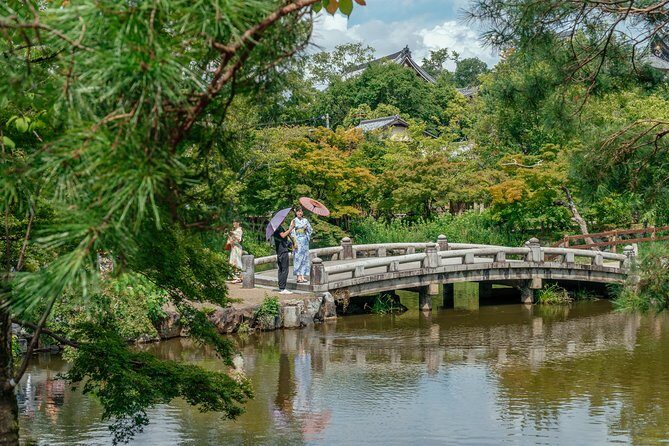
The second half leans into legends and city planning—especially through Yasaka Shrine and the nearby streets.
Yasaka Shrine (legend timing tied to Emperor Seimei)
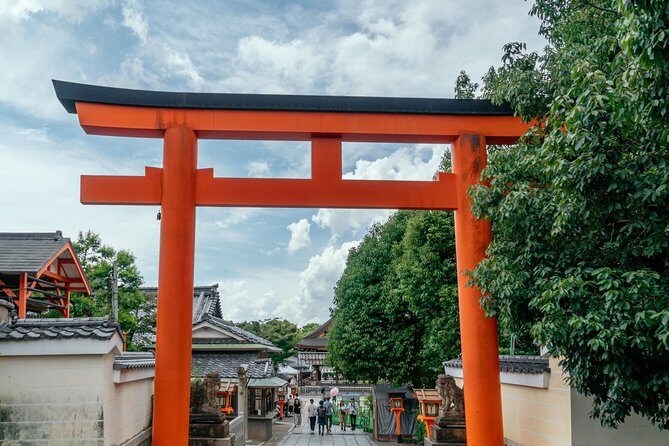
You return to Yasaka Shrine, where the tour description references a legend reaching back well before the Heian era. It also mentions AC 656, linked to the second year of Emperor Seimei’s reign.
This stop is short, so the value is in what you’re told while you look. Instead of treating the shrine as a static landmark, you learn how the place’s story stretches across centuries. That gives you a stronger mental map than just seeing a big torii and moving on.
Shijo Dori (the ancient capital’s street grid in plain language)
Then you walk along Shijo Dori, explained as meaning Fourth Avenue of Heian-kyō, the ancient capital. This is the kind of detail that sounds nerdy until you realize it’s how Kyoto’s structure still shows up.
You’ll feel how the modern street grid connects to the city’s older plan. When you walk past other avenues later, you’ll start noticing the pattern.
Nene-no-Michi (named for Nene; linked to Kodaiji)
Next is Nene-no-Michi. The tour ties it to Kodaiji Temple, described as built in 1605 at the behest of Nene. The street is later named for her, so you get a person behind the place name.
I like this because it turns street names into stories you can hold onto. It also gives you a better reason to care about small lanes and connectors, not just the main attractions.
Yasaka Shrine area finish with a five-story pagoda viewpoint
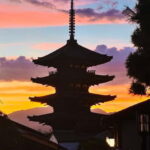
You finish back in the Yasaka area. The final segment highlights a picturesque five-story Buddhist pagoda temple and notes sweeping views from the top.
This is a strong way to end the walk because your eyes get to travel. After a day of looking at details, you benefit from a wide view.
And since the tour ends in a local cafe nearby, you can treat the viewpoint as the final “big moment” and then decompress. This is where you’ll likely review what you learned while everything is still fresh.
What $135.45 per person buys you (and when it’s worth it)
At $135.45 per person for about 2.5 hours, you’re paying for two things: a private host and a tight route with explanations that help you make sense of Kyoto fast.
Is it cheap? No. But it can be good value if it replaces a half-day of guesswork. If you’re traveling with limited time—maybe you’re hopping between cities or you want your first Gion day to be meaningful—this price can feel fair because you’re buying context and guidance.
Also, it’s private, exclusively for your group. That matters. With a group tour, you often spend your time trying to catch up. Here, you can slow down for photos, ask follow-ups, and steer the conversation toward what you actually care about: religion, performance history, or how Gion’s streets work.
The tour also states it’s carbon neutral, and you get a mobile ticket. Those don’t replace the quality of the guide, but they do add up to a smoother, more modern experience.
A practical note: the tour is listed as having moderate physical fitness requirements. This isn’t described as a strenuous hike, but it is a walking route with multiple stops. If you know you tire quickly, plan for breaks and go easy on heel-heavy shoes.
The biggest “you’ll be glad you did this” moments
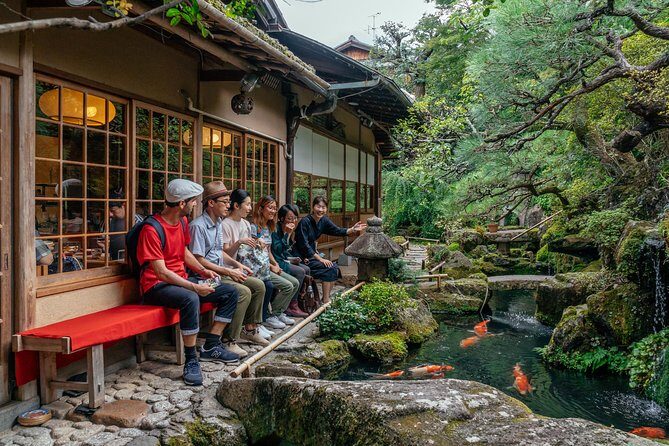
The most praised side of this experience is the human factor: the guide’s ability to turn stops into stories, and the relaxed pace that makes questions feel welcome.
In particular, guides tied to this experience are described with a strong focus on respect for Kyoto’s geiko culture and clear explanations of differences between Shinto and Buddhism. That’s the kind of learning that keeps you from accidentally misunderstanding what you see.
You’ll also benefit if your host helps with crowd management. Some guides are described as steering groups away from busier areas, which can make a huge difference in Gion’s narrower streets.
Another standout: families do well on this kind of tour. One family experience included a guide adapting for kids (around ages 10 and 14) who asked lots of questions. If you’re traveling with younger teens, this can be a good fit because the route has variety—shrines, streets, and explanations—so attention doesn’t flag.
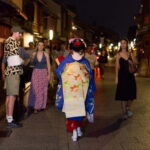
And yes, the route can sometimes put you near people in traditional dress, including geisha/geiko outfits. You should treat that as a possible bonus, not the guarantee.
Practical tips: shoes, manners, and how to take photos without being rude
Kyoto has rules, even when they’re not written on signs.
- Wear comfortable shoes. You’ll be walking from stop to stop in Higashiyama.
- Don’t block entrances or paths to take pictures. Move aside and let others pass.
- At shrines and temple areas, keep your voice low and follow the vibe of the place.
- If you see traditional performers or entertainment-related spaces, treat it like a real workplace and community area. The point is respect, not disruption.
If you’re serious about photos, consider using the quieter parts of the route for longer shots. When your guide adjusts the pace to avoid crowds, you get better angles and less waiting.
Also, since you’ll be doing a mix of arts history and religion, bring a curious mindset. If your guide mentions dates like the Edo period (1596–1615) or AC 656, those aren’t trivia dumps. They’re anchors that make the whole day click.
Who should book this private Treasures of Kyoto tour?
I’d put this on your shortlist if:
- You want a first-day or early-day Gion experience with structure.
- You’re short on time and prefer a focused walking route over building your own itinerary.
- You care about geisha culture, but you want the context behind it, not just the postcards.
- You’d like a guide who can explain Shinto and Buddhism in a way that feels simple.
I might skip it if:
- You hate walking and want zero-stairs, zero-steps days.
- You’re only interested in the biggest temple iconography and don’t care about theatre or street history.
- You want a very long, free-form exploration with lots of detours. This route is tight on purpose.
Should you book Treasures of Kyoto: Geishas & Traditions?
If you want Kyoto to feel understandable, not overwhelming, I think this is a strong choice. The route combines arts history (kabuki and Minamiza), Gion’s preservation context, and clear religion explanations in a way that stays doable in a half-day.
Book it if you value a private host-led walk and you want your time to turn into real understanding. If you’re aiming for a quick hit of sights only, you might find this less satisfying. But for most people—especially first-timers in Higashiyama—it’s an efficient, respectful way to get beneath the surface.
FAQ
How long is the Treasures of Kyoto: Geishas & Traditions private tour?
It’s listed as approximately 2 hours 30 minutes.
Is this tour private, and will other people join?
Yes. It’s a private tour/activity, and only your group participates.
Where do I meet the tour, and where does it end?
You start at Kawabatacho, Higashiyama Ward, Kyoto, and you end at Yasaka Kamimachi, Higashiyama Ward (near Yasaka no To Temple).
What’s included in the price?
The tour includes a private tour, a local guide, and it’s listed as carbon neutral.
Are there admission tickets or extra entrance fees for the stops?
The stops shown in the itinerary list admission tickets as free.
Is food included during the tour?
Food and beverages are not listed as inclusions. The tour notes a nearby local cafe at the end, but meals aren’t stated as included.
Can I cancel for a full refund?
Yes. Free cancellation is available up to 24 hours in advance for a full refund. If you cancel less than 24 hours before the start time, the amount paid isn’t refunded.