
This guide contains affiliate links. If you book through them we earn a small commission at no extra cost to you.
Most of what’s marketed as an “onsen” in a Kyoto city hotel is not actually onsen. It’s a heated mineral bath, often with added salts, sometimes with a polite volcanic-rock aesthetic, but not water from a natural hot spring. Real onsen — under the Japanese Hot Spring Law — has to come from a natural spring with minimum mineral content and a natural temperature of at least 25°C at source. A distressing number of Kyoto city-hotel “onsen suites” quietly don’t clear that bar.
This guide covers the ten hotels where you can actually get a proper hot-spring bath in or near Kyoto — six within the city or Kyoto prefecture, four in nearby onsen towns worth combining with a Kyoto trip. Some of these are covered in other articles on this site for other reasons; I’m including them here anyway because an onsen article that excludes the best onsen hotels in Kyoto to avoid repetition would be a worse guide.
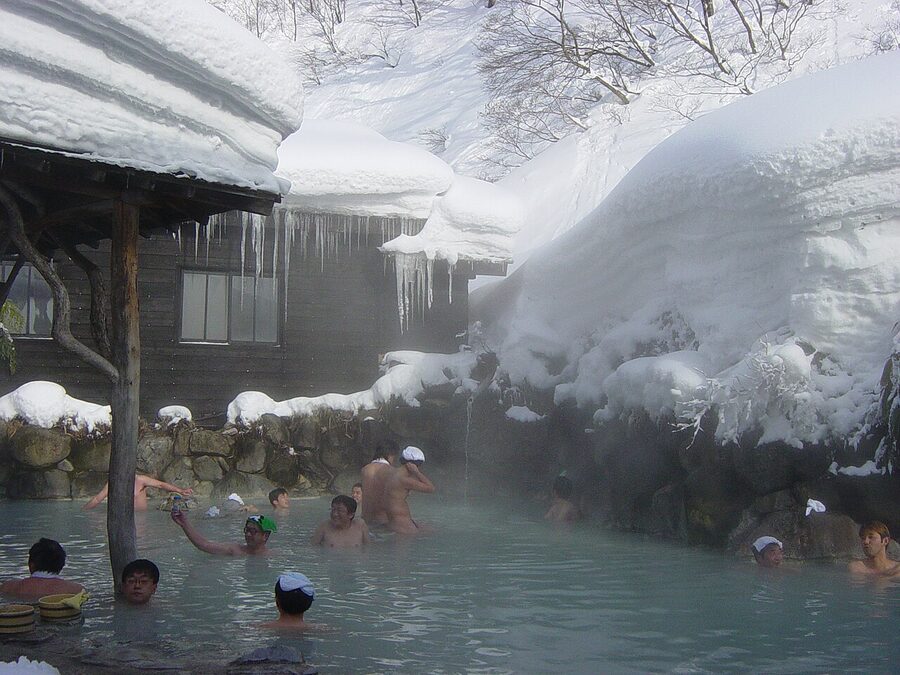
How to Tell a Real Onsen From a Branded Mineral Bath
Three signals to check before booking:
- “Natural hot-spring” (tennen onsen) or “hot spring source on premises” (genzen kakenagashi). The phrase to look for on Japanese-language hotel pages is 天然温泉 or 源泉かけ流し. If the English page just says “onsen” with no underlying Japanese claim, the bath is probably a heated mineral pool.
- Named spring source. Real onsen hotels cite the spring: “Arima source”, “Kurama onsen source”, “self-drilled well from 1,200m depth”. Vague “rich mineral bath” marketing language with no named source is a tell.
- Temperature and flow declaration. Japanese onsen are legally required to post the source temperature and mineral composition in the bath area. If the sign inside the bath just says “Cold / Warm / Hot”, it’s likely a heated-water facility rather than a spring.
Most Kyoto city hotels that advertise “onsen” fall into a grey zone: water is piped in from a real source far away (often Arima in Hyogo), then treated and heated to bath temperature. That counts as onsen under the most generous legal definition but it’s not the same as bathing at the source. I’ve flagged which are which below.
Kyoto City Hotels With Real Hot-Spring Water
Roku Kyoto, LXR Hotels & Resorts
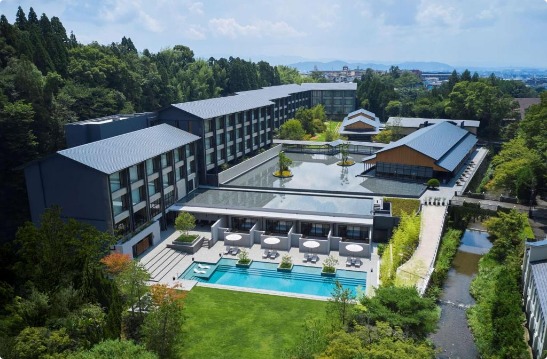
Location: Kinugasa, northern Kyoto · Price: From ¥85,000/night
Onsen type: Real — self-drilled well on the property, water delivered directly to room baths
Best for: Honeymoon, private-onsen stay without leaving Kyoto
Roku is the one Kyoto luxury hotel where you can defensibly claim a real in-room onsen. The property drilled its own hot-spring well when it opened in 2021; the water is natural alkaline spring water at around 35°C at source, heated to 41°C before being piped to the private open-air baths attached to every guest room. Every suite has one. The water is lightly sulphurous, slightly slippery on the skin, and unmistakably from the ground rather than the taps.
The hotel gets deeper coverage in our luxury hotels guide; for onsen-specifically it’s the first place to look if you want private hot-spring water without a two-hour train ride.
Check prices at Roku Kyoto LXR on Booking.com
Hotel The Mitsui Kyoto
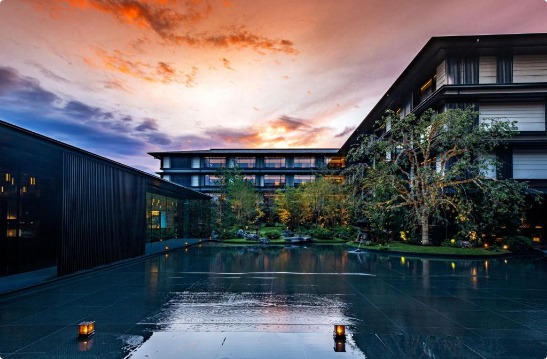
Location: Nakagyo-ku, across from Nijo Castle · Price: From ¥95,000/night
Onsen type: Real source (Arima Onsen, Hyogo), trucked to Kyoto and distributed to bathhouse and selected rooms
Best for: First-class city-centre onsen experience, wellness-focused stay
The Mitsui’s “Thermal Spring” complex is the most-engineered onsen offering in any Kyoto city hotel. The water comes from Arima Onsen — one of Japan’s three oldest and most storied hot-spring sources, about 90 minutes away in Hyogo. It’s transported to the hotel and distributed to a large public bathhouse as well as to the private bath Onsen Suites. The chemistry is real (sodium-chloride rich, slightly iron-tinted) even if the water has travelled.
The drive vs on-premises point is a fair one to raise, and I’d still rank this as a legitimate onsen offering because the water source is real and the bathhouse design is extraordinary.
Check prices at Hotel The Mitsui Kyoto on Booking.com
Fufu Kyoto
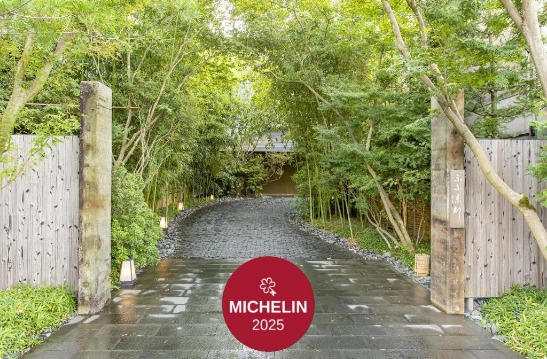
Location: Okazaki (Northern Higashiyama) · Price: From ¥95,000/night including dinner & breakfast
Onsen type: Real — piped from a source around the Kurama area
Best for: Modern ryokan format with genuine onsen; first ryokan stay at luxury tier
Fufu operates in the modern-ryokan category but has invested in a proper hot-spring water supply — piped down from a source in the Kurama area rather than heated locally. Every one of the 40 rooms has a private outdoor bath. The in-room bath is smaller than a hotel spa bath but the water is real and the privacy is absolute; this is the “breakfast with a view while you’re still in the water” kind of stay.
Fufu is also featured in our ryokan guide where the kaiseki programme gets more attention. For the onsen-first traveller it sits firmly in the top five.
Check prices at Fufu Kyoto on Booking.com
Sora Niwa Terrace Kyoto
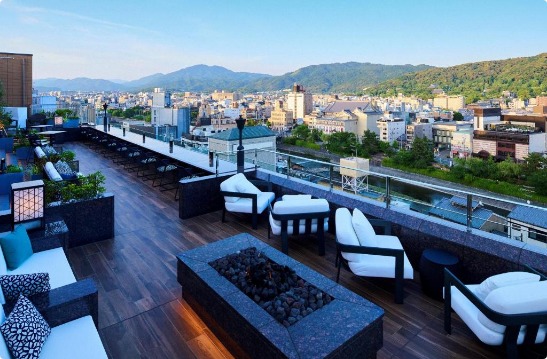
Location: Shijo-Kawaramachi (Downtown Kyoto) · Price: From ¥32,000/night
Onsen type: Real hot-spring water, delivered to a top-floor public bath complex
Best for: Mid-range city onsen, travellers who want a proper bath without luxury pricing
Sora Niwa Terrace (“Sky Garden Terrace”) is the downtown option for real onsen without the luxury-tier spend. The hotel runs a rooftop bathhouse fed from a real hot-spring source, and the setting — with views over the Kamo River and the Higashiyama ridge — is one of the nicer public baths you’ll use in Kyoto city. The rooms themselves are business-hotel-plus: compact but well-finished, nothing dramatic.
Because the bathhouse is communal rather than in-room, Sora Niwa works best as a “city base with a real bath attached” rather than a destination onsen stay. But for ¥35,000 a night including the bath access, it’s strong value.
Check prices at Sora Niwa Terrace Kyoto on Booking.com
Kyoto Hot Spring Hatoya Zuihokaku Hotel
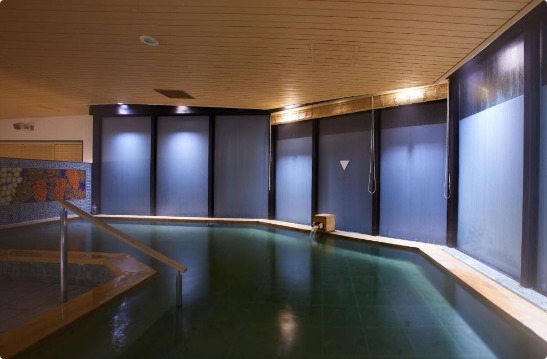
Location: Shichijo (10 min walk north of Kyoto Station) · Price: From ¥18,000/night
Onsen type: Real hot-spring water
Best for: Budget-conscious travellers who still want real onsen, short stays
Hatoya Zuihokaku is the old-school Japanese onsen-hotel format — a large mid-range property with a proper hot-spring bathhouse and relatively plain guest rooms. It’s the kind of place Japanese families book for a weekend away from Osaka. The baths are the main event and they’re genuine: multiple pools at different temperatures, an outdoor option, real hot-spring water sourced locally to Kyoto.
The location near Kyoto Station makes it unusually practical. If you’ve just arrived by shinkansen and want a proper bath before dinner, you’re ten minutes on foot from the station and in the water within half an hour.
Check prices at Hatoya Zuihokaku on Booking.com
Onyado Nono Kyoto Shichijo
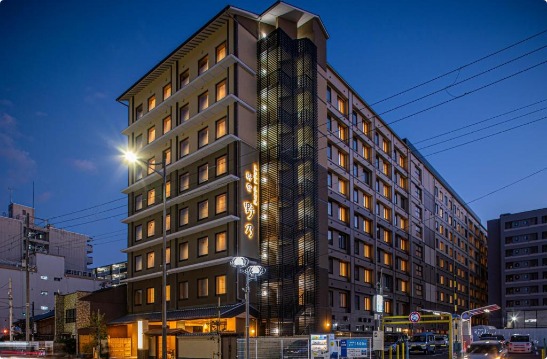
Location: Shichijo (near Sanjusangen-do, 12 min walk from Kyoto Station) · Price: From ¥16,000/night
Onsen type: Real hot-spring water, top-floor public bath
Best for: Budget onsen, solo travellers, short stays
Onyado Nono is a Japanese hotel chain that specialises in mid-priced properties with real onsen baths. The Kyoto Shichijo branch has the chain’s standard format — small, functional rooms, included light breakfast, a proper rooftop hot-spring bath with separate men’s and women’s facilities. The chain manages its own water-source drilling and piping; the Kyoto branch pulls from a local Kyoto-prefecture spring.
This is the budget onsen pick in central Kyoto. The rooms are small and not designer; the bath is the reason you book it. Guests in a yukata padding to dinner through the lobby is very much the atmosphere.
Check prices at Onyado Nono Kyoto Shichijo on Booking.com
Kyoto-Prefecture Onsen Ryokan Outside the City
Kurama Onsen
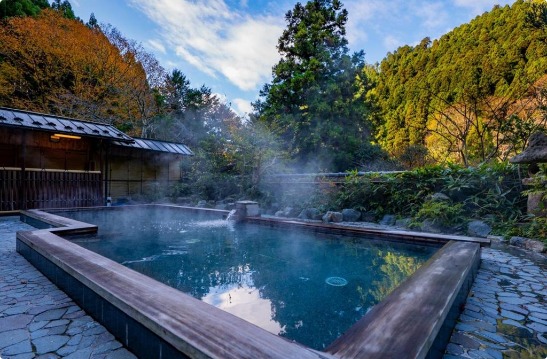
Location: Kurama village, 35 min by Eizan railway from Demachiyanagi · Price: From ¥28,000/night including dinner & breakfast
Onsen type: Real hot-spring source in the mountain village
Best for: Overnight countryside escape with rail access from Kyoto
Kurama is a small mountain village at the northern end of the Eizan railway — 35 minutes from Demachiyanagi station in central Kyoto, through increasingly forested suburbs. Kurama Onsen is the village’s main ryokan, built around a mineral hot spring that flows out of the mountain above. The forested outdoor bath is the standout feature: pine-shaded, looking out over the valley, with water that’s unmistakably sulphurous.
This is the most accessible “mountain onsen ryokan” from Kyoto — you can get there by public transport (the Eizan is a narrow-gauge, single-track railway that runs up the mountain), have a proper one-night ryokan stay, and be back in Kyoto in time for lunch the next day. The village also hosts Kurama-dera, one of Kyoto’s more unusual mountain temples; combine the two.
Check prices at Kurama Onsen on Booking.com
Ryokan Sumiya Kihoan (Kameoka)
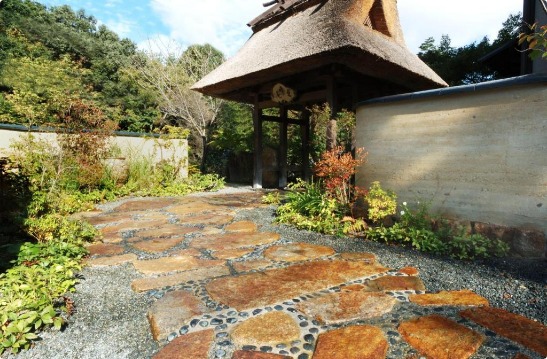
Location: Kameoka, 30 min by JR Sagano line from Kyoto Station · Price: From ¥55,000 per person including dinner & breakfast
Onsen type: Real hot-spring source, private in-suite baths
Best for: Luxury onsen-ryokan experience within a practical train ride of Kyoto
Kameoka is the small town that most Kyoto travellers pass through on the way to the Hozugawa boat ride without stopping. Sumiya Kihoan is why you should stop. The ryokan sits on a hillside on the edge of town and has 14 suites, each with a private outdoor hot-spring bath fed from the property’s own source. Kaiseki dinners here earn regular Michelin mentions.
Covered in more depth in our luxury hotels guide. For onsen specifically, it’s the easiest way to get a genuine luxury private-onsen ryokan experience from a Kyoto base — there and back in two days, with a real hot-spring night in the middle.
Check prices at Ryokan Sumiya Kihoan on Booking.com
Kyo Yunohana Resort Suisen (Kameoka)
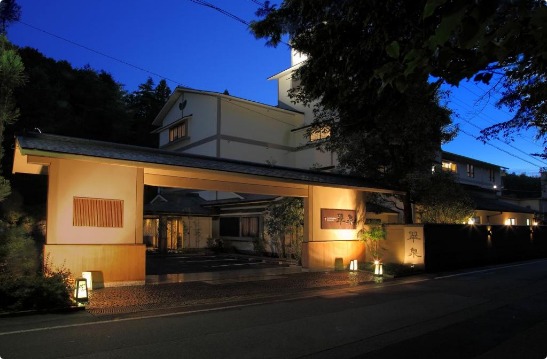
Location: Kameoka, 30 min by JR Sagano line · Price: From ¥22,000 per person including dinner & breakfast
Onsen type: Real Yunohana spring, multiple public baths + some in-room
Best for: Mid-range onsen ryokan, families, groups
Suisen is the larger, more conventional resort option in Kameoka — a proper 80-room onsen hotel with multiple public bathhouses (men’s and women’s, with indoor and outdoor pools) fed from the Yunohana hot-spring source. Rooms are a mix of Japanese-style tatami rooms with futon and western-style rooms with beds. The kaiseki is basic compared to Sumiya Kihoan but perfectly good.
What makes Suisen work as a pick is the scale-to-price ratio. For about a third of the Sumiya Kihoan rate you get a real hot-spring bath, a proper ryokan dinner-and-breakfast format, and you’re still only 30 minutes by train from Kyoto. Good for families that need more rooms or travellers who don’t want to commit to the luxury-tier price.
Check prices at Kyo Yunohana Resort Suisen on Booking.com
Kadensho Arashiyama Onsen
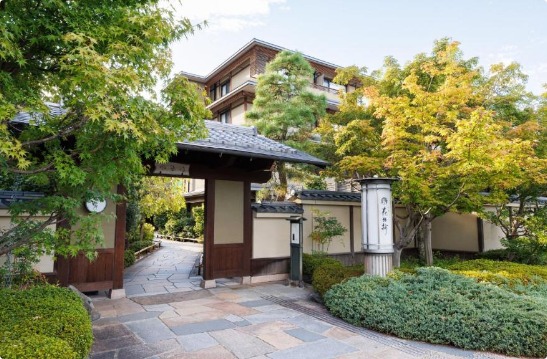
Location: Arashiyama, 15 min by bus from Saga-Arashiyama station · Price: From ¥35,000 per person including dinner & breakfast
Onsen type: Real Arashiyama hot-spring source
Best for: Arashiyama stay with real onsen; note it’s reopening in 2026 after renovation
Kadensho is the Arashiyama onsen ryokan that’s reopening in 2026 after a significant refurbishment — the listing on Booking.com currently reflects the reopened property. It sits on the quieter side of the Arashiyama district, about 15 minutes from the Togetsukyo Bridge, which keeps it out of the day-trip noise. The bathhouse uses Arashiyama-sourced hot-spring water, with both public and private bath options.
Worth pairing with a daytime Arashiyama visit — you can go to the bamboo grove and Tenryu-ji in the morning, return by the afternoon for the bath, and have a full kaiseki dinner before the area empties out for the night.
Check prices at Kadensho Arashiyama Onsen on Booking.com
Nearby Kansai Onsen Towns Worth the Extra Day
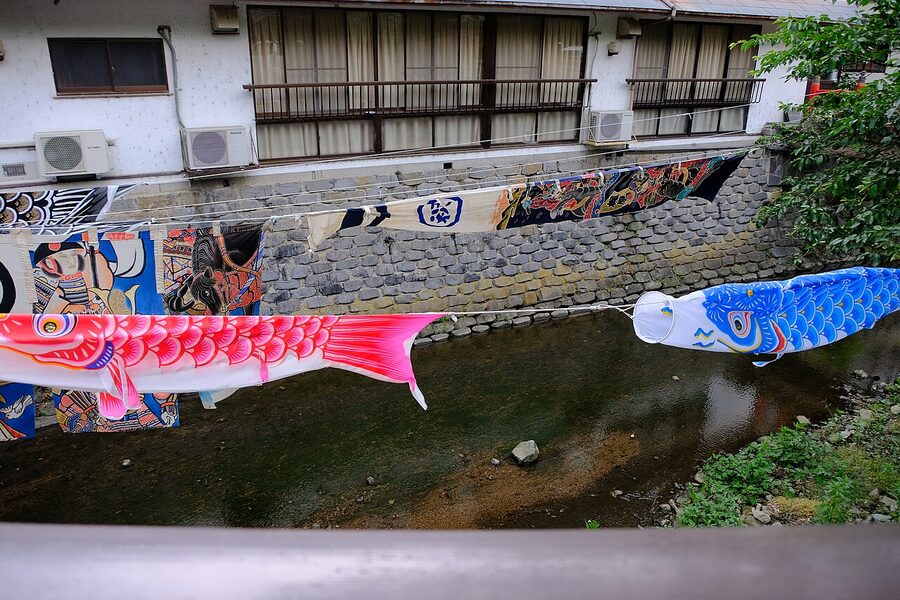
If a night or two of the trip can be dedicated to a proper onsen town, three options within practical range of Kyoto are worth considering. These aren’t in Kyoto prefecture and require a real journey, but the experience is categorically different from any Kyoto-city onsen hotel.
Kinosaki Onsen (2 hours 40 min by JR Limited Express from Kyoto) is the classic choice. A small town built around seven public bathhouses (soto-yu), with 70+ ryokan whose guests wander between the public baths in yukata and wooden geta sandals. The town closes off its main street to cars in the evening and the whole place becomes a sort of open-air bath-crawl. Stay at a ryokan (most include dinner and breakfast) and buy a day-pass giving you access to all seven baths. Genuinely one of the best onsen experiences in Japan and absolutely achievable from a Kyoto base on a two-day overnight.
Arima Onsen (90 min by train from Kyoto via Osaka) is the other end of the experience — one of Japan’s three oldest recorded hot springs, historically associated with samurai convalescence. The “golden spring” (iron-rich, reddish-brown) and “silver spring” (carbonated) are both on-site and genuinely unusual. Smaller than Kinosaki, more accessible for a single night. The luxury hotel Arima Grand Hotel is the go-to, or smaller family-run ryokan around the main bath street.
Kurokawa Onsen is a stretch from Kyoto (requires a flight or longer rail connection, as it’s in Kyushu) but worth naming as the third tier of “if you’re doing onsen seriously in Japan, this is the benchmark” option. Not reachable on a simple two-day detour, but worth researching if you’re planning a longer Kansai-plus-Kyushu trip.
Onsen Etiquette — The Bits That Actually Matter
Most Japanese onsen etiquette is relaxed for foreign guests, but a few things will get you a gentle correction:
- Wash thoroughly outside the tub. The showers along the wall are used while seated on small stools. Rinse completely before you enter the bath. No soap or shampoo goes into the pool.
- No swimwear. Public onsen are bathed in nude. Facilities are separated by gender except at a few mixed-gender baths (konyoku) which are now rare. The small towel you’re given is for modesty walking to and from the bath; don’t take it into the water.
- Tattoos. The tattoo-ban rule varies. Many luxury hotels (Roku, Mitsui, Fufu, Sumiya) are tattoo-friendly now, especially when the bath is private or in-room. Older mid-range hotels and some of the Kinosaki public bathhouses still prohibit tattoos. Ask before booking if you have visible ones, or opt for an in-room bath to sidestep the issue.
- Hair in the water. If you have long hair, tie it up before entering the bath. Keep your small towel folded on your head or on the side of the bath.
What to Book by Goal
- One onsen night with minimum travel: Roku Kyoto LXR (private in-room onsen, stays inside Kyoto city).
- Classic onsen-town experience: Kinosaki Onsen, two nights, Limited Express train from Kyoto Station.
- Budget-conscious Kyoto onsen: Onyado Nono Kyoto Shichijo or Hatoya Zuihokaku near the station.
- Onsen plus kaiseki at luxury level: Sumiya Kihoan in Kameoka, 30 minutes by train.
- Mountain-village onsen within Kyoto prefecture: Kurama Onsen, 35 minutes by Eizan railway.
- In-city-hotel with real hot-spring water: Hotel The Mitsui Kyoto.
For the broader Kyoto hotel picture, the main Kyoto hotel guide covers the 18 city hotels across six areas. For ryokan-format stays specifically, our ryokan guide covers the ten ryokan I’d recommend, several of which overlap with the onsen list here.
The Kyoto tourism association keeps a useful overview of hot springs in Kyoto worth cross-referencing — it’s one of the few official English-language resources that distinguishes real source water from heated mineral baths, and tracks seasonal closures.