This guide contains affiliate links. If you book through them I earn a small commission at no extra cost to you. I only list ryokan I’d actually consider sending someone to.
A proper ryokan night is not about the tatami. It’s not really about the futon either, or the yukata, or the wooden bath. What a ryokan night actually gets you is a deliberate pause. Someone else decides what you eat, what time you eat it, what temperature the bath is, and in what order things happen. For about fifteen hours you stop making decisions. You wake up a little sore from sitting on the floor, unable to remember what you were stressed about the day before, and slightly annoyed that breakfast is at 8am sharp.
This guide covers the fifteen ryokan in Kyoto I’d actually spend money at. Three are legendary family businesses over two hundred years old that still take bookings by email or fax. Five are modern luxury properties that interpret the format without abandoning the discipline. The rest sit in the middle — Gion-side traditional, Michelin-listed, mountain-valley kawadoko, small merchant-house conversions. All of them do the classical evening sequence with proper kaiseki (a multi-course seasonal Japanese dinner). None of them are the generic “ryokan-style hotel” tier you find attached to every Japanese chain.
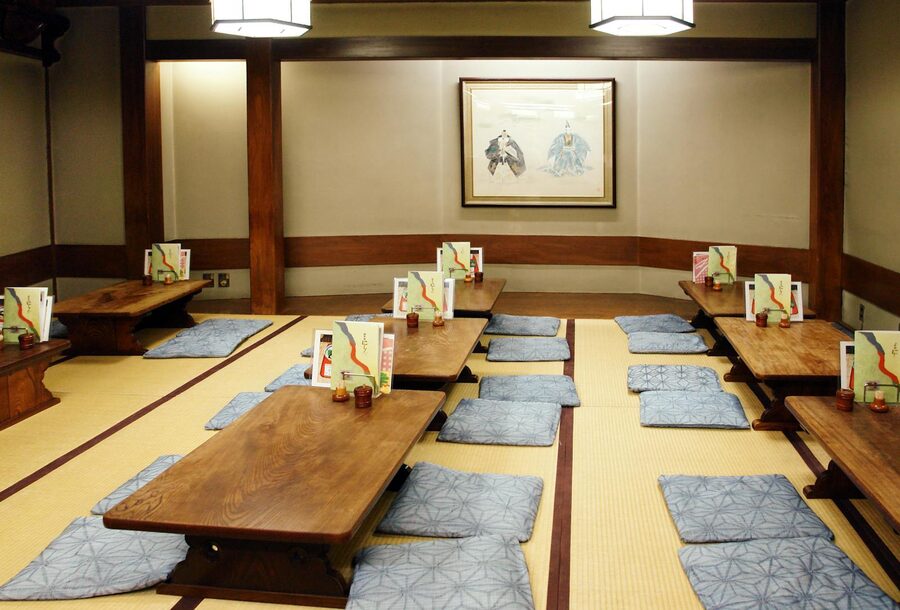
Before the list itself, a piece of framing. There’s no single “best ryokan in Kyoto”. There’s a best ryokan for a first-timer on a two-week trip, a best ryokan for a seventh visit, a best ryokan for summer, a best ryokan for a honeymoon, a best ryokan if you hate sitting on the floor. I’ve tried to make clear which is which throughout.
In This Article
- The quick-reference table
- How a ryokan night actually goes
- The cost ladder — what each tier actually buys you
- How to choose your ryokan
- The historic flagships
- Tawaraya Ryokan — widely regarded as Japan’s finest
- Hiiragiya Ryokan — founded 1818
- Seikoro Ryokan — 1831, Gion-adjacent
- Michelin-guide picks and small luxury
- Kanamean Nishitomiya — one-Michelin-star kaiseki in Pontocho
- Yoshida Sanso — the 1932 imperial-villa hillside retreat
- Nanzenji Sando Kikusui — 1895 teahouse with a garden view
- Kifune Ugenta — the mountain-stream kawadoko ryokan
- Modern luxury ryokan
- Fufu Kyoto — a private outdoor bath in every room
- SOWAKA — the restored ochaya in Gion
- Nazuna Kyoto Tsubaki St. — modern machiya-ryokan hybrid
- Traditional ryokan in Gion and Higashiyama
- Gion Yoshiima — fourth-generation family-run
- Ishibekoji Muan — eight rooms on one of the quietest lanes in Gion
- Ryokan Motonago — a small traditional in Higashiyama
- Kyoto Nanzenji Ryokan Yachiyo — 1915, garden-facing
- Kyomachiya Ryokan Sakura Urushitei — a proper budget machiya
- Ryokan etiquette — the four things you need to get right
- Peak-season pricing — what to actually expect
- What most guides get wrong
- Which ryokan for which traveller
- Booking — how to actually get a room
- Frequently asked questions
- How much does a night at a ryokan in Kyoto cost?
- Do Kyoto ryokan have private bathrooms in the rooms?
- Can you stay at a ryokan if you have tattoos?
- How many nights should I stay at a ryokan?
- What do you wear to dinner at a ryokan?
- Do ryokan in Kyoto have real onsen — actual hot-spring water?
- How far ahead do I need to book Tawaraya?
- Is one ryokan night in Kyoto enough, or should I do two?
- Beyond Kyoto — where to go next for ryokan
The quick-reference table
If you want to skip the 7,000 words of reasoning and just pick one, start here.
| Ryokan | Tier | From / night (per person) | Book |
|---|---|---|---|
| Tawaraya | Historic flagship (direct only) | ¥50,000+ | Direct via ryokan |
| Hiiragiya | Historic flagship | ¥70,000+ | Check prices |
| Seikoro | Historic, mid-flagship | ¥40,000+ | Check prices |
| Kanamean Nishitomiya | Michelin-star kaiseki (direct) | ¥60,000+ | Direct via Michelin Guide |
| Yoshida Sanso | Former imperial villa (direct) | ¥50,000+ | Direct via ryokan |
| Nanzenji Sando Kikusui | Garden ryokan near Nanzen-ji | ¥45,000+ | Check prices |
| Kifune Ugenta | Mountain stream, summer kawadoko (direct) | ¥80,000+ summer | Direct via ryokan |
| Fufu Kyoto | Modern luxury, private outdoor bath | ¥60,000+ | Check prices |
| SOWAKA | Modern boutique in Gion | ¥55,000+ | Check prices |
| Ishibekoji Muan | Eight-room boutique on quiet lane | ¥45,000+ | Check prices |
| Gion Yoshiima | Family-run, moderate-luxury | ¥35,000+ | Check prices |
| Nazuna Kyoto Tsubaki St. | Machiya-style modern ryokan | ¥30,000+ | Check prices |
| Ryokan Motonago | Small traditional in Higashiyama | ¥30,000+ | Check prices |
| Kyoto Nanzenji Ryokan Yachiyo | Mid-range garden ryokan | ¥25,000+ | Check prices |
| Kyomachiya Sakura Urushitei | Budget machiya ryokan | ¥20,000+ | Check prices |
Prices are starting rates per person with dinner and breakfast included at most places, which is how ryokan quote rooms. These move up 50–200% at peak periods (covered further down).
How a ryokan night actually goes
The choreography barely varies between the ¥25,000 small ryokan and the ¥150,000 flagship. Price buys you quality; the sequence is the same.
- Check-in around 3pm or 4pm. Earlier is rarely possible — staff are serving lunch and cleaning rooms until mid-afternoon. Leave your shoes at the genkan (the recessed entrance step) and swap into slippers. A porter carries your bag to the room.
- Tea and a sweet in the room. Someone arrives with matcha and a seasonal wagashi (a small, usually fruit- or bean-based Japanese confection). Not optional — it’s the welcome. Take twenty minutes. Look out the window. Eat the sweet.
- First bath, around 5pm. The communal bath is at its cleanest at opening. If it’s a shared-gender facility it’ll be split men/women on a timetable. Strip off, rinse at the low showers outside the tub, then get in. No soap in the water, ever.
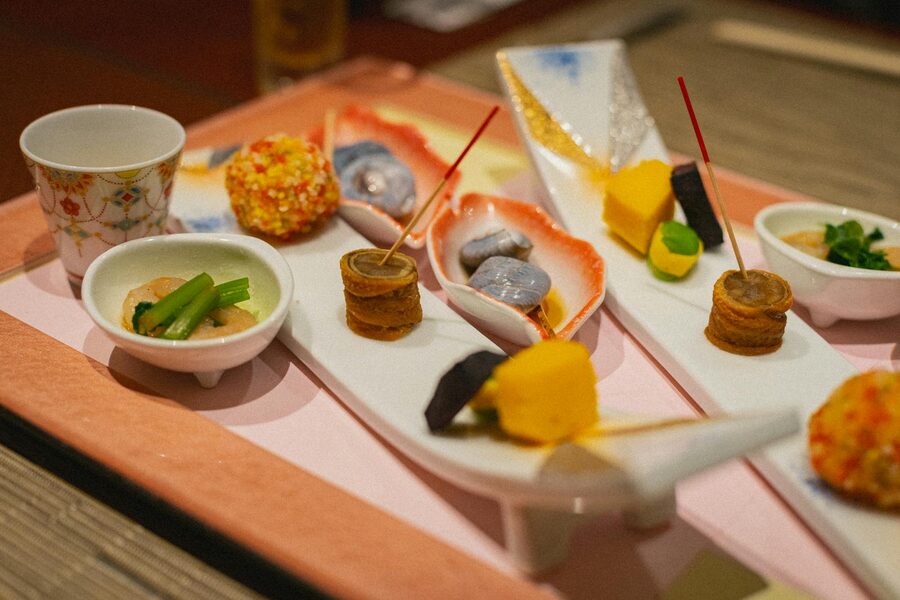
- Dinner, 6pm or 6:30pm. The main event. Eight to twelve small seasonal courses — sashimi, a grilled fish, simmered vegetables, rice, pickles, a soup, a dessert. Served either in your room (at classical flagships) or in a private dining room (modern ryokan). Takes about 90 minutes if you eat at the pace it’s served to you.
- Staff lay out the futon while you bathe again. You leave the room for ten minutes. By the time you come back, the low dining table has vanished and the futon is rolled out. That sleight-of-hand defines the experience.
- Second bath, 9pm. Optional. The bath is quietest between 9 and 10pm.
- Breakfast at 8am sharp. Seven or eight small dishes — grilled salmon, miso soup, rice, pickles, tamagoyaki, a single whole fresh umeboshi (a salted pickled plum). Heavier than you expect. No sleeping in.
- Check-out at 10am or 11am. You’re out before lunch service restarts.
The cost ladder — what each tier actually buys you
Kyoto ryokan prices span a factor of ten. Doubling the rate does not double the pleasure, but the tiers feel genuinely different:
- ¥20,000–¥30,000 per person (small traditional, budget machiya). Kaiseki is simpler — fewer courses, less ceremony, dinner sometimes served in a shared dining room rather than your own. Still authentic, still worth it if you just want the format without the full theatre. Sakura Urushitei, Motonago, Yachiyo live here.
- ¥35,000–¥55,000 per person (mid-tier). Full in-room dinner, proper seasonal kaiseki with fish from the morning market, private bath time bookable. Sweet spot for a first ryokan stay. Yoshiima, Muan, Kikusui.
- ¥60,000–¥100,000 per person (modern luxury and historic mid-flagship). Private outdoor baths on most rooms, top kaiseki chefs, second-meal options, very personalised service. Fufu, SOWAKA, Hiiragiya, Kanamean. This is where you feel the difference.
- ¥100,000+ per person (the historic flagships and a couple of peak-season specialists). Tawaraya, Yoshida Sanso, Kifune Ugenta in kawadoko season. You pay for craftsmanship of the building, continuity of the staff, and kaiseki that other kaiseki chefs go to learn from. The food is superb, but the real difference is the staff reading you.
A first ryokan stay in the ¥45,000–¥65,000 range is the best value compromise in my experience. You get the full format — in-room dinner, proper bath, futon turndown — without paying flagship rates for staff continuity you’ll only register on a fourth visit.
How to choose your ryokan
Four questions that narrow things down fast.
One night or two? I’d pick one over two almost every time. The format is beautiful on day one, slightly repetitive on day two, and by day three the early breakfasts and precise timings stop feeling like a holiday. Treat the ryokan as a set-piece experience inside a longer Kyoto trip, not as a base.
Direct-only or Booking-listed? Seven ryokan on this list don’t appear on Booking.com — Tawaraya, Yoshida Sanso, Kanamean Nishitomiya, and Kifune Ugenta outright, plus you can also book Hiiragiya, Seikoro and Kikusui direct if you prefer. Direct booking means emailing their website contact form in polite English. Replies come within a few days. Booking.com is faster to confirm but sometimes more expensive, since ryokan lift prices on the platform to account for the commission. Email direct if you have time, use Booking.com if you don’t.
In-city or out-of-city? Most of this list is central Kyoto — walkable to Gion, Nishiki Market, or the Downtown subway lines. Kifune Ugenta is 45 minutes north by train and taxi into a mountain valley; Yoshida Sanso is on a wooded hillside 15 minutes by taxi from the centre. Out-of-city ryokan buy you silence and a sharper seasonal feel (water sound in summer at Kibune, eastern-mountain views at Yoshida-yama) but eat a half-day of sightseeing. In-city ryokan integrate with a walking day.
Dietary needs? Every ryokan above will cook around allergies, vegetarianism, or religious restrictions if you tell them when booking. Do not surprise them on arrival. Ryokan kitchens plan two days ahead and a last-minute vegetarian request turns a grilled-fish course into awkward improvisation. Two weeks’ notice is the bare minimum; a month is better.
The historic flagships
Tawaraya Ryokan — widely regarded as Japan’s finest
Location: Downtown, Nakagyo-ku — three minutes’ walk from Oike subway station (Karasuma line)
Rooms: 18, each with a unique name
Best for: A once-in-a-lifetime stay; travellers who have read about it for years and want to finally do it
From: ¥50,000 per person including dinner and breakfast (peak suites go to ¥100,000+)
Book: Direct only — email via the ryokan website. Not listed on Booking.com, Agoda, or any aggregator.
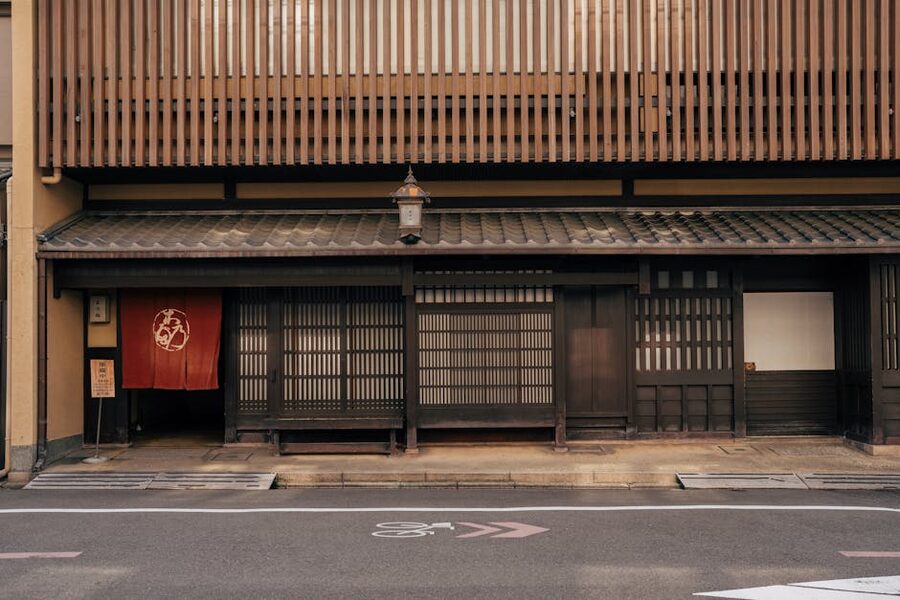
Tawaraya has been operating on the same block in central Kyoto for around three centuries, run by descendants of the original family. All eighteen rooms are different — the older rooms have a real patina of age with low cedar beams and soft lighting, and the garden-view rooms are the ones to ask for if you can’t choose. The building itself has been rebuilt, extended, and patched over the generations, but the continuity of the family and the staff is the point.
What actually makes Tawaraya different is the staff. At most ryokan the service is excellent but formal. Here it’s personal in a way that’s genuinely hard to describe — the woman bringing your tea remembers what you asked for on a previous visit years earlier. Guests mention this in the same tone other hotels get rated on thread count. The garden view from the inner rooms is one of the quietest corners of central Kyoto. You’re in the middle of Nakagyo-ku and you still cannot hear a car.
Bookings are legendarily difficult. The front desk doesn’t answer the phone instantly, they fax requests back, they favour returning guests. If you want to try, write directly in polite English well in advance — six months for standard dates, nine months for sakura or autumn. Be flexible about dates. A hotel concierge from the Ritz, Four Seasons, or Park Hyatt can sometimes call on your behalf with more traction than you’d have yourself.
Who it’s not for: anyone who wants English-language chat, modern Western fittings, or the ryokan format without the formality. Also anyone who cannot sit comfortably on the floor — the in-room dinner service requires it.
What’s good:
- Staff continuity that reads you better than most hotels three times the price
- A garden view from central Nakagyo-ku that is genuinely silent
- Eighteen individually-designed rooms — you don’t get a “standard” here
What’s not:
- Booking is hard and the staff don’t chase you — if you email and don’t get a reply in three days, email again
- No modern concessions of any kind (if you don’t want to sit on the floor to eat, pick somewhere else)
→ Book Tawaraya: direct via the ryokan’s own website contact form. No Booking.com listing exists — silent redirects to other hotels have happened when people tried.
Hiiragiya Ryokan — founded 1818
Location: Nakagyo-ku, diagonally across from Tawaraya — three minutes from Oike station (Karasuma line)
Rooms: 28 split between the historic main building and a newer annex
Best for: A classical flagship experience you can actually book
From: ¥70,000 per person including dinner and breakfast
Book: Direct or via Booking.com
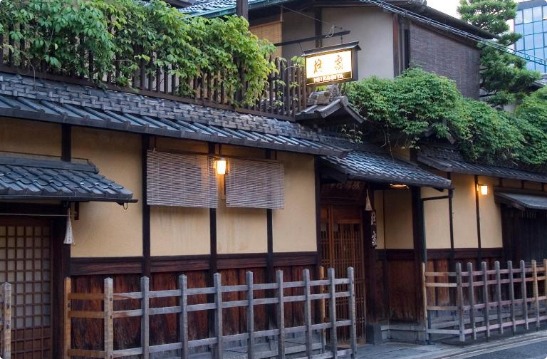
Hiiragiya was founded in 1818 and has been run by the same family for six generations. The 28 rooms split between the historic main building — now a national registered tangible cultural property — and a newer annex. Choose the main building if you can. The older the room, the better the cedar, bamboo, and tatami fittings, and the more the original craftsmanship survives.
Service level is on par with Tawaraya; the food has a lighter, slightly more delicate style. The bath is small but the water is genuinely hot — around 42°C, which first-timers will find uncomfortable for the first ninety seconds. The rooms look onto a classical courtyard garden lit subtly at night. On my last stay, the kimono-clad attendant bringing the evening sake noticed that I’d been out walking in the rain and produced a small hand-warmer without being asked. That’s the register.
If you’re writing a list of “ryokan that should absolutely be on every Kyoto-ryokan list”, Hiiragiya is the one you can recommend confidently knowing a visitor can actually book it.
What’s good:
- The only flagship-tier ryokan you can book on Booking.com two months out
- The historic main-building rooms are genuinely 200-year-old craftsmanship
- Staff are almost as attentive as Tawaraya’s, at a marginally easier price point
What’s not:
- The newer annex rooms are fine but feel like a different (lesser) hotel — ask for the main building when you book
- Still plenty expensive; you’re paying flagship money
→ Check prices at Hiiragiya: Booking.com
Seikoro Ryokan — 1831, Gion-adjacent
Location: Higashiyama, a block from the Kamo River — eight minutes’ walk from Kiyomizu-Gojo (Keihan line)
Rooms: Around 20
Best for: Historic-tier ryokan without the ultra-luxury price tag; first-time ryokan guests on a meaningful budget
From: ¥40,000 per person including dinner and breakfast
Book: Booking.com or direct
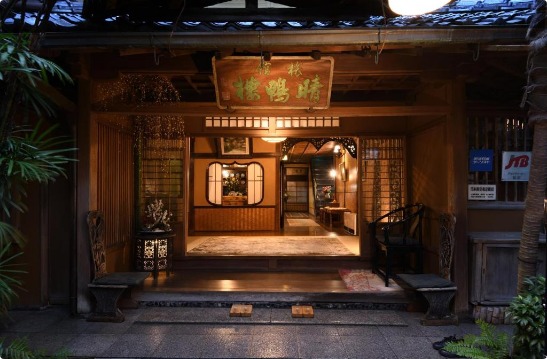
Seikoro has been operating since 1831 and is the third classical Kyoto flagship, though you’ll meet visitors who prefer it to either Tawaraya or Hiiragiya for atmosphere and price. Smaller than Hiiragiya and quieter — the location is on the west edge of Higashiyama, a block from the Kamo River, ten minutes’ walk from Gion. Rooms look onto a small inner garden and the decor is properly traditional without veering into museum-piece territory. Hina dolls on antique tabletops, paper scrolls on the walls, tea and sweets awaiting you on arrival.
Kaiseki here is excellent — seasonal vegetables sourced from Kyoto wholesale markets, stocks made fresh each morning, a dinner that runs for roughly two hours. Breakfast is equally considered and the Western-style bed option is a quiet concession — ask for tatami with futon if that’s what you came for.
Service is slightly less formal than the top two flagships. Staff will chat in polite English if you start the conversation. Easier for a first ryokan stay.
What’s good:
- Historic 1831 architecture you can book online in the ¥40,000 range
- Ten minutes to Gion, fifteen minutes to Kiyomizu-dera if you wake early
- Staff speak enough English that a first-timer won’t be stranded
What’s not:
- Rooms vary significantly in size — if you’re tall, request a larger one
- The bath is small for a ryokan of this age and gets busy at 5pm and 9pm
→ Check prices at Seikoro: Booking.com
Michelin-guide picks and small luxury
Kanamean Nishitomiya — one-Michelin-star kaiseki in Pontocho
Location: Downtown near Pontocho — five minutes’ walk from Sanjo station (Keihan or Tozai lines)
Rooms: 8 tatami rooms
Best for: Food-first travellers who want the kaiseki to be the event, not the room
From: ¥60,000 per person including dinner and breakfast
Book: Direct via the Michelin Guide’s partner booking tool or the ryokan’s own site — not on Booking.com.
Kanamean Nishitomiya was founded in 1873 and has kept its one Michelin star for sixteen consecutive years — a span most Michelin restaurants in Kyoto can’t match. Eight traditional tatami rooms, ikebana in every one, Bose sound systems, and underfloor heating. The location is the narrow central-Kyoto corridor of Pontocho — a lane of lantern-lit wooden frontages that comes alive after dark. Despite the downtown position, the ryokan turns its back on the street and you’d never know the city was five metres away.
If you care about the food, this is the flagship pick. The kaiseki tops the dinner at all the other ryokan on this list because it’s actually a one-starred restaurant in its own right — guests book just for dinner — and the staying-guest kaiseki is the same kitchen’s full-course service. The room is secondary. Tiny boutique footprint, charming owners, English spoken.
Who it’s not for: anyone whose main criterion is the building. Kanamean is small and downtown — you’re not paying for a garden or a landscape view. You’re paying for the kitchen.
What’s good:
- The kaiseki is at the level of a standalone Michelin-starred restaurant, because it is one
- Eight-room scale means the owners interact with every guest personally
- Pontocho location puts you on one of the most evocative dinner-lantern lanes in central Kyoto
What’s not:
- No garden, no sweeping view — the building is a boutique townhouse, not a country retreat
- Peak-season weekends book out before a lot of this list; go direct early
→ Book Kanamean Nishitomiya: via the Michelin Guide site or the ryokan’s own website. No Booking.com listing.
Yoshida Sanso — the 1932 imperial-villa hillside retreat
Location: Yoshida-yama, on the wooded slopes below Mt. Daimonji — no subway nearby; taxi or ryokan car
Rooms: Around 10 including a main-building suite
Best for: Honeymoon, aesthetic travellers, people who like gardens more than they like shopping
From: ¥50,000 per person including dinner and breakfast
Book: Direct only — via the ryokan website. Also bookable via the Michelin Guide’s partner tool.
Yoshida Sanso was built in 1932 for a member of the Imperial family and converted into a ryokan in the post-war period. It sits on the wooded slopes of Yoshida-yama in eastern Kyoto, about a 15-minute taxi ride from central downtown, near Yoshida Shrine and the Philosopher’s Walk. The architecture is classical Japanese with a subtle Art Deco influence — stained-glass windows, fine parquet floors, the imperial Chrysanthemum Seal woven into the decoration. First-floor tatami rooms have shoji screens that open directly onto the gardens; second-floor rooms look out over Kyoto’s eastern mountains.
The Michelin Guide calls it a hybrid of regal atmosphere and quiet elegance, which is about right. Dinner is served in a private adjoining dining room in the imperial style — formal presentation, seasonal menu, the chef appearing briefly to explain the more unusual dishes. Breakfast is equally considered. Service is among the best in Kyoto and the hillside location produces a real seasonal shift — pink haze in April, red maples in November, a scattering of snow in January.
Practical warning: no public transport within walking distance. Take a taxi from central Kyoto or ask the ryokan to arrange a car. The first time I tried to walk back down the hill at 11pm I gave up halfway and hailed a passing empty cab.
What’s good:
- A former imperial villa with stained glass, parquet, and the Chrysanthemum Seal woven into the decor — this isn’t Airbnb theming
- Hillside location with a real seasonal shift — honeymoon-tier in sakura and autumn
- In-room dinner in the imperial style, with the chef presenting the menu personally
What’s not:
- Zero public transport — you’re reliant on taxis for every movement
- Less central, so you’re burning 45 minutes each direction to see Gion or Arashiyama
→ Book Yoshida Sanso: direct via the ryokan’s website or the Michelin Guide partner tool.
Nanzenji Sando Kikusui — 1895 teahouse with a garden view
Location: Keage, northeastern Kyoto, on the sando (approach road) to Nanzen-ji — five minutes’ walk from Keage station (Tozai line)
Rooms: Around 10
Best for: Temple-focused visits, garden enthusiasts, repeat Kyoto visitors
From: ¥45,000 per person including dinner and breakfast
Book: Booking.com or direct
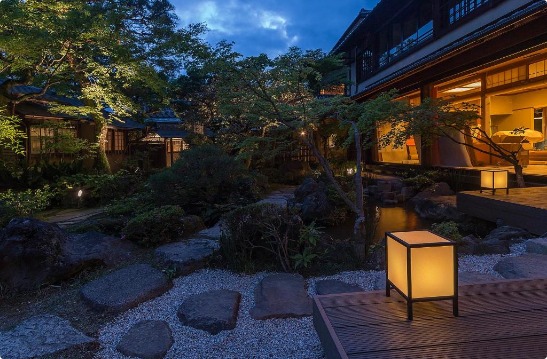
Kikusui sits directly on the sando — the approach road — to Nanzen-ji, one of Kyoto’s great Zen temples. The building is an 1895 teahouse converted into a small ryokan with a classical chisen-kaiyu (pond-and-stroll) garden at the back. The east-facing rooms look directly onto a pond with carp and a carefully composed arrangement of maples and stone lanterns. Morning light through the maple canopy is the photograph most visitors take.
Dinner is a creative kaiseki with Michelin recognition. The ryokan runs a small tea ceremony in the garden pavilion if you book ahead. But the real reason to stay here is the location: you can walk to Nanzen-ji in two minutes after breakfast — before the tour groups arrive — and continue up the Philosopher’s Path to Ginkaku-ji if the weather’s good. I did this on a cold November morning and had the aqueduct of Nanzen-ji entirely to myself for twelve minutes.
What’s good:
- Direct temple access — you can be inside Nanzen-ji before 9am when tour buses start to arrive
- The east-facing rooms with garden pond are genuinely some of the prettiest in Kyoto
- Michelin-recognised dinner without the flagship price tag
What’s not:
- The non-garden-facing rooms are significantly less interesting — specify east-side if possible
- Keage is quiet to the point of feeling remote at night — not a downtown ryokan
→ Check prices at Nanzenji Sando Kikusui: Booking.com
Kifune Ugenta — the mountain-stream kawadoko ryokan
Location: Kibune, a mountain valley 45 minutes north of central Kyoto — take the Keihan line to Demachiyanagi, change to the Eizan line to Kibune-guchi, then a 5-minute taxi
Rooms: Two suites
Best for: Summer escapes (May–September), couples, nature-first travellers, anyone who wants the kawadoko experience with an overnight
From: ¥80,000 per person in summer kawadoko season; lower in winter
Book: Direct only
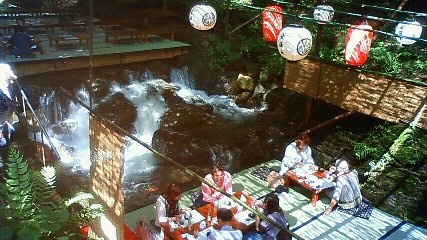
Kifune Ugenta was founded in 1962 and is the ryokan the Michelin Guide singles out in the Kibune valley. There are only two suites — one traditional Japanese, one modern contemporary — both with open-air baths, fireplaces, and the adjacent Kibune River running past. The valley sits in a narrow ravine about 45 minutes from central Kyoto and is famous for its cluster of ryokan and restaurants that build kawadoko platforms over the river in summer. From May to September you eat dinner directly above the water, cooled by the stream, in air roughly six degrees lower than the downtown Kyoto afternoon.
A night at Ugenta in late July is one of the best luxury experiences in Japan. You arrive in the afternoon heat, bathe, and are led down to the kawadoko platform at dusk. The kaiseki is served directly over the stream. You sleep with the sound of water all night. In winter the kawadoko is retracted and dinner moves indoors around the irori (a square fire-pit sunk into the floor) — still excellent, more atmospheric in a different way, but without the summer drama.
Note: the rest of the valley has a string of non-ryokan kawadoko restaurants doing lunch if you don’t want to commit to the overnight. Ugenta only takes overnight guests and books up six months out for July and August weekends.
What’s good:
- Summer kawadoko dinner over an actual mountain stream — not a reconstruction, the real thing
- Two suites only, so the entire property is effectively yours for the evening
- Water temperature in the valley runs about six degrees below central Kyoto in summer
What’s not:
- A 45-minute train and taxi transit each way — burns a Kyoto day
- Winter lacks the kawadoko drama; the summer booking window opens nine months ahead
→ Book Kifune Ugenta: direct via the ryokan’s website. Not on Booking.com.
Modern luxury ryokan
Fufu Kyoto — a private outdoor bath in every room
Location: Okazaki, a block from the Heian Shrine — five minutes’ walk from Higashiyama station (Tozai line)
Rooms: Around 40
Best for: A first luxury ryokan stay, honeymoon, anyone who wants a private bath without going full flagship
From: ¥60,000 per person including dinner and breakfast
Book: Booking.com or direct
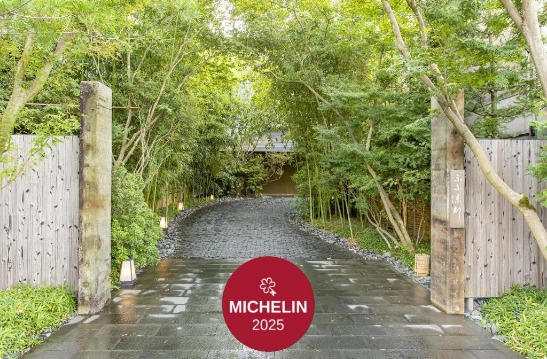
Fufu Kyoto opened in 2020 and gets the modern-ryokan format closer to right than most newer properties. Every room has a private outdoor bath — the signature of the brand — and the suites include genuinely sizeable hillside-facing terraces. Rooms mix traditional tatami sections with Western beds and a futon option, which sounds like compromise but works well for travellers who’ve never slept on the floor and don’t want their first ryokan to be a test of hip flexibility.
The kaiseki is Michelin-starred and runs about two hours. The chef uses Kyoto vegetables almost exclusively and refuses to serve food out of season. There’s a small hot-spring source piped into the baths, which is unusual inside central Kyoto — most city “onsen” are just heated mineral baths — and here it’s the real thing. If you only have time for one ryokan night and can’t chase Tawaraya reservations, this is the pick.
What’s good:
- Private outdoor bath in every room, genuinely piped hot-spring water
- Michelin-starred kaiseki with proper seasonal discipline
- Western-bed option means travellers who can’t sleep on the floor aren’t excluded
What’s not:
- Built in 2020 — if you want 200-year-old cedar beams, this isn’t it
- Okazaki is quiet; for Gion-lane atmosphere you’re looking at a 20-minute walk or a taxi
→ Check prices at Fufu Kyoto: Booking.com
SOWAKA — the restored ochaya in Gion
Location: Gion, two minutes from Yasaka Shrine — six minutes’ walk from Gion-Shijo station (Keihan line)
Rooms: 23 across two buildings
Best for: Combining a ryokan night with a Gion sightseeing focus
From: ¥55,000 per person including dinner and breakfast
Book: Booking.com or direct
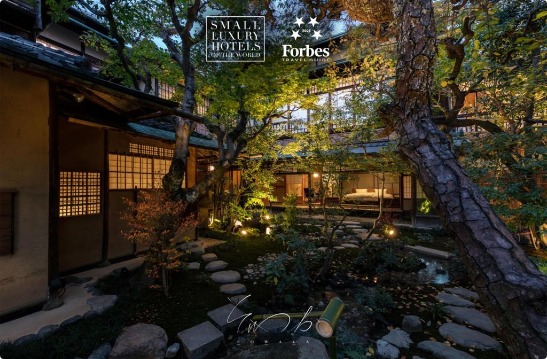
SOWAKA occupies a renovated ochaya — a traditional Gion teahouse where geisha and maiko entertained clients — plus a newer annex. The 23 rooms split between the two buildings; the main-house rooms have the most character, with some of the original maiko-era interior panels still in place. There’s a small onsite restaurant, La Bombance, separately Michelin-listed for modern Japanese. The staff does the full ryokan sequence — tea, bath, kaiseki, futon turndown — but with slightly more contemporary tonal notes. Breakfast is Western or Japanese by request, which matters more than you’d think on day three of a ryokan-heavy trip.
The location is among the best on this list for first-time Gion visitors. Three minutes from Yasaka Shrine, five from the Shirakawa canal, eight from Kiyomizu-dera if you leave by 7:30am. If you want the ryokan format and the classical Gion sightseeing corridor in the same stay, SOWAKA is the call.
What’s good:
- Original ochaya interior panels preserved in the main-building rooms
- Best walking-distance Gion location on this list — Yasaka Shrine, Hanamikoji, Shirakawa all within ten minutes
- Western breakfast option if you’ve had enough grilled salmon by day three
What’s not:
- The annex rooms are quietly worse than the main-house ones — request the main house
- Gion around SOWAKA gets dense at 6pm with dinner crowds; the peace is all indoor
→ Check prices at SOWAKA: Booking.com
Nazuna Kyoto Tsubaki St. — modern machiya-ryokan hybrid
Location: Kiyamachi-dori, near Gojo — six minutes’ walk from Gojo station (Karasuma line)
Rooms: Around 15
Best for: Couples, privacy-first travellers, introverts who find classical ryokan staff attention too much
From: ¥30,000 per person including dinner and breakfast
Book: Booking.com or direct
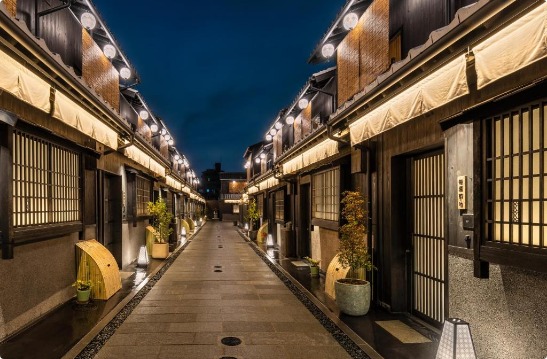
The Nazuna brand runs a small portfolio of modern ryokan in converted machiya (traditional wooden townhouses) across Kyoto. Tsubaki St. is the Kiyamachi-dori property — a canal-side lane of low two-storey buildings that’s one of the prettiest walking-only streets in central Kyoto. Every room has a private bath (not outdoor; these are townhouses), tatami flooring, and in-room kaiseki served by a single staff member who does the full multi-course dinner without the constant flow of ryokan attendants you get at the flagships.
That last point is either a positive or a negative depending on you. At Tawaraya, someone appears every fifteen minutes. At Nazuna, you can actually be alone with the person you’re travelling with for most of the evening. For honeymoons or people who don’t want constant interaction it’s a genuine upgrade; if the “service” is the whole point of the format for you, you’ll miss it.
What’s good:
- Private in-room bath in a central Kyoto machiya lane, under ¥35,000 a head
- Introvert-friendly ryokan format — the hospitality is quieter and less constant
- Kiyamachi-dori is one of the best-preserved narrow streets in central Kyoto
What’s not:
- Not a “classical” ryokan — if you want the eighteenth-century cedar-beam experience, look elsewhere
- Kaiseki is good but not at the level of the Michelin-listed flagships
→ Check prices at Nazuna Kyoto Tsubaki St.: Booking.com
Traditional ryokan in Gion and Higashiyama
Gion Yoshiima — fourth-generation family-run
Location: Gion, near Hanamikoji — four minutes’ walk from Gion-Shijo station (Keihan line)
Rooms: 16
Best for: A first ryokan at moderate-luxury prices; couples who want Gion atmosphere
From: ¥35,000 per person including dinner and breakfast
Book: Booking.com or direct
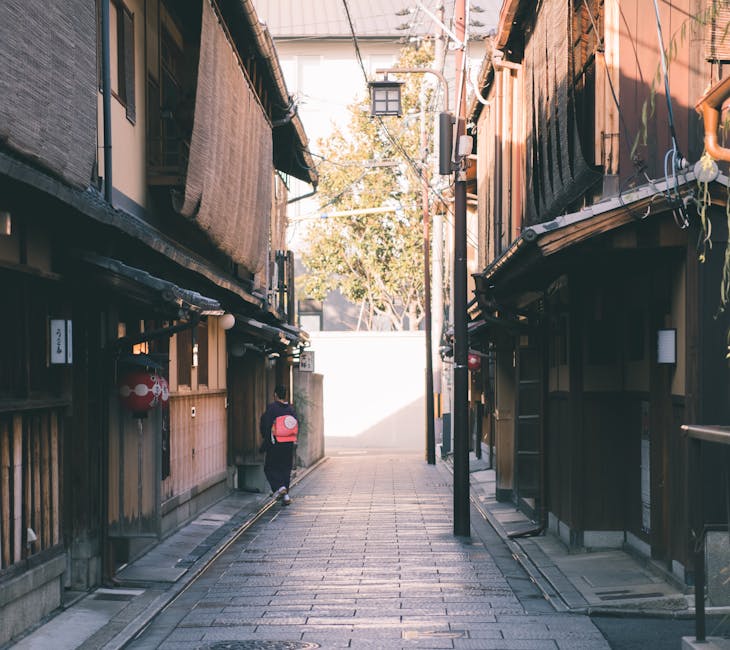
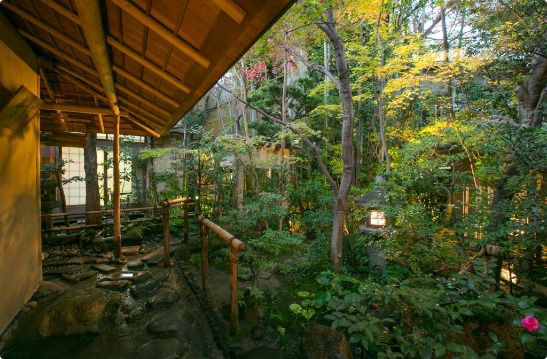
Yoshiima is a small fourth-generation family-run ryokan on a side lane on the edge of Gion. 16 rooms, all tatami, most looking onto an inner courtyard garden. The kaiseki is good traditional Kyoto home cooking with a few set pieces — sashimi, grilled fish, seasonal vegetables — rather than Michelin-level innovation. Breakfast is served in your room in the classical way.
The reason to pick Yoshiima over SOWAKA is the price-to-experience ratio. You get the full ryokan format at roughly 60% of the SOWAKA rate, and the Gion location is still walkable to Hanamikoji and the Shirakawa canal. The rooms are older and less designer-perfect. The charm is the continuity and the fact that the same family has been greeting guests at this door for four generations.
What’s good:
- Fourth-generation family ownership — old-school ryokan service at this price point is rare
- In-room kaiseki breakfast, not the shared-dining-room compromise
- Four minutes from Gion-Shijo — excellent Gion base
What’s not:
- Rooms are older and the bath is small — if you need a private bath, go elsewhere
- English is limited; bring translator app and patience
→ Check prices at Gion Yoshiima: Booking.com
Ishibekoji Muan — eight rooms on one of the quietest lanes in Gion
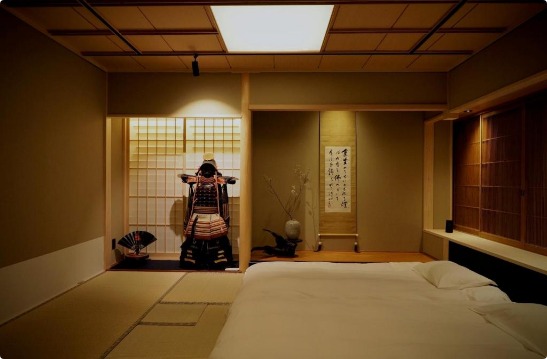
Location: Ishibe-koji, Gion — seven minutes’ walk from Gion-Shijo station (Keihan line)
Rooms: 8
Best for: Couples wanting a very small, atmospheric ryokan on one of the most preserved lanes in Gion
From: ¥45,000 per person including dinner and breakfast
Book: Booking.com or direct
Muan occupies a restored merchant house on Ishibe-koji, the narrow stone-paved lane that runs parallel to Hanamikoji and escapes the worst of the Gion tourist volume. Only eight rooms. It’s run by a husband-and-wife team and has the feel of a private home — you’ll almost certainly see the owners directly rather than being handed off to staff.
Kaiseki is served in a shared dining room with other guests, which sounds worse than it is. The setting is intimate, the atmosphere is quiet, and you’re not eating at touching-elbows distance. The bath is private and booked by appointment. This is the ryokan for people who want the format without the grandeur — and whose priority is the walk back to the door at 11pm, which at Muan is through one of the prettiest and least-trafficked lanes in Gion.
Ishibe-koji itself is worth the stay. It’s the Gion lane most guides miss and most residents prefer. Walk it after 9pm and you’ll have it to yourself.
What’s good:
- Eight-room scale means you’ll meet the owners directly
- Ishibe-koji lane is one of the most preserved walking-only streets in Gion
- Private bath bookable — no flagship-scale bathing queue
What’s not:
- Kaiseki in shared dining, not in your room — the most classical experience this isn’t
- Only eight rooms, so you’re booking six months out for any weekend
→ Check prices at Ishibekoji Muan: Booking.com
Ryokan Motonago — a small traditional in Higashiyama
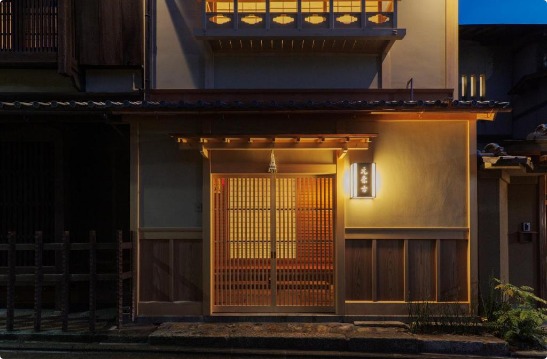
Location: Higashiyama, three minutes from Kodai-ji — ten minutes’ walk from Gion-Shijo station (Keihan line)
Rooms: 11
Best for: A small traditional ryokan within walking distance of the Higashiyama temple cluster
From: ¥30,000 per person including dinner and breakfast
Book: Booking.com or direct
Motonago is a small family-run ryokan tucked on the hillside leading up to Kodai-ji temple, in the preserved corridor between Gion and Kiyomizu-dera. Eleven rooms, all tatami, all looking onto the internal garden. The building is a converted machiya and the wood is properly aged. Kaiseki is modest by flagship standards but unfussy and seasonal — home cooking from a Kyoto grandmother rather than a Michelin chef.
The reason to stay here is the walking distance. You’re three minutes from Kodai-ji, five from Yasaka Shrine, eight from Kiyomizu-dera. An early-morning walk from the door at 7am will put you inside Kiyomizu before the tour groups start arriving. I’ve done this twice and both times had the wooden stage above the maples almost to myself.
What’s good:
- Inside the Higashiyama walking corridor — early-morning temple access is genuinely viable
- Small and family-run — you’ll recognise the staff by name by day two
- Kaiseki is homely rather than flashy; for a first ryokan this is a feature, not a bug
What’s not:
- No private bath, no lift, narrow stairs — not ideal for travellers with mobility issues
- Rooms are small even by ryokan standards — pack light
→ Check prices at Ryokan Motonago: Booking.com
Kyoto Nanzenji Ryokan Yachiyo — 1915, garden-facing
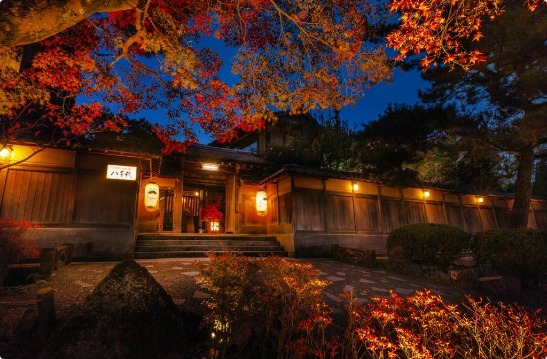
Location: Keage, on the Nanzen-ji sando — five minutes’ walk from Keage station (Tozai line)
Rooms: Around 25
Best for: Garden-focused mid-range stays; travellers who want the Nanzen-ji sando location without Kikusui rates
From: ¥25,000 per person including dinner and breakfast
Book: Booking.com or direct
Yachiyo has been running since 1915, a few doors down from Kikusui on the same Nanzen-ji approach road. The building is older and larger than Kikusui’s and the stroll garden is one of the better mid-range gardens in central Kyoto. Rooms vary — ask for a garden-facing tatami room when you book, not a Western-style bed room facing the street.
Dinner is proper seasonal kaiseki (though without Michelin recognition) and breakfast runs at 8am. Service is attentive rather than flagship-formal. The reason Yachiyo belongs on this list is the price — you’re getting the Nanzen-ji walkable location, a proper garden, and full ryokan sequence for half what Kikusui costs. The trade is less architectural distinction in the rooms and a slightly less tuned kaiseki. Fair trade for most first-timers.
What’s good:
- Garden at mid-range rates — this is the best garden-to-price ratio on this list
- Direct Nanzen-ji walking access, five minutes to the main gate
- Tokko- and Onsen-side room options if you want a private bath configuration
What’s not:
- Western-bed rooms sit facing the street — ask for garden-facing tatami on booking
- Kaiseki is fine but not the Michelin-tier Kikusui level
→ Check prices at Kyoto Nanzenji Ryokan Yachiyo: Booking.com
Kyomachiya Ryokan Sakura Urushitei — a proper budget machiya
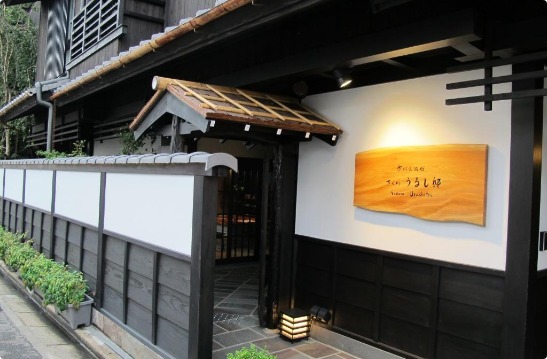
Location: Nakagyo-ku near Nishiki Market — four minutes’ walk from Karasuma-Oike station (Karasuma or Tozai line)
Rooms: Around 10
Best for: Travellers who want the machiya ryokan format without the mid-range price
From: ¥20,000 per person including dinner and breakfast
Book: Booking.com or direct
Sakura Urushitei is a restored Kyoto machiya townhouse converted into a small ryokan. Around ten tatami rooms, wooden beams with visible age, an internal garden, and a small shared bath. Kaiseki here is simpler — fewer courses, served in a shared dining room rather than your suite — but the food is still seasonal Kyoto home cooking, not a chain buffet impression of ryokan food.
This is the tier where a first-time ryokan guest on a meaningful budget should stay. You get the building, the tatami, the kaiseki format, the yukata-and-bath sequence, for half what the Gion ryokan charge. What you don’t get is in-room dinner, staff continuity, or flagship-level food. If your priority is the format as experience and not the format as luxury, the trade is fair.
What’s good:
- Under ¥25,000 a person with dinner and breakfast — genuinely the budget tier
- Proper machiya building, not a hotel chain in tatami cosplay
- Four minutes from Nishiki Market — one of the best central locations on this list
What’s not:
- Shared dining, not in-room kaiseki — the classical “staff serving course by course in your room” isn’t here
- Shared bath only — book private bath time on the afternoon you arrive, or you’ll miss the window
→ Check prices at Kyomachiya Sakura Urushitei: Booking.com
Ryokan etiquette — the four things you need to get right
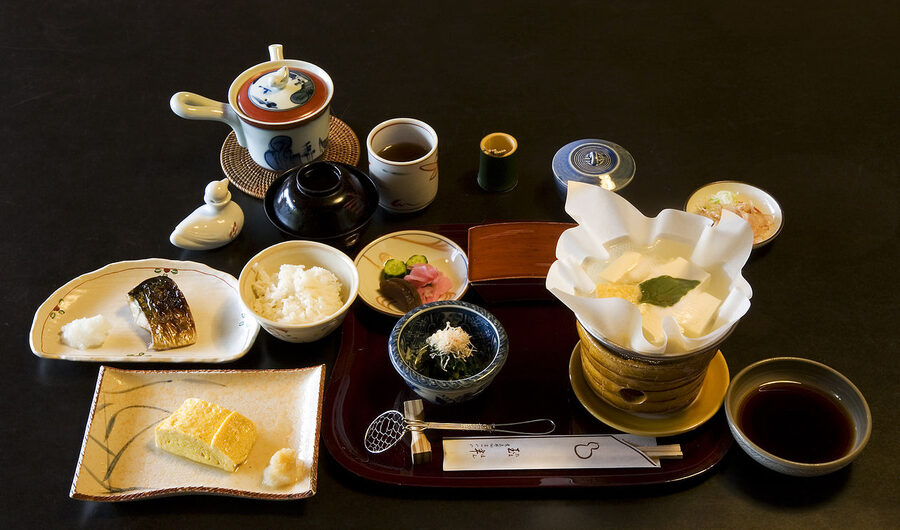
Most ryokan etiquette is flexible for foreign guests — staff will gently correct mistakes without the embarrassing fuss some guidebooks warn about. Four things actually matter.
- Shoes at the genkan. The recessed step at the entrance is the line between outside and inside. Step up out of your shoes, not down into slippers. Facing your shoes toward the exit when you take them off is a small courtesy staff will appreciate but not require.
- Bath protocol. Wash and rinse at the low showers outside the tub before getting in. No soap in the water. No towel in the water — fold the small towel and balance it on your head if you must take it with you. Tattoos are sometimes an issue at older ryokan; ask in advance if you have visible ones.
- Dinner timing. If staff ask whether you want dinner at 6pm or 6:30pm, they’re not asking for you — they’re scheduling. Don’t say “any time”. Pick one and arrive five minutes early in your yukata.
- Tipping. Don’t. It’s not done. If you want to mark a particular service, a small gift (a box of sweets, a bottle of sake) given to the head maid on departure is the local form.
One more thing. The yukata goes left side over right — right-over-left is how corpses are dressed. The staff will fix it for you without comment if you get it wrong.
Peak-season pricing — what to actually expect
Kyoto has two sharp peak periods where ryokan rates move aggressively, plus a diffuse summer tourist spike and a quiet winter trough. In rough terms:
- Cherry blossoms (late March to mid-April). Rates roughly double for the ten-day sakura window. Hiiragiya, Fufu, and the smaller ryokan sell out six months ahead for this period. If you’re flexible on dates, blossom season actually begins in the valleys (Kibune, Uji) a week before central Kyoto — sometimes you can catch late sakura in Kibune Ugenta after the downtown has fallen.
- Autumn leaves (mid to late November). Rates climb 1.5 to 2 times, peak around the final weekend of November. This is actually the best aesthetic season for the Higashiyama ryokan — the gardens at Kikusui and Yachiyo come into their own.
- Summer kawadoko (May to September). Kibune Ugenta and the other kawadoko ryokan are at their highest rates in July and August. July weekends book out nine months ahead.
- Gion Matsuri (mid-July). Parade days (July 17 and 24) are impossible for central-Kyoto ryokan; rates jump, and occupancy hits 100% across the Gion/Downtown corridor.
- New Year (December 28 – January 3). Many ryokan close entirely; those that stay open run double rates with compulsory New Year kaiseki menus.
- Quiet windows — early December, late January through February, late June. Rates drop 20–30% below the published “standard”, and the best ryokan actually have availability at two weeks’ notice.
Direct-booking ryokan occasionally release cancelled reservations two to four weeks out. If your dates are fixed and a Tawaraya or Yoshida Sanso booking looks impossible, email the ryokan at the three-week mark asking politely whether any cancellations have come in. I’ve had this work twice.
What most guides get wrong
Four opinions I’d stake.
Tawaraya is not the right pick for a first ryokan stay. It’s difficult to book, expensive, and the service is calibrated for guests who are deep enough into ryokan culture to appreciate the subtleties. A first-time visitor will have an excellent stay — but they’ll also have an equally excellent stay at Hiiragiya, Fufu, or Kanamean for a third less money and ten times easier booking. Save Tawaraya for a return visit, when you know what you’re looking at.
One night at a ryokan is enough. Three nights is two too many. The format is beautiful at day one, slightly repetitive at day two, and by day three the early breakfasts and precise dinner timings stop feeling like a holiday and start feeling like a training camp. Treat the ryokan as a highlight experience inside a longer Kyoto trip, not as a base for sightseeing.
The Kibune mountain-stream ryokan beat the downtown flagships in summer. From mid-July to late August, the temperature differential between Kibune valley and downtown Kyoto is real — the valley runs roughly six degrees cooler. A kawadoko dinner at Ugenta above an actual mountain stream beats a ¥100,000 in-room kaiseki in a dead-still Nakagyo summer hotel corridor every time. If you can only afford one summer ryokan night, do it in Kibune.
“Luxury ryokan Kyoto” isn’t always better than “mid-range ryokan Kyoto”. Price buys you room craftsmanship, kaiseki complexity, and staff continuity. It does not buy you a better sleep, a better bath, or a better emotional takeaway. Ishibekoji Muan at ¥45,000 is, for many first-timers, the better experience than Hiiragiya at ¥95,000 — because eight rooms and the owner pouring your tea produces a different kind of human warmth than eighteen rooms and a formal kimono-clad attendant. Know which you want.
Which ryokan for which traveller
Quick calls by traveller type.
- First ryokan stay, medium budget: Gion Yoshiima or Ishibekoji Muan. Real ryokan format, Gion location, moderate price.
- First ryokan stay, higher budget: Fufu Kyoto or SOWAKA. Private bath, Western bed option, the modern luxury ryokan experience at a forgiving entry point.
- Honeymoon: Yoshida Sanso (off-season) or Kifune Ugenta (summer). Imperial villa or kawadoko platform. Both work; pick based on the month.
- Budget (sub-¥25,000 per person): Kyomachiya Sakura Urushitei or Motonago. Real ryokan format without the in-room dinner theatre.
- Returning visitor / serious ryokan hunter: Tawaraya or Kanamean Nishitomiya. The flagship pick for someone who’s already done two easier ryokan.
- Families with children under 12: Yachiyo or Fufu. Both take kids politely; classical flagships often don’t, and Gion Yoshiima is too small.
- Food-first traveller: Kanamean Nishitomiya or Fufu Kyoto. Both are Michelin-starred for their kaiseki.
- Summer only, July–August: Kifune Ugenta. The kawadoko makes every other ryokan in central Kyoto feel stifling.
- Winter visitor wanting silence: Yoshida Sanso or Kikusui. Both look better in the dead of winter than in summer.
- Someone who’s never slept on a futon: Fufu, SOWAKA, or Seikoro. All three offer Western-bed options and the ryokan sequence in parallel.
Booking — how to actually get a room
Three booking categories behave differently:
- Booking.com-listed (Hiiragiya, Seikoro, Kikusui, Fufu, SOWAKA, Yoshiima, Muan, Motonago, Yachiyo, Nazuna, Sakura Urushitei): book three to six months ahead for standard dates, six to twelve for sakura or autumn weekends. Cancellation policies vary — read the fine print, especially on the flagship tier.
- Direct-only, accessible (Yoshida Sanso, Kanamean Nishitomiya, Kifune Ugenta): email the ryokan’s website contact form in polite English. Include exact dates, number of guests, dietary requirements, and approximate arrival time. Most reply within 48 hours. Payment is usually on arrival by card.
- Direct-only, difficult (Tawaraya): email well in advance (nine months for peak dates) with a courteous paragraph introducing yourself. Returning guests and luxury-hotel concierge introductions go to the front of the queue. First-time foreign guests without a relationship should be flexible about dates.
If you’re already staying in a regular hotel — the full list is in the main Kyoto hotel guide — and want to add a single ryokan night, the concierge at the luxury-tier hotels (Ritz, Four Seasons, Park Hyatt) can often call on your behalf with more traction than you’d get yourself. This particularly matters for Tawaraya and Yoshida Sanso.
Frequently asked questions
How much does a night at a ryokan in Kyoto cost?
Budget ryokan start at around ¥20,000 per person including dinner and breakfast. Mid-range sits between ¥35,000 and ¥55,000. Modern luxury ryokan begin at ¥60,000, and the historic flagships — Tawaraya, Hiiragiya, Yoshida Sanso — typically run ¥70,000 to ¥150,000+ per person at peak periods. These are per-person rates, not per-room, which is how ryokan quote.
Do Kyoto ryokan have private bathrooms in the rooms?
Mixed. Modern luxury ryokan like Fufu and SOWAKA have private baths (and sometimes private outdoor baths) in every room. Historic flagships and smaller traditional ryokan generally use a shared bathhouse that’s booked by appointment or timed by gender, plus a small in-room toilet. For a first ryokan stay, a shared bath is part of the experience; by the third or fourth ryokan night, you’ll probably want a private one.
Can you stay at a ryokan if you have tattoos?
Depends on the ryokan. Modern luxury properties (Fufu, SOWAKA, Nazuna) are broadly tattoo-friendly — small covers can be used in shared bath areas. Historic flagships can be stricter, though this is less rigid than it was a decade ago. Email ahead with a polite query; most will offer a private-bath booking slot or suggest a time when shared bath isn’t an issue. Never assume.
How many nights should I stay at a ryokan?
One night, unless you have a specific reason otherwise. The format is designed as a single-night experience — check in at 3pm, dinner at 6pm, bath, breakfast at 8am, check out by 11am. Two nights can work at a destination ryokan where the location itself is the appeal (Kifune Ugenta, Yoshida Sanso). Three nights starts to feel like a training camp.
What do you wear to dinner at a ryokan?
The yukata provided in your room. Staff will fix the fit if it’s wrong. The only rule is left side over right — right-over-left is funerary dress. If you can’t do the floor-seated dinner comfortably, ask for a room with table-and-chair seating; most ryokan have at least one.
Do ryokan in Kyoto have real onsen — actual hot-spring water?
Some do, most don’t. Central Kyoto is not a natural hot-spring area, so most city ryokan baths are heated mineral water rather than geothermal onsen. The exceptions: Fufu Kyoto pipes in genuine hot-spring water, as do a handful of Arashiyama and Kibune ryokan. For real onsen with proper volcanic spring water, you want Kinosaki Onsen (2.5 hours by train from Kyoto — outside the scope of this guide but worth knowing). See the kyotoguide.info Kyoto onsen guide for the full picture.
How far ahead do I need to book Tawaraya?
Six months for standard dates. Nine months for sakura (late March to early April) or autumn leaves (mid to late November). Tawaraya prioritises returning guests, and first-time foreign guests should be flexible about dates. An introduction from a Ritz, Four Seasons, or Park Hyatt concierge improves your chances significantly.
Is one ryokan night in Kyoto enough, or should I do two?
One, unless the ryokan itself is a destination (Kifune Ugenta in kawadoko season, Yoshida Sanso for a honeymoon). The format is beautiful at day one and slightly repetitive at day two — the precise breakfast timing and constant staff attention that charm at the start become scheduling friction by the second morning. Combine a single ryokan night with two or three nights at a good Kyoto hotel for the best balance.
Beyond Kyoto — where to go next for ryokan
If the Kyoto ryokan on this list leave you wanting more of the format, two directions are worth knowing about. Kinosaki Onsen, 2.5 hours north by train, is a whole town of ryokan built around seven public bathhouses — the traditional alternative for real hot-spring ryokan culture. The Japan National Tourism Organization has a useful official overview of ryokan if you want to cross-reference the cultural terms. If you want luxury-tier hotels in Kyoto as the other half of your trip, the Kyoto luxury hotel guide covers the Ritz, Four Seasons, and similar. For ryokan and hotels with genuine hot-spring baths, see the Kyoto onsen hotel guide.
Most useful thing you can read before a ryokan night, though, is nothing. Show up. Do what the staff suggest. Let the format do its work.