This guide contains affiliate links. If you book through them we earn a small commission at no extra cost to you. Prices shown are approximate starting rates for 2026 and shift with season and demand.
Everyone tells you Kyoto is expensive. It can be. It doesn’t have to be.
The mistake most budget-travel guides make is collapsing three very different ways to sleep in Kyoto into one list. Hostel dorms, capsule hotels, and budget business hotels are not variants of the same thing. They’re three separate products at three separate price points, each with a specific use case. Book the wrong one for your trip and you’ll either overpay or have a miserable stay. Book the right one and you can do a week in Kyoto for less than a single night at the Park Hyatt.
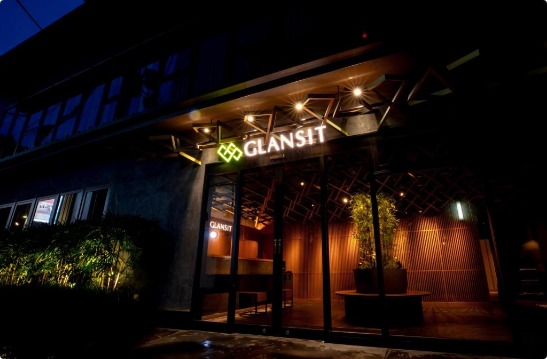
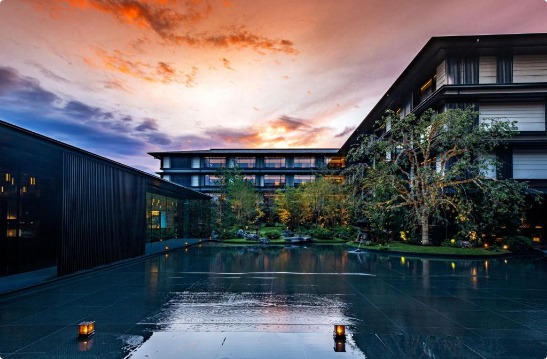
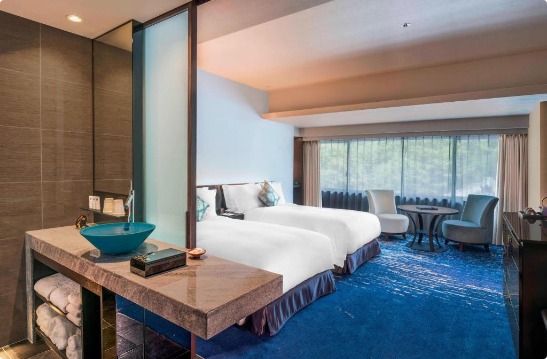
This guide covers all three tiers across sixteen properties. Every hotel listed has been verified on Booking.com in April 2026 and photographed from its current listing, which is why the images here are the actual rooms and lobbies you’ll walk into rather than stock marketing shots. The prices, the walking times, the quirks — I’ve either stayed in these places or had someone I trust do it. Where something is a compromise, I’ve said so.
In This Article
- The three budget tiers in Kyoto
- Quick-reference comparison — all 16 budget properties
- How to pick — the decision framework nobody writes down
- Peak-season pricing — the budget tier matters more here
- Hostels — under ¥6,000 a night
- K’s House Kyoto — the reliable backpacker standard
- Piece Hostel Kyoto — design-forward, near the station
- Piece Hostel Sanjo — the downtown sister
- UNKNOWN KYOTO — the design-led newcomer
- Len Kyoto Kawaramachi — hostel-hotel hybrid
- Ryokan Hostel Gion — a hostel inside Gion itself
- Capsule hotels — ¥7,000 to ¥14,000
- Tsukimi Hotel — the intimate, women-friendly option
- Glansit Kyoto Kawaramachi — my default capsule pick
- The Millennials Kyoto — the architectural capsule
- Budget business and design hotels — ¥12,000 to ¥22,000
- APA Hotel Kyoto Gion Excellent — budget chain near Gion
- Toyoko Inn Kyoto Shijo-Karasuma — predictable, downtown
- Sotetsu Fresa Inn Kyoto-Kiyomizu Gojo — between downtown and the temple walk
- Hotel Anteroom Kyoto — the art-hotel budget play
- Candeo Hotels Kyoto Karasuma Rokkaku — machiya lobby, rooftop bath
- Hotel Kuu Kyoto — design-led budget
- Dormy Inn Premium Kyoto Ekimae — onsen on top, budget price below
- What most “cheap Kyoto” guides get wrong
- Capsule-hotel etiquette — the four things to know
- Hostel etiquette — things Western hostellers sometimes miss
- Peak-season pricing playbook
- Booking tips — direct vs Booking, refundable vs not
- By-budget summary — what to book at each price point
- Frequently asked questions
- Are capsule hotels safe in Kyoto?
- Do hostels in Kyoto have curfews?
- What’s the cheapest place to stay in Kyoto?
- Are capsule hotels suitable for couples?
- Do Kyoto hostels have private rooms?
- Capsule hotel or hostel dorm — which is better?
- Is Kyoto more expensive than Tokyo or Osaka for budget travel?
- What should I bring to a capsule hotel?
- One more option — machiya rentals for longer stays
The three budget tiers in Kyoto
- Hostel dorms — ¥3,500 to ¥6,000/night. Bunk bed, shared bathroom, communal kitchen, lockers. You’re sharing a room with four to ten other people. Best for under-30s and solo travellers who don’t mind the social layer. Kyoto has a handful of genuinely good ones — K’s House, Piece Hostel and the newer design hostels like UNKNOWN KYOTO are the reliable picks.
- Capsule hotels — ¥7,000 to ¥14,000/night. A single-person pod (modern capsules are about 2m long and have proper mattresses and LED lighting) in a shared sleeping floor, with communal bathrooms and a public lounge. Modern capsule hotels have moved upmarket significantly — The Millennials charges ¥12,000+ a night and you’re getting what’s effectively a premium mini-suite with shared amenities.
- Budget business hotels — ¥13,000 to ¥22,000/night. Full private room with en-suite bathroom, small but properly finished. Toyoko Inn, Sotetsu Fresa, Dormy Inn and the design-led Hotel Kuu sit here. For solo travellers or couples who want privacy without luxury-tier spend, this is the most useful bracket in Kyoto.
There’s a fourth category I won’t spend much time on in this article: Airbnb-style machiya rentals, which become competitive on a per-night basis if you’re staying a week or longer and travelling with 2–4 people. I’ll mention them at the end. For one to three nights at solo or couple volumes, the three tiers above are what you’re working with.
Quick-reference comparison — all 16 budget properties
| Property | Type | Location | From/night | Book |
|---|---|---|---|---|
| K’s House Kyoto | Hostel | South of Kyoto Station | ¥3,800 (dorm) | Booking |
| Piece Hostel Kyoto | Hostel (design) | Shichijo, near station | ¥4,500 (dorm) | Booking |
| Piece Hostel Sanjo | Hostel (design) | Sanjo downtown | ¥4,800 (dorm) | Booking |
| UNKNOWN KYOTO | Hostel (design) | Gojo/downtown edge | ¥5,200 (dorm) | Booking |
| Len Kyoto Kawaramachi | Hostel-hotel hybrid | Kawaramachi downtown | ¥5,500 (dorm) / ¥13,000 (private) | Booking |
| Ryokan Hostel Gion | Hostel (tatami) | Gion | ¥5,500 (dorm) | Booking |
| Tsukimi Hotel | Capsule | Shimogyo, near station | ¥7,500 | Booking |
| Glansit Kyoto Kawaramachi | Capsule | Kawaramachi downtown | ¥8,500 | Booking |
| The Millennials Kyoto | Capsule (design) | Nakagyo, downtown | ¥12,000 | Booking |
| APA Hotel Kyoto Gion Excellent | Budget business | Gion edge | ¥12,500 | Booking |
| Toyoko Inn Kyoto Shijo-Karasuma | Budget business | Shijo-Karasuma downtown | ¥13,500 | Booking |
| Sotetsu Fresa Inn Kiyomizu-Gojo | Budget business | Between downtown and Kiyomizu | ¥14,000 | Booking |
| Hotel Anteroom Kyoto | Budget design | Kujo, south of station | ¥15,500 | Booking |
| Candeo Hotels Karasuma Rokkaku | Budget business (rooftop bath) | Karasuma Oike, central | ¥15,500 | Booking |
| Hotel Kuu Kyoto | Budget design | Shimogyo, Downtown-Station | ¥16,000 | Booking |
| Dormy Inn Premium Kyoto Ekimae | Budget business (onsen) | Opposite Kyoto Station | ¥17,000 | Booking |
How to pick — the decision framework nobody writes down
Here’s the thing nobody tells you: the first question isn’t “what’s my budget” — it’s “am I alone or with someone, and do I need my own door.” Answer that and 70% of the decision is made.
Solo, under 30, happy being social: hostel dorm. You’ll pay ¥3,800–¥5,500, you’ll meet other travellers in the kitchen and lounge, you’ll save your money for restaurants. Kyoto hostels are unusually well-run by global backpacker standards — the worst one I’ve stayed in was still cleaner than an average European hostel.
Solo, 30+, want privacy but hostel prices: capsule. This is the single most underrated move in Kyoto accommodation. A modern capsule (The Millennials, Glansit, Tsukimi) gives you a sealed private bed, a real mattress and a mood-lit pod for ¥8,500–¥12,000. You sleep better than in a dorm, you pay less than a business hotel room, and you still have the social lounges and baths of a hostel-style property. Capsule hotels in Japan are mostly for solo business travellers, not budget tourists; treating them as a solo backpacker pick is slightly off-label and it works brilliantly.
Couple on a budget: budget business hotel. Capsules don’t do couples (each pod is strictly single-occupancy), hostel private rooms exist but feel like dorms with walls, and Airbnb-style machiya starts making sense only at 3+ nights. For a couple doing 3–4 nights in Kyoto under ¥20k a night, the right answer is Toyoko Inn, Sotetsu Fresa, Hotel Kuu or Dormy Inn Premium. Len Kyoto Kawaramachi also has proper private rooms that work for couples at around ¥13,000 — cheaper than the chain business hotels with more character.
On the area question: for a short budget trip I’d bias heavily towards Downtown (Karasuma/Kawaramachi) or Kyoto Station. Downtown gives you the most walkable dinner scene and access to Nishiki Market, Shijo subway, and the bus web that connects to Arashiyama and Kinkaku-ji. Station is cheaper for the same quality and has the shinkansen directly out the door. Gion on a budget is possible (Ryokan Hostel Gion, APA Gion) but you’re paying a location premium of about ¥2,000–¥3,000 a night for atmosphere that you can walk to in 15 minutes from downtown anyway. For a fuller view of each area, our main Kyoto hotel guide breaks down all the sub-neighbourhoods.
Walking distance notes you’ll actually use: Kyoto Station to Shijo-Karasuma (central downtown) is two stops on the subway or a 25-minute walk. Shijo-Karasuma to Kawaramachi (far side of downtown) is another 10 minutes on foot. Kawaramachi to Yasaka Shrine in Gion is 15 minutes across the Kamo River. That’s the entire central grid — you can do it all by foot, and a budget hotel anywhere in that triangle works for sightseeing.
Peak-season pricing — the budget tier matters more here
Budget accommodation in Kyoto is less elastic than luxury on peak dates, but it’s not immune. Cherry blossom season (late March to mid-April) pushes dorm prices up roughly 1.2x — so a ¥4,000 K’s House bed becomes ¥5,000. Capsules go up harder, roughly 1.5x, because they have a much smaller inventory and business travellers from Tokyo fight for the same pods. Budget business hotels follow luxury-hotel pricing more closely and can jump 1.6–2x, which is when a Toyoko Inn room you’d book for ¥13,500 in January hits ¥22,000 in early April.
Autumn-leaf season (mid-November through the first week of December) is the other peak and follows the same pattern with slightly softer multipliers. The shoulder-season windows for good weather at normal prices: late April to mid-May (after the blossoms, before the humidity) and mid-September to mid-October (after summer dies, before autumn leaves kick off). For a ¥4,000–¥14,000 night in normal season, book 4–6 weeks ahead. For cherry blossom season, book 3–4 months ahead — or give up and sleep in Osaka and commute.
Hostels — under ¥6,000 a night
Kyoto’s hostel scene has two halves. The older traditional backpacker hostels (K’s House, Gojo Guesthouse, Utano Youth Hostel) are clean-and-functional with long-serving staff and a global backpacker crowd. The newer design-led hostels (Piece Hostel, UNKNOWN KYOTO, Len Kyoto, Ryokan Hostel Gion) run closer to boutique budget hotels with proper communal design — more likely to have a coffee bar and a DJ night than a creaking bunk frame. Both work; pick the vibe that matches your trip.
K’s House Kyoto — the reliable backpacker standard
Nearest station: Kujo (Kintetsu line) — 5 min walk, or Kyoto Station — 15 min walk
To Downtown (Shijo-Karasuma): 12 min by subway
Best for: Solo travellers on a tight budget, traditional backpacker crowd
From: ¥3,800/night dorm, ¥9,500/night private room
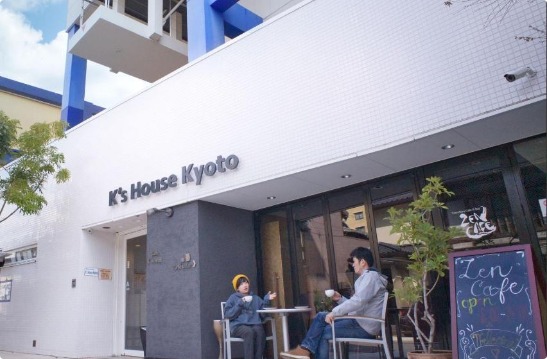
K’s House is the Kyoto branch of one of Japan’s bigger independent backpacker chains — they run multiple properties across the country and the template is well-sorted: dorm beds with privacy curtains and reading lights, a proper communal kitchen with free rice and condiments, a lounge that actually gets used for traveller meetups. The Kyoto property is an older converted building three stops south of Kyoto Station on the Kintetsu line (or a 15-minute walk from the station), which keeps rates low but adds a small commute.
What makes K’s House work is consistency. If you’ve stayed at K’s House in Hakone or Hiroshima before, the Kyoto one will feel familiar — the drawer-style locker, the rice cooker by the kitchen door, the evening staff behind reception. For a solo traveller doing a Japan loop, this is the “reliable cheap” option. Who it’s not for: anyone who wants design-forward spaces, or couples looking for a double (K’s House has private rooms but they’re twin-bed rather than double).
- What’s good:
- Dorm beds have privacy curtains and personal reading lights — not every Kyoto hostel bothers
- Kitchen is usable (real hob, real fridge, free rice) — rare in Japanese hostels
- Rooftop terrace overlooking a quiet residential street — good evening beer spot
- What’s not:
- The 15-minute walk to Kyoto Station eats time every day you take the train
- Private rooms are twin-bed; couples will want doubles (book Len Kyoto instead)
Check prices at K’s House Kyoto on Booking.com
Piece Hostel Kyoto — design-forward, near the station
Nearest station: Kyoto Station (Shichijo exit) — 6 min walk
To Fushimi Inari: 5 min by train
Best for: Design-conscious budget travellers, solo-but-not-backpacker demographic
From: ¥4,500/night dorm, ¥14,000/night private
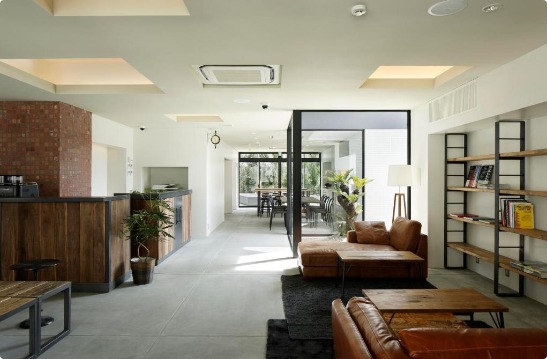
Piece Hostel is a step up from K’s House in aesthetic and a step down in communal-backpacker atmosphere. The Shichijo branch has a large, light-filled lobby with a cafe attached, the dorms use semi-enclosed bunk pods rather than open bunks, and the guest demographic skews older (late 20s to 40s) and more international-solo than backpacker-gap-year. The station-proximity is what seals it — you can roll out of bed, walk 6 minutes, and be on a shinkansen.
Worth knowing: the cafe at Piece is genuinely good and does a proper breakfast set for ¥900 that beats most hotel breakfast buffets. It’s also open to non-guests, so the daytime crowd mixes locals with travellers in a way most hostels don’t. Makes the property feel more like a coworking-space-with-beds than a classical hostel. Less of a “let’s go drinking with the dorm mates” energy than K’s House, more of a “read in the lobby with a flat white” energy.
- What’s good:
- Dorm bunks are semi-enclosed pods with reading lights, USB ports, small shelf — best dorm hardware in Kyoto
- 6-minute walk to Kyoto Station is unbeatable for a Japan-loop traveller
- Onsite cafe does ¥900 breakfasts that are genuinely good, open 7:30am
- What’s not:
- Quieter than traditional backpacker hostels — don’t come here to party
- Private rooms sit at ¥14,000 which pushes into budget-business hotel territory where Hotel Kuu is better value
Check prices at Piece Hostel Kyoto on Booking.com
Piece Hostel Sanjo — the downtown sister
Nearest station: Sanjo (Keihan) — 4 min walk, Kawaramachi (Hankyu) — 6 min walk
To Gion: 10 min walk across Sanjo bridge
Best for: Solo travellers who want to be downtown for dinner and nightlife
From: ¥4,800/night dorm
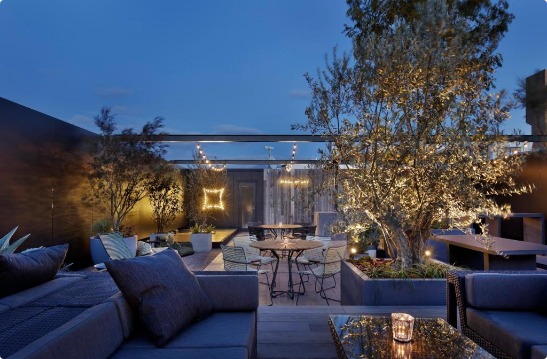
The Sanjo branch of Piece Hostel is the better of the two for anyone whose Kyoto priority is eating and drinking rather than sightseeing efficiency. It sits on the northeast edge of downtown, a short walk from the Kamo River and Kiyamachi-dori’s strip of izakaya and bars. Same pod-dorm aesthetic as the Shichijo branch, smaller footprint, no onsite cafe — but you don’t need one when you’re in the middle of Kyoto’s restaurant district.
Sanjo over Shichijo if your trip is more food-and-bars than sightseeing-at-dawn. Shichijo over Sanjo if you’re doing Fushimi Inari and day trips out to Nara.
- What’s good:
- Sitting in the downtown restaurant grid — dinner options within 5 minutes’ walk are better than anywhere else on this list
- Same pod-quality dorm hardware as Piece Shichijo (reading lights, USB, semi-enclosed)
- Quiet building — not on the main street, so it doesn’t pick up bar noise
- What’s not:
- No onsite cafe or breakfast — less of a hangout space than the Shichijo branch
- Slight extra walk to the shinkansen (subway one stop to Karasuma then change) compared to Shichijo’s direct walk
Check prices at Piece Hostel Sanjo on Booking.com
UNKNOWN KYOTO — the design-led newcomer
Nearest station: Gojo (Karasuma subway) — 5 min walk
To Kiyomizu-dera: 20 min walk east
Best for: Solo travellers with a design sensibility, digital nomads, mid-30s crowd
From: ¥5,200/night dorm, ¥11,000/night private
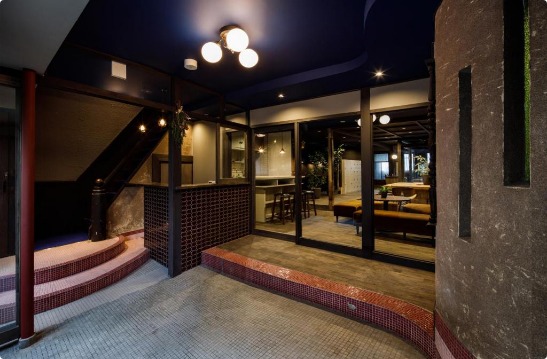
UNKNOWN KYOTO is the design-hostel pick for travellers who’d otherwise pass on hostels entirely. It’s in a converted historic building on the southern edge of downtown, set up around a central courtyard with cafe and bar space on the ground floor and dorms and private rooms on the upper levels. The aesthetic is minimalist-industrial (exposed concrete, black steel, warm timber accents) rather than the cheerful-backpacker look of K’s House. The free monitor rental for digital nomads is a specific, slightly odd touch that tells you who the property is actually targeting.
The crowd skews older and more international than traditional hostels — a lot of 30–45 solo travellers working a bit during the day. The bar-lobby is open late and draws locals in, so it feels more like a small hotel lobby than a backpacker common room. The dorms themselves are solid but unspectacular; what you’re paying for is the public spaces and the location.
- What’s good:
- Bar-lobby is properly comfortable for working during the day — one of the few hostels where you can actually spend daylight hours onsite
- Location on Gojo Avenue puts you 20 minutes’ walk from Kiyomizu-dera without Gion pricing
- Design sensibility that feels intentional rather than Ikea-assembled
- What’s not:
- ¥5,200 dorm rate is the upper end for Kyoto hostels — K’s House is cheaper for the same core product
- Private rooms are small even by Japanese hotel standards — they’re upsell hostel rooms, not proper hotel rooms
Check prices at UNKNOWN KYOTO on Booking.com
Len Kyoto Kawaramachi — hostel-hotel hybrid
Nearest station: Kawaramachi (Hankyu) — 6 min walk
To Gion: 8 min walk across Shijo bridge
Best for: Couples on a budget (private rooms at ¥13k), design-minded solo travellers
From: ¥5,500/night dorm, ¥13,000/night private
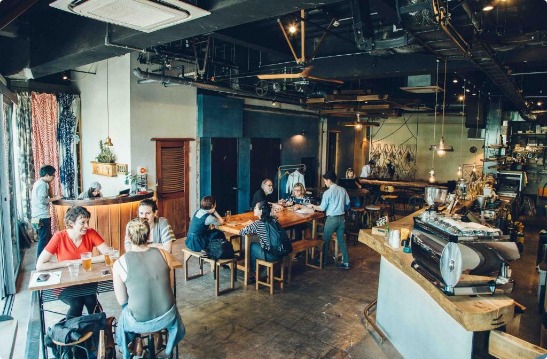
Len Kyoto Kawaramachi is the closest thing Kyoto has to a “budget boutique hotel” — it runs dorms, private rooms, and a ground-floor cafe-bar that operates as a proper restaurant and draws in a local crowd. The private rooms are where it earns its keep: at ¥13,000 a night for a double, it’s cheaper than most chain business hotels and the rooms have more character (exposed concrete, timber accents, decent-sized windows). Downtown location, across the bridge from Gion, five minutes to Nishiki Market.
The dorms are fine but not what you’re here for — the USP is the hybrid format. Couples on a budget who want a genuine hotel room with a modicum of style rather than the standard Toyoko Inn beige should look here first. The cafe-bar serves actually good food (not the “hostel kitchen” standard) and doubles as workspace during the day and a bar at night.
- What’s good:
- Private double rooms at ¥13,000 — cheaper than Toyoko Inn with more character
- Ground-floor cafe-bar is actually used by locals — feels less hostel-bubble than most
- On the Kamo River edge of downtown, 8 minutes’ walk to Gion
- What’s not:
- Dorms are average-to-good, not the best in Kyoto (Piece does dorms better)
- Cafe-bar gets busy in the evening which means some street noise in the lower rooms
Check prices at Len Kyoto Kawaramachi on Booking.com
Ryokan Hostel Gion — a hostel inside Gion itself
Nearest station: Gion-Shijo (Keihan) — 4 min walk
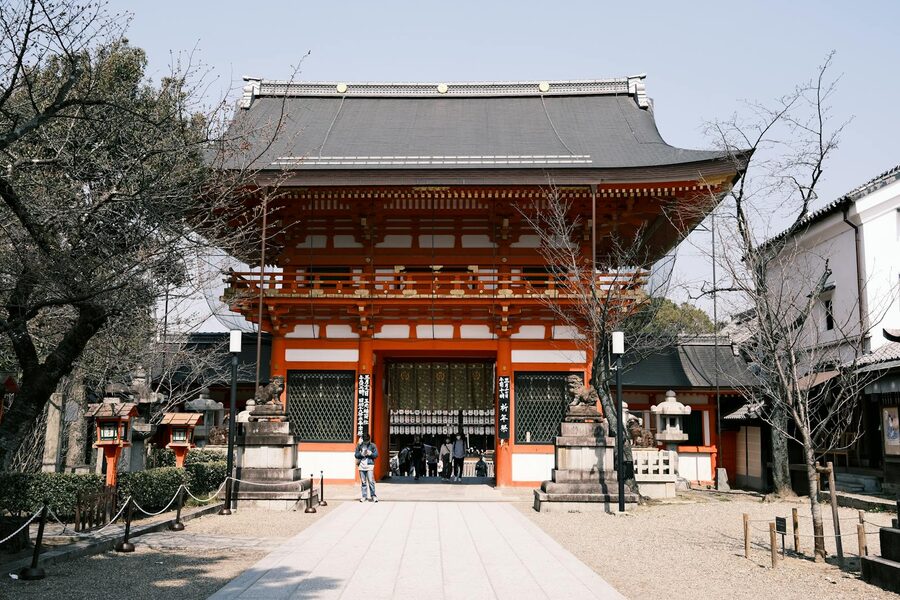
To Yasaka Shrine: 4 min walk east
Best for: Budget travellers who want a Gion location over a modern hostel
From: ¥5,500/night dorm, ¥13,000/night private
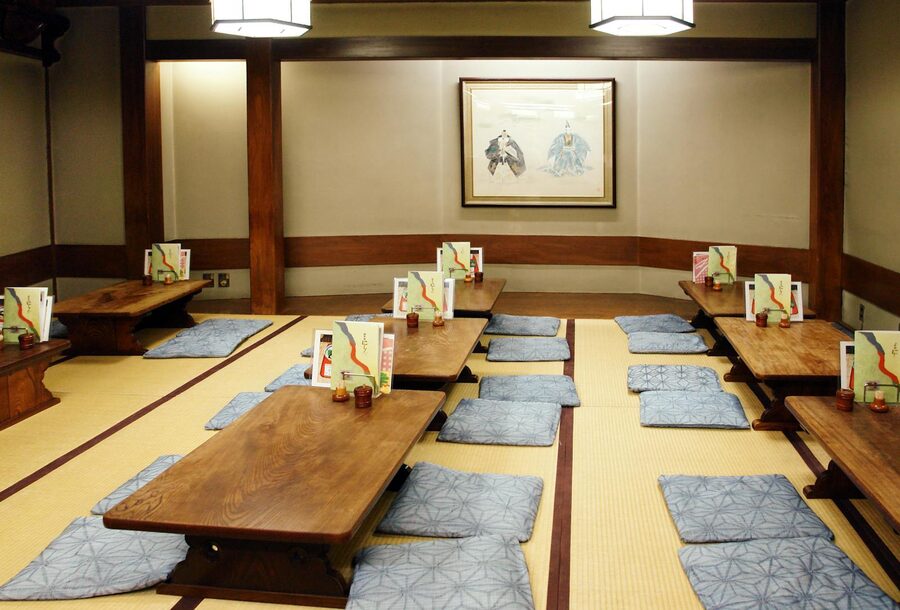
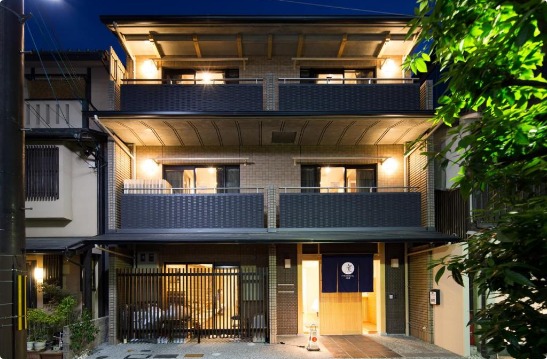
One of the few hostels sitting inside the Gion district proper — a converted small building with tatami-floored dorms (six to eight beds) and a handful of tiny private rooms that feel closer to a guesthouse than a traditional hostel. The tradeoff is scale: fewer amenities than K’s House or Piece, no kitchen to speak of, smaller common area. But you’re four minutes from Yasaka Shrine, which is a location bid nobody else in the Gion price bracket can match.
A compromise pick. Not the most refined hostel experience, but if your priority is “walk out the door into Gion at 6am to photograph empty streets”, this is the cheapest way to do that. For a deeper look at Gion as a base including the ryokan options on the pricier end, our Gion hotels guide covers the full bracket.
- What’s good:
- Four minutes from Yasaka Shrine — can do empty-street photo walks at 6am without a taxi
- Tatami floors and futon bedding in dorms — a real traditional Japanese sleeping experience without ryokan prices
- Private rooms exist at around ¥13k — rare in Gion
- What’s not:
- No proper kitchen — you’ll eat out for every meal
- Tatami-on-futon is authentic but firmer than most Western beds; bad for side sleepers
Check prices at Ryokan Hostel Gion on Booking.com
Capsule hotels — ¥7,000 to ¥14,000
Kyoto’s capsule hotel scene is underdeveloped compared to Tokyo and Osaka (fewer properties, less choice at the design end) but the ones that exist are good. Three that are worth your time. All three are in or near central Kyoto; all three have communal baths, secure lockers, and some form of lounge; all three are strictly single-occupancy.
Tsukimi Hotel — the intimate, women-friendly option
Nearest station: Kyoto Station (central exit) — 8 min walk
To Nishiki Market: 18 min walk north, or 1 subway stop
Best for: Solo female travellers, budget-first stays
From: ¥7,500/night
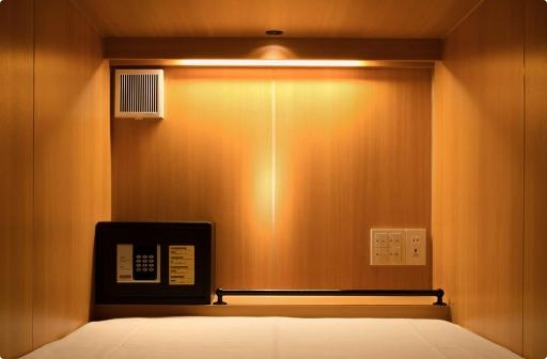
Tsukimi is a small independent capsule hotel — around 50 pods total across three floors — that sits near Kyoto Station and runs one of its floors as women-only. The aesthetic is warmer than most Japanese capsules (lots of pale wood, low warm lighting) and the property is well-maintained without being design-fussed. Lounge area is small but useful as a base for working on a laptop during the day.
Good pick if you’re travelling solo on a tight budget and want a capsule option that isn’t The Millennials queue. The station-adjacent location also makes it useful as a first-night or last-night stop between shinkansen trips — you can drop a bag, grab dinner at Porta or the Isetan food hall upstairs at Kyoto Station, and be ready for the early train out.
- What’s good:
- Dedicated women-only floor — not just a couple of beds tagged “female”
- 8-minute walk to the shinkansen; perfect for the last-night-before-early-train routine
- Cheaper than Glansit and The Millennials for a similar-quality pod
- What’s not:
- Pods are on the smaller side — fine if you’re used to capsules, tight if it’s your first
- Stricter on tattoos in the communal bath than the larger capsule hotels
Check prices at Tsukimi Hotel on Booking.com
Glansit Kyoto Kawaramachi — my default capsule pick
Nearest station: Kawaramachi (Hankyu) — 4 min walk
To Nishiki Market: 3 min walk
Best for: Budget-conscious capsule stays, travellers who want a central location for less
From: ¥8,500/night
Glansit’s Kyoto Kawaramachi branch is directly above a downtown shopping street, a three-minute walk from Nishiki Market. The capsules are larger than The Millennials’ SmartPods — noticeably wider and with better storage inside — but less technologically embellished. No projector, no app, just a well-designed larger pod at about 70% of the Millennials rate. The bath facility is open 24 hours (rare in Kyoto) and decent quality.
This is my default capsule hotel pick for a practical Kyoto stay. Less design-forward than The Millennials but noticeably more comfortable to sleep in, and the location is better for evening dinner access. The nearby Pontocho and Kiyamachi-dori izakaya strips are five minutes away on foot. Who it’s not for: anyone who wants the “modern capsule experience” as an event in itself — for that The Millennials does it better.
- What’s good:
- Pods are noticeably wider than The Millennials — better for taller travellers or anyone claustrophobic
- 24-hour communal bath — come back from late dinner, soak, sleep
- Three minutes from Nishiki Market — grab breakfast on the way out
- What’s not:
- Aesthetic is functional rather than design-forward — not the capsule to Instagram
- Lounge is smaller than The Millennials’ — less room to work during the day
Check prices at Glansit Kyoto Kawaramachi on Booking.com
The Millennials Kyoto — the architectural capsule
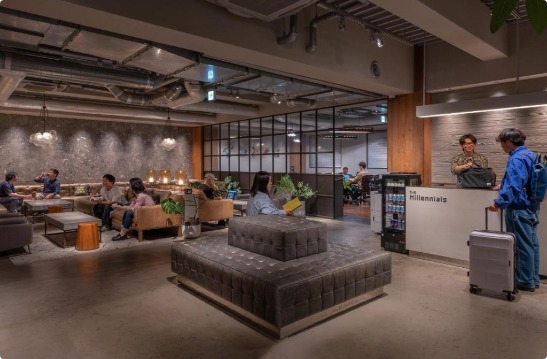
Nearest station: Karasuma (Hankyu) / Shijo (Karasuma subway) — 5 min walk either way
To Nishiki Market: 6 min walk
Best for: First capsule-hotel experience, solo travellers on a mid-budget
From: ¥12,000/night
The Millennials is one of the better-known modern capsule hotels in Japan. Each “SmartPod” is a semi-enclosed bunk with a queen-width mattress, a projector that casts onto the ceiling (or the sloped wall at the end of the pod), app-controlled mood lighting, and a sliding door that gives you proper privacy. The bath complex is large and well-designed; the lobby has an all-day beer tap (included in the nightly rate from 5–10pm). It’s a capsule hotel that feels less like a budget option and more like an architectural choice.
Who it’s for: solo travellers who want the capsule experience without the downmarket baggage, and first-timers who want to see a capsule hotel done well. Who it’s not for: couples (Millennials pods are strictly single-occupancy), very light sleepers — even with the sliding door, you hear other guests moving around the floor — and anyone over about 190cm; the pod is long enough but not generous with it. For a ¥4,000 saving per night Glansit gets you a better sleep.
- What’s good:
- Free beer tap in the lounge 5–10pm — genuinely included, not a gimmick fee
- App-controlled pod (lighting, projector, alarm) is fun for a first capsule stay
- Large lounge and workspace — the capsule hotel to stay at if you’re working remotely
- What’s not:
- ¥4,000 more per night than Glansit for a smaller pod — tech premium, not sleep premium
- International-solo crowd means sliding doors open and close all night; light sleepers will struggle
Check prices at The Millennials Kyoto on Booking.com
Budget business and design hotels — ¥12,000 to ¥22,000
This is the bracket that makes Kyoto accessible for couples and anyone who can’t live with shared bathrooms. Most of the hotels in this tier are functional rather than stylish — clean, efficient, small rooms with private en-suite bathrooms — but the category now includes a handful of design-led options (Hotel Kuu, Hotel Anteroom, Candeo Karasuma Rokkaku) that give you proper hotel comfort at hostel-adjacent prices. Dormy Inn Premium is the outlier: a budget business hotel with a natural hot-spring bath on the top floor, and the single best value-per-experience ratio on this list.
APA Hotel Kyoto Gion Excellent — budget chain near Gion
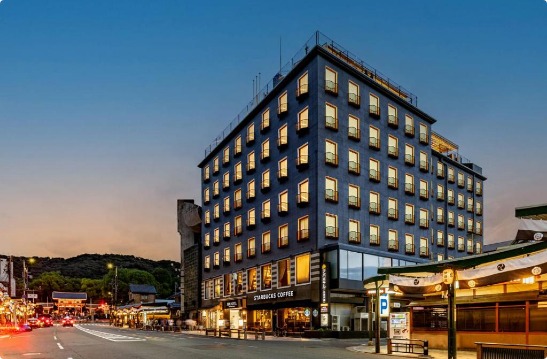
Nearest station: Gion-Shijo (Keihan) — 3 min walk
To Yasaka Shrine: 6 min walk east
Best for: Gion location on a tight budget, solo or pair who don’t need space
From: ¥12,500/night
APA is one of Japan’s larger business-hotel chains, known for aggressive pricing, very compact rooms, and memorably pink-and-red branding across every lobby. The Gion Excellent branch — which sits on the west bank of the Kamo River, just over the bridge from Gion proper — is the cheapest proper hotel you’ll find this close to the geisha district. A three-minute walk to Gion-Shijo station, six minutes to Yasaka Shrine. Rooms are tiny (11–13 m²) but include en-suite bathrooms and the usual APA kit — air-con, work desk, kettle.
The value is purely locational. If you want a private hotel room in walking distance of Gion without paying ryokan or Park Hyatt rates, this is the lowest floor. Don’t expect design or quiet — APA hotels are cost-optimised — but expect reliability and a location that normally costs ¥40k+ a night.
- What’s good:
- Three minutes to Gion-Shijo station — Gion and Pontocho both in a 10-minute walk
- Reliably cheap on dates when other Gion-adjacent hotels double in price
- Proper en-suite private room under ¥13k — rare for this location
- What’s not:
- Rooms are genuinely small (11–13 m²) — two people plus luggage is cramped
- APA’s lobby branding is busy and loud; the chain has had political controversies that put some travellers off — read up before booking
Check prices at APA Hotel Kyoto Gion Excellent on Booking.com
Toyoko Inn Kyoto Shijo-Karasuma — predictable, downtown
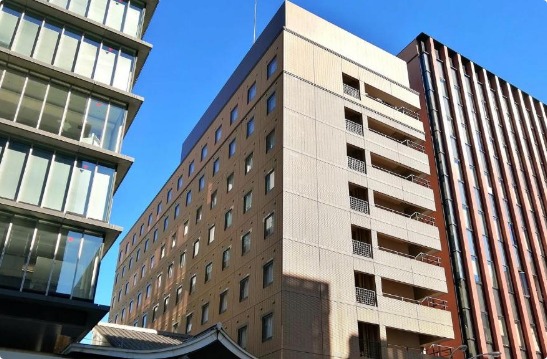
Nearest station: Shijo (Karasuma subway) — 3 min walk
To Nishiki Market: 5 min walk east
Best for: Solo travellers, pairs on a budget, reliability over character
From: ¥13,500/night
Toyoko Inn is among Japan’s largest business-hotel chains, sitting alongside APA (which has the larger property count overall). The Kyoto Shijo-Karasuma branch is exactly what you expect if you’ve stayed at any Toyoko Inn before: tiny rooms (about 12 m²), fluorescent corridor lighting, a very basic included breakfast (rice balls, miso soup, coffee), and pricing that rarely moves outside peak season. What it gets right is everything it promises to: spotless cleaning, functional wi-fi, no surprises. You’ll be in the middle of downtown, three minutes from Shijo subway.
The value is in knowing what you’re getting. A Toyoko Inn room isn’t an experience; it’s a functional bed in the middle of the city for ¥15k. For a 3-night trip where you want to spend money on restaurants rather than accommodation, this is the efficient choice. Couples should check the twin-bed vs double-bed options carefully — Toyoko Inn rooms are small enough that which bed configuration you get matters.
- What’s good:
- Three-minute walk to Shijo subway — central downtown access
- Loyalty programme (“Toyoko Inn Club”) knocks 5% off and you can sign up at check-in
- Included breakfast saves you ¥800 a morning on a coffee and pastry outside
- What’s not:
- Rooms are small even by Japanese business-hotel standards
- Breakfast is functional, not good — rice balls, miso and packet coffee
Check prices at Toyoko Inn Kyoto Shijo-Karasuma on Booking.com
Sotetsu Fresa Inn Kyoto-Kiyomizu Gojo — between downtown and the temple walk
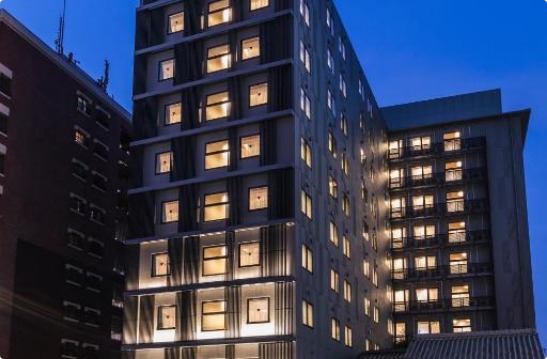
Nearest station: Kiyomizu-Gojo (Keihan) — 2 min walk
To Kiyomizu-dera: 20 min walk uphill
Best for: Travellers doing the Kiyomizu–Ninenzaka–Sannenzaka walk, solo or pair
From: ¥14,000/night
Sotetsu is a mid-tier Japanese chain that sits slightly above Toyoko Inn in quality (larger rooms, better breakfast, more consistent design) and slightly below the international three-star chains. The Kiyomizu-Gojo branch has the cleanest positioning of the Kyoto business hotels — it’s two minutes from the Keihan line and sits at the base of the walk up to Kiyomizu-dera. For travellers who want to be at Kiyomizu at 6am (which you should — by 9:30am the approach is shoulder-to-shoulder), this is the logical base.
Rooms are around 13–15 m² — about 30% larger than Toyoko Inn, still small by Western standards — with en-suite unit bathrooms and the usual Japanese business-hotel fit-out. Breakfast is a cut above Toyoko’s (proper rice cookers, miso, egg station) and runs from 7am. Not a destination hotel, but a well-sited practical base for temple walks.
- What’s good:
- Two-minute walk to Keihan line — one stop north to Gion, easy access to Fushimi Inari south
- Rooms are about 30% larger than Toyoko Inn for ¥500 more per night
- On the natural walk-up route to Kiyomizu-dera — be at the gate for dawn
- What’s not:
- Not in the middle of the dinner scene — you’ll walk 15 minutes or grab a train for evening food
- Gojo-dori is a main road and the street-facing rooms pick up some traffic noise
Check prices at Sotetsu Fresa Inn Kyoto-Kiyomizu Gojo on Booking.com
Hotel Anteroom Kyoto — the art-hotel budget play
Nearest station: Kujo (Karasuma subway) — 8 min walk
To Kyoto Station: 15 min walk north, or 1 subway stop
Best for: Design-led travellers, anyone who’d otherwise book an Airbnb, solo or pair
From: ¥15,500/night
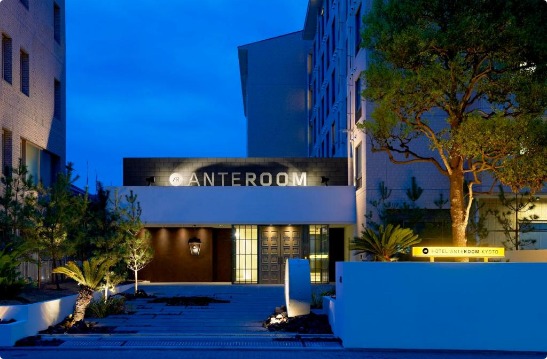
Hotel Anteroom Kyoto is the budget-tier’s most idiosyncratic property. Converted from a former student dormitory in Kujo (just south of Kyoto Station), it runs as a small art hotel with rotating gallery exhibitions in the public spaces, a restaurant-bar that hosts DJ nights and artist talks, and guest rooms with deliberately eccentric interior design — some with artist commissions on the walls, some with large format photography. Rooms are small (15–19 m²) but each has a distinct personality, which is rare in this price bracket.
The Kujo location is the main compromise. You’re a 15-minute walk or one subway stop from Kyoto Station, which means you’re an extra 10–15 minutes from downtown and Gion than a station-area hotel would be. For travellers who’ll spend evenings in the hotel’s bar-gallery rather than out on the town, this is fine. For travellers doing late izakaya crawls in Pontocho, you’ll end up in a lot of taxis home.
- What’s good:
- Actual curated art throughout the public spaces — not decor-as-art, real gallery programming
- Restaurant-bar is properly good and hosts events most weeks; you can have dinner and drinks on site
- Rooms have personality that the chain business hotels can’t match at this price
- What’s not:
- Kujo location adds 10–15 minutes to every downtown and Gion trip
- Rooms are still small — the design hides it but doesn’t change it
Check prices at Hotel Anteroom Kyoto on Booking.com
Candeo Hotels Kyoto Karasuma Rokkaku — machiya lobby, rooftop bath
Nearest station: Karasuma Oike (subway) — 3 min walk
To Nishiki Market: 7 min walk south
Best for: Solo or pair travellers who want rooftop-bath access without paying onsen-hotel rates
From: ¥15,500/night
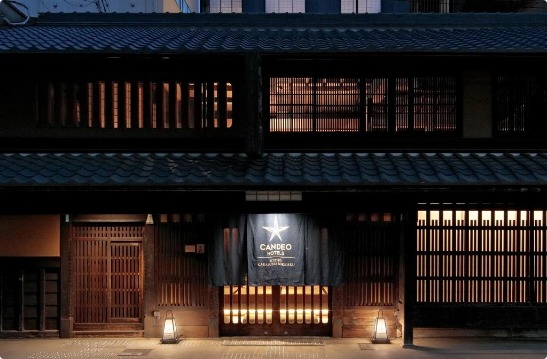
Candeo is a Japanese mid-tier chain that runs properties across the country and typically hits above its weight on in-room quality for the price. The Karasuma Rokkaku branch adds two Kyoto-specific features that push it above the chain average. First, the lobby is a converted century-old *machiya* (traditional wooden townhouse), used as a library-lounge with low tables and garden views — a more pleasant space to wait out a rain shower than any other hotel in the bracket. Second, the rooftop bath complex (the hotel calls it SkySpa) gives you indoor and open-air public baths on the top floor, which is a feature most hotels in this price range don’t try to offer.
Rooms are standard-chain modern (17–20 m², tight but not cramped), minimal and well-lit. The location on Rokkaku-dori puts you three minutes from Karasuma Oike subway and seven minutes from Nishiki Market. This is the single best “bath included” budget choice if you don’t need the dedicated onsen experience that Dormy Inn Premium offers. Covered in more detail in our Kyoto onsen hotels guide.
- What’s good:
- Machiya-lobby library is genuinely pleasant to sit in — free tea, old books, garden view
- Rooftop public bath included in the rate — a ¥15k hotel with a skyline bath is unusual
- Three minutes from Karasuma Oike subway; central grid access
- What’s not:
- The machiya lobby is nice, but it’s one converted building; the actual hotel is a modern tower
- Rooftop bath is treated water, not natural hot-spring — Dormy Inn Premium’s bath is the better onsen experience
Check prices at Candeo Hotels Kyoto Karasuma Rokkaku on Booking.com
Hotel Kuu Kyoto — design-led budget
Nearest station: Gojo (Karasuma subway) — 6 min walk
To Kyoto Station: 12 min walk south
Best for: Design-conscious budget stays; travellers who’d otherwise pick an Airbnb
From: ¥16,000/night
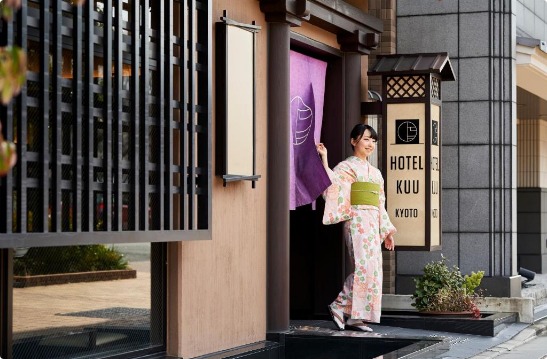
Hotel Kuu is what happens when a younger Japanese hospitality team builds a budget business hotel with design intent. Rooms are small (15–18 m²) but each has a properly thought-out lighting plan, a cedar-accented wet room, and a small reading nook. The lobby and restaurant-bar area are comfortable enough that you’ll spend time there rather than retreating to the room. The hotel’s coffee bar does a good morning flat white at ¥450.
The compromise vs Toyoko Inn is about ¥2,500 more per night for a noticeably nicer room. Vs a mid-range design hotel like Node Kyoto you’re saving ¥8,000–12,000 a night. For a 3-night trip this is a meaningful saving without giving up much comfort. Between downtown and Kyoto Station, which means both are a short walk away but neither is out the door.
- What’s good:
- Actual design consideration per room — cedar-wet-room, reading nook, considered lighting
- Ground-floor coffee bar opens early and does a proper flat white
- Between downtown and Kyoto Station — 10–12 minutes to either
- What’s not:
- “Between downtown and station” means neither is at the door — adds walking to the day
- Rooms are still small; the design doesn’t change the square metres
Check prices at Hotel Kuu Kyoto on Booking.com
Dormy Inn Premium Kyoto Ekimae — onsen on top, budget price below
Nearest station: Kyoto Station (Hachijo exit) — 2 min walk
To Tower exit/downtown: 8 min walk through station
Best for: Travellers who want a real onsen bath but can’t stretch to luxury
From: ¥17,000/night
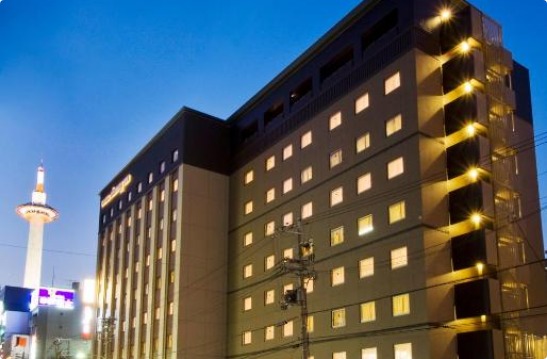
Dormy Inn Premium Kyoto Ekimae does something rare — it’s a straightforwardly budget business hotel with a real natural hot-spring bath on the top floor. The rooms are standard Japanese business-hotel-plus (about 16 m², properly finished), and the Booking.com title on the property is specifically “Natural Hot Spring” because that’s the draw. Men’s and women’s baths are separated; each has indoor and outdoor pools. The late-night free ramen service in the lobby (around 9:30pm) is a Dormy Inn chain tradition that genuinely gets used.
For ¥17,000 a night with a real onsen and a two-minute walk to the shinkansen, this is the single best value in Kyoto budget accommodation. The catch is that the entire internet knows this, so peak-season bookings vanish four months out. Covered more thoroughly in our onsen hotels guide because the bath is the main event here, not the rooms. For a broader look at all the station-area options including the mid-range, see our hotels near Kyoto Station guide.
- What’s good:
- Real natural hot-spring bath on the top floor with indoor and outdoor pools — included in rate
- Free late-night ramen service around 9:30pm — a Dormy Inn chain quirk that works
- Two-minute walk to the Hachijo exit of Kyoto Station — shinkansen out the door
- What’s not:
- Rooms themselves are fine-not-great — you’re here for the bath, not the bed
- Peak-season rooms vanish 3–4 months out; flexibility on dates matters
Check prices at Dormy Inn Premium Kyoto Ekimae on Booking.com
What most “cheap Kyoto” guides get wrong
Three things.
Dormy Inn Premium beats most five-star onsen stays on value per yen. This isn’t contrarian; it’s just true and nobody says it. A five-star onsen ryokan in Kyoto runs ¥80,000–¥150,000 a night with kaiseki dinner. You get a better dinner, a private bath, a ryokan experience. You don’t get a better public bath — Dormy’s is real natural hot-spring water on the top floor of a building two minutes from the shinkansen. If the bath is the part you care about and you’re willing to eat dinner out (which you should, because Kyoto’s restaurant scene is the other reason to be here), ¥17k at Dormy gets you 80% of the onsen experience for 20% of the price. The remaining 20% is the ryokan wrap — the futon, the kaiseki, the yukata walk to the bath. All lovely. All optional.
K’s House dorm beats some mid-range private rooms on value. A ¥3,800 K’s House bunk gives you privacy curtains, a reading light, a locker, and a usable kitchen. A ¥14,000 Piece Hostel private room gives you a door. Per yen, the dorm wins on every metric except “do other humans exist in this room.” For a solo traveller on a 7-night Japan trip who’s happy with the social layer, the ¥10k a night difference is ¥70k — a flight home, or four nice dinners, or a night at the Ritz-Carlton on the last night. Most budget-content treats dorms as the “settling for less” option. They’re not, if you match them to the right traveller.
Most “cheap Kyoto hotels” articles are affiliate lists in disguise. If the piece has 25 hotels and every single one is a Booking.com affiliate link with a glowing one-paragraph summary, the author hasn’t vetted them — they’ve taken Booking’s “best-selling in Kyoto under $200” list and rewritten the tags. You can tell the difference by whether the article mentions what each property isn’t for. Every hotel has a downside; if nobody lists any, assume nothing’s been checked properly. The 16 properties here all have a “what’s not” list because every one has been either stayed in or looked at in depth.
A related point: Nine Hours Kyoto keeps appearing in capsule-hotel lists (including old editions of this one). Their Kyoto branch closed and what shows up under that name on various sites often resolves to the Tokyo Suidobashi branch if you follow the link. If you see a Nine Hours Kyoto listing promoting a current stay in 2026, verify it — it’s more likely a stale aggregator entry than a live property.
Capsule-hotel etiquette — the four things to know
- The door is a courtesy, not a lock. Most Kyoto capsule pods have a sliding door or roll-down shade for privacy. They don’t lock. Valuables go in the en-suite locker you’re given on check-in — put your wallet, passport and laptop in there before you sleep.
- Noise rules are serious. Phone calls in the sleeping area are a hard no. Even conversation above a whisper will draw a staff correction. Most people retreat to the lounge or the corridor if they need to talk.
- The bath is communal. Same rules as an onsen — wash at the showers first, no soap in the bath, no towels in the water. Tattoo policy varies; The Millennials and Glansit are tattoo-friendly in private-pod bathrooms and tend to be relaxed in communal baths too. Tsukimi is stricter.
- Check-out is usually 10am sharp. Japanese business hotels and capsules enforce this more strictly than international 5-stars. Late check-out is occasionally possible but costs — usually ¥500–¥1,000 per extra hour.
Hostel etiquette — things Western hostellers sometimes miss
- Shoes off at the door. Most Japanese hostels have a shoe cubby at the entrance and provide indoor slippers. Don’t trail street shoes into the common area; you’ll get a polite correction.
- Silent at night. Quiet hours in Japanese hostels usually start at 10pm and are taken seriously — stricter than European hostel norms. If you want to drink and talk past 10, use the lounge or go out.
- Wash your own dishes. Kitchens in Japanese hostels operate on a “leave it as you found it” principle. Staff clean common surfaces but not your pan. Do yours.
- The bath is usually shared, even in hostels. Ryokan Hostel Gion and K’s House both run small public-bath-style shower areas rather than individual private showers. Same onsen etiquette applies — wash at the stools first.
- Luggage storage before check-in is the norm. Check-in is usually 3pm, check-out 10am. Every hostel on this list has free bag storage front and back of that window. You can drop bags off the shinkansen at 9am and go do your day.
Peak-season pricing playbook
Two big peaks and two smaller bumps.
Cherry blossom season (late March to mid-April). Prices across all three budget tiers go up 1.2x–2x depending on category. Dorms jump least (supply is flexible, some hostels add extra beds). Capsules jump hardest in percentage terms because inventory is fixed at 50–200 pods per property. Business hotels follow the overall-luxury-market curve — expect 1.6–2x peak multipliers on the weekends of peak bloom. To manage: book four months ahead for peak bloom dates, or book adjacent weeks (last week of March, second-half April) for 60–70% of the peak price with 80% of the experience.
Autumn foliage (mid-November to first week of December). Same pattern, softer multipliers — roughly 1.3x–1.6x. Mid-November foliage is more reliable than early November; book for the last week of November and first week of December for the best chance of peak colour without peak pricing.
Gion Matsuri (mid-July weekends). Kyoto’s big festival creates a smaller peak on the main parade weekends (around 15–24 July). Budget-tier impact is smaller than in spring and autumn because the heat and humidity keep some travellers away. Expect 1.2x on business hotels, flat on dorms and capsules.
Japanese long weekends. Golden Week (late April to early May), Obon (mid-August), and the New Year period all pull domestic travellers into Kyoto. Business hotels feel this most; dorms and capsules are less affected because domestic travellers skew to ryokan and hotel rooms.
Shoulder-season sweet spots. Late April to mid-May (after blossoms, before humidity); mid-September to mid-October (after summer humidity dies, before autumn colours kick off). Mid-June has reasonable prices and the start of the rainy season, which means fewer crowds at temples — a contrarian time to come if you don’t mind afternoon rain.
Booking tips — direct vs Booking, refundable vs not
Four practical rules I follow every trip.
Book Booking.com for flexibility, direct for loyalty. Booking.com gives you free cancellation up to 24–72 hours before check-in on the majority of rooms, which matters for flights or itinerary changes. Direct booking at the big chains (Toyoko Inn, APA, Dormy Inn) gets you loyalty points and very occasionally a 3–5% direct-book discount, but the cancellation terms are usually stricter. For a trip that’s locked in, direct. For a trip that might shift, Booking.
Non-refundable rates are usually 10–15% cheaper. If your flights are paid and your dates are fixed, always take the non-refundable rate. If there’s any flex on dates, pay the 10–15% premium for free cancellation — one date shift saves more than that.
Free-cancellation windows matter. Typical Booking.com window is 24 or 72 hours before check-in. A few budget properties (usually the tighter hostels) have a 7-day window. Read before you click.
Price-matching across platforms is worth two minutes. For any specific hotel and date combination, check Booking, Agoda, Expedia and the hotel’s direct site. Kyoto budget hotels sometimes show a 5–12% spread across platforms on the same dates, and the lowest-priced is usually Agoda (Asia-region pricing) or the direct site (loyalty-member rate). It’s worth the two minutes.
By-budget summary — what to book at each price point
- Under ¥5,000/night (solo): K’s House Kyoto dorm. Reliable, cheap, sociable.
- ¥5,000–¥7,000/night (solo, design leaning): Piece Hostel Kyoto or Sanjo (pod-style bunks) or UNKNOWN KYOTO (design hostel).
- ¥5,000–¥9,000/night (solo, want privacy in a capsule): Tsukimi Hotel. Women-only floor available; close to station.
- ¥9,000–¥13,000/night (solo, want design capsule or couple hostel-hybrid): Glansit Kyoto Kawaramachi (capsule) or Len Kyoto Kawaramachi private room (couples).
- ¥13,000–¥15,000/night (solo or couple, chain reliability, Gion or central): APA Gion Excellent (Gion location) or Toyoko Inn Shijo-Karasuma (downtown) or Sotetsu Fresa Inn Kiyomizu-Gojo (temple-walk base).
- ¥15,000–¥18,000/night (want design or rooftop bath): Hotel Kuu, Hotel Anteroom Kyoto, or Candeo Karasuma Rokkaku (rooftop bath included).
- ¥17,000–¥22,000/night (want a real onsen on top of the room): Dormy Inn Premium Kyoto Ekimae. Best value-per-experience on this list.
- First-time capsule experience: The Millennials Kyoto. Pay the design premium, do it once.
- Gion location on a budget: Ryokan Hostel Gion (hostel), APA Gion Excellent (budget business), or a dorm at Len Kyoto if you accept the 8-minute walk.
Frequently asked questions
Are capsule hotels safe in Kyoto?
Yes. Kyoto has one of the lowest violent crime rates of any major global city, and capsule hotels are designed for solo business travellers so security is taken seriously. Every capsule on this list gives you a lockable en-suite locker for valuables (wallet, passport, laptop). The pod door itself doesn’t lock — it’s a privacy curtain — so don’t leave valuables inside the pod when you go to the bath. In practice, petty theft in Kyoto capsules is rare enough that the staff can usually recover a lost item within the property.
Do hostels in Kyoto have curfews?
No hostel on this list has a hard curfew. Most switch to key-code entry after 10pm or 11pm so you need the code to get in, but you can arrive at any hour. A few old-school traditional guesthouses (not on this list) still operate 10pm or 11pm lockouts — check the property’s policy at booking time if it matters. Quiet hours are enforced inside the dorms from around 10pm; you can still come and go from the hostel, but you shouldn’t be talking in the dorm after 10.
What’s the cheapest place to stay in Kyoto?
K’s House Kyoto at ¥3,800 a night for a dorm bed is the cheapest property on this list, and one of the cheapest in central Kyoto overall. If you push to peripheral neighbourhoods (Nishijin, Fushimi, Uji), there are guesthouses at ¥3,000–¥3,500, but the commute into central Kyoto eats the saving back on transport. For practical terms, ¥3,800 at K’s House is the realistic floor.
Are capsule hotels suitable for couples?
No, capsule hotels are strictly single-occupancy — each pod is sized for one person and hotels check this at breakfast. Couples on a budget have three options: book a budget business hotel (APA, Toyoko Inn, Sotetsu Fresa) with a double-bed room for ¥13,000–¥15,000; book a private room at a hostel-hotel hybrid like Len Kyoto Kawaramachi (¥13,000); or push to ¥16,000–¥20,000 for a design-led small hotel like Hotel Kuu or Hotel Anteroom.
Do Kyoto hostels have private rooms?
Most of them do. K’s House, Piece Hostel (both branches), Ryokan Hostel Gion, Len Kyoto Kawaramachi and UNKNOWN KYOTO all run private rooms alongside the dorms, at rates of roughly ¥9,500–¥14,000 per night. These are smaller and more basic than proper hotel rooms (think 10–15 m² rather than 15–20 m²) but they give you a private door at hostel pricing with shared bathrooms typically down the corridor. Good middle-ground for budget-minded couples who don’t want to pay business-hotel rates.
Capsule hotel or hostel dorm — which is better?
Capsule hotel if you want privacy and good sleep above all else. Hostel dorm if you want the social layer and a lower price. A modern capsule pod (Millennials, Glansit, Tsukimi) is noticeably better for sleep than a hostel bunk — the sliding door, the queen-width mattress, the personal-floor bathroom. You pay ¥3,000–¥8,000 more per night for that. A hostel dorm gets you the lounge, the kitchen, the traveller crowd. They’re different products for different trip types; don’t pick one because it’s cheaper without thinking about which you actually want.
Is Kyoto more expensive than Tokyo or Osaka for budget travel?
Kyoto is roughly on par with Tokyo and slightly more expensive than Osaka for budget accommodation. Tokyo has a bigger capsule-hotel scene and more hostel supply, so the pricing curve has more options at the very cheap end. Osaka is generally the cheapest of the three for dorms and capsules — roughly 10–20% below Kyoto rates on the same category. For a budget Japan loop, staying in Osaka and commuting to Kyoto (15 minutes on the shinkansen, 30 minutes on local trains) works out cheaper and sometimes preferable if Kyoto’s peak-season rates have jumped.
What should I bring to a capsule hotel?
Most capsule hotels provide everything you need: towels, yukata or pyjamas, toothbrush, basic toiletries, slippers. What you should bring: earplugs (the sliding-door privacy is not acoustic), an eye mask (corridor lights bleed into some pods), a small lock for the locker if you want to use your own padlock (most provide lockers with built-in locks, but some still use old-style key lockers where a small backup lock is useful), and a phone charger with a long cable (pod USB ports are often inconveniently placed). A sleep-mask and earplugs pair is the single best upgrade you can make to a capsule stay.
One more option — machiya rentals for longer stays
Not strictly budget, but worth mentioning for context. For longer stays (a week or more) on a budget, an Airbnb-style machiya rental often works out cheaper per night than any business hotel — the Maana Homes properties covered in our luxury hotels guide are the upmarket end of that model, but similar machiya rentals exist in the ¥22,000–¥35,000 per night range on regular short-stay platforms for a whole 2-bedroom house. For four travellers splitting the cost, that’s ¥5,500–¥9,000 per person per night in a whole machiya — competitive with capsule hotel pricing and dramatically more comfortable. Always check that the listing is a properly licensed minpaku — Japan regulates short-stay rentals strictly and unlicensed listings occasionally get cancelled at short notice.
For more context on where each neighbourhood sits in the overall Kyoto sleeping options, the Japan National Tourism Organization’s Japan hostels and capsule hotels guide covers the category nationally and is a useful official reference on how the capsule product differs between regions.
Beyond this budget tier, the mid-range business hotels covered in our main hotel guide — Mitsui Garden Hotel Kyoto Station, Sakura Terrace The Gallery and Node Hotel — start around ¥18,000–¥25,000 and sit between “budget” and “mid-range.” If you’re on the borderline between the two brackets, check both guides for the best rate on your specific dates.