
Most Kyoto guides treat the station area as the part of the city you tolerate to reach the parts you came for. That’s the wrong way around. The Kyoto Station neighbourhood is genuinely worth half a day even if you’re not staying here — two of the city’s biggest Buddhist complexes are a five-minute walk from the main exit, the station building itself is a designed-to-divide-opinion piece of architecture, and the quickest panoramic view of the city is one elevator ride away at Kyoto Tower.
This is a walking guide to what’s actually in and around the station, with a focus on things you’d regret missing. If you’ve already booked your stay, our where-to-stay guide covers the hotel options in more depth; this one’s about what to do with your time once the bags are down.

In This Article
- Getting Your Bearings
- The Kyoto Station Building — Architecture You’ll Hate or Love
- Higashi Honganji — Five Minutes From the North Exit
- Nishi Honganji — Ten Minutes and Worth the Walk
- To-ji — Five-Storied Pagoda and the Weekend Market
- Umekoji Park and the Kyoto Railway Museum
- Kyoto Tower — The Easiest Panorama in the City
- Where to Eat Near Kyoto Station
- Day Trips Starting From Kyoto Station
- Where to Stay in the Station Area
Getting Your Bearings
Kyoto Station has two main exits and you need to know the difference. The Karasuma (Central) exit faces north, toward central Kyoto — this is where you’ll find the Kyoto Tower, the bus terminal for most city and day-trip routes, and the entrances to the Karasuma subway line. The Hachijo exit faces south, toward the shinkansen platforms, cheaper hotels, and To-ji temple.
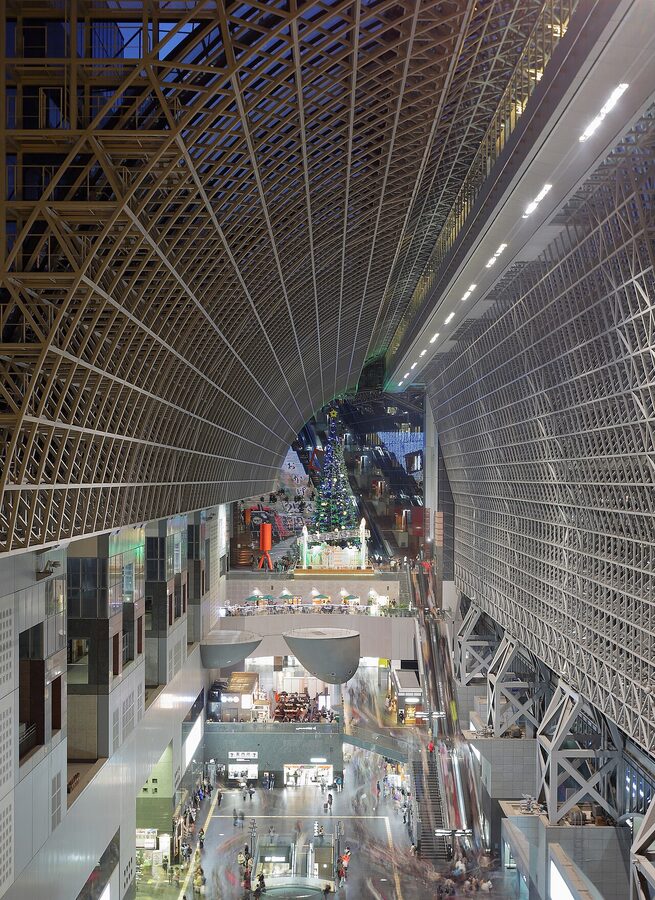
Inside, the station has 11 floors above ground and three below. The ground-floor concourse handles ticketing and platform access; the Isetan department store takes up roughly floors 2 through 11 on the north side; and the whole upper atrium is connected by a bridge called the Skyway that runs from floor 7 across to the Happy Terrace observation deck on the east roof. If you’ve only got an hour before your shinkansen, walking the Skyway at dusk is the single best use of that hour.
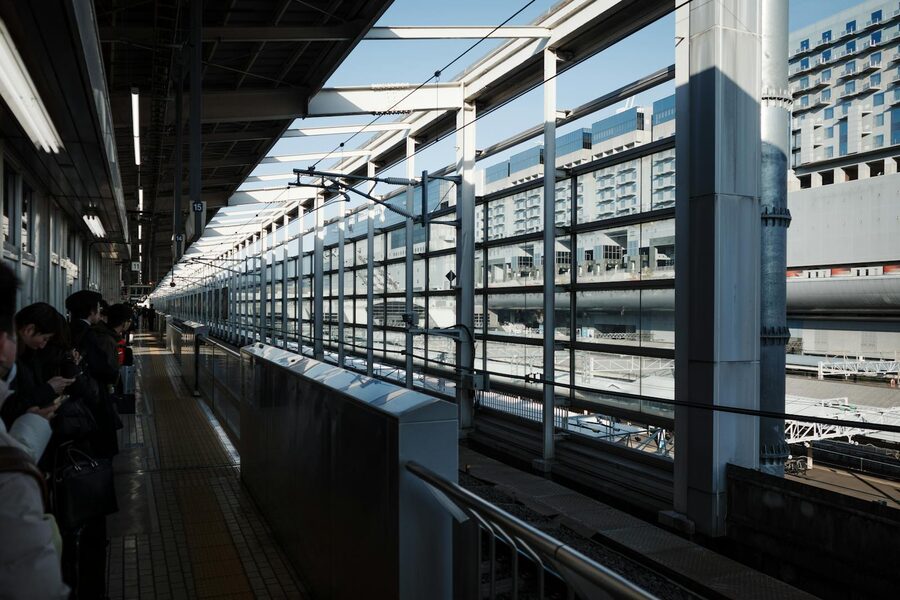
A practical note that nobody writes down: coin lockers at Kyoto Station fill up by 10am during peak season. If you’re arriving with bags and planning to check into a hotel later, head straight to the large-size lockers on the B1 level under the Central exit or use the manned luggage counter on the Hachijo side (¥800/bag, open until 20:30). The smaller lockers scattered around the concourses will all be full.
The Kyoto Station Building — Architecture You’ll Hate or Love
Hiroshi Hara’s 1997 station building is the city’s most divisive piece of architecture. The opposition was fierce when it opened — critics said a 60-metre glass-and-steel slab had no business sitting opposite Higashi Honganji, one of the largest wooden structures in Japan. Supporters pointed out that the old station (finished in 1952 and burned down twice before that) had been ugly too.
Whether you like it or not, three things inside are worth seeing:
- The Grand Staircase on the atrium’s west side — 171 steps of illuminated LED panels that play a different pattern each season. Climb them from floor 4 to floor 11 if your knees are willing. Free.
- The Skyway — a glass-bottomed pedestrian bridge running 147m across the 11th floor. Open daily, free, and the best view inside the station. Try it around sunset when the city lights start coming up.
- The Happy Terrace observation deck on the east roof — a small open-air terrace with a view down onto Kyoto Tower and north across to the Higashiyama hills. It’s not a dedicated lookout and most people miss it entirely, which means it’s often empty.
If you’re shopping, the Isetan department store on the upper floors is the polished option; the Porta underground mall below the central exit is cheaper and better for konbini-grab-and-go. The basement food floor at Isetan (B1 and B2) is a better lunch stop than almost any sit-down restaurant in the station concourses.
Higashi Honganji — Five Minutes From the North Exit
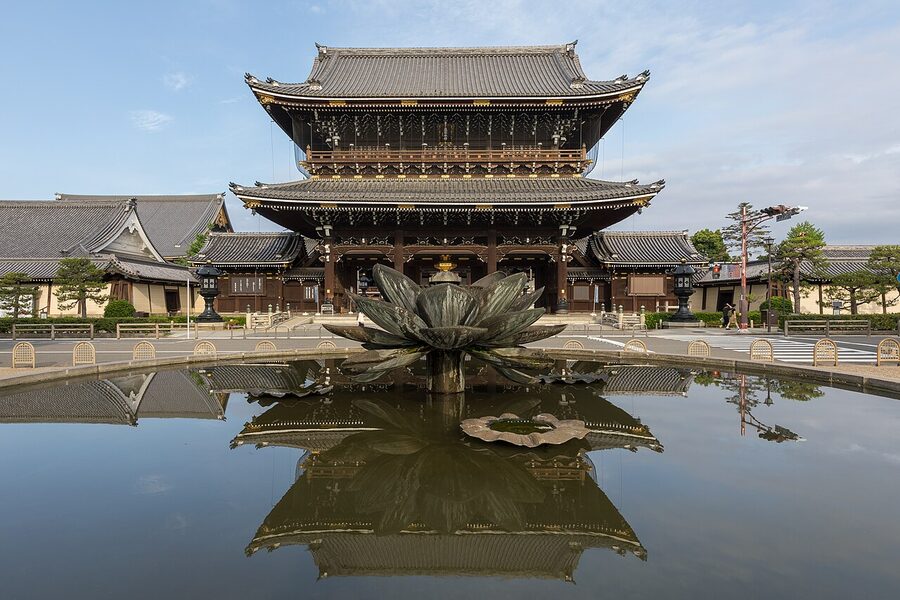

Walk five minutes north-west from the Karasuma exit and you’ll run into Higashi Honganji. The scale is the first thing that hits you — the Goei-do (Founder’s Hall) is one of the largest wooden buildings in the world, and the gate you enter through is itself the size of a small temple. Admission is free. Shoes off, socks on, wooden floors everywhere.
This is the head temple of the Otani-ha branch of Jodo Shinshu Buddhism. The current buildings date from 1895, because every earlier version burned down — a recurring theme with Kyoto’s temples. Worth seeing even if you only spend twenty minutes: the interior of the Founder’s Hall with its gilded Buddhist altar and tatami-mat prayer space, and the braided rope behind the altar made from the hair of female devotees who donated it during reconstruction in the 19th century.
Go first thing in the morning (open 5:50am in summer, 6:20am in winter — yes, really) and you’ll be one of about a dozen people in the whole complex. Walking into the main hall with nobody else in it is one of the better early-morning experiences you can have in Kyoto that doesn’t require a ticket.
Nishi Honganji — Ten Minutes and Worth the Walk
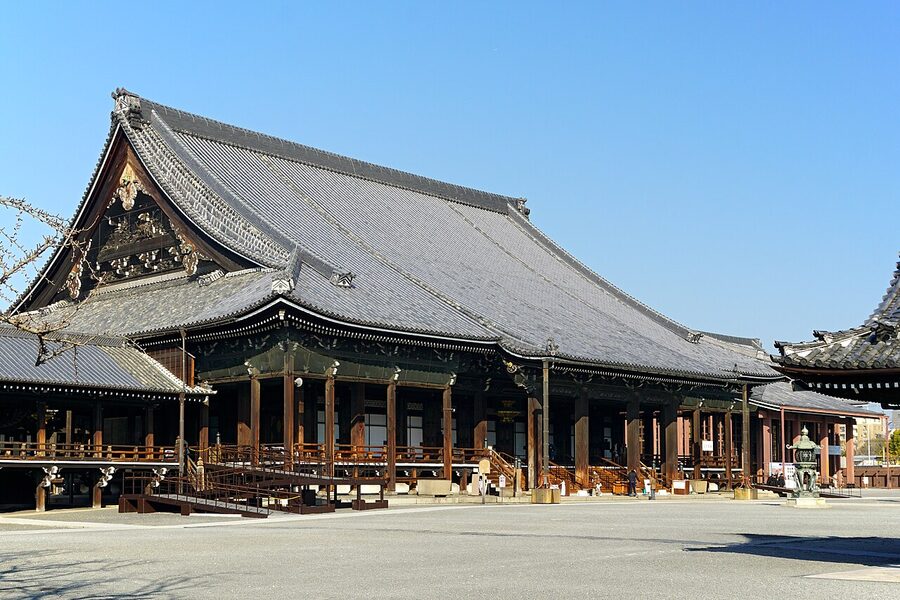

Nishi Honganji (West Honganji) sits two blocks further west, about a ten-minute walk from the station. It’s a UNESCO World Heritage Site and the older of the two big Jodo Shinshu headquarters — the 1591 founding date is the original, although most of the buildings have been rebuilt after fires since then. The Karamon gate at the back of the complex is worth tracking down specifically: it’s a Momoyama-period masterpiece with pine trees, peonies, and a Chinese lion carved in full relief, gilded to a level that almost looks fake in photos and isn’t.
If you only have time for one of the two Honganji temples, take Nishi. The Founder’s Hall is in better proportion, the gardens are more accessible, and the Karamon gate alone is worth the detour.
Both temples run English-language guided tours through their international centres. You can book on arrival but slots fill up by 10am in peak season.
To-ji — Five-Storied Pagoda and the Weekend Market
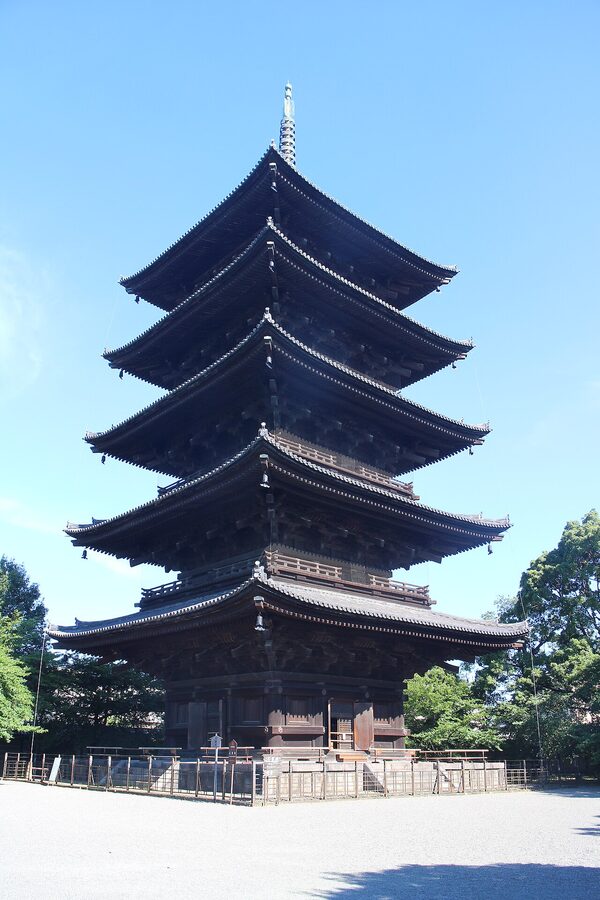

To-ji is a 15-minute walk south-west of Kyoto Station, on the far side of the Hachijo exit. Its five-storied pagoda is the tallest wooden pagoda in Japan at 55 metres and serves as the de-facto symbol of Kyoto on about half of the city’s tourism material — more often photographed than visited, which is its own kind of shame.
Admission to the main complex is ¥500 (¥800 when the pagoda’s first floor is open, usually spring and autumn). The Kodo (Lecture Hall) contains a set of 21 wooden Buddhist statues arranged as a three-dimensional mandala — most statues are Heian-period originals from the 9th century. It’s one of the most important assemblages of Buddhist sculpture in Japan and far less visited than the photograph of the pagoda would suggest.
The reason to plan your trip around To-ji, though, is Kobo-san market. On the 21st of every month, the whole temple complex fills with over a thousand antique and flea-market stalls — old kimono, lacquerware, Showa-era postcards, ceramics, swords, random tools. It starts around 6am and winds down by 4pm. If you can hit Kyoto on a 21st, prioritise this. There’s nothing else quite like it in the city.
Umekoji Park and the Kyoto Railway Museum
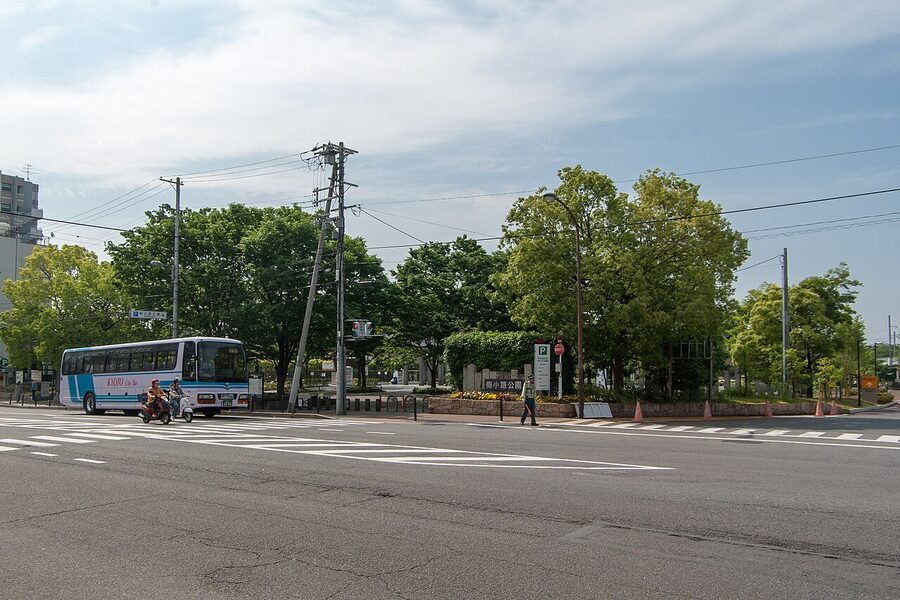

Fifteen minutes’ walk west of the station and you’re in Umekoji Park — an open green space with lawns, a small pond, and a preserved 1914-era steam locomotive roundhouse at its southern edge. The roundhouse is now the heart of the Kyoto Railway Museum, which is far better than you’d expect if trains aren’t your specific interest. ¥1,500 gets you a full shinkansen nose in section cross, a wartime diesel, full vintage passenger cars you can walk through, and a working steam-train shuttle on weekends. Families with school-age kids will lose three hours here without trying.
The park itself is free and pleasant for a picnic lunch — the food basement at Isetan is fifteen minutes away and the park benches under the maples are peaceful even in mid-summer. If you’re travelling with children and need a midday break that isn’t another temple, this is the best option near the station.
Kyoto Tower — The Easiest Panorama in the City
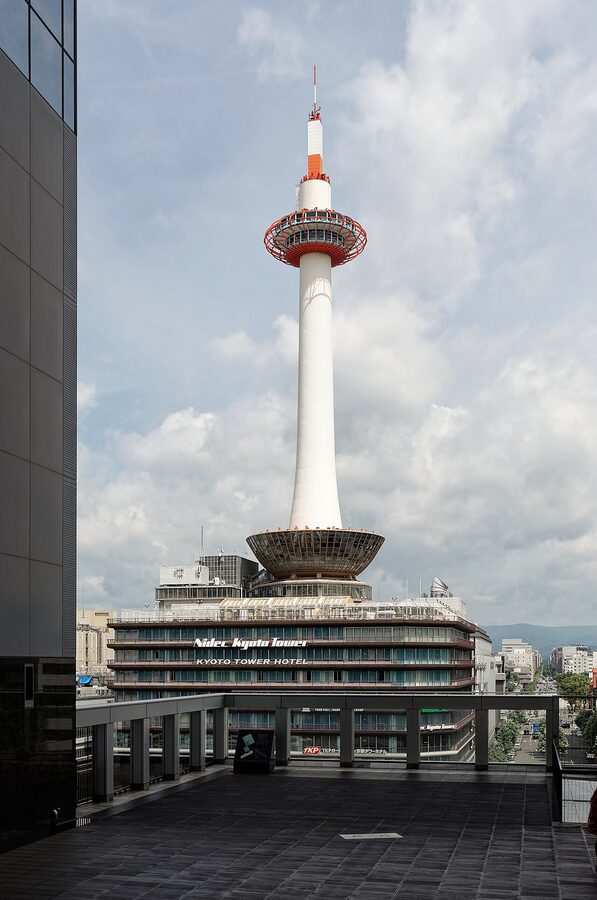

Kyoto Tower opened in 1964 and has been the subject of polite local hatred ever since. It’s a 131-metre white tower sitting in direct line-of-sight between Kyoto Station and the old city — which, when you’re trying to maintain a skyline ceiling in a low-rise historic capital, is not the friendliest gesture. But the observation deck is a genuinely useful orientation tool for first-time visitors.
Admission is ¥900. The deck is at 100m and gives you a 360-degree view: east along the Higashiyama ridge (Kiyomizu-dera visible with binoculars); north to the Imperial Palace grounds; west to Arashiyama mountain on a clear day; south to Fushimi Inari and beyond. On a low-humidity winter morning you can see Osaka. On a July afternoon you’ll struggle to see Heian Shrine.
The tower itself contains a branded onsen public bath (¥750) in the basement, a small food hall on the second floor, and a hotel (Kyoto Tower Hotel) attached — all surprisingly functional pieces of 1960s infrastructure. Go in the late afternoon when the low sun lights up the Higashiyama temples and you can pick them out clearly from above.
Where to Eat Near Kyoto Station
Ignore most of the station’s chain restaurants. The food here ranges from fine to a waste of a meal, and you’re surrounded by better options inside a ten-minute walk.
Inside the station: the Ramen Koji alley on the 10th floor has eight small ramen shops representing regions from Sapporo to Hakata. Not the best ramen in Japan, but better than the average hotel breakfast and a good rainy-day option. Don’t queue — if one shop has a line, walk to the next.
Just outside: Shinpuku Saikan (a short walk north of Higashi Honganji) is an old-school Kyoto ramen shop that specialises in a dark-soy broth. It’s been running since 1938 and tastes like it — fine in a very specific way.
For a sit-down lunch, head north on Karasuma-dori for five minutes and turn east at Shichijo-dori — the area around Shichijo Bridge has a handful of good kaiseki-lite lunch places (set menus in the ¥3,000 range) that serve lunch sets to Higashi Honganji day-trippers. Walk twenty minutes north along Karasuma and you’re at Gojo, which has better cafe options.
For dinner, take a subway — the station area itself doesn’t have a dinner scene. Six minutes on the Karasuma line puts you at Shijo for all of Downtown and Pontocho.
Day Trips Starting From Kyoto Station
The station’s real superpower is how easily it gets you elsewhere. Some quick orienting times:
- Nara — 45 minutes on the JR Nara line (local) or 55 minutes via Kintetsu (Kintetsu-Kyoto station is inside Kyoto Station). The Kintetsu Limited Express (Saki) drops the journey to 35 minutes.
- Osaka (Umeda / Namba) — 15 minutes on the JR shinkansen, 30 minutes on the JR special rapid, 45 minutes on the Hankyu line from Kawaramachi.
- Himeji Castle — 45 minutes by shinkansen (Hikari or Sakura). The castle is a 20-minute walk from Himeji Station. Worth a day.
- Hikone Castle and Lake Biwa — 45 minutes on the JR limited express. Smaller crowds than Himeji, genuinely atmospheric castle, and an afternoon around the lake.
- Uji — 25 minutes on the JR Nara line. Byodo-in Temple (the Phoenix Hall on the back of the ¥10 coin) and matcha tea shops. Half-day trip.
- Arashiyama — 15 minutes on the JR Sagano line. Bamboo grove, Togetsukyo Bridge, Tenryu-ji.
If you’re doing more than two of these, check whether the JR Kansai Wide Pass (4 days, ¥7,000) pays for itself — for most 4-day Kyoto trips with a Himeji or Hikone side-trip built in, it does.
Where to Stay in the Station Area
Hotels near Kyoto Station fall into three useful groups — direct-station (Granvia, integrated with the station complex), mid-range business hotels a few minutes’ walk north or south (Mitsui Garden being the reliable pick), and the cluster of budget hotels one subway stop south around Kujo and Tofukuji. All three categories are covered in depth in our Kyoto hotel guide — the short version is that you stay here for logistics, not atmosphere.
If you’re continuing to Tokyo the morning after arrival, or doing a string of day trips out from the centre, the station area genuinely is the best base. For a longer stay you’ll want something in Downtown or Higashiyama, which are six and twelve subway-minutes away respectively.
For broader area context, the Kyoto City Tourism Association’s official “Around Kyoto Station” page keeps an up-to-date list of event schedules and seasonal opening times — useful cross-reference before a trip. And if you’re here overnight, the Miyama thatched-roof village is a good countryside counterweight — see our Miyama day-trip guide.