
If you have four days in Kyoto, one of them should be in Miyama. This is unusual advice — most day-trip guides from Kyoto send you to Nara, Himeji, or Arashiyama. Those are all fine, but they’re all busy, and they’re all more or less still “Kyoto”. Miyama is two hours north of the city in the mountains of Tamba, a cluster of villages where about half the houses still have thatched kayabuki roofs and the valley road still floods when there’s a good rain.
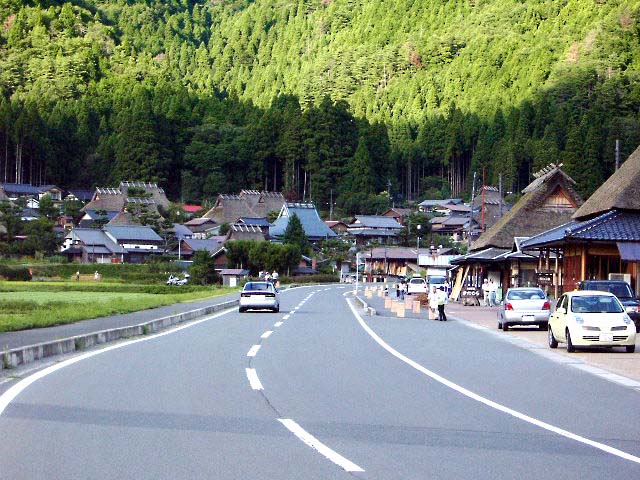
Kayabuki-no-Sato is the most photographed of these villages — 50 or so thatched houses arranged in a gentle curve along a hillside, still fully lived in by about 40 families. It’s one of Japan’s three best-preserved thatched-roof villages and the only one you can reach from Kyoto as a day trip. This is a guide to how to do that without wasting the day on buses, and what else is worth doing once you’re up there.

In This Article
Getting to Miyama Without Wasting the Day
Miyama is in the mountains of Nantan, Kyoto Prefecture, about 50km north of Kyoto City as the crow flies but more like 60km by road around the intervening ridges. Public transport is fiddly. There are three realistic options:
Option 1 — JR + Nantan City Bus (the cheapest). Take the JR Sagano/San-in Line from Kyoto Station north to Hiyoshi Station (50 min, ¥770, local trains). From Hiyoshi, connect to the Nantan City Bus toward Miyama via Kayabuki-no-Sato (about 75 min, ¥1,000). Total: 2 hours 5 minutes each way, roughly ¥1,800 return on top of the JR Pass. The bus runs roughly every 90 minutes and you need to check return times carefully — the last bus out of Kayabuki-no-Sato is around 17:20 most of the year.
Option 2 — JR + Nantan City Bus via Sonobe (marginally faster). JR Sagano/San-in Line to Sonobe Station (40 min, ¥970). From Sonobe, there’s a more direct Nantan bus up the valley — about 55 min. Slightly faster but fewer departures; the schedule’s on Miyama Navi.
Option 3 — hire a taxi or driver. Two hours each way but with no schedule anxiety, and you can get down to the smaller villages (Kita, Nakachigusa, Ashiu) that the bus doesn’t serve. Expect ¥25,000–¥30,000 for the full day if you hire a Kyoto taxi; less with a pre-booked English-speaking driver service. For a couple or a family, this often works out better than the bus.
There are no direct trains. The Kyoto City subway does not go to Miyama. Don’t believe any article that tells you otherwise.
If you’re driving yourself, it’s genuinely easier than the public transport — around 90 minutes up Route 162 via Keihoku, winding but well-paved. Parking at Kayabuki-no-Sato is ¥500 for the day. I’d only recommend this if you’re already driving in Japan and comfortable on mountain roads.
The Thatched Village Itself
_Museum.jpg)
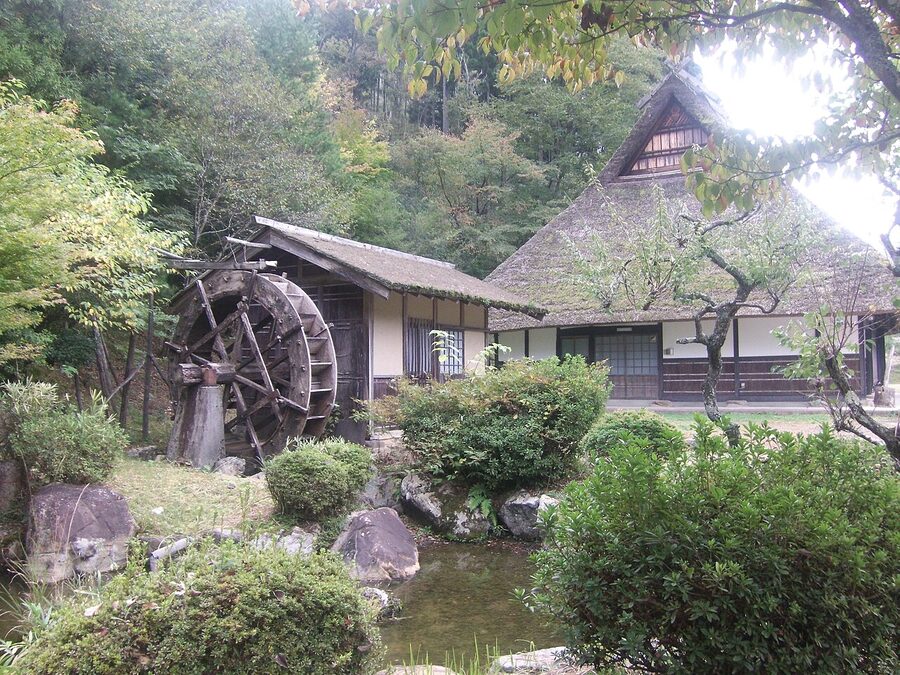
Kayabuki-no-Sato (literally “thatched-roof village”) is the main draw. It’s been designated one of Japan’s three best-preserved traditional villages — alongside Shirakawa-go and Ainokura — but unlike those two, Miyama is not a UNESCO site and gets a fraction of the foreign visitors. About 80% of its visitors are Japanese. The air is different here: in Shirakawa-go the village feels performative; in Miyama it still feels lived in, and that’s because it is. Families run a grocery shop, a post office, and two cafes. Kids walk to the single primary school. It’s not a museum.
There are about 50 houses, 39 with traditional kayabuki thatch. The thatch itself is pasture grass (susuki) tied into bundles with rice straw, and re-thatching a single roof takes a team of specialist roofers about a month of careful work. The village maintains its own guild of roofers who rotate between houses — partly because there simply aren’t enough of them anywhere else to do the job.
Once you’re there, set aside about two hours to walk the village end-to-end:
- The Folk Museum (Minzoku Shiryokan) — ¥300 entry, housed in a 200-year-old thatched farmhouse, with farming tools, straw sandals, and the blackened irori hearth still in place. A good 20 minutes for a first look at what life in these houses looked like into the mid-20th century.
- The fire-hydrant photo spot — at the top of the village road, where you can frame the whole village under the mountain ridge. Easy to find because it’s the only angle where the whole row of houses lines up. Worth pulling up the tripod for.
- Chii Hachiman-gū — a small Shinto shrine at the west end of the village, dated to the 12th century. Not spectacular on its own, but the walking path up to it from the main road is a good ten-minute loop with rice paddies on either side.
- Kita Village viewpoint — a five-minute walk up the hill east of the village, where a small observation platform gives you the wide shot. Go here for sunrise or late afternoon.
Food at the village: there are a few small restaurants and one very good soba shop (Kitamura) that serves handmade buckwheat noodles with wild vegetables gathered locally. It has about 20 seats and fills up by 12:30. Get there at 11:30 or wait until 14:00.
Winter Snow Lantern Festival
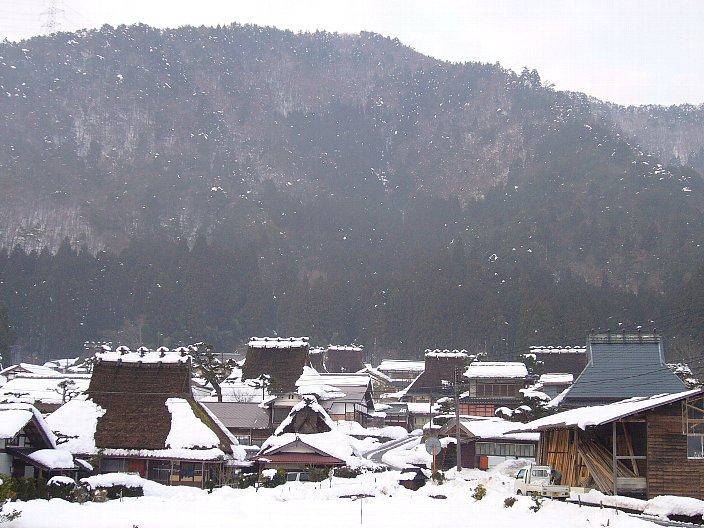
For ten days across late January and early February, Miyama runs its Yuki-Toro — the Snow Lantern Festival. The villages along the valley road set out more than 900 hand-carved snow lanterns along the footpaths and lane edges, lit with tea-lights at dusk. On weekend evenings the Kayabuki-no-Sato village adds a full illumination with floodlights that make the thatched roofs glow against the snow-dark sky.
This is the single best time to visit if you can arrange it. Hotel rates in Kyoto are low in February, the thatched village looks like a painting, and you can do dinner at a farmhouse restaurant after the lantern walk. The only catch is getting back to Kyoto — the last bus out runs around 20:00 on festival weekends, so you either need a late train connection or an overnight stay up in the valley. Overnight is the better plan; see the accommodation note below.
Exact dates change each year — the festival’s official site publishes the window in early December.
Summer Fireworks (May and August)

Miyama runs a small fireworks display on the last weekend of May as part of the “Protection from Fire” festival — the village’s thatched houses are stress-tested against their one historical enemy with a ceremonial water-cannon drill and a fireworks evening. Separately there’s a larger summer fireworks and lantern evening in mid-August, loosely timed to Obon.
Both are worth attending if the dates line up. The May event in particular is more of a village festival than a tourist event — a lot of the attendees are from the surrounding farms and you’ll often be the only non-Japanese visitor. Don’t plan your trip around them specifically, but if you’re already in Kyoto those weekends, they’re worth a half-day diversion.
Beyond Kayabuki-no-Sato — The Wider Valley
Most visitors only see the main thatched village and head back. That’s fine for a half-day. If you’ve made the effort to get up here, though, the surrounding area rewards a little more exploration:
- Ashu Primeval Forest — a 30-minute drive further up the valley from Kayabuki-no-Sato, this is one of the last genuinely old-growth beech forests in western Japan. There’s a 2-hour marked trail through the reserve; entry is by permit from the Kyoto University research station at the trailhead (¥500, advance reservation recommended). Sandwiches and water, bring your own.
- Cycling the valley — electric bike hire at the visitor centre near Kayabuki-no-Sato runs about ¥2,000 for a half-day. The valley road is flat-ish for about 12km past the village before the hills kick in, and you can reach three smaller thatched-roof hamlets (Kita, Nakachigusa, Tsuruga-oka) that the buses don’t go to. Most of the best Miyama photographs on Instagram come from these smaller clusters, not the main village.
- Kajiyama Sake Brewery — a small family-run brewery near Sonobe, tastings by appointment, excellent for a stop on the way back to the train station. They make a junmai ginjo specifically from Miyama-grown rice.
- Beniyaku-ji temple — a small mountain temple 15 minutes’ drive east of Miyama, dating to the 9th century, with a moss garden and a hiking path up to a waterfall. Free entry, almost never any other visitors.
Should You Stay Overnight?
A few of the thatched farmhouses operate as small ryokan-minshuku guesthouses, with two or three rooms each and a family-cooked evening meal included. The best-known are Miyama Futon & Breakfast, Matabee (a restored 19th-century house run by the family who owned it originally), and Momijiya — each sleeps 4–6 people and books up months ahead for the winter lantern window.
Staying overnight is the other end of the spectrum from a rushed day trip. You walk around the village at 5pm when the day-trippers have gone, eat a farmhouse dinner of mountain vegetables and grilled river fish at 6:30, and walk out again at 6am to an empty village in the mist. It’s the version of Miyama you’ll remember.
Prices are ¥18,000–¥28,000 per person including dinner and breakfast. For an overnight, pair it with a quiet night back at your Kyoto base (see our Kyoto hotel guide) or split the trip with an Arashiyama night on the western edge of Kyoto.
When to Go
The village works in every season but looks quite different at each:
- Late January to early February — snow and the lantern festival. The best of the winter options.
- Mid-April to early May — rice paddies are being flooded and planted, cherry trees out for the first week. Cool, often still blanket weather at night.
- Late June through August — saturated green paddies and high summer colour. Humid. The summer fireworks weekend.
- Late October through early December — the beech forests up the valley turn gold and red; the thatched village sits against a patchwork of leaf colour. Arguably the best overall window.
Avoid the weeks of Golden Week (late April / early May) and Obon (mid-August) — these are the only times the village gets genuinely crowded with Japanese domestic tourism.
Practical Summary
Budget roughly 9 hours door-to-door for a comfortable day trip from Kyoto Station: two hours up, five hours in Miyama, two hours back. That’s enough time for the main thatched village, lunch at Kitamura, the folk museum, and the wider walk up to the viewpoint. If you want the Ashu primeval forest or the valley cycle, plan to stay overnight.
What to bring: comfortable walking shoes (the village paths are gravel and stone, sometimes icy in winter), a water bottle (vending machines but no konbini), and cash — several of the smaller shops and the folk museum don’t take cards.
If you’re building a longer Kyoto itinerary that’s willing to use an English-speaking chauffeur service, our four-day Kyoto itinerary includes Miyama as the day-three countryside escape, with drive times worked out. For the best base to return to after a day up in the mountains, the Kyoto hotel guide covers the 18 hotels I’d consider across the city’s six main areas.