This guide contains affiliate links. If you book through them we earn a small commission at no extra cost to you.
Most of what’s sold as an “onsen” in a Kyoto city hotel is not onsen. It’s a heated mineral bath, often with added bath salts and some polite volcanic-rock styling, but the water did not come out of the ground at temperature. Real onsen — under Japan’s Hot Spring Law — has to originate from a natural spring with minimum mineral content and be at least 25°C at source. A distressing number of Kyoto city-hotel “onsen suites” quietly don’t clear that bar, and the English-language pages rarely tell you which side of the line a hotel sits on.
I’ve been writing about Kyoto hotels long enough to get annoyed about this particular bit of marketing. So this guide does one specific job: lay out every hotel where you can actually get a proper hot-spring bath in or near Kyoto, sorted by whether it’s in the city, in the prefecture, or in one of the nearby onsen towns worth combining with a Kyoto trip. Fifteen hotels, clear labels on each.
A few appear in our main Kyoto hotel guide, the luxury roundup and the ryokan guide too.
In This Article
- Quick-Reference Table: 15 Onsen Hotels, Ranked by Match
- How to Tell a Real Onsen From a Branded Mineral Bath
- How to Choose: Private vs Public, In-City vs Nearby, One Night vs Two
- Where These Are on a Map
- Kyoto City Hotels With Real Hot-Spring Water
- Roku Kyoto, LXR Hotels & Resorts — Best Private In-Room Onsen in Kyoto City
- Hotel The Mitsui Kyoto — Best City-Centre Bathhouse Experience
- Fufu Kyoto — Best Modern-Ryokan Private Onsen
- Aman Kyoto — Direct-Book Luxury With an On-Site Well
- Sora Niwa Terrace Kyoto — Best Mid-Range City Onsen
- Kyoto Hot Spring Hatoya Zuihokaku — Old-School Station-Area Onsen Hotel
- Onyado Nono Kyoto Shichijo — Budget Onsen, Rooftop Bath
- Dormy Inn Premium Kyoto Ekimae — The Budget Sleeper Pick
- Traditional Ryokan in Kyoto (With a Note on What Counts as “Onsen”)
- Kyoto Nanzenji Ryokan Yachiyo — Classic Ryokan, Not Actually Onsen
- Kyoto-Prefecture Onsen Ryokan — Real Mountain and Countryside Options
- Kurama Onsen — Best Accessible Mountain Ryokan
- Ryokan Sumiya Kihoan (Kameoka) — Best Luxury Onsen Ryokan Near Kyoto
- Kyo Yunohana Resort Suisen (Kameoka) — Mid-Range Onsen Resort
- Kyoto Arashiyama Onsen Ryokan Togetsutei — Arashiyama Onsen Ryokan
- Kadensho Arashiyama Onsen — The Refurbished Arashiyama Ryokan
- Nearby Kansai Onsen Towns Worth the Extra Day
- Nishimuraya Honkan (Kinosaki Onsen) — Best Kinosaki Ryokan
- Arima Grand Hotel (Arima Onsen) — Accessible Arima Hot-Spring Stay
- Onsen Etiquette: The Bits That Actually Matter
- What Most Guides Get Wrong About Kyoto Onsen
- Booking Tips: When and Where to Book
- What to Book by Goal
- Frequently Asked Questions
- Does Kyoto have real onsen?
- What’s the difference between onsen and sento?
- Can you go to an onsen with tattoos in Kyoto?
- Which Kyoto hotels have real hot-spring water in the room?
- Is Kinosaki Onsen a day trip from Kyoto?
- How much does an onsen ryokan in Kyoto cost?
- What do you wear in an onsen?
- Is Arima Onsen worth visiting from Kyoto?
Quick-Reference Table: 15 Onsen Hotels, Ranked by Match
Read-and-book version, if you’re not in the mood for 6,000 words. The “Onsen type” column is the single most important field — “Real (on-site)” means the hotel draws hot-spring water from a well on the property; “Real (trucked)” means it’s a genuine onsen source delivered from elsewhere; “Real (piped)” means fed by pipeline from a nearby source. I’ve deliberately left out hotels where the bath is only a heated mineral pool.
| Hotel | Tier | Location | Onsen type | From/night | Book |
|---|---|---|---|---|---|
| Roku Kyoto LXR | Luxury, in-city | Kinugasa, N. Kyoto | Real, on-site well | ¥85,000 | Check prices |
| Hotel The Mitsui Kyoto | Luxury, in-city | Nakagyo, by Nijo Castle | Real, trucked from Arima | ¥95,000 | Check prices |
| Fufu Kyoto | Luxury ryokan-style | Okazaki, N. Higashiyama | Real, piped from Kurama-area source | ¥95,000 w/ meals | Check prices |
| Aman Kyoto | Luxury, in-city | Takagamine, N. Kyoto | Real, on-site well (direct-book only) | ¥240,000 | Aman direct |
| Sora Niwa Terrace Kyoto | Mid-range, in-city | Shijo-Kawaramachi | Real, rooftop public bath | ¥32,000 | Check prices |
| Hatoya Zuihokaku | Mid-range, in-city | Shichijo, 10 min walk from Kyoto Stn | Real hot-spring | ¥18,000 | Check prices |
| Onyado Nono Kyoto Shichijo | Budget, in-city | Shichijo, near Sanjusangen-do | Real hot-spring rooftop bath | ¥16,000 | Check prices |
| Dormy Inn Premium Kyoto Ekimae | Budget, in-city | Opposite Kyoto Station | Real, natural hot-spring | ¥13,000 | Check prices |
| Kyoto Nanzenji Ryokan Yachiyo | Mid-range ryokan | Nanzen-ji, E. Kyoto | Mineral bath (not onsen — listed for context) | ¥40,000 w/ meals | Check prices |
| Kurama Onsen | Mid, mountain ryokan | Kurama village, 35 min from Kyoto | Real, village hot-spring source | ¥28,000 w/ meals | Check prices |
| Ryokan Sumiya Kihoan | Luxury ryokan | Kameoka, 30 min train from Kyoto | Real, on-property source | ¥55,000 pp w/ meals | Check prices |
| Kyo Yunohana Resort Suisen | Mid-range resort | Kameoka | Real Yunohana spring | ¥22,000 pp w/ meals | Check prices |
| Kyoto Arashiyama Onsen Ryokan Togetsutei | Mid ryokan | Arashiyama, W. Kyoto | Real Arashiyama hot-spring | ¥42,000 w/ meals | Check prices |
| Kadensho Arashiyama Onsen | Mid-to-upper ryokan | Arashiyama fringe | Real Arashiyama hot-spring | ¥35,000 pp w/ meals | Check prices |
| Nishimuraya Honkan | Luxury ryokan | Kinosaki Onsen, 2h40m by train | Real, onsen-town source | ¥48,000 pp w/ meals | Check prices |
| Arima Grand Hotel | Mid-upper, resort | Arima Onsen, 1h40m from Kyoto | Real Arima kinsen & ginsen | ¥34,000 pp w/ meals | Check prices |
Prices are Booking.com starting rates at the time of writing for a double or twin room off-peak. Cherry-blossom and autumn-foliage weeks typically run 40–80% higher. Yachiyo is in the table because it’s a common search result for “Kyoto onsen ryokan”; full explanation in its section below.
How to Tell a Real Onsen From a Branded Mineral Bath
Three signals. Check these before you pay for “onsen” in anything.
The Japanese-language claim. Real onsen hotels use the phrase 天然温泉 (tennen onsen, “natural hot spring”) or 源泉かけ流し (genzen kakenagashi, “flowing directly from source”) on their Japanese pages. If the English page just says “onsen” with no corresponding Japanese claim on the site’s Japanese version, the bath is almost always a heated mineral pool. Dormy Inn Premium Kyoto Ekimae, for instance, puts 天然温泉 directly in its signage and English name (“Natural Hot Spring”). Roku Kyoto, Mitsui Kyoto, Fufu and the Kameoka ryokan all carry the claim on their Japanese pages.
A named spring source. Real onsen hotels name the spring. Aman Kyoto cites its on-site well in the Takagamine hills. Fufu says its water comes from a source near Kurama. The Mitsui names Arima as the origin. Sumiya Kihoan gives you the temperature and mineral breakdown of its own property’s source. Vague “rich mineral bath” language with no named source is the tell that you’re looking at a heated pool.
The sign in the bath. Real onsen in Japan are legally required to post a notice inside the bathhouse with the source name, temperature at origin, mineral composition and whether water is recirculated or flowing. It’s usually a small printed board near the changing room. If all you find is a “cold / warm / hot” sign on the tap, it’s a treated bath, not an onsen.
One nuance worth calling out. There’s a grey category where water is real onsen source water but has been piped or trucked to the hotel from elsewhere. Mitsui’s “Thermal Spring” trucks water from Arima in Hyogo, 90 minutes away, then distributes it through the bathhouse and selected rooms. The chemistry is real even if the water has travelled. The table above labels each option as on-site, piped or trucked so you can decide what matters.
How to Choose: Private vs Public, In-City vs Nearby, One Night vs Two
Three questions do most of the work.
Private in-room, or public bathhouse? Private baths on the guest-room terrace are the default for a modern Kyoto onsen stay (Roku, Fufu, Sumiya Kihoan, the better Togetsutei rooms). Public bathhouses, where you bathe nude alongside other guests in a gender-separated pool, remain the norm at Kurama Onsen, Hatoya Zuihokaku and Kinosaki. Private is easier for tattooed travellers and lets two people bathe together; public is usually bigger, more atmospheric, and cheaper. If you’re nervous about public bathing, book private and you’ll still get the water chemistry.
In-city, or real onsen trip? A genuine onsen-town experience — yukata-clad guests wandering between bathhouses on a closed-off main street — is not something a Kyoto city hotel can give you. If that’s the mental picture in your head, the article you actually want is in the “nearby Kansai onsen towns” section below. If you want a proper bath attached to your Kyoto stay without losing sightseeing time, the in-city options further up will serve you better.
One night or two? One-night ryokan stays with dinner and breakfast are the Japanese default: arrive in the afternoon, bathe before dinner, kaiseki, bathe again before bed, bathe once more in the morning, check out. Two nights in the same ryokan is unusual unless the setting justifies not moving (Nishimuraya in Kinosaki; Sumiya Kihoan for a quieter countryside stay). For most trips I’d book one onsen night and put everything else in a Kyoto city base.
Where These Are on a Map
The in-city hotels cluster in three zones. North Kyoto holds Roku, Aman Kyoto and Fufu — all on the same rough 20–30 minute arc from Kyoto Station, up past the northern temple ring. Downtown has Sora Niwa Terrace, a few minutes from Shijo Station. The Kyoto Station cluster — Hatoya, Onyado Nono, Dormy Inn Premium — all sit within ten to fifteen minutes on foot of the shinkansen platform, which is where you want to be if you’re arriving onto the bullet train and want a bath in under an hour.
The prefecture ryokan are further out. Kurama Onsen sits 35 minutes up the Eizan railway, Kameoka (Sumiya Kihoan and Yunohana Suisen) is 30 minutes by JR Sagano, and the Arashiyama pair (Togetsutei and Kadensho) are 20 minutes by train or about 15 by taxi from central Kyoto. Kinosaki is 2h40 by Limited Express. Arima is 1h40 via Osaka or Kobe. I’d treat the last two as destination trips rather than add-ons.
Kyoto City Hotels With Real Hot-Spring Water
This is the shortlist for people who want real onsen water without leaving the city. It’s small. Kyoto is not a natural onsen region — it’s a Heian-period capital city built in a basin, not a volcano town. The hotels below have either drilled their own wells, trucked in source water from elsewhere, or found a Kyoto-prefecture source within pipeable distance. Seven of them are on Booking.com; one, Aman Kyoto, is direct-book only.
Roku Kyoto, LXR Hotels & Resorts — Best Private In-Room Onsen in Kyoto City
Nearest Station: Enmachi (JR) — 20 min by taxi, or shuttle
To Kinkaku-ji: 10 min by taxi
Best For: Honeymoon, private-onsen stay without leaving Kyoto
Onsen type: Real — self-drilled alkaline well on property
From: ¥85,000/night
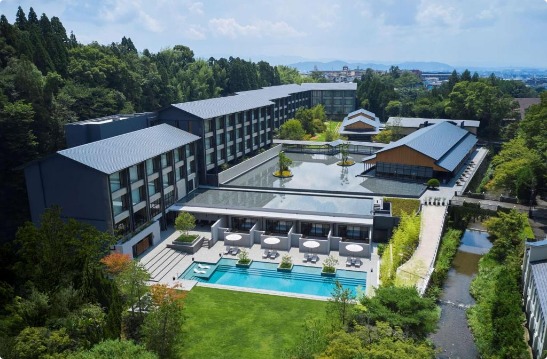
Roku is the one Kyoto luxury hotel where you can defensibly claim a real in-room onsen. The property drilled its own alkaline well when it opened in 2021, and the water is piped to private outdoor baths attached to every guest room. Alkaline water feels slightly slippery on the skin — the easiest giveaway that it’s from the ground rather than the tap. A public bathhouse on the upper terrace is worth doing once for the view but the in-room baths are the reason you book.
Roku works best for a couple who want the full ryokan-style bathing programme without committing to a traditional ryokan — beds instead of futons, western breakfast available, Kinkaku-ji walkable in the afternoon. It doesn’t work if you were expecting a walking-distance-to-Gion base: you’re in a quiet residential slice of north Kyoto, 20 minutes by taxi from the downtown restaurant zone, and the shuttle service isn’t a substitute for staying central. See our luxury hotels guide for a fuller write-up.
What’s Good:
- Every room has a private outdoor bath fed from the on-site well
- Alkaline water; 30 seconds in and your skin feels noticeably different
- The hillside setting is quieter than any central Kyoto luxury property
What’s Not:
- Restaurant scene is all internal; nothing within walking distance
- Rooms on the lower rows look into the corridor of the building opposite, not the hillside — ask when booking
Check prices at Roku Kyoto LXR on Booking.com →
Hotel The Mitsui Kyoto — Best City-Centre Bathhouse Experience
Nearest Station: Nijojomae (Tozai Line) — 3 min walk
To Nijo Castle: opposite the hotel
Best For: First-class central base with a proper bathhouse attached
Onsen type: Real Arima source water, trucked to the hotel
From: ¥95,000/night
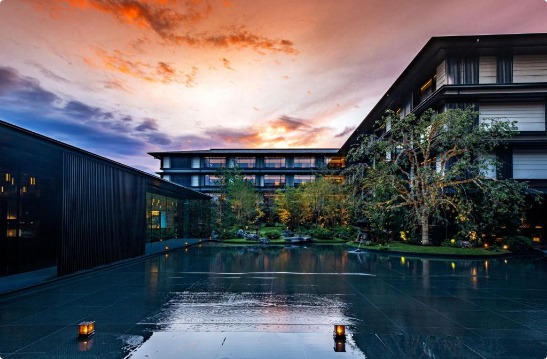
The Mitsui’s “Thermal Spring” complex is the most fully built-out onsen offering of any Kyoto city hotel I’ve looked at. The water comes from Arima Onsen — one of the historic Kansai hot-spring sources, about 90 minutes away in Hyogo — and is transported to the hotel and distributed to a large public bathhouse plus the Onsen Suite private baths. The chemistry is real (sodium-chloride rich, faintly iron-tinted) even if the water has travelled. The bathhouse itself is the draw. It’s set around a small courtyard, with separate gender-segregated pools and a shared rest area, and the design is closer to a spa-building-in-a-garden than a hotel basement bathhouse.
Location is the other reason this is the default pick if you want a city base with a bath. You’re directly across from Nijo Castle, three minutes from the Tozai subway, and fifteen minutes on foot from the Nishiki Market edge of downtown. Onsen Suite rooms have their own en-suite thermal bath; standard rooms use the public bathhouse. If you’re a couple who wants both the bathing and the central-Kyoto access, it’s the clearest single pick here.
The fair negative is the trucked-in water point. If your threshold is “I want to bathe at the source”, you need to go to Kameoka or Kinosaki. If your threshold is “I want to bathe in real onsen water without sacrificing a sightseeing day”, the Mitsui is the answer.
What’s Good:
- Bathhouse is architecturally the best-designed in any Kyoto hotel
- Nijojomae subway 3 minutes away; downtown reachable on foot
- Onsen Suite rooms have en-suite baths fed from the same Arima source
What’s Not:
- Trucked water is a legitimate but cooler-than-source experience
- Standard rooms use only the public bathhouse; you need to step up to an Onsen Suite for in-room bathing
Check prices at Hotel The Mitsui Kyoto on Booking.com →
Fufu Kyoto — Best Modern-Ryokan Private Onsen
Nearest Station: Higashiyama (Tozai Line) — 12 min walk
To Nanzen-ji: 7 min walk
Best For: Modern ryokan format with genuine onsen; first ryokan stay at luxury tier
Onsen type: Real — piped from a source around the Kurama area
From: ¥95,000/night including kaiseki dinner & breakfast
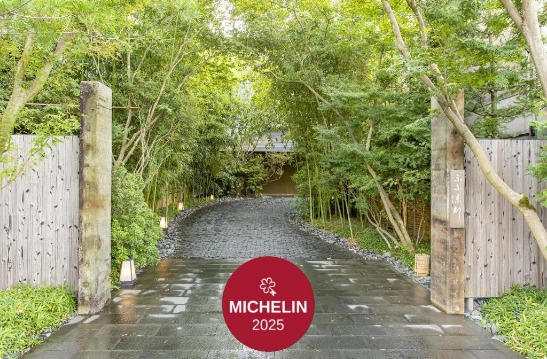
Fufu operates in the modern-ryokan category but has invested in a real hot-spring supply piped down from a source in the Kurama area. Every one of the 40 rooms has a private outdoor bath on its own terrace, and the in-room format is what makes it work — breakfast with a view while you’re still in the water is very much the thing here. The kaiseki dinner is included in the room rate and properly cooked on-site.
The setting helps. Okazaki in northern Higashiyama is quiet in the evenings, and the hotel backs onto the canal running down from Nanzen-ji. You can walk to the Philosopher’s Path, Heian-jingu and Nanzen-ji by day and have a full onsen-and-kaiseki evening after. Where Fufu doesn’t work is as a first ryokan stay for travellers who wanted the tatami-and-futon classic — this is a modern building with western beds and contemporary architecture. The ryokan guide lists the more traditional alternatives.
What’s Good:
- Private outdoor onsen on every room’s terrace
- Kaiseki is properly cooked on-site, not catering-grade
- Walking distance to Nanzen-ji and the Philosopher’s Path
What’s Not:
- In-room baths are smaller than a public bathhouse — not designed for sharing
- Modern build; if you wanted old wood and futons, this isn’t it
Check prices at Fufu Kyoto on Booking.com →
Aman Kyoto — Direct-Book Luxury With an On-Site Well
Nearest Station: Kitaoji (Karasuma Line) — 10 min by taxi
To Kinkaku-ji: 6 min by taxi
Best For: Travellers for whom the room rate isn’t the constraint; Aman loyalists
Onsen type: Real — on-site well in Takagamine hills; direct-book only
From: ¥240,000/night
Aman Kyoto isn’t on Booking.com, which is why this entry is shorter. The hotel sits on a forested slope in Takagamine in the far north of the city, drilled its own hot-spring well, and the water feeds both the communal onsen pavilion and the in-suite bathing rooms in higher-category accommodation. The public bathhouse is the better of the two: quiet, forest-facing, and a strong candidate for best hotel onsen in Kansai. Starting rate is roughly triple the next hotel on this list, and the location — 25 minutes by taxi from downtown — is more remote than Roku. If you’re an Aman loyalist or a specific honeymoon use-case it will already be on your list. If not, Roku delivers 85% of the same experience at a third of the price.
Sora Niwa Terrace Kyoto — Best Mid-Range City Onsen
Nearest Station: Kiyamachi-Shijo (Hankyu) — 3 min walk
To Nishiki Market: 5 min walk
Best For: Mid-range city onsen, travellers who want a proper bath without luxury pricing
Onsen type: Real hot-spring water, top-floor public bath
From: ¥32,000/night
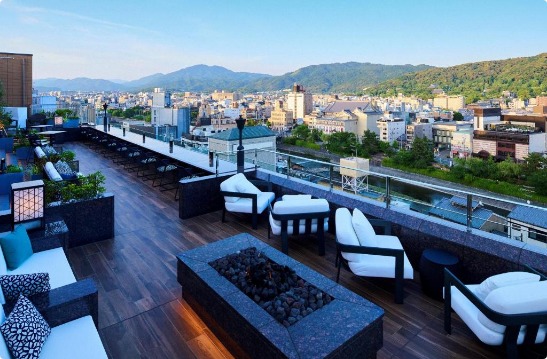
Sora Niwa Terrace (the name means “Sky Garden Terrace”) is the downtown option for real onsen without the luxury-tier spend. The hotel runs a rooftop bathhouse fed from a real hot-spring source, and the setting — with views over the Kamo River and the Higashiyama ridge — is one of the better public baths you’ll use in Kyoto. The rooms themselves are business-hotel-plus: compact but well-finished, nothing dramatic. There are no in-room baths, so this is only the right choice if you’re willing to use a gender-separated public bath.
What makes it work as a pick is the location. Three minutes from Shijo-Kawaramachi puts you in the heart of the downtown restaurant grid, with the Kamo River walk at your doorstep and the Gion lantern streets fifteen minutes on foot across the bridge. At roughly a third of the Mitsui’s room rate and on the same subway line as Gion, it’s the best value-for-proper-onsen equation in central Kyoto.
Fair warning: peak cherry-blossom and autumn rates push the starting price above ¥50,000, and the hotel gets heavy Japanese-domestic demand on Friday and Saturday nights. Book at least a month ahead for weekend stays in March, April, October and November.
What’s Good:
- Rooftop bath has real source water and a view toward Higashiyama
- Three minutes from Shijo-Kawaramachi’s restaurant grid
- About a third of the room rate of the luxury options
What’s Not:
- Bathhouse is communal only — no in-room option
- Rooms are compact; if you want a sitting area, step up a category
Check prices at Sora Niwa Terrace Kyoto on Booking.com →
Kyoto Hot Spring Hatoya Zuihokaku — Old-School Station-Area Onsen Hotel
Nearest Station: Kyoto Station — 10 min walk north
To Higashi Honganji: 3 min walk
Best For: Budget-conscious travellers who still want real onsen, short stays
Onsen type: Real hot-spring water, public bathhouse
From: ¥18,000/night
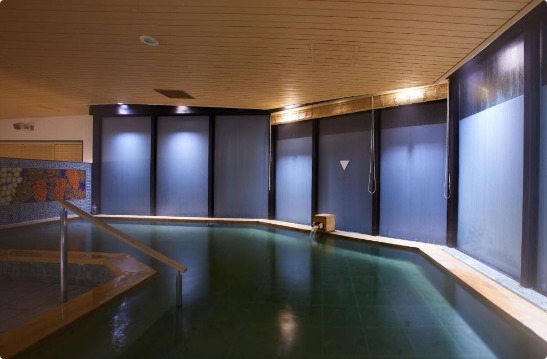
Hatoya Zuihokaku is the old-school Japanese onsen-hotel format: a mid-range 200-plus-room property with a proper hot-spring bathhouse and relatively plain guest rooms. The kind of place Japanese families book for a weekend away from Osaka. Baths are the main event and they’re genuine — multiple pools at different temperatures, an outdoor option, real hot-spring water sourced locally to Kyoto. Breakfast is buffet-style and included in most rates.
The location near Kyoto Station makes it unusually practical. Ten minutes on foot from the Karasuma-Dori exit gets you in the water within half an hour of stepping off the shinkansen, and Higashi Honganji is a three-minute walk for a morning temple visit. Rooms are functional mid-range Japanese — twin beds or small doubles, sometimes tatami, not the reason to book. The bath is.
What’s Good:
- Real hot-spring water in multiple pools, including an outdoor option
- Ten minutes on foot from Kyoto Station’s Karasuma exit
- Included breakfast; authentic Japanese domestic-tourism atmosphere
What’s Not:
- Rooms are dated; the interior hasn’t been refreshed recently
- Busy Japanese families on Saturday nights — bath can fill up around 8pm
Check prices at Hatoya Zuihokaku on Booking.com →
Onyado Nono Kyoto Shichijo — Budget Onsen, Rooftop Bath
Nearest Station: Kyoto Station — 12 min walk
To Sanjusangen-do: 5 min walk
Best For: Budget onsen, solo travellers, short stays
Onsen type: Real hot-spring water, top-floor public bath
From: ¥16,000/night
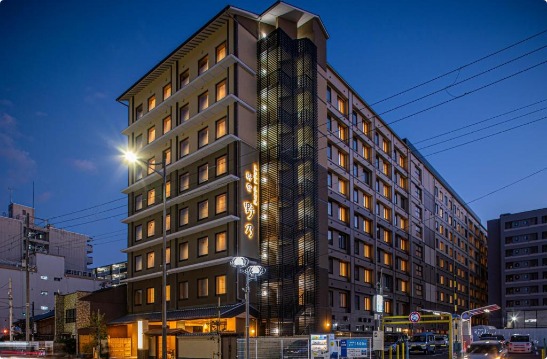
Onyado Nono is a Japanese chain specialising in mid-priced properties with real onsen baths. The Kyoto Shichijo branch runs the chain’s standard format: small functional rooms, light breakfast included, a proper rooftop hot-spring bath with separate men’s and women’s facilities. Water comes from a local Kyoto-prefecture spring via the chain’s own drilling. Close enough to Sanjusangen-do to combine a morning temple visit with a bath at check-in.
This is the budget onsen pick in central Kyoto for a specific traveller: someone who wants the hot-spring bath as the central experience and is fine with a small functional room otherwise. There’s a free yukata and slippers set, and most nights you’ll see guests drifting from the lift to the bath door in theirs.
What’s Good:
- Real rooftop onsen; separate men’s and women’s
- Free yukata and breakfast included
- Close enough to Sanjusangen-do to walk
What’s Not:
- Rooms are small; no suites or upgrade path
- Public bath only; tattoos can be an issue — check policy before booking
Check prices at Onyado Nono Kyoto Shichijo on Booking.com →
Dormy Inn Premium Kyoto Ekimae — The Budget Sleeper Pick
Nearest Station: Kyoto Station — 2 min walk from the Hachijo (south) exit
To Kyoto Station bus terminal: 3 min walk
Best For: One or two nights on a budget with real onsen; late shinkansen arrivals
Onsen type: Real natural hot-spring, top-floor public bath
From: ¥13,000/night
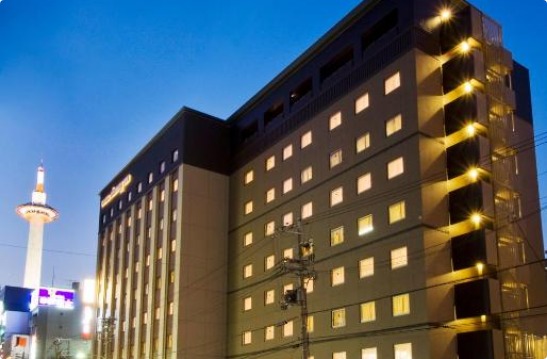
Dormy Inn’s Premium Kyoto Ekimae branch is the budget onsen that actually delivers. The hotel name has 天然温泉 (natural hot spring) in its signage, and the top-floor bathhouse is fed from a real source — there’s separate men’s and women’s facilities, including outdoor baths on the roof. Rooms are compact business-hotel format but cleaner and more recent than the older Kyoto Station area properties, and the chain’s standard free-night-ramen service (from 9:30pm to 11pm) is a proper draw after a long sightseeing day. Breakfast is a large Japanese-plus-western buffet, available à la carte.
Why it’s a sleeper pick: at roughly a third of the price of Sora Niwa Terrace, you’re getting real onsen, a rooftop bath and an unbeatable Kyoto Station location (literally across the road from the Hachijo-guchi exit). It’s not a design hotel, the lobby is generic, and you won’t get an in-room bath. But if the brief is “one night of real onsen without the luxury spend”, this is the highest-value single answer in the city. Covered more broadly in our budget hotels guide where the other Dormy Inn comparisons sit.
What’s Good:
- Real top-floor onsen at budget pricing
- Two minutes from Kyoto Station south exit
- Free late-night ramen; proper buffet breakfast
What’s Not:
- Building and lobby are business-hotel generic
- No in-room bath option; only the communal rooftop
Check prices at Dormy Inn Premium Kyoto Ekimae on Booking.com →
Traditional Ryokan in Kyoto (With a Note on What Counts as “Onsen”)
Kyoto Nanzenji Ryokan Yachiyo — Classic Ryokan, Not Actually Onsen
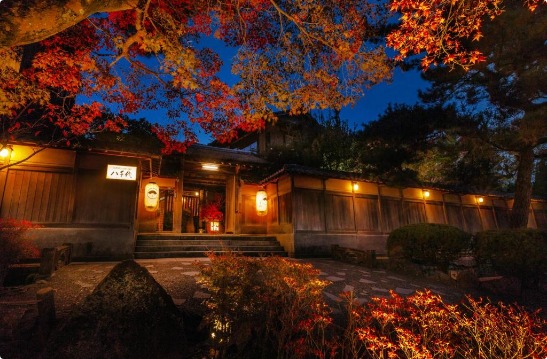
Nearest Station: Keage (Tozai Line) — 5 min walk
To Nanzen-ji: 4 min walk
Best For: Traditional ryokan stay; people who want a proper Japanese inn experience more than they want real onsen water
Onsen type: Not onsen — mineral bath only (listed because it’s a common search result)
From: ¥40,000/night including dinner & breakfast
I’m including Yachiyo in this article with a warning, because it comes up for every “Kyoto onsen ryokan” search and would otherwise lead readers to believe it’s a real hot-spring stay. It’s not. The bath at Yachiyo is a heated mineral bath, not fed from a natural hot-spring source, and the ryokan itself doesn’t claim otherwise on its Japanese pages. What you’re booking here is a proper traditional ryokan — a 1915-founded family-run inn with a 100-year-old Japanese garden, kaiseki by an on-site chef, futons laid out on tatami after dinner.
If the question is “I want the traditional ryokan format in Kyoto and the onsen isn’t the critical part”, Yachiyo is one of the more reliable picks, and the location opposite the Nanzen-ji temple complex is genuinely excellent. But if the question is “I want to bathe in real hot-spring water”, this is not the hotel for you — Fufu Kyoto or Kurama Onsen will be better matches. The full ryokan write-up is in our ryokan guide.
What’s Good:
- Authentic century-old traditional ryokan format
- Private Japanese garden visible from every room
- Five minutes from Nanzen-ji and the southern Philosopher’s Path
What’s Not:
- Bath is a heated mineral bath, not real onsen
- Tatami-and-futon format isn’t for travellers who want a bed and a desk
Check prices at Kyoto Nanzenji Ryokan Yachiyo on Booking.com →
Kyoto-Prefecture Onsen Ryokan — Real Mountain and Countryside Options
Once you leave Kyoto city proper but stay inside the prefecture, the onsen options improve. These are all within 45 minutes of central Kyoto by train, which means you can do a one-night ryokan stay as an add-on to a Kyoto trip without losing half a day on travel. The caveat is that they’re all in small towns or villages — don’t expect a walkable restaurant scene outside the ryokan itself.
Kurama Onsen — Best Accessible Mountain Ryokan
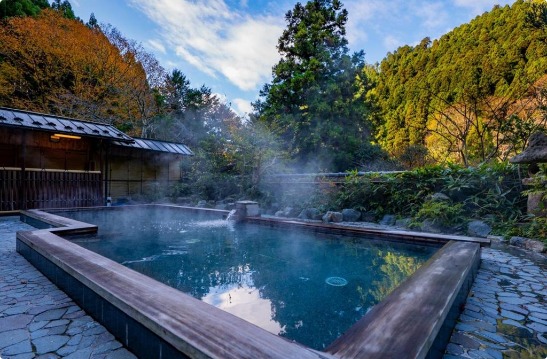
Nearest Station: Kurama (Eizan Railway) — 10 min walk
From Demachiyanagi in Kyoto: 35 min by Eizan Railway
Best For: Overnight countryside escape with rail access from Kyoto
Onsen type: Real hot-spring source in the mountain village (radium/sodium-chloride)
From: ¥28,000/night including dinner & breakfast
Kurama is a small mountain village at the northern end of the Eizan Railway — 35 minutes from Demachiyanagi station in central Kyoto, through increasingly forested suburbs as the track climbs. Kurama Onsen is the village’s main ryokan, built around a mineral hot spring that flows out of the mountain above. The forested outdoor bath is the standout: pine-shaded, looking out over the valley, dry-in-the-winter-with-snow-on-the-branches if you time it right. The water is radium-bearing sodium-chloride rather than the sulphur-rich onsen you’ll find elsewhere in Japan, so the smell is mild.
This is the accessible “mountain onsen ryokan” from Kyoto — you can get there by public transport (the Eizan is a narrow-gauge, single-track railway that runs up the mountain), have a proper one-night ryokan stay, and be back in Kyoto in time for lunch the next day. The village also hosts Kurama-dera, a mountain temple that’s worth the hike from the station regardless of whether you’re staying. Combine the two as a package and you’ve got a full 24-hour trip that feels completely different from central Kyoto.
What’s Good:
- Reachable by public transport from central Kyoto in under an hour
- Forested outdoor bath works in all four seasons
- Can be combined with Kurama-dera temple hike for a full day out
What’s Not:
- Rooms are dated — classic mid-range ryokan rather than a design property
- The village is small; there’s nothing to do in the evening after dinner
Check prices at Kurama Onsen on Booking.com →
Ryokan Sumiya Kihoan (Kameoka) — Best Luxury Onsen Ryokan Near Kyoto
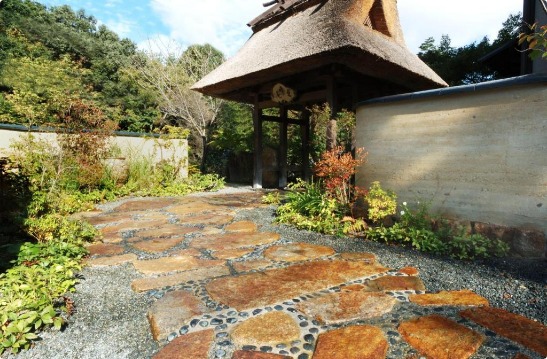
Nearest Station: Kameoka (JR Sagano Line) — 5 min by ryokan shuttle
From Kyoto Station: 30 min by JR Sagano
Best For: Luxury onsen-ryokan experience within a practical train ride of Kyoto
Onsen type: Real hot-spring, private in-suite baths
From: ¥55,000 per person including dinner & breakfast
Kameoka is the small town that most Kyoto travellers pass through on the way to the Hozugawa boat ride without stopping. Sumiya Kihoan is why you should stop. The ryokan sits on a hillside on the edge of town and has 14 suites, each with a private outdoor hot-spring bath fed from the property’s own source. The kaiseki dinners here are built around local Tamba beef, seasonal river fish and Kameoka-grown vegetables, and earn regular Michelin mentions.
Covered in more depth in our luxury hotels guide. For onsen specifically, it’s the easiest way to get a genuine luxury private-onsen ryokan experience from a Kyoto base: 30 minutes out on JR Sagano, private in-room bath, proper kaiseki dinner, Kameoka station shuttle, back in Kyoto by mid-morning. If budget allows, I’d pick this over almost any in-city option because the water is actually on-site rather than piped or trucked.
What’s Good:
- Private outdoor onsen in every suite, on-property source
- Kaiseki is the real thing — local sourcing, Michelin-level execution
- 30 minutes by train from Kyoto Station; shuttle from Kameoka
What’s Not:
- Significant price step up from the alternatives
- Kameoka itself has nothing to do beyond the ryokan and the boat ride
Check prices at Ryokan Sumiya Kihoan on Booking.com →
Kyo Yunohana Resort Suisen (Kameoka) — Mid-Range Onsen Resort
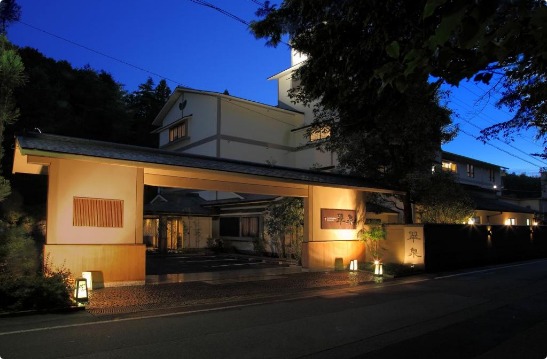
Nearest Station: Kameoka (JR Sagano Line) — 10 min by shuttle
From Kyoto Station: 30 min by JR Sagano
Best For: Mid-range onsen ryokan, families, groups
Onsen type: Real Yunohana spring, multiple public baths + some in-room
From: ¥22,000 per person including dinner & breakfast
Suisen is the larger, more conventional resort option in Kameoka — an 80-room onsen hotel with multiple gender-separated public bathhouses fed from the Yunohana hot-spring source. Rooms mix Japanese-style tatami-with-futon and western-style with beds. Kaiseki is a simpler version of what you’d get at Sumiya Kihoan, well executed but not Michelin-level.
What makes Suisen work is the scale-to-price ratio. For about a third of the Sumiya Kihoan rate you get a real hot-spring bath, a proper ryokan dinner-and-breakfast format, and you’re still 30 minutes by train from Kyoto. Good for families that need more rooms (connecting rooms available) or travellers not wanting to commit to the luxury-tier price. Free shuttle from Kameoka station at scheduled times.
What’s Good:
- Real onsen at roughly one-third the price of Sumiya Kihoan
- Family rooms and connecting rooms available
- Multiple public bathhouses keep crowding low even on weekends
What’s Not:
- Resort-hotel feel rather than intimate ryokan
- Kaiseki is serviceable; don’t expect the Sumiya Kihoan-level cooking
Check prices at Kyo Yunohana Resort Suisen on Booking.com →
Kyoto Arashiyama Onsen Ryokan Togetsutei — Arashiyama Onsen Ryokan
Nearest Station: Saga-Arashiyama (JR Sagano) — 8 min walk
To Togetsukyo Bridge: 3 min walk
Best For: Arashiyama stay with real onsen; combining with the bamboo grove and river area
Onsen type: Real Arashiyama hot-spring
From: ¥42,000/night including dinner & breakfast
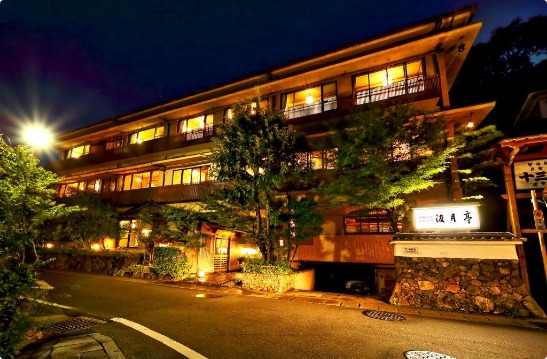
Togetsutei sits directly on the Oi River beside the Togetsukyo Bridge, which means you’re at the centre of Arashiyama’s main attraction zone and can hear the river from the bath. The public bathhouse is fed from the Arashiyama Onsen source; a smaller number of higher-tier rooms have their own private onsen baths. Kaiseki dinner is included in most rates and served in the guest rooms.
This is an Arashiyama base — walk out, cross the bridge, and you’re at the bamboo grove and Tenryu-ji in fifteen minutes. See the area in a half-day, come back for the afternoon bath, kaiseki in-room, wake up on the river side. Pairs with our Arashiyama hotels guide for broader area context. The obvious negative: Arashiyama runs shoulder-to-shoulder from mid-morning to late afternoon, and the evenings are only quiet because the day crowds have left.
What’s Good:
- Directly on the Oi River beside Togetsukyo
- Real Arashiyama Onsen source water
- Walking distance to the bamboo grove and Tenryu-ji
What’s Not:
- Arashiyama gets busy in daytime — the bath is where you hide
- Private in-room onsen is only available in the higher-tier rooms
Check prices at Kyoto Arashiyama Onsen Ryokan Togetsutei on Booking.com →
Kadensho Arashiyama Onsen — The Refurbished Arashiyama Ryokan
Nearest Station: Saga-Arashiyama (JR Sagano) — 15 min by bus
To Togetsukyo Bridge: 12 min by bus
Best For: Arashiyama stay with real onsen, away from the main tourist grid
Onsen type: Real Arashiyama hot-spring source
From: ¥35,000 per person including dinner & breakfast
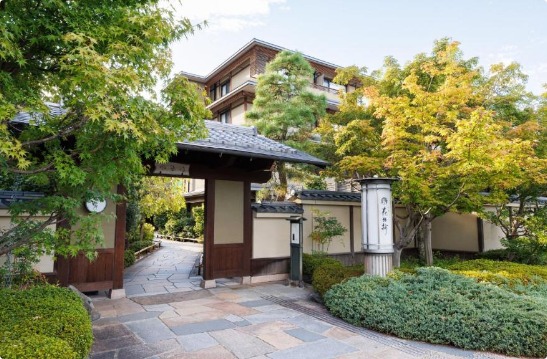
Kadensho is the Arashiyama onsen ryokan that’s reopened after a significant refurbishment. It sits on the quieter side of the Arashiyama district, about 15 minutes from the Togetsukyo Bridge, which keeps it out of the day-trip noise. The bathhouse uses Arashiyama-sourced hot-spring water with both public and private bath options. Worth pairing with a daytime Arashiyama visit: bamboo grove and Tenryu-ji in the morning, bus back for the afternoon bath, kaiseki dinner before the area empties. The right pick if Togetsutei is full or you want to be away from the riverside crowd.
What’s Good:
- Quieter location than the river-front Arashiyama options
- Recent renovation means bathhouse and rooms are new-build
- Real Arashiyama Onsen source
What’s Not:
- Not walkable to Togetsukyo; the bus adds friction
- The quieter setting means fewer restaurants nearby in the evening
Check prices at Kadensho Arashiyama Onsen on Booking.com →
Nearby Kansai Onsen Towns Worth the Extra Day
If a night or two of the trip can go to a proper onsen town, the two options within practical range of Kyoto are worth the effort. These aren’t in Kyoto prefecture and require a real journey, but the experience is categorically different from any Kyoto-city onsen hotel. You’re booking a town, not a hotel.
Nishimuraya Honkan (Kinosaki Onsen) — Best Kinosaki Ryokan
Nearest Station: Kinosaki Onsen (JR San’in) — 8 min walk
From Kyoto Station: 2 h 40 min by JR Limited Express Kinosaki
Best For: One proper onsen-town night as a Kyoto add-on
Onsen type: Real Kinosaki source water in the ryokan bath; 7 town bathhouses included
From: ¥48,000 per person including kaiseki dinner & breakfast
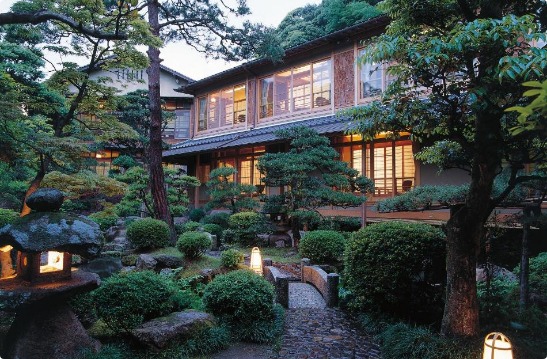
Kinosaki Onsen is a small town on the Sea of Japan side of Hyogo, built around seven public bathhouses (soto-yu) that guests wander between in yukata and wooden geta sandals. The town closes its main street to cars in the evening and the whole place becomes a kind of open-air bath-crawl. Nishimuraya Honkan is the town’s senior ryokan: an 1860-founded family-run inn with its own private bathhouse on-property and a free pass giving you access to all seven town baths. Kaiseki dinner includes Tajima beef and local Sea of Japan crab, depending on the season.
This is the reference experience for “proper onsen town from Kyoto”. A two-day, one-night trip works: 10am limited express from Kyoto, arrive around 1pm, check in, first bath before dinner, kaiseki, second bath before bed, third bath in the morning, back in Kyoto by lunch the next day. Nishimuraya is the right pick because the in-house bath is one of the better in the town and the kaiseki is a proper worked menu.
What’s Good:
- Free pass to all seven Kinosaki town bathhouses
- Private in-house bath fed from Kinosaki source water
- Kaiseki features Tajima beef and, in winter, Sea of Japan crab
What’s Not:
- 2 h 40 min train each way from Kyoto
- Crab season (November to March) weekends need booking 2+ months ahead
Check prices at Nishimuraya Honkan on Booking.com →
Arima Grand Hotel (Arima Onsen) — Accessible Arima Hot-Spring Stay
Nearest Station: Arima Onsen (Kobe Electric Railway) — 5 min walk
From Kyoto Station: ~1 h 40 min via Shin-Kobe & Sanyo / Kobe-dentetsu
Best For: Shorter onsen-town trip than Kinosaki, experiencing the Arima kinsen/ginsen
Onsen type: Real Arima kinsen (golden spring, iron-rich) and ginsen (silver spring, carbonated)
From: ¥34,000 per person including dinner & breakfast
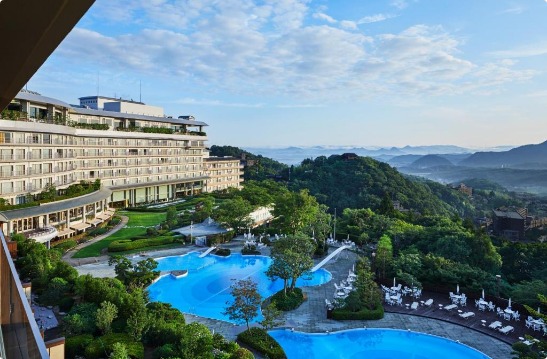
Arima Onsen is Kansai’s other proper onsen town — part of the traditional “three ancient springs” grouping in Japanese onsen culture. The “golden spring” (iron-rich, visibly reddish-brown) and “silver spring” (carbonated, clear) are both sourced on-site and genuinely unusual — the kinsen water is one of the few onsen waters that actually looks noticeably different from tap water. Smaller than Kinosaki and more easily done in a single night.
Arima Grand Hotel is the larger resort-style pick in the town, with multiple public bathhouses drawing from both the kinsen and ginsen sources plus some in-room hot-spring baths in the higher-tier rooms. It’s not the most intimate ryokan option in Arima — smaller family-run ryokan around the main bath street have more character — but it’s the most accessible for a single-night trip, has reliable English service, and gets you the full Arima water experience with less booking friction.
What’s Good:
- Both kinsen (golden) and ginsen (silver) springs on-property
- Single-night Arima trip is doable in 1 h 40 min each way from Kyoto
- English service more reliable than smaller Arima family ryokan
What’s Not:
- Resort-hotel feel rather than old-town ryokan character
- Arima itself is touristed in daytime — evening is when it quietens
Check prices at Arima Grand Hotel on Booking.com →
Onsen Etiquette: The Bits That Actually Matter
Most Japanese onsen etiquette is relaxed for foreign guests. A few things will still get you a gentle correction.
Wash thoroughly outside the tub. The showers along the wall are used seated on small stools. Rinse completely before you enter the bath. No soap or shampoo goes into the pool, ever. In a Japanese onsen the bath is for soaking, not for cleaning.
No swimwear. Public onsen are bathed nude. Facilities are separated by gender except at a few mixed-gender baths (konyoku) which are now rare. The small towel you’re given is for modesty walking to and from the bath; don’t take it into the water. You’ll see most Japanese guests fold it on top of their head or rest it on the side of the bath.
Tattoos vary by property. The tattoo-ban rule isn’t consistent. Many luxury hotels (Roku, Mitsui, Fufu, Sumiya, Aman) are tattoo-friendly now, especially for private or in-room baths. Older mid-range hotels and some of the Kinosaki public bathhouses still prohibit tattoos. If you have visible ones, ask before booking, or opt for an in-room bath to sidestep the issue entirely. Cover-up stickers are widely available and work well for small pieces.
Hair in the water. Long hair gets tied up before entering the bath. There are usually hair ties in the changing area. Keep your small towel folded on your head or on the side of the bath; soaking it in the pool is the thing you’re not supposed to do.
Timing. Don’t book dinner at 8pm if you want the bath to yourself — most Japanese guests bathe between 5 and 7pm before dinner. The bath is quietest either before 5pm or after 10pm. In ryokan the bath is usually available from early afternoon to about midnight.
What Most Guides Get Wrong About Kyoto Onsen
Three specific things. I’ll stand behind all of them.
Most “onsen hotels” in central Kyoto are heated mineral baths. A listing on Booking.com is allowed to say “onsen facility” if it has any public bath with added mineral salts — so search “Kyoto hotels with onsen” and most of the results are properties where the bath is a treated pool, not hot-spring source water. The quick-reference table above is deliberately narrow for this reason. If a hotel is selling “onsen” and the property couldn’t confirm real source water on its Japanese page, I left it out.
Dormy Inn Premium gives you better onsen value than some of the 5-stars. At ¥13,000 a night you’re getting a real rooftop onsen bath across the road from Kyoto Station. The rooms are business-hotel-compact and the lobby is generic, but the actual water quality and bath facilities are equivalent to what you’d pay three times more for at a boutique mid-range property. For a one-night city-centre bath, it’s the clearest value pick in the city.
Kinosaki is the actual onsen-town experience — and most Kyoto travellers skip it. The mental image most first-time visitors have when they hear “Kyoto hot-spring stay” is Kinosaki: yukata, wooden sandals, a small town closed to cars in the evening, a pass for seven bathhouses. You can’t get that from any Kyoto city hotel because no part of Kyoto is that kind of town. 2 hours 40 minutes each way is long but it’s the difference between a bath attached to your hotel and a whole evening wandering a bath-crawl. If the onsen is the real reason you’re coming, do the train ride.
Booking Tips: When and Where to Book
Direct vs Booking.com. For the in-city hotels, Booking.com rates are usually the same as direct and you gain easier cancellation. For the ryokan, rooms on Booking.com are a subset of the full inventory; direct booking often opens more room types and meal plans. For the highest-tier rooms with private baths, check the ryokan’s own site before defaulting to the affiliate.
Peak dates. Late March to early April for cherry blossoms, mid-November to early December for autumn foliage, and Kinosaki weekends in crab season (November through March). Expect 40–80% price premiums and a 2–3 month booking lead time. Off-peak — early January, February, June and September — the same hotels run at standard rates.
Kinosaki trains. The Kinosaki Limited Express runs about six times a day from Kyoto Station. Friday late-afternoon and Saturday morning departures fill early; book the train at the same time as the ryokan. Local-plus-change via Fukuchiyama takes about 30 minutes longer.
The Kyoto tourism association keeps a useful overview of hot springs in Kyoto — one of the few official English resources that distinguishes real source water from heated mineral baths, and tracks seasonal bathhouse closures.
What to Book by Goal
- One onsen night with minimum travel: Roku Kyoto LXR (private in-room onsen, stays inside Kyoto city).
- Classic onsen-town experience: Nishimuraya Honkan in Kinosaki — two days, one night, Limited Express train from Kyoto Station.
- Onsen on the budget: Dormy Inn Premium Kyoto Ekimae, or Onyado Nono Kyoto Shichijo — both under ¥20,000 with real rooftop onsen.
- No travel beyond Kyoto: Hotel The Mitsui Kyoto — proper bathhouse in the city, trucked-in real Arima water.
- Luxury onsen ryokan with kaiseki: Sumiya Kihoan in Kameoka — 30 minutes by train, private in-suite bath, Michelin-mention dinner.
- Arashiyama stay with real onsen: Togetsutei for riverside; Kadensho if Togetsutei is full or you want the quieter fringe.
- Arima experience in a single night: Arima Grand Hotel — the accessible way to bathe in the golden and silver springs.
- Mountain-village onsen within Kyoto prefecture: Kurama Onsen — 35 minutes by Eizan railway.
- Traditional ryokan but onsen-water not critical: Yachiyo by Nanzen-ji — classic format, a mineral bath rather than real onsen.
Frequently Asked Questions
Does Kyoto have real onsen?
Yes, but fewer than you’d expect from a city this famous. Kyoto isn’t a natural onsen region — it’s a historic capital built in a basin rather than a volcanic zone. The real onsen hotels in the city are either hotels that drilled their own wells (Roku, Aman Kyoto), or hotels that truck or pipe in water from real sources elsewhere (Mitsui from Arima, Fufu from Kurama). Outside city limits but inside the prefecture, Kurama and the Kameoka ryokan use their own local springs.
What’s the difference between onsen and sento?
Onsen are hot-spring baths fed by natural mineral-rich spring water. Sento are neighbourhood public bathhouses with ordinary heated tap water, historically used by people without private bathrooms at home. Sento still exist in Kyoto (Funaoka Onsen, despite the name, is a well-known sento) and are often atmospheric and cheap, but the water isn’t mineral-rich in the way onsen water is. This guide is all onsen.
Can you go to an onsen with tattoos in Kyoto?
It depends on the property. Luxury hotels — Roku, Hotel The Mitsui, Fufu, Sumiya Kihoan, Aman — are generally tattoo-friendly, especially for private or in-room baths. Older mid-range hotels and some Kinosaki public bathhouses still ban tattoos. If you have visible tattoos, book a hotel with private in-room onsen (Roku, Fufu, Sumiya), or ask the hotel’s English-language email before booking. Cover-up stickers for small pieces are sold at most onsen-town convenience stores.
Which Kyoto hotels have real hot-spring water in the room?
Private in-room onsen with real source water exist at Roku Kyoto LXR (on-site well), Fufu Kyoto (piped from Kurama), Sumiya Kihoan in Kameoka (on-property source), Aman Kyoto in the higher suite categories (on-site well), Hotel The Mitsui Kyoto’s Onsen Suites (trucked from Arima), and the top-tier rooms at Togetsutei and Kadensho in Arashiyama. Everywhere else on this list, bathing is in a shared public bathhouse.
Is Kinosaki Onsen a day trip from Kyoto?
Technically yes, practically no. The train is 2 hours 40 minutes each way, and the whole point of Kinosaki is the evening — yukata-clad guests between bathhouses after dark. A day trip gets you about four hours in the town and misses the evening atmosphere entirely. Book an overnight at a ryokan like Nishimuraya Honkan and do it as a one-night add-on to your Kyoto trip instead.
How much does an onsen ryokan in Kyoto cost?
Budget onsen hotels in the city start around ¥13,000 a night (Dormy Inn Premium Kyoto Ekimae). Mid-range real-onsen hotels are ¥18,000–¥35,000 (Hatoya Zuihokaku, Onyado Nono, Sora Niwa Terrace). Proper onsen ryokan with kaiseki are ¥22,000–¥55,000 per person (Suisen, Kurama Onsen, Sumiya Kihoan). Luxury city onsen is ¥85,000–¥240,000 per room (Roku, Mitsui, Fufu, Aman). Expect 40–80% premiums during cherry-blossom and autumn-foliage weeks.
What do you wear in an onsen?
Nothing. Public onsen are nude bathing, gender-separated. You’re given a small towel (50cm x 100cm) that stays out of the water, used for modesty walking to the bath and folded on your head or the side while you soak. Most ryokan provide yukata (light cotton robes) and slippers for wearing between your room, the bath and the dining room — these are for the hotel’s interior only, not street-wear, unless you’re in Kinosaki where yukata is the street uniform.
Is Arima Onsen worth visiting from Kyoto?
For a single onsen night yes. Arima is 1 h 40 min from Kyoto Station via Shin-Kobe, smaller and more walkable than Kinosaki, with two chemically distinct springs (the iron-rich “golden” and carbonated “silver”). Best done as an overnight rather than a day trip. Arima Grand Hotel gives you the most English-service-friendly way in; smaller family ryokan in the town have more character if you’re comfortable with minimal English.