This guide contains affiliate links. If you book through them we earn a small commission at no extra cost to you. I only recommend places I’ve researched in depth and would happily steer a friend towards.
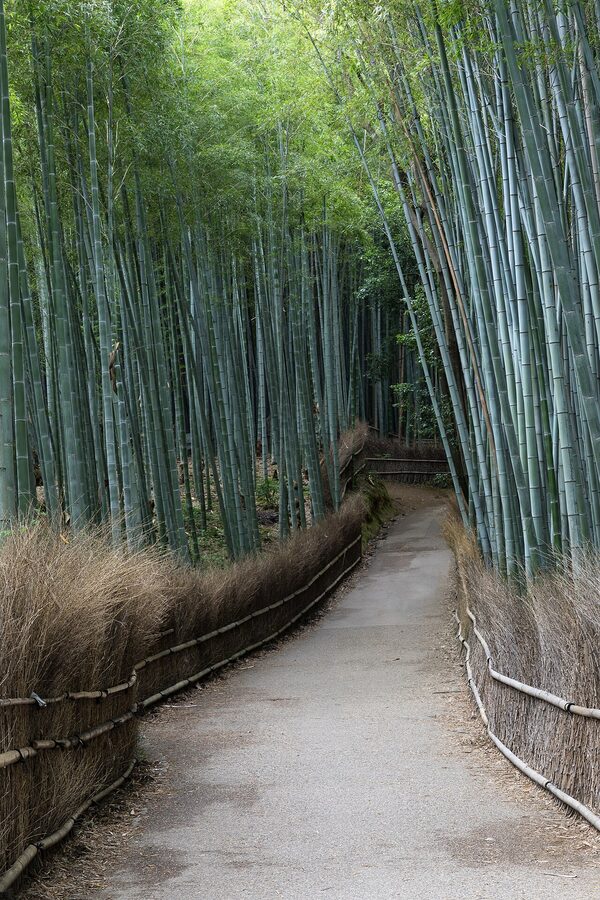
Arashiyama is a one-night town. You notice that the second you arrive around 6pm, after the last coach tour has pulled out. The bamboo path empties. The shops close. The Hozu River stops being a backdrop for selfies and starts being a river again. If you’ve only ever seen Arashiyama between 10am and 3pm, you’ve never really seen Arashiyama at all.
That’s the case for staying the night. It’s also the case for why I’ve written 14 hotels up here rather than the usual three or four. The area has more good accommodation than any other single Kyoto neighbourhood outside the station, and the gap between the best place to stay and the mediocre default near the train is absurd. Fourteen minutes of reading time now saves you an unhappy ¥80,000 booking.
I’ll start with HOSHINOYA Kyoto because it defines the category and sets the price ceiling, then work through everything else by tier — luxury and boutique, mid-range, onsen ryokan, and a couple of budget picks that are surprisingly decent if you’d rather spend the saved money on dinner.
In This Article
- Quick Comparison — 14 Arashiyama Hotels
- How the Area Sits in Kyoto
- How to Choose Your Arashiyama Stay
- HOSHINOYA Kyoto — the Direct-Only Flagship
- Luxury and Boutique on the River
- Suiran, a Luxury Collection Hotel — Best Marriott-Points Redemption
- MUNI Kyoto by Onko Chishin — Best Design Hotel in Arashiyama
- Homm Stay Nagi Arashiyama — Best Private-Onsen Villa Format
- Rangetsu — Best Ryokan-Hotel Hybrid
- Onsen Ryokan — the Traditional Arashiyama Stay
- Arashiyama Benkei — Best Classical Ryokan
- Kyoto Arashiyama Onsen Togetsutei — Closest Real Onsen to the Bridge
- Kadensho Arashiyama Onsen — Best Value Onsen Ryokan
- Yado Arashiyama — Adults-Only Ryokan for Couples
- Mid-Range and Traditional Hotels
- Ranzan — Traditional Family-Run Stay
- The GrandWest Arashiyama — Best Family-Size Rooms
- Hotel Binario Saga Arashiyama — Best Value Near JR Saga-Arashiyama
- Budget and Hostel
- Hotel Arashiyama — Cheap and Close to the Bridge
- Mulan Hostel — Best Budget-Backpacker Option
- Kawadoko — the Summer River Dining Platforms
- Peak-Season Arashiyama — What to Actually Expect
- What Most Arashiyama Guides Get Wrong
- By Traveller Type — Quick Recommendations
- Frequently asked questions
- Is it worth staying overnight in Arashiyama?
- What’s the best luxury hotel in Arashiyama?
- How do you book HOSHINOYA Kyoto?
- Which Arashiyama hotels have real hot-spring onsen water?
- How far is Arashiyama from central Kyoto?
- Can you walk to the bamboo grove from the hotels in this guide?
- When is kawadoko season in Arashiyama?
- Are Arashiyama ryokan good for couples?
Quick Comparison — 14 Arashiyama Hotels
| Hotel | Tier | From/night | Best For | Book |
|---|---|---|---|---|
| HOSHINOYA Kyoto | Ultra-luxury | ¥150,000+ pp w/meals | Once-in-a-lifetime; boat arrival | Direct only |
| Suiran, a Luxury Collection | Luxury | ¥95,000 | Honeymoon, Marriott points | Check prices |
| MUNI Kyoto | Luxury | ¥85,000 | Design-led luxury, French food | Check prices |
| Homm Stay Nagi | Luxury boutique | ¥65,000 | Privacy, in-villa onsen | Check prices |
| Rangetsu | Mid-luxury | ¥50,000 | Ryokan-curious couples | Check prices |
| Arashiyama Benkei | Classic ryokan | ¥45,000 pp w/meals | Full traditional ryokan | Check prices |
| Togetsutei | Onsen ryokan | ¥38,000 pp w/meals | Real hot-spring water, city-adjacent | Check prices |
| Kadensho | Onsen ryokan | ¥35,000 pp w/meals | Value onsen, quieter side | Check prices |
| Ranzan | Traditional | ¥30,000 | Old-school family-run stay | Check prices |
| The GrandWest | Mid-range | ¥25,000 | Families; bigger rooms | Check prices |
| Hotel Binario Saga Arashiyama | Mid-range | ¥22,000 | JR station walkers | Check prices |
| Yado Arashiyama | Adults-only ryokan | ¥30,000 | Quiet couples, no kids | Check prices |
| Hotel Arashiyama | Budget | ¥14,000 | One cheap night near the bridge | Check prices |
| Mulan Hostel | Hostel | ¥6,000 | Solo travellers on a budget | Check prices |
How the Area Sits in Kyoto
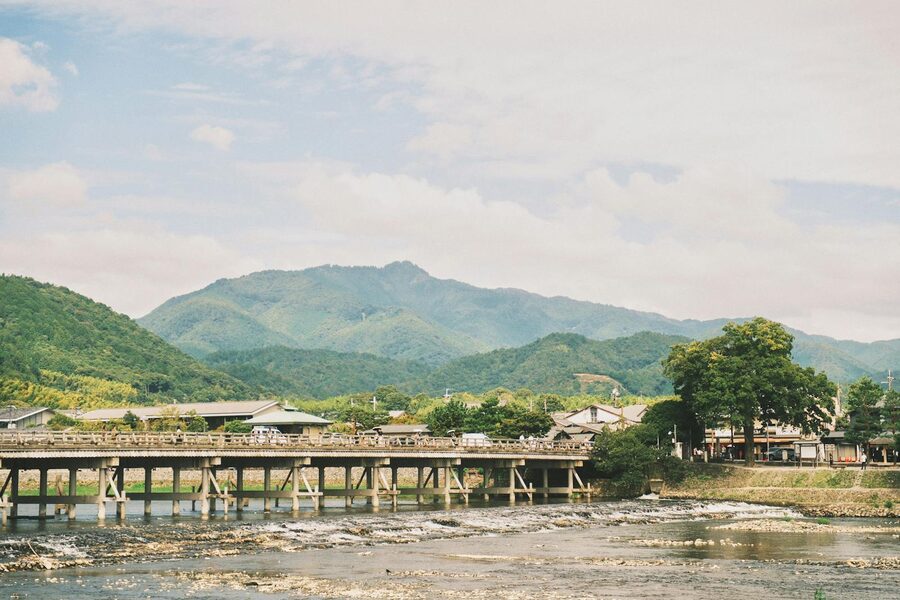
Arashiyama is the western edge of Kyoto. The JR Sagano line gets you from Kyoto Station to Saga-Arashiyama in 15 minutes. The Keifuku Randen tram from Shijo-Omiya takes about 22 minutes and drops you closer to Togetsukyo Bridge. The Hankyu Arashiyama station is the quieter, more local option — it connects to Kawaramachi in central Kyoto in about 20 minutes with one change. A taxi from the centre runs ¥3,500-4,500 and 25-30 minutes depending on traffic on the Oike-dori corridor.
The sightseeing core is tight. Togetsukyo Bridge, the bamboo grove, Tenryu-ji temple, and the Kimono Forest at Randen station are all within a 15-minute walk of each other. Everything you’d read about Arashiyama happens in roughly a six-block area. That also means hotel location matters less than you’d think — the “far” places are 10 minutes’ walk from the bridge, not 40.
How to Choose Your Arashiyama Stay
Three axes matter here: riverside vs hillside, one-night vs two, onsen ryokan vs hotel.
Riverside (south bank, Tenryu-ji side) vs hillside (northern Sagano side). Riverside puts you 2-5 minutes from Togetsukyo and gives you the river-view rooms that are the whole point of paying ¥95,000 for somewhere like Suiran. Hillside — north of the bamboo grove towards the Saga-Toriimoto preserved-village area — is quieter, cheaper, and about 12-15 minutes’ walk to the bridge. For a single-night stay, pay for the riverside. For two nights, the hillside places give you a second-day base you can cycle from without dealing with the day-tripper crowd.
One night or two. One night is what most people do, and it’s what most of Arashiyama’s rhythm is built around — check in at 3pm, dinner, morning walk to Tenryu-ji, check out by 11am. Two nights only makes sense if you’re doing a Hozu boat trip, a Sagano Scenic Railway day, or cycling to Adashino Nenbutsu-ji and the thatched-roof villages north of the bamboo grove. Don’t stay three — you’ll run out of things to do by the second afternoon and start eyeing the train back into town.
Onsen ryokan vs hotel. The onsen ryokan format — kaiseki dinner in the room, futon laid out while you bathe, traditional Japanese breakfast — is one of the best uses of an Arashiyama night. The hotel format (western bed, flexible dinner time, no 6pm kaiseki commitment) is better if you want to eat at one of the independent Arashiyama restaurants, or if you’re travelling with kids who won’t sit through a nine-course meal. Rangetsu hybrids both formats if you can’t decide.
Summer vs winter. From May through September, riverside hotels and restaurants open their kawadoko platforms — raised wooden decks over the Hozu. Eating dinner on one, with the river running under your feet, is one of Kyoto’s real summer pleasures. It’s also noticeably cooler than the street above, which on a July evening in Kyoto matters. In winter (December-February), Arashiyama is quiet, crisp, and occasionally dusted with snow — Tenryu-ji’s garden is at its best under frost. Summer and winter are the underrated seasons here. Spring and autumn are where you pay double and queue to take photos.
HOSHINOYA Kyoto — the Direct-Only Flagship
Nearest Station: Arashiyama (Hankyu) — 12 min walk to the hotel boat dock, then 10 min by boat
To Togetsukyo Bridge: boat dock is at the foot of the bridge
Best For: Ultra-luxury travellers; honeymoon; once-in-a-lifetime Kyoto night
From: ¥150,000 per person including dinner and breakfast
Book: Direct only via hoshinoya.com — not listed on Booking.com
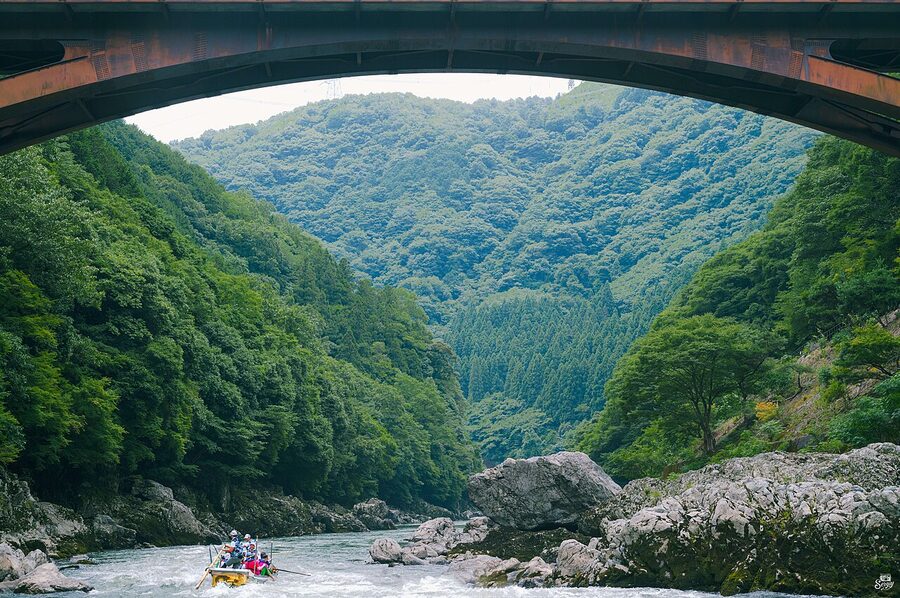
HOSHINOYA is 25 rooms on the Hozu River about ten minutes upstream of Togetsukyo, accessible only by a private hinoki-wood boat from the hotel’s dock at the foot of the bridge. You don’t drive there. You don’t walk there. You check in at a small riverside pavilion, leave your bags, board the boat with half a dozen other guests, and arrive at the property by water. It’s the arrival that defines the stay. No other Kyoto luxury hotel has anything close to it.
Rooms are all river-facing and built in a classical Japanese format — tatami floors, low furniture, paper-screen windows that frame a specific wedge of the gorge each way you look. The two on-site restaurants serve kaiseki with a French technical layer; a standard stay includes dinner and breakfast. There’s a proper spa. There’s a hot-spring bath. There are morning boat excursions along the gorge and an incense-blending session in the afternoon. It’s the style of luxury where they assume you’re not leaving the property — and across a single two-night stay, you won’t want to.
The main caveat is that you have to book direct. Hoshino Resorts don’t list on Booking, Agoda, or Expedia, and the standard advance-booking window is six to twelve months for autumn and cherry-blossom dates. If you can get a date, take it. The experience is sufficiently different from everything else in this article that the comparison with Suiran or MUNI doesn’t quite hold.
What’s Good:
- Boat-arrival check-in is unlike any other Kyoto hotel — you can’t reproduce it elsewhere
- 25 rooms across the whole property means service is attentive — noticeably more so than the larger luxury hotels
- Full-board kaiseki + breakfast is included in the base rate, not an upsell
What’s Not:
- Direct-only booking makes date flexibility harder than it should be
- Once you’re there you’re there — spontaneous dinner at an independent restaurant means a ten-minute boat back and a rearrangement
Book direct at hoshinoresorts.com →
Luxury and Boutique on the River
Suiran, a Luxury Collection Hotel — Best Marriott-Points Redemption
Nearest Station: Saga-Arashiyama (JR Sagano) — 8 min walk
To Togetsukyo Bridge: 4 min walk
Best For: Honeymoon, anniversary, Marriott Bonvoy redemptions
From: ¥95,000/night
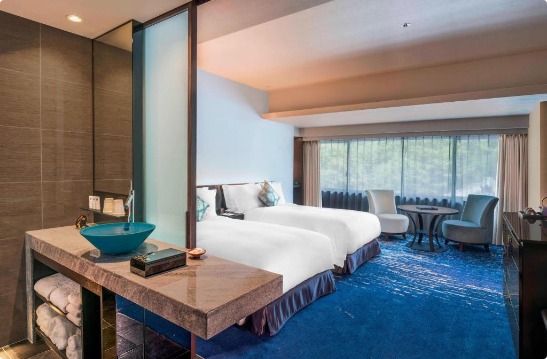
Suiran sits on the south bank of the Hozu in a row of restored Meiji-era villas. The top-category rooms — specifically the river-view suites — have private outdoor baths that open directly onto the water. Standard deluxe rooms are still good, around 45m², but the gap between them and the suites is real; if you’re going to Suiran, pay up or don’t go at all. The on-site restaurant, Kyo-Suiran, does a creative kaiseki with enough French technique to keep it interesting; the separate riverside café is a good breakfast option when the in-room Japanese breakfast starts to feel too formal for the tenth day of a trip.
The thing Suiran does better than anywhere else in this guide is the combination of 5-star international brand service and riverside location. Concierge staff speak fluent English. Check-in is calm, polished, and handled while you have a welcome drink rather than at a desk. For anyone with Marriott points to burn — or who wants guaranteed Bonvoy elite recognition — this is the obvious pick in Kyoto.
It’s not the place for you if you want a proper onsen ryokan format. There are no futons in the rooms. There’s no formal in-room kaiseki service. The atmosphere is “Luxury Collection hotel on a very nice river” rather than “traditional Japanese inn”. If that’s what you want, skip down to Benkei or Togetsutei.
What’s Good:
- Private outdoor bath in the river-view suite category — the water view from inside the bath is the selling point
- Marriott Luxury Collection brand standards for service, check-in, and concierge arrangements
- Two restaurants and a café on-site, all good enough to eat at if you don’t want to walk out for dinner
What’s Not:
- Standard-category rooms don’t get the outdoor bath — the price jump to the river-view suite is substantial and, for one night, hard to justify unless it’s a special occasion
- Not a traditional ryokan format despite the Meiji-era buildings — western beds, western dining schedule
Check prices at Suiran on Booking.com →
MUNI Kyoto by Onko Chishin — Best Design Hotel in Arashiyama
Nearest Station: Saga-Arashiyama (JR Sagano) — 5 min walk
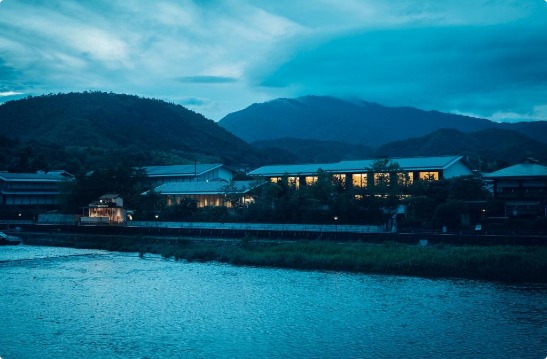
To Togetsukyo Bridge: direct view from the hotel; about 2 min walk to the bridge itself
Best For: Design-led luxury, foodies, couples who care about architecture
From: ¥85,000/night
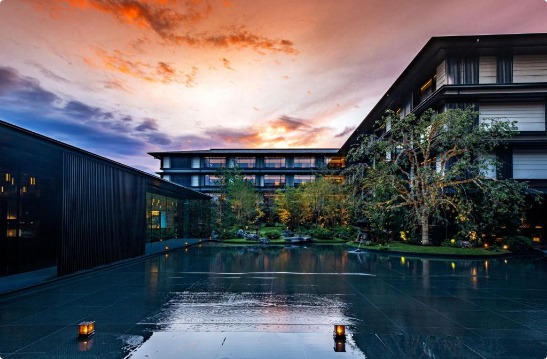
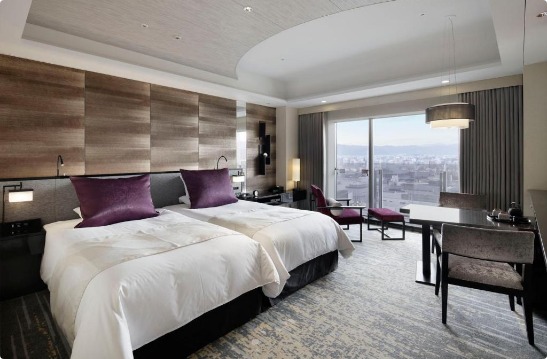
MUNI is 21 rooms in a 2020-built property directly facing Togetsukyo, designed by Kengo Kuma’s studio. Rooms are all over 50m², all with floor-to-ceiling windows looking out over the bridge and the Katsura/Oi river. The finish is minimal-contemporary — pale oak, natural stone, generous bathtubs positioned to have the same river view the bed has. It’s the kind of place that photographs well because it was built to.
The restaurant is the other reason to come. Restaurant MUNI runs “MUNI French KAISEKI” — a French technical foundation with Japanese seasonal produce, formatted as a kaiseki progression, paired from an in-house collection of over 1,000 wine bottles. It’s a destination for Kyoto-based residents, not just hotel guests, and well worth booking independently of your stay. The ground-floor Riverside Café does lighter French-Japanese lunch service and is usually easier to get into.
MUNI is the choice for travellers who want contemporary design-hotel sensibility rather than traditional ryokan formality. The rooms feel more Parisian than ryokan. The dining room is as likely to be playing jazz as silence. If that sounds wrong to you, book Benkei or Togetsutei instead — MUNI is a different product dressed in the same Arashiyama setting.
What’s Good:
- 50m²+ rooms, all facing Togetsukyo Bridge — the view is what you’re paying for and it delivers
- Restaurant MUNI is a French-kaiseki destination with a 1,000-bottle wine cellar, open to non-guests as well
- Hotel architecture (Kengo Kuma studio) is genuinely considered — materials, light, sound are all thought-through
What’s Not:
- Very contemporary design — no tatami, no futons, no traditional Japanese atmosphere at all
- The café does not have the same view as the rooms; lunch guests are seated towards the rear
Check prices at MUNI Kyoto on Booking.com →
Homm Stay Nagi Arashiyama — Best Private-Onsen Villa Format
Nearest Station: Saga-Arashiyama (JR Sagano) — 10 min walk
To Togetsukyo Bridge: 8 min walk (residential-lane route)
Best For: Couples who prioritise privacy; design-led luxury without the blockbuster brand
From: ¥65,000/night
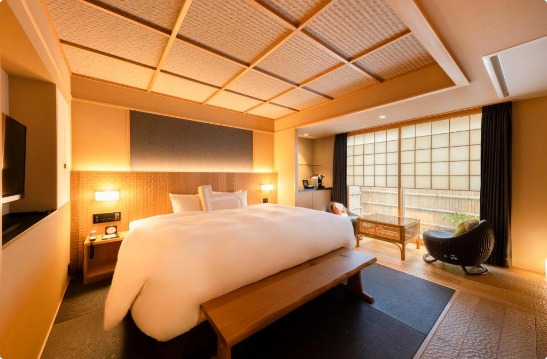
Nagi Arashiyama is Banyan Group’s smaller boutique product — twelve villa-style rooms, each with a private cedar onsen tub and a small outdoor garden terrace. Opened in 2023. The whole building is contemporary Japanese: pale-wood interiors, charcoal textiles, generous windows looking onto the hillside rather than the river (you’re a block back from the water). Because it’s on a quiet residential lane, evenings here are genuinely quiet. After 8pm you hear actual insects rather than coach doors.
Service is less formal than Suiran or MUNI — more boutique-hotel than 5-star flagship, fewer uniformed staff at the door. The hardware, though, is a step above. Rooms are bigger, baths are better, and the in-room private onsen means you never have to use a public bath if you don’t want to. For a two-person stay built around the room, Nagi gives you more privacy-per-yen than anywhere else on this list.
The trade-off is that there’s less of a hotel to hang out in. No big lobby, no destination restaurant, no concierge desk with a live person at 11pm. Dinner is either in your villa (order-in kaiseki) or out in town. For people who want a social hotel with bars and lounges, Nagi isn’t it. For people who want to disappear for 20 hours, it’s nearly perfect.
What’s Good:
- Private cedar onsen bath in every room — no scheduling the shared onsen around other guests
- Twelve rooms means the whole property is quiet; evening noise levels are the lowest of any hotel in this guide
- Residential-lane location means 8pm onwards feels genuinely off-tourist-track
What’s Not:
- No river view — you’re a block back, and the hillside outlook is pleasant but not spectacular
- Limited on-site amenities; no bar, no concierge desk after mid-evening
Check prices at Homm Stay Nagi Arashiyama on Booking.com →
Rangetsu — Best Ryokan-Hotel Hybrid
Nearest Station: Hankyu Arashiyama — 10 min walk
To Togetsukyo Bridge: 5 min walk
Best For: Travellers who want ryokan aesthetics without full ryokan commitment
From: ¥50,000/night
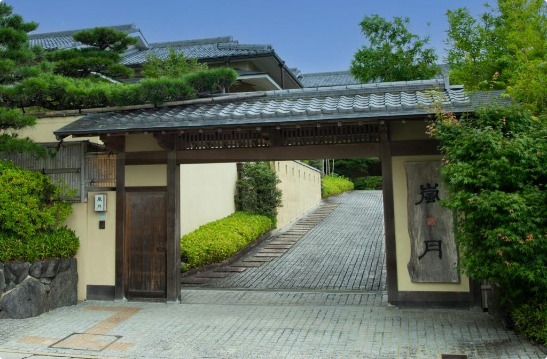
Rangetsu opened in 2022 on the south side of the river. It sits halfway between a modern hotel and a classical ryokan — rooms have tatami sections and futon options alongside western beds, the bath complex is proper hot-spring format with both indoor and outdoor pools, and the kaiseki dinner is an optional add-on rather than a built-in. For travellers who like the idea of the ryokan format but don’t want to lock into the 6pm-dinner rhythm, this is the sensible compromise.
Rooms are well-sized (28-42 m², depending on category) and the building is built around an inner courtyard with a small stream-fed garden. River-view rooms are genuinely worth the upgrade — the view is of the Hozu gorge rather than a parking lot, which sounds obvious but is not the default at this price point. Breakfast (the slightly-less-formal Japanese morning set, not the full kaiseki progression) is included and is actually very good.
For couples who want ryokan atmosphere but plan to eat at an independent restaurant one night, Rangetsu works where Benkei or Togetsutei would lock you into the in-ryokan dinner. The flip side is that the service isn’t as polished as the fully-traditional places — reception is more hotel than okami-san, and staff turnover is visibly higher.
What’s Good:
- Optional rather than mandatory kaiseki dinner — unusual in the ryokan-adjacent category and genuinely useful
- Real hot-spring bath with both indoor and outdoor pools on site
- River-view room upgrade gives you an actual river view rather than a courtyard outlook
What’s Not:
- Service feels modern-hotel rather than traditional-ryokan — fine for what it is, but don’t expect personalised attention
- The kaiseki add-on, when you take it, is a step below what Benkei does for a comparable total rate
Check prices at Rangetsu on Booking.com →
Onsen Ryokan — the Traditional Arashiyama Stay
Arashiyama Benkei — Best Classical Ryokan
Nearest Station: Arashiyama (Hankyu) — 7 min walk
To Togetsukyo Bridge: 6 min walk
Best For: Full traditional ryokan experience; kaiseki dinner in the room
From: ¥45,000 per person including dinner and breakfast
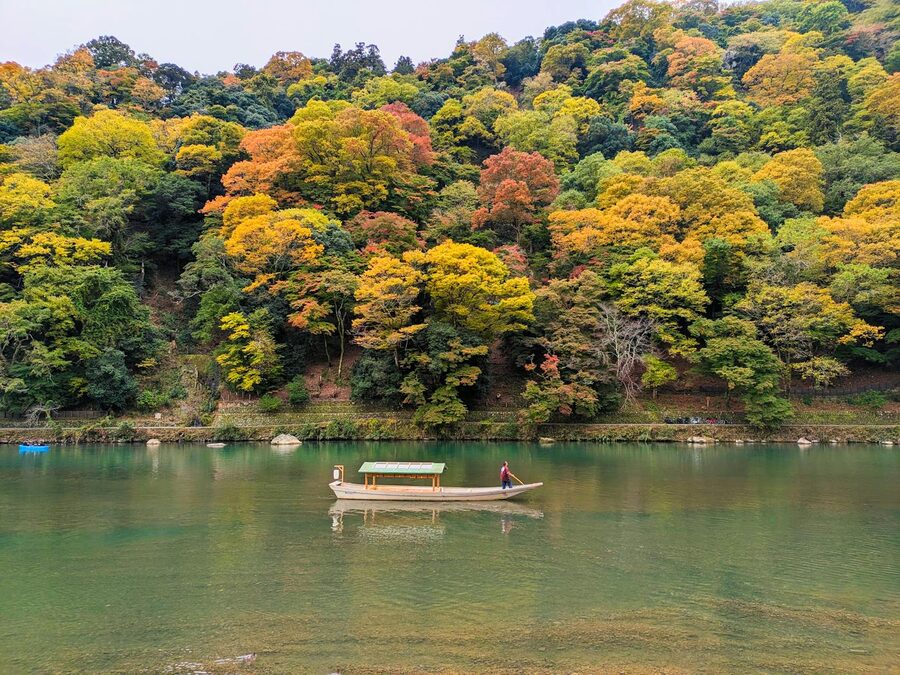
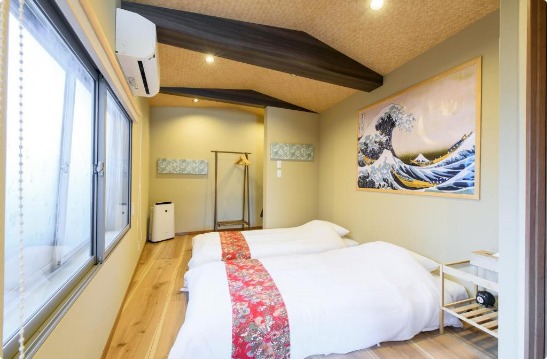
Benkei is an old-school Arashiyama riverside ryokan — cedar corridors, tatami everywhere, a staff of eight or ten who appear and disappear silently during dinner service. The upper-floor rooms have a hinoki-cypress tub on the balcony heated to onsen temperatures; sitting in it at dusk with the Hozu below is what most people remember about the stay. Dinner is multi-course kaiseki with seasonal sashimi, grilled river fish, and whatever small mountain vegetable is at its peak that week — the May menu around this article’s publication is built around bamboo shoots, yomogi, and young ayu.
The property has a quiet intensity that takes about an hour to notice. By 9pm, the whole inn is silent. Breakfast is served at 8am sharp, Japanese-style (grilled fish, miso, rice, pickles) and worth eating for the fish alone. The in-room futon is laid out by the okami while you bathe — a bit of ryokan theatre that people either love or find slightly strange on first encounter.
Benkei is not the place if you’re travelling with young kids (the pace is wrong for them), if you want a late night out (the building closes up hard at 10pm), or if you can’t eat a nine-course dinner (the kaiseki is the point — skipping it makes the stay not make sense). For a proper single-night ryokan experience with Arashiyama’s riverside atmosphere, it’s the classical pick and the one I’d send people to first.
What’s Good:
- Upper-floor rooms have private cypress onsen tubs on the balcony with Hozu River view
- Kaiseki dinner is seasonal, properly multi-course, and served in the room by the okami
- Service ratio is high — roughly one staff member per two rooms during the evening service
What’s Not:
- Small property, narrow corridors — families with three or more people sharing a room will feel cramped
- Standard-category rooms do not have the private balcony bath; the upgrade is meaningful
Check prices at Arashiyama Benkei on Booking.com →
Kyoto Arashiyama Onsen Togetsutei — Closest Real Onsen to the Bridge
Nearest Station: Saga-Arashiyama (JR Sagano) — 6 min walk
To Togetsukyo Bridge: 2 min walk
Best For: Travellers who specifically want a real onsen ryokan within walking distance of everything
From: ¥38,000 per person including dinner and breakfast
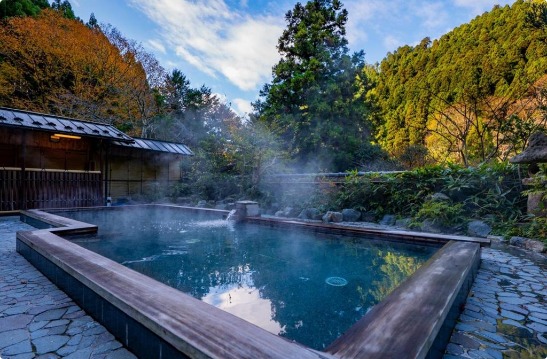
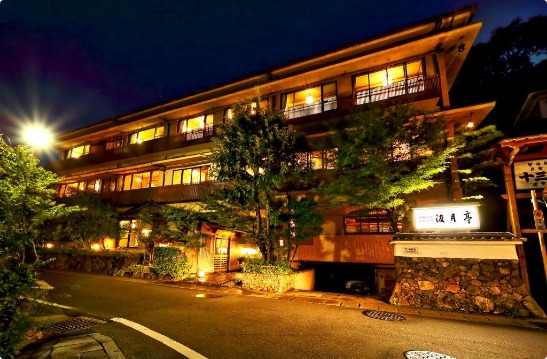
Togetsutei is the closest thing to a classical onsen ryokan within two minutes of Togetsukyo Bridge. The hot-spring water is piped from an Arashiyama-area source — not the trucked-in arrangement some Kyoto city hotels use — and the rooftop rotenburo is one of the better city-adjacent baths in Kansai. Rooms are tatami-traditional with futon bedding and low dining tables; the format is classical rather than modern-hybrid.
What Togetsutei does specifically well is the combination of proximity and authenticity. You can walk down to the bridge for a sunset photograph, walk back, soak in the rooftop bath for 40 minutes as the light goes, and have kaiseki served in the room by 7pm. That sequence isn’t possible at properties further from the bridge, and it isn’t the same at places without real onsen water.
The building itself is older than some guests expect — this isn’t a 2020s opening, it’s a working traditional ryokan that has been refurbished rather than rebuilt. Corridors are narrow, the lift is small, some rooms face an internal courtyard rather than the river. For full river-view, ask specifically for the river-side category when you book.
What’s Good:
- Real piped-from-source onsen water — not a cosmetic “hot bath” some Kyoto hotels market as onsen
- Rooftop outdoor bath with mountain view; one of the better sunset-bath experiences in Kyoto
- Two-minute walk to Togetsukyo Bridge makes it the most convenient onsen ryokan in the area
What’s Not:
- Older building — less contemporary comfort than newer properties like Rangetsu
- Not all rooms have the river view; check the category carefully
Check prices at Togetsutei on Booking.com →
Kadensho Arashiyama Onsen — Best Value Onsen Ryokan
Nearest Station: Hankyu Arashiyama — 3 min walk; Saga-Arashiyama (JR) — 15 min walk
To Togetsukyo Bridge: 15 min walk or 5 min shuttle
Best For: Traditional onsen ryokan experience; families wanting multiple private baths
From: ¥35,000 per person including dinner and breakfast
Note: Reopening in 2026 after significant refurbishment
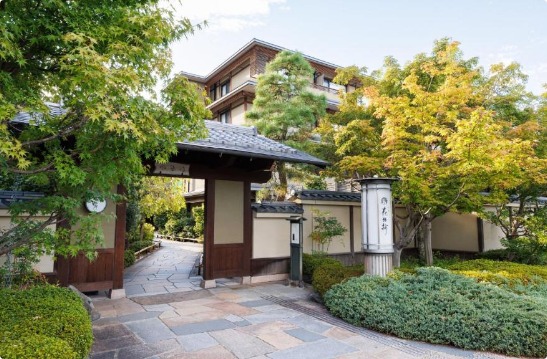
Kadensho is a larger onsen ryokan on the western edge of Arashiyama, about 15 minutes’ walk or a five-minute shuttle from the Togetsukyo area. The property reopens in 2026 after a full refurbishment; the Booking listing reflects the updated product and the early reviews are promising. Hot-spring water is from an Arashiyama-area source. There are four public baths (guests only) and five private baths of different styles — the private-bath selection is the widest of any onsen ryokan in this guide.
The location is the Kadensho trade-off. You’re not five minutes from Togetsukyo — you’re fifteen, or a shuttle. But that also means you’re away from the coach-tour day-visitor zone, the evenings are quieter, and the walk back from dinner is genuinely pleasant rather than navigating the post-closing Arashiyama crowd.
For same-product-lower-price comparison, Kadensho often comes in 15-20% below Togetsutei for a dinner-inclusive stay, and the onsen selection is wider. The downside is that if your Arashiyama plan is four separate bridge-side activities per day, fifteen minutes each way adds up fast.
What’s Good:
- Nine separate onsen baths including five private — the widest selection in Arashiyama
- Reopened 2026 with new hardware — fresher than the older ryokan on the riverside
- Often 15-20% cheaper than Togetsutei for a comparable dinner-inclusive stay
What’s Not:
- Fifteen-minute walk or shuttle ride from Togetsukyo — meaningful if you’re planning bridge-side evenings
- The shuttle runs a fixed schedule, not on-demand, so you occasionally wait
Check prices at Kadensho Arashiyama on Booking.com →
Yado Arashiyama — Adults-Only Ryokan for Couples
Nearest Station: Hankyu Arashiyama — 6 min walk
To Togetsukyo Bridge: 10 min walk
Best For: Quiet couples, repeat Japan travellers, people who want ryokan without the family bustle
From: ¥30,000/night
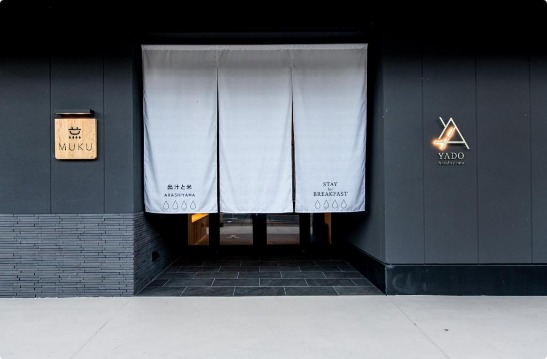
Yado Arashiyama is a small ryokan that enforces a 13-and-older age policy on guests. In practice, that means the onsen corridor at 6am is silent, the dinner service doesn’t accommodate high chairs, and the whole property runs at a lower ambient noise level than you’d otherwise expect from a mid-priced ryokan. For repeat Japan travellers who’ve done one family-friendly onsen stay too many, this is an underrated pick.
The hardware is mid-range rather than luxury — functional tatami rooms, a communal bath rather than in-room onsen, Japanese breakfast that’s good rather than exceptional. But the property is small (10 rooms) and the staff know your name after breakfast. It’s the low-drama ryokan option rather than the statement-piece one.
Worth noting: Yado means “inn” in Japanese, and several unrelated small Japanese inns use the same name. Make sure you’re booking Yado Arashiyama specifically with the 13+ policy — that’s the distinguishing feature.
What’s Good:
- 13+ age policy means a genuinely quiet property at any hour
- Small scale (10 rooms) gives you the okami-remembers-your-name effect at a non-luxury rate
- Six minutes from Hankyu Arashiyama — convenient for day trips to Osaka via Kawaramachi
What’s Not:
- No in-room onsen in any category; the shared communal bath is adequate but not special
- Kaiseki dinner is optional and, when taken, noticeably simpler than Benkei’s for a similar rate
Check prices at Yado Arashiyama on Booking.com →
Mid-Range and Traditional Hotels
Ranzan — Traditional Family-Run Stay
Nearest Station: Saga-Arashiyama (JR Sagano) — 5 min walk
To Togetsukyo Bridge: 7 min walk
Best For: Travellers who want traditional atmosphere at mid-range rates
From: ¥30,000/night
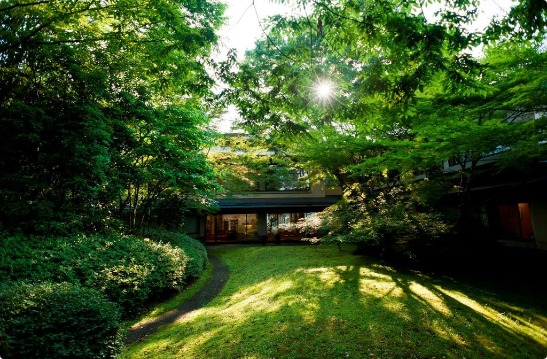
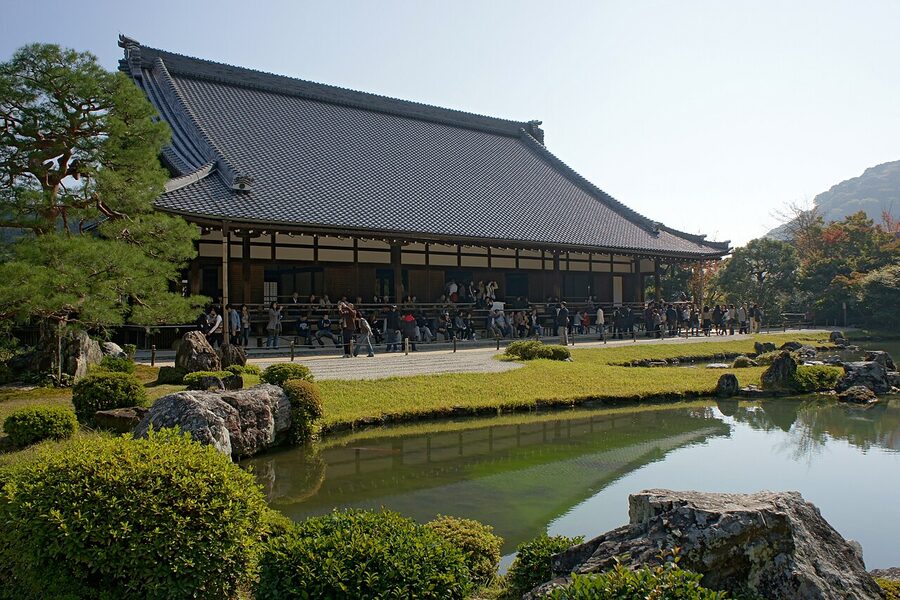
Ranzan has been running in Arashiyama since the 1930s, rebuilt a few times but still operated by the same family. The product is closer to a small traditional Japanese hotel than a modern boutique — tatami rooms with futon bedding, a communal bath, traditional kaiseki served in a private dining room rather than in-room. The garden behind the property connects directly to the Tenryu-ji temple grounds, which is the hotel’s quiet-edge advantage; early mornings, you can walk straight from the breakfast room into the temple gardens before the entrance gate opens.
Dinner is included at most rate tiers and worth eating. Breakfast is traditional Japanese — grilled fish, miso, pickles, rice — and leaves you functional rather than stuffed for the morning. Staff are older, fluent enough in English to handle most requests, and visibly proud of the property. The whole operation has the feel of a family business that knows it’s a family business.
What’s Good:
- Walkable rear-garden access to Tenryu-ji grounds before the main entrance gate opens
- Same-family operation since 1930s means institutional memory — staff know what previous guests liked
- Dinner-inclusive rate is genuinely good value for a traditional kaiseki
What’s Not:
- Building is older and the rooms reflect it — finishes are functional rather than luxurious
- Communal bath only, no in-room onsen or private bath option
Check prices at Ranzan on Booking.com →
The GrandWest Arashiyama — Best Family-Size Rooms
Nearest Station: Hankyu Arashiyama — 5 min walk
To Togetsukyo Bridge: 6 min walk
Best For: Groups of three or four, families with older children
From: ¥25,000/night (quad room)
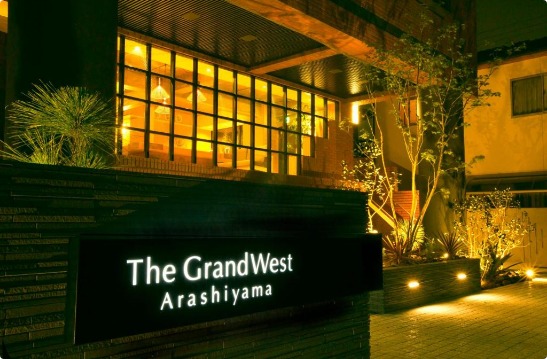
The GrandWest is a 2022-opened boutique mid-range hotel with a specific selling point: rooms are larger than typical for the Arashiyama price tier, with some suite-style layouts that comfortably sleep three or four. Finishes are contemporary clean rather than traditional-Japanese, which is unusual for the area. There’s a decent on-site restaurant that serves regional Kyoto cuisine without the formal kaiseki commitment, and a rooftop relaxation area with a view over the neighbourhood.
It’s also one of the few places in Arashiyama that offers bicycle rental from reception — a practical advantage for the Sagano back-country ride up to Adashino Nenbutsu-ji. The location is slightly further back from Togetsukyo than some of the riverside options, but closer to Hankyu Arashiyama station, which matters if you’re doing an Osaka day-trip the next morning.
For groups and families, the value is clear. For couples wanting the classical Arashiyama atmosphere, Ranzan or Rangetsu are better picks.
What’s Good:
- Suite-style family rooms sleep four comfortably — unusual for Arashiyama and specifically useful for groups
- On-site bicycle rental from reception, handy for the Sagano back-country ride
- Five minutes from Hankyu Arashiyama makes Osaka day-trips straightforward
What’s Not:
- No traditional-Japanese atmosphere — contemporary finish throughout
- Not the best choice for couples wanting the Arashiyama ryokan feel
Check prices at The GrandWest Arashiyama on Booking.com →
Hotel Binario Saga Arashiyama — Best Value Near JR Saga-Arashiyama
Nearest Station: Saga-Arashiyama (JR Sagano) — 2 min walk
To Togetsukyo Bridge: 12 min walk
Best For: Travellers arriving by JR with luggage; one-night Arashiyama inserts
From: ¥22,000/night
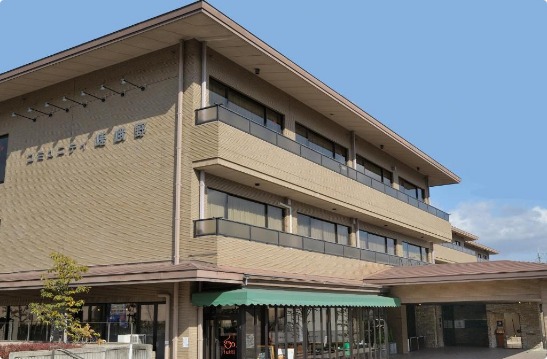
Binario Saga is the practical choice if you’re arriving from Kyoto Station on the JR Sagano line and don’t want to wrestle a suitcase down the residential streets to the riverside. Two minutes’ walk from the station exit, modern 2010s build, rooms are clean and well-sized for the price tier. The on-site breakfast is a hotel-buffet rather than a Japanese morning set, which some travellers will prefer and others won’t.
The trade-off is that you’re 12 minutes from Togetsukyo on foot, and the walk takes you through the main-drag tourist stretch — which is fine in the morning but can be sludgy at 3pm when the coach tours are at peak density. For an Arashiyama one-night insert between Kyoto and the next stop (Kanazawa, Hiroshima, Osaka), this is the hassle-free pick.
Binario has a sister concept at Saga-Arashiyama Sou which is a smaller boutique property a block away; the main Binario described here is the larger practical option, and the one to book if you want the full-hotel amenities rather than the boutique-annex feel.
What’s Good:
- Two minutes from JR Saga-Arashiyama — the most luggage-friendly location for first-day arrivals
- Modern 2010s build with reliable hardware (good showers, actual soundproofing, working desks)
- Breakfast is a decent hotel buffet if you’re not in the mood for Japanese morning formality
What’s Not:
- Twelve-minute walk from the bridge means you’re not enjoying the early-morning riverside without effort
- No onsen, no traditional ryokan atmosphere — it’s a straightforward business-class hotel
Check prices at Hotel Binario Saga Arashiyama on Booking.com →
Budget and Hostel
Hotel Arashiyama — Cheap and Close to the Bridge
Nearest Station: Arashiyama (Hankyu) — 6 min walk; Saga-Arashiyama (JR) — 10 min walk
To Togetsukyo Bridge: 4 min walk
Best For: Travellers wanting one cheap night close to the bridge
From: ¥14,000/night
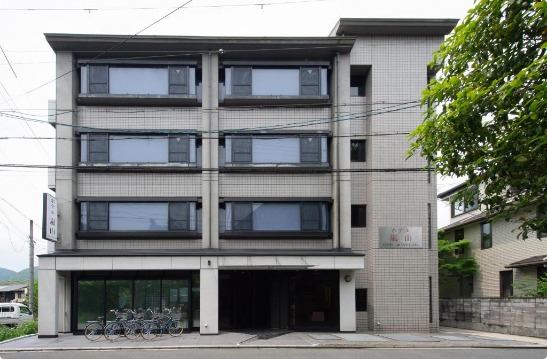
Hotel Arashiyama is a small business-class inn that happens to sit four minutes from Togetsukyo — an unusual combination given that waterfront real estate is usually the preserve of the ¥40,000+ ryokan. Rooms are compact (around 15m² for standard), western-bed format, with a small on-site Japanese-style restaurant. The property is older, the finishes are basic, but it’s genuinely close to the bridge and genuinely under ¥15,000.
For travellers doing a multi-city Japan trip on a constrained budget who want one Arashiyama night on the way through, it’s a sensible pick. For anyone who’s come specifically to Arashiyama as the trip’s luxury stop, skip it and pay for Rangetsu or Togetsutei.
What’s Good:
- Four minutes’ walk to Togetsukyo Bridge — closer than most properties four times the price
- Rate of ¥14,000 includes a basic breakfast; rare at that price in Arashiyama
- Small on-site restaurant saves the walk into town for dinner on arrival night
What’s Not:
- Rooms are small and dated; you’re paying for the location, not the hardware
- No onsen, no kaiseki, no ryokan atmosphere — straightforward budget business hotel
Check prices at Hotel Arashiyama on Booking.com →
Mulan Hostel — Best Budget-Backpacker Option
Nearest Station: Hankyu Arashiyama — 1 min walk
To Togetsukyo Bridge: 8 min walk
Best For: Solo travellers on a budget; Osaka day-trippers; people who’d rather spend saved money on dinner
From: ¥6,000/night (dorm bed); ¥18,000 (private room)
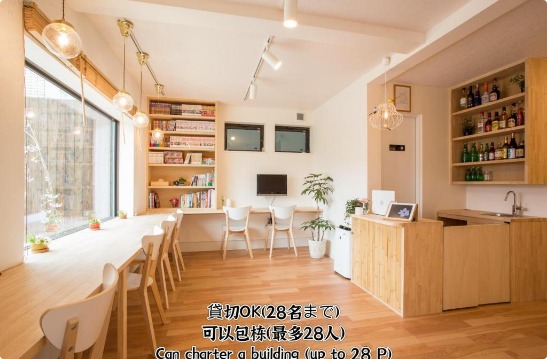
Mulan is a small hostel one minute from Hankyu Arashiyama station. Dorm beds are ¥6,000-ish, private rooms are around ¥18,000. The property is small enough (a dozen beds total across the mixed and female-only dorms plus two private rooms) that it runs more like a guesthouse than a chain hostel. Reception takes bike rental bookings, stores luggage competently, and runs a family computer in the common area for trip-planning.
The location is the underrated advantage. Most Arashiyama hostels (the bigger chains in Kyoto) are 20-30 minutes’ walk from the bamboo grove. Mulan is eight minutes from Togetsukyo and one minute from the train that takes you to central Kyoto in 20 minutes. For a solo or pair-of-friends budget trip, it’s the sensible Arashiyama pick.
Worth flagging: dorm beds sell out fast in autumn and cherry-blossom seasons, often three months ahead of competing mid-range hotels. If you want budget-priced Arashiyama in peak season, book Mulan before you book your flight.
What’s Good:
- One minute from Hankyu Arashiyama — the most station-adjacent budget option in the area
- Private rooms available alongside dorm beds — useful for couples who’d otherwise default to a hotel
- Small property feel, reception knows guests by name, bike rental on-site
What’s Not:
- Books out months ahead in November and April — not a last-minute option
- Dorm-style shared bathrooms; no onsen or private bath anywhere on the property
Check prices at Mulan Hostel on Booking.com →
Kawadoko — the Summer River Dining Platforms
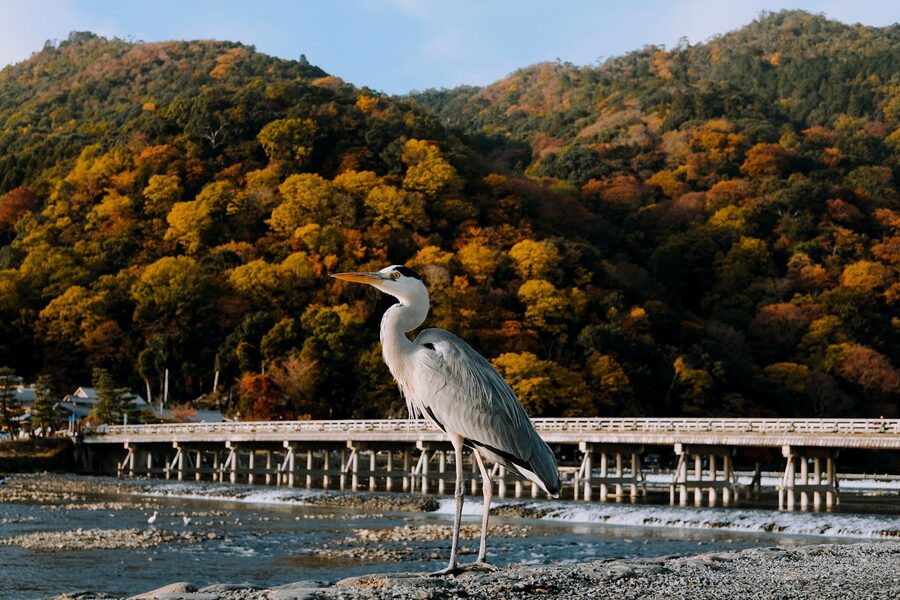
Arashiyama’s kawadoko season runs roughly May through September. Several of the ryokan and hotels on this list — Benkei, Togetsutei, and a handful of independent restaurants — build temporary wooden platforms out over the Hozu and serve dinner there from around 5:30pm. The platforms sit just above the water. You can feel the current under your feet. On a July evening when Kyoto’s streets are running at 34°C, the platform is noticeably cooler and worth the price of staying over for.
Two things to know. First, kawadoko dining at the hotels requires a dinner booking well in advance — the platforms are small and hotel guests get priority, but walk-ins are only occasionally possible. Second, weather cancels them: a rain forecast of 30%+ typically means the platform service moves indoors, and you lose the experience. If kawadoko is the main reason for your Arashiyama night, build two nights’ flexibility into your dates.
For travellers staying at the non-riverside properties (MUNI, Nagi, GrandWest, Binario), the independent kawadoko restaurants along the Hozu take non-guests for lunch or dinner — Yoshimura is the best-known, Hirokawa does eel, and there are a handful of smaller ones between the bridge and the upstream monkey-park pontoon.
Peak-Season Arashiyama — What to Actually Expect
Arashiyama’s peak weeks are the second week of November (autumn foliage) and the first week of April (cherry blossom). Rates across every hotel on this list double during those windows; Rangetsu at ¥50,000 becomes ¥100,000, Suiran at ¥95,000 becomes ¥180,000+. Availability gets tight four to six months out, and the absolute top picks (Benkei, Togetsutei in river-view, Suiran suites) book six to twelve months ahead.
The secondary peak is mid-July for the Gion Matsuri — though Arashiyama isn’t the Matsuri location, spill-over demand pushes rates up by 30-40% around the 14th-17th. October outside the second-week peak is actually very good value; the foliage has started and the coach tours haven’t yet ramped. Late February is the cheapest month — rates drop to 60% of peak and you get a quiet, crisp Arashiyama with the occasional dusting of snow on the bamboo.
Booking platform note: Booking.com and Agoda typically show within ¥1,000-2,000 of each other for the hotels in this guide, with direct-booking sometimes 5-10% cheaper but with worse cancellation terms. For onsen ryokan specifically, direct booking via the ryokan website occasionally gets you a better-category room at the same rate — worth checking before defaulting to the platform.
What Most Arashiyama Guides Get Wrong
Three takes where I’d break with the consensus you’ll read elsewhere.
HOSHINOYA’s boat arrival is worth more than its food. The conventional ranking of HOSHINOYA puts the kaiseki and the architectural rooms at the top of the selling points. Having stayed there and at Suiran and MUNI, the thing HOSHINOYA has that nobody else has is the boat-arrival sequence. The rooms are great but comparable to Suiran’s river suites. The food is great but comparable to what MUNI does with its French-kaiseki programme. The twenty minutes from the pavilion dock to the property by private boat, through the gorge, is something no other hotel can reproduce. If you’re deciding whether the premium over Suiran is worth it, price the boat at ¥55,000 per head and the decision is clear.
One night in Arashiyama beats three extra downtown Kyoto nights. The default Kyoto itinerary puts you in Gion or near Kyoto Station for the whole trip and day-trips Arashiyama between 10am and 3pm. That’s backwards. The Arashiyama experience is the early morning (bamboo grove, Tenryu-ji garden, river mist off the Hozu) and the evening (kawadoko dinner, empty bridge). Day-trippers catch only the midday crush. Move one night from a downtown hotel to one of the places in this guide and the Kyoto trip measurably improves.
Kadensho is often the better value than Togetsutei. The conventional Arashiyama onsen-ryokan recommendation is Togetsutei, because it’s closest to the bridge. Kadensho is fifteen minutes further out, has a wider private-bath selection, is usually 15-20% cheaper, and reopened in 2026 with fresher hardware. Unless your specific plan is bridge-side evening-photography sessions, Kadensho gives you more onsen-ryokan for your yen.
By Traveller Type — Quick Recommendations
- Honeymoon or once-in-a-lifetime: HOSHINOYA Kyoto (direct only). Suiran riverside suite is the Marriott-points-redemption runner-up.
- Design-led luxury foodie: MUNI Kyoto. Restaurant MUNI’s French-kaiseki programme is a genuine destination, and the building is the best-designed hotel in Arashiyama.
- Privacy-first couples: Homm Stay Nagi Arashiyama. Twelve rooms, private onsen in each, quiet residential lane.
- Ryokan-curious but don’t want to commit: Rangetsu. Optional kaiseki, hybrid tatami/western rooms.
- Classical ryokan purist: Arashiyama Benkei. Upper-floor cypress-bath balcony is the experience.
- Real onsen close to the bridge: Kyoto Arashiyama Onsen Togetsutei. Rooftop rotenburo, two minutes from Togetsukyo.
- Value onsen ryokan: Kadensho Arashiyama Onsen. Nine baths, 15% cheaper than Togetsutei for a comparable product.
- Adults-only quiet: Yado Arashiyama. 13+ age policy, 10 rooms, genuinely calm.
- Family of four sharing: The GrandWest Arashiyama. Suite-style rooms sleep four, contemporary finish.
- Traditional family-run mid-range: Ranzan. 1930s history, rear-garden access to Tenryu-ji grounds.
- Arriving by train with luggage: Hotel Binario Saga Arashiyama. Two minutes from JR Saga-Arashiyama.
- One cheap night near the bridge: Hotel Arashiyama. ¥14,000 and four minutes to Togetsukyo.
- Solo or budget-pair: Mulan Hostel. One minute from Hankyu, dorm and private rooms, books out fast in peak season.
For the wider Kyoto accommodation picture, see our main hotel guide. For onsen ryokan across the whole of Kyoto rather than just Arashiyama, the Kyoto onsen hotels guide covers the non-Arashiyama options including Kurama and Ohara. For the rest of the luxury picture, Kyoto’s luxury hotels covers the downtown flagships, and for the ryokan-specific deep dive see best ryokan in Kyoto. If you’re planning what to do during the Arashiyama daylight hours, our four-day Kyoto itinerary slots Arashiyama on day four with a dawn bamboo-grove walk and a Togetsukyo crossing before the tour buses arrive.
Frequently asked questions
Is it worth staying overnight in Arashiyama?
Yes, for one night. The morning bamboo grove at 6:30am and the evening kawadoko dinner (in summer) are both experiences you can’t replicate as a day-tripper. Beyond one night the area starts to feel limited — Arashiyama restaurants mostly close by 9pm, late bars don’t really exist, and if you want a Pontocho-style evening you’re 25 minutes by taxi back into central Kyoto. One night is the sweet spot.
What’s the best luxury hotel in Arashiyama?
HOSHINOYA Kyoto is the top of the category — direct-booking only, boat-arrival, ¥150,000 per person and up with meals. Among Booking.com-listable options, Suiran (a Luxury Collection Hotel) and MUNI Kyoto are the next tier; Suiran for the classic riverside suite with private outdoor bath, MUNI for the design-led contemporary rooms and the French-kaiseki restaurant.
How do you book HOSHINOYA Kyoto?
Direct via hoshinoresorts.com/en/hotels/hoshinoyakyoto. HOSHINOYA doesn’t list on Booking.com, Agoda, or Expedia; the only real booking channel is their own site. Autumn and cherry-blossom dates sell out six to twelve months ahead, so book early if the trip window is fixed.
Which Arashiyama hotels have real hot-spring onsen water?
Togetsutei and Kadensho both pipe water from an Arashiyama-area source. Benkei’s upper-floor balcony baths run heated water to onsen temperatures; whether that counts as “real onsen” depends on your strictness (the water is local, but the classification is closer to a hot bath than to a certified onsen spring). Homm Stay Nagi Arashiyama has in-villa cedar onsen tubs with sourced water in each of its twelve rooms. Outside these four, “onsen” branding in the area is often marketing rather than certified hot-spring.
How far is Arashiyama from central Kyoto?
Fifteen minutes by JR Sagano line (Kyoto Station to Saga-Arashiyama), 22 minutes by Keifuku Randen tram from Shijo-Omiya, or 20 minutes on the Hankyu line from Kawaramachi with one change. Taxis run ¥3,500-4,500 and 25-30 minutes from central Kyoto, depending on Oike-dori traffic. The trip is short enough that day-visits are the default for most travellers — which is why overnight stays are underrated.
Can you walk to the bamboo grove from the hotels in this guide?
Yes, from every single one of them. The farthest (Kadensho) is about 18 minutes on foot; the closest (Togetsutei, Suiran, Benkei) are under six. HOSHINOYA is the outlier — you take the hotel boat back to the pavilion dock, then walk to the grove in about five minutes from there. Bike rental is available from The GrandWest and Mulan Hostel for travellers who’d rather cycle.
When is kawadoko season in Arashiyama?
Kawadoko — the raised wooden dining platforms over the Hozu River — typically operate from early May through late September, with the exact opening and closing dates varying by hotel and restaurant. Togetsutei, Benkei, and a handful of independent restaurants run platforms during the season. Rain cancels service; a 30%+ forecast usually means the kawadoko closes for the day and dinner moves indoors.
Are Arashiyama ryokan good for couples?
Very good — the ryokan format (kaiseki in the room, futon, in-room or balcony bath) is specifically tuned to two people. Benkei’s upper-floor rooms are the honeymoon pick; Nagi’s villa-with-private-onsen layout is the design-led-couples pick; Yado Arashiyama’s 13+ age policy means the whole property is quieter if that matters. The pattern of ryokan that don’t work well for couples is the larger, family-oriented ones (Kadensho is friendly but less intimate) rather than any specific property flaw.
For further Arashiyama context, the Kyoto City tourism board’s Arashiyama area page has current event and seasonal-opening info worth cross-checking before booking.