
This guide contains affiliate links. If you book through them we earn a small commission at no extra cost to you. I only recommend hotels I’d genuinely consider for myself or a friend.
Most Kyoto hotel guides will tell you to stay in Gion. Most people should not stay in Gion. I’ll get to why in a moment — but if you’ve ever read an article about Kyoto accommodation and come away feeling like every area was described as “charming” and every hotel had “stunning views”, this is the guide for you.
I’ve been coming back to Kyoto long enough to have stayed in most of the main areas at least twice, and long enough to know that where you sleep shapes almost everything about the trip. Stay in the wrong part of town and you’ll waste an hour a day on the subway. Stay in the right part and you can walk out of your hotel at 6am with a coffee and watch the city wake up around Yasaka Pagoda before the coach tours arrive.
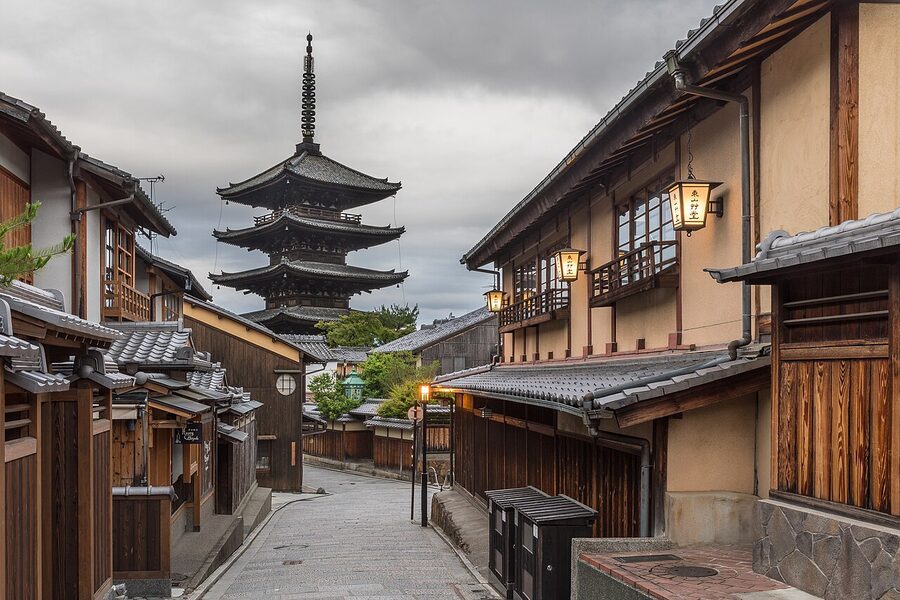
,_Kyoto,_Japan.jpg)
What follows is the area-by-area breakdown I wish someone had given me the first time: six real neighbourhoods, eighteen hotels I’d actually book, and a straight answer on where each type of traveller should point themselves. No “hidden gems”, no postcard-generic views, no filler. Just what the streets feel like, where the subway goes, and which places are worth the money.
Looking for a specific type of hotel? If you already know what kind of stay you want, skip to the dedicated guide — each one goes deeper than what’s covered below. Best ryokan in Kyoto (ten including historic flagships) · Luxury hotels (twelve 5-stars from Aman to Banyan Tree) · Hotels with real onsen (which ones have actual hot-spring water) · Budget hotels, hostels and capsules. By area: Hotels near Kyoto Station · Hotels in Gion · Hotels in Arashiyama.
Where to Stay in Kyoto at a Glance
If you already know what you want, here’s the one-minute version. The rest of the guide goes deep on each area and every hotel.
| Area | Best for | Top pick | From / night | Book |
|---|---|---|---|---|
| Downtown (Kawaramachi/Shijo) | First-timers, food, short walks to almost everything | Nol Kyoto Sanjo | ¥55,000 | Check prices |
| Southern Higashiyama / Gion | Temple atmosphere, couples, the Kyoto you pictured | The Celestine Kyoto Gion | ¥45,000 | Check prices |
| Kyoto Station | Short stays, day-trippers to Nara/Osaka/Himeji | Hotel Granvia Kyoto | ¥32,000 | Check prices |
| Central (Karasuma / Shinmachi) | Quieter base, boutique hotels, local feel | Hotel Kanra Kyoto | ¥42,000 | Check prices |
| Northern Higashiyama | Repeat visitors, slow mornings, gardens | The Westin Miyako Kyoto | ¥48,000 | Check prices |
| Arashiyama | One-night bookends, nature, no-crowds mornings | Suiran, a Luxury Collection Hotel | ¥95,000 | Check prices |
A couple of things I’ll repeat throughout the guide. First, Kyoto is small — a taxi from Kyoto Station to Gion is fifteen minutes on a good traffic day. The anxiety about “which area” is much bigger than the real geography. Second, seasonality changes everything. A mid-range hotel in Downtown in late July costs what a four-star ryokan costs in mid-November. Plan around the weather, not just the map.
Picking the Right Area for Your Trip
Kyoto’s old town is a grid, which makes it easier than people expect. Think of it as a 4km-by-4km rectangle with the Kamo River running down the middle. Most of what you came to see sits on either bank of that river. The subway has two useful lines — Karasuma (green) going north-south through the middle, and Tozai (red) going east-west — and then a few private railways that take you out to the edges (Hankyu to Arashiyama, Keihan along the river, Eizan up into the mountains).
Here’s how to think about it:
- If this is your first visit and you only have three or four days, you want to be in Downtown. You can walk to Nishiki Market, you’re one subway stop from Gion, and you’re two bus stops from Arashiyama. The Karasuma line gets you to Kyoto Station in six minutes for day trips. First-timers almost always over-weight Gion and under-weight Downtown — it’s the opposite of what you think.
- If you want the honeymoon photos, stay in Southern Higashiyama / Gion. You’ll pay for the privilege, the streets will be shoulder-to-shoulder from 10am, and you’ll understand why the pictures exist. Just know what you’re signing up for.
- If you’re only in Kyoto for one or two nights, stay at Kyoto Station. Drop the bags, do a quick temple circuit, get the shinkansen out in the morning. Nothing wrong with it.
- If this is your second or third trip, you probably want Northern Higashiyama — quieter, green, and the temples up this way (Nanzen-ji, Eikan-do, Ginkaku-ji) are easier to visit without the coach-tour chaos.
- If you want the local feel, Central Kyoto around Karasuma is where office workers actually live. More cafes than temples, more standing-room sake bars than souvenir shops.
- If you’re doing a slow, high-end trip, book Arashiyama for one or two nights at the end. You arrive for dinner, wake up at a bamboo grove with no one in it, and still have time to be back in town for lunch.
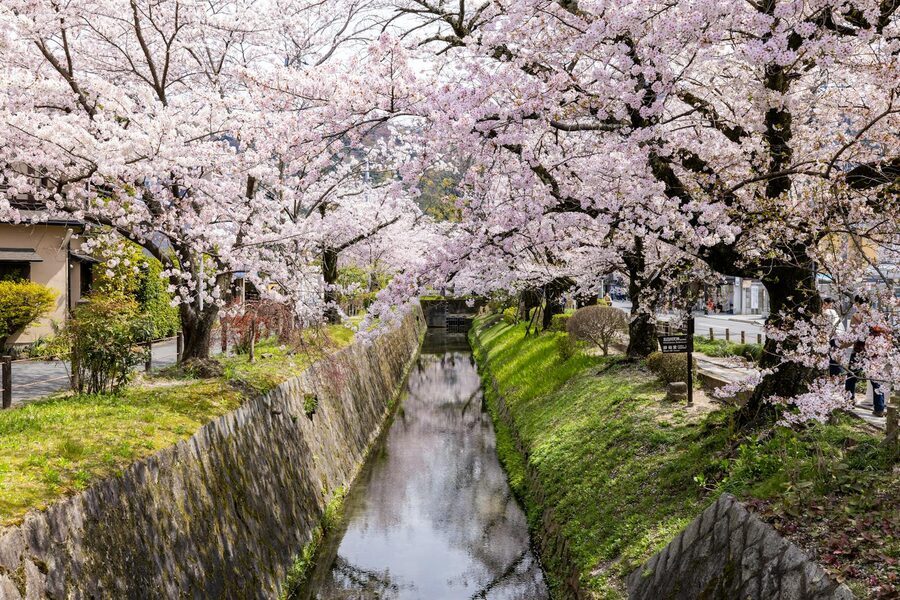
The peak-season caveat deserves its own paragraph. Late March to early April (cherry blossoms) and the first three weeks of November (autumn leaves) push rates up by a factor of two to three. Book six to nine months ahead if you’re travelling then. The last week of December through early January is surprisingly peaceful and photogenic — temples get dusted in snow some years and the tourist numbers drop off a cliff.
Downtown Kyoto — Kawaramachi, Shijo and Sanjo
This is where I tell most first-timers to stay. The area stretches roughly from Karasuma-dori east to the Kamo River, bounded by Sanjo-dori in the north and Shijo-dori in the south. In practice that means you’ve got Nishiki Market (a block north of Shijo), Pontocho (a narrow lantern-lit alley along the river), the Takashimaya and Daimaru department stores, and about four hundred restaurants within ten minutes’ walk. You’re one stop from Gion on the Keihan line or fifteen minutes walking across Shijo Bridge.
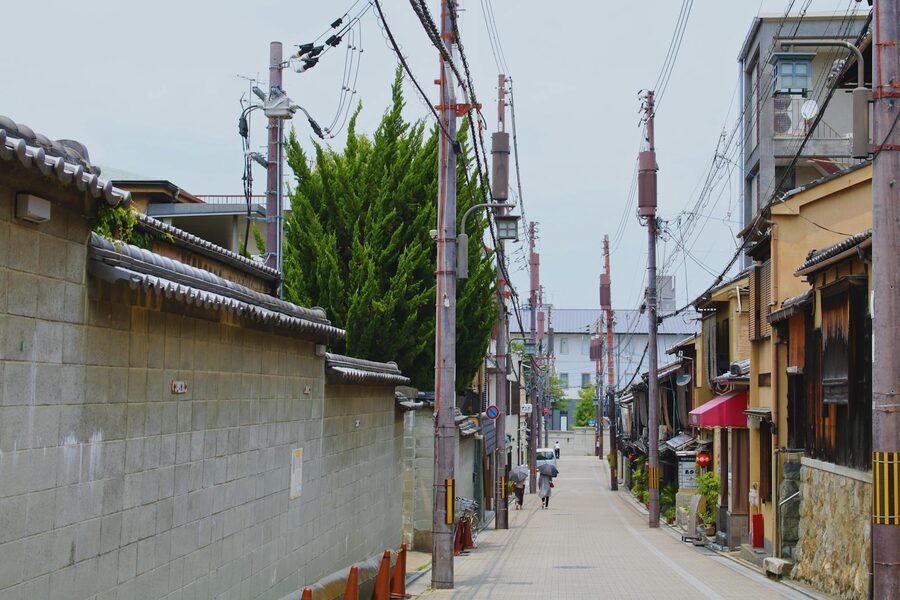
The downside: Shijo-dori itself is a wide, loud, car-dominated shopping street. Stay a block or two back from it (Kiyamachi, Nishikiyamachi, or anywhere in the Sanjo area) and the scale drops immediately to something much more walkable. The big chain hotels on Shijo-dori tend to be fine but sterile — you’re better off in a boutique one block inland.
The Ritz-Carlton Kyoto — Best Luxury
Nearest station: Kyoto Shiyakusho-mae (Tozai line) — 5 min walk
To Nijo Castle: 10 min walk · To Gion: 12 min walk across the river
Best for: Honeymoon, anniversary, money-is-not-the-question
From: ¥280,000/night
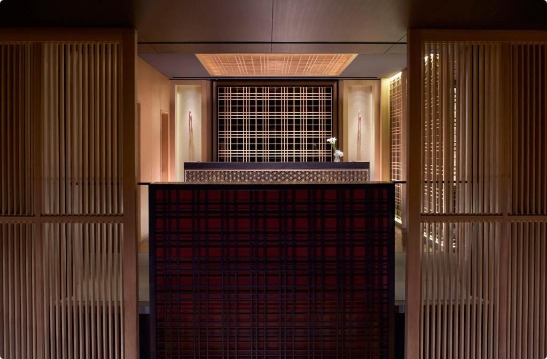
The Ritz sits on the west bank of the Kamo River, right where it meets the Nijo Castle axis. The building is low and black-tiled so you barely notice it from the street, which is the point. Inside it’s all tatami-edged corners, a genuinely good Michelin-starred kaiseki (Mizuki), and rooms that face either the river or the inner garden. Ask for a river view on the upper floors — at dusk you can watch the egrets hunting in the shallows while somebody’s dropping the turndown amenities.
Who it’s not for: anyone who finds pristine luxury a bit airless. The service is faultless but formal. If you want personality and a bit of grit, go elsewhere.
What’s good:
- River-view rooms have a private low-lit path to the pool that feels like you’re walking into a film set
- Breakfast is Japanese set-menu or western — both are actually good (rare)
- A five-minute walk to Pontocho and ten to Gion, without being in either
What’s not:
- Cheapest rooms are in the inner court and don’t get much natural light
- Price. Nothing else here is close.
Check prices at The Ritz-Carlton Kyoto on Booking.com
Nol Kyoto Sanjo — Best Mid-Luxury Boutique
Nearest station: Karasuma-Oike (Karasuma/Tozai lines) — 3 min walk
To Nishiki Market: 6 min walk · To Gion: 15 min walk
Best for: Couples who want style without the five-star price tag
From: ¥55,000/night
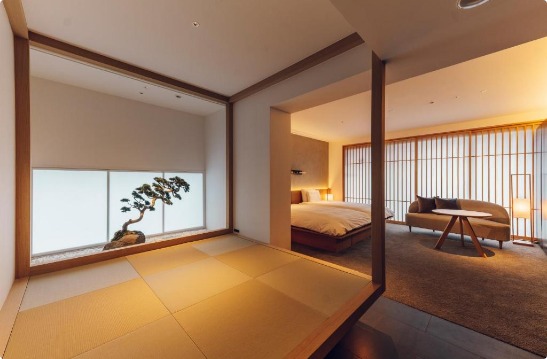
This is my recommended base for most first-timers with mid-range budgets. Nol is a re-built sake-merchant’s townhouse with a central courtyard you can see from the lobby bar, which is frankly prettier than a lot of the temples people queue to photograph. Rooms are compact but properly designed — deep cedar bath, blackout curtains that work, and decent soundproofing for a Kyoto boutique. The courtyard bar does a very good evening pour of Kyoto-region sake without pretension.
Where it falls down: the front-facing rooms pick up a bit of delivery-truck noise in the early morning. Ask for a courtyard-side room and you’ll sleep like a stone.
What’s good:
- Three minutes to the subway station, six minutes on foot to Nishiki Market
- In-room sake selection is better than half the bars in town
- Design is genuinely Kyoto, not a watered-down generic Japanese hotel aesthetic
What’s not:
- No gym or pool if that matters to you
- Rooms are on the small side for the price in the off-season; it’s worth it in peak
Check prices at Nol Kyoto Sanjo on Booking.com
Cross Hotel Kyoto — Best Mid-Range
Nearest station: Kyoto Shiyakusho-mae (Tozai) — 4 min walk
To Pontocho: 3 min walk · To Gion: 8 min walk
Best for: Anyone who wants a modern hotel one block from Pontocho
From: ¥28,000/night
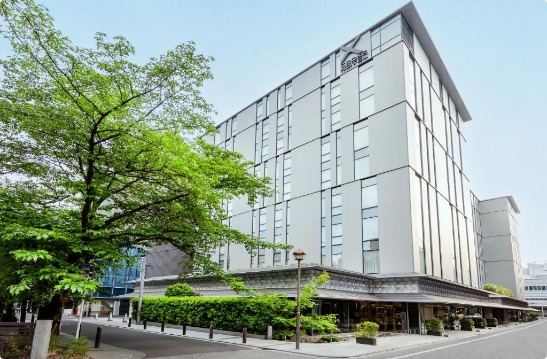
Cross Hotel opens directly onto Kawaramachi-dori and sits about ninety seconds’ walk from the Pontocho alley. Rooms are standard business-hotel-plus — bigger than Japanese average, thoughtful lighting, proper desks. The rooftop bar has a surprisingly open view down onto the river. You’re paying for location and a product that just works.
If you’ve stayed at Hotel Indigo in other cities, Cross is in roughly the same category — design-forward without being a boutique experience. It’s the one I’d pick for a three-night trip with friends splitting rooms.
What’s good:
- Genuinely central — Pontocho in three minutes, Nishiki Market in seven
- Rooftop bar with river view is open to guests without a minimum spend
- Rooms fit two medium suitcases open on the floor, which in Kyoto is not guaranteed
What’s not:
- Kawaramachi-dori is a busy road — sealed windows help but light sleepers, request a higher floor
- Breakfast is included but it’s a standard buffet; eat at the konbini two doors down instead
Check prices at Cross Hotel Kyoto on Booking.com
Southern Higashiyama and Gion
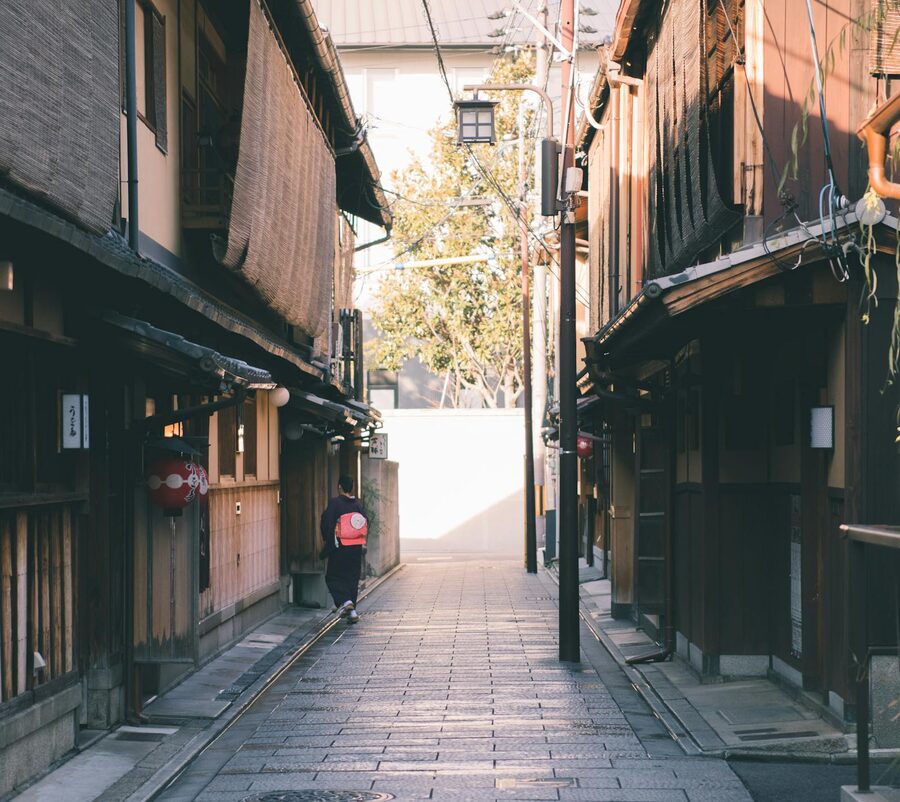
Southern Higashiyama is the stretch east of the Kamo River running from Yasaka Shrine in the north down through the Ninenzaka and Sannenzaka lanes to Kiyomizu-dera. Gion is the chunk closest to the river, around Hanamikoji-dori and Shirakawa. This is the area that made Kyoto famous: wooden machiya townhouses, narrow stone lanes, and — if you’re lucky and patient — the occasional maiko hurrying between engagements at dusk.
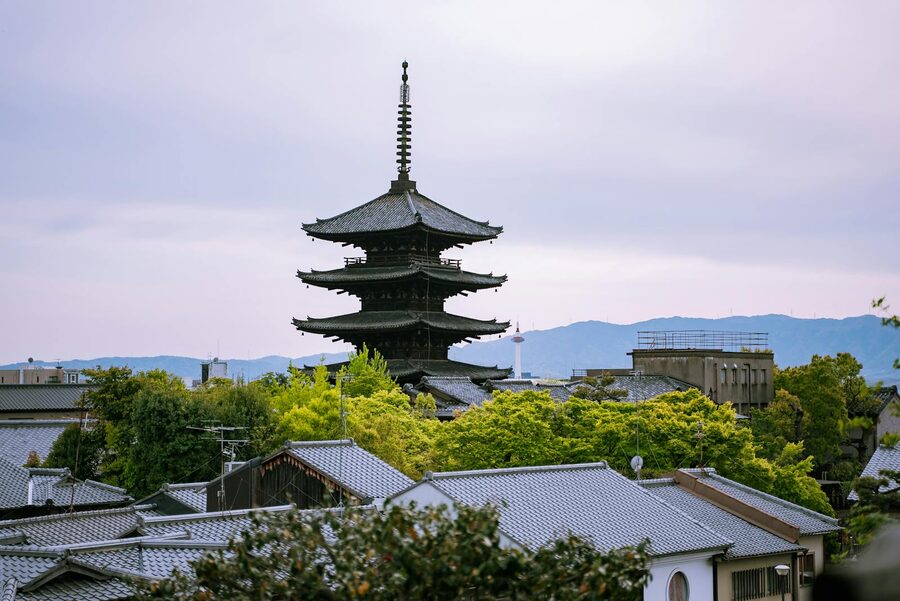
The bit most guides don’t tell you: Gion is tiny. The section of Hanamikoji that features in every photograph is about 300 metres long. And it gets genuinely packed from mid-morning onward — to the point that local residents had to put up “no photography” signs in 2019 because tourist behaviour was causing real problems. Staying in Southern Higashiyama is worth it because it lets you be out there at 6am and 9pm when the streets aren’t a set for everyone else’s reel. Don’t come here expecting a quiet residential base — come because you want the window at dawn and dusk.
Fair warning: this area has fewer subway options than Downtown. Higashiyama station (Tozai line) serves the north end; the south (Kiyomizu area) is a 15-minute uphill walk from the nearest station. Taxi is often the answer.
Four Seasons Hotel Kyoto — Best Ultra-Luxury
Nearest station: Shichijo (Keihan line) — 7 min walk
To Sanjusangen-do: 5 min walk · To Gion: 15 min walk
Best for: Luxury travellers who want a walled garden, not a city hotel
From: ¥160,000/night
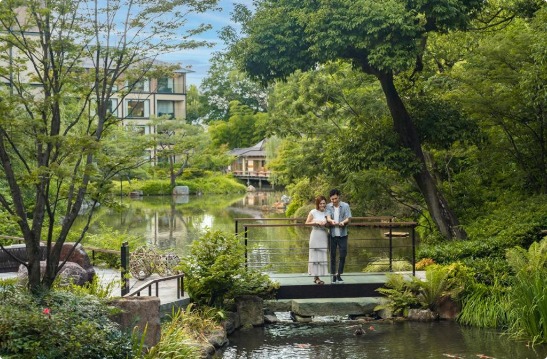
The Four Seasons sits around a restored 800-year-old Shakusui-en pond garden. That’s the whole pitch, and it’s a good one. Rooms look onto either the pond or the inner garden; the pond-view ones are worth the upgrade if you can swing it. The spa is one of the best in Japan by any measure. Service is polished without being stiff — they remember your morning coffee order on day one and you barely notice them doing it.
Slightly awkward location-wise: you’re far enough south of the central Higashiyama scrum that you’ll take taxis to Kiyomizu-dera and Gion rather than walk. The Sanjusangen-do temple (1,001 gilded Kannon statues, genuinely worth an hour) is right next door, which is a bonus almost nobody takes advantage of.
What’s good:
- The Shakusui-en garden is the best private hotel garden I’ve stayed at anywhere in Japan
- The Brasserie breakfast has an omelette station that outperforms most Michelin hotels’ breakfast offerings
- The spa’s steam room and cedar bath are both actually usable, not just decorative
What’s not:
- You will take taxis to reach central Higashiyama — factor ¥1,200–1,500 each way
- The pool has set hours and isn’t huge; not really a swimming pool, more of a dipping one
Check prices at Four Seasons Hotel Kyoto on Booking.com
The Celestine Kyoto Gion — Best Location in Gion
Nearest station: Gion-Shijo (Keihan) — 6 min walk
To Yasaka Shrine: 4 min walk · To Kiyomizu-dera: 15 min walk uphill
Best for: Couples prioritising Gion atmosphere over hotel amenities
From: ¥45,000/night
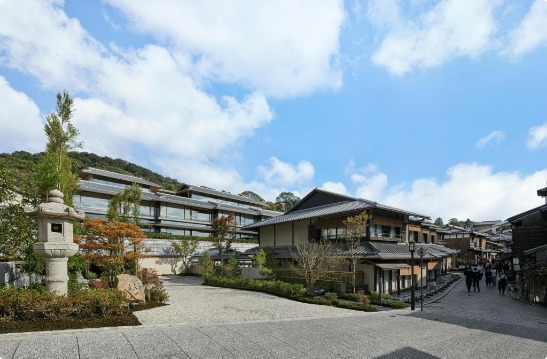
If you want to wake up in the middle of Gion and walk out into the streets at 6am, the Celestine is the hotel you book. It’s on a side street off Higashi-oji, four minutes from Yasaka Shrine, walking distance to Shirakawa canal, and it has a quiet ochaya-style courtyard that you can actually sit in with a book. Rooms are small but beautifully finished — dark wood, proper noren curtains on the bathrooms, and deep soaking tubs in the higher categories.
Worth knowing: the Celestine is a mid-luxury hotel, not a five-star. The restaurant is fine but not a destination. The gym is token. This is a hotel you stay at for the location and the room design, not to spend a day indoors.
What’s good:
- The best Gion location in this price bracket — genuinely walkable to everything
- The ochaya-style courtyard garden is quiet enough to read in
- Deep cedar bathtubs in the deluxe-category rooms
What’s not:
- Entry-level rooms are compact; pay up one tier if you have two big cases
- Restaurant is skippable — walk two minutes to a proper kaiseki place instead
Check prices at The Celestine Kyoto Gion on Booking.com
Park Hyatt Kyoto — Best Views
Nearest station: Kiyomizu-Gojo (Keihan) — 15 min walk uphill
To Kiyomizu-dera: 5 min walk · To Yasaka Pagoda: 2 min walk
Best for: View-seekers, honeymoons, anyone happy to taxi in and out
From: ¥180,000/night
The Park Hyatt is the only major luxury hotel actually embedded in the upper Higashiyama slopes, about two minutes on foot from Yasaka Pagoda. Rooms facing west look out over the rooftops of southern Kyoto with the Yasaka-dori axis in the foreground; it’s the view you’d pay any amount for if you’ve never seen it. The hotel is Park Hyatt’s usual understated Japanese aesthetic — pale wood, charcoal textiles, zero bling.
The trade-off is the steep walk uphill from any subway, which rules it out for some travellers. Taxis are easy but the price mounts up quickly over a five-night stay.
What’s good:
- Window seats in the upper rooms are the best hotel views in Kyoto — better than the Four Seasons on this one metric
- Kyoto Bistro does a genuinely excellent dinner; the restaurant terrace works for sundowners
- Walking distance to Kiyomizu-dera, Yasaka Pagoda, Ninenzaka — the dense cluster
What’s not:
- Arrival and departure are uphill with luggage — use a taxi, not the station walk
- Smallest rooms lose the view — only the higher categories look out properly
Check prices at Park Hyatt Kyoto on Booking.com
Kyoto Station Area
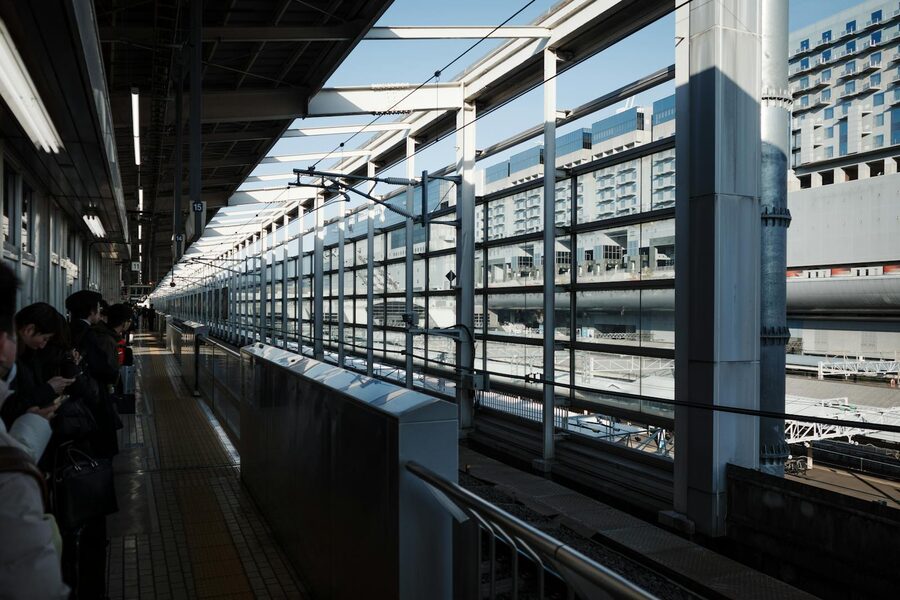
The Kyoto Station area gets a bad rap in guides that treat atmosphere as the only metric. It’s a working transport hub, flanked by mid-rise hotels, with two major Buddhist complexes (Higashi and Nishi Honganji) a short walk north. You don’t stay here for charm. You stay here because you can drop bags at 11am, do a day trip to Nara or Himeji, be back at your hotel by dinnertime, and take the shinkansen out in the morning without needing a taxi.
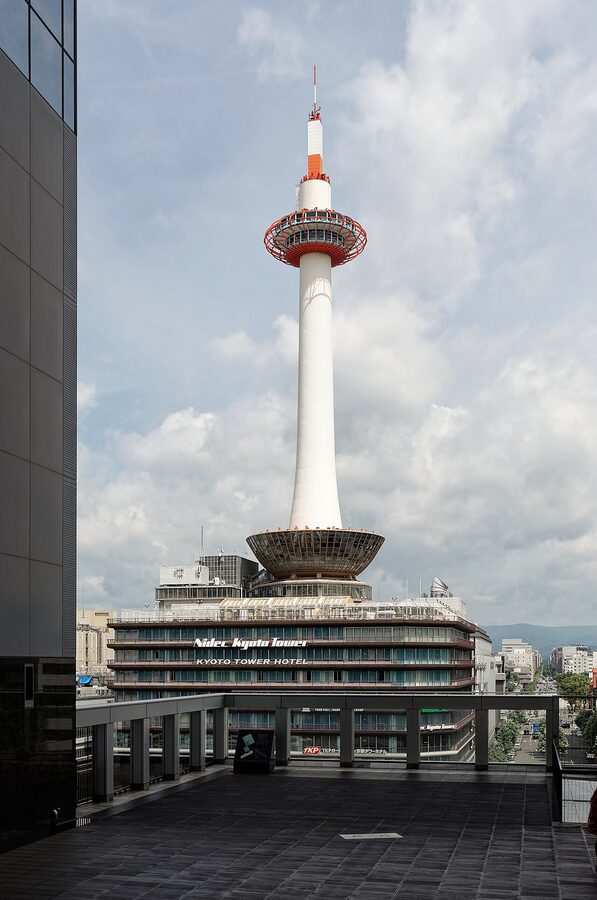

Practical reality: the station is a 15–20 minute bus ride (or 6 minutes on the Karasuma subway) from the rest of central Kyoto. Every Karasuma-line stop between Shijo and Kyoto gets you close to something worth seeing. It’s not the inconvenience people describe — but it is further from Gion in feel, even if not in time.
Who should stay here: one-night visitors, day-trippers, and anyone booking very late for cherry blossom or autumn colour peaks (this is the area that sells out last, so it’s your fallback).
Hotel Granvia Kyoto — Best Direct-Station Hotel
Nearest station: Kyoto Station — inside it
To shinkansen platforms: 3 min walk
Best for: Short stays, rainy days, families with small kids or big bags
From: ¥32,000/night
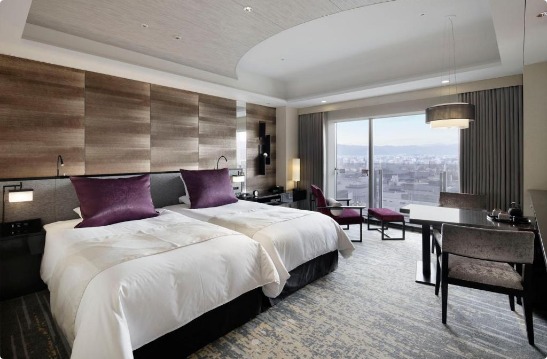
Granvia is physically connected to Kyoto Station. Not near it — in it. You exit the shinkansen turnstiles, walk through a couple of corridors, and you’re at the check-in desk. For short trips this is a superpower: no taxis, no luggage-wrangling through subway staircases, no logistics. The rooms themselves are large by Japanese standards and the higher floors get decent views north toward the Higashiyama hills.
Worth knowing: Granvia is a business-and-conference hotel at its core. Service is professional but efficient, not cosy. If what you want is a boutique Kyoto experience, this is the opposite of that. If what you want is three subways merging under your feet and the shinkansen six minutes from your door, it’s perfect.
What’s good:
- Physical connection to the station is genuinely useful in rain, cold, or with big luggage
- Club-floor lounge is one of the better ones in any Japanese business hotel
- The 11-floor Isetan department store in the station has a food basement that dismantles most hotel breakfast buffets
What’s not:
- Feels corporate; the atmosphere is zero
- Lower floors face interior light wells — request floor 13+ for a view
Check prices at Hotel Granvia Kyoto on Booking.com
Mitsui Garden Hotel Kyoto Station — Best Value Mid-Range
Nearest station: Kyoto Station — 4 min walk
To Higashi Honganji: 5 min walk
Best for: Solo travellers, pairs on a budget, groups comparing notes at breakfast
From: ¥19,000/night
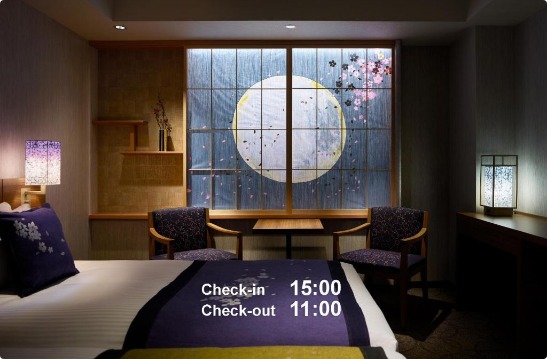
Mitsui Garden is a reliable Japanese business-hotel chain that consistently punches above its weight. The Kyoto Station branch has an onsen-style public bath on the top floor, which at this price is borderline absurd. Rooms are small but thoughtfully finished, and the buffet breakfast is actually worth eating (yuba tofu, obanzai side dishes, good coffee). For a short stay where you just want a decent place to sleep, this is my go-to.
What’s good:
- Free top-floor public bath — a real one, not a tub with a sign
- Breakfast includes Kyoto-style side dishes most chain hotels wouldn’t bother with
- Four-minute walk to the station north exit; five minutes to the bus stop for Arashiyama/Kinkaku-ji
What’s not:
- Rooms are genuinely compact — one large suitcase fits, two means stacking
- The corridors have that slightly fluorescent business-hotel feel
Check prices at Mitsui Garden Hotel Kyoto Station on Booking.com
Sakura Terrace The Gallery — Best Budget Near the Station
Nearest station: Kujo (Karasuma line) — 3 min walk · Kyoto Station — 12 min walk
Best for: Budget travellers, under-30 backpackers who’ve outgrown hostels
From: ¥12,000/night
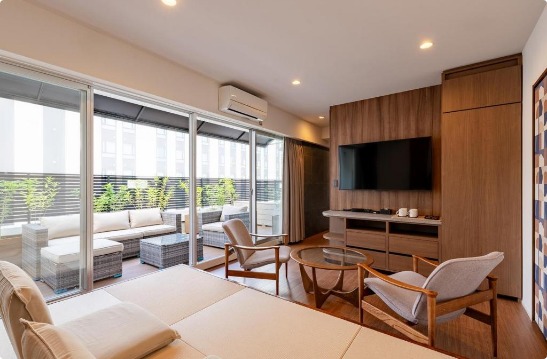
Sakura Terrace is one subway stop south of Kyoto Station in a quieter residential block. It’s a mid-2010s refit with a proper lounge, a decent on-site restaurant, and — importantly for the budget bracket — rooms that don’t feel like cells. The Gallery branch (as opposed to the main Sakura Terrace) has marginally bigger rooms and better lighting.
The trade-off is location: you’re one stop south of the station, meaning an extra ¥200 per journey and a five-minute disadvantage on everything. If you’re in Kyoto for three nights or more and have the time budget, it pays itself back in dinners.
What’s good:
- Under ¥15k in low season and still feels like a real hotel, not a hostel
- Lounge area with free coffee genuinely gets used — good place to plan tomorrow
- The attached cafe does a reasonable kaiseki-light dinner if you can’t be bothered to go out
What’s not:
- You’re 12 minutes’ walk from the station with luggage — fine but not zero
- Area is residential, so nothing obvious to do within five minutes of the door
Check prices at Sakura Terrace The Gallery on Booking.com
Central Kyoto — Karasuma, Shinmachi and the Imperial Palace
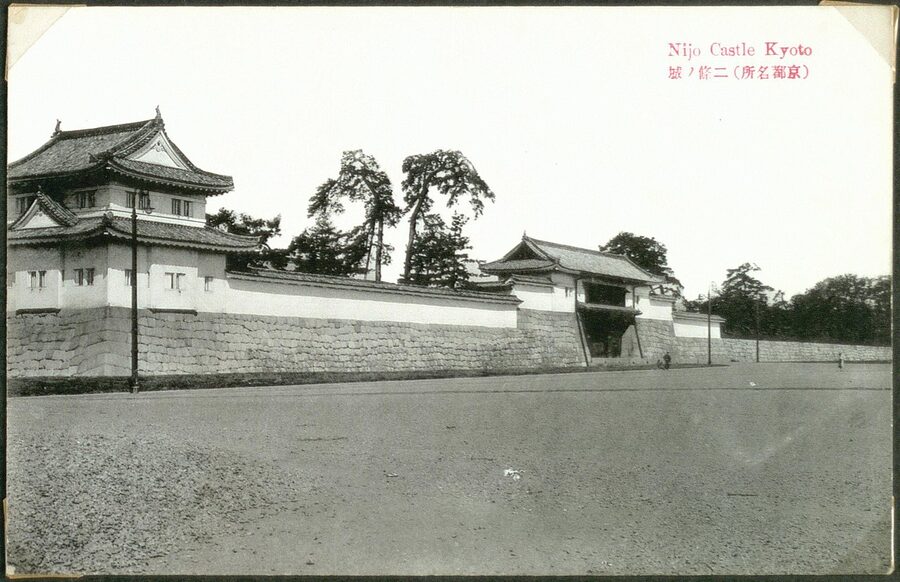
Central Kyoto is the working, residential spine between Downtown and the Imperial Palace. Karasuma-dori runs north-south through the middle; the Shinmachi and Muromachi lanes running off it are where you’ll find machiya guesthouses, standing-room sake bars, and coffee shops that open at 8am to a queue of locals, not tourists. Nijo Castle sits on the north edge; the Imperial Palace grounds are ten minutes’ walk further north. Temples are sparser up here, which is why some guides dismiss it — but that’s exactly what makes it feel like a city rather than a theme park.
Stay here if you’ve been to Kyoto before and want to eat well, walk a lot, and not share the pavement with 4,000 people at Kiyomizu. On the Karasuma subway line you’re six minutes from Kyoto Station and three minutes from Shijo — the geography is fine.
Dusit Thani Kyoto — Best New Luxury
Nearest station: Shijo (Karasuma line) — 8 min walk
To Nishiki Market: 12 min walk · To Nijo Castle: 10 min walk
Best for: Second-time visitors wanting quiet luxury over atmospheric crowds
From: ¥55,000/night
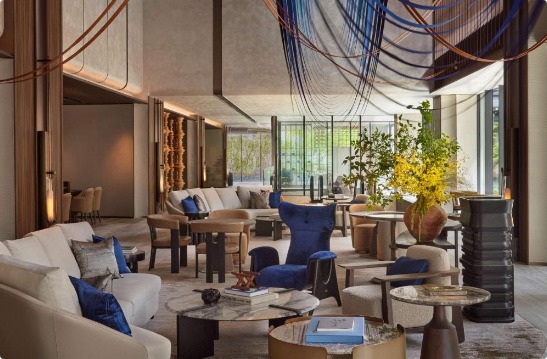
Dusit Thani opened in 2024 and has quickly become the counter-recommendation to the Ritz: it’s everything the Ritz is, but in a quieter part of town and at roughly a third of the price. The architecture borrows from Thai-Japanese fusion, which sounds suspect and mostly isn’t — dark wood, clean lines, lots of natural light. The courtyard pool is one of the nicer indoor pools in town. Breakfast is Thai-Japanese and genuinely interesting.
It’s newer than most of the big-name luxury hotels, which means the service team is still finding its rhythm. I’ve seen small service inconsistencies that wouldn’t happen at the Ritz. Going to be a non-issue in twelve months.
What’s good:
- Best-value luxury in Kyoto at the moment — paying Dusit money for Ritz-level hardware
- Indoor courtyard pool you’ll actually use
- Great sound-proofing; rooms are uniformly big (for Kyoto)
What’s not:
- Opened recently; service occasionally slips in ways it won’t in a year
- Area around the hotel is quiet, which means less spontaneous eating — you’ll plan dinners
Check prices at Dusit Thani Kyoto on Booking.com
Hotel Kanra Kyoto — Best Machiya-Style Boutique
Nearest station: Gojo (Karasuma line) — 4 min walk
To Kyoto Station: 12 min walk · To Kawaramachi: 15 min walk
Best for: Couples, design-conscious travellers, people who want tatami without ryokan formality
From: ¥42,000/night
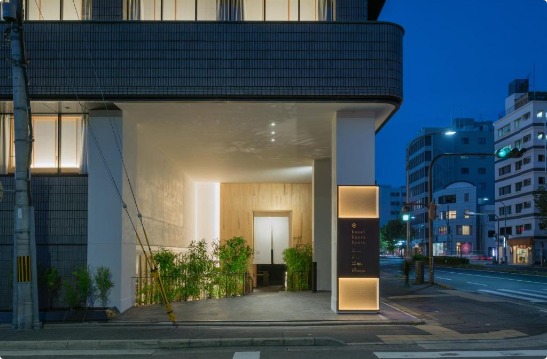
Kanra is what everyone else’s “machiya-style” hotel wishes it was. Rooms have real tatami floor sections, low cedar beams, and deep soaking tubs in the standard categories — not in a performative way, in a lived-in way. The Kanra Lounge does a good genmaicha and has enough seating to actually use as a writing spot. It sits in a quieter patch of southern Central Kyoto, four minutes from Gojo subway station, so you’re near transport without being on top of it.
This is the hotel I recommend to people who want “a ryokan without the ryokan commitment” — tatami and baths without kaiseki dinners, 8am lights-out, and the slight awkwardness of staff that knows you’ve skipped the bath.
What’s good:
- Genuine machiya aesthetic in every room, not just the lobby
- Deep cedar bath as standard, even in entry-level rooms
- Breakfast (obanzai set) is better than most boutique hotels in this price bracket
What’s not:
- Location is further south than most — add 10 min walking to everything in Gion
- The ground-floor rooms lose some natural light
Check prices at Hotel Kanra Kyoto on Booking.com
Nishiyama Ryokan — Best Traditional Ryokan in the Centre
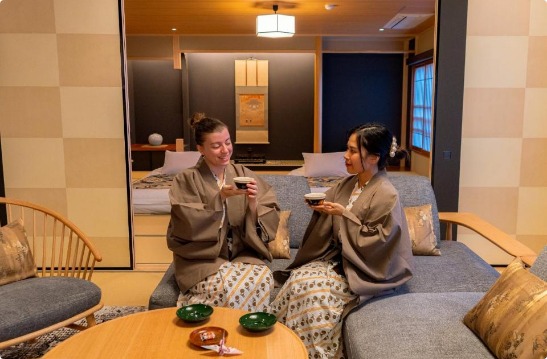
Nearest station: Kyoto Shiyakusho-mae (Tozai) — 4 min walk
To Pontocho: 6 min walk · To Nishiki Market: 10 min walk
Best for: First ryokan experience without going rural
From: ¥25,000/night
Most great ryokan are in the mountains — Hakone, Kinosaki, Kurokawa. Staying at one in the middle of a city is a compromise by definition: you lose the onsen-and-pine-forest context. Nishiyama is the best compromise I’ve found. It’s a proper family-run ryokan (fourth-generation owners at last check), with tatami rooms, futon beds, and a courtyard garden, located four minutes from Kyoto Shiyakusho-mae subway. You get the ryokan architecture and the kaiseki dinner without needing to leave town.
The catch: the dinner is served in your room and it’s excellent, but the baths are private bathroom-style, not a grand communal onsen. If you want the full ryokan ritual, you’ll want to do a night at Kinosaki or Kurama (close enough to Kyoto to combine). If you want the ryokan stay without leaving the city, Nishiyama is it.
What’s good:
- Real family-run ryokan inside the city, not a hotel pretending to be one
- In-room kaiseki is the best part — they ask about dietary preferences properly
- Central location means you can walk in from dinner at Pontocho
What’s not:
- No communal onsen — this is a city ryokan, not a mountain one
- Curfew is 11pm; if you want to be out late, it won’t suit
Check prices at Nishiyama Ryokan on Booking.com
Northern Higashiyama — Nanzen-ji, Okazaki, Philosopher’s Path
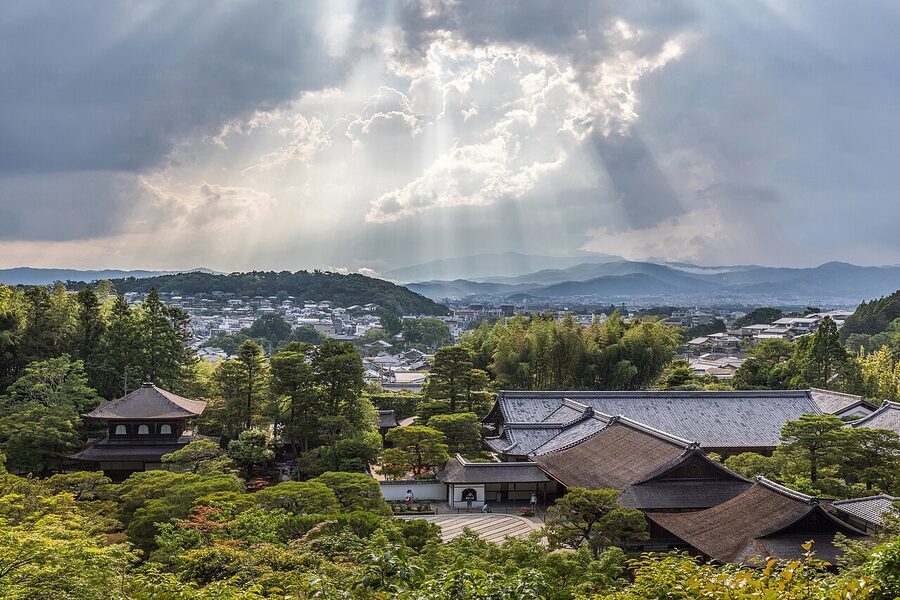

Northern Higashiyama is where I send repeat visitors. The subway’s Tozai line runs along the southern edge, so Keage and Higashiyama stations are useful. The area stretches roughly from Heian Shrine and the Okazaki museum district in the west, up past Nanzen-ji and Eikan-do, along the Philosopher’s Path, and finally to Ginkaku-ji at the north end. Compared to Gion, you’ll see a tenth of the people, the gardens are twice the size, and the temples actually have the kind of calm the brochures promise.
It’s also quiet at night. Don’t stay here if you want izakaya crawls and standing-room bars — there aren’t any. Evenings are for dinner at your hotel or a fifteen-minute taxi into Downtown and back.
The Westin Miyako Kyoto — Best Classic Luxury
Nearest station: Keage (Tozai line) — 3 min walk
To Nanzen-ji: 7 min walk · To Heian Shrine: 12 min walk
Best for: Repeat visitors, garden-lovers, anyone who remembers pre-2000s Kyoto
From: ¥48,000/night
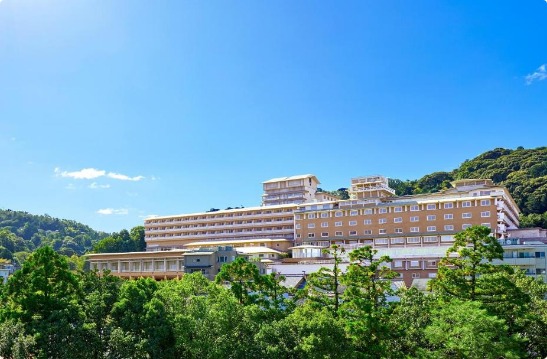
The Westin Miyako has been on this spot under one name or another since 1890. It’s older than half the buildings that count as landmarks. The hotel sits on a forested hillside above Keage station; rooms on the east side look out across the wooded Higashiyama ridge. It’s been refreshed in stages and the current product is solid — not bleeding-edge design, not trying to be, but extremely comfortable in a way modern hotels have forgotten how to be.
The bird-garden walking trail that wraps the back of the property is a genuinely lovely pre-breakfast loop — cedar trees, a small pond, and you’ll have it to yourself every morning.
What’s good:
- Three-minute walk to Keage subway = easy downtown access in 12 minutes
- Hillside rooms have some of the city’s best window-light at golden hour
- Back-garden walking loop is a morning ritual worth keeping
What’s not:
- Design is classic, not contemporary; if you’re used to Aman and Setouchi Retreat you may find it dated
- Lobby and public areas are grand but a bit hushed — it’s not a hotel where you hang around in the lobby
Check prices at The Westin Miyako Kyoto on Booking.com
Hotel Okura Kyoto Okazaki Bettei — Best Boutique Luxury
Nearest station: Higashiyama (Tozai line) — 6 min walk
To Heian Shrine: 3 min walk · To Ginkaku-ji: 20 min walk along Philosopher’s Path
Best for: Slow trips, gardens-and-breakfast mornings
From: ¥45,000/night
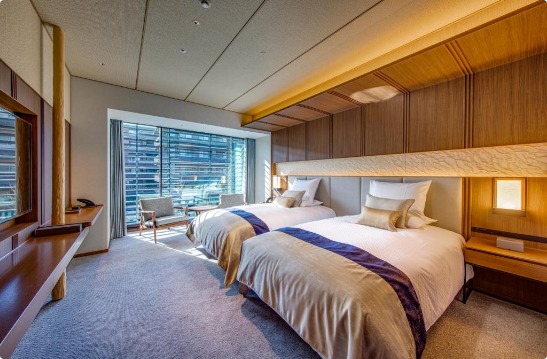
Okura Okazaki Bettei is a small, garden-focused branch of the Okura group, tucked into the Okazaki cultural zone between Heian Shrine and the Kyoto municipal art museum. It’s an annex — only about 60 rooms — designed to feel like a detached villa. Rooms open onto a large central garden; the morning light through the maples is the hotel’s main selling point, and it’s enough of one.
This is a deliberately small operation. There’s a single restaurant, one small spa, and not much else. Perfect for the kind of trip where you eat breakfast for an hour, walk for the morning, come back to a bath, and don’t need entertainment between meals.
What’s good:
- Garden layout gives every room a proper outlook — no inner-court letdowns
- Three-minute walk to Heian Shrine; twenty-minute walk up Philosopher’s Path
- Kaiseki breakfast is one of the best any hotel serves at this price
What’s not:
- No pool, small gym — not a hotel for indoor pursuits
- Nearest dinner options beyond the hotel itself are a ten-minute walk away
Check prices at Hotel Okura Kyoto Okazaki Bettei on Booking.com
Kyoto Garden Ryokan Yachiyo — Best Ryokan Near Nanzen-ji
Nearest station: Keage (Tozai line) — 5 min walk
To Nanzen-ji: 2 min walk · To Philosopher’s Path: 6 min walk
Best for: Ryokan experience next to the best walking route in the city
From: ¥28,000/night
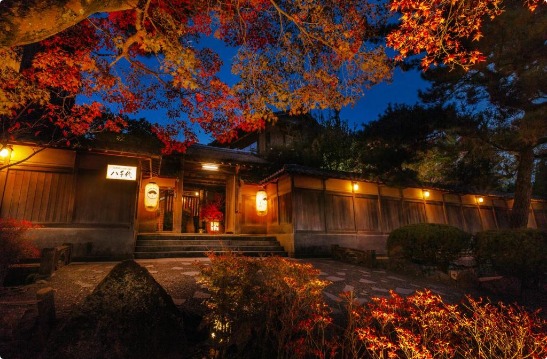
Yachiyo sits almost at the gate of Nanzen-ji — one of Kyoto’s three or four most atmospheric temples, with a stone aqueduct running through the grounds that you can walk across for free. The ryokan itself is lower-key than Nishiyama, with a courtyard garden and tatami rooms; the food is traditional obanzai-kaiseki rather than multi-Michelin-track. Rooms with garden views are the ones to book.
Practically, this is my favourite ryokan base in Kyoto because of what’s outside the door: turn left and you’re at Nanzen-ji in two minutes; turn right and you’re on the Philosopher’s Path for a ninety-minute stroll up to Ginkaku-ji.
What’s good:
- Location is unbeatable for temple-walking — Nanzen-ji at one end, Ginkaku-ji via Philosopher’s Path at the other
- Garden-view tatami rooms feel significantly bigger than their square footage
- Dinner is traditional obanzai — a more grounded meal than the showy kaiseki you’ll get at luxury ryokans
What’s not:
- The baths are small private ones, not a grand onsen
- Reception staff’s English is functional, not fluent — bring phrases if you have specific needs
Check prices at Kyoto Garden Ryokan Yachiyo on Booking.com
Arashiyama
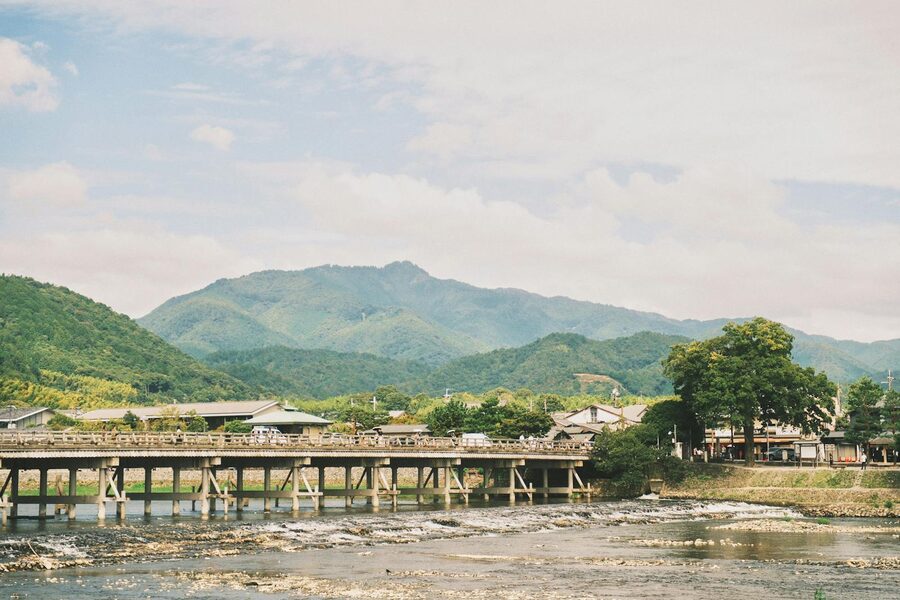
Arashiyama sits at the western edge of the city, about twenty minutes from Kyoto Station on the JR Sagano line or forty minutes by bus. Most people come for half a day and leave again; a smaller number stay overnight and wake up to an Arashiyama without anybody in it. This second option is one of the best luxury travel experiences in Japan, and I’d argue it’s worth sacrificing a night from your central Kyoto stay for it.
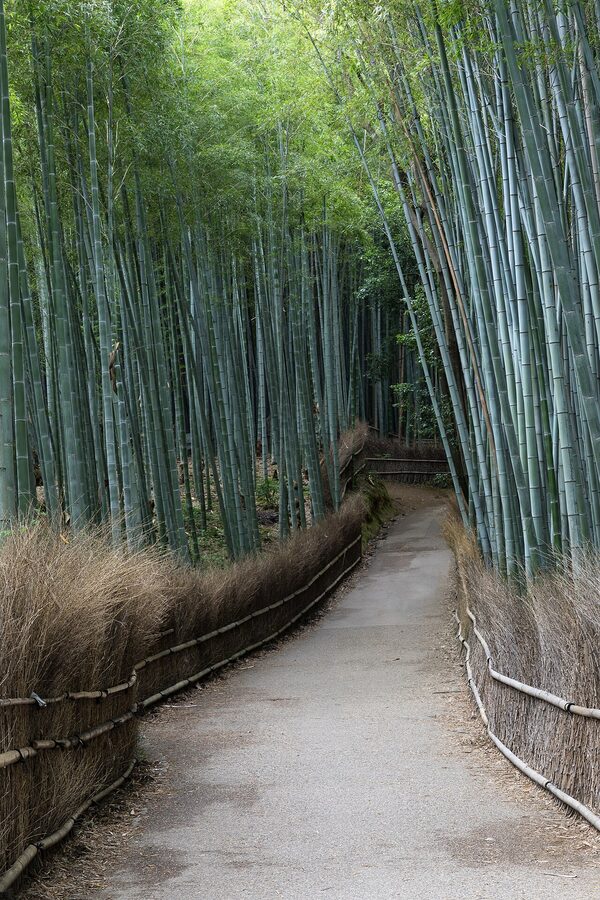

The village-side part of Arashiyama is genuinely small — fifteen minutes on foot from Togetsukyo Bridge to the Tenryu-ji gate. Hotels here tend to be either on the riverbank (Suiran, HOSHINOYA) or tucked into the residential lanes above (Benkei, Togetsutei). Access to central Kyoto drops off in the evenings — after 10pm, the trains are sparse and taxis are your friend.
One note worth putting here: HOSHINOYA Kyoto is Arashiyama’s best-known luxury property, arrived at by private boat along the river, and a genuine highlight of the high-end Japan trail. It doesn’t list on Booking.com or Agoda — you book direct at hoshinoya.com. If money’s no object, do that. For everyone else, the three hotels below are the ones to consider.
Suiran, a Luxury Collection Hotel Kyoto — Best Riverside Luxury
Nearest station: Saga-Arashiyama (JR) — 12 min walk · Arashiyama (Hankyu) — 6 min walk
To Togetsukyo Bridge: 4 min walk · To Bamboo Grove: 10 min walk
Best for: Honeymoon, wedding anniversary, a bucket-list night
From: ¥95,000/night
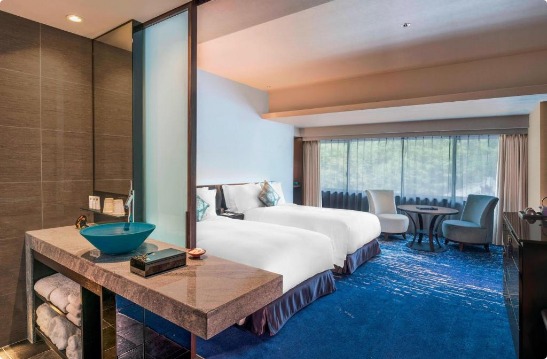
Suiran sits on the south bank of the Hozu River, looking across at Togetsukyo. It’s in a row of restored Meiji-era villas; the top-category rooms have private riverside terraces with outdoor baths. Morning mist coming up off the river is one of those things you remember years later. The restaurant (Kyo-Suiran) does a creative take on kaiseki that’s worth the separate booking.
Best bit: guests get early access to the main temples’ inner gardens via a concierge arrangement — a quiet perk that lets you be at Tenryu-ji before the gates officially open to the public.
What’s good:
- Private outdoor bath river views in the upper room categories
- Early concierge access to Tenryu-ji before general opening
- Cycle hire is free and Arashiyama is flat — best way to do the area
What’s not:
- Standard rooms don’t have the river view; pay up one tier or skip
- Getting into central Kyoto for dinner is a 25-minute taxi each way
Check prices at Suiran, a Luxury Collection Hotel on Booking.com
Arashiyama Benkei — Best Traditional Ryokan
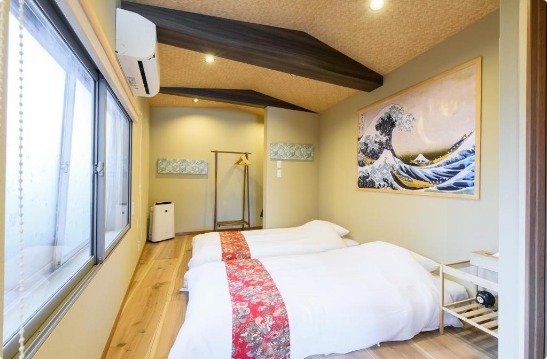
Nearest station: Saga-Arashiyama (JR) — 8 min walk
To Togetsukyo Bridge: 6 min walk · To Tenryu-ji: 5 min walk
Best for: Full ryokan experience with kaiseki dinner and in-room baths
From: ¥45,000/night (dinner + breakfast included)
Arashiyama Benkei is an old-school riverside ryokan — think cedar corridors, tatami everywhere, and the small fleet of servers who appear and disappear silently. The upper rooms have a hinoki cypress tub on the balcony that’s heated to onsen temperatures; sitting in it at dusk with the Hozu River below is the reason people come here. The kaiseki is multi-course traditional with seasonal sashimi and grilled river fish; no fusion flourishes, just the classical sequence done well.
Not the place for you if you’re travelling with young kids or want a late night out — the building quiets down hard by 9pm and breakfast is at 8am sharp.
What’s good:
- Kaiseki dinner and breakfast are included; the value is real
- Top-room balconies have cypress tubs with river views
- Staff service is textbook classical ryokan — memorable in itself
What’s not:
- 8pm-ish dinner seating means your evening gets shaped around it
- No lift in the old wing — ask for a ground-floor room if stairs are an issue
Check prices at Arashiyama Benkei on Booking.com
Togetsutei — Best Onsen Ryokan
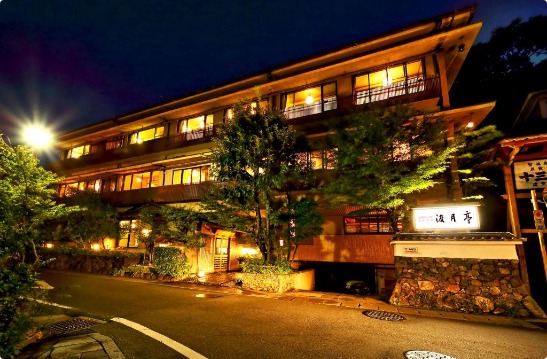
Nearest station: Arashiyama (Hankyu) — 4 min walk
To Togetsukyo Bridge: 2 min walk
Best for: Travellers who specifically want an in-town onsen
From: ¥38,000/night (dinner + breakfast included)
Togetsutei (also sold on Booking.com as Kyoto Arashiyama Onsen Ryokan Togetsutei Syuzakaku) has the closest thing to a proper onsen in the Arashiyama area. The hot-spring water is trucked in from a real onsen source (not local groundwater), and the rooftop open-air bath is one of the nicer city-adjacent baths in Kansai. Rooms are tatami-traditional with big river-view windows in the higher categories.
Food-wise, Togetsutei is slightly less refined than Benkei but the portions are larger; pairings are more generous. If you want the ryokan experience with actual spring-fed baths and don’t want to schlep out to Kinosaki for one night, this is the compromise.
What’s good:
- Real hot-spring water — rare inside Kyoto city limits
- Rooftop open-air bath is a highlight, especially in autumn
- Two minutes’ walk to Togetsukyo Bridge — closest to the heart of Arashiyama
What’s not:
- Older building; some rooms feel dated in the non-renovated wing
- Food is generous but less refined than the top-tier ryokans
Check prices at Togetsutei on Booking.com
Types of Kyoto Accommodation
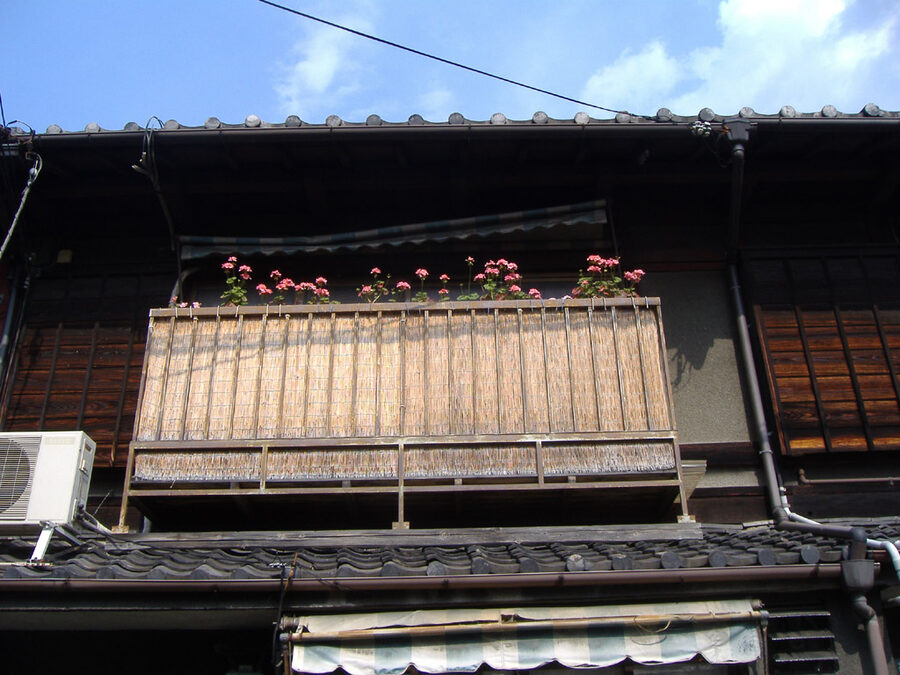

Most guides stop at neighbourhoods and lists of hotels. The shape of where you stay — hotel, ryokan, machiya, guesthouse — matters nearly as much as the location.
Hotels are what the global booking sites understand. A room, a front desk, a breakfast buffet, maybe a gym. For most first-timers, that’s what you want for most of the nights. Low friction.
Ryokan are the older, quieter sibling. Tatami floors, futon bedding rolled out by staff, multi-course kaiseki dinner served in your room or a private dining room, traditional shared bathing culture. A ryokan night is a two-meal commitment; dinner usually starts at 6 or 7pm and breakfast at 8am sharp. One night in a proper ryokan is a highlight of any Japan trip. Three nights is a lot. I’d do one night, two at most.
Machiya are the wooden townhouses you see all over central Kyoto — narrow frontage, long interiors, courtyard gardens. Many have been converted to whole-house vacation rentals that sleep two to six. They’re brilliant for groups or couples on long stays; you get the Kyoto architectural experience without the ryokan schedule. Downsides: no front desk, no daily cleaning, and no staff to tell you which restaurant is good tonight. Airbnb’s machiya listings are heavily regulated now and most legal ones operate as licensed minpaku — look for that word in the listing.
Business hotels (Mitsui Garden, APA, Toyoko Inn, Dormy Inn) are the Japanese invention that backpackers rediscover every generation. Small rooms, spotless, usually with a free top-floor public bath, all under ¥18,000. For a solo traveller on a budget these outperform any Kyoto hostel I’ve stayed in.
Guesthouses range from very good (K’s House, Piece Hostel) to mediocre. For groups it’s often the machiya or a business hotel that wins on cost per bed.
Peak Season Pricing: What You’re Actually Paying For
Kyoto has the steepest peak-season curve of any Japanese city I track. Here’s the rough shape:
- Late March to early April (cherry blossom, sakura) — two to three weeks of peak. Hotel rates 1.8x–3x the winter rate. Top luxury sells out 6+ months in advance for prime weekends. Business hotels sell out 2–3 months ahead.
- First three weeks of November (autumn colour, koyo) — similar curve, slightly narrower. The last week of the month sometimes extends if the weather stays mild.
- Golden Week (late April through early May) — domestic holiday. Rates jump 1.5x, everywhere is busier, but not as catastrophic as sakura.
- Obon (mid-August) — another domestic peak. Humid, hot, still priced up.
- Last week of December through early January — the hidden shoulder. Tourist numbers drop sharply, temples get quieter, and some years you get snow on the rooftops. Cheaper than summer.
- January, February, June, September — cheapest months. You trade weather (cold rain in Feb, humid rain in June) for prices that are often half of peak.
One tactic that actually works: if you can’t travel outside peak, book late. A lot of travellers panic-book cherry-blossom dates six months out, then their plans shift, and the cancellations release in the 2–4 week window before arrival. I’ve picked up Celestine Gion rooms at three-week lead time for 40% less than the same rate showed at six months out. Not reliable, but the option exists.
The Contrarian Take — What Most Guides Get Wrong
Three opinions I’ll stand behind after more trips here than I’d care to count.
Gion is overrated for sleeping in, underrated for walking through. The mistake most guides make is treating Gion’s visual drama as a 24-hour selling point. It isn’t. You want Gion at 6am and 9pm — silent, lantern-lit, residents walking dogs. That argues for staying nearby (Southern Higashiyama, or a Downtown hotel fifteen minutes’ walk away) but against making Gion itself your base. Stay there if you want those morning windows; don’t stay there because the photos of afternoon Gion seduced you.
Kyoto Station is not a compromise. It’s a strategy. Every guide writes up Kyoto Station as the “last resort” option. But if you’re only in Kyoto for two nights — and you’re doing a day trip to Nara on day one and one to Osaka on day two — being inside the station is measurably better than being in Gion. You save an hour of daily transit. That’s enough to do an extra temple, an extra meal. Don’t apologise for it.
One night in Arashiyama beats three more in central Kyoto. This is the switch more repeat visitors make. Once you’ve done the dense temple circuit, a night at Suiran or Benkei gives you something you can’t get in the city: bamboo grove mornings with no humans in them, Togetsukyo at first light, a proper meal in a proper room. Treat it as a small mountain-onsen escape bolted onto the city. The combined trip is more interesting than three extra Downtown nights.
The Short-Version Summary: Where to Book by Trip Type
If you want to skip back up and re-read the hotel descriptions, pick the one that matches you:
- First visit, 3–5 nights, mid-budget: Nol Kyoto Sanjo, Downtown. Three minutes from the subway, a decent courtyard bar, everything on foot.
- First visit, 3–5 nights, big budget: The Ritz-Carlton Kyoto, Downtown. Or Four Seasons in Southern Higashiyama if the garden matters more than the walk.
- Couples, atmosphere first: The Celestine Kyoto Gion. You’ll be three minutes from Yasaka Shrine and four from Shirakawa.
- Honeymoon, money no object: Park Hyatt Kyoto (for the view), Four Seasons (for the garden), or Suiran in Arashiyama for one or two of the nights.
- Short stays, one or two nights: Hotel Granvia Kyoto. Inside the station, breakfast buffet is good, zero friction.
- Families, two medium kids: Mitsui Garden Hotel Kyoto Station. Bigger rooms, free top-floor public bath, right by the station.
- Solo, budget: Sakura Terrace The Gallery. One stop south of the station, under ¥15k in low season.
- Second or third visit, quiet mornings: The Westin Miyako Kyoto or Hotel Okura Okazaki Bettei. Walk out onto the Philosopher’s Path before breakfast.
- First ryokan experience, in-town: Nishiyama Ryokan, Downtown — the kaiseki is the bit to lean into.
- Full ryokan experience, one night, countryside feel without leaving Kyoto: Arashiyama Benkei. Cypress tub on the balcony, quiet village around.
If you’re planning the rest of the trip, our Kyoto Station area guide covers the temples and food within fifteen minutes of wherever you drop the bags. The Miyama village day trip is worth a look if you’re here four nights or more and want an afternoon out of town. And our four-day Kyoto itinerary is the one I usually hand people when they want a plan rather than a list.
For reservations beyond what’s listed here, the Kyoto City Tourism Association keeps a reliable official accommodation list that’s worth cross-referencing if you’re booking something niche.