One day. Kyoto overload in a good way. This bus tour packs Kyoto’s biggest sights into one smooth route, with a real guide talking history as you move between World Heritage temples and shrines.
I especially like two things: first, the human factor. Guides such as Den and At-Chan have real energy, and At-Chan has even helped solo travelers with photos and taught useful Japanese words on the bus. Second, the value is practical: you get ticketed entry for key sites plus a comfortable air-conditioned coach with Wi‑Fi, so you’re not piecing together transport and admissions all day.
One caution: it’s a long, active day. You’ll walk stairs and hills, and the lunch option is not designed for Muslim-friendly, allergy-friendly, lactose-free, or gluten-free needs. If that matters for you, plan around the no-lunch option.
Key points at a glance
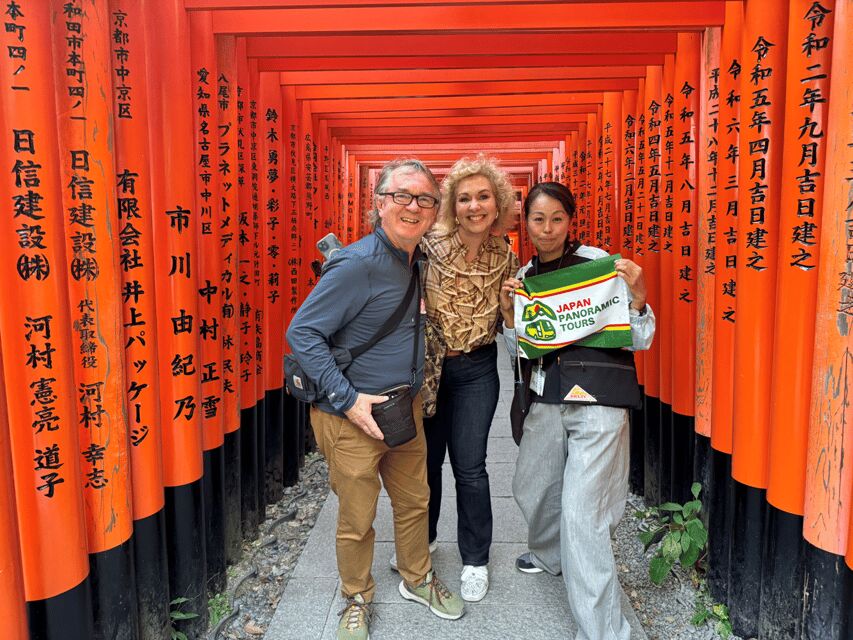
- Fushimi Inari Torii tunnel time: build-your-own “thousands of steps” memories without planning chaos
- World Heritage checklist with tickets included: Kiyomizudera, Sanjusangen-do, Tenryuji, and Kinkakuji
- A guide who keeps it moving and makes it make sense: English live commentary plus headset audio options
- Arashiyama plus bamboo forest in one block: Togetsukyo views, then a short bamboo stroll for photos
- Comfort and focus on logistics: air-conditioned coach, ventilation, and free Wi‑Fi
- Lunch is convenient, but limited: buffet is available only if you choose the lunch option
Meeting at Tully’s Coffee, then riding Kyoto’s highlights
Your day starts in front of Tully’s Coffee (Kyoto Avanti Store). Check-in is at 7:50 AM and the bus departs at 8:00 AM, so treat this like a true morning mission. The payoff is that you get to see Kyoto before the crowds fully stack up.
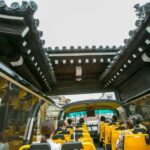
The coach is air-conditioned and set up for comfort, with free Wi‑Fi and regular ventilation. The bus also uses an antibacterial coating, which is a small thing, but it helps on a long day where you’ll be packed in with the rest of the group. You won’t be staring at your phone trying to solve trains, which is the real luxury here.
Inside, you get live commentary from the English-speaking guide, plus multilingual audio headsets. The headset languages provided are Spanish, French, Italian, German, Portuguese, and Ukrainian. In practice, this makes the tour feel less like a lecture and more like you’re moving with someone who explains what you’re looking at.
A few more Kyoto tours and experiences worth a look
Kiyomizudera: the terrace views that make Kyoto look unreal
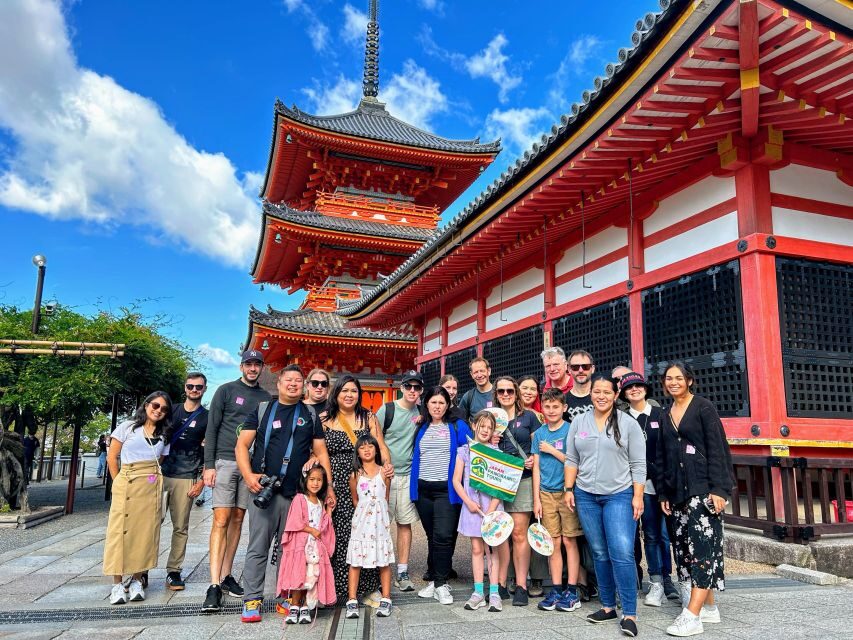
First stop is Kiyomizudera Temple, and you’ll have about an hour to take it in. This is the kind of place where your first instinct is just to look around before you start reading anything. The temple is historic, and it’s also famous for the views from its main terrace area—so even if you’re not a temple superfan, you’ll get your money’s worth in scenery.
Plan your time like this: arrive, get your bearings, then pick one main viewpoint to return to. The complex can feel like a lot all at once, especially if it’s busy, so having a “home base” helps you enjoy it rather than rush it.
Practical note: you’ll do some walking and some stairs as you move through the grounds. Wear shoes you’d be happy with in your least comfortable weather. Kiyomizudera is one of those Kyoto stops where footwear matters more than you think.
Sanjusangen-do: the 1001 Kannon moment
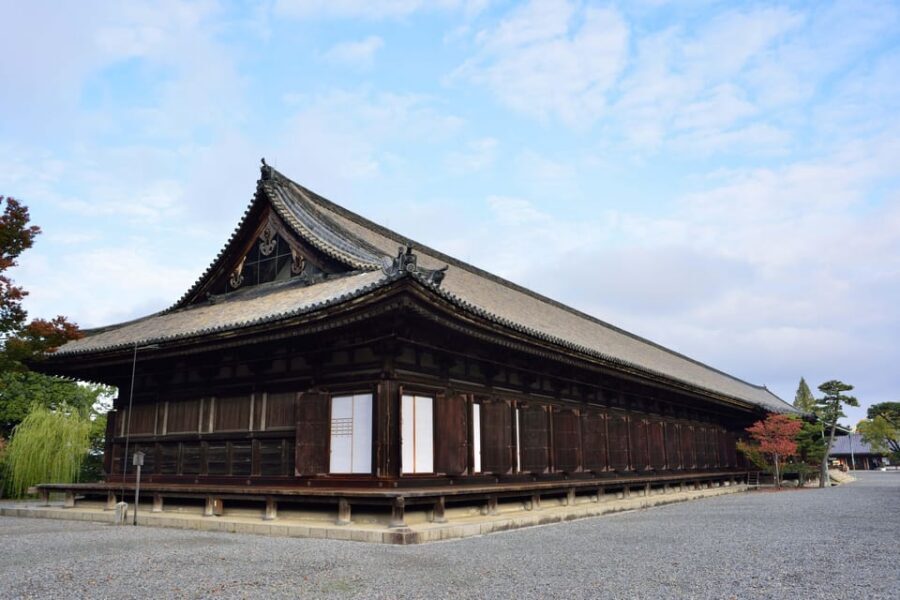
Next up is Sanjusangen-do (often called the temple of 33 spaces; its official name is Rengo-In). You get around 40 minutes here, which sounds short until you realize the hall is the main event.
Here’s what makes it special: the hall is known as Japan’s longest wooden structure, and it’s designed with multiple columns. The big emotional hook is the line-up of 1,001 Kannon statues. Even with a quick visit, you’ll feel the scale fast. It’s visual and slightly eerie in the best way—like the place is keeping watch.
If you want to get the most out of your time, don’t rush to photos only. Spend a minute looking first, then take a few pictures from one or two angles. The statues repeat in a way that makes you start noticing details after you stop scanning for a “perfect shot.”
Arashiyama lunch by Togetsukyo Bridge: rhythm, food, and river views
After the temple portion, the tour moves into Arashiyama. You’ll get time for lunch and sightseeing, with about 50 minutes on the clock for this segment.
Arashiyama works well in a bus tour because it’s not just one site. It’s a district with the famous Togetsukyo Bridge area, plus shops and atmosphere nearby. The bridge is the central visual anchor, and having lunch while you can glance toward the water keeps your brain from going into “temple fatigue.”
The lunch is a Japanese buffet made with seasonal ingredients if you select the lunch option. The data here also matters for planning: vegetarian dishes are available, but the tour states there are no Muslim-friendly, allergy-friendly, lactose-free, gluten-free, or vegan-friendly meals. If you have serious dietary restrictions, it’s smart to choose the option without lunch and then eat on your own during Arashiyama free time.
One note from real experiences: a few people found buffet items weren’t always served hot. That’s not a deal-breaker, but it’s a good reason to keep your expectations flexible and bring a backup snack if you’re sensitive to temperature.
Sagano Bamboo Forest: a quick walk with big photo payoff
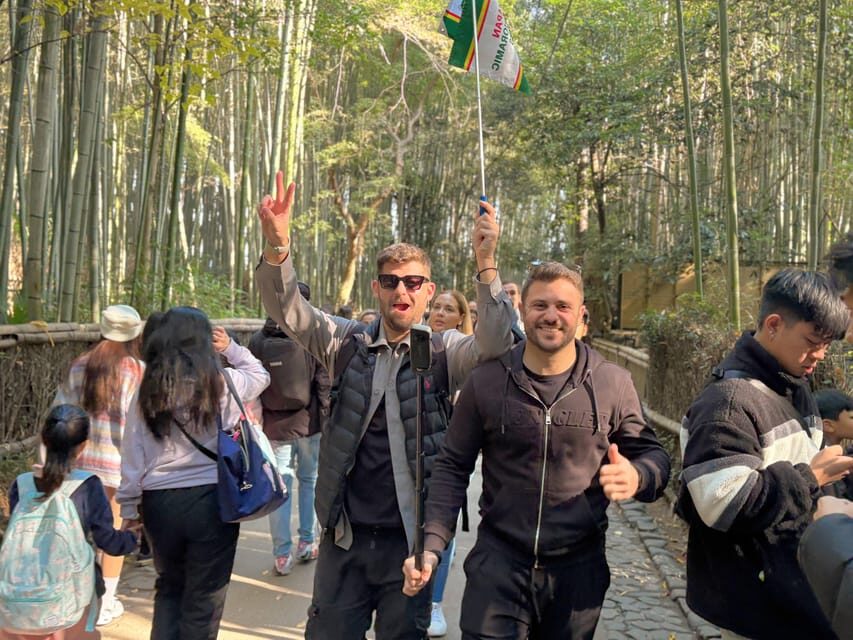
After lunch, the schedule hits Sagano Bamboo Forest (also called the bamboo grove area). You’ll have about 20 minutes for a photo stop and walk.
Here’s the thing about bamboo: you don’t need a long hike to get the effect. The paths cut through tall stalks, and when there’s even a light breeze, the movement makes the whole place feel alive. The time is short by design, and that’s exactly why this works in a one-day format. You’ll get the mood without losing the entire day to slower walking.
Wear breathable but supportive shoes. Even a “short” bamboo stroll can be slippery depending on weather. Also, plan to be patient with photo timing—this is the kind of spot where everyone wants the same angles.
A few more Kyoto tours and experiences worth a look
Tenryuji Temple: gardens that reward slow looking
From the bamboo area, you’ll reach Tenryu-ji Temple, with about 30 minutes. Tenryuji is known for its Japanese gardens, which are registered as a World Heritage site.
This is one of those stops where you can either sprint around or actually notice what the garden is doing. Since you only get a half hour, I suggest you choose one “direction.” Walk in, take in the layout, then return to a main viewing area before you leave.
If the group is moving quickly, don’t feel pressured to keep up with everyone’s pace. Try to anchor yourself: one viewpoint, one short rest, and then a couple more angles on your way out. Tenryuji is a “quiet payoff” stop, and you’ll enjoy it more if you give it that little bit of attention.
Kinkaku-ji: the Golden Temple glow up close
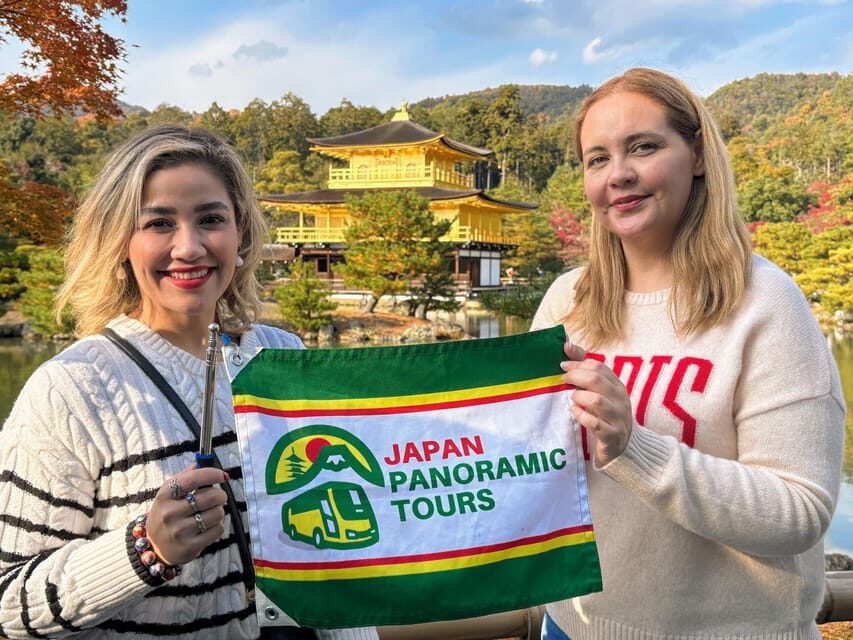
Then comes Kinkaku-ji, the Golden Temple, also connected to Rokuon-ji. You’ll have around 40 minutes, which is usually enough to see it from the main viewing perspective, then walk around for closer details.
Kinkaku-ji is famous for a reason. In bright light, the gold effect can look almost unreal. But the best part isn’t just the shine—it’s the contrast. You’re standing in a temple setting that feels formal and controlled, while the crowd energy is anything but. If you let the place settle you for a moment, it’s a surprisingly emotional stop.
Pro tip for photos: shoot from at least two distances. Up close captures texture, while farther shots show how the building sits within the landscape. That way you don’t end up with only one kind of picture.
Nijo Castle pass-by: a brief bonus on the way to Fushimi Inari
The tour also includes a pass-by of Nijo Castle. That’s not time for a full visit, so don’t plan on it as part of your “must-see list.” Still, it’s useful as a visual checkpoint. If you’re the kind of person who likes having a shortlist for your next trip, this pass-by gives you a mental breadcrumb.
Then it’s onward to the biggest finale.
Fushimi Inari Taisha: the torii tunnel walk you’ll remember
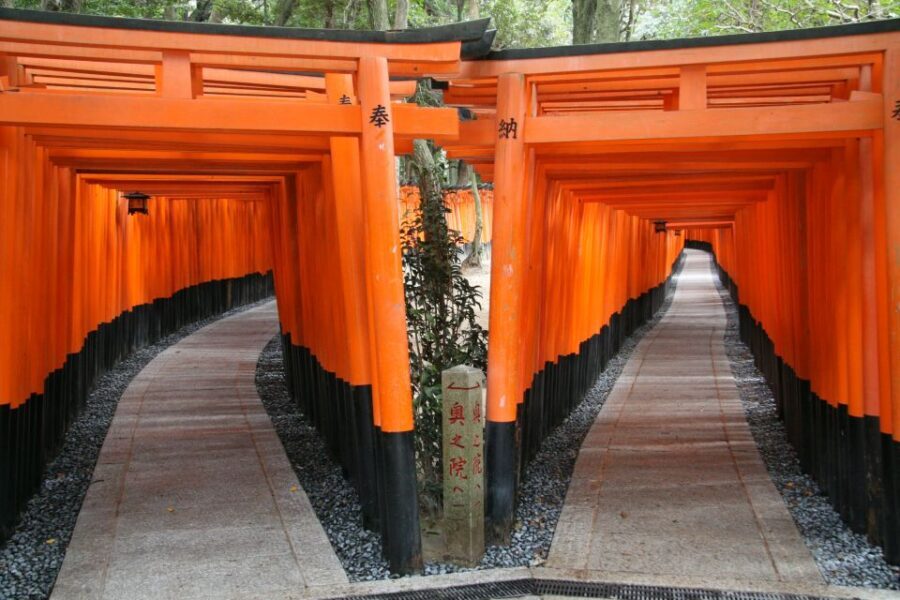
Finally, you reach Fushimi Inari Taisha, with about an hour for the visit and the most iconic moment on the entire itinerary. This is the place everyone pictures: the long path where you walk under thousands of red torii gates.
This stop is special because it changes as you walk. At the start, you’re surrounded by gates everywhere. As you go deeper, the tunnel effect gets stronger and the crowd tends to thin out. You don’t need to chase the furthest point to get the magic. Even a moderate walk can feel like stepping into a red corridor.
A practical plan for the hour:
- Start by walking at an unhurried pace.
- Stop once for a view/photo, then keep moving.
- If you feel good, go a bit farther; if you’re tired, turn back and enjoy the gate repetition on the return.
This is also one of the reasons comfortable shoes matter. The terrain includes stairs and uneven spots in places, and your legs will remember it later.
When you’re done, the tour finishes back at Kyoto Station, which is convenient if you’re continuing your day trip plans or heading to another part of Japan.
Price and value: is $122 per person a smart move?
The price for this tour is listed at $122 per person for about 9 hours. To judge value, look at what you’re getting without extra work:
- Transportation in an air-conditioned coach with free Wi‑Fi
- Live English guide commentary
- Headsets for multiple additional languages
- Ticketed entry included for several major stops, including Kiyomizudera, Sanjusangen-do, Tenryuji, and Kinkakuji
- A planned route that covers a lot of Kyoto in one day
What you’re not getting is just as important:
- Meals and drinks beyond the optional lunch
- Hotel pickup and drop-off
For many visitors, the biggest value is not just savings. It’s the removal of decision stress: you don’t have to map routes between widely spaced areas, line up for tickets at each stop, and then worry about timing. If you have limited days in Kyoto, this “efficient hit list” style fits the reality of travel.
If you’re the type who enjoys bouncing between neighborhoods on your own schedule, this might feel fast. But if you want to see Kyoto’s best-known sites without spending half your day figuring it out, it’s good value.
Who should book this tour, and who should skip it
This tour is a great fit if you:
- Want Kyoto highlights in one day rather than spreading it across multiple days
- Appreciate historical context and want a guide to explain what you’re looking at
- Like group convenience: transport, tickets, and timing handled
It’s less ideal if you:
- Need wheelchair access or mobility support. The tour states it is not suitable for wheelchair users or people with mobility impairments
- Have serious dietary needs that the included lunch option can’t cover. The lunch option does not provide Muslim-friendly, allergy-friendly, lactose-free, gluten-free, or vegan-friendly meals, so you’ll likely want the no-lunch option and plan your own food
If you’re traveling solo, the guide support can be a real plus. People have described guides like At-Chan helping with photos, which can make a big difference when you’re trying to capture memories without constantly asking strangers.
The guide factor: Den, At-Chan, Sakura, Mai, Tommy, and more
One pattern from the experience is that guides do a lot more than read facts. People have named guides such as Den, At-Chan, Sakura, Mai, Tommy, Ciel, and Hiroko, and many comments point to the same themes: friendly energy, clear explanations, and helping the day run on time even when the itinerary is packed.
That matters because this tour is dense. It’s not a slow scenic bus ride with one stop. You’re moving through multiple major sites, and the guide’s job is to keep your attention, give context, and help everyone transition smoothly.
You’ll also sometimes get helpful in-the-moment extras. For example, there are reports of umbrellas being provided when needed, and of guides using games and humor on the bus between stops. These are small touches, but on a long day, they keep the mood up.
Should you book Kyoto’s Fushimi Inari plus Golden Temple day?
Book this tour if you want a high-output Kyoto day with major sights and real guidance, without wrangling transport and tickets. The combination of World Heritage stops, the torii tunnel finale, and included admissions for multiple highlights makes the time feel well spent.
Skip or rethink if you hate walking hills and stairs, need strict dietary accommodations that the lunch option can’t support, or you prefer a slower, neighborhood-by-neighborhood Kyoto.
If you do book, my best advice is simple: treat it like an athletic day with cultural rewards. Bring comfortable shoes, keep your expectations realistic for a buffet lunch, and save your energy for the big finish at Fushimi Inari.
FAQ
How long is the Kyoto Fushimi Inari, Kinkakuji, Bamboo Grove 1 Day Bus Tour?
The duration is listed as 510 minutes, which is about 9 hours.
Where does the tour start, and when does it depart?
It starts in front of Tully’s Coffee (Kyoto Avanti Store). Check-in is at 7:50 AM and departure is at 8:00 AM.
What’s included in the tour price?
Included are the tour guide, transportation by air-conditioned vehicle with Wi‑Fi, audio headsets (Spanish, French, Italian, German, Portuguese, Ukrainian), and entry tickets for Kiyomizudera Temple, Sanjusangen-do Temple, Tenryuji Temple, and Kinkakuji Temple.
Is lunch included?
Lunch is only included if you choose the option with lunch. The lunch is a Japanese buffet. The tour notes vegetarian dishes are available, but there are no Muslim-friendly, allergy-friendly, lactose-free, gluten-free, or vegan-friendly meals.
What languages are available?
The live tour guide is in English. Audio headsets are provided in Spanish, French, Italian, German, Portuguese, and Ukrainian.
Is the tour suitable for wheelchair users?
No. The tour is not suitable for wheelchair users or people with mobility impairments, and it involves walking stairs and hills.