Turning soybeans into something you can taste.
This Kyoto class is simple in concept and satisfying in the details: you learn how Japanese tofu is made, then eat it right after it’s made. I like that it focuses on the real difference between hand-made tofu and the factory stuff, not just the story around it.
Two things I especially like: you get hands-on practice that makes the process feel real, and you taste multiple tofu styles made during production, including soy milk and oboro-dofu. One heads-up: you won’t get a full meal here, so plan around the fact that what’s included is mostly tofu tasting.
In This Review
- Key things you’ll notice
- From soybeans to Kyoto tofu: what this class teaches
- Inside the 90 minutes: what the flow feels like
- Soybeans matter: the lesson behind the first step
- The fresh-taste moment: eating tofu straight from production
- Four tofu dishes: why “variety” here is actually a lesson
- Who leads the class and what small-group means for you
- Price and value: is $56 worth 90 minutes of tofu?
- Diet notes: vegan, halal, gluten-free, and allergies
- Finding the place near Shijo or Karasuma stations
- Practical tips before you go
- Should you book this Kyoto tofu workshop?
- FAQ
- How long is the Kyoto tofu-making masterclass?
- Where is the meeting point?
- How many people are in the group?
- What does the price include?
- Are meals or drinks included?
- Is the class available in English?
- Is the experience suitable for gluten-free, vegan, halal, or allergies?
- What is special about this class compared to just eating tofu?
- Is it easy to reach from central Kyoto?
Key things you’ll notice
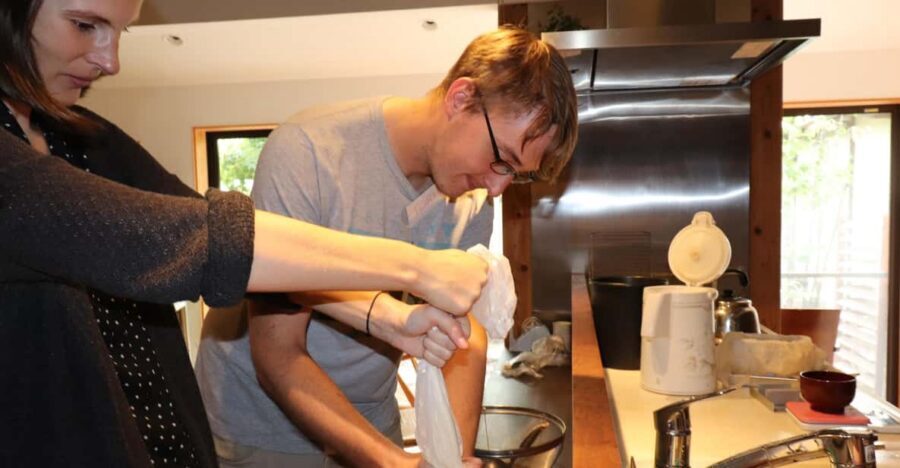
- Hands-on tofu making from soybeans, not a demo
- Soymilk and oboro-dofu served as part of the production process
- Four tofu dishes built from what you make
- Small group size (up to 6) for real Q&A time
- English/Japanese instruction with dietary accommodations available
From soybeans to Kyoto tofu: what this class teaches
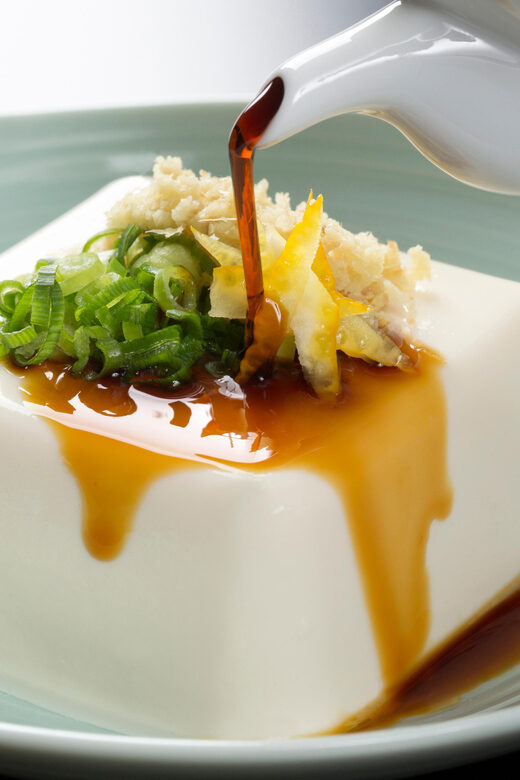
Tofu in Japan has a reputation for being different, and this workshop is a direct way to understand why. In many countries, tofu tends to be treated like an ingredient: cubed, cooked, and mixed into stir-fries and stews. In Japan, tofu is often eaten on its own—think chilled tofu—or used in lighter formats like miso soup.
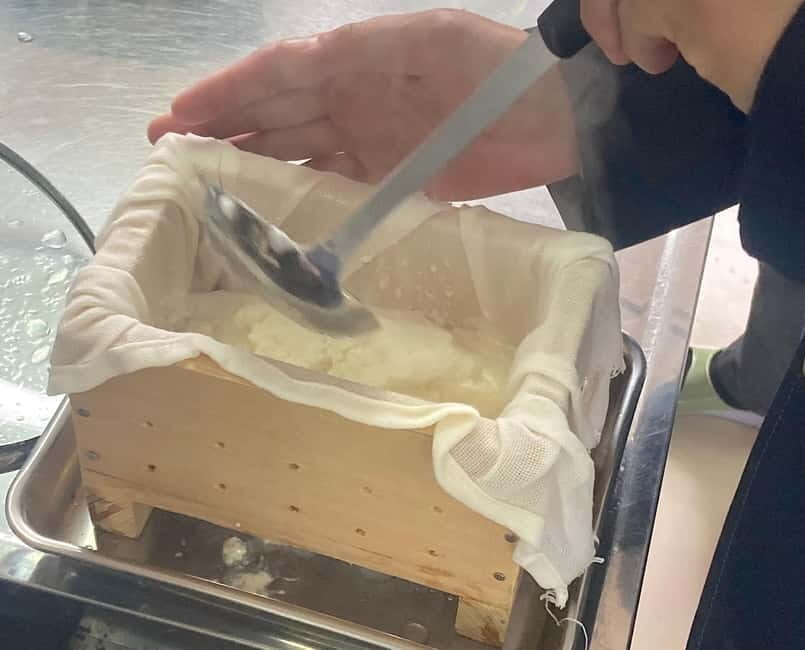
The biggest lesson I’d want you to leave with is this: hand-made tofu usually tastes and feels different even before you add anything. Texture is part of flavor here. When tofu is made by hand from soybeans, it can be thicker and more satisfying than machine-made tofu, including when you eat it plain.
And that’s what this class is set up to do. You start by making tofu, then you taste it with little to no seasoning. Then you move into several tofu dishes so you can connect the sensory dots: how softness, sweetness, and bean flavor change as the tofu is handled and served.
If you're still narrowing it down, here are other tours in Kyoto we've reviewed.


Inside the 90 minutes: what the flow feels like
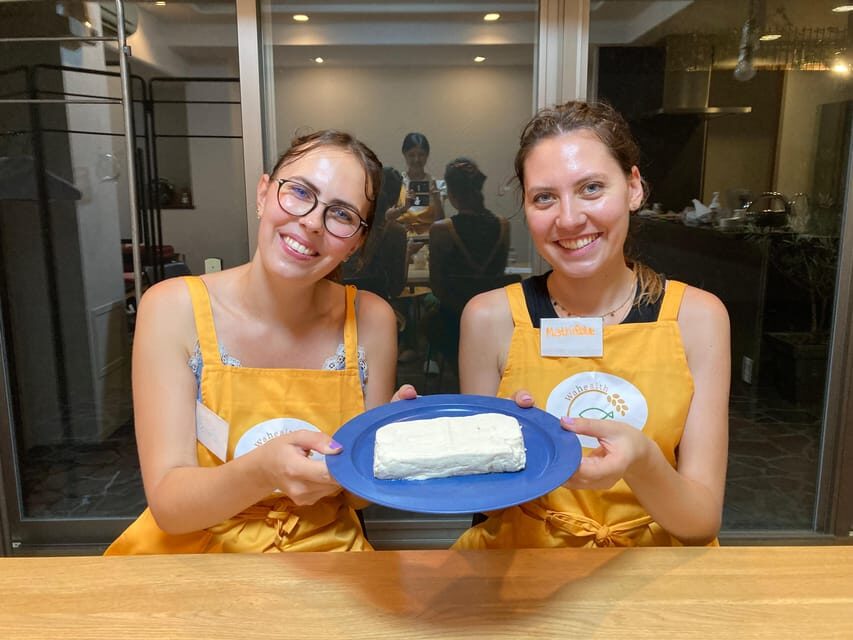
This is a tight, focused 90-minute masterclass. It’s small-group by design—limited to 6 people—so the instructor can slow down for questions and keep you moving through the steps at the right pace. The class is taught in English and Japanese, which matters because tofu-making has moments where one clarification saves you from confusion later.
A practical way to think about the timing:
- First you get oriented to tofu basics: soybean differences, how tofu is made, and how tofu is eaten in Japan.
- Then you shift into production and tasting in the same session.
- You finish by eating four different tofu dishes made from your batch.
That structure is part of the value. You’re not just learning vocabulary like chilled tofu or miso soup. You’re learning what those ideas taste like in real life, immediately.
Soybeans matter: the lesson behind the first step
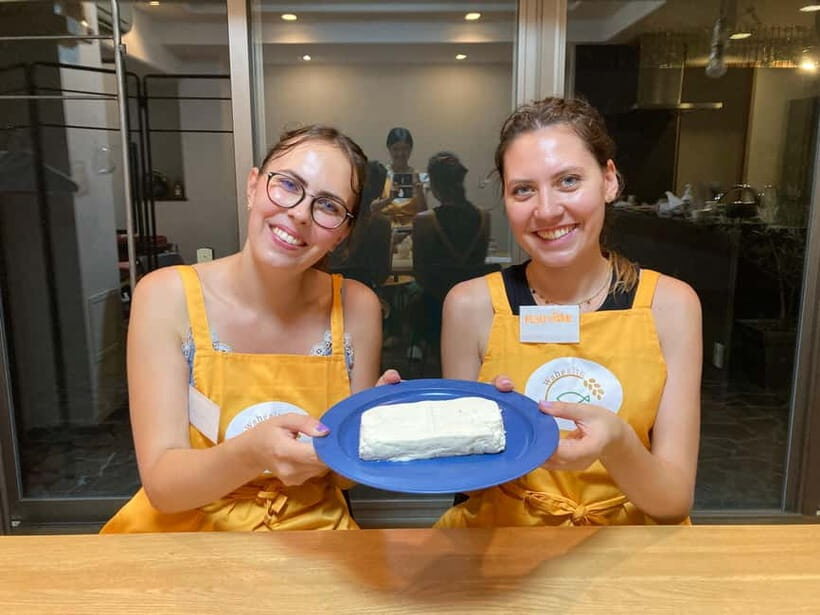
Before you touch anything, you’ll get the foundation: not all soybeans are the same, and tofu starts with those differences. The class also explains how tofu is made from soybeans and why Japanese tofu habits are different from what many people expect.
This matters for you because it changes how you’ll shop and cook later. Instead of seeing tofu as one interchangeable product, you’ll start noticing categories and uses. You’ll also understand why a dish can be “simple” in ingredients and still be complex in taste.
And here’s the small-but-important practical detail: the class is built around letting you taste tofu at different stages. So when you hear that handmade tofu has an original taste, you can verify it with your own mouth, not just nod along.
The fresh-taste moment: eating tofu straight from production
One of the best parts of this experience is exactly when you eat it. You can enjoy freshly made tofu, starting from the moment it’s ready. That’s not a throwaway line. Freshness is where you’ll notice the difference most.
If you’ve ever eaten tofu that tastes bland or overly firm, this is a useful contrast. Handmade tofu is often more satisfying when eaten plain because the bean flavor and the texture are front and center. In other words, you’re not covering tofu with sauces. You’re learning what tofu actually is.
A key extra here is that you’re not limited to one product. During the production process, you can enjoy soy milk and oboro-dofu. Those aren’t just snacks; they’re part of the tofu-making story. Soy milk shows you the sweetness and creaminess before curdling. Oboro-dofu gives you a sense of softer, gently set tofu textures that bridge the gap between raw soy and the final blocks.
The result is that you leave understanding tofu as a process, not just a packaged square.
Four tofu dishes: why “variety” here is actually a lesson
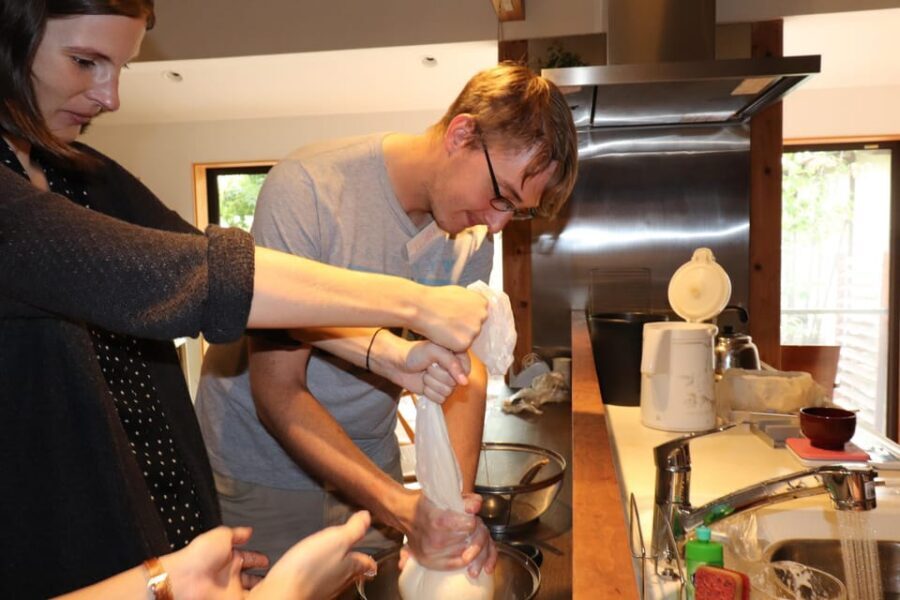
You’ll enjoy four different tofu dishes made with the tofu you make. This is one of those inclusions that sounds like standard workshop food, but the structure is smarter than it looks.
The point isn’t just to eat more. It’s to show you how Japanese eating styles shape tofu flavor and texture. Since you begin with tofu tasted in a more neutral way, each dish later becomes a “translation” of what you already tasted.
Even though the exact recipes aren’t listed here, you can still expect the dishes to be built around tofu as an ingredient with different roles:
- Some servings lean into chilled, simple enjoyment
- Some likely introduce tofu in warm or soup-like contexts, the typical Japanese use
- Some will highlight how texture changes when tofu is cut, warmed, or paired
This is the kind of tasting that helps you improve as a cook. After one session, you start thinking, Which tofu texture fits this dish? Instead of just reaching for whatever is in the fridge.


Who leads the class and what small-group means for you
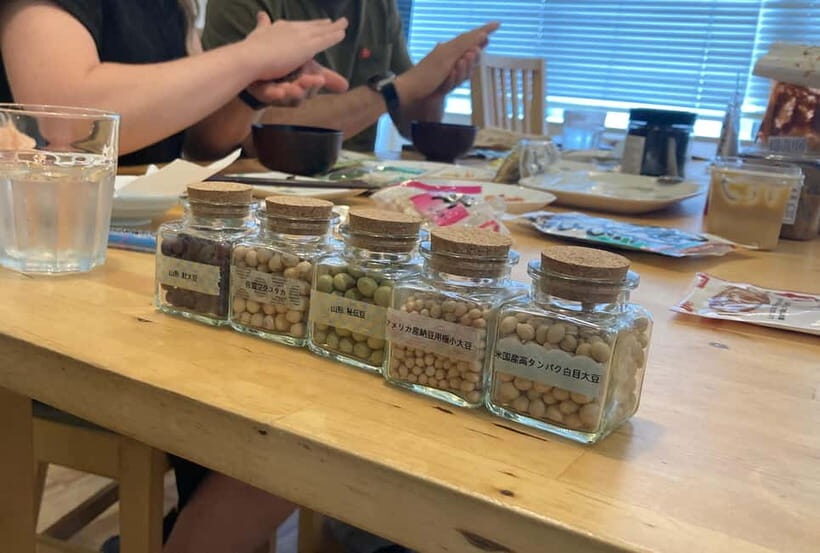
The workshop is run by Japan Association of Washoku Lifestylists. Instruction is offered in English and Japanese, which is a big deal in a food class where timing and technique matter.
From the experience, the instructor approach stands out as friendly and question-friendly. In one case, the instructor was Marie, and the vibe was described as helpful, smiling, and very good at answering questions. You’ll probably feel the same benefit: in a class limited to 6, your questions don’t disappear into the back row.
For you, that translates into better learning. You can ask why something is done a certain way, then watch how it affects the final tofu you’ll eat.
Price and value: is $56 worth 90 minutes of tofu?
At $56 per person for a 90-minute small-group class, this isn’t a budget “snack activity.” But it also isn’t a luxury-only cooking show. It’s priced like a hands-on food workshop where the main product is what you make and eat.
Here’s how I’d judge the value based on what’s included:
- You’re taught the tofu process from soybeans to final tofu
- You taste freshly made tofu
- You also taste soy milk and oboro-dofu made during production
- You get four tofu dishes using your tofu
- It’s taught to small groups, so you’re not shoved into a crowd
And on the downside side, this is not a restaurant meal. The class notes that meals and drinks other than tofu tasting aren’t included. So you may want to plan a light pre-dinner snack or make it part of a day when you’re ready for an early supper afterward.
If you want an authentic food experience that also teaches technique, the value looks solid. If you’re only curious about tasting, you might decide to do a simpler food stop elsewhere.
Diet notes: vegan, halal, gluten-free, and allergies
This workshop is gluten-free/vegan/halal-friendly/allergy-free OK, as long as you let them know your needs ahead of time. That’s an important detail because tofu is one of those foods where dietary requirements can get complicated by side ingredients.
The practical takeaway for you: if you have an allergy or dietary restriction, tell them clearly. The class says they’ll prepare ingredients accordingly, but you’ll need to do your part so they can plan.
Finding the place near Shijo or Karasuma stations
The meeting point is straightforward but easy to miss if you’re skimming. Take the elevator to the third floor, then press the doorbell for 302.
You’ll also be able to reach it easily on foot: it’s within about a 10-minute walk from Shijo Station or Karasuma Station. That makes it a good fit for a day already packed with Kyoto sights—shrines, lanes, and the usual walking.
One more practical point: the class may be held in a small space. That’s not necessarily a problem; it can actually feel more authentic because you get a real look at how the lesson fits into everyday life.
Practical tips before you go
You’ll have the best time if you treat this like a technique class plus a tasting menu.
A few tips I’d follow:
- Come with curiosity. You’ll learn more when you’re paying attention to texture and taste, not just watching hands move.
- Plan for not being fully fed. The included tasting and dishes are tofu-focused, not a full meal with drinks.
- Bring your questions. With a group limited to 6, questions are part of the value.
Also, the class offers free cancellation up to 24 hours in advance and reserve now & pay later. That can help if your Kyoto plans are still shifting day to day.
Should you book this Kyoto tofu workshop?
Book it if you want something more meaningful than a tofu souvenir stop. This class fits you if you care about taste, texture, and learning how Japanese tofu is made and eaten. The fresh tasting and the four tofu dishes make it feel like a real education, not a quick tour.
Skip it if you’re mainly looking for a big meal or you’re short on time. Also consider your expectations: this is focused on soybeans, tofu-making, and tofu dishes. It isn’t a broad Kyoto food tour.
If your goal is to understand why Japanese tofu feels different, this is one of the most direct ways to get there—right on the spot.
FAQ
How long is the Kyoto tofu-making masterclass?
The class lasts 90 minutes.
Where is the meeting point?
Meet at the location where you take the elevator to the third floor and press the doorbell for 302.
How many people are in the group?
It’s a small group, limited to 6 participants.
What does the price include?
You get instruction on tofu and soybeans, tasting freshly made tofu, and four different tofu dishes made with the tofu you make, plus an instructor introduction.
Are meals or drinks included?
Meals and drinks are not included (other than the tofu tastings).
Is the class available in English?
Yes. Instruction is available in English and Japanese.
Is the experience suitable for gluten-free, vegan, halal, or allergies?
It is listed as gluten-free/vegan/halal-friendly/allergy-free OK, and you should let them know your dietary restrictions so they can prepare ingredients.
What is special about this class compared to just eating tofu?
You make tofu from soybeans by hand, then you eat it fresh, including tasting soy milk and oboro-dofu produced during the process.
Is it easy to reach from central Kyoto?
Yes. It’s within a 10-minute walk from Shijo Station or Karasuma Station.