A single hour can teach you a whole new sound. This private koto lesson at Soushunan turns traditional Japanese music into something you can actually play, not just watch. You’ll learn the koto basics, the tradition behind it, and then work on the specific song called Sakura.
I especially love the fact that instruction comes from a real professional performer, and the teaching style is patient enough for beginners. I also like that the studio provides what you need, including the instrument and the music notation, so you can show up and start making music right away.
One thing to consider: this is a lesson-focused experience, not a walking tour. If you’re hoping for big sightseeing stops, you’ll want to pair it with other Kyoto plans before or after.
In This Review
- Key things that make this koto lesson click
- Arriving at 箏春庵 Soushunan in Kyoto
- What a 1 hour 20 minute lesson feels like
- Learning the koto basics without extra prep
- Why Sakura is a smart first song
- Tea break and a chance to watch a pro
- Price and value: what you’re really paying for
- Getting the most out of your private session
- Who should book this Kyoto koto lesson
- Should you book this koto lesson in Kyoto?
- FAQ
- How long is the private koto lesson?
- Is this a private activity?
- What song will I learn?
- What is included in the price?
- What is not included?
- Where does the lesson take place?
- Do I need to bring any musical equipment or sheet music?
- Can children join?
- Is there a tea break and a performance?
- Can I cancel and get a full refund?
- Is the koto lesson accessible for most travelers?
- Are service animals allowed?
Key things that make this koto lesson click
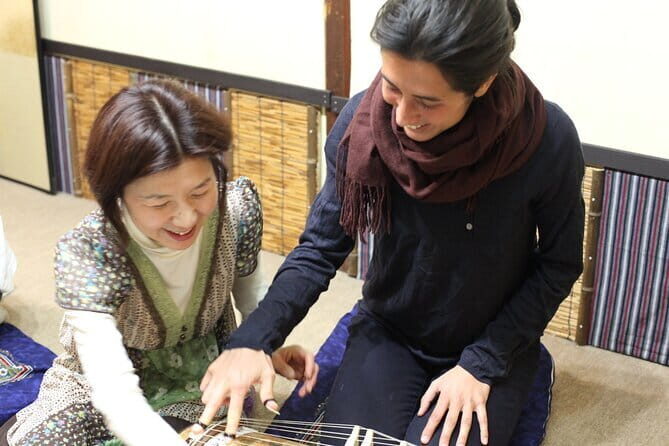
- Private class, just your group, so you can go at your pace without sharing attention with strangers
- Professional performer instruction with calm, patient guidance
- You’ll learn the song Sakura, not random notes that disappear after the lesson
- Everything is provided, including the koto and music notation
- Tea break plus the teacher’s performance to round out the experience
Arriving at 箏春庵 Soushunan in Kyoto
The experience starts right in the studio at 箏春庵 Soushunan in Kamigyo Ward, Kyoto. That matters more than people think, because you’re not hunting around for a cultural pop-up in a busy street maze—you’re walking into a space built for practicing.
This is set up as a private activity, so only your group participates. That usually means you get more direct help when your fingers hesitate, your posture feels awkward, or the rhythm isn’t landing yet.
You’ll want to plan on being there a little early. The koto isn’t something you figure out in two seconds, and the lesson timing is about getting you started smoothly, not rushing you into sound.
Other private tours in Kyoto


What a 1 hour 20 minute lesson feels like
The total time is about 1 hour 20 minutes. In practice, that’s long enough to get past the first “wait, what am I doing?” stage, but short enough that it doesn’t turn into a marathon.
The flow is simple:
- You arrive and get set up with the koto
- You learn how to handle the instrument and read the guidance
- You work on playing the chosen piece, Sakura
- You learn some context about the tradition and history
- You finish with a tea break and the teacher plays
Because it’s structured like that, you don’t leave with only theory. You leave with actual finger memory and a sense of how the koto fits into Japanese formal culture.
Learning the koto basics without extra prep
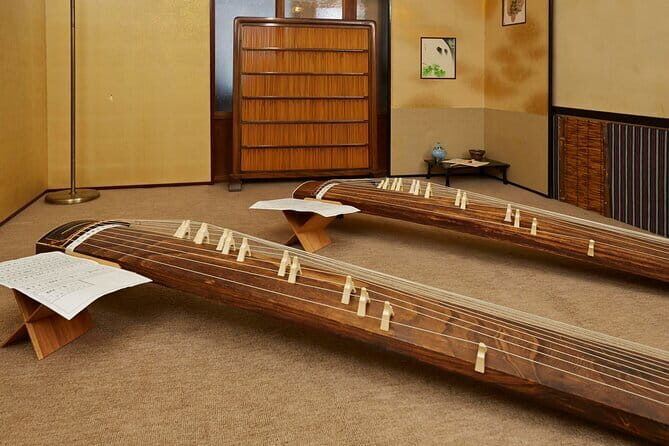
You don’t need to bring an instrument or sheet music. The lesson includes everything you need, including musical instruments and the music notation used during the session.
That’s a big value point for a beginner. When you have to hunt for materials, you lose time and confidence. Here, you can focus on the essentials: how the koto sits, how your hands move, and how to produce clear notes.
Expect guidance step-by-step rather than a “good luck” style. The instruction is led by the owner, a professional koto performer, and the teaching approach is described as kind and patient, including when kids join in.
If you’re traveling with family, this is one of the most practical cultural activities you can choose. The lesson is designed for a wide age range, from about 3 years old up through elderly participants, so the pace can flex within the group.
Why Sakura is a smart first song
Sakura is the specific piece you’ll learn. That choice is useful because it gives you a clear goal. Instead of collecting tiny fragments of technique, you work toward one recognizable performance you can piece together by the end.
Also, learning one defined song helps you understand how the koto’s mechanics translate into music. You’ll start connecting finger motion with sound, and that connection is what turns practice into progress.
During the lesson, you’ll also get some background on the tradition—why the koto matters and how it shows up in formal settings in Japan. Even if you only catch part of the story, it helps you hear the instrument differently. You’re not just pressing strings; you’re playing something with a role.
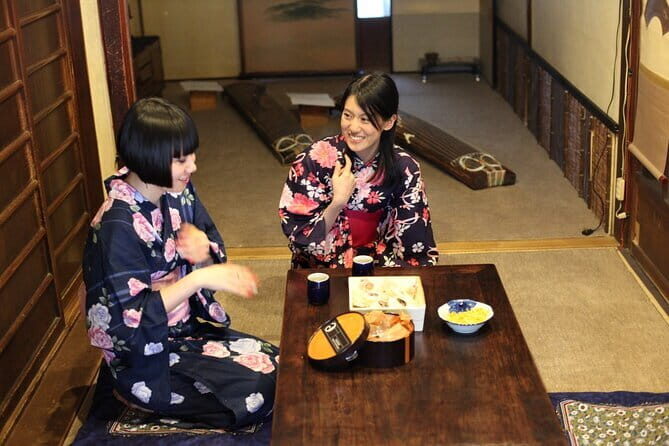
And yes, the friendly practical part matters too: the teacher helps you work through the parts you’re struggling with. One strong highlight from the experience is that participants can end up playing meaningful pieces by the end of the session, including children.
Tea break and a chance to watch a pro
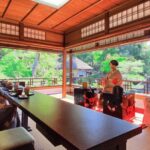
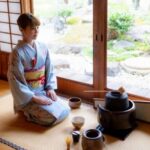
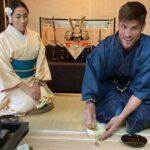
After you finish your practicing, you get a tea break. This is more than a pause button. It gives your ears a moment to reset so you can listen differently when the teacher plays.
Then you get to enjoy the teacher’s performance. That’s a great reality check. You’ll hear how the notes you were working on fit together when they’re played with experience and control.
This part often makes the lesson feel complete. You don’t just learn in a vacuum—you get a mini performance context right there in the same space where you practiced.
If you’re traveling with kids, this tea break is also a nice reset. They might start out curious, then get tired of holding attention, and the break helps them land the experience on a positive note.
A few more Kyoto tours and experiences worth a look



Price and value: what you’re really paying for
At $60 per person, this private lesson may sound simple on the surface. But in Kyoto, a private cultural experience that includes the instrument and instruction has real value—especially if you’re a beginner.
Here’s what’s included:
- all fees and taxes
- koto instrument usage fee
- lesson fee
What’s not included is private transportation, so you’ll need to get yourself to the studio on your own. That’s normal for Kyoto activities, but it matters for planning. If you’re coming from farther out, build in travel time so you don’t arrive stressed.
The experience also tends to be booked ahead, averaging about 57 days in advance. That’s a good sign of steady demand. If you have a narrow window in Kyoto, booking earlier helps you avoid having to compromise on timing.
When you think about value, focus on the goal: you want one clear outcome. This lesson is built around playing Sakura with expert help, not just sitting through a demonstration.
Getting the most out of your private session
This is a private class, so you can ask questions and adjust. If you want to maximize your progress, come ready to focus for the full 1 hour 20 minutes.
A few practical tips:
- Wear comfortable clothes that let you move your arms freely
- Don’t worry about speed at the start—clean tone and timing matter more
- Listen closely when the teacher corrects hand position or rhythm
- Treat the tea break like part of the lesson, not a break from learning
Also, keep expectations realistic. You’re learning a traditional instrument with specific technique, so the goal isn’t to become a performer in one afternoon. The goal is to leave able to play and understand what you’re doing, and that’s exactly the design of the session.
Who should book this Kyoto koto lesson
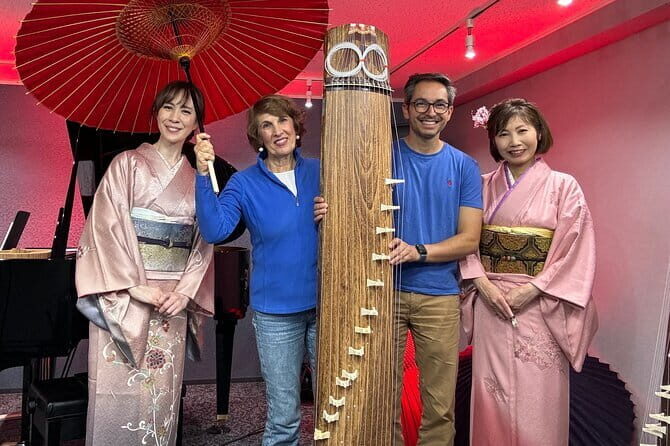
This is a strong fit if you want hands-on culture. If you only want photos of temples and don’t care about music, you’ll likely feel underwhelmed.
It’s also a great choice for families. With a wide age range supported, and a teaching style described as kind and patient, you won’t feel like the lesson only works for adults. Kids especially can do well when the instruction is paced and supportive.
I’d also recommend it if you care about authenticity. The koto isn’t a prop here—it’s taught by the owner, a professional performer who teaches both technique and tradition. That combination is what makes the experience more meaningful than a basic souvenir workshop.
And if you’re thinking about pairing it with other Kyoto plans, this works well as a half-day anchor. It doesn’t require extra gear, and it ends back where you started.
Should you book this koto lesson in Kyoto?
If you want a beginner-friendly, private way to learn a real Japanese instrument, I’d book it. For the price, you get professional instruction, the instrument and notation provided, and a full experience that includes a tea break and a teacher performance.
I’d skip it only if you’re looking for a sightseeing-heavy itinerary or you don’t want to spend your time learning an instrument. Otherwise, this is the kind of Kyoto activity that gives you a skill you can carry home in your hands, not just your camera roll.
FAQ
How long is the private koto lesson?
It lasts about 1 hour 20 minutes.
Is this a private activity?
Yes. It’s private, and only your group participates.
What song will I learn?
You’ll learn Sakura.
What is included in the price?
All fees and taxes are included, along with koto instrument usage fee and the lesson fee.
What is not included?
Private transportation is not included.
Where does the lesson take place?
The lesson starts at 箏春庵 soushunan288-2 Higashishinmeichō, Kamigyo Ward, Kyoto, 602-8162, Japan, and it ends back at the meeting point.
Do I need to bring any musical equipment or sheet music?
No. Musical instruments and music notation are available.
Can children join?
Yes. The experience encourages participation for people from about 3 years old to elderly people.
Is there a tea break and a performance?
After the lesson, you can take a tea break and enjoy the teacher’s performance.
Can I cancel and get a full refund?
Yes, free cancellation is available. You can cancel up to 24 hours in advance for a full refund.
Is the koto lesson accessible for most travelers?
Most travelers can participate.
Are service animals allowed?
Yes, service animals are allowed.