Kyoto turns into a story when you walk it. This half-day small-group east-side route pairs major sights with calmer, story-rich stops—so you don’t just photograph temples, you understand them. I especially like the local guide factor and how the pace stays human, not race-walk.
What I love most is the mix: shrine ritual, Zen quiet, classic wooden streets in Gion, and then the famous torii climb at Fushimi Inari. One thing to consider: it’s a walking day (roughly 4 hours), ends at Fushimi Inari Station, and train fare plus meals are on you.
In This Review
- Key highlights at a glance
- A 4-hour East Kyoto walk that actually makes sense
- Start at Minamiza Theater, finish near Fushimi Inari Station
- Gion first: machiya streets and the vibe of old Kyoto
- Yasaka Shrine: a 1,350-year anchor at the edge of Gion
- Kodai-ji: Zen calm near Gion (and why the timing works)
- Yasaka Pagoda (Hōkan-ji): the five-story landmark before Kiyomizu-dera
- Kiyomizu-dera: the temple that makes you look outward
- Fushimi Inari-taisha: torii gates and the Mount Inari climb
- Price and value: what your $78.04 is really buying
- The kind of guide experience you should expect
- Who should book this tour
- Tips to make the day feel easy
- Should you book Sparrow Travel’s Fushimi Inari and Gion tour?
- FAQ
- How long is the tour?
- What’s the price per person?
- How big is the group?
- Where does the tour start?
- Where does the tour end?
- What admissions are included?
- Is transportation included?
- Are meals included?
- Do I need a printed ticket?
- Can I cancel for free?
Key highlights at a glance
- Max 8 travelers means you’re less likely to get lost in a crowd
- Admissions included for Kōdai-ji and Kiyomizu-dera, with other major stops listed as free entry
- East Kyoto routing connects Gion → shrine → temple area → Mount Inari without backtracking chaos
- Guide storytelling includes more than monuments, including how Kyoto’s old culture meets modern life
- Starts at Minamiza Theater and ends at Fushimi-Inari Station for an easier finish near the torii area
A 4-hour East Kyoto walk that actually makes sense
This tour is built for people who want the highlights without treating Kyoto like a checklist. You’ll spend about 4 hours on foot through Kyoto’s eastern historic areas, moving from entertainment district streets into shrine and temple grounds, then finishing where Kyoto really goes vertical: Mount Inari.
The value isn’t only the sights—it’s the order. Gion and Yasaka Shrine set the stage with old Kyoto atmosphere. Then the walk takes you through temple culture at Kodai-ji and the iconic pagoda area before bringing you to Kiyomizu-dera. Finally, you transition to the torii world of Fushimi Inari-taisha. When the route flows like this, you feel less rushed, even with a full program.
Also, the group size matters. With a maximum of 8, the guide can adjust to the walking level in real time. You’re not trapped behind a conga line, and you can ask basic questions without feeling like you’re slowing everyone down.
A few more Kyoto tours and experiences worth a look


Start at Minamiza Theater, finish near Fushimi Inari Station
The meeting point is Minamiza Theater (Kyoto, Higashiyama Ward, near Shijo Bridge). It’s a practical hub if you’re already planning to spend your day in eastern Kyoto.
At the end, the tour finishes at Fushimi-Inari Station. That’s important because it gives you a straightforward escape route once your feet start negotiating for better conditions. The station is on the Keihan Line, and it’s described as an easy walk from Fushimi Inari Shrine. In other words, you’re not stranded far from transit after your last stop.
Two logistics notes you should plan for:
- Train transportation is not included (¥220 per person is listed as extra).
- Meals aren’t included, so decide ahead of time where you want to refuel after the tour.
Gion first: machiya streets and the vibe of old Kyoto
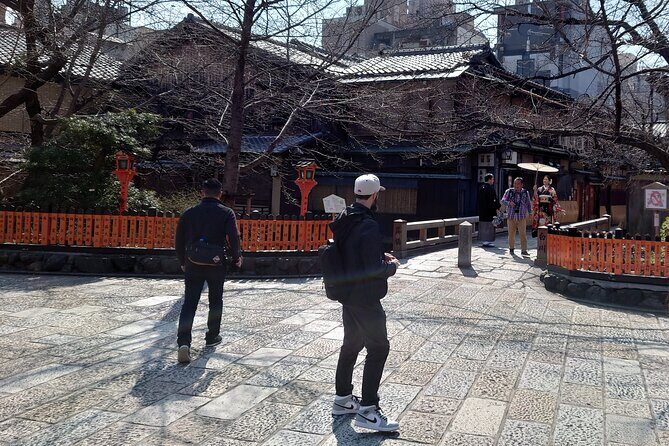
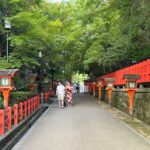
You begin in Gion, one of Kyoto’s best-known historic districts. This is the part of Kyoto that makes you slow down. The streets and traditional machiya-style wooden houses create a visual rhythm you won’t get if you only visit temple gates and souvenir lanes.
Even if you don’t chase geisha-and-maiko sightings, Gion gives you context: it’s the living neighborhood side of Kyoto’s heritage. And because you start here, you get your first dose of atmosphere before the later crowds thicken around the big-name temples.
A practical benefit of opening with Gion: it’s a gentle warm-up. It’s not “climb Mount Inari” warm-up, but it helps you get your bearings for the rest of the day—where to look, how the streets flow, and what kind of details the guide will point out as you move east.
Yasaka Shrine: a 1,350-year anchor at the edge of Gion
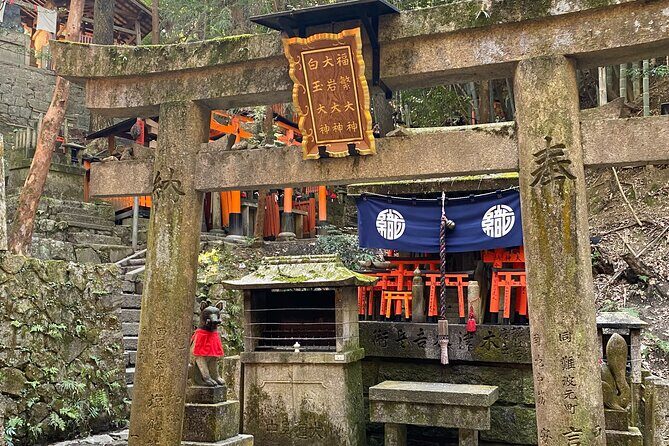
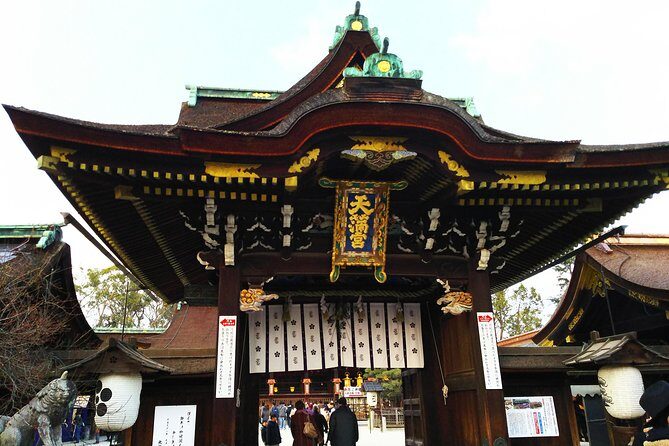
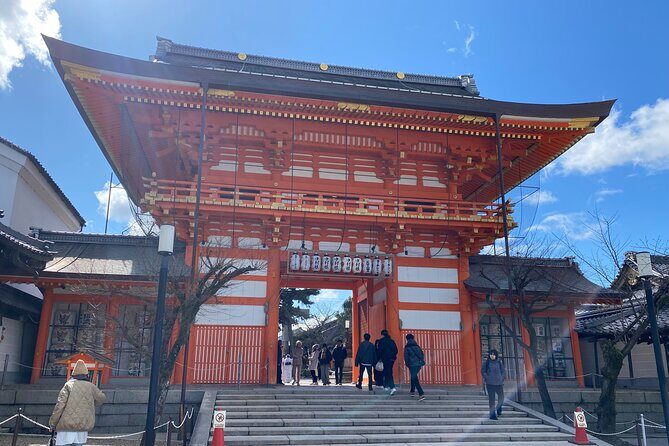
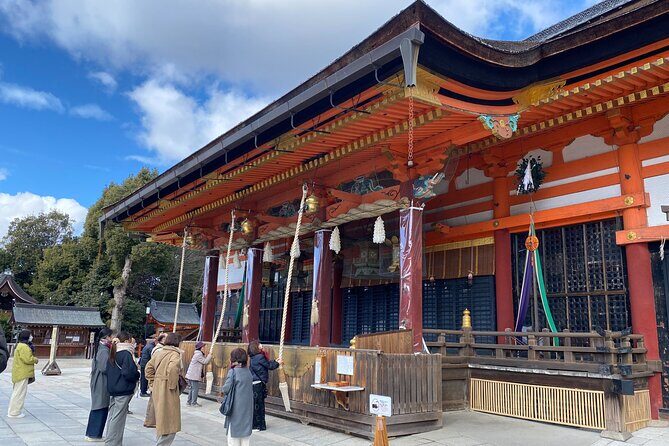
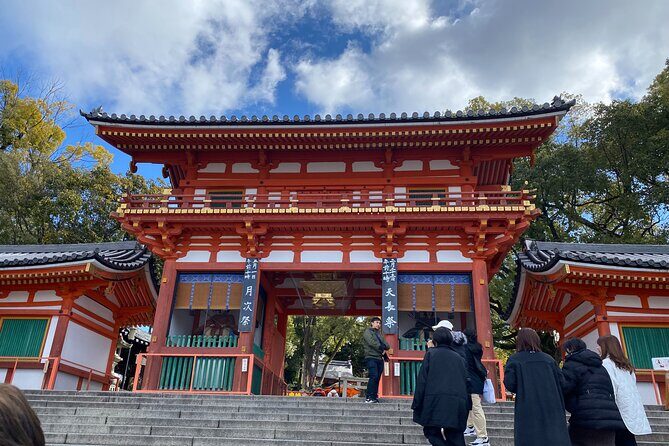
Next comes Yasaka Shrine, located at the eastern end of Gion. This shrine is described as over 1,350 years old, dedicated to Susanoo-no-Mikoto. That matters because it turns a famous landmark into a real piece of long-running belief and tradition.
You’ll have about 30 minutes here, which is enough to take in the main areas without feeling like you need to sprint for every gate and offering. Since entry is listed as free, you can focus on understanding what you’re seeing instead of checking tickets and timing.
One consideration: Yasaka Shrine is popular. If you’re sensitive to crowds, keep your expectations realistic and use the time to slow down at quieter corners rather than only walking the busiest path.
Kodai-ji: Zen calm near Gion (and why the timing works)
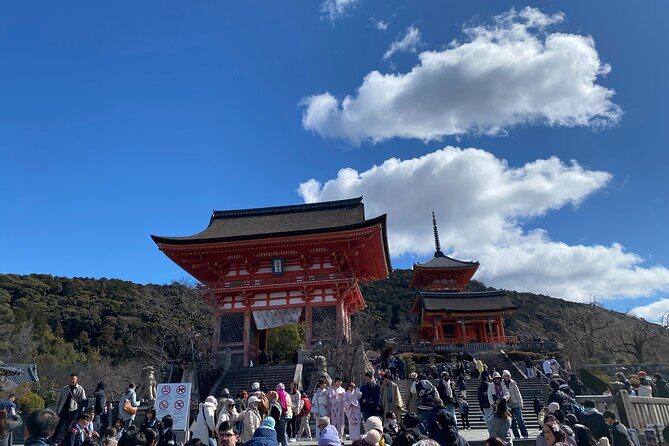
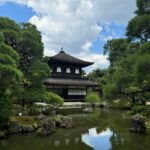
Then you shift to Kōdai-ji Temple, a Zen Buddhist temple near Gion. It’s founded in 1606 by the wife of Toyotomi Hideyoshi, so you’re stepping into a specific historical story rather than a generic temple stop. Entry is listed as included for this stop.
At about 30 minutes, it’s timed well. This is the “reset” moment in the middle of a busy sightseeing circuit. You’ll go from shrine energy into a more contemplative space, and it helps your brain process everything else you’ll see later—especially once you reach Kiyomizu-dera’s major viewpoints.
The only drawback I’d flag is that Zen spaces reward quiet attention. If you’re the type who wants non-stop action every minute, you might find yourself wanting more time to just stand and look.
A few more Kyoto tours and experiences worth a look





Yasaka Pagoda (Hōkan-ji): the five-story landmark before Kiyomizu-dera
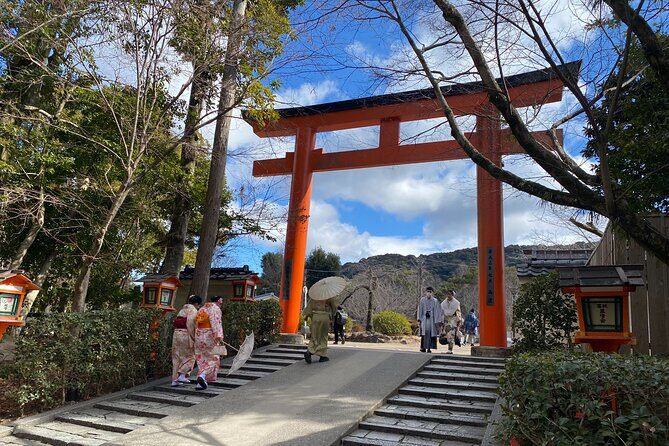
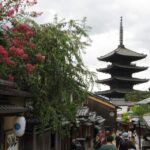
After Kodai-ji, you’ll see Yasaka Pagoda, officially known as Hōkan-ji Temple. This is a famous five-story pagoda, and the details provided say it was originally built in the 6th century.
This stop works as a visual hinge. It’s a chance to see how Kyoto’s religious architecture ties together across time—then you immediately move into the bigger spectacle of Kiyomizu-dera.
Entry is listed as free here, so you’re paying in steps and time, not extra money. The best way to enjoy it is to take a slower loop around where you can see the structure from a couple angles, rather than snapping one front-facing photo and rushing on.
Kiyomizu-dera: the temple that makes you look outward
Your next major stop is Kiyomizu-dera, founded in 778. It’s described as renowned for its wooden stage, set on the slopes of Mount Otowa in eastern Kyoto.
Entry is listed as included, and you’ll have about 30 minutes. That’s a smart length for Kiyomizu-dera. This is one of those places where your attention naturally moves outward—views, structures, and the way the temple sits on the hillside. If you only give it a quick pass, you miss the main experience.
One practical note: because it’s on a slope, comfortable shoes matter. Also, it’s a high-demand site, so expect some crowding. The guide helps you make sense of where to focus so you don’t waste time wandering.
Fushimi Inari-taisha: torii gates and the Mount Inari climb
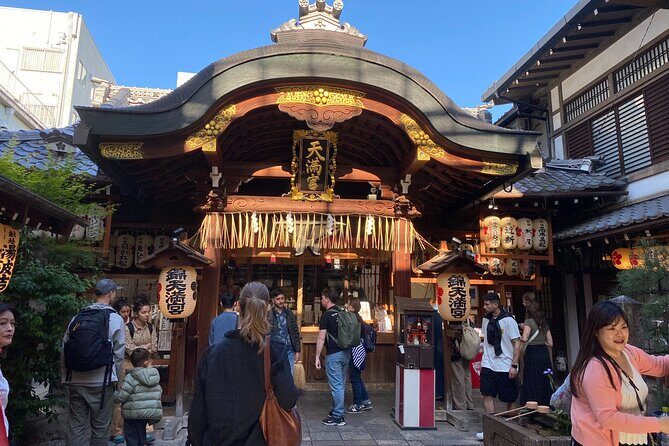
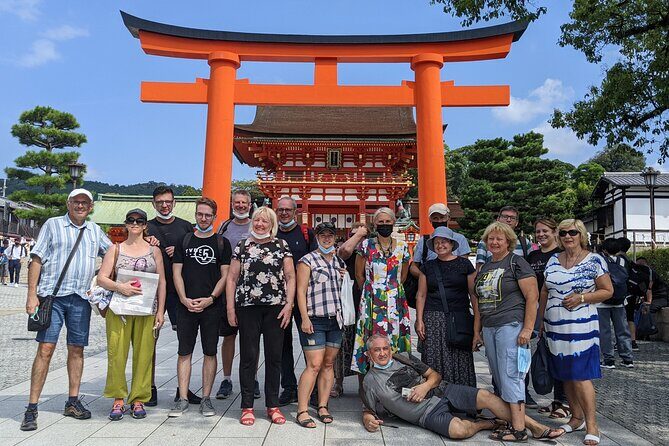
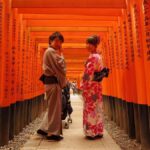
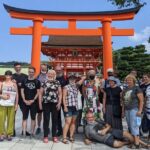
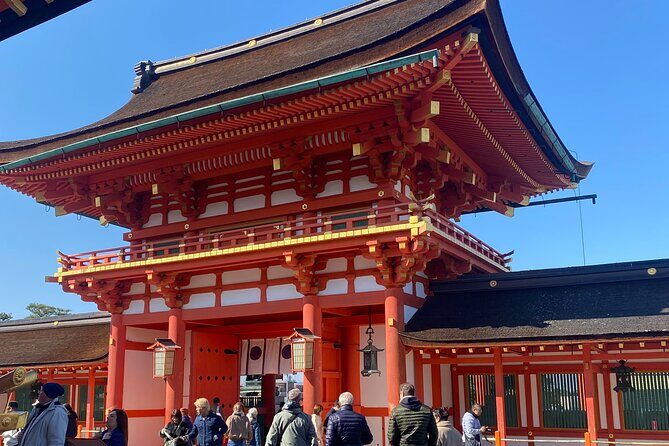
Finally, you reach Fushimi Inari-taisha, one of Kyoto’s most iconic shrines. The big draw is the thousands of red torii gates forming winding paths up Mount Inari. Entry is listed as free, and you’ll spend about 1 hour here.
This is the stop most people dream about. It’s also the stop where people’s plans matter most. With only an hour, you’ll likely choose either:
- a meaningful upward stroll to get the torii rhythm, or
- a more top-to-bottom approach that favors photos and easier pacing
The route length inside Inari can surprise you. If you’re unsure, go with the mindset that an hour is for experiencing the torii trail atmosphere, not “complete every possible path” no matter what.
The tour ending here also makes sense. You’re already at the core area. And since the finishing point is Fushimi-Inari Station, you can exit without extra repositioning.
Price and value: what your $78.04 is really buying
The price listed is $78.04 per person, for a 4-hour half-day group tour. What you’re paying for isn’t just access—it’s guided time plus key admissions.
Included costs:
- Guide costs (including a personal guide)
- Admission fees for Kōdai-ji and Kiyomizu-dera
Not included:
- Transportation by train (¥220 per person is listed)
- Meals and drinks
So is it worth it? For many first-timers in Kyoto, yes—because the “expensive” part of a day here is usually your time. With a guide, you spend less time figuring out where to go and more time understanding what you’re seeing. Add in that the group is kept to a maximum of 8, and you get something better than a rushed highlight sprint.
Where you might feel the cost is if you already know Kyoto well, or if you’re comfortable navigating the sites on your own and don’t need context. In that case, you might prefer a self-guided day. But if you want a structured flow with interpretation, this price sits in a reasonable zone for Kyoto.
The kind of guide experience you should expect
A standout theme from the guide style here is practical pacing. The tour is designed to adjust to the group’s speed, which is exactly what you want on a walking day.
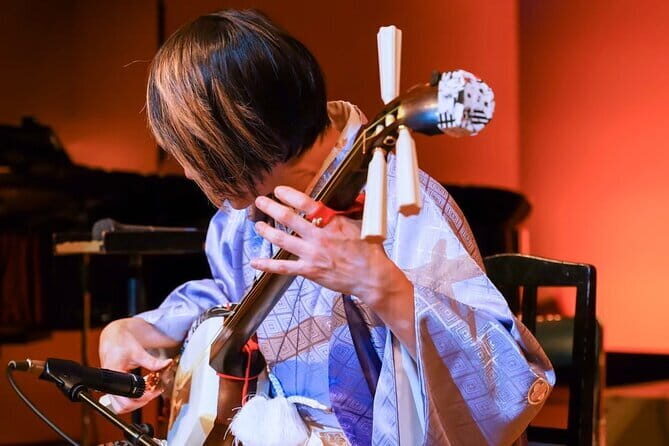
You may also get a guide who connects old Kyoto to newer Kyoto. One name tied to this tour experience is Tomoki, and the approach described includes not just temples and shrines, but also how Kyoto’s culture connects to modern life—plus mentions of traditional sweets and matcha. You won’t need to be a history student to get value from that. It just makes the day feel less like sightseeing, more like understanding.
Who should book this tour
You’ll likely enjoy this most if you:
- want a short, focused Kyoto day without overplanning
- care about the stories behind major sights like Yasaka Shrine, Kiyomizu-dera, and Fushimi Inari
- prefer a small group that can move at a comfortable rhythm
- are new to Kyoto and want a route that makes geographic sense for the east side
This is also a good option if you’re bouncing between areas and want a finish near Fushimi-Inari Station.
Who might want to skip it? If your priority is deep time in one specific temple complex, or if you dislike walking and slopes, you might find a half-day program too limiting.
Tips to make the day feel easy
I’d plan your day with a few simple rules:
- Wear comfortable shoes. Slopes and temple steps are part of the deal here.
- Carry a small water bottle. Meals aren’t included, so you’ll want something.
- Don’t over-plan the evening right away. After the torii trails, you’ll probably want a calm reset and a nearby meal.
- If you’re aiming for specific photos at Fushimi Inari and Kiyomizu-dera, accept that crowds exist. Pick your angle, not every angle.
The best results come from treating the tour like a guided walk with time to look—rather than a mission.
Should you book Sparrow Travel’s Fushimi Inari and Gion tour?
Book it if you want an east Kyoto day that hits the big icons with context, without dragging you across the city all day. The small group size, included admissions for the two major temple stops, and the logical routing make it a solid value for many visitors.
Skip it if you already have a plan to self-guide these exact areas, or if you’re traveling with limited stamina and can’t handle a walking-heavy half day.
FAQ
How long is the tour?
The tour is about 4 hours.
What’s the price per person?
The price is $78.04 per person.
How big is the group?
The tour has a maximum of 8 travelers.
Where does the tour start?
It starts at Minamiza Theater (Kyoto, Higashiyama Ward, near Shijo Bridge).
Where does the tour end?
It ends at Fushimi-Inari Station, with a short walk to Fushimi Inari Shrine.
What admissions are included?
Admission fees are included for Kōdai-ji Temple and Kiyomizu-dera. Other listed stops have admission marked as free.
Is transportation included?
No. Train transportation is not included, with ¥220 per person listed as an extra cost.
Are meals included?
No. Meals and drinks are not included.
Do I need a printed ticket?
A mobile ticket is included, and confirmation is received at the time of booking.
Can I cancel for free?
Yes. You can cancel up to 24 hours in advance for a full refund.