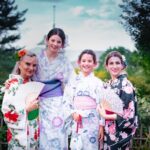
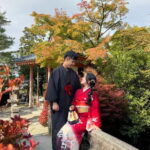
Kyoto looks different when you’re dressed for it. This private kimono photoshoot is built around Kyoto’s most photo-friendly areas, starting near Yasaka Pagoda and moving through Gion and shrine-torii sights. I like that you get 30 fully edited high-resolution photos delivered within 24 hours. One thing to keep in mind: during busy seasons, photo delivery can run later than the 24-hour target.
I also like the hands-on direction you get during the shoot. Photographers such as Mina and Josh are praised for quick guidance, clear posing tips, and smart route choices when crowds show up—so you spend more time getting good frames than figuring out what to do.
In This Review
- Key points before you go
- Why this Kyoto kimono shoot feels like a shortcut to great photos
- Meeting near Yasaka Pagoda: timing, walk rhythm, and what “private” changes
- Gion photoshoot time: lantern alleys with a guided pose plan
- Shrine entrance to Senbon Torii and hidden torii trails: the photo sequence that gives depth
- Yasaka Koshindo Temple: color, spiritual vibe, and easy solo-couple variety
- Maruyama Park in different seasons: when timing adds magic
- Kimono rental and hair set: the traditional look starts the moment you meet
- The photo delivery promise: edited set within 24 hours, downloadable links for two weeks
- Value and pricing: $164 per group up to 1, and what you’re paying for
- Who should book this and who should reconsider
- Should you book this Kyoto kimono photo session?
- FAQ
- How long is the Kyoto private kimono photoshoot?
- Where does the photoshoot start?
- What photos will I receive?
- When will the edited photos be delivered?
- Are the photos available to download after delivery?
- Is kimono and hair styling included?
- Can I get raw files?
- What languages are available for the guide?
- Is it accessible for wheelchairs, and is smoking allowed?
- What’s not included?
Key points before you go

- Private photoshoot for solo or couples with a tailored pace and dedicated attention
- Kimono rental (Normal Kimono) + hair set for that traditional look right away
- 30 professionally edited high-res JPGs sent within 24 hours (may be delayed in peak times)
- About 200 standard JPG photos per hour, plus the edited set for your favorites
- Kyoto photo circuit including Gion, main shrine entrance, Senbon Torii, and hidden torii trails
- Timed for real moments, including Yasaka Koshindo Temple and seasonal Maruyama Park backdrops
Why this Kyoto kimono shoot feels like a shortcut to great photos

A lot of Kyoto photo plans fall into one of two traps: you either wander without direction, or you follow a fixed route that everyone else is also using. This experience skips both. You’re in a kimono, you’re moving with a photographer who knows where to stand, and you’re getting coached into poses that look natural in motion (not like you’re trying hard in every frame).
The kimono part is not just costume. It instantly changes how you frame yourself against Kyoto’s stone, lantern light, and shrine architecture. Even if you’re not a model type, the structure of the session helps. You get guidance on what to do with your hands and where to look, and you’re not constantly thinking about composition.
Two practical reasons this tends to work well:
- It’s private, so the pace can match you rather than a group schedule.
- The plan is aimed at recognizable Kyoto scenes (Gion streets, temple color, torii-lined paths) without forcing you to manage camera settings and crowd flow.
A few more Kyoto tours and experiences worth a look
Meeting near Yasaka Pagoda: timing, walk rhythm, and what “private” changes

You’ll meet at 3-chōme-347 Kiyomizu, a location close to Yasaka Pagoda. The session runs 90 minutes to 7 hours, depending on what you book and what start times are available.
That time window matters. A shorter session is usually about getting the essential portraits and a tight route. A longer session gives room for more walking stops and more variation in angles—especially around the shrine and torii areas, where you’ll want a few moments for both close-up details and wider compositions.
Because it’s private, you also get flexibility if the area gets crowded. In one account, Josh was praised for switching to different spots when people showed up. That’s exactly what you want in Kyoto: good scenes, then quick adjustments when reality interferes.
Quick note: transportation isn’t included. Plan to arrive on time and on foot for the easiest start.
Gion photoshoot time: lantern alleys with a guided pose plan

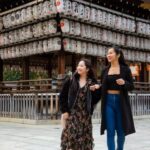
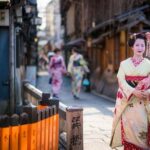
Gion is where Kyoto feels cinematic fast. In this experience, you’ll have about 1.5 hours for a photo stop in Gion, with time to stroll and shoot in the lanes associated with traditional tea-house atmosphere.
Here’s what I think this kind of Gion stop does better than a DIY plan:
- In kimono, your movement reads differently. A slow walk, a turn of the body, even pausing for a lantern-lit angle all becomes intentional.
- You’re not guessing where to stand. The photographer’s job is to find spots that don’t look like a generic “I stood here” photo.
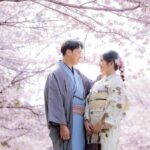
Couples also get an extra benefit. One review mentioned doing a matchy look, which makes sense: with kimono and hair together, matching fabric tones and styling can look coordinated without extra effort on your end.
If you’re the solo type, Gion can still work beautifully—especially if you want a portrait that feels Kyoto-first, not selfie-first.
Shrine entrance to Senbon Torii and hidden torii trails: the photo sequence that gives depth

This is the part that turns a portrait session into a Kyoto story.
The plan includes:
- the Main Shrine Entrance
- Senbon Torii
- Hidden Torii Trails
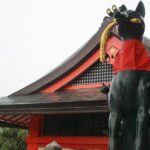
Senbon Torii is the torii tunnel look many people come to Kyoto dreaming about. The “power” of it in photos is depth: repeating shapes that naturally lead your eye into the scene. A good photographer uses that by placing you so the torii lines guide the viewer, not block your face.
The hidden torii trails (as the name suggests) are about atmosphere. Instead of only the most obvious angle, you also get to experience torii-lined pathways that feel more like a walk-through moment than just a stop-and-snap.
One practical consideration: torii areas often bring crowds. The upside is that a photographer can help you work around that—waiting for a clear moment, or switching vantage points so you don’t end up with other people stealing the frame.
Yasaka Koshindo Temple: color, spiritual vibe, and easy solo-couple variety

Another highlight is Yasaka Koshindo Temple. It’s described as vibrant and colorful, which matters because it gives you photo variety beyond grayscale stone and dark shrine wood.
This works for solo and couples because you can shoot in two modes:
- Portrait-focused frames where the temple color becomes your background
- More environmental shots where you look part of the scene, not just pasted onto it
If you want a little more drama in your final gallery—bright tones, strong vertical details, and a more “lived-in Kyoto” look—this stop tends to deliver.
Other private tours in Kyoto


Maruyama Park in different seasons: when timing adds magic

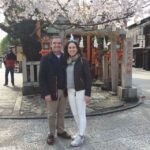
Maruyama Park is another key stop, especially noted as magical during cherry blossom season. Even outside peak bloom, parks can give you softer light and a less rigid background than strict shrine architecture.
For photos, parks often help with two things:
- Movement: walking poses look better when there’s space.
- Light: open areas can make skin tones and kimono colors look more even.
If you’re traveling around sakura time, this is one of the best reasons to pick this itinerary. Kyoto’s cherry season is short, and having a photo plan aimed at it is a smart way to get results without spending hours hunting for the perfect spot.
Kimono rental and hair set: the traditional look starts the moment you meet

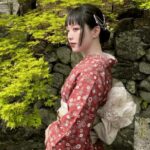
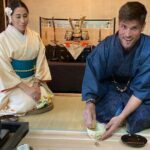
The experience includes kimono rental (Normal Kimino) and a hair set. That means you’re not trying to coordinate wardrobe + styling separately.
In practice, kimono days can be a little chaotic—time matters, and different shops handle things differently. One account noted disorganization from kimono shop staff and that the hairstylist seemed to struggle a bit, but the overall photo quality and the session experience still landed strong. The takeaway for you: show up with a relaxed mindset and give yourself buffer time if you can.
Also, the session doesn’t include an umbrella, so if rain happens, you’ll want to plan accordingly. Rain can make Kyoto pretty, but wet streets and costume comfort are real factors.
If you care about matching outfits for couples, you’ll likely appreciate the styling options and the help from the photographer. One honeymoon review specifically praised the photographer’s guidance and how happy they were with the final pictures.
The photo delivery promise: edited set within 24 hours, downloadable links for two weeks

This is where value shows up, or disappoints—so read this part carefully.
What’s included:
- You receive 30 professionally edited high-quality JPG photographs
- You also get all photos from the shoot (about 200 per hour in standard-quality JPG format)
- Delivery is aimed at within 24 hours, but delays can happen during busy seasons
- Photos are downloadable for 2 weeks after the link is sent; after that, they’re deleted
If you need photos for something time-sensitive—honeymoon posts, thank-you cards, or a printed guest book—don’t wait for the last minute. The 24-hour target is great, but Kyoto peak times can squeeze turnaround.
About raw files: they’re not included. If you want them, it costs ¥10,000 per booking.
Value and pricing: $164 per group up to 1, and what you’re paying for

The price shown is $164 per group up to 1, plus tax is included. Since the session is private and includes kimono rental and photo editing, the cost isn’t only for “someone taking photos.” You’re paying for:
- professional setup (kimono rental + hair set)
- dedicated shooting time in multiple Kyoto hotspots
- an editing workflow that produces a polished set of 30 photos
- delivery of a large number of standard JPGs for browsing
If you were to assemble this yourself, it usually becomes a chain of tasks: rental, styling, finding photo angles, booking a photographer, and then doing your own editing or paying for it. Here, you get one structured package with clear output.
One consideration: couples may need to check how group pricing works for your specific booking. The listing says per group up to 1, so if you’re booking as a couple, confirm what’s included for two people before you lock in.
Who should book this and who should reconsider
This fits best if you want:
- a solo or couple portrait experience in Kyoto
- photos that look like you planned the outfit and composition (because you effectively did)
- help posing, not just roaming
- a mix of classic Kyoto scenes: Gion + shrine/torii + temple + park
It may not fit if:
- you don’t want to wear a kimono or deal with hair styling
- you need photos instantly the same day for a strict deadline (delivery is targeted within 24 hours, with possible delays)
- you’re sensitive to walking time between stops
It also notes it’s not suitable for people over 95 years. Smoking isn’t allowed during the activity. On the positive side, it is marked wheelchair accessible, which is rare enough in Kyoto experiences that it’s worth noting.
Should you book this Kyoto kimono photo session?
If your priority is photos that look finished—kimono styling included, poses coached, and a polished edited set sent quickly—this is an easy yes. It’s especially strong for couples and for honeymoon-style memories where you want Kyoto’s scenes to feel romantic and intentional.
I’d book it if:
- you want shrine and torii photography without handling route confusion
- you care about edited results, not just “some photos”
- you’re visiting Kyoto for the first time and want the most photogenic areas covered
I’d think twice if:
- you’re traveling with a very tight photo deadline and cannot absorb possible delivery delays during peak times
- you expect transportation to be handled (it isn’t)
- rain and walking discomfort would be a problem, since an umbrella isn’t included
If you decide to go, do one simple thing: bring a calm attitude to the kimono/hair portion and let the photographer do the heavy lifting on angles and crowd timing.
FAQ
How long is the Kyoto private kimono photoshoot?
The session length can be 90 minutes up to 7 hours, depending on availability and the starting time you choose.
Where does the photoshoot start?
The meeting point is 3-chōme-347 Kiyomizu, which is described as close to Yasaka Pagoda.
What photos will I receive?
You’ll get 30 professionally edited, high-quality JPG photos. You’ll also receive all photos from the shoot (about 200 per hour in standard-quality JPG format).
When will the edited photos be delivered?
The provider aims to deliver edited photos within 24 hours, though delays can happen during busy seasons.
Are the photos available to download after delivery?
Yes. Your download link stays active for 2 weeks after it’s sent, and then the photos are deleted.
Is kimono and hair styling included?
Yes. The experience includes kimono rental (Normal Kimono) and a hair set for a traditional look.
Can I get raw files?
Raw files are not included. They are available as an add-on for ¥10,000 per booking.
What languages are available for the guide?
Live help is available in Spanish, English, Arabic, and Japanese.
Is it accessible for wheelchairs, and is smoking allowed?
The activity is marked wheelchair accessible, and smoking is not allowed.
What’s not included?
Transportation, personal expenses, and an umbrella are not included.