Make chopsticks the old-school way. In this Gion workshop, you start with simple wooden blanks and shape them into real, ready-to-use chopsticks with a traditional kanna hand plane. I especially like two things: the beginner-friendly teaching (no woodworking experience needed) and the chance to pick from different Japanese woods, each with its own look and feel.
One thing to keep in mind: if you have your heart set on a specific wood, be flexible. One review noted that only one of the advertised two wood choices was available during their visit, so arriving with a backup option in mind can save disappointment.
In This Review
- Key takeaways before you go
- Gion workshop setup: where the session starts
- Choosing Japanese wood: color and grain become part of the souvenir
- The kanna carving step: where the calm comes from
- Sanding, natural oil, and the comfort test
- Optional engraving: making them truly yours
- Price and value: $15.25 for real craft time
- Who should book this workshop?
- Should you book this chopsticks workshop in Gion?
- FAQ
- How long is the Kyoto chopsticks making workshop in Gion?
- How much does it cost?
- Where is the meeting point?
- Do I need prior woodworking experience?
- What about choosing wood?
- Can I engrave my chopsticks?
- Is there a mobile ticket?
- What’s the cancellation policy?
Key takeaways before you go
- Gion location that’s easy to reach: the workshop sits right in Kyoto’s Higashiyama area.
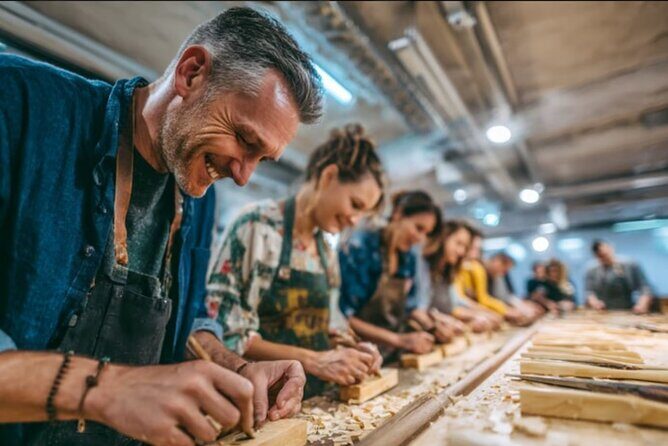
- Hands-on, not just watching: you do the carving with a hand plane.
- Wood choice is part of the fun: different tones and grains change the final vibe.
- Finish work matters: sanding plus natural oil makes the chopsticks comfortable and good-looking.
- Optional personal touch: get an engraving in Japanese or your native language.
Gion workshop setup: where the session starts
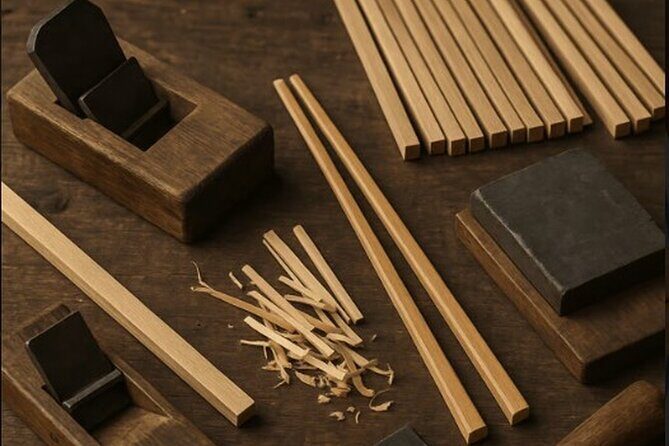
Your visit begins at 禅(ZEN) Chopsticks Making Workshop, Gion Kyoto, on Yasaka Koji South (machi-71-13 Tamamizu, Higashiyama Ward). From a traveler’s point of view, that location is helpful because you’re already in the Kyoto sightseeing zone. You’re not bouncing across town for a short activity.
The timing is also realistic: the workshop runs about 1 hour (approx.), and the experience ends back at the meeting point. That makes it easy to slot between temple stops or late-afternoon wandering through Gion. If you like your days to feel full but not exhausting, this fits the bill.
The group size is capped at 32 travelers, which keeps the class from turning into a chaotic crowd. You also get English-speaking staff support, so the “I don’t know what I’m doing” feeling usually fades fast.
A few more Kyoto tours and experiences worth a look



Choosing Japanese wood: color and grain become part of the souvenir
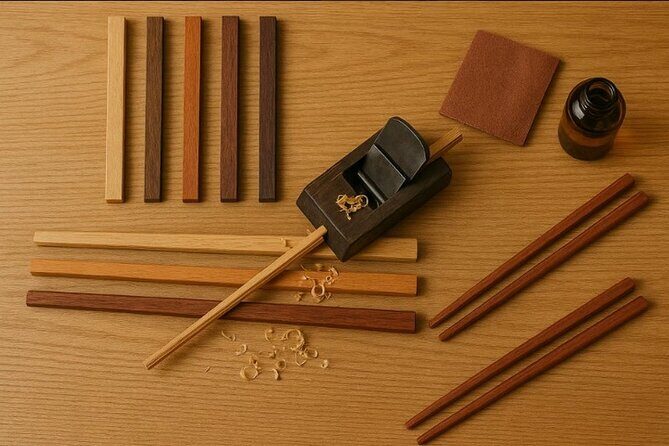
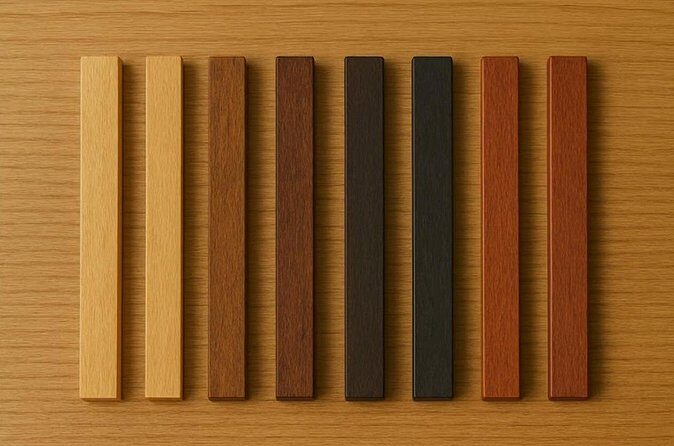
The workshop starts by getting you to choose your wood. That sounds like a small step, but it changes the whole experience. Different woods bring different natural colors and grain patterns, so your finished chopsticks won’t just be personal because you made them—they’ll look like you chose a style.
You get a picked set of woods to choose from. The details say two wood types are included at no extra cost, and premium woods are available as an optional upgrade. In practice, that means you should treat the selection moment like a mini decision in a craft shop: check the tones, look at the grain, and decide if you want something lighter, darker, or in-between.
If you’re picky about a specific wood, plan with a little wiggle room. One review mentioned a mismatch between advertised options and what was available, which can happen when demand is high. I’d come ready to enjoy whichever wood you get, while still hoping for your first pick.
The kanna carving step: where the calm comes from
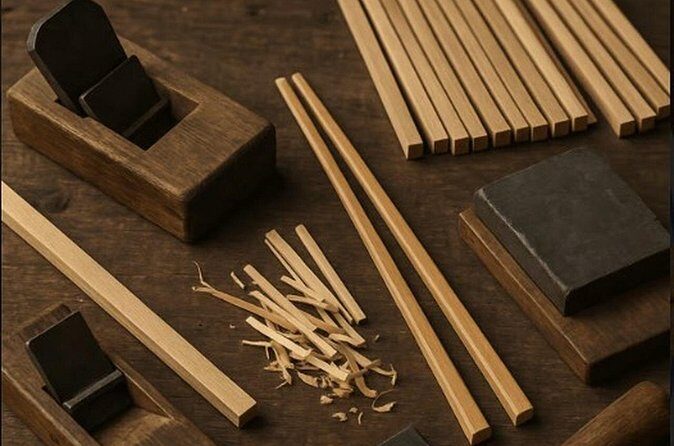
This is the core of the workshop: shaping your chopsticks using a traditional kanna hand plane. You start with rough wooden blanks, then work your way toward a form that actually looks like chopsticks.
You place your chopsticks on a stand and carve carefully into shape. This is where the class feels craft-focused rather than tourist-themed. You’re learning through doing—turning grain and texture into a usable tool with your own hands.
The instruction is designed for first-timers. The workshop description says they teach each step clearly and patiently, from rough shaping to a smooth, polished finish. Reviews back that up with comments about the staff being friendly and attentive to details. For you, that usually means less stress and more time actually learning how to guide the tool.
What I like about this section is that it’s not just a one-time action. You get repeated chances to adjust—carve a bit, check the shape, refine. That repetition gives you the satisfying feel of progress. It also makes the hour fly by, because you’re busy the whole time.
Sanding, natural oil, and the comfort test
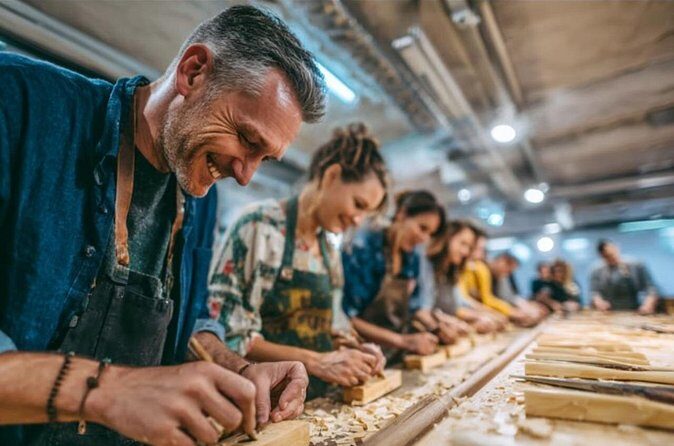
After carving, the process shifts to finishing work. You smooth the surface and edges using sandpaper. That part matters more than it sounds. Chopsticks aren’t meant to be sharp-edged or rough. Sanding brings the wood to the point where it feels good in-hand.
Then comes the oil. You apply a coat of natural oil to protect and enhance the finish, giving the chopsticks a soft, polished look. This step is a smart touch for a souvenir because it helps the chopsticks look better right away and stand up better as a daily-use object.
In a class like this, the finishing work is also where you can see your raw effort turn into something elegant. Carving turns the wood into shape. Sanding and oiling turn the shape into comfort.
Practical note: you’ll leave with your finished chopsticks as a keepsake. If you’re planning to use them at dinner soon after, this is the type of souvenir that actually earns its place at the table, not just in a drawer.
Optional engraving: making them truly yours
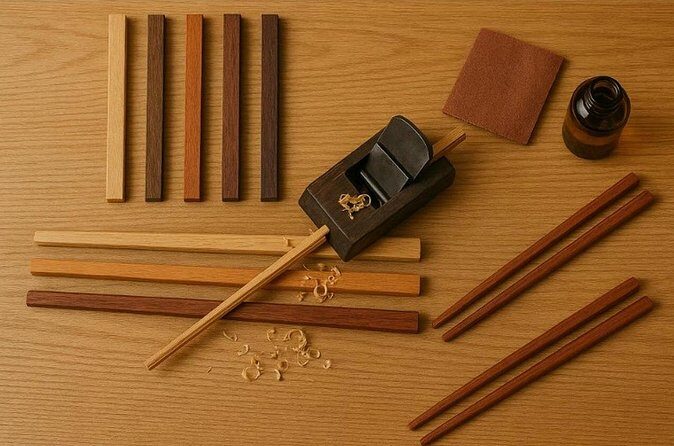
If you want that personal stamp, you can add engraving. The workshop offers an optional engraving option where your name can be written either in Japanese or your native language.
This is one of the best parts for people who like souvenirs with a story. You made the chopsticks, chose the wood, carved and finished them—then you can mark them with text that feels like yours.
The reviews include praise for how neat and well-handled the engraving process is. For you, that matters because engraving can easily look messy if the setup isn’t steady. Here, the approach seems controlled and tidy.
What to think about before you choose engraving: decide what you want to see every time you use the chopsticks. Is it your name, a travel nickname, or something sentimental like first initials? If your handwriting in your native script is complex, keep the wording simple so the engraving stays clean.
A few more Kyoto tours and experiences worth a look
Price and value: $15.25 for real craft time
At $15.25 per person, this workshop is priced like an affordable hands-on activity, not a premium craft class. The value is in what’s included: tools and instruction, two wood options at no extra cost, sanding and oil finishing, and the fact that you take home the finished chopsticks.
A lot of Kyoto souvenirs are impressive but passive. You buy, you carry, you forget where you got it. This is the opposite. You spend your time shaping the item, so the $15.25 feels more like a ticket to learning and doing than just buying something.
Also, the duration helps the value. You get a full, satisfying activity in about 1 hour. If you only have a limited window in the city, it’s easier to justify spending than a half-day class.
If you’re traveling as a couple, this kind of workshop can be a great shared activity. Each person ends up with something functional and personal, not just a matched set.
Who should book this workshop?
This workshop is a strong fit if you want a calm, creative break from the usual Kyoto rush. It’s also a good choice if you care about cultural crafts but don’t want something that requires advanced skills.
You’ll likely enjoy it most if:
- you like hands-on activities more than show-and-tell
- you want a practical souvenir you can use
- you’re traveling with family, since the instruction style is beginner-friendly and the experience has been described as fun for families
- you want a personalized memento with optional engraving
It’s also worth considering if you’re the type who enjoys “making” moments—watching wood become something you can actually eat with. That’s a rare souvenir outcome.
The main consideration is the wood selection issue. If you have a strict preference for a specific wood, bring flexibility. The workshop seems to give you a choice, but availability can shift.
Should you book this chopsticks workshop in Gion?
Yes, I think you should book it if you want a short, hands-on Kyoto craft with a real takeaway. The combination of patient instruction, the kanna carving step, and the finishing process (sanding plus natural oil) turns it into more than a quick activity. Add engraving, and it becomes a keepsake that feels personal instead of generic.
Skip or reconsider if you need a very specific wood type and you’re not okay with alternatives. Also, if you dislike anything that feels like a structured workshop environment, expect a classroom rhythm. Even so, the staff support and the fact that you actively carve and finish keeps it from feeling purely scripted.
If you’re planning a day in Higashiyama, this is a practical, low-regret stop—one that gives you Kyoto craft you can actually bring home and use.
FAQ
How long is the Kyoto chopsticks making workshop in Gion?
It runs for about 1 hour (approx.).
How much does it cost?
The price is $15.25 per person.
Where is the meeting point?
The start point is 禅(ZEN) Chopsticks Making Workshop, Gion Kyoto, Yasaka Koji South, machi-71-13 Tamamizu, Higashiyama Ward, Kyoto, 605-0851, Japan. The activity ends back at the meeting point.
Do I need prior woodworking experience?
No. The workshop is designed for first-timers and beginner-friendly instruction is provided.
What about choosing wood?
You can choose from a variety of Japanese woods. Two wood types are included at no extra cost, and premium woods are available as an optional upgrade.
Can I engrave my chopsticks?
Yes, there’s an optional engraving option where your name can be engraved in Japanese or your native language.
Is there a mobile ticket?
Yes, you receive a mobile ticket.
What’s the cancellation policy?
You can cancel for a full refund up to 24 hours in advance. If you cancel less than 24 hours before the start time, the amount paid is not refunded.