Kyoto’s Arashiyama feels busy fast, so this helps. I like the small group size (max 8) because you can actually ask questions, and I like the temple-focused storytelling that gives you context while you’re walking. The only real drawback is that it includes a moderate amount of walking, so comfy shoes matter.
You also get a sensible flow through the famous sights plus quieter spots in the Sagano area, with a guide taking care of the route. The tour runs about 4 hours and starts at 9:30am, rain or shine, which is handy when Kyoto weather refuses to cooperate.
If you’re coming in mid-summer, the heat and humidity can wear you down, even though you do get breaks. Plan for pace, not sprinting.
In This Review
- Key highlights to know before you go
- Why this Arashiyama tour works better than wandering alone
- Price and timing: a 9:30am shortcut through temples
- Stop 1: Otagi Nenbutsu-ji and its 1,200 stone rakan
- Wednesday note: Adashino Nenbutsu-ji replaces Otagi
- Saga Toriimoto preserved street: a traditional feel with mountain energy
- Sabou Sagano: a small reset with a drink included
- Jōjakkōji: gardens, calm, and views that make the walking worth it
- Mikami Shrine and the shrine of hair
- Ogura Pond: quiet reflections and seasonal changes
- Bamboo Forest Street: the photo spot, with a timing reality check
- Park viewpoints and Togetsukyo Bridge over the Hozu River
- Logistics that matter: meeting point, mobile ticket, and small-group flow
- Is the guide time worth it? The temple context payoff
- Who should book this Arashiyama tour?
- Should you book this Kyoto Arashiyama tour?
- FAQ
- What time does the Kyoto Arashiyama tour start?
- How long is the tour?
- Where do I meet the guide?
- Where does the tour end?
- Is the ticket mobile, and are admissions included?
- What happens on Wednesdays?
- Is there a lot of walking?
- Do I need cash or an IC card for anything?
- Is the tour canceled for bad weather?
Key highlights to know before you go
- Small group access (up to 8) for easier questions and less wandering
- Temple stops with meaning, not just photo ops, at Otagi Nenbutsu-ji and Jōjakkōji
- Wednesday swap in place: Otagi-Nenbutsu-ji is closed, so you visit Adashino-Nenbutsu-ji instead
- Iconic Arashiyama scenery: Bamboo Forest Street, Togetsukyo Bridge, and mountain viewpoints
- A built-in break at Sabou Sagano with a drink included (coffee/tea/juice)
Why this Arashiyama tour works better than wandering alone
Arashiyama is one of Kyoto’s most famous areas, and that fame comes with crowds. This tour helps you get through the big hits without spending your morning figuring out where to go next.
I also like how it mixes “name-brand Kyoto” with places that feel more like you stumbled into them the right way. You’re not just chasing the bamboo for a quick picture. You’re also learning why certain temples and shrines matter, and that changes how you look at the same sights.
Finally, the time window is realistic. About 4 hours is long enough to feel like you did something meaningful, but short enough that you won’t be exhausted by the time you return to the rest of Kyoto.
A few more Kyoto tours and experiences worth a look


Price and timing: a 9:30am shortcut through temples
This tour costs $79.07 per person, and for that price you’re paying for organization plus guide time. It’s not just “tickets and a route.” Several admissions are included, and you get commentary while you move between stops.
The 9:30am start is smart. You’ll hit some of the area’s most popular spots earlier than many day plans. And because it runs rain or shine, you don’t lose the day to a random drizzle.
One practical note: bus fee is excluded. You’ll need an IC card or coins (¥230) prepared, so keep that in mind before you head out.
Stop 1: Otagi Nenbutsu-ji and its 1,200 stone rakan
Otagi Nenbutsu-ji is the kind of place you remember because it feels personal. Instead of a single main hall moment, the temple is known for a huge collection of stone statues—over 1,200 rakan—with distinct faces and details.
You’ll get about 20 minutes here. That’s enough time to look around without feeling rushed, especially if your guide is pointing out what to notice. This is also where context matters most: if you understand what these figures represent, your photos and your walking feel less random.
A drawback: because the statues are the whole show, it can be tempting to stare down at everything at once. If you want good photos, bring a little patience and try to slow down for a few minutes rather than rushing to the next corner.
Wednesday note: Adashino Nenbutsu-ji replaces Otagi
Kyoto has its rhythm, and this tour accounts for it. Every Wednesday, Otagi-Nenbutsu-ji is closed, and the itinerary switches to Adashino-Nenbutsu-ji instead.
Adashino is a Buddhist temple in Kyoto’s Sagano district, founded in 811 by the monk Kūkai. The temple was established to honor those who died without family, which gives the visit a heavier, more reflective tone than the typical scenic stop.
You’ll spend about 20 minutes there as well. If your trip lands on a Wednesday, you’re not losing a stop—you’re getting a different kind of quiet, with a different story behind it.
Saga Toriimoto preserved street: a traditional feel with mountain energy
Next up is Saga Toriimoto Preserved Street. Think of this as a historic walking route connected to Mount Atago, including a trail that leads from the base toward the summit area, one of the higher points in Kyoto.
Along the way, you pass a traditional village feel—especially the character of thatched-roof homes. This stop adds variety to the day. After temples, you get a more “Kyoto neighborhood and village path” vibe, with more walking and scenery.
Timing-wise, the stop length isn’t listed in the same clear format as the temples, but you’ll have enough time to stroll the area without it turning into a full hike. Still, keep an eye on your energy levels because the total day includes a moderate amount of walking.



Sabou Sagano: a small reset with a drink included
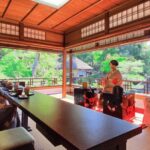
Mid-tour, you get a break at Sabou Sagano with 25 minutes allotted. A coffee/tea/juice drink is included, and other options like matcha are at your own expense.
I like that this isn’t a vague pause. It’s a scheduled reset that helps you avoid the classic Kyoto mistake: skipping food and then burning through your day with no patience left.
If you’re the type who likes to take photos between moves, this is also a good spot to re-check your phone battery and decide what you want most: bamboo photos, river views, or extra temple time.
Jōjakkōji: gardens, calm, and views that make the walking worth it
Jōjakkōji is where the tour leans into “slow down” energy. It’s described as a tranquil retreat that blends nature and spirituality, with stunning views.
You’ll spend about 30 minutes, including admission. In practice, this is a longer temple stop than some of the others, which helps you actually notice the garden details instead of rushing past them.
The main consideration here is crowd rhythm. Arashiyama can feel like a conveyor belt. Jōjakkōji offers a calmer atmosphere, but you still want to move with purpose—look, pause, and then move on when the flow shifts.
Mikami Shrine and the shrine of hair
You’ll also pass through Mikami Shrine, known for its spiritual connection to hair and beauty. It’s sometimes called the shrine of hair, and people come to pray for beautiful hair.
This is a nice contrast to the big temple complexes. Instead of scale, you get specificity. It’s a small moment that helps you see how Kyoto spirituality is woven into everyday themes.
You likely won’t spend tons of time here, but it’s the kind of stop that makes the day feel more local and less like a checklist.
Ogura Pond: quiet reflections and seasonal changes
Then there’s Ogura Pond, a peaceful setting surrounded by greenery. The calm water reflects trees and mountains, and the whole scene changes with the seasons.
Even with limited time, it’s worth slowing down for a minute or two. Kyoto ponds work because they mirror light. If the day is cloudy, the reflections can look softer. If the sun hits, it can feel sharper and more dramatic.
This stop gives you mental breathing room too. After bamboo and river photos, a quiet pond view is exactly the reset you didn’t know you needed.
Bamboo Forest Street: the photo spot, with a timing reality check
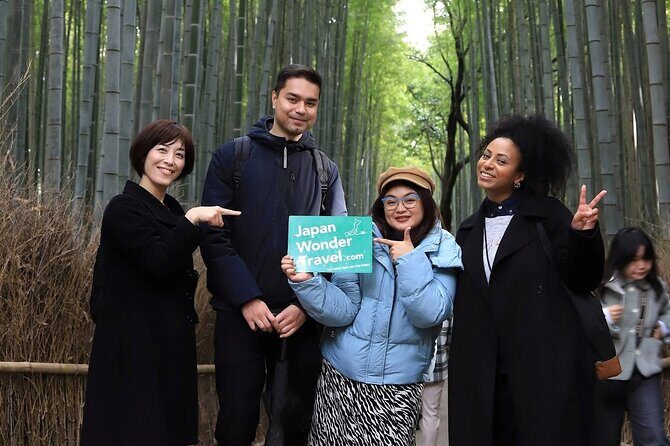
Of course, you’ll hit Bamboo Forest Street for a photo spot. The grove is one of Kyoto’s most photographed areas for a reason: the bamboo stalks are tall, the path curves gently, and the surroundings create a strong visual tunnel effect.
You’ll have about 10 minutes here, and that’s about right. More time could turn it into frustration because photos take longer in a crowded, narrow walkway.
Go in with the mindset of “multiple angles, not one perfect shot.” If you want fewer people in your frame, shift your position a few steps at a time rather than standing still at the same spot for your whole window.
Park viewpoints and Togetsukyo Bridge over the Hozu River
After bamboo, you’ll get more scenic variety: a park with breathtaking views of the Arashiyama Mountains plus a peaceful riverside setting. There’s also mention of relaxing along the river or walking around for panorama-style views.
Then comes Togetsukyo Bridge, spanning the Hozu River. It’s described as centuries-old and strongly tied to Arashiyama’s classic views.
You’ll spend about 10 minutes at each of these “outside” moments. That’s a good pacing choice because bridge and river stops work best when you’re not stuck in one place too long.
A practical tip: if you want photos with depth, look for angles where the bridge and river lead your eyes toward the mountains. The guide’s route usually helps you find those view lines without backtracking.
Logistics that matter: meeting point, mobile ticket, and small-group flow
The tour meets at Hannari Hokkori Square at 20 Sagatenryūji Tsukurimichichō, Ukyo Ward, Kyoto 616-8384. It starts at 9:30am.
Your ending point is near the Site of Kotokiki Bridge, with the same general address area. That means you can plan your next stop without having to return to the exact starting spot.
You’ll use a mobile ticket, which removes the paper ticket hunt. It’s also near public transportation, so you’re not stuck far from a rail or bus connection.
Comfort is the big theme. The walking is moderate, so wear comfortable shoes. Also remember the tour runs rain or shine, so bring something light for drizzle and keep a small towel handy if you’re prone to wet hair and slippery soles.
Is the guide time worth it? The temple context payoff
The standout value here is how the guide turns stops into meaningful experiences. If you’ve ever felt like you walked through a famous place but learned nothing, this is the antidote.
You’ll get explanations of the cultural significance of temples as you pass them, and the small group size gives you the chance to ask questions when something doesn’t make sense. That’s especially helpful in Arashiyama, where Japanese site names can blur together if you’re not paying attention.
Even if your Japanese is basic, the guided structure helps you keep moving with a purpose.
Who should book this Arashiyama tour?
This tour is a great fit if you want:
- A 4-hour Arashiyama plan that balances big-name sights with quieter stops
- Temple and shrine context, not just photos
- A small-group experience where it’s easier to ask questions
- A scheduled day that works even if weather changes
It’s less ideal if you want a long, independent explore where you can wander for hours at bamboo or you dislike any walking beyond a light stroll.
Also consider season. One piece of advice from people who loved the trip: spring and autumn tend to be the most enjoyable. Summer can be hot and humid, so your comfort will depend on your heat tolerance and how you pace breaks.
Should you book this Kyoto Arashiyama tour?
Yes—if your goal is to see Arashiyama’s core sights with less hassle and more meaning, this tour is a strong value. The $79.07 price feels fair when you factor in that admissions are included at multiple stops, you have a guided route, and the group stays small enough for real interaction.
I’d skip it only if you want maximum flexibility to linger and you’re not interested in temple context. Also, if you’re expecting zero walking, be aware the day involves moderate walking and a few scenic stretches.
If you’re aiming for a smooth Arashiyama morning—temples first, bamboo and river views after—this is exactly the kind of guided plan that makes Kyoto feel manageable.
FAQ
What time does the Kyoto Arashiyama tour start?
The tour starts at 9:30am.
How long is the tour?
It runs for about 4 hours.
Where do I meet the guide?
You meet at Hannari Hokkori Square (20 Sagatenryūji Tsukurimichichō, Ukyo Ward, Kyoto 616-8384, Japan).
Where does the tour end?
It ends at the Site of Kotokiki Bridge, in the same general Sagatenryuji Tsukurimichicho area.
Is the ticket mobile, and are admissions included?
The tour uses a mobile ticket. Admission tickets are included for several stops listed on the itinerary.
What happens on Wednesdays?
On Wednesdays, Otagi-Nenbutsu-ji is closed, and the tour visits Adashino-Nenbutsu-ji instead.
Is there a lot of walking?
The tour involves a moderate amount of walking, so comfortable walking shoes are recommended.
Do I need cash or an IC card for anything?
The bus fee is excluded. You should have an IC card or coins (¥230) prepared.
Is the tour canceled for bad weather?
The tour takes place rain or shine.