Kyoto feels easier when someone explains it. This half-day experience is built around a native Kyoto guide in Italian, who ties landmarks to how people lived and what the city meant to the imperial court and the samurai era. I especially like the way you get answers to real questions, and how the day mixes headline sights with everyday-feeling streets. One possible drawback: the schedule is packed, so you’ll want comfy shoes and you may not have time for long, slow detours.
You start at Kyoto Station and end in Pontocho, which is a nice trick—see a lot, then choose your own next move for dinner. There’s also a real break back at the station, so you’re not just bouncing from temple to temple without catching your breath. Since everything from transport to monument entry is included during the route, the day often feels good value for the amount of guidance you get.
If you’re the type who likes history but doesn’t want museum-style lectures, this tour hits a sweet spot. It’s also wheelchair accessible, so it’s designed to work for more than one kind of traveler.
In This Review
- Key things to know before you go
- A native guide in Italian changes how Kyoto “clicks”
- Kyoto Station start: how the meeting point actually helps
- Sagano Bamboo Forest: morning calm, plus a real walking plan
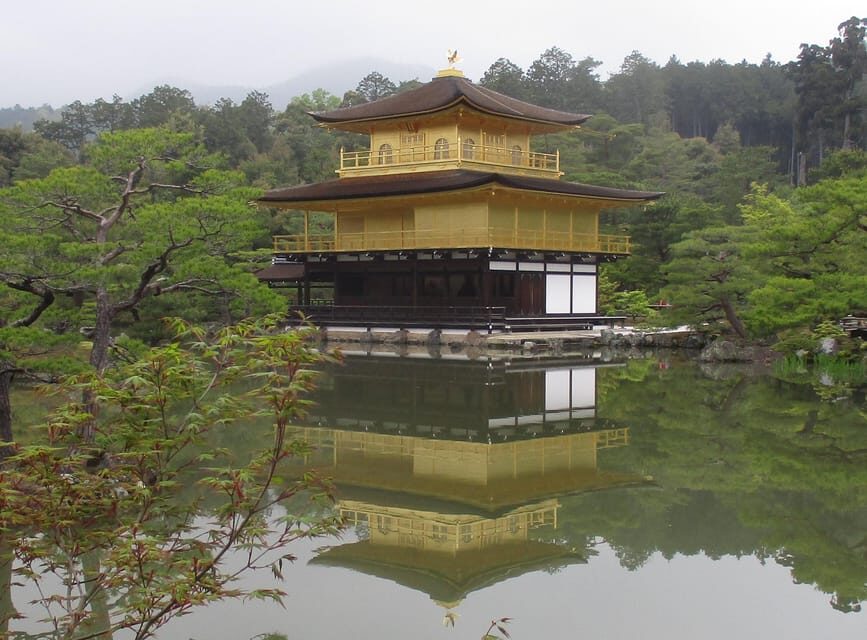
- Kinkaku-ji Golden Pavilion: the headliner with less guesswork
- Back to Kyoto Station: your reset hour in the middle
- Kiyomizu-dera and the old-street approach: temple + atmosphere
- Gion, Maiko/Geiko area, and Kyoto Minami-za: culture in the late-day glow
- Price and value: $153 for guided entry, transport, and real context
- Should you book this Kyoto treasures tour?
- FAQ
- Where is the meeting point?
- What sights are included?
- What is the tour length?
- What language is the tour guide?
- Are transport and entrance fees included?
- Where does the tour finish?
- Is the tour wheelchair accessible?
- Can I pay later and cancel?
Key things to know before you go
- Italian-speaking native guide answers questions about Kyoto as a historical capital, plus daily life context
- Golden Pavilion (Kinkaku-ji) and the Sagano Bamboo Forest give you two Kyoto icons with actual explanation
- Half-day pacing still covers both northwest Kyoto (old retreat culture) and east/south Kyoto (temples and streets)
- Kyoto Station break gives you time to reset instead of sprinting the whole time
- Finish in Pontocho, with the option to leave early if you’d rather continue on your own
A native guide in Italian changes how Kyoto “clicks”
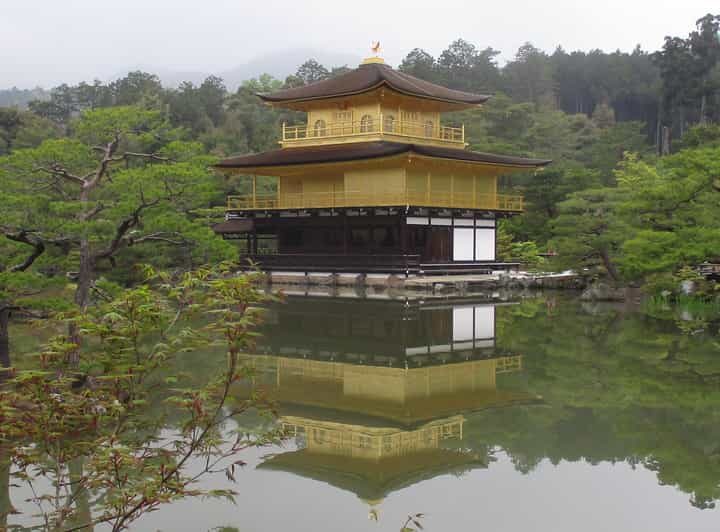
Kyoto can be one big list: temple, shrine, temple, photo. This tour is different because the guide speaks Italian and stays focused on meaning, not just names. You’re not only shown places—you’re given the story behind them: why these sites mattered, how the capital worked, and how daily life looked to the people connected to the imperial house, aristocrats, and literati.
I love that the guide is described as native and based in Kyoto. That matters because Kyoto isn’t a theme park. Even on a short itinerary, you can ask questions and get answers that feel local, not generic. If you’ve ever wondered why certain paths look the way they do or what a temple’s role was, you’ll likely appreciate the extra context.
The format also helps. You’ll be moving by train, bus/coach, and subway/metro, with entrance fees handled for the stops on the route. That means you’re spending your energy looking at the city instead of figuring out every connection.
The tradeoff is the same for any well-paced highlights tour: you can’t turn it into a slow photo walk. If you want hours of free time at one site, plan on using the station break and the ability to leave around the finishing area in Pontocho.
If you're still narrowing it down, here are other tours in Kyoto we've reviewed.



Kyoto Station start: how the meeting point actually helps
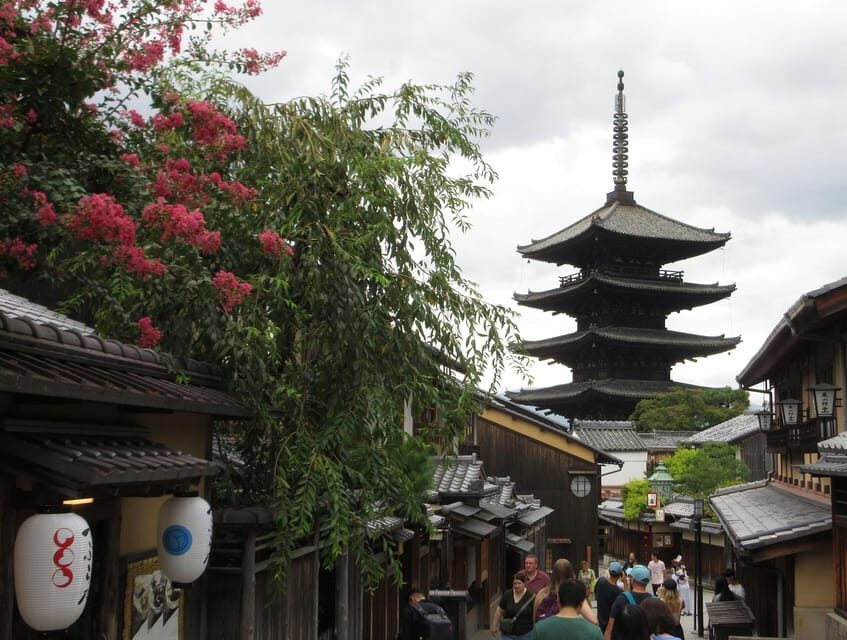
You meet at Kyoto Station, North Entrance (Karasuma-guchi). The specific location is in the space between the two escalators in front of the taxi (not bus) terminal, to the east just outside the central entrance to the north of Kyoto Station.
That sounds detailed, and that detail is practical. Kyoto Station is huge, and “meet at the station” usually turns into a search mission. This setup aims to reduce the chaos by putting you at a recognizable landmark—plus you’ll get an email before the day with more confirmation.
Timing matters here. The day begins right from the station, then you’re off to the northwest side. If you arrive early, don’t just wander randomly; use the time to orient yourself around that North Entrance area so you’re not rushing when the group gathers.
Sagano Bamboo Forest: morning calm, plus a real walking plan
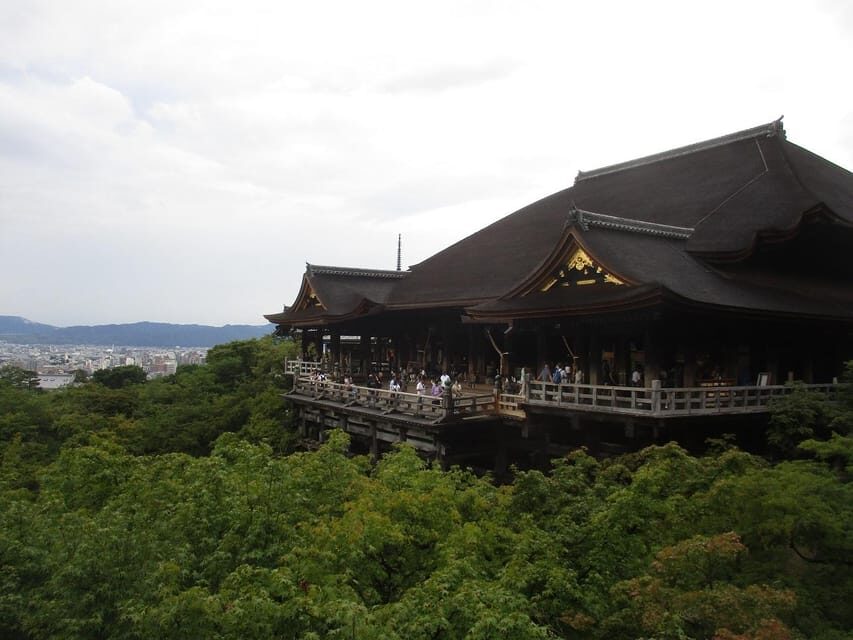
Your first major stop is in the Sagano area: the Bamboo Forest. You’ll have about 1 hour for the guided visit and walking there.
Here’s what makes Sagano work on a short tour: it’s one of those places where the atmosphere does the heavy lifting. But a guide makes it more than a photo stop. With the tour’s focus on how Kyoto’s history links to life around the city, you’ll get context that turns the bamboo from scenery into setting—part of Kyoto’s preserved environment and the kind of retreats that were important in the past.
Because you have a set amount of time, you’ll likely walk with purpose. You won’t be stuck waiting for the group or wandering until you lose the thread. It’s also early enough to feel less crowded than later in the day (even if you still expect plenty of visitors).
Practical tip: bamboo paths can be busy, and the ground can be uneven in spots. Wear shoes you trust for walking, not just standing still for pictures.
Kinkaku-ji Golden Pavilion: the headliner with less guesswork
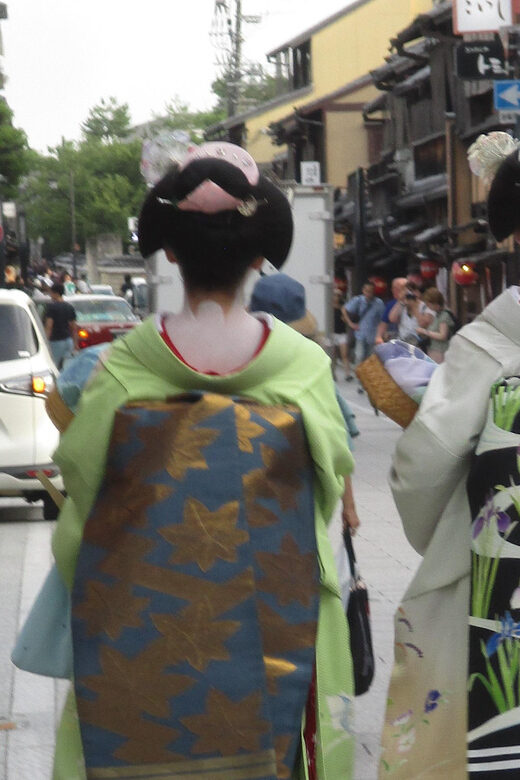
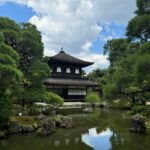
After Sagano, you move toward Kinkaku-ji, the Golden Pagoda. You get about 1 hour here, with guided sightseeing.
This is the Kyoto “must see,” and it’s also where a good guide makes the difference between seeing something famous and understanding why it’s famous. The tour’s theme—Kyoto as the historical capital tied to the lives of aristocrats and figures connected to the imperial house—fits naturally here. The Golden Pavilion is not only a stunning object; it’s a symbol of the culture that shaped Kyoto’s most preserved spaces.
A key detail: the tour includes the entrance fees and transportation for this part of the route. You don’t have to hunt for ticket lines or figure out the logistics between stops. That keeps the pacing smooth and helps you get the most out of your hour.
Possible consideration: Kinkaku-ji gets a lot of attention. Even with guidance, you might be sharing viewpoints with other visitors and moving in sections. If you’re the type who needs solitude for photos, accept that you’ll be working within real-world crowd flow.
Back to Kyoto Station: your reset hour in the middle
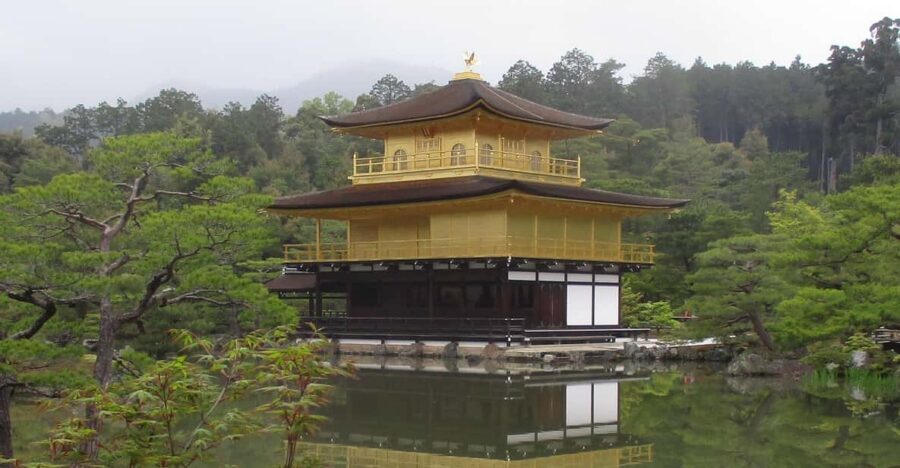
After Kinkaku-ji, you’ll head back to Kyoto Station for a 1 hour break.
This break is underrated value. Temples and scenic walks build up fast—sightseeing fatigue is real. Having a solid block back at the station lets you use bathrooms, grab a snack, and re-fuel without the pressure of staying in “tour mode.”
It also helps you control the rest of the day. You can decide how you want to pace the afternoon: keep moving with the group, or slow down slightly during the guided parts. If you’re sensitive to long walking stretches, use this time to adjust.
In a half-day itinerary, that station hour is what makes the whole thing feel manageable rather than exhausting.



Kiyomizu-dera and the old-street approach: temple + atmosphere
In the afternoon, you visit Kiyomizu-dera. You’ll get about 1 hour for the guided visit and sightseeing.
Kiyomizu-dera is famous for a reason, but what you’re likely to appreciate here is the approach and the way the area is set up like old Kyoto in motion. The tour doesn’t stop at the temple; it continues on foot to traditional streets and viewpoints.
After Kiyomizu-dera, you walk about 5 minutes to Sannenzaka. You then continue toward Ninenzaka, with short guided moments and walking time between sections.
What I like about this portion is that it slows the day down in the right places. Big monuments grab your attention. But these streets help you understand the feel of the city: layered lanes, historic pedestrian flow, and a sense that people have been moving through this area for generations.
Because you’re still on a guided route, you won’t get lost. But you also don’t get dragged away immediately after a single photo—you move through the area with just enough freedom to notice details.
Practical note: old streets often mean lots of steps and uneven stone. Bring shoes you can walk in comfortably for at least 20–30 minutes on top of temple time.
Gion, Maiko/Geiko area, and Kyoto Minami-za: culture in the late-day glow
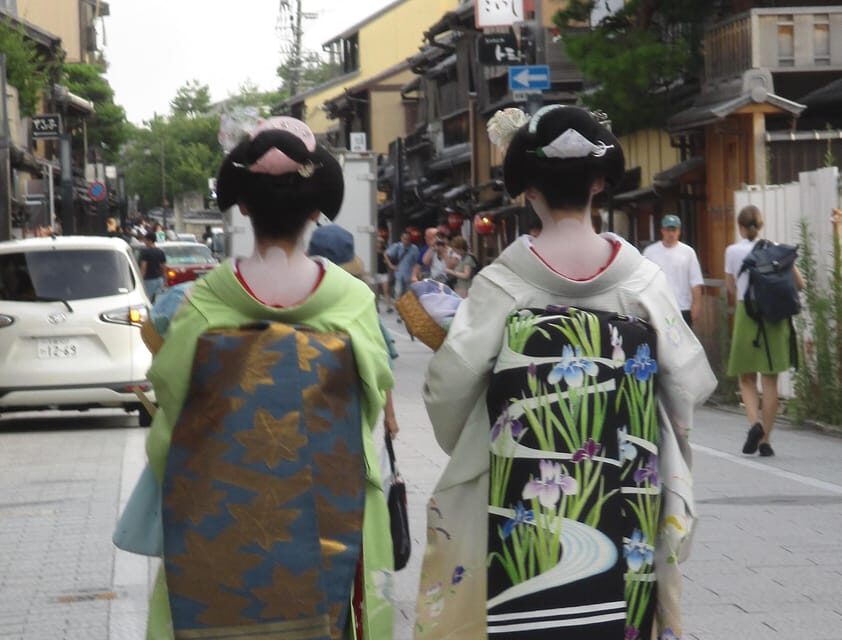
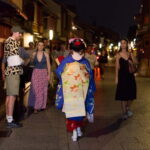
Next up is Gion, including a 30-minute guided visit and sightseeing. This is the zone people associate with Maiko and Geiko culture, often called Geisya in reference to professional performing arts traditions.
On a highlights tour, Gion can turn into a quick walk-by. Here, the guide time helps. You’re not only moving through a famous district—you’re getting context for what you’re seeing and why the area gained its cultural role.
After Gion, you’ll walk to Kyōto Minami-za for a short guided stop (about 3 minutes), then finish the day in Pontocho with a few more minutes of walking.
Pontocho is a smart ending point. It feels like Kyoto’s “after the tour” layer: dimmer, more atmospheric, and great for choosing your next plan. And the tour highlight says you’re free to leave halfway—so if you decide you’d rather keep exploring on your own than stay for the final portions, you’re not locked into every last minute.
This flexibility is part of the value. You can treat the guided route as a well-made outline, then step out when it fits your style.
Price and value: $153 for guided entry, transport, and real context
At about $153 per person for a half-day route, the price can look like a lot if you’re comparing it to DIY transit. But this tour bundles three things that usually cost you time and effort:
- transportation between the key areas
- monument entrance fees included during the route
- an Italian-speaking guide who answers questions and explains how Kyoto’s history connects to daily life
That combo is what you’re paying for. Kyoto is spread out. A temple-and-streets day can turn into extra transit tickets, entrance line stress, and lots of lost time figuring out where to go next. Here, you get a plan, and the guide helps you understand what you’re seeing as you go.
Is it worth it for every style of traveler? Not automatically. If you love wandering without structure and you know your way around with maps and patience, you might prefer to build your own day. But if you want the city’s meaning explained while you’re still moving between major sites, this is a strong use of money for a short visit.
Who it suits best:
- First-time Kyoto visitors who want the classic stops with context
- People who like asking questions and hearing the story behind landmarks
- Anyone who wants less route-planning and more “just follow the guide” time
Should you book this Kyoto treasures tour?
If your goal is to see Kyoto’s major icons in a short window—Kinkaku-ji, Sagano Bamboo Forest, Kiyomizu-dera, and the streets of Sannenzaka/Ninenzaka—and you also want explanations in clear Italian, this tour is a good match. The standout theme from the experience is how special the guide makes the day: detailed storytelling about each temple and a friendly, helpful approach that keeps you engaged.
I’d book it when:
- you have limited time in Kyoto and want a well-sequenced route
- you care about understanding Kyoto’s past connections to aristocrats and the imperial capital, not only taking photos
- you’d like a native guide to answer questions in real time
I’d think twice if:
- you hate structured pacing and want long stays at fewer sights
- you need lots of independent wandering and don’t want the group rhythm at all
If you’re in the middle—curious, practical, and excited to understand what you’re seeing—this tour is one of the smarter ways to spend half a day in Kyoto.
FAQ
Where is the meeting point?
You meet at Kyoto Station, North Entrance (Karasuma-guchi), in the space between the two escalators in front of the taxi terminal (not the bus terminal), on the east side just outside the central entrance to the north of Kyoto Station.
What sights are included?
You visit Sagano Bamboo Forest, Kinkaku-ji (Golden Pagoda), Kiyomizu-dera, Sannenzaka, Ninenzaka, Gion, and Kyōto Minami-za, finishing in Pontocho.
What is the tour length?
The duration is listed as 1 day, and the full itinerary lasts about half a day.
What language is the tour guide?
The tour guide speaks Italian.
Are transport and entrance fees included?
Yes. All transportation and entrance fees to the monuments visited during the itinerary are included.
Where does the tour finish?
The tour finishes in Pontocho.
Is the tour wheelchair accessible?
Yes, the tour is wheelchair accessible.
Can I pay later and cancel?
You can reserve and pay later, and free cancellation is available up to 24 hours in advance for a full refund.