You can forge a real ninja weapon in Kyoto.
This isn’t a movie-themed photo stop. At Atelier NIN, you’ll heat and shape steel, refine it with proper tools, engrave a chosen kanji, and finish the piece with a dark protective coating and polish. You’ll also get a short session on ninja weapons and how they fit into history and technique.
I like the hands-on forging that turns raw metal into an actual tool, not a demo. I also like the personalization: you pick a kanji for engraving, and the workshop supplies a clean box and bag so you can transport your finished ninja weapon afterward.
One thing to plan for: the studio is off the beaten path, and a few people noted the directions can feel a little vague at times. If you’re the type who likes clear step-by-step instructions, ask questions early and don’t be shy about slowing down.
In This Review
- Key things to know before you forge
- Ninja Weapon Forging in Kyoto: more than a ninja-themed workshop
- Atelier NIN starts you in “craft mode” with samue and a tenugui
- Pick your shuriken style or choose a kunai
- Forging at 800°C: the “wow” moment where the tool takes form
- Shaping and sharpening with real tools (belt sander time)
- Kanji engraving: make it personal without slowing everything down
- Blackening and finishing: how you get that dark “ninja tool” look
- The ninja knowledge session: context that makes the craft feel earned
- Tools, safety, and the working pace in a small group
- Price and value: is $151.92 fair for this Kyoto experience?
- Where to meet and how to get there off the main tourist loop
- Who should book this ninja weapon forging experience
- Should you book Atelier NIN in Kyoto?
- FAQ
- Do I need prior experience to make a ninja weapon?
- What weapons can I create during the workshop?
- What happens during the 2.5-hour session?
- How long is the workshop, and how large are the groups?
- What is included for taking your weapon home?
- Is private transportation included from Kyoto?
Key things to know before you forge
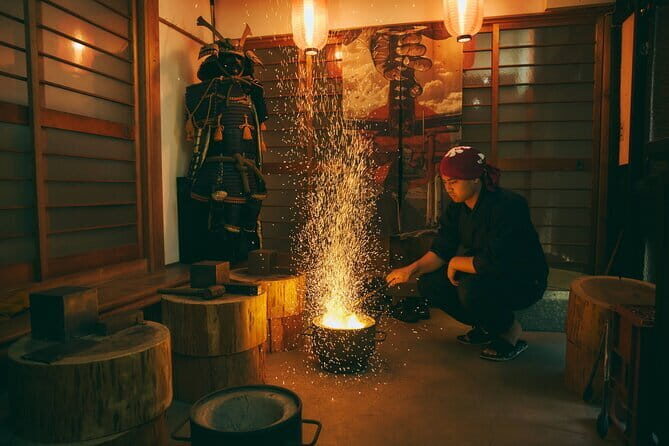
- Real steel shaping with a furnace and hammer work that’s the core of the class
- Choose your weapon from three shuriken styles or a kunai
- Kanji engraving lets you leave with a truly one-of-a-kind souvenir
- Protective blackening + final polish for an authentic dark finish and a clean look
- Small-group feel with a maximum of 25 people and hands-on instructor support
Ninja Weapon Forging in Kyoto: more than a ninja-themed workshop
Kyoto has plenty of craft workshops, but this one is unusual: you’re making something sharp and metal, with real steps used in traditional metalwork. The setting also helps. You don’t just sit and watch. You suit up in the blacksmith uniform (samue), wrap a tenugui around your head, and suddenly the day feels like training.
The best part is that you get a full arc. You start with picking the design, then you move through heating and hammering, then shaping and sharpening, then the finishing moves. By the time you’re done, your weapon isn’t a charm. It’s a crafted object that’s meant to be handled and stored properly.
If you like the idea of ninja culture, you’ll also appreciate that the experience isn’t only aesthetics. You’ll get a knowledge session about ninja weapons, plus “secret technique” style explanations that connect the tool to its purpose. It makes the craft steps feel less random and more intentional.
Other ninja experiences in Kyoto



Atelier NIN starts you in “craft mode” with samue and a tenugui
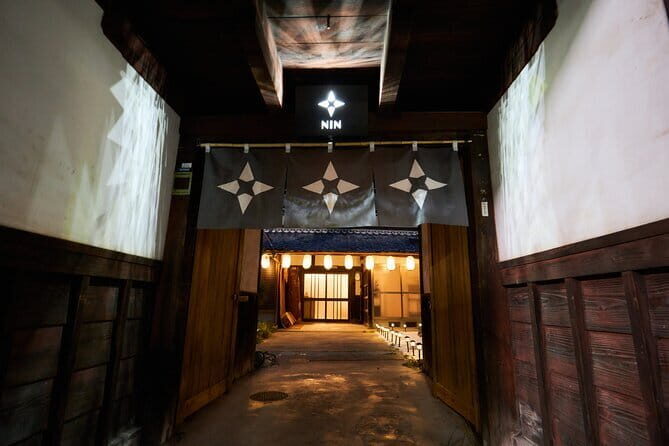
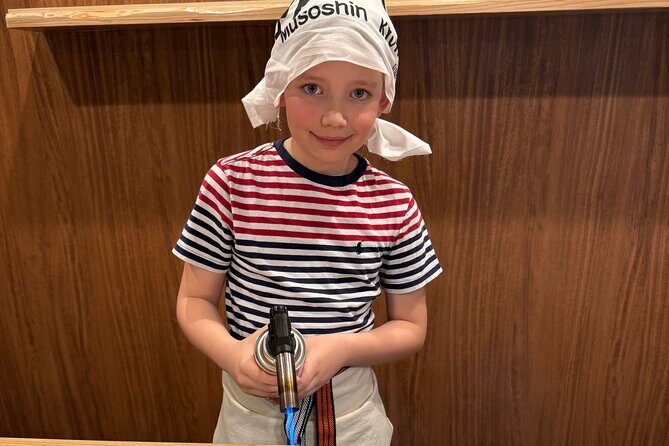
Before you touch anything, you shift into the workshop mindset. You change into samue, the traditional blacksmith uniform, and put on a tenugui (the head wrap). It’s a small thing, but it matters. It sets the tone and helps you feel like you’re stepping into the craft world instead of just trying an activity.
Then you’re briefed on the flow of the session. This is where you’ll also get your first chance to confirm what you’re making that day—three shuriken styles or one kunai. The staff run a tight, action-focused class, and most people seem to enjoy the energy level.
One practical note: the experience is described as having a moderate physical fitness level requirement. Most of the work you do yourself is controlled and supported with tools you rent on-site, but you will be doing some shaping and refining by hand. If you’re dealing with limited grip strength or stamina, go into it expecting a workout-like feel.
Pick your shuriken style or choose a kunai
This is where you decide what your finished ninja weapon will look and feel like. You can choose from three shuriken styles or select one kunai. Each option has a different shape, and that difference shows up again later when you’re refining edges and surfaces.
If you’re a total beginner, you’re fine here. The experience is designed for people with no prior metalworking skills. The instructors guide you through the steps, and the tools do a lot of the heavy lifting—especially when it comes to sharpening and refining.
There’s also some cost variation you should know about: one cost note from the experience is that choosing the kunai can come with an extra 3,000 yen. If you’re budget-minded, factor that into your choice before you arrive.
Forging at 800°C: the “wow” moment where the tool takes form
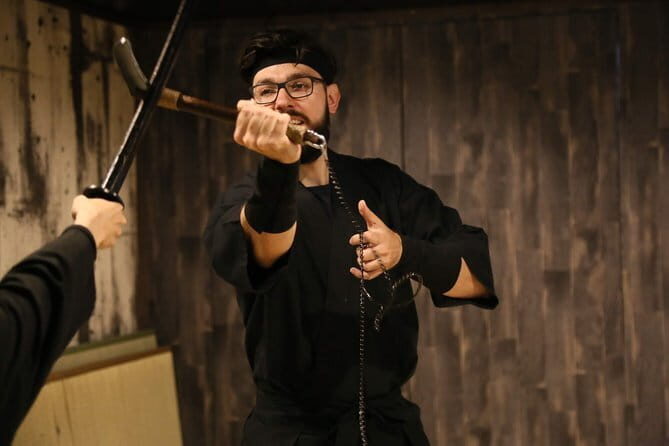
The most dramatic step is forging. You heat your chosen weapon shape in an 800°C furnace, and then you hammer the glowing steel. Sparks flying is not a marketing trick here—it’s the natural visual of the forging process.
This part is valuable even if you don’t care about becoming a blacksmith. When you watch a blade being shaped by heat and force, you start to understand why metalworking is a craft, not a gadget. The instructors help you do the motions safely and correctly, so you’re learning something real rather than just playing along.
Also, this is the core step where your tool starts looking like a weapon. Before the heat work, it’s closer to a metal blank. After it, the shape and character start showing up.
Shaping and sharpening with real tools (belt sander time)

After forging, you move into shaping and refining. You’ll use a professional belt sander to refine and sharpen the metal. This is where your weapon stops looking rough and starts looking intentional.
What I like about this step for your day-to-day value is that it feels efficient. Instead of spending forever on tiny hand-filing motions, you use a tool designed for consistent shaping. That means your time is spent learning technique, not just exhausting your arms.
It also helps you get closer to the “display-ready” look by the end. And that matters because you’re taking the weapon home, not leaving it on a shelf. The class is designed to get you a finished souvenir you’ll actually want to pack.




Kanji engraving: make it personal without slowing everything down
Next comes kanji engraving. You choose a kanji character, and the staff engrave it with precision. This is one of the most memorable parts, because it turns your metal piece into something personal.
Pick something meaningful (a name, a value, a theme). The staff handle the precision part, so you don’t need to be an artist. You just choose the character and they do the careful work.
This is also where a specific instructor name comes up in the experience details: people mention support from staff member Taka, including help with making a kunai more symmetrical. That kind of small correction is exactly what you want in a hands-on class—someone watching your work and nudging it in the right direction.
Blackening and finishing: how you get that dark “ninja tool” look
Once the shape is done, you protect and finish the steel. You apply a special solution to blacken the metal. The result is a dark, authentic finish that matches the visual idea most people have about ninja tools.
Then there’s final polish, which brings out shine where it’s meant to be seen. This combination—dark protective coating plus polished highlights—gives the weapon a finished look rather than a “project” look.
For a souvenir, this finishing stage is a big deal. It improves the appearance, but it also signals that your object is treated and ready to store. You’re not just leaving with raw work; you’re leaving with a piece that’s meant to live in your home collection.
The ninja knowledge session: context that makes the craft feel earned
At some point during the workflow, you’ll get a knowledge session on ninja history, weapons, and techniques. It’s not a long lecture, but it adds context: why these tools existed, and how people thought about their use.
This matters because forging can feel like “just make a shape.” The knowledge session connects the design choices to purpose. Even if you’re not a ninja-obsessed history fan, it helps you understand what you’re building beyond the cool factor.
If you’re traveling with kids or teens, this explanation piece is also useful. It gives them something to talk about on the train ride home that’s not only “we swung hammers today.”
Tools, safety, and the working pace in a small group
The class is capped at a maximum of 25 travelers, and that small size generally keeps the energy from becoming chaotic. You’ll be moving through stations and doing practical steps, so smaller groups tend to mean more instructor attention.
You also get the tools you need. The workshop rents specialized items like files for sharpening and hammers for forging work. You rent the tools; you’re not expected to bring your own gear. They also rent the uniforms exclusively for craftsmen.
For safety, the key is that you’re doing heat and hammer work with guidance. The process is described as safely learning how to heat, hammer, and shape steel. You’re not left to guess. You’ll still want to be alert and follow directions, but the structure is designed to keep you on the right track.
One pacing note from the experience details: some people felt the instructions weren’t always fully detailed, and one person even described a “conveyor belt” feeling. That doesn’t match most of the overwhelmingly positive feedback, but it’s a reminder to treat this as a busy hands-on class. If you want maximum clarity, you can get it by asking early.
Price and value: is $151.92 fair for this Kyoto experience?
At $151.92 per person for about 2 hours 30 minutes, the price sits in the “serious workshop” category. The value is strongest if you care about two things: learning real craft steps and leaving with a finished, customized object.
Here’s what you’re paying for:
- Staff-led step-by-step forging and finishing (not just a simple craft)
- On-site specialized tools like hammers and files
- Uniform rental (samue and tenugui-style setup)
- A take-home setup: a clean box and bag to transport your finished weapon
That package changes the math. A “souvenir only” experience wouldn’t justify the cost. But this one is a hands-on skill session that produces a tangible item you can store and display.
If you’re the type who only wants low-effort activities, you may find it intense. If you like making things with your hands, you’ll likely see this as good value for Kyoto because you’re not just consuming culture—you’re creating it in a traditional way.
Where to meet and how to get there off the main tourist loop
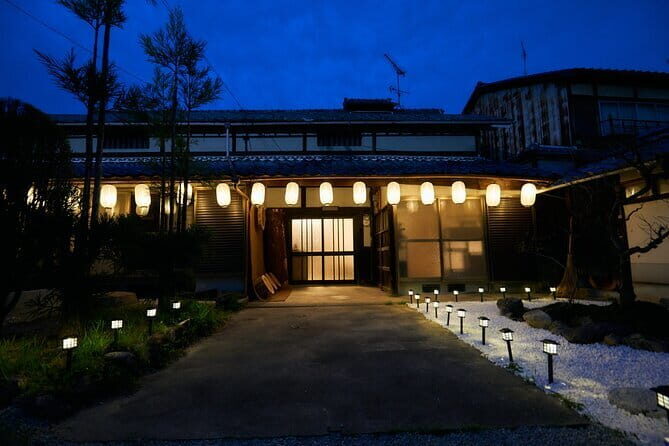
You meet at studio NIN, 八瀬168-1 Yasenosechō, Sakyo Ward, Kyoto, 601-1254. The location is described as near public transportation, but it’s also described as being off the beaten path.
So plan for real-world travel time. If your route only works with trains and buses, great. If it’s one of those “last mile” situations, a taxi can make the day easier.
One review-style logistics tip that shows up clearly in the experience details: have a taxi plan ready. A taxi app and a quick route search can save you stress, especially if you’re arriving at a time when buses are less frequent.
Who should book this ninja weapon forging experience
I think this works best for three kinds of travelers:
First, people who want an authentic Kyoto craft experience that feels physical and memorable. Forging and finishing make it more than a themed workshop.
Second, travelers who like customizing gifts. Choosing a kanji engraving is personal, and the finished piece is something you can actually keep. The included box and bag help with transport, and that’s a practical win.
Third, families with older kids and teens. The workshop format is described as fun and engaging for both kids and adults, and it’s set up for beginners. Just remember the moderate physical fitness note for the sharpening and hammering work.
Should you book Atelier NIN in Kyoto?
Book it if you want a hands-on, real-steel experience in Kyoto where you’ll leave with a customized shuriken or kunai that you made through heat, hammering, shaping, and finishing. The strongest draws are the full process and the take-home results, not just the ninja theme.
Skip it or reconsider if you want a low-effort activity, or if you get frustrated when instructions feel more “do it with us” than “every step explained in advance.” Also consider the off-the-beaten-path location. If you can handle that with a simple taxi plan, you’ll probably enjoy the workshop experience much more.
If you match those vibes—hands-on craft, authentic feel, and a souvenir with a story—this is a very strong choice in Kyoto.
FAQ
Do I need prior experience to make a ninja weapon?
No. The experience is described as suitable with no experience required, and skilled craftsmen teach you the steps from heating and hammering to shaping, engraving, and finishing.
What weapons can I create during the workshop?
You can choose from three shuriken styles or one kunai.
What happens during the 2.5-hour session?
You suit up, choose your weapon, forge heated steel (including furnace heat and hammering), shape and sharpen it using professional tools, engrave a chosen kanji, blacken the steel with a protective solution, and finish with polishing.
How long is the workshop, and how large are the groups?
The duration is about 2 hours 30 minutes, and the activity has a maximum of 25 travelers.
What is included for taking your weapon home?
You get a clean box and bag to take the weapon home. The workshop also provides rented tools and uniforms for the craftsmen.
Is private transportation included from Kyoto?
No. Private transportation is not included. The meeting point is near public transportation, but you may want to plan for travel to an off-the-beaten-path studio.