Kyoto in one day can feel like a sprint. This tour turns it into a smart route: Fushimi Inari, the Arashiyama Bamboo Forest, and the Golden Pavilion all in one plan. I especially like the clear pacing with real stops for photos, plus the fact that you’re not doing this alone—your guide keeps the day organized and your questions answered. The one caution: it’s a long walking + public transit day, and the Monkey Park hill is steep, so plan for stamina.
I also like that you get major landmarks without burning time guessing train transfers or ticket lines. You’ll start at Kitsunezo by JR Inari Station, then hop through Kyoto by rail/tram and foot, finishing at Kyoto Station. If you’re sensitive to heat, or you arrive late and can’t join once the tour starts, that’s the main drawback to weigh.
In This Review
- Key highlights worth getting excited about
- Why this Kyoto route works in one full day
- Meeting at Kitsunezo and starting with Fushimi Inari Taisha
- Public transit from Inari to Arashiyama (and why it saves your day)
- Arashiyama Bamboo Forest and Nonomiya Shrine: calm time that still feels special
- Tenryuji Temple: UNESCO Zen gardens without the guesswork
- Arashiyama lunch break: fuel up without losing momentum
- Iwatayama Monkey Park: short steep hike, big payoff (if your knees agree)
- Getting to Kinkakuji: tram-to-foot for a smoother late day
- Kinkakuji Golden Pavilion: where the pond reflection becomes the point
- Staying comfortable on an 8-hour walking day
- Price and value: why $96 can make sense
- Who should book this tour, and who should reconsider
- Should you book this Kyoto walking tour?
- FAQ
- FAQ
- Where is the meeting point for the tour?
- How long is the tour?
- Is this tour a bus tour or a walking tour?
- What’s included in the tour price?
- What is not included?
- Is there an option for a private group?
- How big is the group?
- Can I skip ticket lines?
- Is the Monkey Park hike suitable for everyone?
- What if I arrive late?
Key highlights worth getting excited about
- Vermilion torii photo time at Fushimi Inari Taisha, guided and paced for the best walk-and-shoot rhythm
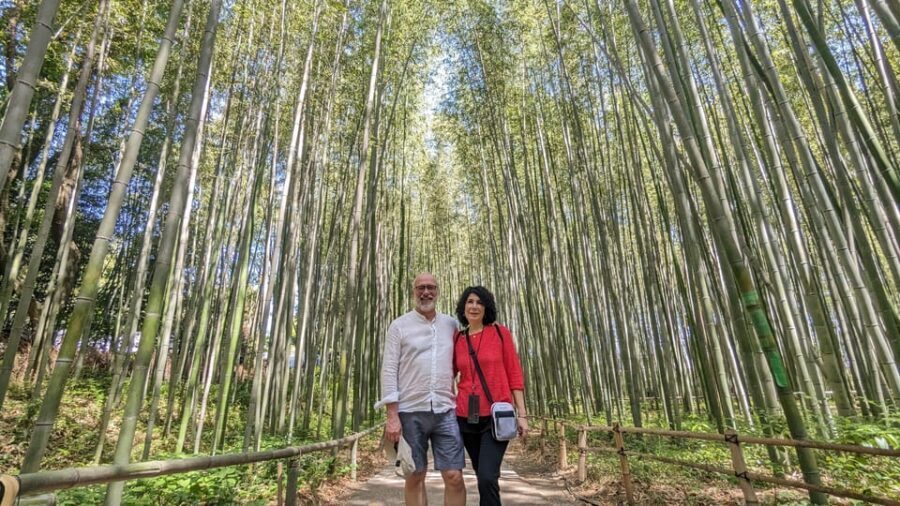
- Arashiyama Bamboo Forest plus nearby Nonomiya Shrine, with photo stops and room to breathe
- Tenryuji Temple (UNESCO), guided through Zen temple design and garden views
- Iwatayama Monkey Park with a short but steep hill, macaques, and city panoramas
- Kinkakuji Golden Pavilion with timed-feeling pond reflections and a walk around the grounds
Why this Kyoto route works in one full day
This is one of those Kyoto plans that respects reality. Kyoto’s highlights are scattered. If you try to DIY four big districts in one day, you lose hours to transit, crowds, and wrong turns. This route is built to keep moving while still giving you real time in each place.
You’ll cover about three of Kyoto’s most iconic areas—Fushimi Inari, Arashiyama, and Kinkakuji—using a mix of trains/tram and walking. The group size is small (up to 10 people), and there’s an option for a private group if you want more control over pace and questions.
One practical note I’m glad they state clearly: it’s not a bus tour. You’re walking portions of the day and transferring via public transit. That usually means faster, cheaper movement. It also means you should treat this like a hike day, not a museum day.
Other walking tours we've reviewed in Kyoto

Meeting at Kitsunezo and starting with Fushimi Inari Taisha
Your day begins at Kitsunezo, at a fox statue across the street from JR Inari Station. It’s an easy landmark to find, and it also makes sense for a Fushimi Inari start—less time warming up your bearings, more time getting into the torii flow.
Be there 10 minutes early. This matters because it’s a shared group and they start on time. If you show up late, you can’t join the tour after it departs, and there’s no refund in that case.
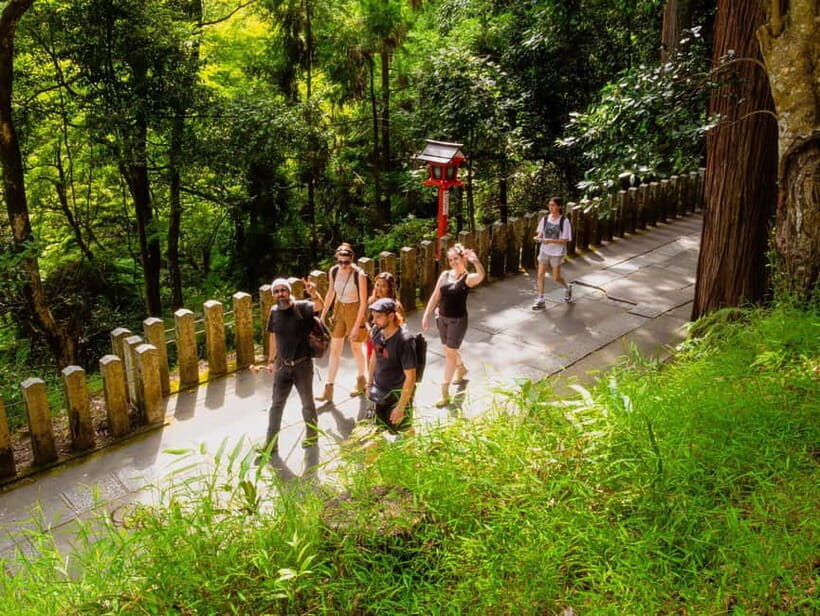
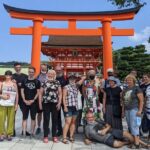
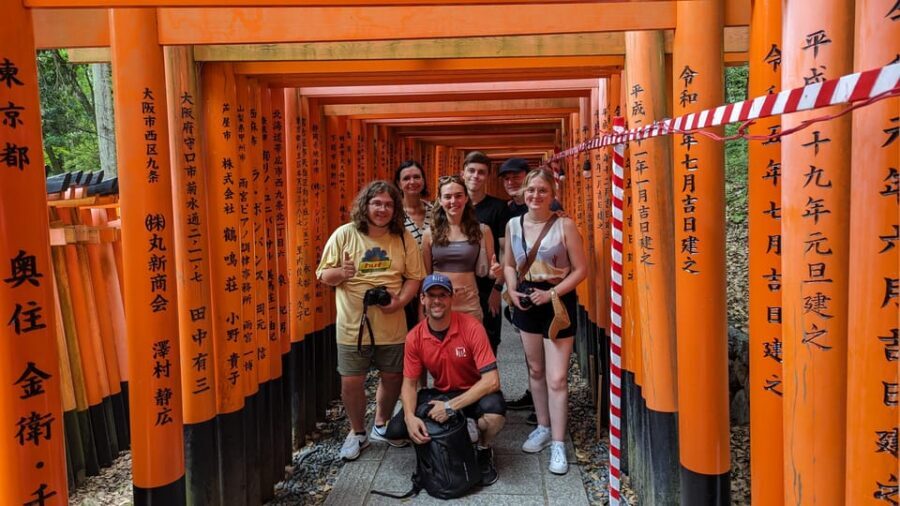
From there, it’s straight to Fushimi Inari Taisha. You’ll get about an hour here: guided tour, a visit, and a photo stop along the most famous torii sections. The route through the vermilion torii gates feels like a tunnel you walk through rather than a single photo spot you rush past.
What I like about how they structure this part: you’re not just standing under torii. You’re walking. That gives you options for shots—pillar lines, perspective angles, and framed glimpses deeper in the stairs. Just remember: shoes matter. The torii walk involves uneven steps and repeated uphill/downhill movement.
Public transit from Inari to Arashiyama (and why it saves your day)
After Fushimi Inari, you take a train connection that’s designed to cut down wasted travel. You’ll head to Kyoto Station using the JR Nara Line, then transfer to the JR Sagano Line and get off at Saga-Arashiyama Station.
There’s a short break built into the schedule around the station area. It’s not a long rest, but it’s enough time to reset—water, quick bathroom stop if needed, and regrouping with the guide.
I recommend you plan to use a transit card like Suica or Icoca for trains and buses. Transportation isn’t included in the tour price, so having the card ready avoids delays when you’re switching lines or hopping off at the next stop.
If you’re trying to keep your day from turning into a transit maze, this part is a big deal. The route is doing the navigation work for you, so you can spend your energy on walking the sights instead of studying maps.
Arashiyama Bamboo Forest and Nonomiya Shrine: calm time that still feels special
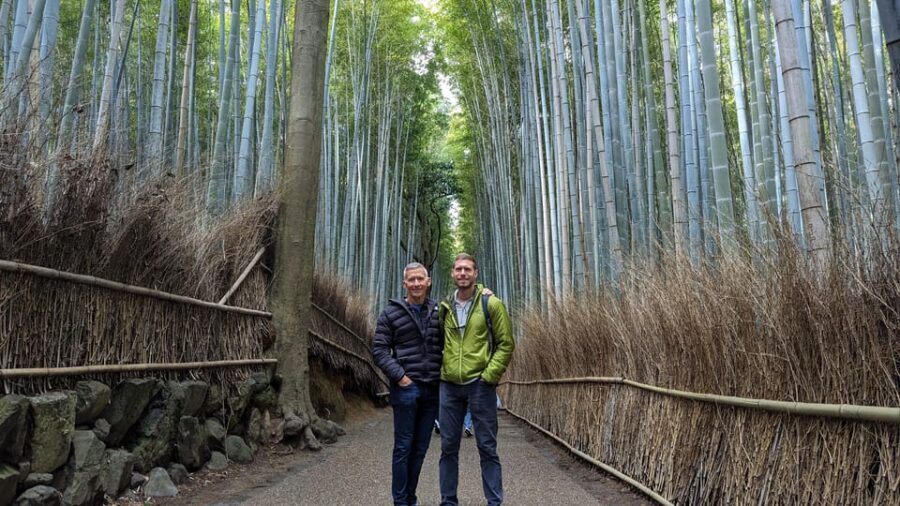
Once you’re near Arashiyama, the schedule brings you to the Arashiyama Bamboo Grove for about 45 minutes. You’ll have a mix of guided sightseeing, photo stops, and free time. That balance is important. Bamboo groves have two modes: you can sprint through for photos, or you can slow down and let the sound and light change as you move.
This tour leans toward the slower, more watchable version. You’ll walk at a leisure pace, with time to get a feel for the grove rather than treating it like a single backdrop.
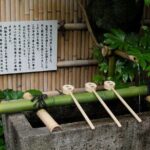
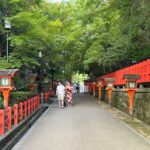
Next is Nonomiya Shrine (around 15 minutes). It’s a quick stop compared to the grove and the temples later in the day, but it gives the walk some variety. You’ll get a guided look plus time to pause, look around, and take in the shrine setting without rushing.
One small reality check: bamboo crowds can still happen. The advantage of having a guide and a plan is that you aren’t stuck figuring out where your best viewing time is. You follow the rhythm the route has already tested.
Tenryuji Temple: UNESCO Zen gardens without the guesswork
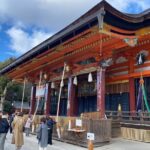
Right by the bamboo area is Tenryuji Temple, a UNESCO World Heritage Site and one of Kyoto’s notable Zen temples. You’ll get about 30 minutes, including guided explanation and time on your own.
This is the stop where the day shifts from “iconic photo” mode to “why Kyoto looks like this” mode. Tenryuji’s appeal is in the garden design and the way the temple and grounds work together. You’ll likely notice how the architecture frames views and how the greenery changes the feel of the space depending on where you stand.
What’s valuable here is the guide-led context. Even if you’ve seen pictures before, it’s hard to understand the logic of the space without someone pointing out what to look for. Guides in this group—people like Tom, Rémi, and others—are praised for being easy to understand and for answering questions in a way that connects the sights to daily Japanese culture and temple life.
Tip for your visit: take your time at the transitions. Spend a few extra minutes where you can compare the temple structure and garden views from different angles. That’s where the “Zen” experience becomes more than a label.
A few more Kyoto tours and experiences worth a look


Arashiyama lunch break: fuel up without losing momentum
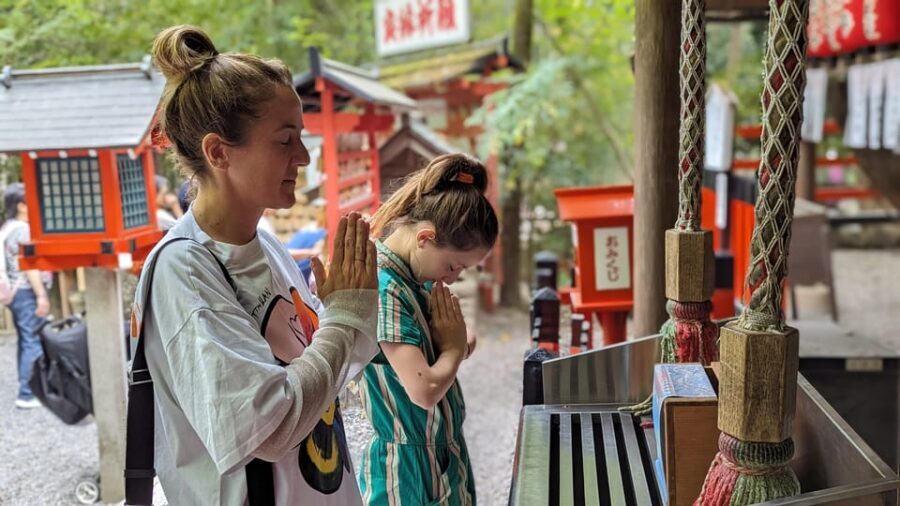
Then you get your Arashiyama lunch window, about 40 minutes of free time. Lunch itself is not included in the tour price, and you’ll also want to budget for your own food and drinks.
If you want structure, there’s an option for your guide to help with a proper lunch. The tour description includes meals with tables and chairs and hot/cold options, with kids’ vegetarian options available. Still, the lunch budget is separate, so bring cash and keep some flexibility.
This break matters because the day still has a steep hill and a late-day temple. If you skip the calories and water, Kinkakuji can turn into a “why did I do this” moment.
Practical move: eat earlier in the window if you can. Arashiyama spots can get busy, and you don’t want to spend your time waiting when you still have to climb.
Iwatayama Monkey Park: short steep hike, big payoff (if your knees agree)
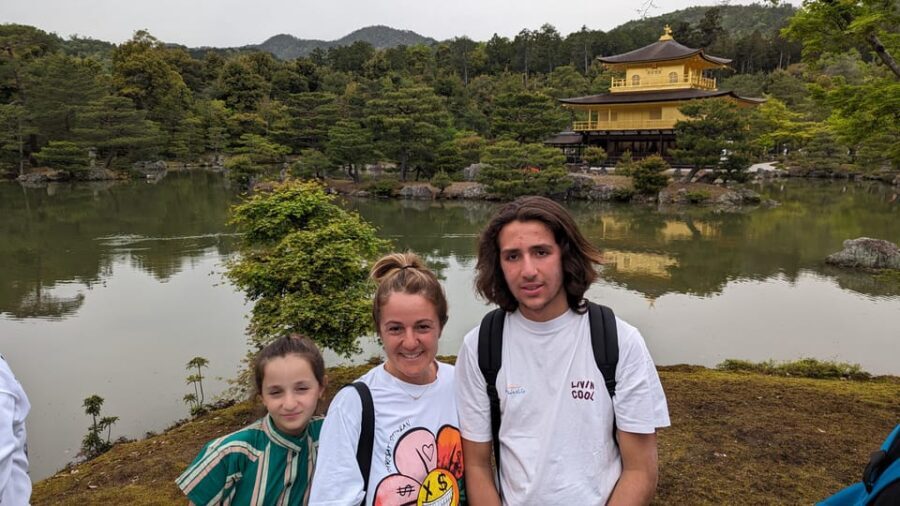
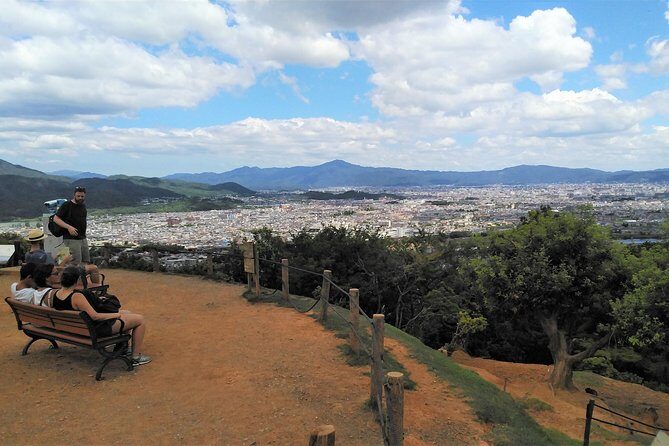
This part is the physical challenge. You’ll go to Iwatayama Monkey Park, where you can see wild Japanese macaques and enjoy panoramic views of Kyoto.
The climb itself is described as a short hike—about 20 minutes—but it’s also described as steep. And they’re clear that it’s not recommended for people with leg or knee injuries. For some people, it can take longer depending on physical condition, so don’t treat 20 minutes like a promise.
At the top, you can feed the monkeys (they specifically mention feeding) and enjoy the cityscapes. It’s one of those experiences that feels like a break from the temple rhythm—lively, funny, and a bit chaotic in the best way.
If you’re traveling with kids, this can still work as long as the child is comfortable hiking. One family experience in the group described it as enjoyable even with two teens, which is a good sign that the hike is manageable for people who can handle short climbs.
My advice: bring patience, not just stamina. The monkeys can be quick to move, and you’ll want time to watch them without rushing.
Getting to Kinkakuji: tram-to-foot for a smoother late day
After Monkey Park, the tour connects you to the area near the Golden Pavilion using tram rail. You’ll head to Randen Arashiyama Station, which is the nearest station to reach Kinkakuji.
The schedule then includes:
- a transit segment,
- a coffee break (about 10 minutes),
- and a final walk to the temple area.
That coffee moment sounds small, but it matters. By late afternoon, your legs will remind you you’ve been walking since morning.
Also note: you’re still using public transportation. If your card isn’t set, or you don’t know how you’ll pay, you’ll feel it. Get your Suica/IC card ready earlier and you’ll thank yourself later.
Kinkakuji Golden Pavilion: where the pond reflection becomes the point
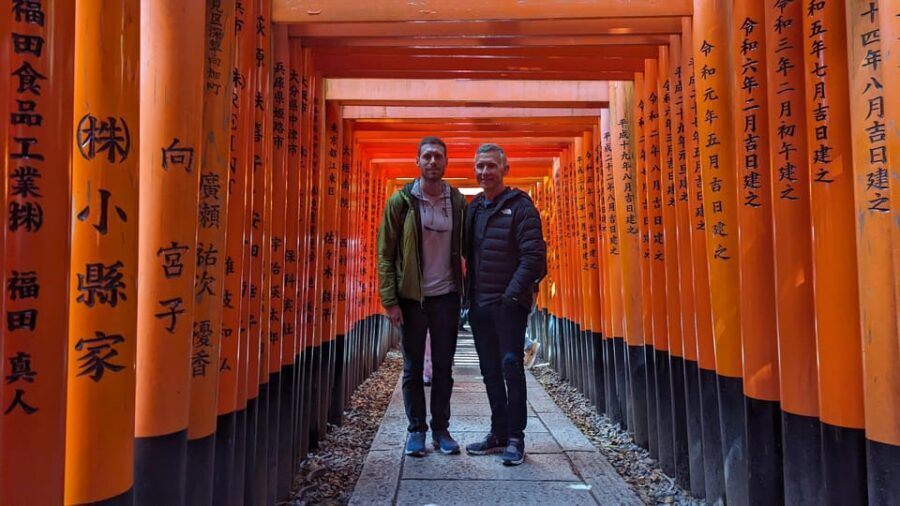
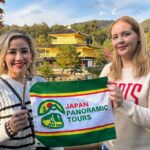
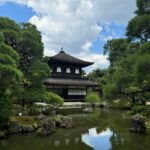
Kinkaku-ji (Golden Pavilion) is a Zen temple famous for its top floors covered in gold leaf. You’ll have about 45 minutes here, including photo time, guided visit, free time, and time for shopping near the area.
The pond reflection is a major part of the experience, especially in afternoon light. The tour’s timing is set so you can enjoy that reflective effect rather than only seeing Kinkakuji at the wrong moment in the day.
As you walk around the pavilion, keep your eyes on the changing angles. The same building looks different as you shift position, and the surrounding pond and gardens help create that “Kyoto postcard” feeling.
This is also a great place to slow down. If you only sprint from one landmark to another, the Golden Pavilion becomes just a pretty structure. If you let yourself walk the loop around it, it turns into something more memorable.
Staying comfortable on an 8-hour walking day
This is an 8-hour tour, though they note it can run around 30 minutes earlier or later. It’s long enough that weather and your personal pace matter.
Bring comfortable shoes and comfortable clothes. You’ll also want cash on hand. The tour doesn’t include food and drinks, and you’ll likely pay for your own lunch and whatever you want while passing shops near Kinkakuji.
Warm weather can be tough on a day like this. In one group experience, the tour was described as strenuous in hot weather, which matches the reality: you’re out walking most of the day, not resting under air conditioning.
One more rule that’s easy to overlook: be on time. The tour is structured for the route to work, and late arrivals can’t be accommodated after departure.
If you’re someone who likes to plan, use the schedule like a guide:
- Start strong at Fushimi Inari
- Eat and reset in Arashiyama
- Approach Monkey Park with a realistic pace
- Save your energy to enjoy Kinkakuji rather than just reach it
Price and value: why $96 can make sense
At $96 per person for an about 8-hour outing, the value comes from two places.
First, you get a guide all day. That matters in Kyoto because the sights are spread out and the cultural context helps you understand what you’re looking at.
Second, several key costs are included:
- Tenryuji Temple entrance ticket
- Monkey Park entrance ticket
- Golden Temple (Kinkakuji) entrance ticket
- Souvenir pictures downloadable from their private drive
- And you get help with skip-the-ticket-line entry
What you should expect to pay separately: transportation and lunch/food & drinks, plus any shopping.
So the question becomes: do you want to spend time figuring out tickets and logistics, or do you want a guided day that already connects the dots? If you’re doing Kyoto for the first time, or you just want a clean plan, this price can feel fair because it removes the friction.
Who should book this tour, and who should reconsider
This tour is a strong fit if you:
- want the big Kyoto hits in a single day
- like a blend of temples, gardens, and wildlife
- appreciate a guide who can answer questions in English, French, Spanish, or German (the tour lists these as available live guide options)
- want small-group energy (up to 10) without going fully private
It’s also a good option for families with older kids who can handle walking. One family described the day as enjoyable with teens, and the guide was praised for organization and multilingual support.
You should reconsider if:
- you have leg or knee injuries and want to avoid the steep Monkey Park hill
- you expect a low-walking day
- you need extra flexibility for late starts, because the tour starts on time and you can’t join if you arrive late
Should you book this Kyoto walking tour?
I think you should book it if you want a well-structured “greatest hits” Kyoto day with the important tickets handled and a guide keeping the flow moving. The route makes sense: torii at Fushimi Inari, bamboo and Zen at Arashiyama, macaques at Monkey Park, and Kinkakuji late-day reflections.
Skip it if your knees hate hills or if you’re looking for a short, relaxing tour with minimal walking. This is an active day. If you’re okay with that, you’ll get a lot of Kyoto in one go—and you won’t be stuck playing transportation roulette.
FAQ
FAQ
Where is the meeting point for the tour?
You meet your guide in front of KITSUNEZO, a fox statue just across the street from JR Inari Train Station.
How long is the tour?
The tour is approximately 8 hours. It can vary by about 30 minutes.
Is this tour a bus tour or a walking tour?
It’s a walking tour that uses public transportation, not a bus tour.
What’s included in the tour price?
Included are the English/Japanese guide, tickets for Tenryuji Temple, Monkey Park, and Golden Temple (Kinkakuji), plus souvenir pictures downloadable from their private drive.
What is not included?
Transportation (you’re advised to use a Suica or Icoca card), lunch, food and drinks, and shopping/souvenirs are not included.
Is there an option for a private group?
Yes, private group options are available.
How big is the group?
This is a shared group tour and can have up to 10 people.
Can I skip ticket lines?
Yes. The tour includes skip the ticket line.
Is the Monkey Park hike suitable for everyone?
No. It’s not recommended for people with leg/knee injuries, and for some guests the climb may take longer than the stated short hike time.
What if I arrive late?
The tour must start on time for this shared format. If you’re late, you cannot join the tour and will not be given a refund.