Hiroshima, then Miyajima, all in one long day. This tour mixes two very different sides of Japan: the postcard calm of Itsukushima Shrine and the unforgettable weight of Hiroshima’s Peace sites. I like that it handles the big logistics for you, with Kyoto to Hiroshima by Shinkansen, ferry transfers on the back half, and a licensed English guide helping you connect the dots.
Two things I especially like: the smooth end-to-end transport (including reserved seating setup) and the fact that the Hiroshima segment comes with an English guide interpreter who puts the atomic bombing story into context, not just dates on a screen. One thing to keep in mind is the timing. It’s about a 13-hour day, and the Hiroshima Museum and Miyajima moments are limited enough that you may feel mildly rushed if you want to linger.
In This Review
- Key highlights worth showing up for
- From Kyoto Station to Hiroshima: the Shinkansen part that keeps you sane
- Getting to Miyajima: ferry time, deer, and choosing the right pace
- Itsukushima Shrine: what to do with your one-hour stop
- Lunch on Miyajima: plan for no meal included
- Hiroshima Peace Memorial Park and Museum: a guided visit that changes how you see it
- Atomic Bomb Dome and the surrounding memorials: preserved structures and hard details
- The pacing reality: where the day feels tight (and how to work with it)
- Price and value: what you get for $399.71 per person
- Who this full-day Kyoto to Hiroshima and Miyajima tour fits best
- Should you book this tour or plan on your own?
- FAQ
- What time does the tour start, and where do I meet?
- How long is the full-day tour?
- Is lunch included?
- Which major sites does the tour include?
- Is an English guide provided?
- How do you get back to Kyoto?
Key highlights worth showing up for
- Shinkansen round-trip from Kyoto so you lose less time to trains and transfers
- Itsukushima Shrine (UNESCO) plus the classic torii-at-tide look
- Miyajima ferry ride (the boat time is part of the experience)
- Hiroshima Peace Memorial Museum (UNESCO) with guided interpretation
- Genbaku Dome / Atomic Bomb Dome as a preserved symbol of WWII
- Small group size (max 40) which helps the day move smoothly
From Kyoto Station to Hiroshima: the Shinkansen part that keeps you sane
I really value when a day trip removes decision-making. Here, pickup is at the JTB Sunrise Tours Desk inside Avanti (Avanti B1F), across from Kyoto Station’s Hachijo Exit, starting at 7:30am. You’ll walk over to Kyoto Station with staff, then board the bullet train for the ride to Hiroshima Station.
The Shinkansen stretch is roughly two hours each way (the schedule shows about 1 hour 40 minutes for parts of the Kyoto↔Hiroshima segments). That matters because Hiroshima and Miyajima aren’t close to Kyoto. If you plan it on your own, you end up juggling train timing, reserved seats, and ferry connections. This tour aims to reduce all of that stress.
A practical tip: Avanti is a mall-like building, and the meeting desk is in the basement level. Plan to arrive a few minutes early so you can get your bearings fast and avoid the “where is the counter” scramble.
A few more Kyoto tours and experiences worth a look

Getting to Miyajima: ferry time, deer, and choosing the right pace
After you arrive in Hiroshima, you head toward Miyajimaguchi by train or vehicle, then transfer to a boat to Miyajima. The boat ride is about 45 minutes, and that’s not filler. Miyajima is a place where the scenery is part of the arrival, not just the destination.
On the island, you’ll have about one hour allotted before lunch on your own. You can expect tame deer to show up around the paths, and that adds to the island’s “everyone’s in on the magic” feeling. And yes, Itsukushima Shrine is the headline: established in the 6th century, famous for its Shinden-zukuri architectural style, and known for the iconic torii gate appearance at high tide.
Important reality check: you don’t control the tide on a fixed tour schedule, and the time is tight. Still, even without the perfect postcard view, the shrine grounds and the waterfront setting are worth your attention.
Itsukushima Shrine: what to do with your one-hour stop
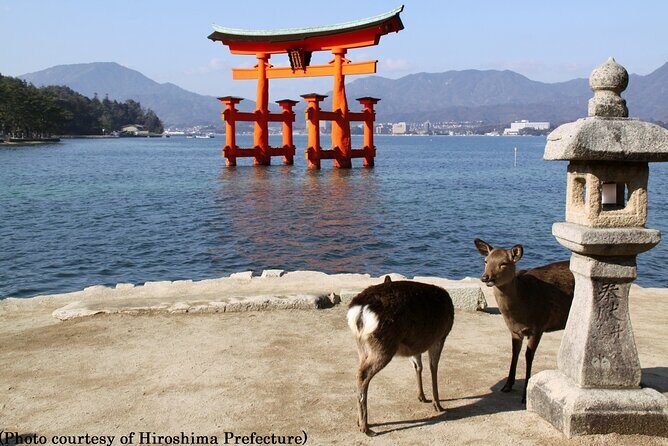
With only about an hour at the shrine area, you’ll do best by treating this as a focused walk, not a slow wander. I recommend you pick a simple plan as you arrive:
1) Get your photos and first impressions near the waterfront areas tied to the torii view.
2) Then shift to the shrine itself and notice the wooden structures and the way the building design works with the water setting.
3) Keep your energy for the return ferry. The rest of the island will still be there, but your time window is the limiting factor.
This is one spot where the guide can really help. In the Hiroshima portion, you’ll get extra explanation, but even for Miyajima, your guide’s orientation can help you avoid spending your hour on the wrong “loop” of paths.
Lunch on Miyajima: plan for no meal included
Lunch is not included. You’ll have time on Miyajima, and you’re free to eat wherever you like. The tour notes common local options such as oysters, Hiroshima-style okonomiyaki, and conger eel rice bowl, available at many shops on the island.
Here’s the practical move: decide early whether you want something quick (like a snack-and-walk style meal) or a sit-down lunch. With time constraints, you don’t want a long line to eat into your shrine time. If you’re traveling with picky eaters, I’d also recommend you pick a place that has clear menus and is used to visitors.
Also, be ready for crowds. Miyajima draws a lot of people, especially on good-weather days. In a tight schedule, the difference between an efficient lunch stop and a slow one can be the difference between feeling relaxed or feeling rushed.
Hiroshima Peace Memorial Park and Museum: a guided visit that changes how you see it
This is the emotional core of the tour. In the afternoon, you’ll visit Hiroshima Peace Memorial Park (UNESCO) and the Hiroshima Peace Memorial Museum, where the atomic bombing on August 6, 1945 is explained through exhibits. The structure here is designed for reflection, but without guidance it’s easy to get lost or skip the details that make the story hit harder.
What I like is that the guide leads you through the museum and shares key context. Many guides in this program have been praised for humor and clarity in earlier parts of the day, and then for handling the heavier material with care and good pacing during Hiroshima. Names that have come up include Angela, Masoko, Azusa, Sato, and Takeshi, with multiple people specifically mentioning how engaging and well-organized the guide was.
Time check: you’re looking at about one hour at the museum. That’s enough to see the main exhibits, but not enough to read every caption word-for-word. If you’re the type who likes to linger, you might feel like the museum ends too soon. On the other hand, if you want a powerful overview without turning the day into an all-day museum marathon, this structure can work well.


Atomic Bomb Dome and the surrounding memorials: preserved structures and hard details
After the museum, you’ll finish in Hiroshima by visiting the Genbaku Dome (also called the Atomic Bomb Dome or Hiroshima Peace Memorial). This is one of the few buildings that survived the bombing and was preserved as a symbol of peace and the elimination of atomic weapons.
The tour also ties in nearby memorial elements: the Children’s Peace Monument, draped with thousands of origami cranes made by children, and the Atomic Bomb Memorial Mound, which contains the ashes of 70,000 bomb victims. The note that many victims were unidentified or had no surviving relatives adds an extra layer of grief that the memorial scene carries.
Stop time here is about 40 minutes. That sounds short, but the area is powerful, and you don’t need long to feel the weight of what you’re seeing. Still, if you like to sit with a place, give yourself at least a few minutes to stand back and take in the scale of the Dome and the memorial layout.
The pacing reality: where the day feels tight (and how to work with it)
This tour is built for people who want the big hits in one day, not for people trying to master every detail. The schedule is roughly:
- Start in Kyoto around 7:30am
- Kyoto-to-Hiroshima by Shinkansen
- Transfer to Miyajima and spend about 45 minutes getting there by boat
- About one hour on Miyajima before lunch time and return
- Peace Park and Museum in the afternoon
- Genbaku Dome finish, then return to Kyoto by late evening
You end around 9:00pm back at Kyoto Station. No hotel drop-off is provided, so you’ll want to plan your evening transport. If you’re thinking of taking a long train connection right after, I’d choose something with a cushion.
One more pacing detail: many people praise the organization and the guided structure. But some feedback points out that museum time can feel rushed and that Hiroshima gets squeezed by the need to include Miyajima as well. If Hiroshima is your top priority, lean into the museum and peace park as your main focus, and treat Miyajima as “see the shrine, enjoy the island mood, eat, and move.”
Price and value: what you get for $399.71 per person
At $399.71 per person, this is not a budget day trip. But it’s also not just a sightseeing walk. You’re paying for the big pieces that cost time and mental energy if you do it yourself:
- Shinkansen transportation round-trip between Kyoto and Hiroshima, including reserved seating setup
- Ferry/transfer time between Hiroshima and Miyajima
- Admissions and related fees, including Itsukushima Shrine, Hiroshima Peace Memorial Museum, and the Miyajima visitor tax
- A licensed English guide interpreter during the Hiroshima segment
- A mobile ticket, which usually makes logistics smoother day-of
The one clear miss on value is lunch. It’s on your own at Miyajima. If you’re the kind of eater who wants a long sit-down meal, you might spend extra here compared with a quick shop stop.
Overall, I think the best value is for people who:
- want Hiroshima’s meaning explained clearly,
- don’t want to spend their day on transfers and seat-finding,
- and can handle a packed schedule without needing hours at each site.
Who this full-day Kyoto to Hiroshima and Miyajima tour fits best
This tour fits best if you want a guided, high-efficiency day with two UNESCO stops and two major Hiroshima sites. It also works well for families and mixed-age groups, especially because the guide helps keep everyone together and oriented.
It might feel less perfect if you:
- want very slow museum time,
- care more about Miyajima than Hiroshima,
- or get easily frustrated by tight schedules.
Group size is capped at 40, which is big enough to be lively but small enough that the tour can stay organized.
Should you book this tour or plan on your own?
Book this tour if you want Hiroshima and Miyajima in one day with transport handled, admissions included where it matters, and guided interpretation where the story is hardest to read on your own. The biggest strength is that it turns a complicated logistics day into a guided sequence you can trust.
Consider planning independently if you’re the type who wants deep, unhurried time in the Peace Museum or if you’d rather control your lunch and island route without a set itinerary.
If you’re torn, pick your priority. If Hiroshima is the “must-do,” this tour’s guided focus and built-in time allocation make it a practical way to get it done with meaning.
FAQ
What time does the tour start, and where do I meet?
The tour starts at 7:30am at the JTB Sunrise Tours Desk inside Avanti (Avanti B1F), across from Kyoto Station’s Hachijo Exit.
How long is the full-day tour?
It runs about 13 hours 20 minutes.
Is lunch included?
No. Lunch isn’t included, and you eat on your own at Miyajima.
Which major sites does the tour include?
You visit Itsukushima Shrine on Miyajima, the Hiroshima Peace Memorial Park and Hiroshima Peace Memorial Museum, and the Genbaku Dome (Atomic Bomb Dome).
Is an English guide provided?
A national government licensed English guide interpreter is provided during the Hiroshima segment.
How do you get back to Kyoto?
After the Hiroshima portion, you board the Shinkansen back to Kyoto Station. The tour ends on arrival around 9:00pm, with no hotel drop-off.