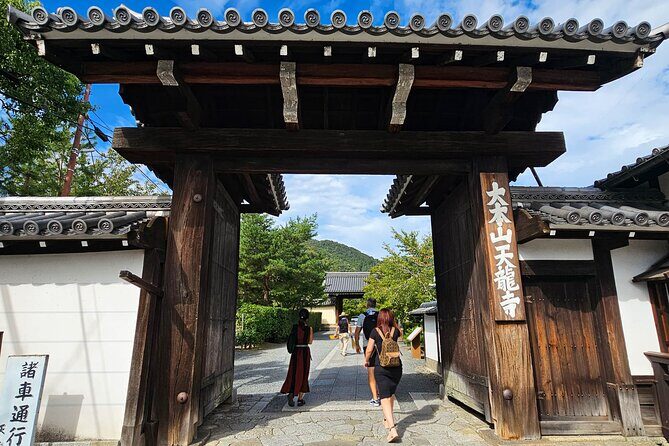
Ten Kyoto icons in one long day. This is a full-course Kyoto tour built for first-timers and people short on time: you move by foot plus public transport, guided by locals who know the etiquette, history, and practical ways to get around. I love how the experience mixes sightseeing with real-life lessons like how to use public transit and what local manners look like day to day.
The big thing to consider is the effort. You’re signing up for a serious walking day (over 20,000 steps is part of it), and the route starts on time, with no room for late arrivals.
I also love the way the day doesn’t just chase famous buildings. You get Arashiyama to Gion in one shot, plus everyday Kyoto energy in places like Kiyomizu-zaka and Sanneizaka. And yes, lunch is part of the rhythm too: a conveyor-belt sushi stop where you order from what’s available.
In This Review
- Key points before you go
- A Kyoto full-day route that actually solves the hard part
- Price and value: what $98.83 covers (and what it doesn’t)
- Meeting at Saga-Arashiyama: where your day begins
- Arashiyama bamboo forest: the morning shortcut to atmosphere
- Kinkakuji and Ryoan-ji: the classic contrast in one stretch
- Fushimi Inari: torii gates and how to enjoy the climb on a tight clock
- Kiyomizu-zaka and Sanneizaka: the street Kyoto you can actually spend time in
- Kiyomizu-dera plus the Yasaka Pagoda area: big views, fast transfers
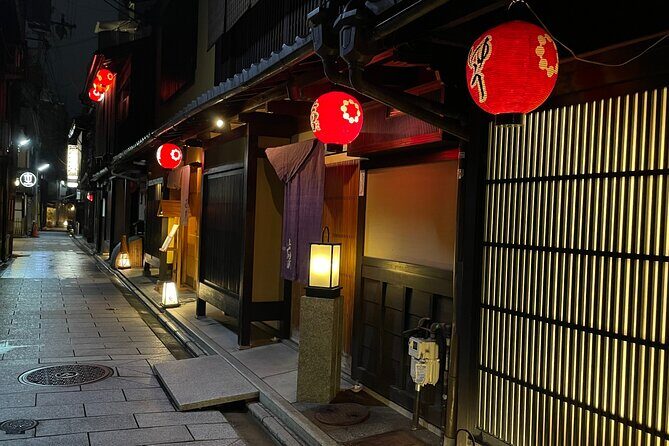
- Gion at the end of the day: an atmospheric place to land
- Lunch at a conveyor-belt sushi stop: convenient, but choose wisely
- Transportation tips that keep the day from feeling chaotic
- Who should book this tour, and who should think twice
- Should you book this Kyoto full-course tour?
- FAQ
- What time does the tour start, and where do I meet?
- How long is the Kyoto full course tour?
- How many travelers are in the group?
- What’s included in the tour price?
- Is lunch included?
- Are temple and shrine entrance fees included?
- Do I need transportation money during the tour?
- Should I have an IC card like Suica or PASMO?
- Is the tour difficult to walk?
- Is it refundable if I cancel or miss the start time?
Key points before you go
- Small group (max 10) means you’re not lost in a crowd, even when you’re moving fast.
- 10 major stops plus side-stops cover Arashiyama, temples, shrines, and Gion without wasting half your day commuting.
- 20,000+ steps and lots of transfers make this best for people with moderate fitness and comfy shoes.
- Local guides like Megumi and Masako are repeatedly praised for pacing, humor, and clear explanations.
- Lunch is at a sushi-go-round spot, and vegetarian options may be limited to what’s on the menu.
- Not all entrances are included, so you’ll want to budget for temple/shrine fees and transport.
A Kyoto full-day route that actually solves the hard part
Kyoto is one of Japan’s most beautiful cities, and also one of the trickiest cities to plan. Stops are spread out, buses can feel like a puzzle, and walking distances add up fast. This tour is built for that exact problem: it’s a structured day that strings together the classic sights and a few more lived-in streets, so you can stop thinking about logistics and start enjoying what’s around you.
What makes it feel especially useful is the guide style. Guides are trained locals, not just people reading facts off a card. You get help understanding what you’re seeing—why certain places are revered, what visitors should watch for, and how etiquette shows up in everyday moments. In a city where you might otherwise be stuck figuring out what matters most, that guidance helps you feel oriented fast.
The pace is intense, though. If you’re the type who wants long sits, slow photos, and lots of detours, this may feel like you’re power-walking through your must-sees. But if you want the “show me Kyoto” day, this hits that goal very directly.
If you're still narrowing it down, here are other tours in Kyoto we've reviewed.


Price and value: what $98.83 covers (and what it doesn’t)
The tour price is $98.83 per person, and it includes the tour fee and consumption tax. That’s your baseline for a full day of planning, guiding, and moving between neighborhoods with a tight schedule.
What you should still budget for:
- Transportation: about $10 (¥1,340) per person
- Food and drinks: about $6.8–$14 depending on what you order
- Entrance fees: about $11 (¥1,600) total
To me, the value comes from where the tour spends the most effort: reducing planning time and making multiple far-apart neighborhoods workable in one day. Without a route like this, most first-timers spend their energy on figuring out transit, queue timing, and what to drop. You’re paying for that pressure to be handled for you—while still letting you choose how you handle food and optional costs.
Meeting at Saga-Arashiyama: where your day begins
You meet at JR Saga-Arashiyama Station (the meeting point address is listed near Saga-Arashiyama), with the tour starting at 8:50. The schedule is strict: the experience starts on time, and late arrivals can’t join.
That matters more than it sounds. Arashiyama and the temple circuit can get crowded, and the tour is designed so you’re not fighting peak congestion at every stop. Showing up early helps you get the best of the morning energy.
The day ends in Gion, specifically the Gion Shopping Street area. That’s a nice finish because it drops you into one of Kyoto’s most atmospheric zones right after you’ve already seen the big-ticket sights.
Arashiyama bamboo forest: the morning shortcut to atmosphere
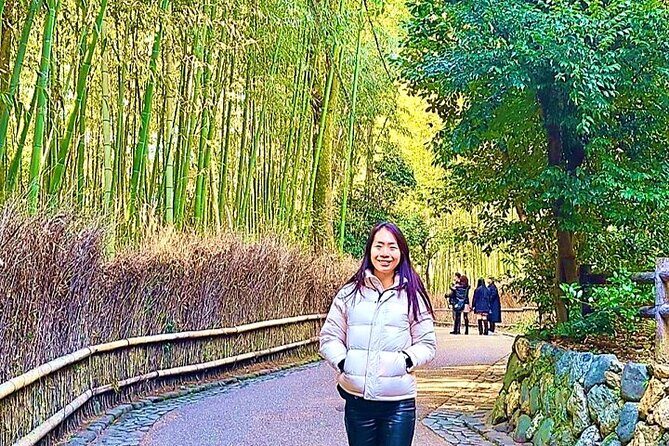
The day’s first stop is Arashiyama, with a bamboo forest and a surrounding forested mountain feel. You get about 30 minutes here, and the key is that you’re visiting early enough to catch the place before it turns into a wall of people.
Two things help make this stop work even with limited time:
- You’re there with context from the guide, so you’re not just staring at a photo backdrop.
- The route flows onward so you don’t waste the rest of the morning trying to cram the next stop.
One drawback is obvious: 30 minutes goes fast in a place where you’ll want to look around, take photos, and breathe it in. If bamboo quiet time is your top priority, you may want to return later on your own.
Kinkakuji and Ryoan-ji: the classic contrast in one stretch
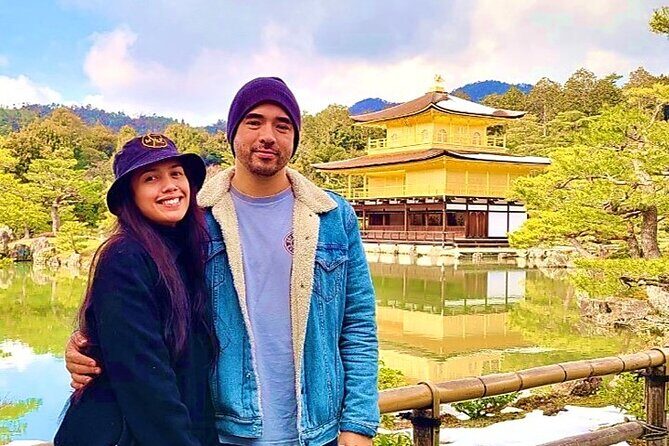
Next up is Kinkakuji (Golden Pavilion). This is the famous one, and you’ll understand why in minutes. It’s visually striking, and it’s also one of those places where the surrounding atmosphere matters as much as the main view. Your stop is about 30 minutes, and admission is not included.
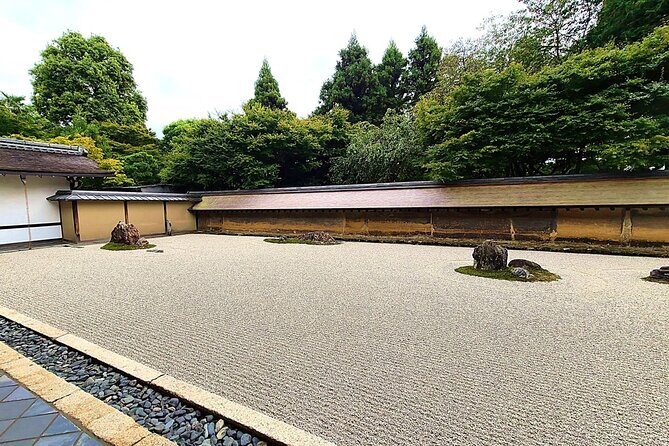
Then comes Ryoan-ji Temple, known for its stone garden. Even if you don’t read much beforehand, the guide helps you slow down and see the garden the way it’s meant to be experienced. One detail that adds personality is that Queen Elizabeth visited and praised the garden, which makes the place feel connected to more than just Kyoto day-trips.
Trade-off: both stops are short, so you’ll want to choose what you focus on—views, garden angles, or just letting the place land. If you try to do everything at full speed, you’ll walk away impressed but not fully satisfied.

Fushimi Inari: torii gates and how to enjoy the climb on a tight clock
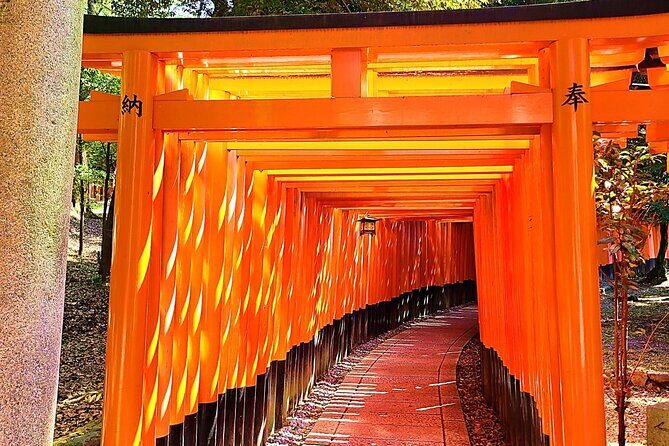
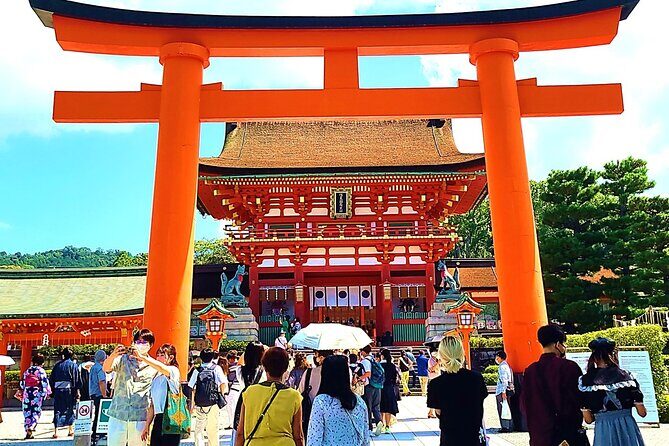
Fushimi Inari-taisha is the No. 1 sightseeing stop for overseas customers for a reason. The 1000+ red torii gates line the paths, and the visual rhythm makes you feel like you’ve stepped into a different kind of Kyoto.
This stop is about 30 minutes, admission not included. That’s enough to experience the main corridor, but not enough to do a full deep climb. The trick for enjoying it here is mindset: don’t try to conquer it like a hiking goal. Treat it like a sensory walk—watch the gate-to-gate pattern, pause for the view angles, and keep moving when the group needs to.
If you’re prone to getting stuck photographing every step, you might feel rushed. Still, as an introduction, it’s hard to beat.
Kiyomizu-zaka and Sanneizaka: the street Kyoto you can actually spend time in
From shrines, you move into street Kyoto.
Kiyomizu-zaka Street is a lively strip with souvenir shops and local eateries. You get about 30 minutes, and it’s an easy place to slow down because you’re not fighting temple gates or paid entry points. Even if you don’t buy anything, it’s useful to see what Kyoto looks like when people are shopping, snacking, and strolling.
Then you head to Sanneizaka, another beautiful pedestrian slope with souvenir-lined charm. It’s quieter than some areas, and it feels more like a neighborhood edge than a strict tourist funnel.
The possible drawback is also simple: these streets can be busy, especially in peak hours. You’ll want to stay flexible and follow the host’s flow so the day keeps working.
Kiyomizu-dera plus the Yasaka Pagoda area: big views, fast transfers
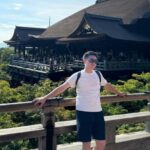
Kiyomizu-dera is next, about 30 minutes. This is one of the most popular temple stops for Japanese visitors too, not just international crowds. A detail worth knowing beforehand: the wooden stage is described as using no nails. You’ll only get a short time here, so focus on the viewpoint moments and the architectural highlights the guide points out.
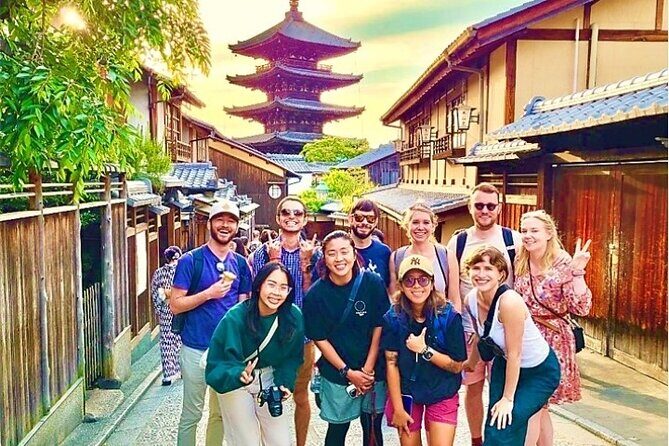
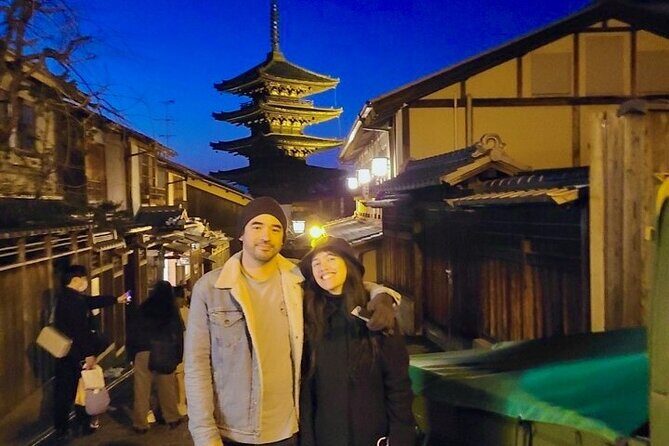
Then you move to Hokan-ji Temple, where the Yasaka Pagoda shows up as a major symbol of Kyoto. You’re there around 30 minutes, and admission is listed as free.
This pairing works because it gives you two types of “Kyoto skyline” feelings: wide temple views plus a recognizable Kyoto landmark silhouette. With limited time, that’s a smart use of your day.
The one warning: temple circuits tend to involve uneven ground, steps, and crowds. The tour expects moderate physical fitness, and the overall day is already demanding.
Gion at the end of the day: an atmospheric place to land
Finally, you finish in Gion. You get about 30 minutes here, and it’s a strong ending because Gion feels like Kyoto’s old-world mood turned up.
This is where you can exhale and look around without the pressure of another big ticket admission. If you’re hoping for photos that look like Kyoto postcards—narrow lanes, traditional styling, and the sense that you’re walking through a living historic district—Gion is where you’ll feel it.
Lunch at a conveyor-belt sushi stop: convenient, but choose wisely
Lunch is set at a sushi-go-round place. It’s part of the schedule, and you’ll be guided to where lunch happens.
What’s important to know: food cost isn’t included in the base price. The data lists food and beverage expenses around $6.8–$14 depending on your order.
Vegetarian planning needs attention. One of the notes shared for the experience says only some menu items might work for vegetarians at a sushi-go-round style restaurant. Also, there’s been at least one complaint that lunch didn’t cater well for vegetarians. So if you’re vegetarian, plan for compromises and consider bringing backup ideas, or be ready to pick from what’s available.
The upside: sushi-go-round lunch is usually fast and easy in a day like this. It keeps the tour moving and avoids the long sit-down waiting that can break tight itineraries.
Transportation tips that keep the day from feeling chaotic
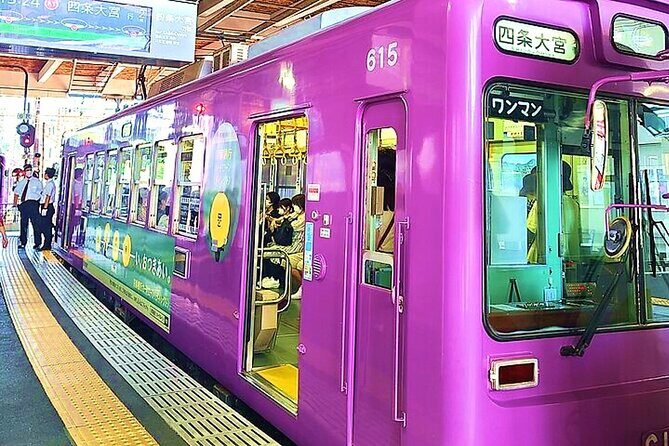
You’ll use public transit, which is why the tour stresses preparation. Kyoto transit can be complicated, and this route relies on you following the host and moving with the group.
Practical tips:
- Have a transport IC card ready, like SUICA or PASMO.
- Bring cash for the parts that are not included (especially food and entrance fees if you need to pay on-site).
- Stay with the group. If you break away, the host can’t look for you, and there are no refunds tied to getting separated.
Also, remember the day is designed to run like clockwork. The tour starts at 8:50, and it’s described as starting on time. That’s the difference between a smooth day and a stressful scramble.
Who should book this tour, and who should think twice
This tour is a good fit if:
- You want a first-day orientation to Kyoto’s layout and top sights.
- You have limited time (3 days in Kyoto often means you’re trying to pick the best use of Day 1).
- You like moving by foot and transit and you’re okay with a structured pace.
- You want a guide-led explanation, not a self-guided scavenger hunt.
This tour may not be the best fit if:
- You need a low-walking experience. With 20,000+ steps and lots of transfer walking, it’s intense.
- You need step-free access at every stop. One review pointed out that many top sights were not accessible for a wheelchair, and the schedule doesn’t suggest alternate routes.
- You’re sensitive to crowding. Temple and shrine areas can feel packed, and the short time blocks mean you’re moving through rather than staying.
The guide factor helps a lot. Named guides like Megumi and Masako show up repeatedly in positive feedback, with people praising their communication and humor. A strong guide can make a demanding day feel manageable.
Should you book this Kyoto full-course tour?
I’d book it if you want the classic Kyoto checklist handled for you in one long day, and you’re ready for serious walking. The route has logic: Arashiyama early, then Kinkakuji and Ryoan-ji, then Fushimi Inari, then street Kyoto around Kiyomizu-zaka and Sanneizaka, finishing with big temples and landing in Gion.
I’d pass or plan carefully if you’re not comfortable with 20,000+ steps, need strict accessibility accommodations, or have vegetarian needs you can’t flex on. In those cases, you’ll probably enjoy Kyoto more with fewer stops and more time to slow down.
If you do book, go in with the right expectations: this is a fast-paced sightseeing day, not a sit-down history seminar. Bring good shoes, a train-friendly mindset, and a willingness to move. You’ll likely leave with a strong sense of where Kyoto is—and which neighborhoods you’ll want to explore next on your own.
FAQ
What time does the tour start, and where do I meet?
The tour meets at JR Saga-Arashiyama Station. The start time is listed as 8:50, and the program starts on time. The meeting point details are provided with the station address.
How long is the Kyoto full course tour?
The duration is about 9 hours 30 minutes.
How many travelers are in the group?
The tour has a maximum of 10 travelers.
What’s included in the tour price?
The tour fee and consumption tax are included. Transportation, food and beverages, and entrance fees are not included.
Is lunch included?
Lunch is not included in the base price. The tour includes a conveyor-belt sushi lunch stop, and you pay for what you order (with an estimated cost range provided).
Are temple and shrine entrance fees included?
No. Entrance fees are listed as not included, with an estimated total of about $11 (¥1,600) per person.
Do I need transportation money during the tour?
Yes. Transportation expenses are listed as about $10 (¥1,340) per person.
Should I have an IC card like Suica or PASMO?
Yes, it’s recommended to prepare an IC card (SUICA/PASMO) in advance for getting around.
Is the tour difficult to walk?
It’s designed for people with moderate physical fitness, and the day involves walking over 20,000 steps.
Is it refundable if I cancel or miss the start time?
It’s non-refundable and cannot be changed. Late arrivals are not allowed to participate, and there are no refunds.