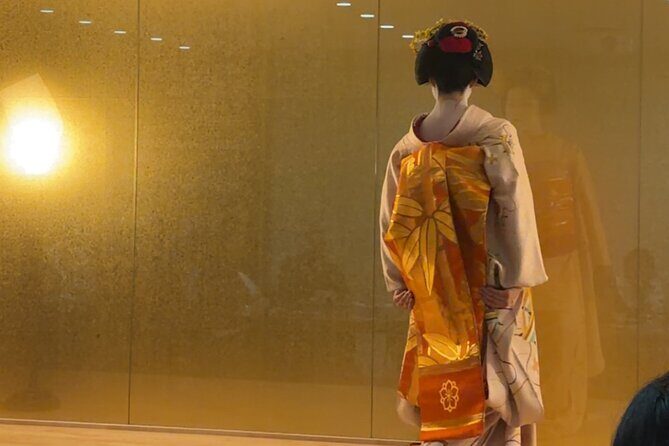
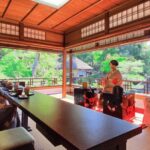
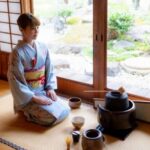
Maiko on stage beats street sightings. This 90-minute Kyoto show gives you a guaranteed look at traditional dance by an apprentice geisha, not a hope-and-pray street encounter. I like that it stays human-sized, with a max group of 14, and your guide handles English translation so you can actually ask questions.
The best part is the chance to hear what daily life looks like in training—from customs to work habits—directly from a maiko during the Q&A. It’s not just a performance with the lights going down; it’s a conversation while you still get one or two polished songs and dance moments on stage.
One thing to consider: this is a fixed, ticketed format in one session. If you’re hoping for a long evening wandering the geiko districts on your own, this will feel short and structured—by design.
In This Review
- Key things to know before you go
- What you’re really buying: a maiko chat plus a stage show
- The 90-minute flow: how the session typically unfolds
- How the Q&A changes the whole experience
- Meet the guide: translation quality is the real “luxury”
- Watching the dances: what to pay attention to (so it doesn’t become “just pretty”)
- Photos: expect time, but follow the mood
- The location: Honmachi and why it’s practical
- Value check: is $105.42 really worth it?
- Who this suits best (and who might want to skip)
- Tips to make your questions land well
- Brief practical notes (so there are no surprises)
- Should you book Kyoto Geisha Show Cultural Hour with a maiko?
- FAQ
- How long is the geisha show experience?
- What exactly is performed?
- Will I understand what’s happening if I don’t speak Japanese?
- How big is the group?
- Where does the tour take place?
- What’s included in the price?
- Is coffee or tea included?
- Do I need to book far in advance?
- Is it refundable if I change my mind?
- What happens if the weather is bad?
Key things to know before you go
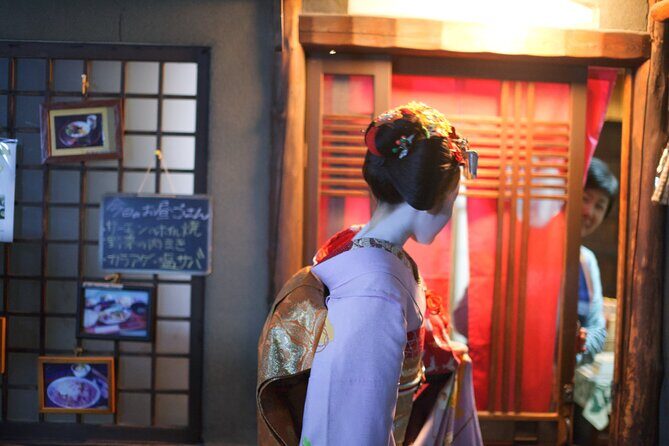
- You’re watching an apprentice geisha (maiko), with a short set of songs and dance on stage.
- Q&A is built in, so you’re not stuck only watching from afar.
- English translation throughout via an English-speaking guide.
- Small group (max 14) helps questions feel more personal and less like a classroom.
- Performance time is about one hour, wrapped in a 1.5-hour experience total.
- Honmachi (Kyoto) location is near public transportation, so you’re not stuck with a long commute.
What you’re really buying: a maiko chat plus a stage show
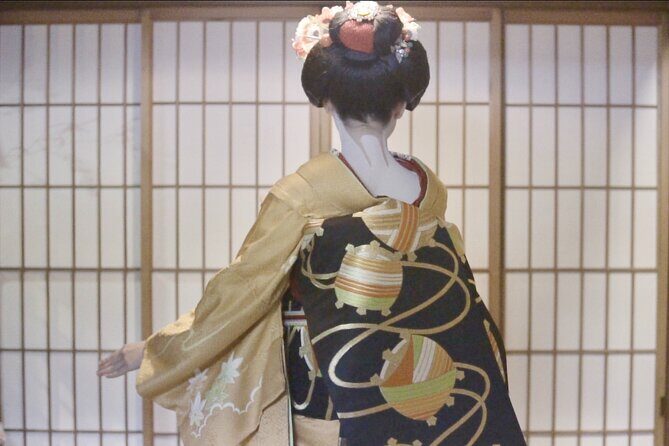
Kyoto’s geisha culture has a strong visual pull—elegant kimono, careful gestures, the music and the setting. But the tricky part is access. Street sightings are rare these days, and many visitors only get a short, one-way performance.
This experience is built around two things at once: you get a stage performance by a maiko, and you get a real Q&A where the conversation can go beyond the usual “where are you from?” scripts. The session is designed to reduce language friction with an English-speaking guide translating for you. That matters. Without translation, you often end up watching body language and guessing. With it, you can ask practical questions about training, customs, and the day-to-day rhythm of the work.
It’s also intentionally small. A max group of 14 keeps it from turning into a factory line. You’re still following a schedule, but the atmosphere has room for actual back-and-forth.
A few more Kyoto tours and experiences worth a look


The 90-minute flow: how the session typically unfolds
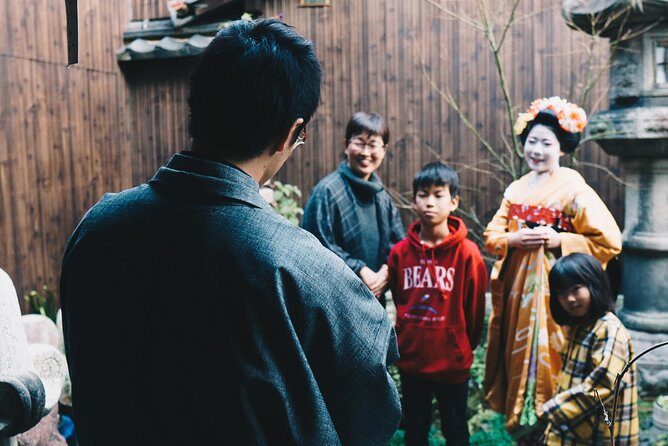
Your confirmed time is for a 1-hour show plus Q&A, inside a total 1 hour 30 minutes. The structure is simple: meet up near Honmachi, then you move into the venue and the performance format.
In practice, the experience often begins with orientation from your guide—things like how geiko and maiko training works, how entertainment houses fit into the nightlife of the districts, and what visitors should understand before asking questions. Some guides also walk you a short distance through the district context (past buildings like theatres or agencies), so you have a framework before the maiko appears. If you’ve got history questions, your host should have answers.
Then comes the heart of it: the maiko performs one or two traditional songs (with dance), and there’s time to speak with her afterward (or between segments, depending on how the session runs). You’re not just watching. You’re in the same room long enough to ask follow-ups and learn what training looks like from the inside.
How the Q&A changes the whole experience
A one-hour dance show is pleasant. A Q&A session turns it into understanding.
This show’s Q&A focus is on training and customs—how the apprenticeship works, what life is like while learning, and what people often misunderstand. You’ll also hear context that helps you read what you’re seeing: posture, pacing, and why certain details matter in performance.
In some sessions, the tone can get a bit lighter too. One group notes that after the talk, the maiko even taught a simple party game before the dances. That kind of moment matters because it makes her feel like a person, not just a performer in formal clothing.
Meet the guide: translation quality is the real “luxury”
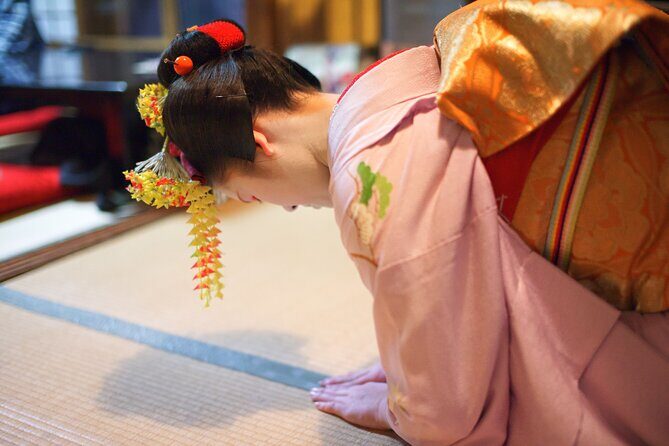
The guide isn’t just holding a script. This kind of cultural event lives or dies by translation nuance—especially when questions get personal or tradition-specific.
Ken and Saya are two names that come up in the feedback for how well the host balanced formality with comfort. The job is delicate: the maiko needs respect and space, and you need a chance to speak naturally. A strong guide also knows how to ask the questions that help visitors learn quickly—without making the maiko repeat the same basic explanations over and over.
If you’re the type who likes to ask follow-ups, this is where the small group helps. With fewer people, the translation doesn’t feel like a bottleneck. You’re more likely to get direct answers instead of broad, general statements.
Watching the dances: what to pay attention to (so it doesn’t become “just pretty”)
The dances are the obvious highlight. The goal here, though, is to help you experience them beyond aesthetics.
Here’s what I’d focus on during the performance:
- Control and timing: apprentices train for precision. Watch how movements start and stop cleanly.
- Interaction with the music: the rhythm guides everything, and the choreography follows it closely.
- Formality in small gestures: geisha culture isn’t only the big steps. It’s the “in-between” motions too.
- Confidence as training shows: even in an apprenticeship, you can often see the polishing that comes from repeated practice.
The feedback I’ve read repeatedly points to the dances as breathtaking and the maiko as charming in conversation—so arrive ready to look carefully, not just take quick photos. Speaking of which…
A few more Kyoto tours and experiences worth a look



Photos: expect time, but follow the mood
Some sessions include time to take photos with the maiko afterward. The key is to treat it like part of the respectful flow of the evening, not the main event. If your guide suggests a particular moment, follow that cue.
The location: Honmachi and why it’s practical

The meeting point is listed in 5-chōme-182 Honmachi, Kyoto. What that means for you is not just an address—it’s access.
This experience is near public transportation, and it’s scheduled as a compact 90-minute block. In Kyoto, time adds up fast. A session that’s transit-friendly is one less thing to fight with—especially if you’re already juggling temples, trains, and dinner reservations.
Also, because it’s small-group, you’re less likely to get swept into a crowded queue situation.
Value check: is $105.42 really worth it?
At $105.42 per person for about 1 hour 30 minutes, it isn’t a cheap add-on. But value depends on what you get.
You’re paying for:
- A guaranteed stage performance by a maiko (not a street “maybe”).
- A guided, translated Q&A—that part alone is often hard to replicate on your own.
- A small-group setting that keeps interaction from feeling scripted at scale.
- A professional cultural host (English translation and context) who helps you understand what you’re seeing.
If you’re the kind of visitor who likes learning by asking questions, this is strong value. If your goal is purely photos and watching from a distance, you may feel less satisfied.
My practical rule: if you can’t imagine spending money on a one-time cultural conversation that’s hard to replicate, you’ll probably pass. If you want the learning piece, this is exactly that.
Who this suits best (and who might want to skip)

This is a great match for you if:
- You care about cultural context, not just a performance.
- You want Q&A with translation so you can ask thoughtful questions.
- You prefer small-group experiences over crowded shows.
- You’re visiting Kyoto mainly for tradition and want an inside look at training life.
It may feel less ideal if:
- You dislike structured schedules and prefer self-guided wandering.
- You’re looking for a full evening program with lots of extra activities (this is compact by design).
- You’re sensitive about fixed plans since the experience is non-refundable and cannot be changed once booked.
Tips to make your questions land well
You’ll get more from the Q&A if your questions are clear and respectful. Here are a few directions that fit what this session is built around (training and customs):
- Ask about how apprenticeship training shapes daily life, not just what people wear.
- Ask what visitors often misunderstand about geisha/maiko culture.
- Ask about skills they practice and how that practice becomes stage-ready.
- If you’re curious about etiquette, ask what rules matter most when interacting respectfully.
And one small “pro” move: keep follow-ups short. A good guide can only translate as much as you can say cleanly.
Brief practical notes (so there are no surprises)
- Coffee/tea isn’t listed as included, so if you want a drink, plan to handle it on-site.
- The show depends on good weather. If it’s canceled due to poor weather, you’ll be offered a different date or a full refund.
- Confirmation comes at booking time, and the event has a maximum of 14 travelers, which is part of what keeps it intimate.
Should you book Kyoto Geisha Show Cultural Hour with a maiko?
If you want a real chance to see a maiko perform on stage and ask questions with translation, this is an easy yes.
I’d book it especially if:
- you’re worried you’ll miss geisha culture on the streets,
- you value learning through a guided format,
- and you like small groups where the host can help you understand details.
Skip it if your budget is tight for one hour of entertainment, or if you’d rather spend that money on a longer Kyoto evening with food and open-ended wandering. This experience is about accuracy, access, and conversation—not extended nightlife.
If you do book: show up ready to watch closely, ask respectful questions, and enjoy the fact that this is designed to make the culture feel human, not distant.
FAQ
How long is the geisha show experience?
The experience runs for about 1 hour 30 minutes total, including a 1-hour geisha show and Q&A portion.
What exactly is performed?
You’ll see a geisha performance by a maiko, with one or two songs included as part of the show.
Will I understand what’s happening if I don’t speak Japanese?
Yes. An English-speaking guide translates for you, so there should be no language barrier during the Q&A and explanations.
How big is the group?
The experience has a maximum of 14 travelers, which helps keep it small-group instead of crowded.
Where does the tour take place?
The listed meeting location is 5-chōme-182 Honmachi, Kyoto, and it’s near public transportation.
What’s included in the price?
Included are the 1-hour geisha show & meeting, plus the Q&A and English-speaking guide.
Is coffee or tea included?
Coffee and/or tea is listed as not included, so plan accordingly if you want a drink.
Do I need to book far in advance?
This experience is commonly booked about 44 days in advance on average, so earlier booking can help if dates are limited.
Is it refundable if I change my mind?
No. This experience is non-refundable and cannot be changed for any reason.
What happens if the weather is bad?
This experience requires good weather. If it’s canceled due to poor weather, you’ll be offered a different date or a full refund.