Kyoto’s Gion looks different after dark. This early night walking tour takes you through the Gion area when the big daytime crush fades, with a guide who explains geisha history and etiquette as you move between landmarks and lesser-seen corners. It’s built for a calmer pace and a more personal experience, not a herding session.
I especially love the chance to catch a Maiko or Geiko sighting on Gionmachi Minamigawa, and I like how the guide turns ordinary streets into something you actually understand—like why certain shrines matter and what people do there. Guides such as Karen, Ricky, Sho, May, Pam, and Hina pop up in past tours, and the common thread is clear: they talk history with real local flavor, not just a script.
One thing to plan for: the route includes slopes and stairs, so it’s not a great match if you’re not comfortable with walking uphill in Kyoto.
In This Review
- Key things to know before you go
- Why a Gion night walk feels worth the effort
- Where you start near Minamiza Theater
- The walk through Gionmachi Minamigawa and geisha etiquette
- Yasui-Konpiragu: a shrine tied to relationships and protection
- Sannenzaka Ninenzaka: old-town lanes near Kiyomizu-dera
- A WWII Kannon statue site built in 1955
- The 400-year-old teahouse, garden, and bamboo grove
- Yasaka Shrine (Gion-san): blessings to ward off bad luck
- How the price makes sense for what you get
- The guides: why people remember the stories
- What to expect on timing and pacing
- Practical advice: what to bring and how to handle rain
- A quick balanced caution about organization
- Who should book this Gion Magical Night Walking Tour
- Should you book it?
- FAQ
- How long is the Kyoto Gion Magical Night Walking Tour?
- How big is the group?
- Do I need a printed ticket?
- Where do I meet for the tour?
- What are the main stops on the route?
- Is the tour mostly flat and easy walking?
- What if the weather is bad?
Key things to know before you go
- Small-group feel: capped at up to eight in the tour description, with operator info listing a maximum of 10.
- Geisha etiquette, not awkwardness: you’ll get practical guidance like how to greet a Maiko or Geiko if you spot one.
- Quiet evening timing: you start early enough to see Gion before the evening surge.
- Photo-friendly stops: the route is designed for nighttime views and lantern-lit scenes.
- Multiple culture stops: shrines, old-town lanes near Kiyomizu-dera, and a WWII memorial Kannon statue site.
- Comfort matters: expect stairs and hills, plus a lot of walking over 1 hour 40 minutes (often closer to two).
Why a Gion night walk feels worth the effort
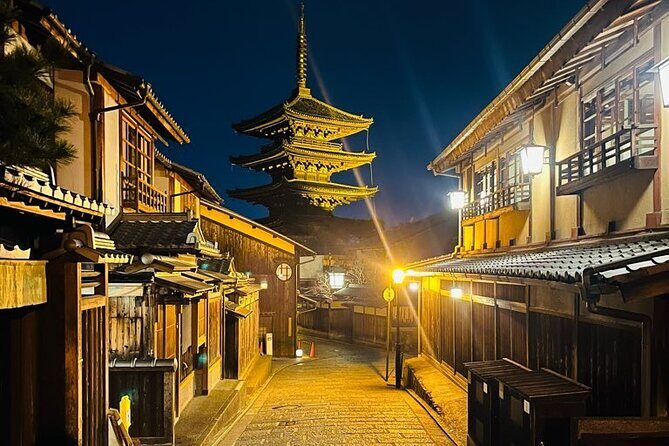
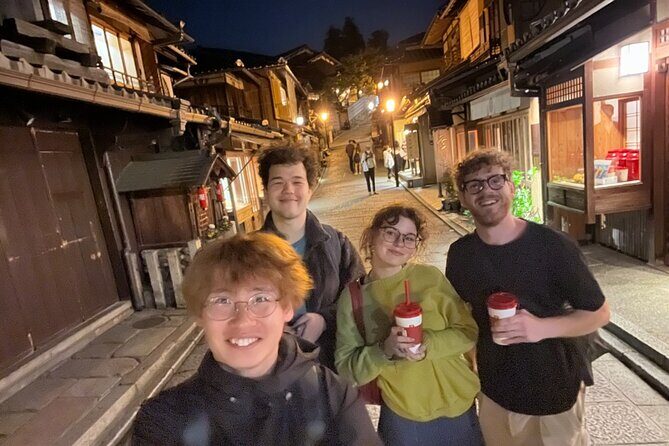
Gion in the evening has a different rhythm. During the day you can barely hear your own thoughts; at night, streetlights and lanterns soften the whole district, and it’s easier to notice details like narrow lanes, shrine entrances, and old wooden façades.
This tour leans hard into that contrast. You’re not just ticking boxes—you’re learning what you’re seeing and why it matters, with the guide explaining geisha culture, etiquette, and the role of Gion-san blessings tied to Yasaka Shrine.
The practical win is that you get order in the chaos. Kyoto’s famous areas can feel confusing when you’re on your own; here, the route keeps you moving through the right spots at the right time, with pauses for photos and questions.
A few more Kyoto tours and experiences worth a look

Where you start near Minamiza Theater
The tour starts at Minamiza Theater (松竹南座, 2F west lobby), at the address listed as 198 Nakanochō, Higashiyama Ward. It’s the kind of meeting point that’s easy to reference once you’re in the neighborhood, and it’s also listed as near public transportation.
You’ll end at Gionmachi Kitagawa, Higashiyama Ward (625). That matters because you can plan the rest of your evening around where you finish, instead of doubling back across the busiest parts of Gion.
One small tip: arrive a few minutes early. The tour is short, with plenty packed in, and you don’t want to lose time figuring out the exact meetup spot—especially since the route involves walking up and down.
The walk through Gionmachi Minamigawa and geisha etiquette
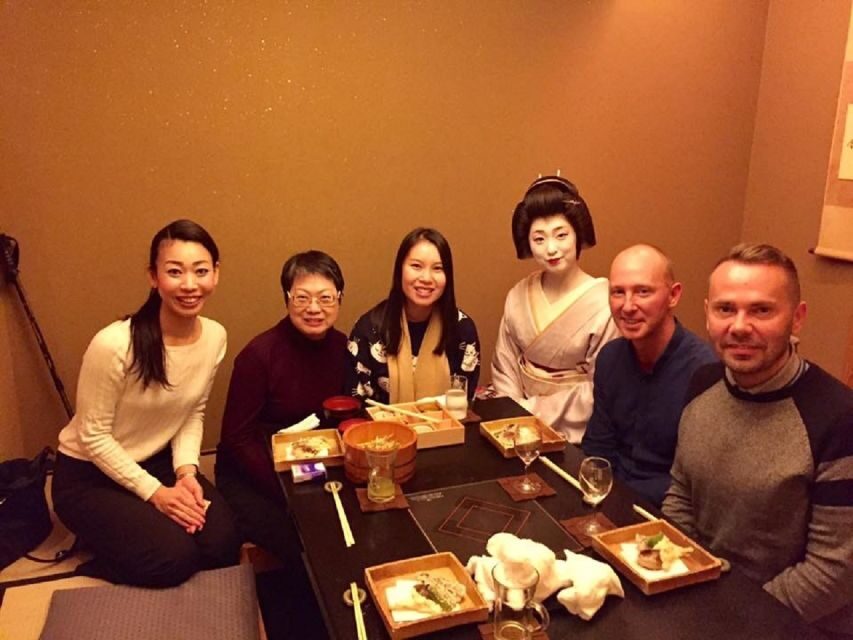
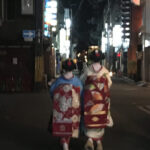
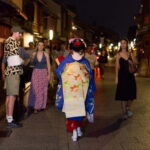
Your first stop is Gionmachi Minamigawa, one of the district’s best-known streets. This is the area where you might spot a Maiko or Geiko if you’re lucky, and the guide gives simple, respectful etiquette so you don’t end up doing the wrong thing in a moment that feels star-struck.
If you see them: smile and say Konnichiwa. That’s the kind of guidance that makes the difference between a respectful encounter and a clumsy one, and it’s also why I think this tour works better with a guide than wandering on your own with zero context.
What I like about starting here is that it sets the theme instantly. You’re not learning geisha culture in the abstract—you’re seeing the street where the culture is visibly part of daily life, then getting the meaning behind what you notice.
Yasui-Konpiragu: a shrine tied to relationships and protection
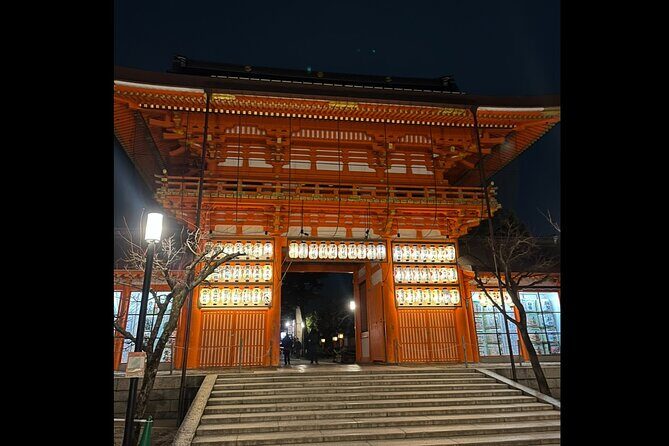
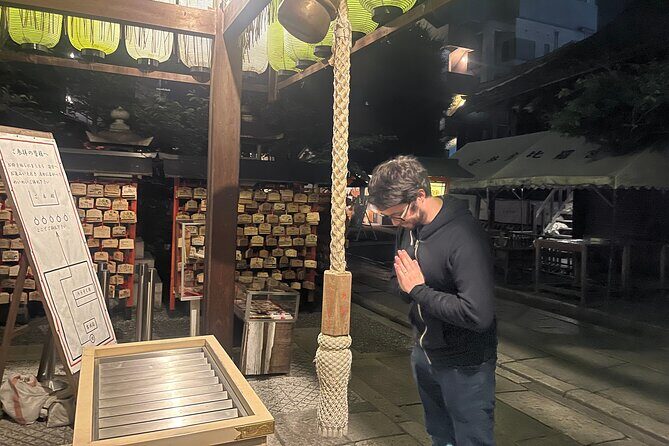
Next comes Yasui-Konpiragu. It’s described as a shrine connected to helping men and women meet and to cutting off bad relationships. If you’re traveling as a couple, or even just curious about how Japanese shrine beliefs show up in real life, this stop gives you a direct cultural thread to follow.
The guide also explains how the bond is believed to be strengthened for married couples or couples. Even if you don’t treat the beliefs literally, understanding what people pray for—and how—helps you read the shrine space with more care.
The evening angle here is good. At night, the mood is quieter, and you can actually take in the shrine setting instead of trying to squeeze through foot traffic.
Sannenzaka Ninenzaka: old-town lanes near Kiyomizu-dera
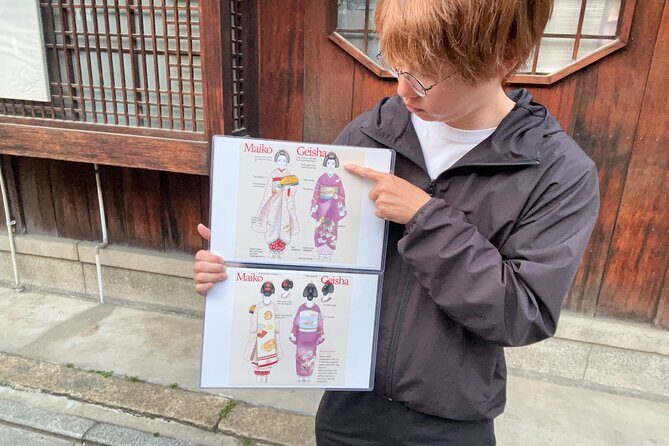
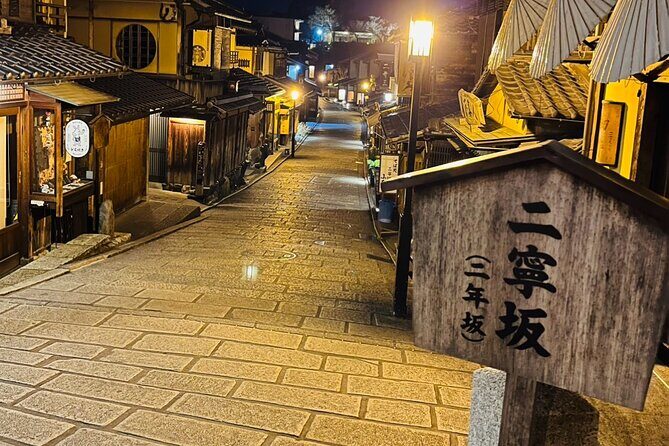
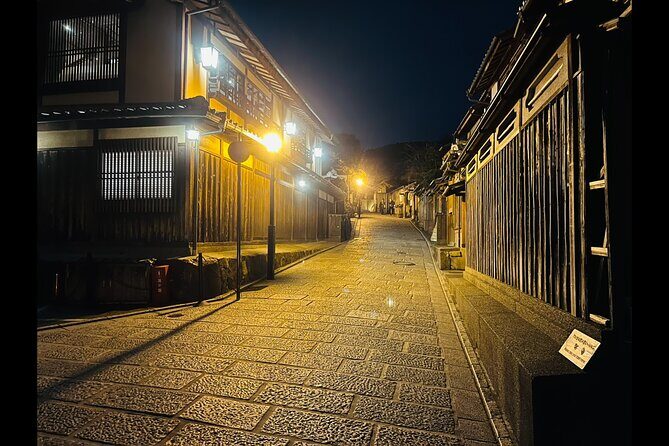
Then you head to the classic pedestrian lanes of Sannenzaka Ninenzaka, the streets known for traditional Kyoto townscape views. This area sits near Kiyomizu-dera, so it’s naturally full of visitors during the day—yet in the evening it feels calmer, and the architecture becomes much easier to appreciate.
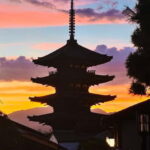
One feature mentioned is Yasaka-no-to (Yasaka Pagoda), which is especially popular. At night, that kind of landmark changes character: the scene becomes more about outlines and lantern glow, not just crowds and signage.
This is also a solid section for photos. The guide times stops so you can get shots without constantly moving, and that’s a big deal in Kyoto where you often end up rushing to keep up.
Other walking tours we've reviewed in Kyoto





A WWII Kannon statue site built in 1955
One of the stops is a memorial built in 1955 to pray for the repose of the souls of the victims of World War II. It features a very large Kannon statue.
This is a heavier moment than the “pretty streets” vibe. I like that the tour doesn’t only chase the aesthetic side of Gion; it includes a place where compassion, memory, and Buddhist practice show up in a very clear way.
If you’re the type who enjoys travel that balances beauty with meaning, you’ll probably appreciate this pause. It also gives your brain a break from the constant stream of shops and crowds.
The 400-year-old teahouse, garden, and bamboo grove
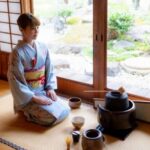
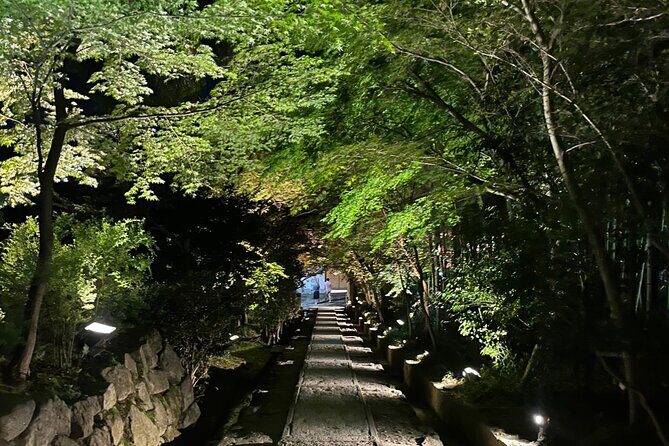
Another highlight is a site built about 400 years ago by the wife of a shogun to mourn the death of her husband. Here, you can enjoy a garden, a 400-year-old tea ceremony house, and a bamboo grove.
Even if you don’t go inside every structure, this stop helps you understand why Kyoto is so tied to craftsmanship and ritual spaces. Tea houses and garden layouts aren’t just scenery; they’re part of how people create calm, order, and reflection.
In a night walk format, this kind of pause is valuable. You get a moment that feels slower and more intimate, with the bamboo and garden elements giving the tour a different texture than the street views alone.
Yasaka Shrine (Gion-san): blessings to ward off bad luck
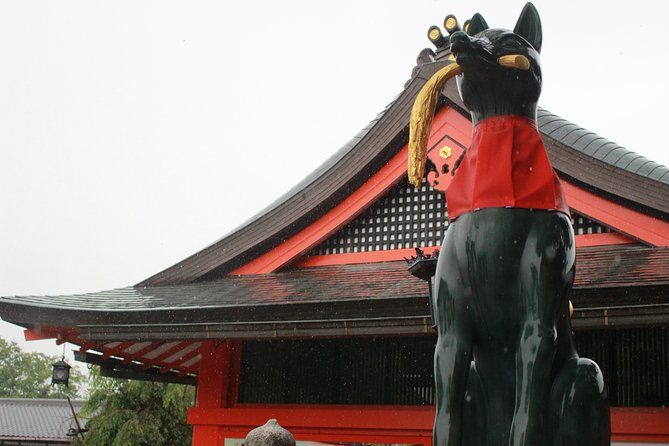
You finish at Yasaka Shrine, described as the head shrine of about 2,300 related shrines across Japan. It’s known as Gion-san, with blessings meant to ward off bad luck, bring good luck, and promote beauty.
This stop also “connects the dots” for your geisha interest. Gion-san isn’t just a pretty name; it ties religious practice to community identity, and that’s the kind of cultural link that makes the tour feel more grounded than just a sightseeing loop.
If you like to read sacred spaces as living places (not just photos), this ending gives you a satisfying final note. It’s also a helpful destination anchor for planning dinner afterward.
How the price makes sense for what you get
The price is $29.60 per person, which is very reasonable for a guided night walk in Kyoto—especially one that keeps admissions simple. Several stops are marked as free (including the first three), and your main “investment” is the guide’s time: stories about geisha culture and etiquette, plus a route that gets you places you might miss or misunderstand on your own.
At this price point, the value usually comes down to three things:
- Do you get meaning, not just movement?
- Do you get enough time to ask questions and take photos?
- Do you avoid wasting energy on a route that’s inefficient?
This tour scores well on all three. Multiple stops are designed as cultural anchors, the group is kept small, and the pacing includes photo pauses. Past tours also mention that the walk can feel longer than the advertised 1 hour 40 minutes, so I’d treat it as about 90 minutes to around two hours of active wandering with stops.
The guides: why people remember the stories
One of the most praised aspects is the guide experience. Names that come up a lot include Karen, Ricky, Sho, May, Pam, and Hina, and the feedback pattern is consistent: guides share lots of historical and cultural context, keep the group engaged, and respond well to questions.
That last part matters. In a district like Gion, you can stare at details for hours and still not know what you’re looking at. A good guide gives you handles: what to notice on streets, what shrines symbolize, and how etiquette works when you’re near geisha-world settings.
There’s also a practical storytelling style. Several guides are described as patient and humorous, which helps when you have mixed ages in the group. If you’re traveling with kids or teens, this kind of pacing can keep the tour from feeling like a lecture.
What to expect on timing and pacing
The tour duration is listed at about 1 hour 40 minutes. Still, a common practical note is that the walk can run closer to two hours once you add photo stops and conversation.
The group size is kept small, with a cap listed as up to eight in the tour description and up to 10 in the operator details. Either way, it’s meant to feel more like a guided stroll than a parade of strangers.
You’ll cover multiple sights in the evening. That means good shoes and steady energy matter. Kyoto evenings are pleasant, but a “short” walk that includes hills and stairs can be more demanding than it sounds.
Practical advice: what to bring and how to handle rain
Bring comfortable shoes. The tour notes slopes and stairs, and the route includes old-town lanes that can feel a bit uneven. Even if you’re a confident walker, it helps to keep your feet happy.
An umbrella can be useful. Rain can also make streets quieter and more atmospheric, but it won’t make hills easier. If you’re prone to slipping, plan extra time for careful steps and use the umbrella for stability in wind.
If you care about photography, keep your camera ready at the stops. Night lighting changes fast, and the tour is set up for lantern-lit scenes and illuminated shrine moments.
A quick balanced caution about organization
One negative note in the mix is a report of poor communication and a missed meetup, with frustration serious enough that a refund was requested. I can’t verify what happened in that case, but I can tell you what you should do to protect your time: confirm the meetup details in advance, keep an eye on your phone for any updates, and arrive early so you’re not waiting around in the dark.
Most tours run smoothly, but in a city like Kyoto—where you’re walking and time matters—your best defense is simple: be prompt and prepared.
Who should book this Gion Magical Night Walking Tour
This tour is best if you:
- Want geisha culture explained in a practical, respectful way
- Prefer a small group route through Gion instead of daytime crowd navigation
- Like shrines, old-town streets, and cultural context—not just photos
- Enjoy nighttime walking and streetlight views
It’s also a good fit if you’re traveling with teens who can handle walking and want to understand what they’re seeing. The tour’s pacing includes time for photos and questions, which is ideal for that age range.
Skip it (or at least consider a gentler alternative) if:
- You’re not comfortable with slopes and stairs
- You want a fully flat, low-effort stroll
Should you book it?
Yes, you should book it if you want Gion to make sense. For the price, you’re getting a guided path that connects street scenes to geisha etiquette, shrine meaning, and Kyoto’s nighttime atmosphere. The small-group format is a real upgrade, and the route hits a strong mix: geisha-area street views, relationship-focused shrine context, old-town lanes, a WWII memorial Kannon moment, and a centuries-old garden/tea setting.
Just go in with the right expectations: plan for hills, bring good shoes, and be early at the meetup. If you do that, you’ll leave with more than photos—you’ll have a better read on Gion.
FAQ
How long is the Kyoto Gion Magical Night Walking Tour?
It lasts about 1 hour 40 minutes.
How big is the group?
The tour is described as a small-group experience with a maximum of eight people, and operator info lists a maximum of 10 travelers.
Do I need a printed ticket?
No. The tour uses a mobile ticket.
Where do I meet for the tour?
You start at Minamiza Theater in Kyoto (2F west lobby), at the listed address on Shokuchiku Minamiza location near the theater area in Higashiyama Ward.
What are the main stops on the route?
You pass through places including Gionmachi Minamigawa, Yasui-Konpiragu, Sannenzaka Ninenzaka, a WWII memorial site built in 1955 with a large Kannon statue, a place associated with a tea ceremony house and bamboo grove built about 400 years ago, and you end at Yasaka Shrine.
Is the tour mostly flat and easy walking?
No. The route includes slopes and stairs, so it is not recommended if you’re not comfortable walking.
What if the weather is bad?
The tour requires good weather. If it’s canceled due to poor weather, you’ll be offered a different date or a full refund.