Kyoto, but make it stealth mode. This hands-on lesson turns a ninja-themed story into real, physical practice, taught in English by a Japanese master. You get ninja techniques you can actually try, plus full ninja clothing rental so you’re not just watching. One drawback to consider: it’s an intense, short session, so if you’re mainly hunting for deep historical context, you may want to pair it with a museum stop later.
What I like most is the way the class is designed for beginners. The skills are broken into entry-level steps and then build into more techniques during the same two hours. I also love the weapon-handling aspect, because it’s not only posing for photos, it’s learning how to use tools like kunai, shuriken, and a sword in training form.
In This Review
- Small Group, Hands-On, and Actually Taught in English
- Key Highlights I’d Prioritize Before You Book
- Your 2 Hours of Ninja Practice: What Happens Once You Arrive
- From Street Clothes to Ninja Uniform in the Dojo
- Meditation, Breathing, and Ninja Walking: The Skills That Set the Tone
- The Ninja Trick House Moment: Gimmick, Trap, and Learning by Doing
- Sword Training and Shuriken Skills: Tools You Actually Handle
- Kusarigama and Chain Tools: Why This Station Gets the Most Curiosity
- Who Teaches You, and What That Means for First-Timers
- Photos, Memory, and the Little Extras That Make It Feel Complete
- Price and Value: Is $95.51 for Two Hours Worth It
- Timing Fit: How to Make It Work With the Rest of Your Kyoto Day
- Weather-Dependent Reality (And Why It Still Usually Works)
- Who This Ninja Lesson Is Best For
- Should You Book This 2-Hour Ninja Workshop?
- FAQ
- How long is the Ninja hands-on lesson?
- What’s the group size limit?
- Where do I meet for the lesson?
- What time does the class start?
- What’s included in the price?
- What isn’t included?
- What’s the cancellation policy?
Small Group, Hands-On, and Actually Taught in English
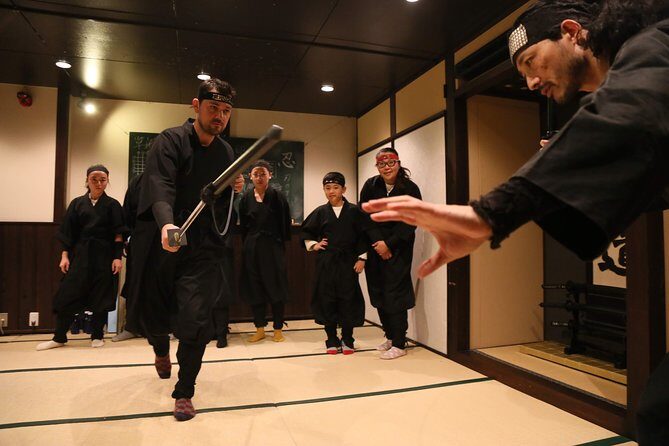
The class is limited to no more than six people, which means you don’t get lost in a big crowd. Expect a steady rhythm: explanation, guided practice, then more practice at multiple stations. And yes, you’ll wear the outfit, which makes it fun immediately, but the real payoff is learning practical movement patterns like ninja walking, plus breathing and meditation such as Kuji-In.
A second thing to know up front: you’re in a dojo setting, so shoes off and slippers on is part of the experience. If you’re the type who likes to keep things casual, plan for that small routine and focus on the training instead of rushing through it.
Key Highlights I’d Prioritize Before You Book
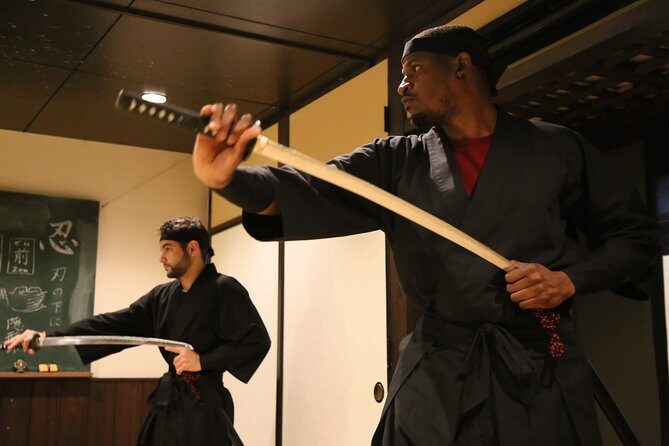
- English instruction from a Japanese sensei master trained in ninja arts, with teaching tailored for beginners
- Full ninja clothing rental so you look the part and feel part of the practice
- Kuji-In meditation plus ninja breathing and ninja walking as a true “start” to the training, not a throwaway warm-up
- Hands-on weapon stations including sword training, kunai, kusarigama, rope techniques, shuriken types, and blow darts
- A max group size of 6, so you get more direct attention than you’d expect from a short workshop
- Photo help from staff in some sessions, including professional camera shots sent by email the same day (based on class reports)
Other ninja experiences in Kyoto



Your 2 Hours of Ninja Practice: What Happens Once You Arrive
Your lesson runs for about two hours and starts at 10:00 am. The meeting point is the Ninja Dojo and Store Kyoto, on the 2nd floor (address listed as Shimogyo Ward, Hakurakutenchō, 528). The activity ends back at the same meeting point, so you’re not dropped somewhere else.
This is a practical setup: the studio is near public transportation, and there’s no hotel pickup or drop-off. That matters because you’ll want to plan your Kyoto transit with a little buffer. If you’re trying to connect this class to another activity the same morning, I’d avoid scheduling it back-to-back with something that depends on perfect timing.
When you arrive, you’ll follow the dojo routine. One class report describes leaving shoes at the door and switching to slippers before heading upstairs. If you want things to feel smooth, wear shoes that are easy to take off and put back on.
From Street Clothes to Ninja Uniform in the Dojo
The clothing rental is included, and it’s not just for looks. Getting dressed is part of the “transition” into training mode. In several class accounts, you’re helped into the outfit and then guided onward as a group.
This matters for value. At $95.51 per person for two hours, you’re paying for more than a costume. You’re paying for instruction, practice time, and the equipment-handling portion of the lesson. The uniform is the entry point, but the training is the main event.
Also, if you’re thinking about photos: being in uniform from the start usually means you’ll have more usable pictures than the typical “arrive, change, pose, leave” format. Some sessions include staff photography during the class, and at least one account mentions professional photos and videos delivered by email the same day.
Meditation, Breathing, and Ninja Walking: The Skills That Set the Tone
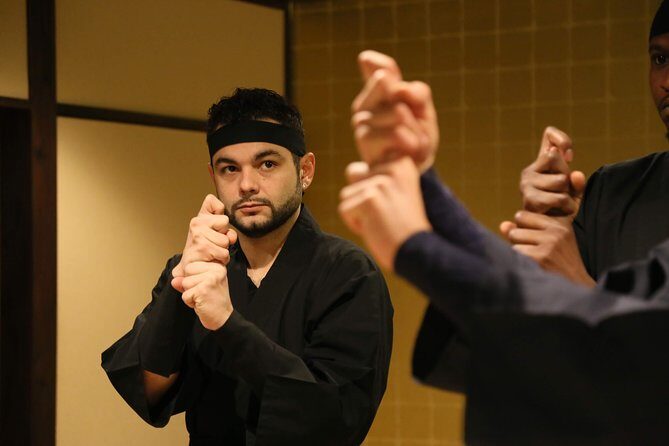
The lesson isn’t only weapons. It starts with basics tied to how ninja practitioners approached mindset and movement.
Here’s what you’ll practice early on:
- Kuji-In meditation
- ninja breathing
- ninja walking
Even if you’re skeptical at first, this is one of the best parts to lean into. It’s easy to think of ninjas as just tools and tricks, but this segment helps you understand how the body is supposed to move: controlled breathing, steady footwork, and a more focused posture. You’ll feel the difference quickly because the rest of the training depends on not rushing.
The class is described as elementary level, but it still moves beyond simple “look how it’s done.” You’ll practice enough that you’re not just watching a performance. You’re building coordination in real time.
The Ninja Trick House Moment: Gimmick, Trap, and Learning by Doing
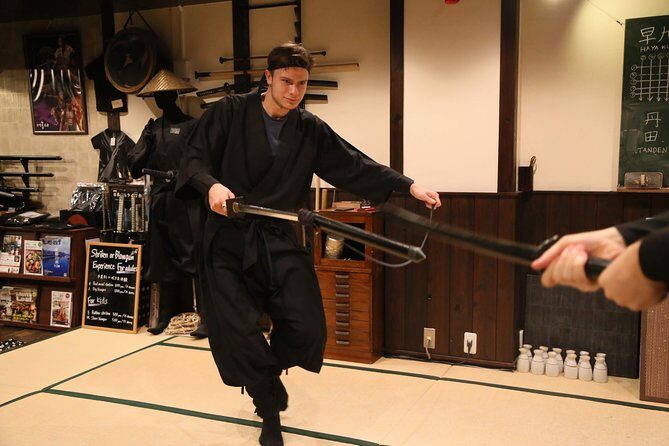
A big part of the fun (and a reason parents often love this activity) is the introduction gimmick and trap at the ninja trick house. The lesson format uses this kind of scenario to keep you alert and engaged, while also teaching you how to react and move under playful pressure.
You should approach it like a game that teaches control, not a horror-movie set. If you’re traveling with kids, this is the part that typically turns curiosity into full buy-in.
The practical value here is attention. When you’re actively doing something—rather than only listening—you remember more, and you’ll leave with clearer “I actually learned this” confidence.
A few more Kyoto tours and experiences worth a look





Sword Training and Shuriken Skills: Tools You Actually Handle
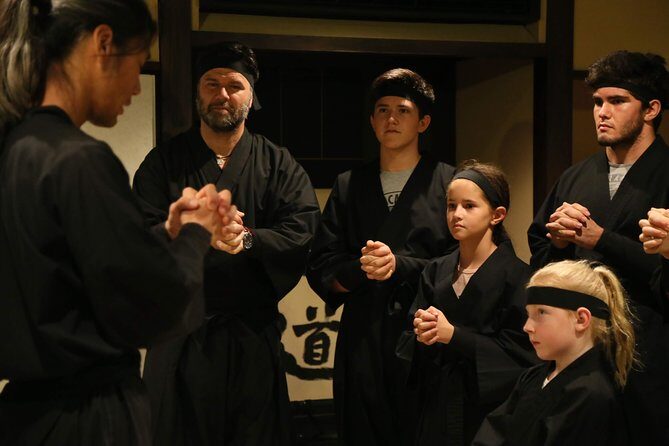
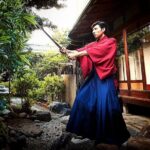
The weapon portion is the headline, and it’s handled in a structured way. You’ll do training for ninja sword, then also learn connections between sword techniques and throwing skills.
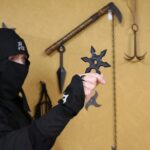
From the training list, you can expect practice with:
- Kunai (dagger)
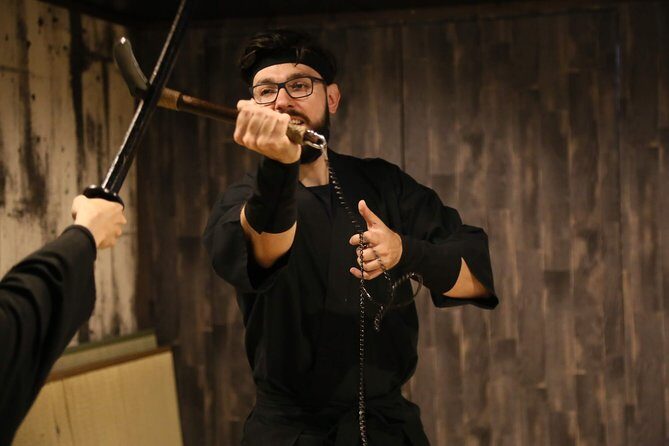
- Kusarigama (sickle with chain)
- Rope technique
- Kunai with rope
- Shuriken (ninja star)
- Ninja sword with shuriken
- Stick type shuriken
- Ninja blowgun (blow darts)
What you’ll likely notice during this part is how different each tool feels. Even if you’ve never held a weapon before, you get guided steps. Some class accounts mention that participants can try weapons themselves on targets, which is a huge difference from only seeing demonstrations.
One more value point: being able to handle a variety of tools in one session means you leave with a more complete mental map of what “ninja technique” feels like. You don’t just do one throw and leave. You work through a sequence.
Kusarigama and Chain Tools: Why This Station Gets the Most Curiosity
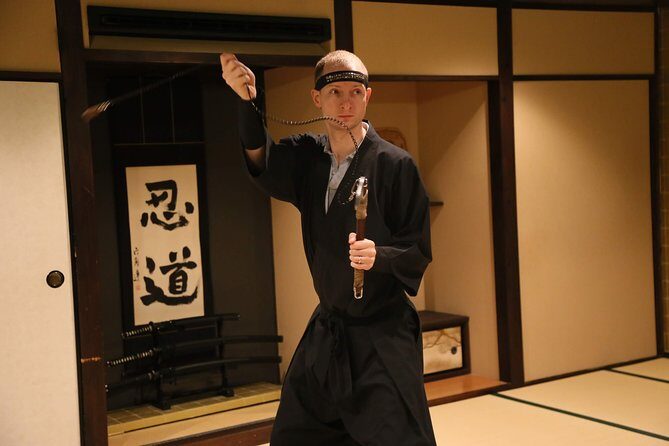
If you’re wondering what makes this workshop feel “real,” it’s stations like kusarigama and rope technique. Chain-and-rope methods are hard to teach purely with words. In a hands-on class, you can correct your own instincts quickly once an instructor shows what control looks like.
Even with entry-level lessons, this kind of station gives you a more honest sense of why these tools were tricky. It’s also a great equalizer: kids often get excited right away, while adults tend to enjoy the methodical learning and the patience from the instructor.
Who Teaches You, and What That Means for First-Timers
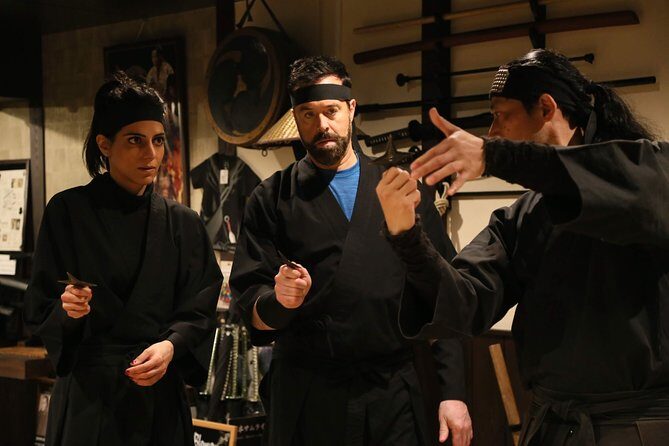
This lesson is taught by a Japanese sensei master who has trained in ninja arts, and instruction is in English. Multiple class reports praise the instructor’s ability to explain clearly, plus a mix of humor and discipline. One detail that stands out: a staff member named Sho is described as welcoming participants at the door and helping with the early stages of the class.
That’s not a small point. For first-timers, the difference between a good and a mediocre workshop is usually communication. If you don’t understand what you’re supposed to do, you can’t learn it. Based on the way the class is described and how it’s repeatedly rated, the instruction aims to keep you moving and confident.
Photos, Memory, and the Little Extras That Make It Feel Complete
The uniform plus action means you’ll have natural photo moments. Some sessions add a practical bonus: staff may take photos and videos using a professional camera, then email them to you the same day (one account mentions delivery via Google Photos).
This matters because it removes the “can we get good photos while everyone’s doing their thing” stress. You can focus on training while someone captures the results.
Also, the location includes a dojo and store, so after training there’s usually time to browse ninja-themed items if you want souvenirs.
Price and Value: Is $95.51 for Two Hours Worth It
At $95.51 per person for about two hours, this isn’t a cheap activity. But you’re also not just buying a show.
You’re paying for:
- a small-group format (max 6)
- English instruction from a trained sensei
- clothing rental included
- entry-level instruction plus additional techniques within the same session
- a weapons-focused, hands-on structure (including multiple tool types)
For me, the value works best if you want participation. If your plan is to take photos and only watch, you might feel the price more than if you’re actually willing to jump in.
One more note: if you want lots of history, one class account specifically says they’d have liked more history. This workshop seems designed for technique and practice first, so think of it as a skill experience. Pair it with another Kyoto cultural stop if history is your top priority.
Timing Fit: How to Make It Work With the Rest of Your Kyoto Day
Because it starts at 10:00 am and you return to the meeting point, it’s a good morning anchor. It also gives you a break from the “walking all day” rhythm, which Kyoto can demand.
Plan around the fact that there’s no hotel pickup. You’ll need to get yourself to the dojo on time. The most helpful mindset is to arrive a bit early, follow the footwear routine, and let the day reset once you’re in uniform.
If you’re traveling with kids, this time slot often works well: they get a structured activity with an end point, and the training includes both interactive stations and weapons practice in a controlled way.
Weather-Dependent Reality (And Why It Still Usually Works)
The experience requires good weather. That sounds odd for a dojo class, but it’s in the provided policy, so take it seriously. If weather conditions affect the session, you’ll be offered a different date or a full refund.
If you’re visiting Kyoto during rainy weeks, I’d keep your schedule flexible in the morning when possible, so one disruption doesn’t snowball into your entire itinerary.
Who This Ninja Lesson Is Best For
This is the kind of activity that fits a wide range of ages, as long as you’re ready to participate.
- Kids and families: The hands-on stations and costume element make it feel like an event, not a lecture. Accounts include children ranging from early elementary school ages through teens.
- Beginners and non-athletes: It’s elementary level and designed to be accessible, even for people who aren’t flexible.
- Couples and solo adults: A couple report notes adults enjoyed the class and found it legitimate and fun rather than hokey. Solo visitors also describe it as a great way to do something spontaneous in Kyoto.
Where it may not fit as well: if your main goal is historical storytelling and you don’t want movement-based practice, you might leave wishing for more context than what’s built into a two-hour format.
Should You Book This 2-Hour Ninja Workshop?
Yes, if you want a short, high-participation experience in Kyoto that’s more than just themed sightseeing. The best reason to book is the mix of mindset practice (meditation and breathing), movement basics (ninja walking), and then real tool technique stations. The small group size keeps it personal, and the included clothing rental makes the whole thing feel like a complete, memorable event.
Book it especially if:
- you want something hands-on on a Kyoto day
- you’re traveling with kids or teens
- you’re curious about ninja techniques and want to feel how they work in practice
Skip it if you:
- only want museum-style history and no training component
- are unlikely to participate once you’re there
If you want a fun Kyoto morning with a clear end point and real skills in your pocket, this one is a strong choice.
FAQ
How long is the Ninja hands-on lesson?
It’s about 2 hours.
What’s the group size limit?
The experience has a maximum of 6 travelers.
Where do I meet for the lesson?
You meet at NINJA DOJO and STORE KYOTOJapan, 600-8422 Kyoto, Shimogyo Ward, Hakurakutenchō, 528, 2F.
What time does the class start?
The start time listed is 10:00 am.
What’s included in the price?
Included items are a Japanese sensei master who teaches in English, ninja clothes rental during training, and an admission fee.
What isn’t included?
Hotel pickup and drop-off aren’t included, and food and drink aren’t included.
What’s the cancellation policy?
You can cancel for a full refund up to 24 hours in advance. Within 24 hours, refunds aren’t available. If it’s canceled due to poor weather, you’ll be offered another date or a full refund.