Samurai lessons in Kyoto are surprisingly practical. This Kenbu class teaches the disciplined basics step by step, from bowing to stylized strikes with a sword, and you finish with a costume photo session and a completion certificate.
I especially like the structure: you watch a short film first, then you suit up and practice the movements instead of just standing around. I also love the ending performance, which adds context for what you just trained. One heads-up: there’s no waiting room, and you’re not allowed to observe only, so you’ll want to arrive on time and plan to participate.
In This Review
- Key reasons this Kyoto samurai class works
- Kyoto’s Samurai Kembu Theater: find the dojo and set your expectations
- The rhythm of the class: from a 4-minute film to real practice
- Bow before you draw: the discipline lesson most people underestimate
- Suit up for Kenbu: costume changes and the photo session you’ll actually use
- Learning stylized strikes: control over chaos
- The end performance: 10 or 30 minutes with commentary
- What’s included, what isn’t, and why the price feels reasonable
- Who should book this samurai sword class in Kyoto
- Practical tips so you don’t feel rushed or underprepared
- Should you book Samurai Sword Class in Kyoto?
- FAQ
- Where is the meeting point for the Kyoto samurai sword class?
- How long does the experience take?
- What’s included in the $64 per person price?
- Do I need to bring a sword or special gear?
- Can I just watch instead of participating?
- Can I cancel and get a full refund?
Key reasons this Kyoto samurai class works
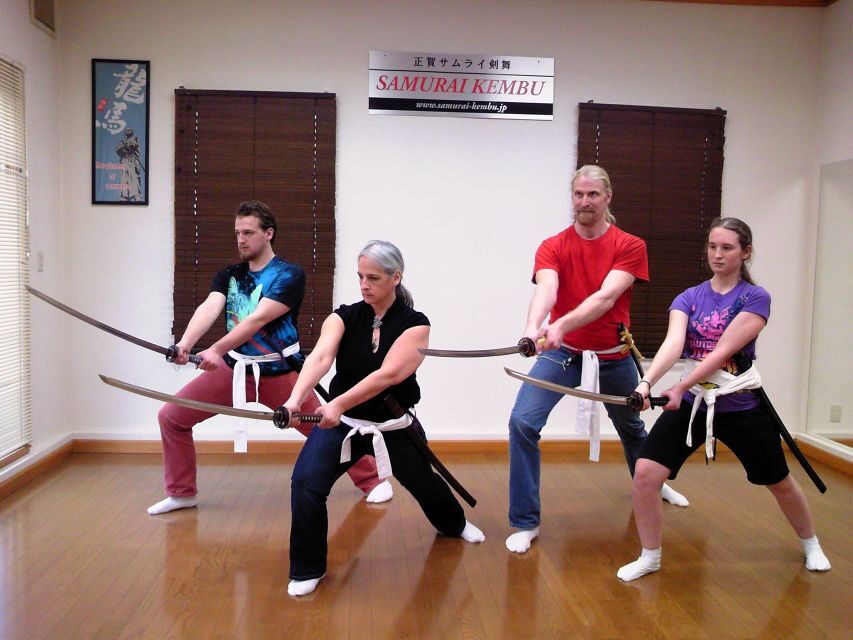
- Small groups (up to 10) keep the coaching personal and help you adjust your form
- Bowing and sword handling basics get taught in a clear sequence: bow, draw, strike, and resheathe
- Photo session in full costume turns the lesson into a real keepsake, not just a story
- Short film plus optional performance helps you connect beginner practice to the stage version
- English-speaking instruction (with Japanese support) makes safety cues easier to follow
- Tenugui towel and completion certificate give you tangible souvenirs you actually keep
Kyoto’s Samurai Kembu Theater: find the dojo and set your expectations
This class happens at Samurai Kembu Theater (Kyoto dojo) in Higashiyama, on B1F of the Gozan Building. The meeting point is 35-7 Sanchome (Higashi-iru, Sanjo-hanamikoji), Higashiyama-ku, Kyoto 605-0005. It’s an activity-first venue, so don’t expect a casual waiting lounge.
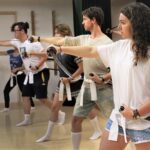
Expect a focused, hands-on session in a small group limited to 10 participants. That size matters in a sword class: you need space, you need corrections, and you need attention when you’re learning movement patterns safely.
Also, the training is not a spectator event. You’re expected to participate, and there’s no observation-only option. If you’re the type who likes watching first, this may not fit your style.
A few more Kyoto tours and experiences worth a look

The rhythm of the class: from a 4-minute film to real practice
The experience starts with a short film (about 4 minutes) covering the basics. For many people, that’s the difference between feeling lost and feeling oriented. You’ll get the framework of what Kenbu is, before anyone hands you anything to hold.
Then the pace shifts quickly from explanation to action. You suit up in samurai attire and take hold of your samurai sword for guided practice. I like that the session respects your time: you’re not stuck listening for ages, but you’re also not thrown into complex choreography immediately.
And because the class is designed around safety and consistent instruction, you’ll follow the instructor’s steps in order—bowing, drawing, resheathing, and the stylized strikes that connect it all.
Bow before you draw: the discipline lesson most people underestimate
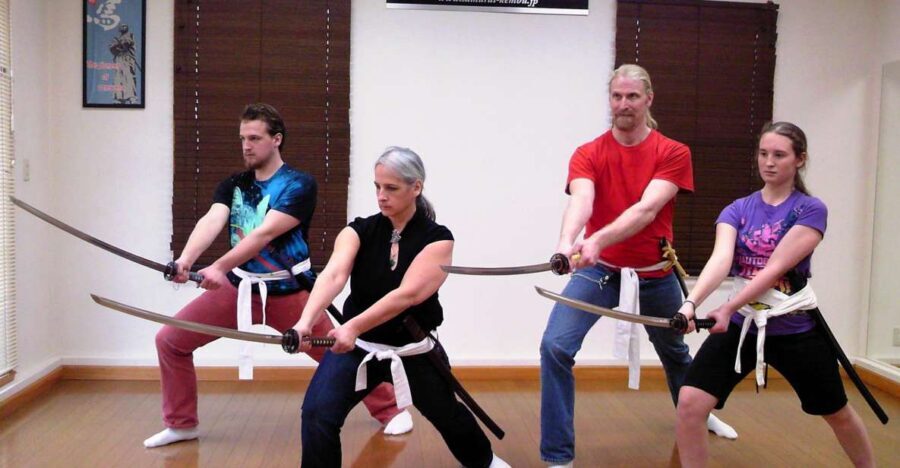
The bowing instruction is more than a nice cultural touch. It teaches a mindset: control starts with respect, posture, and awareness. You’ll learn how to bow before training begins, and later you’ll practice a respectful bow to your opponent using the sword movements you’re taught.
In a lot of sword demos, people jump straight to action. Here, you’re trained to slow down first. That’s a real win for beginners, because your body learns the timing and spacing before it learns speed.
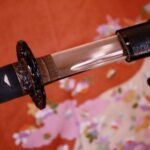
You’re also taught how to draw the sword and replace it in its protective scabbard. That sequence is practical. It reinforces control and helps you avoid the common beginner problem: moving the sword like an object instead of treating it like something you handle with precision.
Suit up for Kenbu: costume changes and the photo session you’ll actually use
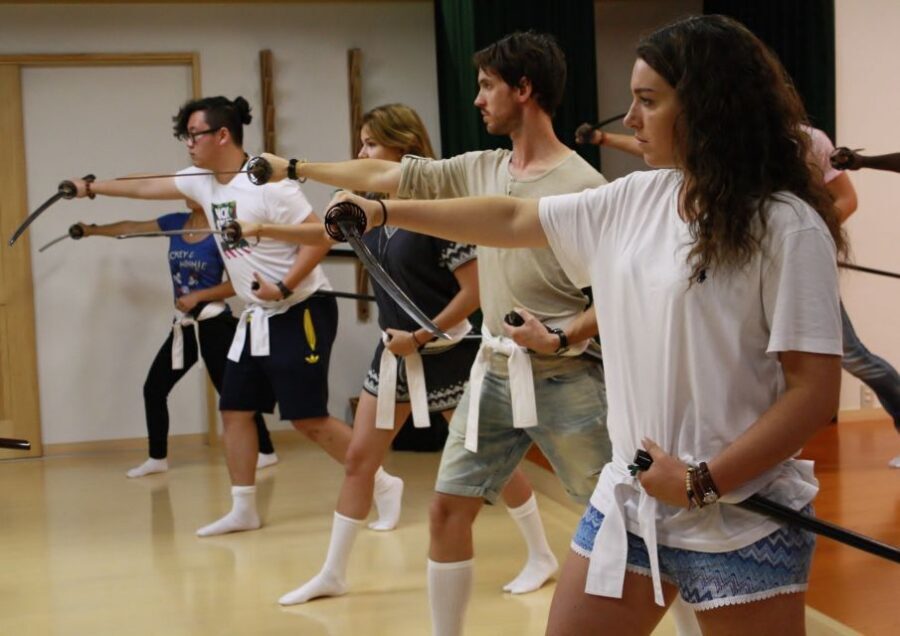
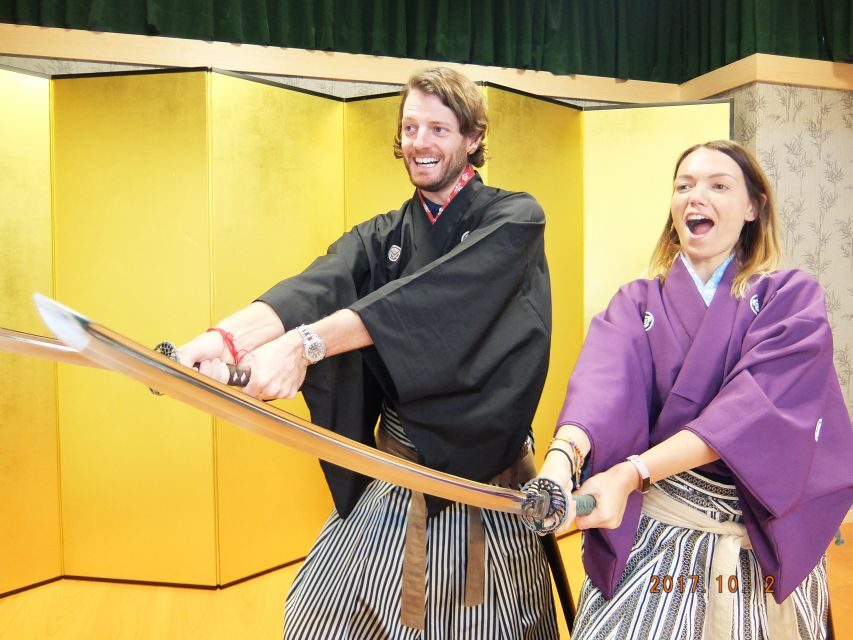
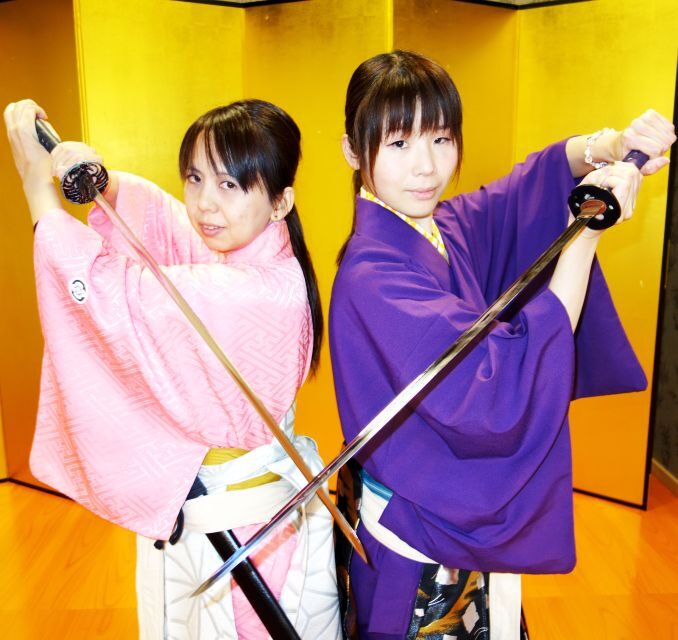
After the intro film, it’s costume time. You get geared up in traditional samurai attire and then do a photo session. The class includes photos as part of the experience, not just “take your own pictures if you have time.”
Here’s what I find smart about this part: it’s integrated into the timing, so you don’t feel rushed while you’re also trying to learn sword technique. When you’re done, you’ll receive a completion certificate, which makes the whole thing feel official.
One practical note from the rules: wear clothes that work for movement and costume changes. If you show up in a single hoodie or tights only, it may not be suitable for how they help you switch outfits. I’d rather you wear something easy to change in than risk wasting your energy on the logistics.
Also, there’s no waiting room, so come dressed enough to start the process smoothly.
Learning stylized strikes: control over chaos
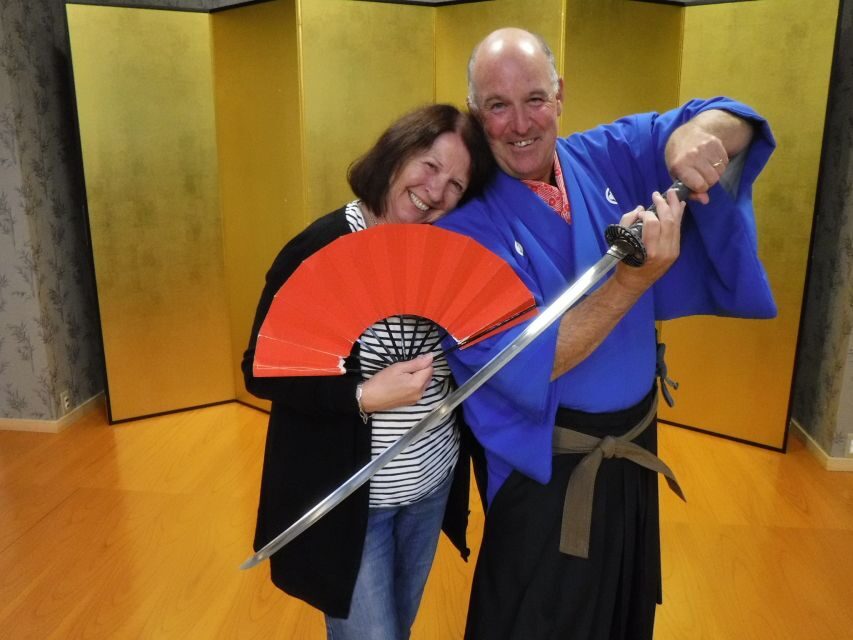
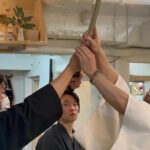
The heart of the class is hands-on practice of the stylized movements that make up Kenbu. You’ll learn the movements involved in drawing and striking, then you’ll practice as instructed.
What makes Kenbu feel different from typical “swing a sword” content is how choreographed and respectful it is. Even at the beginner level, you’re guided toward clean technique: how you hold your body, how you move through the strike, and how you return the sword properly.
Many people also come in thinking they’ll feel awkward. The good news is the class is built for beginners. Recent participants describe the instructors as patient and clear, with teaching that blends seriousness with humor. That matters because learning sword movement can feel intimidating—your confidence grows when someone corrects you without making you feel small.
And you’ll get at least one short opportunity to connect what you did to what it looks like onstage, because the session includes an optional performance at the end.
A few more Kyoto tours and experiences worth a look




The end performance: 10 or 30 minutes with commentary
At the end of your class, you may watch a performance (either 10 minutes or 30 minutes depending on the option you choose). This isn’t filler. It’s a fast bridge between classroom technique and the staged form of sword dance.
You’ll get commentary from a sword dance instructor, which helps you interpret the movements you just practiced. I love this format because it turns your muscle memory into something you can actually understand.
If you go for the longer option, you’ll likely get more chances to see transitions and overall choreography. If you’re short on time, the shorter performance still gives context.
Either way, the performance is the moment when Kenbu stops being only a technique and becomes a cultural art you can recognize at a glance.
What’s included, what isn’t, and why the price feels reasonable
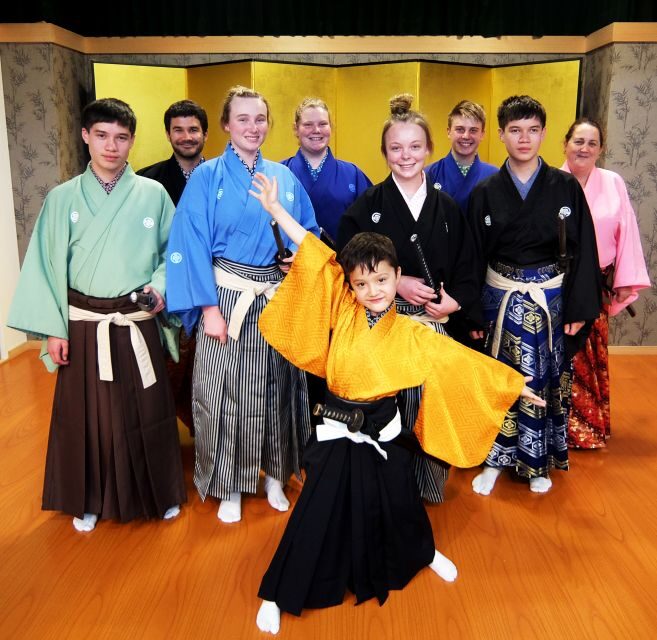
The listed price is $64 per person, for a session that runs 90 minutes to 2 hours. For Kyoto, that’s a fair value when you consider what’s included: an English-speaking instructor, a photo session, a tenugui towel (traditional Japanese towel), and a completion certificate.
What you’re not getting is the rest of a full day. Food and drinks aren’t included, and there’s no hotel pick-up/drop-off. You’ll handle getting to the dojo on your own.
So, think of this as a high-value, concentrated experience. You’re paying for coaching, a guided practice sequence, and a structured way to take home photos and a certificate—not for a full-day itinerary with meals.
If you want a classic Kyoto morning where you learn something real and walk away with photos that don’t look staged, this price can make sense.
Who should book this samurai sword class in Kyoto
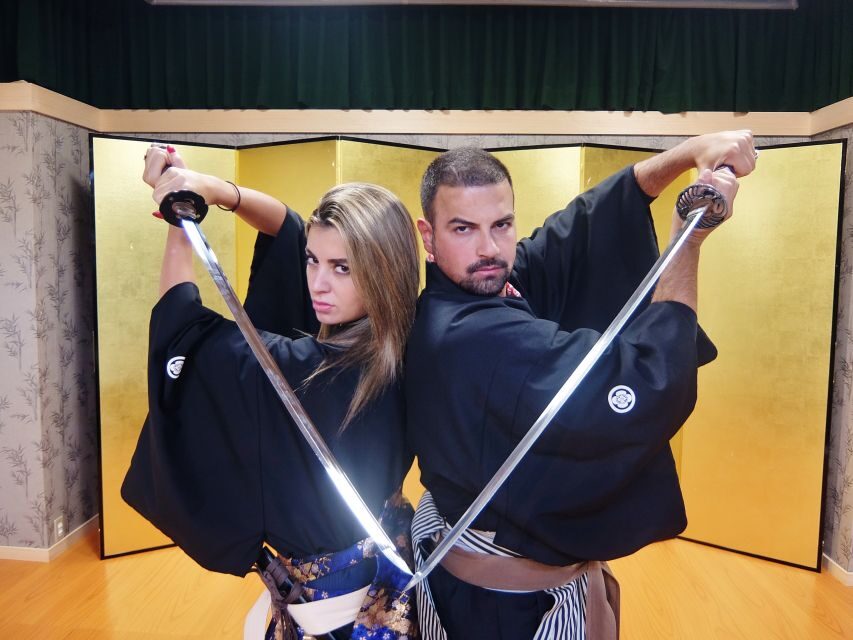
This experience is a great fit if you want hands-on culture. It’s also ideal if you like activities that teach a physical skill while still explaining the meaning behind it.
Based on the class structure and how it’s described, you’ll probably enjoy it most if:
- You like learning by doing, not just watching
- You’re curious about Kenbu and want the basics you can build on
- You want a fun Kyoto activity that also creates strong photo memories
- You’re traveling with teens or adults who are willing to participate fully
A quick note about kids: it’s not suitable for children under 4, and for ages 5 to 10 it’s desirable that the child has martial arts experience or is in a learning mindset, since lessons are conducted with adult participants. That doesn’t mean it’s impossible, but it’s a better match when the kid can handle the format.
If you hate getting dressed up, or you want a silent, observation-only museum vibe, skip this one.
Practical tips so you don’t feel rushed or underprepared
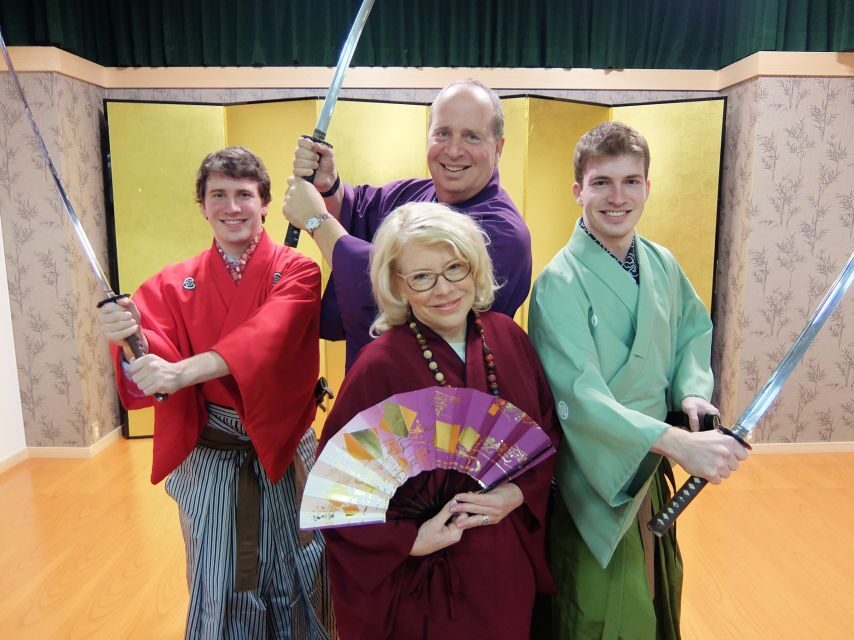
Here’s how to make the class feel smooth from minute one:
- Wear exercise-friendly clothes you can move in comfortably. The rules specifically say clothes should suit movement.
- Don’t show up with luggage or large bags. There’s no room for big travel storage.
- Leave pets at home (not allowed).
- Do not bring weapons or sharp objects. The class has its own controlled setup.
- Avoid alcohol beforehand and don’t come under the influence.
- Arrive early enough to settle in, because there’s no waiting room.
If you’re thinking about filming or photos, remember the experience includes a photo session, so you don’t need to over-plan your own setup. Just be ready to stand, move, and change clothes.
And yes, the class can include a little souvenir moment beyond the included items. Some participants mention extra small keepsakes like scarves or similar items, but you should treat those as potential extras rather than guaranteed.
Should you book Samurai Sword Class in Kyoto?
I think this is a smart booking if you want a short, real skill instead of another stop-and-photos activity. The biggest strength is the sequence: film intro, costume time, respectful bowing, sword handling basics, then a performance with commentary so you understand what you practiced.
Book it if you’re comfortable participating and you’ll show up with the right clothing. Skip it if you’re looking for observation only, if you don’t want to dress for the class, or if you’re carrying lots of luggage you can’t store.
If you’re on the fence, pick a session that lines up with your energy level. The class is focused, and it pays off when you treat it like an actual lesson, not a casual show.
FAQ
Where is the meeting point for the Kyoto samurai sword class?
The meeting point is Samurai Kembu Theater (Kyoto dojo), 35-7 Sanchome (Higashi-iru, Sanjo-hanamikoji), Higashiyama-ku, B1F Gozan Building, Kyoto 605-0005.
How long does the experience take?
Plan for 90 minutes to 2 hours. The exact timing can vary by starting time.
What’s included in the $64 per person price?
You get an English-speaking instructor, a photo session, a tenugui towel, and a completion certificate.
Do I need to bring a sword or special gear?
No. Don’t bring weapons or sharp objects. You should wear clothes suited for exercise and movement for costume changes.
Can I just watch instead of participating?
No. There is no observation only option. You’ll need to join the lesson activities.
Can I cancel and get a full refund?
Yes. You can cancel up to 24 hours in advance for a full refund.