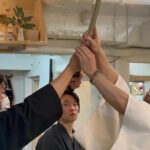
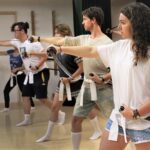
Kendo in Kyoto feels like time travel. In a 120-year-old machiya, you’ll dress in proper training gear and learn kendo moves with safe swords. I love the full uniform transformation, and I love the samurai etiquette + philosophy that gives meaning to each strike. One possible drawback: the room can feel a little dusty or worn, and the location is a bit out of the main flow.
Your instructor, usually Taka-san, keeps things friendly and focused. You’ll get English instruction, clear safety rules, and enough practice time that you don’t just watch—you do.
The session runs about 2 hours, and it ends with action plus memory-making: you’ll be filmed and photographed in full kit, so you can leave with more than a vague tourist souvenir.
In This Review
- Key things you’ll notice right away
- Suit Up in a 120-Year-Old Kyoto Machiya
- Safety Rules, Grip, Posture: Where Kendo Really Starts
- The Samurai Mindset: Etiquette and Philosophy Behind the Moves
- A note about expectations (tatami cutting)
- What You Actually Do With the Sword
- Photos and Videos: Leave With Real Samurai-Mode Footage
- Price and Value: Does $103 Feel Fair?
- Location Tips: Getting to the Old House Without Stress
- What to wear for comfort
- Who This Samurai Kendo Session Fits Best
- Should You Book This Samurai Experience?
- FAQ
- How long is the kendo and samurai experience in Kyoto?
- Do I need prior kendo experience?
- What language is the instructor?
- What gear is included?
- Are replica swords included in the price?
- Where do I meet the group?
- Is the experience suitable for children?
- Is alcohol allowed during the activity?
- Is it a small group class?
- Can I cancel or pay later?
Key things you’ll notice right away

- A real machiya dojo (over 100 years old): training in old Kyoto wooden architecture changes the whole mood.
- Suit-up is part of the lesson: uniform, footwear, and gear are provided so you can jump in fast.
- Safe training swords (bamboo/foam or replicas): you learn form without taking unnecessary risks.
- Etiquette and mindset, not just swings: you’ll be taught how samurai values connect to kendo.
- Sparring-style practice and fun competition: it’s participatory, with a partner practice moment at the end.
Suit Up in a 120-Year-Old Kyoto Machiya

This is not a cosplay show. You start by walking into an old Japanese house setup, with a large gate at the front, and you’ll shift gears quickly once you’re inside.
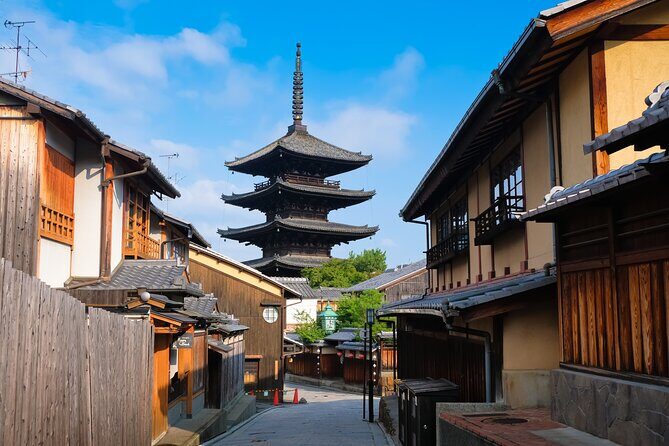
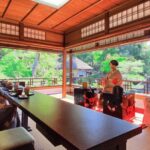
The big draw is the machiya-style building—a traditional Kyoto home over 100 years old. Even if you’ve seen Kyoto’s old streets, it’s different when you’re training in the space, with the floor, air, and layout built for daily life rather than for tourists. Several people point out the authenticity of the setting, and I get why. It makes the kendo lesson feel grounded.
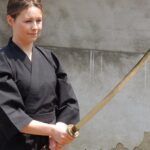
Then comes the moment most people remember: dressing in the gear. The experience includes uniform rental, plus equipment and shoe rental. You don’t need to bring anything except yourself (and a willingness to look a little dramatic while you learn).
Practical note: one review mentioned the room felt a bit dusty and worn. That’s not a deal-breaker, but it’s worth knowing. If you’re sensitive to smells or dust, it helps to bring a mask or expect a less polished studio feel.
A few more Kyoto tours and experiences worth a look


Safety Rules, Grip, Posture: Where Kendo Really Starts

Before anyone swings anything, you’ll get a safety briefing. This matters a lot in kendo training, because the goal is control, not chaos. You’ll also learn etiquette basics—how to behave in the dojo environment and how to handle training equipment respectfully.
You don’t need prior experience. The instruction is designed for beginners, with a step-by-step approach:
- how to hold and control the training sword
- posture and body position
- basic movement patterns and footwork
- how to execute strikes and blocks in a safe, repeatable way
The swords you’ll practice with are specifically described as safe training options—often bamboo swords, foam swords, or refined replicas. That means you get the feel of the art without the dangers (or legal/operational issues) that come with real blades.
Also, don’t be surprised if your instructor keeps the lesson playful. In a bunch of accounts, Taka-san is described as friendly, funny, and patient. That matters when you’re learning a discipline with strict form. Humor can help your brain relax while your body learns the right positions.
The Samurai Mindset: Etiquette and Philosophy Behind the Moves

Kendo is about more than hitting. The best part of this experience is that the physical training is paired with meaning.
You’ll hear the history of samurai culture and kendo’s evolution, and you’ll connect that story to practical training etiquette. In other words, you learn the why behind the what. When your instructor explains the mindset—discipline, presence, respect—it stops being random arm-waving.
One detail I liked from how it’s described: the instruction doesn’t treat history like trivia. It frames etiquette as a living system. That’s the difference between a performance and a skill class.
You’ll also learn how to move with respect in a dojo setting. Even if you’re not a martial arts person, these rules make the experience feel serious. That’s a big part of why people rate it so highly.
A note about expectations (tatami cutting)
A common misconception about samurai-style demos is the idea of dramatic cutting of objects. One person specifically mentions that tatami cutting doesn’t happen anymore because it’s illegal. So if you’re picturing a full-blade action scene, adjust your expectations. You’re here to train technique and etiquette, not to watch a prohibited stunt.
What You Actually Do With the Sword

You’ll spend a meaningful chunk of your time practicing. The flow is designed so you don’t just put on armor and pose.
You’ll start with fundamentals—grip, posture, and basic strikes/blocks. Then you’ll move toward pairing up and doing more realistic practice patterns. Several accounts mention sparring or a sparring-style lesson at the end, using training swords that are appropriate for beginners.
Many descriptions highlight a partner practice moment and then a small competition-like segment. Think of it as a structured way to test what you learned—without turning it into a fight club.
And yes, you’ll likely get the chance to wear full gear before that happens. That’s part of the immersion effect, but it’s also practical: wearing the equipment helps you learn movement and timing the way it’s meant to be trained.




Photos and Videos: Leave With Real Samurai-Mode Footage

The memory-maker here is not just a quick phone snapshot. You’ll be photographed and recorded by your instructor while you’re fully dressed.
That matters because the gear does the heavy lifting visually. But instructors also understand angles and pacing. When someone films you while you’re in correct posture and training stance, the result looks like you were in a dojo scene—not a random traveler dressed up for five minutes.
Plan to participate fully during the photo/video moments. Even small corrections to stance can make a big difference in how the footage looks later.
Price and Value: Does $103 Feel Fair?

At around $103 per person for about 2 hours, you’re paying for more than instruction—you’re paying for a complete, hands-on cultural workshop with training gear and media capture.
Here’s how the value stacks up in practical terms:
- Gear is included: uniform, equipment, and shoe rental are part of the package, so you don’t need to source anything on your own.
- Instruction time is real training: you get safety briefing, fundamentals, practice, and partner work.
- Setting matters: the 100+ year machiya location is a big part of the experience. It’s not a generic studio.
- You get photos/videos: that’s extra value compared with many short “try a costume” activities.
The main “value wobble” is the room condition note (dust/wear). If you’re very picky about clean, modern facilities, that might reduce the experience for you. Also, since the location is described as farther out, you may want to budget a taxi ride and time to arrive calmly.
Still, for what you do—train kendo with guidance, learn the story behind it, and leave with real photos and video—it usually lands as good value.
Location Tips: Getting to the Old House Without Stress

The meeting point is an old Japanese house with a large gate. That’s charming, but it can be slightly tricky if you’re relying only on rail stations and walking.
One practical tip that comes up: take a taxi from the station if you can. The route is described as in a residential area along a winding path, and people recommend taxi time because it saves stress.
Also, give yourself extra time. A few accounts mention lateness disrupted the class. With a training schedule, late arrivals affect everyone.
What to wear for comfort
Even though you’re in Kyoto, this isn’t a hot stroll around temples. You’ll be in a dojo environment, and some accounts mention it can get chilly, with people recommending warm socks and a base layer—especially in colder months. Wear layers you can move in.
Who This Samurai Kendo Session Fits Best

This works best for you if you want an active cultural experience, not just sightseeing.
It’s a great fit for:
- adults and older teens who like hands-on training
- culture-focused travelers who want the etiquette and history side
- people who enjoy learning by doing with a partner practice format
It’s not suitable for children under 7. If you’re traveling with kids, check age carefully.
It also helps if you enjoy structure. Kendo is about form and discipline, and the class style reflects that. If you want total freedom to roam, you might find it more structured than you expect.
One more boundary: alcohol and drugs are not allowed. That’s standard for many training environments, but it’s good to know upfront.
Should You Book This Samurai Experience?

If you want Kyoto to feel physical and real, I’d book it.
This is a strong choice when you care about:
- dressing in proper uniform and gear
- learning beginner kendo fundamentals with safe training swords
- getting the etiquette and mindset that make the practice feel connected to samurai culture
- leaving with instructor-shot photos and videos, not just your own phone pics
Skip it or think twice if you’re very uncomfortable with older indoor spaces (dust/wear was mentioned), or if you strongly prefer “big city, easy-to-reach” activities over a slightly out-of-the-way meeting point.
My call: if you’re game to suit up, listen, practice, and take the whole experience seriously while still having fun, this is one of the better “Kyoto nights” you can book.
FAQ
How long is the kendo and samurai experience in Kyoto?
It lasts about 2 hours.
Do I need prior kendo experience?
No prior experience is required. You’ll get a safety briefing and start with the basics.
What language is the instructor?
Instruction is in English.
What gear is included?
The experience includes uniform rental, equipment rental, shoe rental, and gear rental.
Are replica swords included in the price?
No. Replica swords are available for purchase, but they are not included.
Where do I meet the group?
The meeting point is an old Japanese house with a large gate.
Is the experience suitable for children?
It’s not suitable for children under 7 years old.
Is alcohol allowed during the activity?
No. Alcohol (and drugs) are not allowed.
Is it a small group class?
The experience details provided don’t list group size, but it’s described as an instructor-led workshop where everyone practices.
Can I cancel or pay later?
There is free cancellation up to 24 hours in advance for a full refund, and you can reserve now and pay later.