Samurai training is the easy part. What makes this experience fun is that you do it in a traditional dojo setting while also getting a museum ticket and guided history time included. I especially liked the mix of hands-on practice with hakama dress-up and the straightforward museum portion that helps the whole thing click together. One thing to consider: on the busiest days, the flow can feel a bit rushed between stations, so don’t expect a super slow, private class.
You’re not stuck with one start time either. The schedule offers multiple daily start times, and you’ll check in with a mobile ticket near public transportation. Just note the venue has rules—children under 7 can’t enter the dojo—and the experience is designed for short, guided rounds rather than long free practice.
In This Review
- Key points before you go
- Entering the dojo: hakama, etiquette, and fast setup
- Blunt replica sword training and the “real sword” expectations check
- Museum ticket included: turning training into context
- Ninja star throwing and the photo-stops rhythm
- Timing, group size, and why peak season can feel like a factory line
- Where to meet in Kyoto and what to bring (and skip)
- Price and value: $83.91 is easier to justify if you want multiple parts
- Should you book Kyoto Sword Experience (Samurai and Ninja Museum)?
- FAQ
- Where is the meeting point?
- How long does the experience take?
- Do you use real swords or sharp blades?
- Is ninja star throwing included?
- What is the age limit for the dojo?
- Are there multiple start times?
- How big are the groups?
- Do I need a paper ticket?
- Is free cancellation available?
- What happens if I’m visiting during the elevator out-of-service dates?
Key points before you go
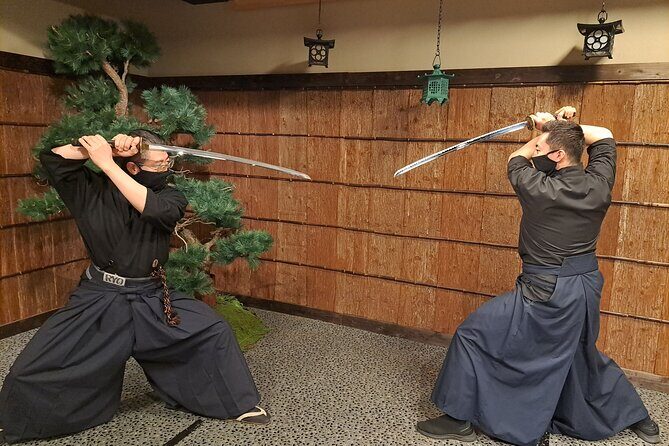
- Hakama dress-up and basic Iaido set the tone fast, with instructors guiding your stance and control
- Blunt replica sword format keeps it in line with Japanese law (no real sharp blade)
- Museum ticket + free guided museum tour helps you connect what you learn to artifacts and stories
- Ninja star throwing is part of the plan, usually after the dojo training
- Small-group feel is the goal, with the tour listing showing a maximum of 22 travelers (some info also indicates smaller sessions)
- Plan for stairs: the venue mentions an elevator out-of-service period in late January to mid-February 2026
Entering the dojo: hakama, etiquette, and fast setup
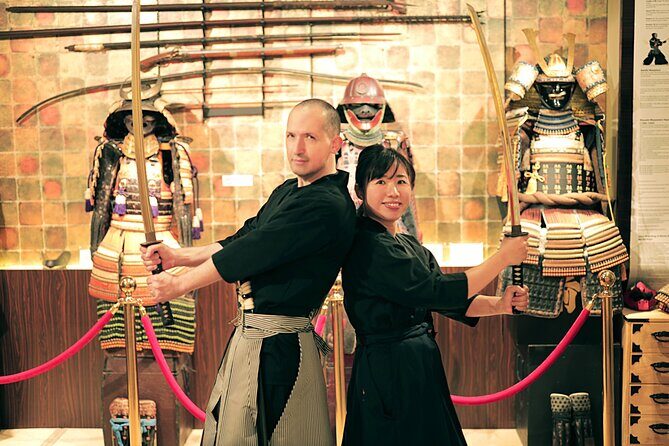
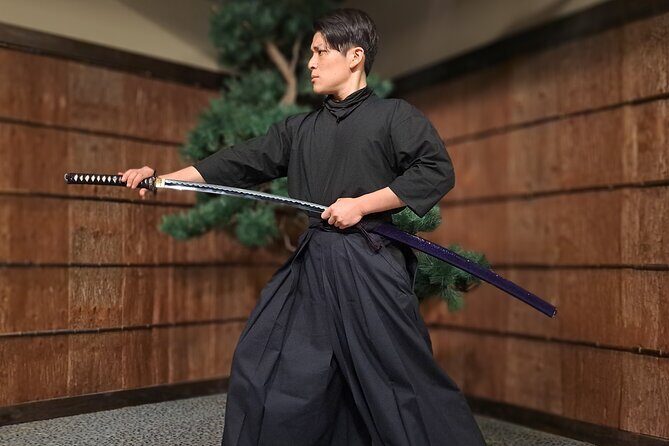
The first moment you walk in, the experience feels like it has a script—good news if you like structure. You start by dressing in a samurai hakama, and the outfit instantly makes you stand differently without anyone having to explain it too much. It’s also one of the best photo wins of the day, because you’re not just posing in street clothes.
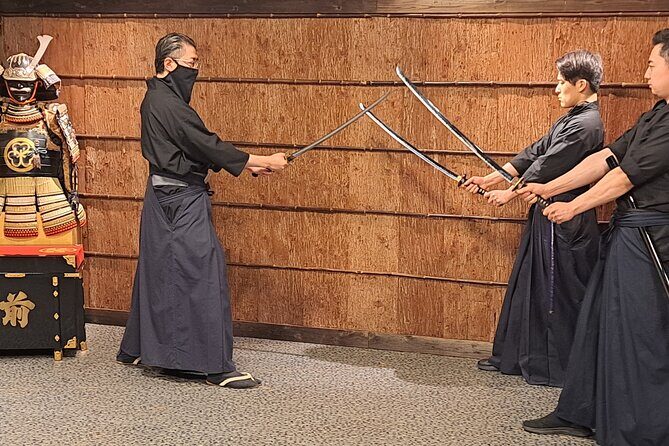
Then you get your basics for safe handling and positioning. Iaido-style practice here is about control and form, not about fancy tricks. Your instructor’s job is to keep everyone moving through similar steps, so you’ll feel guided even if you’ve never touched a sword-shaped object before.
If you land with instructors named Riku, Ken, or Nobu (names that show up in past sessions), you can expect the lesson to lean on clear coaching and museum-style storytelling. That matters because the goal isn’t just photos—it’s understanding why certain movements are taught the way they are.
Other ninja experiences in Kyoto



Blunt replica sword training and the “real sword” expectations check
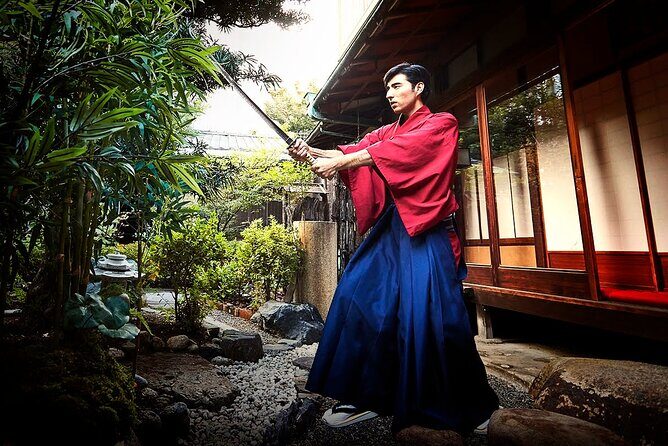
Here’s the most important part to align your expectations: this experience uses a blunt, safe replica sword, and it’s specifically framed to comply with Japanese rules. There’s an update included that says Japanese law bans facilitating or selling activities that involve using a real sword, and the activity does not involve a real sharp blade.
That means if you’ve seen older promo photos online showing dramatic cutting, treat those images cautiously. One review specifically flagged that the cutting shown in photos no longer matches what’s offered, so you should expect a training-focused setup using replicas rather than a high-adrenaline cutting demo.
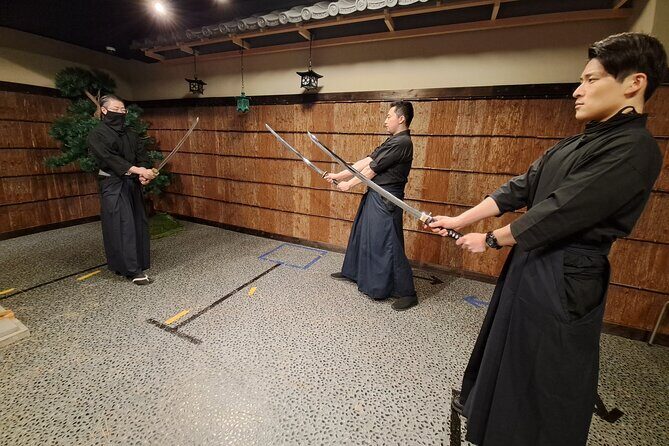
You’ll do basic iaido techniques with the replica sword, and you’ll also get a simple sword-fight style practice in a controlled way. Reviews describe a cutting component in some sessions (for example, cutting a tatami mat), but since the current rules emphasize safety and replica handling, the exact cutting gear and method can vary by session. I’d come in expecting hands-on training with a chance at a cutting moment, not a guaranteed cinematic test.
If you’re traveling during busier seasons, the experience may feel more like timed rounds than a long workshop. That doesn’t make it bad—it just means you’ll want to stay ready, follow instructions, and keep moving when your turn comes.
Museum ticket included: turning training into context
The best surprise is that you don’t just leave the dojo and call it a day. Your ticket includes admission to the Samurai and Ninja Museum along with a free guided museum tour. That guided time is where the day becomes more than cosplay.
In the museum portion, you’ll get a clearer picture of how samurai and ninja culture shaped life in Kyoto and why certain weapons and practices mattered. Names like Ken and Nobu show up in past sessions as guides who helped keep people engaged, and that’s exactly what you want when you’re balancing outfit changes, movement, and language barriers.
Also, because the museum is part of the same price, you’re not forced to decide later whether it’s worth your time or money. If you’re the type who likes to understand what you’re seeing (even at a basic level), this included tour helps you feel you got more than one activity for your yen.
Ninja star throwing and the photo-stops rhythm
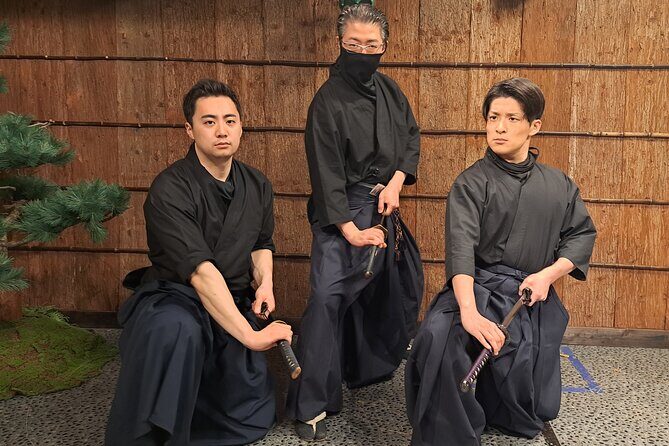
After the dojo practice, the day often shifts into a different mode: pictures and a chance to throw ninja stars. It’s fun because it gives you a concrete “I did that” moment beyond sword stances—one you can repeat later in your own imagination even if you forget half the footwork.
One review notes that the ninja star throwing area involved stairs, and another says there can be some movement between buildings. That lines up with what you should assume from the format: you’ll likely go from training to museum to throwing/photo time, sometimes in slightly different spots.
Photo time is a real part of the experience here. Several reviews mention dressing in samurai gear for pictures and getting memorable photo opportunities. If you care about getting good shots, show up ready to move. If you don’t care much about photos, you can still enjoy the training and museum without getting stuck waiting for picture queues.
One caution: a small number of negative reviews mention that ninja star throwing didn’t happen for them, usually tied to timing issues during peak periods. The good takeaway for you is simple—when you arrive, ask what comes next and watch the schedule your group follows. If the day feels tight, you may need to keep your eyes on when throwing is supposed to happen so you don’t end up stuck at the museum while others throw.
Timing, group size, and why peak season can feel like a factory line
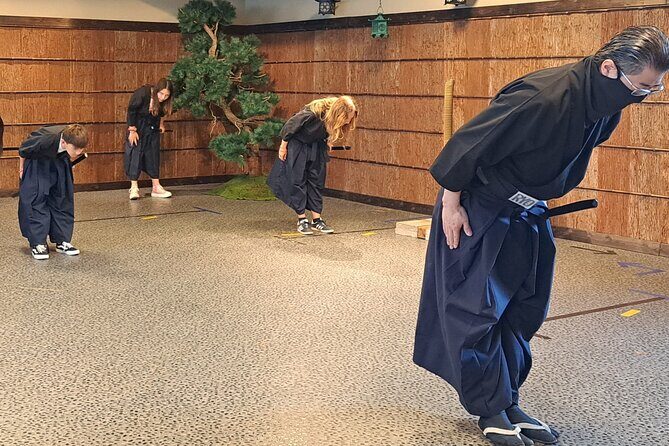
The whole experience is about efficient flow: dress, learn, practice, museum, throw, photos. That’s why the duration is listed as about 2 hours. On quieter days, this format probably feels like a smooth guided session.
On crowded days, it can feel more like a chain of short stops. Several pieces of feedback point to busier seasons (like cherry blossom time) creating larger-than-expected groups, longer waits, and less individual coaching time during the busy parts. That’s not unique to this tour, but it’s extra noticeable when you only get one go at something like the cutting or throwing segment.
Group size info is also a bit inconsistent in the details you’re given: the experience lists a maximum of 22 travelers in one place, while another note says a maximum of 4 travelers. What does that mean for you? Assume it’s meant to be small and guided, but don’t rely on a guarantee of ultra-private instruction. Your confirmation will be the best clue.
If you want the most personal feel, pick an off-peak start time and try to arrive on time (or a touch early). People who arrived late in past feedback mention they still had a good experience, but they clearly felt the pressure of joining once the process had already started.
A few more Kyoto tours and experiences worth a look



Where to meet in Kyoto and what to bring (and skip)
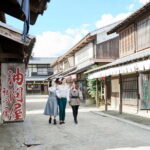
You meet at the Samurai Ninja Museum Kyoto address: 109 Horinouechō, Nakagyo Ward, Kyoto, 604-8117, Japan. The experience ends back at the meeting point, so you’re not navigating a complicated end-to-bus transfer.
It’s also described as near public transportation, which is a big deal in Kyoto. You’ll likely be able to combine this with other nearby sights in Nakagyo Ward, rather than spending your day commuting across town.
What to bring is simple: wear shoes you can move in, because you’ll be changing posture, walking between areas, and possibly taking stairs. If you travel in the window when the elevator is out of service—January 24, 2026 through February 19, 2026—assume you’ll handle steps without help. The day may be fully doable, but it’s smarter to pack for it.
Also, check your age fit before you book. Children under 7 aren’t allowed into the dojo venue. That means you can still bring older kids if they’re able to participate, but this isn’t a drop-off style experience.
Price and value: $83.91 is easier to justify if you want multiple parts
At $83.91 per person for a 2-hour experience, you should judge value by the bundle, not by the sword moment alone. Here, the bundle includes:
- Samurai hakama dress-up
- Iaido basics with a blunt replica sword
- Sword-fight style practice in a controlled setting
- Museum admission plus a guided museum tour
- Ninja star throwing (part of the planned program)
- Multiple daily start times and a mobile ticket
If you’re the kind of traveler who would otherwise pay separately for a museum entry and a short activity, the included museum ticket makes the price feel more reasonable. If all you want is hands-on sword work and you’re not that interested in museum context, the experience can feel pricey compared to the time spent actively training.
I also think it’s worth considering the safety framing. Because the current rules emphasize replica weapons, you’re paying for instruction and cultural experience, not for an adrenaline cutting show. If that matches your expectations, it’s a strong use of time in Kyoto.
Finally, note that recent reviews include a mix of experiences, including complaints about disorganization and rushed timing at peak season. The presence of strong recent ratings suggests the operator has improved training and flow, but your best bet is to choose a time slot carefully.
Should you book Kyoto Sword Experience (Samurai and Ninja Museum)?
I think you should book it if you want an easy-to-follow, hands-on samurai experience with actual structure: dress up, learn form, then get the museum context so it means something. It’s especially good for first-timers who want a safe way to participate without worrying about legal or safety issues.
Skip it or reconsider if you’re ultra-sensitive to waiting, tight schedules, or getting only one short shot at an activity. This format is designed to keep the day moving, so if you’re hoping for long personal practice time, you may leave wanting more.
If you book, my practical tips are these: arrive a few minutes early, ask what order your group follows (training, museum, ninja star, photos), and wear shoes you can walk in comfortably. That’s how you get the best chance at the full experience without feeling rushed.
FAQ
Where is the meeting point?
You meet at Samurai Ninja Museum Kyoto, 109 Horinouechō, Nakagyo Ward, Kyoto, 604-8117, Japan. The activity ends back at the meeting point.
How long does the experience take?
It runs about 2 hours (approx.).
Do you use real swords or sharp blades?
No. The experience uses a blunt, safe replica sword, and it is stated to comply with Japanese law. The included update says it does not involve using a real sword or a sharp blade.
Is ninja star throwing included?
Yes, ninja star throwing is listed as part of the experience.
What is the age limit for the dojo?
Children under 7 are not allowed to enter the samurai dojo venue.
Are there multiple start times?
Yes. The experience offers flexible start times with multiple daily options.
How big are the groups?
The details given include a maximum of 22 travelers, and another note states a maximum of 4 travelers. Check your confirmation for the specific group size for your time slot.
Do I need a paper ticket?
No. A mobile ticket is included, and you should receive confirmation at the time of booking.
Is free cancellation available?
Yes. You can cancel up to 24 hours in advance for a full refund.
What happens if I’m visiting during the elevator out-of-service dates?
The venue notes an elevator out-of-service period from January 24, 2026 to February 19, 2026, so you should be prepared for stair access during that time.