Nijo Castle is where power feels built-in. This 60-minute guided walk through Nijo-jo Castle and Ninomaru Palace turns architecture into a story you can actually follow. I especially like how the tour connects Tokugawa politics to what you see in the gates and rooms, and how the Ninomaru-goten Palace still looks intact enough to make the past feel close. One drawback: admission to the castle grounds is not included, so you’ll need cash on site before the tour can fully start.
You get a tight route—no wandering forever—yet you still cover the core pieces: the East side meeting point, the big gates, the Ninomaru Palace, and the garden loop. The English guides do the heavy lifting, and from what I’ve seen in the way they teach (from guides like Kingo, Ayu, Kaoru, and Ai), the pacing is built for understanding, not just sightseeing. The other consideration is practical: inside the palace you may face rules like no photos and no water, and there’s no air-conditioning mentioned for interiors, so plan for comfort outside of that boxy, historic shell.
In This Review
- Key things to know before you go
- Entering Nijo Castle: where Edo power was staged
- The one-hour plan: gates to the shogun’s office
- Meeting at the East Main Gate reception
- Stop 1: Higashi Ote-mon Gate and the big entrance moments
- Stop 2: Kara-mon (Karamon) Gate
- Stop 3: Ninomaru-goten Palace (the centerpiece)
- Stop 4: Ninomaru Garden loop
- What you actually learn: symbols, room meanings, and daily protocol
- Architecture as a political script
- Decoration and murals: meanings you can’t guess
- Getting time to ask questions
- Ninomaru Garden: the relief walk after palace rules
- Why the garden part matters
- Photo and comfort realities
- Value check: $16 for the guide, plus the ticket you pay in cash
- Logistics that can trip you up (and how to avoid the stress)
- Admission and cash
- Earphones and kids
- Language and sound
- Timing and closures
- Who should book this Kyoto Nijo-jo Castle and Ninomaru Palace guided tour
- Should you book this Nijo-jo Castle and Ninomaru Palace guided tour?
- FAQ
- FAQ
- How long is the Nijo-jo Castle and Ninomaru Palace guided tour?
- Is the tour conducted in English?
- What parts of Nijo Castle are included in the tour?
- Is the castle admission fee included in the $16 tour price?
- Where do I meet for the tour?
- What if I arrive late?
- Are earphones provided?
- Can my child join for free?
- What if I want to bring more than one child?
- When is Ninomaru Goten closed?
Key things to know before you go
- Tour-only access: You reach areas that are normally off-limits to regular self-guided visitors.
- One hour, focused stops: East Main Gate meeting, Karamon/Kara-mon, Ninomaru Palace, and Ninomaru Garden.
- English live guide: Expect clear explanations and time to ask questions when the group allows.
- Admission is extra: The tour is $16, but you pay the venue entry fee separately in cash.
- Earphones depend on ticket: Provided for paid participants; children follow the adult-ticket/earphone rule.
- Ninomaru Goten can be closed: Certain Tuesdays and a Dec 26–Jan 3 window can affect access.
Entering Nijo Castle: where Edo power was staged
Nijo Castle was built in 1603 as the Kyoto residence of Tokugawa Ieyasu, the first shogun of the Edo Period. That detail matters, because this isn’t a castle you visit only for walls and roofs. It’s a place designed for rule—how a leader traveled, how officials waited, and how authority was shown through gates, spacing, and interior decoration.
After the Tokugawa Shogunate fell in 1867, the castle shifted roles and served as an imperial palace. Later, Kyoto City received it and opened it as a historic site. Today it’s part of a UNESCO World Heritage designation (1994), which is a nice stamp, but the real reason you’re here is simpler: this is one of the best surviving examples of Japan’s feudal-era castle architecture.
The guide frames the castle in three main parts—Honmaru (main defense circle), Ninomaru (secondary defense circle), and the gardens that wrap around both. You don’t have time to fully explore everything on your own during this tour. Instead, you’re guided right to the heart of the story: the Ninomaru side, where the shogun’s residence and office were used during visits to Kyoto.
A few more Kyoto tours and experiences worth a look

The one-hour plan: gates to the shogun’s office
This tour is built to be efficient. In practice, it feels like you’re walking a short timeline through the castle’s “public face” and then into the more controlled spaces where a leader’s presence mattered.
Meeting at the East Main Gate reception
You enter through the East Main Gate and gather at the reception area next to the General Reception, on the left after you pass through the East Main Gate. It’s smart to arrive a little early. The tour won’t wait if you’re late when it begins, and the group needs to stay together to keep the timing tight for the palace interior.
The meeting coordinates are roughly 35.012586… , 135.750853…, but follow the on-site ticket booth instructions you get with your booking. Once you’re at the reception, staff will point you to your group and confirm you’re checked in.
Stop 1: Higashi Ote-mon Gate and the big entrance moments
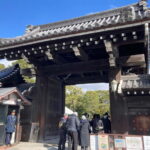
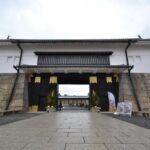
Early on, you pass through the East side gate experience (the tour includes the Higashi Ote-mon Gate area). This is where the architecture starts doing its job—telling you where “inside” begins. Your guide uses this to set context: who built Nijo, why Kyoto mattered, and how the Edo system relied on ceremonies and controlled movement.
Stop 2: Kara-mon (Karamon) Gate
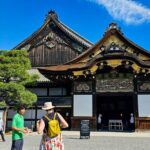
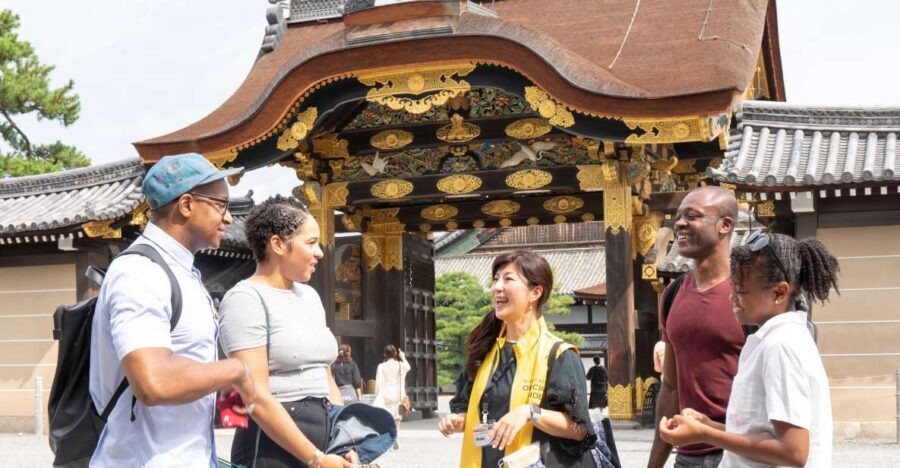
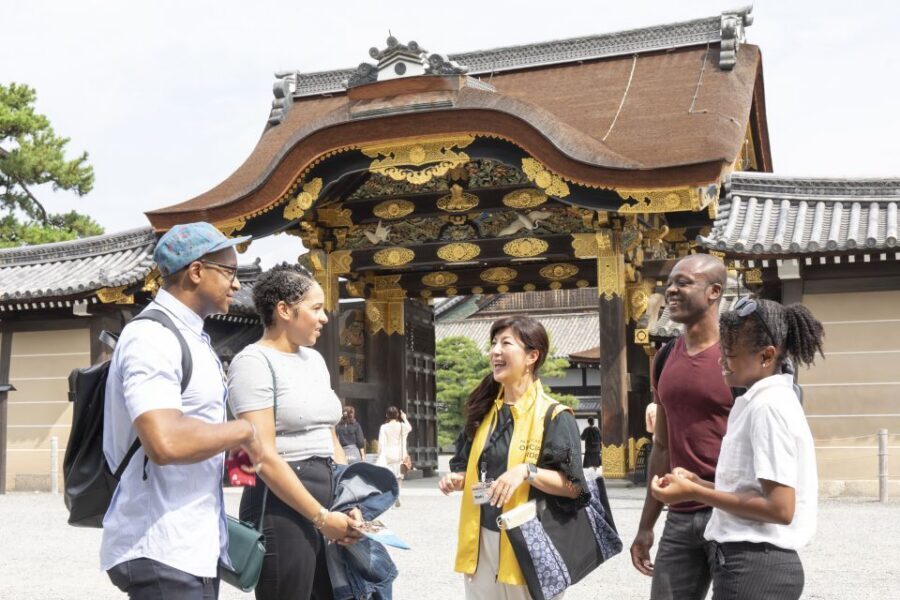
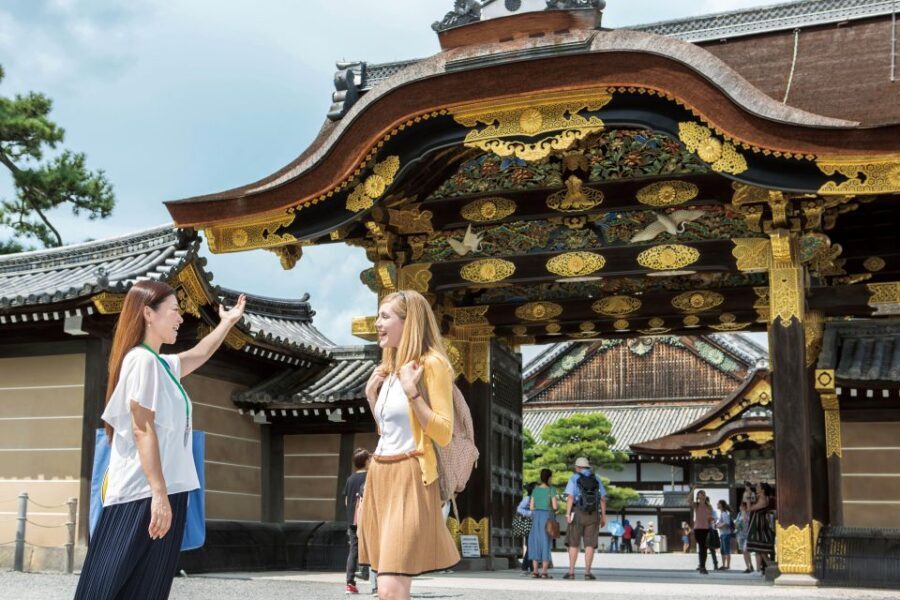
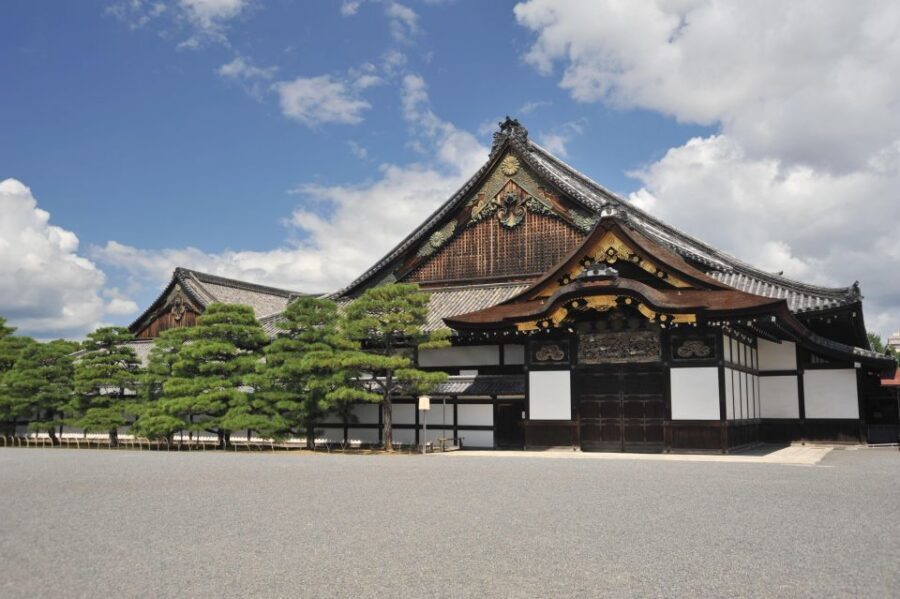
Then comes one of the signature visuals: the Kara-mon / Karamon Gate. It’s described as extravagant, and it’s not just showy decoration. In a place built for power, gates are basically announcements—symbolic doors that separate ordinary circulation from the space reserved for authority.
I like that guides don’t treat this like a photo stop. They often connect carvings and design choices to the political message. Some guides (like Kingo and Kaoru in prior tours) are especially good at explaining why the art is there, not only what it looks like.
Other guided tours in Kyoto




Stop 3: Ninomaru-goten Palace (the centerpiece)
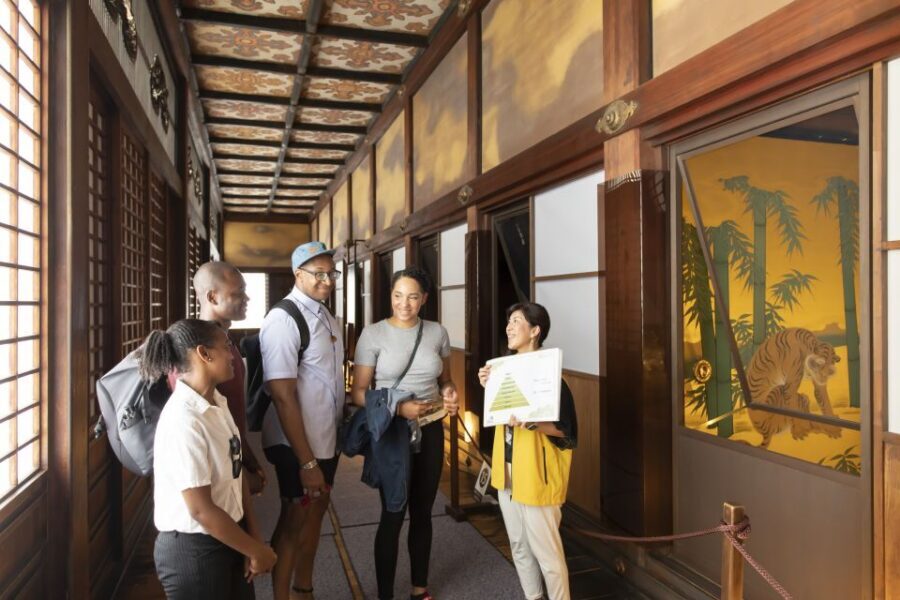
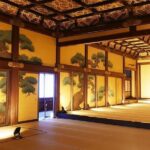
The main focus is the Ninomaru-goten Palace. This is the shogun’s residence and office area on visits to Kyoto, and the palace is still intact, which is rare. That intactness is why your guide’s explanations land so well: you can connect each explanation to an actual room and layout you’re standing in.
Many visitors come in thinking the palace is just “pretty.” The guide usually pushes you past that. You get explanations of how rooms were used and what functions they served—answers that make the building’s design feel less abstract. In the way guides like Ayu, Ai, and Miki have taught, the tour often turns into a short course on how power worked in the Edo period.
One theme that pops up strongly in the way guides explain this place: Nijo Castle is often more about political control than military action. That framing helps a lot if you’ve been picturing every Japanese castle as a battlefield fortress.
Stop 4: Ninomaru Garden loop
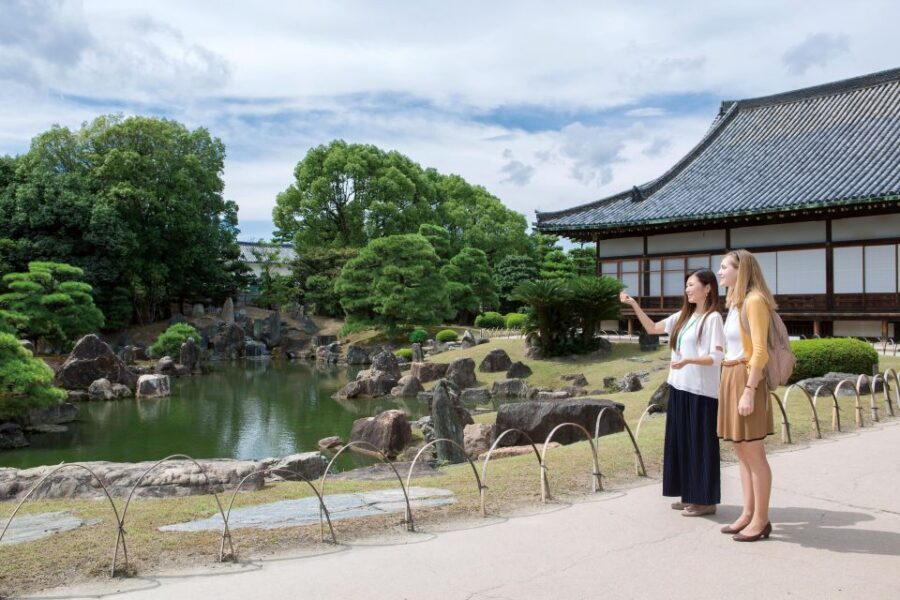
After the palace portion, you move into the Ninomaru Garden. It’s a good pacing tool. Interiors can feel dense and rules-based; gardens give your eyes a break and your brain a reset. Guides use the garden walk to tie the castle layout back to the bigger picture—how defense circles and controlled spaces surround the human experience of the residence.
What you actually learn: symbols, room meanings, and daily protocol
The biggest value of this kind of guided tour is not that someone points out “important” objects. It’s that someone gives you language for what you’re seeing.
Architecture as a political script
Your guide will connect the castle’s layout to leadership logistics: where a leader would appear, how visits were managed, and how the system kept people in line. That’s why the UNESCO status feels deserved after you understand the context, not just because it’s a famous name.
From guide styles like Don-san and Kiku (as seen in prior tour experiences), you may also hear how the court and power structure worked—who mattered, how status showed up in daily life, and why the building would be designed to support those rituals. When you get that context, the palace decorations stop being random and start feeling intentional.
Decoration and murals: meanings you can’t guess
Several tours emphasize symbolism in carvings, architecture, and even murals. The palace has visual details that are hard to interpret on your own. A good guide helps you connect art and design to themes like rule, order, and the role of the shogun when he was in Kyoto.
I like that this is not treated like a lecture. It’s short, broken into room-sized chunks. One review mentioned the guide kept the information at just the right level, which matches the practical goal of a one-hour tour: you don’t need everything, just the key pieces that unlock the rest.
Getting time to ask questions
You’re not stuck silently absorbing information. In multiple tour experiences, the guides were willing to answer questions and slow down when needed. That matters if you’re the kind of person who wonders about practical details—how rooms worked, why certain design choices exist, or what the function of each area might have been.
And yes, humor happens. Guides like Kaoru have a way of making the explanations stick without turning it into a circus. It’s an effective balance: serious history, but not stiff.
Ninomaru Garden: the relief walk after palace rules
Even if you love history, interiors can wear you down. The garden section helps you finish the tour in a calmer tone.
Why the garden part matters
The Ninomaru Garden is not just greenery. It’s part of the castle’s structure—part of the circles around the defense areas. When your guide links the garden to the overall layout of Honmaru and Ninomaru, it clicks into place as part of the system, not a decorative afterthought.
Photo and comfort realities
One practical note from experience reports: inside the palace areas, there may be no photos and no water allowed, and no AC in interiors was mentioned during heat waves. That doesn’t ruin the visit, but it changes how you plan your comfort. Bring water for outside walking, wear breathable layers, and treat the palace interior as a controlled, warm-use space rather than a modern museum.
If it’s very hot, you’ll probably feel the day more than usual. The good news is the tour is only an hour, and it moves.
Value check: $16 for the guide, plus the ticket you pay in cash
Let’s talk straight about value. The tour price is listed at $16 per person and the duration is 1 hour. The important catch: admission fees are not included, and you pay the venue entry fee on site with cash.
That makes the math depend on your budget, but you can still judge it as a value decision. If you were going to visit Nijo anyway, a guided hour is a strong way to get more out of the time you spend paying admission. This tour also includes the advantage of exclusive access to areas normally closed to the public, and that’s the kind of perk you can’t replicate by just reading signage.
One tour experience mentioned that admission can be around 1300 yen extra. Even without pinning an exact exchange rate, the logic holds: the guide fee is small compared to what the visit itself costs once you add the ticket.
Where this becomes a smart buy:
- You want more than surface-level viewing.
- You care about room meaning and symbolism, not just photos.
- You like the idea of tour-only areas.
Where it might feel less urgent:
- If you’re happy with a self-guided walk and you’re comfortable reading on-site explanations.
- If you’re short on time and only want exterior views.
Logistics that can trip you up (and how to avoid the stress)
Admission and cash
Plan on paying admission fees with cash on site. If you hate carrying cash, make that a conscious choice before you head to Nijo Castle. This tour explicitly doesn’t bundle the venue fee into the $16 price.
Earphones and kids
Earphones are provided only to paid participants. If a child needs earphones, the instruction says to purchase adult tickets for them. Also note the child policy: each paid participant can bring one child aged 0–12 for free, but the child must be accompanied by an adult. If you bring more than one child, extra children need adult tickets.
Language and sound
This is an English live guide tour only. If you’re traveling with English-speaking family or friends, that’s a plus—you won’t have to adjust your pace for translation.
Timing and closures
Check for closures. Ninomaru Goten can be affected by seasonal schedule changes: it’s closed on every Tuesday of July, August, December, and January, and Dec 26 to Jan 3 due to the closure of Ninomaru Goten. Plan your dates around that, because it’s the centerpiece of what you’re paying to see.
Who should book this Kyoto Nijo-jo Castle and Ninomaru Palace guided tour
I think this tour fits best when you want a guided story, not a self-guided stamp-collecting day.
You’ll likely love it if:
- You’re interested in Edo politics, Tokugawa rule, and how architecture reflected authority.
- You want the Ninomaru Palace explained in a way that makes room functions understandable.
- You like hearing concrete “what you’re looking at” details from a guide who can answer questions.
You might skip or adjust expectations if:
- You’re visiting only for quick exterior photos and don’t care about room meanings.
- You prefer fully independent exploration without group timing.
- You’re traveling with very small kids who will have a hard time with palace interior rules and warm conditions.
Should you book this Nijo-jo Castle and Ninomaru Palace guided tour?
My take: book it if you’re going to Nijo Castle anyway and you want to feel like you understood what you saw. The one-hour structure is a big plus, and the tour-only access to parts of the castle you wouldn’t normally enter is exactly the kind of benefit that justifies paying for a guide on top of admission.
If you’re on the fence, do this simple test: ask yourself whether you want to learn why the gates and rooms matter. If yes, the guide time is worth it. If you’d rather wander and read slowly on your own, you can still enjoy Nijo—but you’ll miss the quick explanations that make the symbolism and layout click.
FAQ
FAQ
How long is the Nijo-jo Castle and Ninomaru Palace guided tour?
The tour is 60 minutes.
Is the tour conducted in English?
Yes. The guide provides an English live tour only.
What parts of Nijo Castle are included in the tour?
The tour includes Higashi Ote-mon Gate, Kara-mon Gate, Ninomaru-goten Palace, and Ninomaru Garden.
Is the castle admission fee included in the $16 tour price?
No. Admission fees are not included and must be paid on site with cash.
Where do I meet for the tour?
Meet at the Nijo Castle Tour Ticket Booth. Enter through the East Main Gate, then gather at the reception area next to the General Reception on the left side after entering.
What if I arrive late?
You won’t be able to participate if you’re not present when the tour begins. Arrive well before the start time.
Are earphones provided?
Earphones are provided to paid participants.
Can my child join for free?
Each paid participant can bring one child aged 0–12 for free, as long as the child is accompanied by an adult.
What if I want to bring more than one child?
If you bring more than one child, each additional child must purchase an adult ticket.
When is Ninomaru Goten closed?
It is closed every Tuesday of July, August, December, and January, and also from December 26 to January 3.