Swordplay in Kyoto, with context.
This evening ticket lets you watch Kembu sword performance in a small downtown theater, then tack on a mini “try it” session afterward. I like that the narration breaks things down before each segment, so the art feels clear rather than confusing. I also love the practical payoff: you get to take your own photo while holding a sword and a folding fan.
The format is light on full-blown battle choreography.
You’ll get plenty of story, poem recitations, and demonstrations, plus a short practice/photo moment. If you came for intense fighting technique detail, this may feel more theatrical and talk-heavy than you expect.
In This Review
- Key Highlights You’ll Care About
- A Samurai Kembu Show in Downtown Kyoto
- The 4:15 pm Show Start and How to Plan Your Evening
- Shoes Off, Then Sit Down: Your First 5 Minutes
- The Talk Before Each Demo: What You’re Learning
- Traditional and New-Style Kembu: What You’ll Watch
- The Mini Practice With a Sword and Folding Fan
- Photo Session: How to Get Better Shots
- Price and Value: What $33.03 Buys You in Kyoto
- Who This Samurai Kembu Ticket Fits Best
- Should You Book This Kyoto Samurai Performance?
- FAQ
- What time does the performance start?
- How long is the experience?
- Do I need a printed ticket?
- What’s included in the ticket?
- Are food and drinks included?
- Is hotel pickup or drop-off included?
- Do I need to take my shoes off?
- Where is the meeting point?
- Is cancellation free?
Key Highlights You’ll Care About
- Downtown Kyoto theater, near transit and Gion: easy to pair with an evening walk.
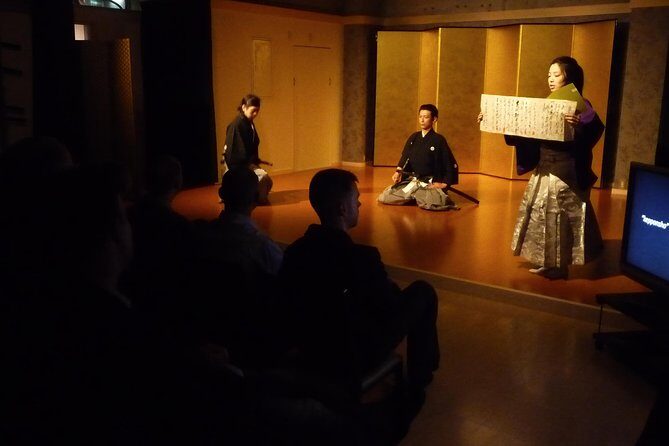
- About 40 minutes of show time: then a mini session with swords and fans.
- Shoe-off entry: you sit traditional-style once you’re inside.
- History talk before demonstrations: short lessons about samurai culture 12th–19th century.
- Traditional and new-style Kembu: you’ll see both ritual and performance variations.
- Hands-on photo moment: you hold gear and take your own shots with performers.
A Samurai Kembu Show in Downtown Kyoto
Kyoto at night can be temple quiet. This experience is different. You trade lantern alleys for a theater where trained performers move like they’re on a stage built for stillness and power.
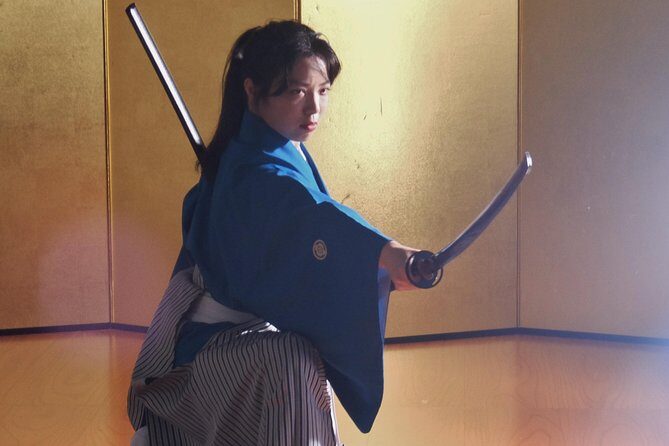
The core of the show is Kembu, a sword performance tied to the samurai era. It’s not just sword waving. The pacing uses rhythm, posture, and spoken context so you understand what you’re seeing: grace, discipline, and focus. You’ll also hear the stories behind the movements, including samurai poems used in the lead-up to battle.
The theater setting matters, too. The show happens in a relatively intimate room, so you’re not stuck watching from far away. That intimacy also makes the post-show photo session feel more personal and less like a factory line.
If your day already included temples and gardens, this is an easy mental switch. You’re still in Kyoto culture, just from the “warrior arts” side.
A few more Kyoto tours and experiences worth a look

The 4:15 pm Show Start and How to Plan Your Evening
The ticket’s start time is listed as 4:15 pm, and you can choose from two showtimes when booking. Either way, treat it like a true evening activity, not a quick stop you squeeze between other things.
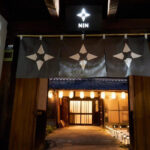
Plan to arrive 15 to 5 minutes early. That buffer matters because you need time to find the reception desk, settle in, and handle the shoe-off entry. The venue instructions say to come down the stairs on the right side toward the GOZAN building to the reception desk.
Why this timing detail is important: the room can be small, and the show begins right on schedule. If you show up late, you risk losing the start of the narration.
After the show, you’ll have a short “mini experience” phase with practice and photos. That means you should keep your later plans flexible. If you want dinner, choose something close enough that you can head out calmly once it ends.
This pairs well with an evening near Gion. Even if you don’t plan it as a theme night, that location helps you turn one activity into a whole Kyoto block.
Shoes Off, Then Sit Down: Your First 5 Minutes
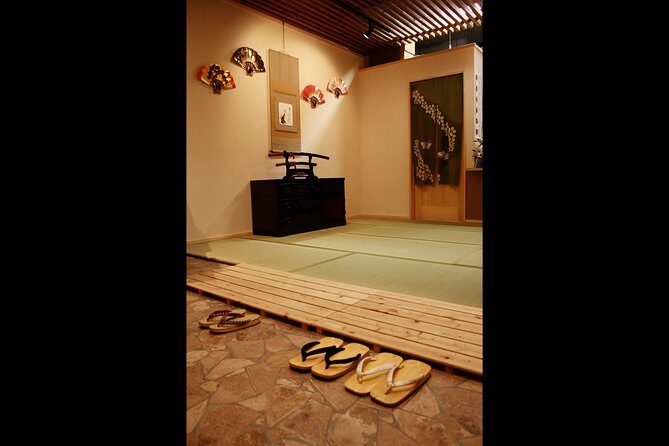
The show starts when you’re already settled. One of the first things you’ll do is remove your shoes at entry, in traditional style. Then you find your seat and get ready for the introduction.
Seating is described as traditional with low-to-the-floor chairs and normal chairs. That’s a big detail for comfort. If your knees are touchy, consider that you may spend some time seated low. Wear pants or clothing that lets you sit comfortably.
Once you’re in place, a performer gives narration in English. The show explains what’s coming next so you can follow the segments as they happen. Some people note that English delivery can be a bit hard to track in the room, but the structure is still clear: narration, demonstration, short history lesson, then the next segment.
This is the moment where expectations matter. This is not a silent martial arts movie. You’ll get spoken context, and the room listens as the story unfolds.
The Talk Before Each Demo: What You’re Learning
The show doesn’t throw you into sword choreography without a map. Before each demonstration, you’ll hear a short history lesson about samurai culture from the 12th to 19th centuries.
What I like here is that the lessons connect the art to mental training. Kembu is presented as a discipline that helped samurai build courage and focus before the rigors of battle. That idea makes the movements feel less like dance for dance’s sake.
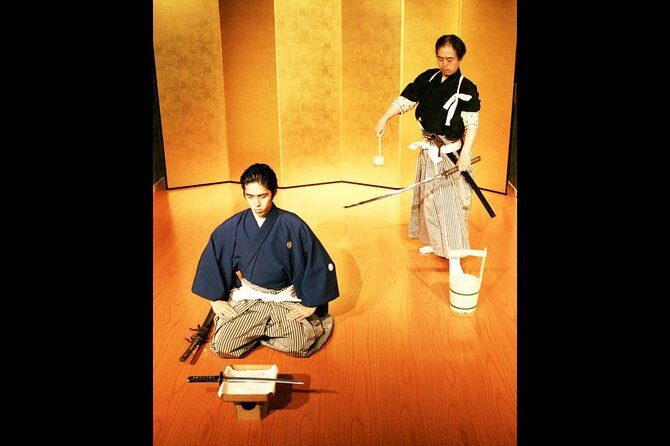
You’ll also hear about samurai poems recited during segments. Poems are woven into the performance so you get the sense that this was culture, not only combat practice. The show also references rituals and ceremonies, including a discussion of seppuku (ritual suicide) and its alternative name hara-kiri.
That last part is heavy content. It’s handled as meaning and ceremony, not as graphic spectacle. If you prefer your entertainment strictly light, you might find it emotionally intense. Still, it’s part of understanding samurai-era thinking as presented in this performance style.
Overall, the talk sections are what make the show more than a few minutes of impressive motion. You leave with a clearer picture of why Kembu exists as an art form.
Traditional and New-Style Kembu: What You’ll Watch
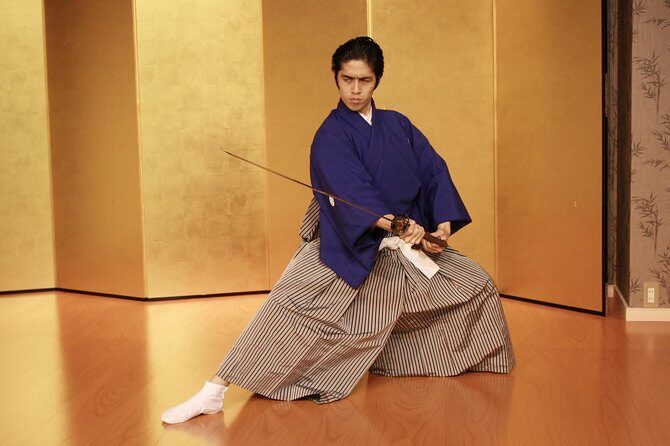
The performance alternates between different styles of Kembu. You’ll see both traditional and new-style movements, each framed with explanation.
The mechanics are all about controlled gestures. Performers wield their swords in intricate sequences while also reciting short samurai poems. The tone can shift from solemn to playful. Some segments include humor or light dialogue, which one review described as keeping the room laughing.
That blend is why the show works for a wide range of ages. One person even called it opera-like in feel: theatrical storytelling, dramatic presence, but without singing. The sword movements are the centerpiece, but acting and timing carry the experience too.
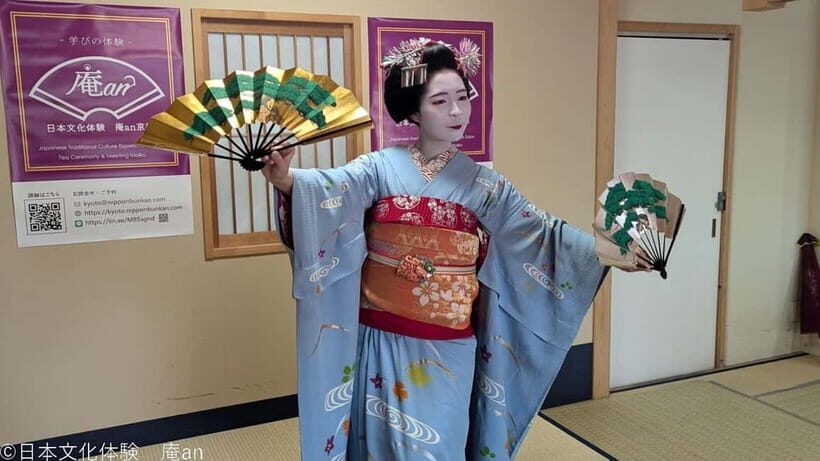
Another useful detail: the show includes fan technique. You’re not just watching a sword routine. There’s also folding fan choreography, which becomes part of the practice later.
If you expected nonstop sword-to-sword action, you might be disappointed. Instead, think of it like stage fencing with cultural explanation. You get artistry, posture, and ritual rhythm.
And yes, you’ll likely feel that focus in your own body. Even sitting still, the movements look precise enough that you can almost copy the shape of them in your mind.
A few more Kyoto tours and experiences worth a look


The Mini Practice With a Sword and Folding Fan
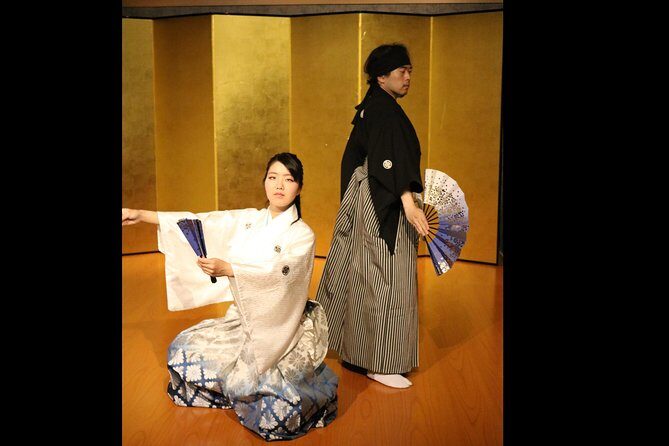
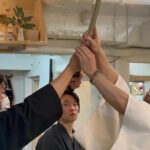
This ticket includes more than watching. After the show, you get a mini experience where you learn some movements and join the action.
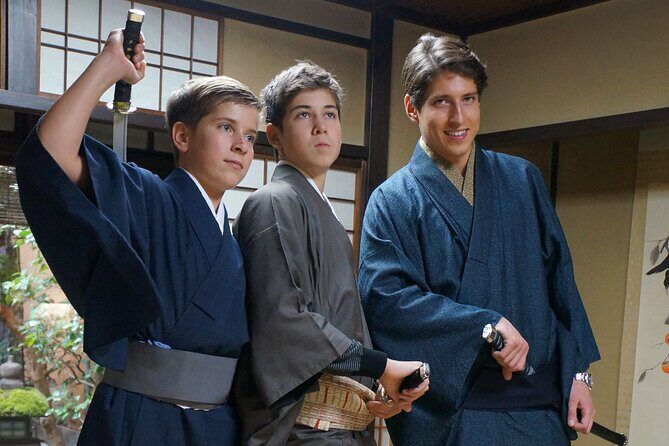
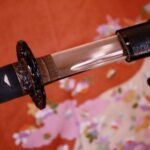
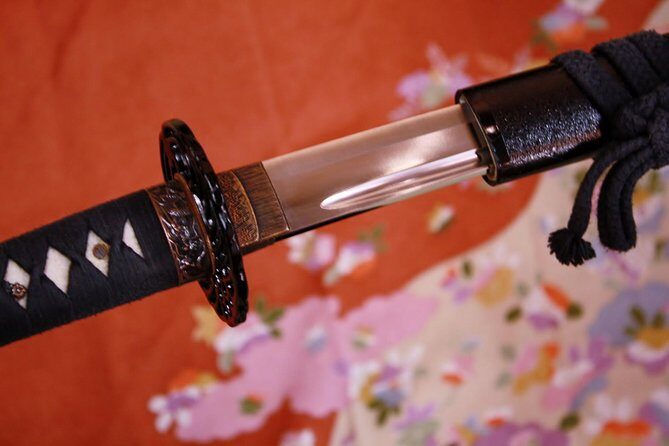
You can handle a sword and work with fan movements during the session. The goal isn’t to train you like a professional. It’s to give you a taste of the mechanics and to help you understand how the gestures connect to the performance.
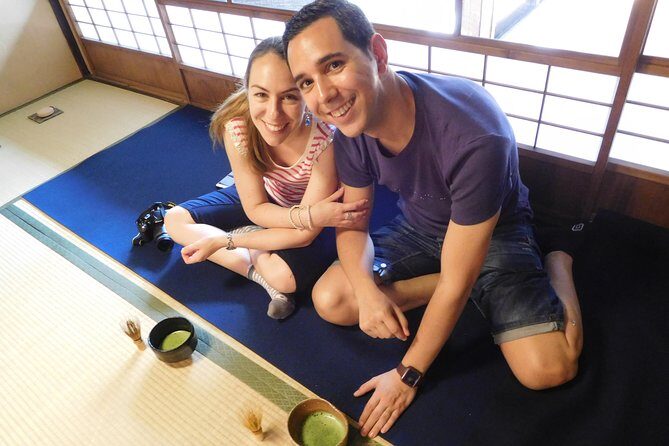
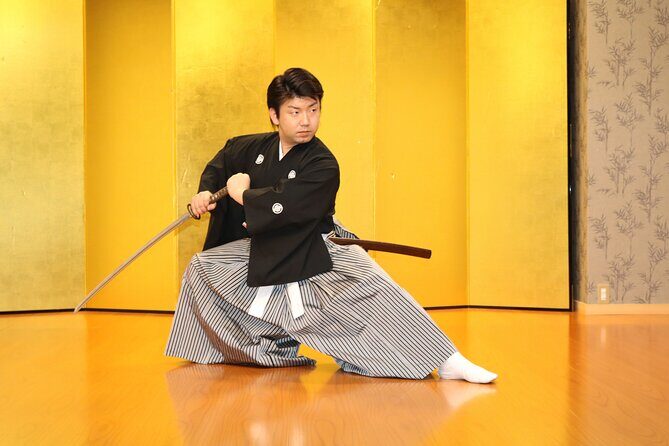
This is also where the experience becomes photo-friendly. You’ll take your own candid shots with performers. The sword-and-fan combo makes the photos look dramatic without requiring you to know any special posing tricks.
A lot of the most enthusiastic feedback focuses on this part: people call it fun, interactive, and the right amount of hands-on time. One note even mentioned that participants could dress up for the practice, though the exact details can vary by what’s available in that moment.
What to consider: the practice time is short. It’s a sample lesson. If you’re hoping for long training or deeper fighting-method coaching, you may want to book a longer class somewhere else.
Still, for a one-hour overall outing, this is a strong value play. You’re buying the show and leaving with the memory of doing it yourself, not only watching it.
Photo Session: How to Get Better Shots
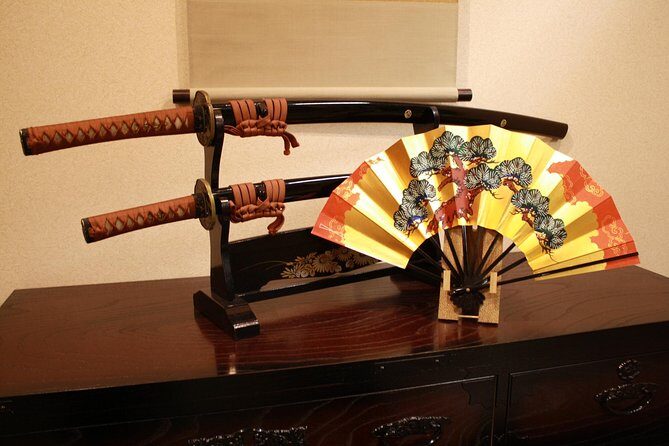
The photo session is a key selling point, and you’ll want to use it well.
Because the ticket says you can take your own photos with a performer, bring a phone you’re comfortable using one-handed. Stand where you can keep the sword and fan safe while still framing the performer. Don’t rush the moment. A few extra seconds helps you avoid blurry shots.
Also, the room is traditional and likely has limited space. Keep your movements tight. If you’re tall, watch your step and angles so you don’t block anyone behind you.
If you’re someone who likes keepsakes, note that at least one review mentioned small extras such as samurai socks. You can’t count on freebies as a plan, but it suggests the team sometimes offers fun takeaways.
Most important: treat this as part of the experience, not a grab-and-go photo. You’ll have the best photos when you slow down, follow the performer’s cues, and let them position you naturally.
Price and Value: What $33.03 Buys You in Kyoto
At $33.03 per person, this sits in the budget-to-mid range for Kyoto cultural shows. The value comes from how the time is split.
You get about 40 minutes of actual performance time, then a mini session with hands-on sword and fan practice, plus the photo opportunity. That matters because a lot of paid shows stop at the curtain call. Here, you get a second act.
You also get a structure that does the heavy lifting for you: narration, short history lessons before each demo, and explanations of what you’re seeing. Even if your Japanese history knowledge is basic, the pacing gives you enough context to connect the dots.
It’s also a solid “rain plan.” One review specifically said heavy rain outside didn’t matter because the event filled the evening indoors. That’s a real Kyoto advantage: weather can change quickly, and indoor cultural programming keeps your schedule intact.
What you’re not getting: hotel pickup, food, or drinks. So you’ll want to plan dinner on your own nearby.
For the money, the experience is worth it if you want an entertaining show with a practical photo payoff. If you want long training or a serious sword-arts seminar, this price won’t match that deeper goal.
Who This Samurai Kembu Ticket Fits Best
This is a good match for people who like hands-on culture. If you enjoy learning through performance, watching first and then trying movements, you’ll probably have a great time.
It also fits families. Several comments described it as family-friendly, with humor and clear explanations. Kids tend to enjoy the sword-and-fan moment, and parents often appreciate that the show is short and not overly long.
You should also consider it if you want something different from the standard Kyoto temple circuit. One review called it a must-do if you want an alternative to temples. The theater location also helps: it’s in downtown Kyoto near where you can walk afterward.
On the other hand, skip it if you want only serious fighting technique. The show includes talking, storytelling, and some comedy. One critical note said it felt less serious and more about discussion than deep battle method training.
Finally, language can be a factor. Most of the experience is explained in English, but one review said pronunciation and room acoustics made it hard to follow. If you’re sensitive to that, pick showtimes when you can sit comfortably and pay close attention early.
Should You Book This Kyoto Samurai Performance?
If your evenings in Kyoto need a plan that’s fun, cultural, and not too long, I’d book this Kembu show. The combination of demonstration, short history narration, and the photo-and-practice mini session is exactly the kind of value that makes a ticket feel justified.
Book it if you want:
- A clear introduction to samurai-era sword performance through narration
- Traditional and modern-style Kembu in one show
- A hands-on moment with sword and fan
- A simple evening activity near Gion
Skip it if you’re chasing:
- Deep, technical fighting instruction
- A nonstop battle spectacle
- Lots of stage segments beyond the standard show flow
FAQ
What time does the performance start?
The listed start time is 4:15 pm, and you can choose from two showtimes when booking.
How long is the experience?
It runs about 1 hour total. Around 40 minutes is show time, followed by the mini experience part.
Do I need a printed ticket?
No. The ticket is a mobile ticket, so you can show it on your phone.
What’s included in the ticket?
You watch the Kembu show, and after the show you join a mini experience that includes sword and fan practice and a photo session.
Are food and drinks included?
No. Food and drinks are not included.
Is hotel pickup or drop-off included?
No. Hotel pickup and drop-off are not included.
Do I need to take my shoes off?
Yes. You take your shoes off when you enter, in traditional style.
Where is the meeting point?
You’ll go to the reception desk by coming down the stairs on the right side toward the GOZAN building. The venue is near public transportation and in downtown Kyoto.
Is cancellation free?
Yes. You can cancel up to 24 hours in advance for a full refund. Canceling less than 24 hours before start time is not refunded.