Asking questions changes everything.
This Kyoto program is built around meeting a Maiko up close, not just watching from far away. You get a tea ceremony demonstration, a Q&A where you can ask your own questions, two traditional dances, and a chance to take photos right beside her, plus a lucky charm called a Senjyafuda.
What I really like is the direct access: you’re encouraged to talk, not just sit quietly. The Maiko’s routines also feel specific and personal, right down to etiquette-style details during the tea ceremony and the controlled elegance of the dance.
One thing to keep in mind: the venue is in a building (not a classic ochaya house), and the room layout can affect visibility for people in back rows. If you care a lot about seeing every movement clearly, think about the optional seat upgrades.
In This Review
- Key Things You’ll Notice (Before You Go)
- Why Meet a Maiko in Kyoto Without Overpaying
- Getting There Near Gojo Station and How the Venue Works
- The 90-Minute Flow: Tea, Q&A, Photo, Dance, and Games
- Tea Ceremony Demonstration vs Matcha-Making
- The Maiko Q&A: What You Can Ask and How to Use It
- Dance Performances: Seasonal Meaning in Movement
- Photos Beside Maiko and the Senjyafuda Lucky Charm
- The Maiko Game: Cheer or Join In
- When You Might Meet Geiko Instead of Maiko
- Who This Experience Suits Best
- Tips to Get the Best View and Best Answers
- Should You Book Simple Plan with Maiko?
- FAQ
- How long is the program, and when does it run?
- Does this Simple Plan include making matcha?
- Can I ask questions during the experience?
- Where do I meet for the tour?
- Is the venue wheelchair accessible?
- Do I need to upgrade seats for a better view?
- Can I get a refund if I cancel?
Key Things You’ll Notice (Before You Go)
- Maiko Q&A is the main event: you can ask questions directly and get insight into daily life
- Tea ceremony demonstration, not matcha-making: you’ll watch the etiquette; making tea requires a different program
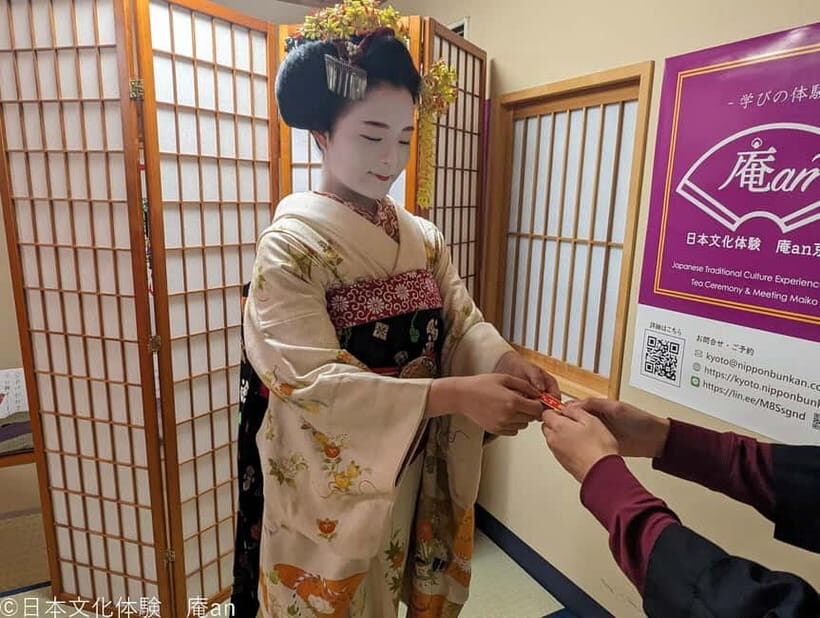
- Close photo + Senjyafuda: you’ll pose near her and receive a lucky charm
- Two seasonal-style dances: you see how stories and everyday life show up in movement
- Interactive game with Maiko hospitality: even watching feels like part of the show
- Room sightlines matter: tables and seating can block the view from back rows
Why Meet a Maiko in Kyoto Without Overpaying
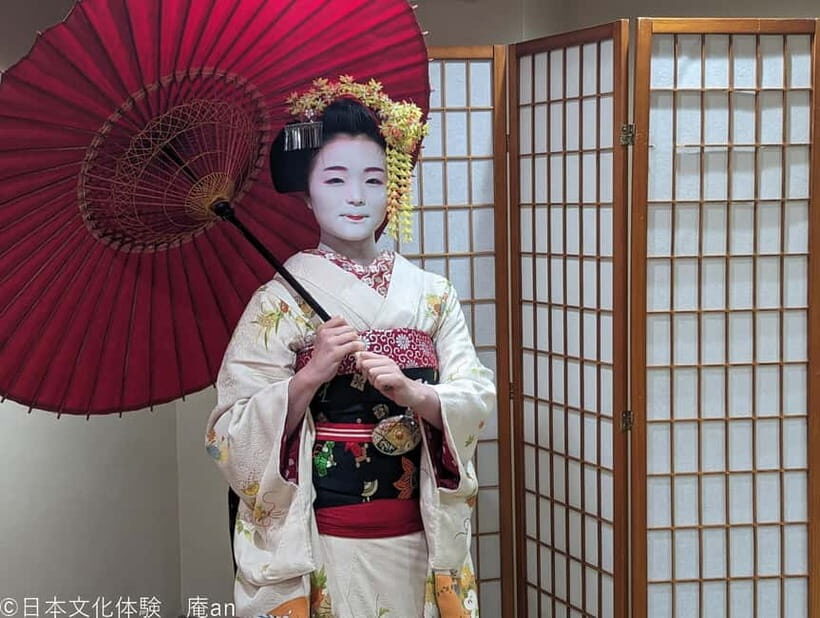
If you’ve looked at maiko experiences in Kyoto, you’ll notice pricing can swing wildly. This Simple Plan with Maiko is appealing because it focuses on the core cultural moments in a tighter package: demonstration, questions, performance, and photos.
At about $38 per person for 90 minutes, you’re paying for access and attention, not for an all-day event. And the value isn’t just in what’s on the schedule. It’s in the tone: you’re not kept at a distance, and you’re not stuck in “watch only” mode.
The program’s concept also helps you learn what maiko culture actually means in day-to-day terms. You’ll hear about routines and etiquette through a Q&A that’s meant to answer real curiosity, not deliver a script you already know. That’s the difference between seeing a costume and understanding a living tradition.
If you're still narrowing it down, here are other tours in Kyoto we've reviewed.


Getting There Near Gojo Station and How the Venue Works
The meeting point is easy: about a 1-minute walk from Exit 1 of Subway Karasuma Line Gojo Station. The store entrance faces Gojo-dori, which helps if you’re arriving on foot or tracing the street from the station.
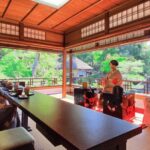
Inside, plan for a straightforward setup rather than a theatrical “only in old Kyoto” environment. This isn’t an ochaya, and it’s not a traditional Japanese house. You’ll be in a building with a relaxed atmosphere and friendly staff, which matters if you want something that feels welcoming instead of stiff.
Two practical things to note:
- No elevator: you’ll take stairs to reach the rooms.
- English support is provided as much as possible; if you need extra help, you’re told to contact them.
Also, simple plans like this often assume you’re ready to participate. If you don’t take part in the experience, you won’t be allowed inside—so don’t book it if you’re planning to “drop in” just for photos.
The 90-Minute Flow: Tea, Q&A, Photo, Dance, and Games
The program moves with a clear rhythm, and that’s one of its strengths. Instead of dragging out a long event, it packs multiple moments into a smooth sequence.
Here’s what you can expect:
- Maiko greeting to start
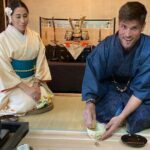
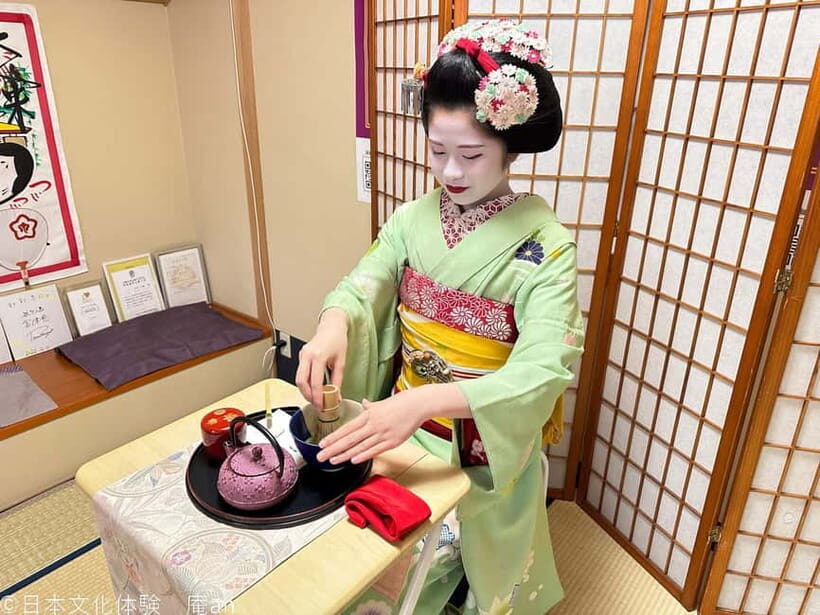
- Tea ceremony demonstration by the Maiko
- Question and Answer session (this is the highlight many people come for)
- Photo time beside Maiko, with a Senjyafuda gift
- Two traditional dance performances
- Interactive game with Maiko hospitality (you can play or cheer)
- Room departure and light chatting time at the end
Why this order works: the tea ceremony sets the tone for manners and movement. Then the Q&A turns curiosity into conversation. After that, the photo and dances feel like a natural progression—each step builds on what you just saw and asked about.
The interactive game also keeps the energy human. It’s not about you being good at anything. It’s about sharing the moment with someone who does this professionally.
Tea Ceremony Demonstration vs Matcha-Making
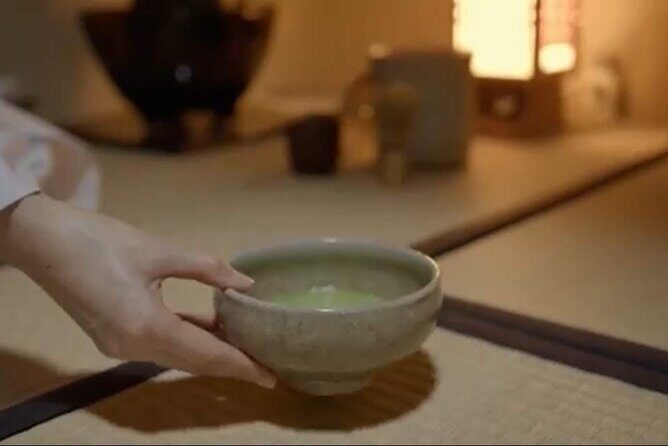
This is a key distinction. In the Simple Plan, you do not make matcha yourself. You’ll watch a tea ceremony demonstration and observe the graceful movements and etiquette.
If you want the hands-on version, you’d need to choose a different option called Tea Ceremony with Maiko Premium. That’s useful to know ahead of time because it changes what kind of experience you’re paying for: observation and etiquette here, participation in tea-making in the premium version.
One more practical point: since this plan doesn’t include a “snack and drink option” in the base price, don’t assume you’ll be served tea or a sweet during the session. The tea ceremony is still part of the program, but the added comfort items may require an extra add-on.
So if you’re the type who likes to snack while watching performances, consider budgeting for the 500 JPY snack and drink option, or eat beforehand.
The Maiko Q&A: What You Can Ask and How to Use It
If you only take one idea from this review, let it be this: the Q&A session is the whole point.
This isn’t a stage monologue where questions are impossible. You can ask your own questions directly to the Maiko. That’s rare. It also changes what you notice during the rest of the program because you’re already listening for answers.
A simple strategy:
- Ask questions that connect the costume and etiquette to daily life.
- Follow up on what you didn’t understand after the tea ceremony.
- Keep questions short so translation stays smooth.
The host/translator also matters here. The program is designed so everyone can feel included in the talk, and the host helps keep the mood friendly rather than formal.
Even if you’re not great at Japanese, you can still benefit. The experience is set up with interpretation as needed, and the atmosphere is informal enough to make questions feel natural.


Dance Performances: Seasonal Meaning in Movement
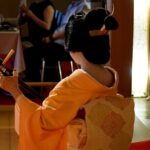
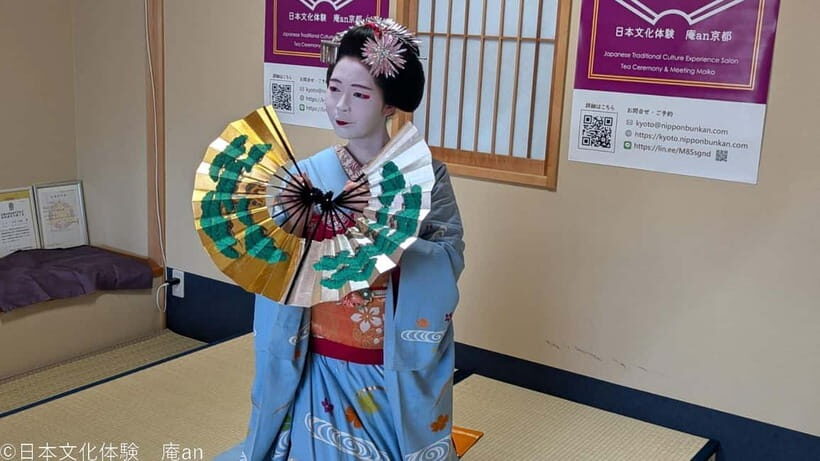
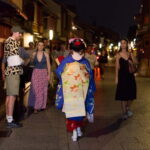
After the Q&A, you’ll see two traditional dances. The themes are described broadly as seasons, love stories, or everyday life—so you’re not just watching “pretty motion.” You’re watching storytelling told through control: timing, posture, and measured gestures.
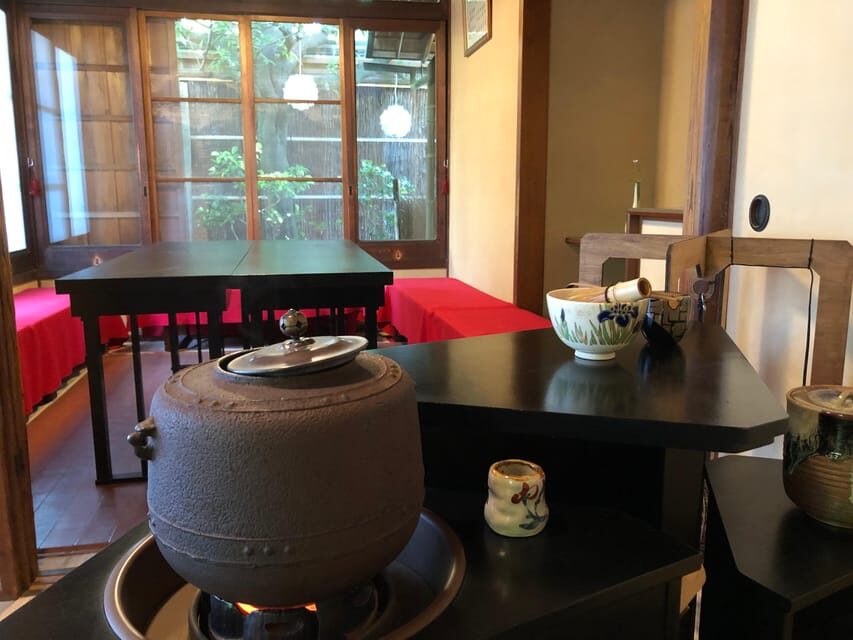
The practical question for you is: where will you be seated? The room layout can make a difference. Red table coverings and table placement can interfere with sightlines from the back.
This is where seat upgrades can pay off. The program offers:
- SS seat (First row): 3,300 JPY
- S2 seat (Second row): 2,200 JPY
- S3 seat (Third row): 1,100 JPY
If you want to see every nuance, paying more for front rows is one of the few “simple levers” you have. If you’re comfortable watching from farther back, you may be fine. But if you hate missing the details, don’t gamble on your view.
Photos Beside Maiko and the Senjyafuda Lucky Charm
The photo moment is scheduled after the Q&A, and it’s clearly set up as a close interaction. You’ll take a commemorative photo right beside Maiko, not from across the room.
As part of the photo time, she presents you with a lucky charm called a Senjyafuda. That’s a nice touch for two reasons. One, it gives the experience a keepsake beyond a photo file. Two, it adds a “gift from the moment” feeling that fits Japanese hospitality.
If you care about photos, be ready to move quickly when you’re called. You’ll have a short window, and you want to use it well.
The Maiko Game: Cheer or Join In
After the dances, the program shifts from performance to participation. Maiko often play simple but exciting games with guests as part of hospitality.
Volunteers are welcome, but you can also just watch. Either way, the mood is supposed to feel like a shared moment—clap, cheer, and keep the energy positive.
This is fun if you’re traveling with others. It gives you an easy way to connect without needing advanced language skills. It also adds a little unpredictability to the evening, which keeps it from feeling like a strict museum demo.
The practical part: if you’re shy, you might not be the first to volunteer. That’s okay. The program seems built so watching still counts as participating.
When You Might Meet Geiko Instead of Maiko
There’s a note that depending on the situation, Geiko may be invited instead of Maiko. In other words, you might walk in expecting one kind of entertainer and meet another.
What should you do? Don’t treat it as a problem. Treat it as Kyoto’s version of “schedule flexibility.” The program keeps the same structure—tea ceremony demonstration, conversation, dances, and the interactive game—so your experience should still land in the same cultural zone.
Who This Experience Suits Best
This Simple Plan with Maiko works well if you:
- Want direct Q&A and real interaction
- Prefer a shorter, focused 90-minute program
- Like traditional performance but don’t want a full-day commitment
- Are traveling on a mid-range budget and want good value for the access you’re getting
You might want to look elsewhere if you:
- Care deeply about perfect sightlines and don’t want to pay for front-row seats
- Want to do hands-on tea-making (this version doesn’t include matcha-making)
- Expect a snack or sweet included with the base price
Tips to Get the Best View and Best Answers
A few choices can meaningfully improve your experience:
- Choose front-row or second-row seats if you’re sensitive to blocked views
- Come a little early so you can get oriented with the stairs and room setup
- During the tea ceremony, watch for etiquette details you can later ask about
- In the Q&A, ask one question, then ask the follow-up you really mean
Also, remember the venue is in a building and the atmosphere is relaxed. That’s good. It means you can act like a normal person, not a museum statue.
Should You Book Simple Plan with Maiko?
Yes, I’d book it if your priority is meeting a maiko up close and getting a chance to ask questions. The structure is efficient, the program feels designed for interaction, and the included photo moment with a Senjyafuda gift makes it more memorable than a standard performance.
I’d think twice if your top priority is a guaranteed, unobstructed view from wherever you sit. In that case, spend the extra on SS or S2 seating. And if you’re hoping to actually make tea, you’ll need the premium tea-making option instead of this Simple Plan.
If you match those expectations, this is a solid value stop in Kyoto—one that gives you the “people part” of geiko/maiko culture, not just the costume.
FAQ
How long is the program, and when does it run?
The experience lasts 90 minutes. Operation hours are 10:00 to 17:00, and reservations received after 17:00 are processed the next day.
Does this Simple Plan include making matcha?
No. This plan includes a tea ceremony demonstration, but it does not include making matcha. Tea-making is offered in the Tea Ceremony with Maiko Premium option.
Can I ask questions during the experience?
Yes. The program includes a Question and Answer session where you can ask questions directly to Maiko.
Where do I meet for the tour?
Meet 1 minute walk from Exit 1 of Subway Karasuma Line Gojo Station. The store entrance faces Gojo-dori.
Is the venue wheelchair accessible?
The experience is wheelchair accessible, but there is no elevator, and you will need to take stairs to reach the venue areas.
Do I need to upgrade seats for a better view?
Seat upgrades are optional. You can choose SS seat (first row), S2 (second row), or S3 (third row) for additional JPY.
Can I get a refund if I cancel?
Yes. You can cancel up to 8 days in advance for a full refund.