Fish cutting in Kyoto sounds scary. It isn’t, mostly because you get hands-on sashimi prep in a market setting guided by a fishmonger with a 400-year shop legacy. You’ll learn how to handle raw fish safely, then cut it into three pieces for eating. Two things I really like: you get to eat what you prepare, and the class stays small (max 6), so questions don’t get lost. One drawback to think about: this is real knife work, and children under 8 can’t take part.
The setup is straightforward: you start at Kimura Fresh Fish at 10:00 am and finish back at the same place about 2.5 hours later. It’s mobile ticket friendly, and lunch is included—so you won’t just leave with a photo and an empty stomach. One more consideration: private transport isn’t included, so plan your public-transit route ahead.
In This Review
- Key points to know before you go
- Why this Kyoto fish cutting class feels practical, not touristy
- Meeting at Kimura Fresh Fish: getting started smoothly
- The workshop rhythm: handling fish before you cut it
- Cutting into sashimi portions: what you’re really learning
- Lunch tastes better when it’s your work
- Small group size: why it matters more than you think
- Price and timing: is $98.53 worth it?
- Logistics and considerations you should not ignore
- Who should book this workshop
- Should you book this Kyoto fish cutting workshop?
- FAQ
- How long is the fish cutting workshop in Kyoto?
- What will I do during the class?
- Is lunch included?
- How many people are in the class?
- Where is the meeting point, and when does it start?
- Can I cancel for a refund?
Key points to know before you go
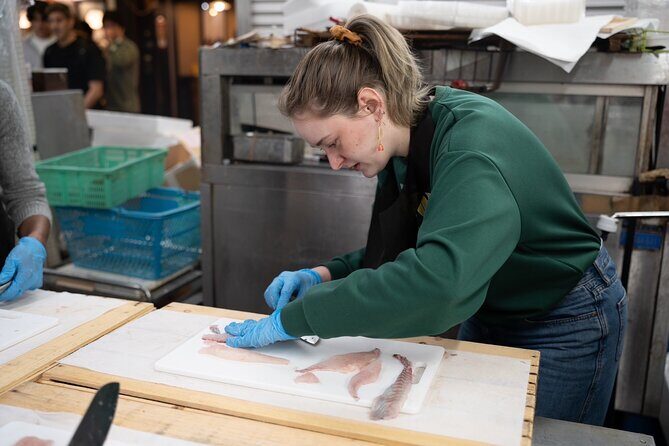
- Cut fish with close supervision so beginners can participate without feeling rushed
- Small group size (up to 6) means you can ask specifics while you’re actually holding the knife
- Lunch is included and is made from the fish you processed
- Hands-on sashimi-style technique focuses on proper handling, not just theory
- Market classroom at Kimura Fresh Fish gives you an up-close look at how fish shops work
- Knives mean an age limit (no children under 8)
Why this Kyoto fish cutting class feels practical, not touristy
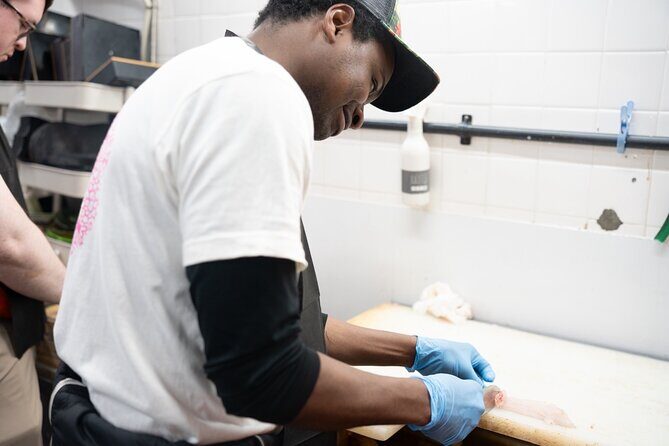
Kyoto has plenty of food tours. This one is different because it teaches a skill you can actually use at home. The goal isn’t just to show you sashimi. It’s to help you understand how raw fish becomes safe, clean, and sashimi-ready—by learning the basics of handling and cutting.
What you’re paying for is the combination of three things: real instruction, real food prep, and real time at the cutting board. That mix matters. Knife work and fish handling can look simple from across a counter, but it’s about technique, grip, angle, and control. In a small workshop, those details are easier to correct.
I also like that the class design is built to reduce stress. The fish is handled first with careful teaching. Then you step in. You’re not thrown into chaos. And when questions pop up—about cutting, fish safety, or anything else—you get answers right away.
A few more Kyoto tours and experiences worth a look
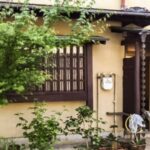


Meeting at Kimura Fresh Fish: getting started smoothly
Your start point is Kimura Fresh Fish, 483 Nakauoyachō, Nakagyo Ward, Kyoto, 604-8125. The start time is 10:00 am, and the activity ends back at the meeting point.
This is the kind of tour where showing up ready helps. You’ll be working with knives and raw fish, so you want your head in the right place. The location is near public transportation, which is a big help in Kyoto, where not every workshop sits right next to your preferred bus stop or train exit. Private transportation isn’t included, so you’ll want to handle getting there with transit.
Another small but useful detail: you get a mobile ticket. That saves you time on day-of logistics. Less fumbling. More time to focus on the lesson.
The workshop rhythm: handling fish before you cut it
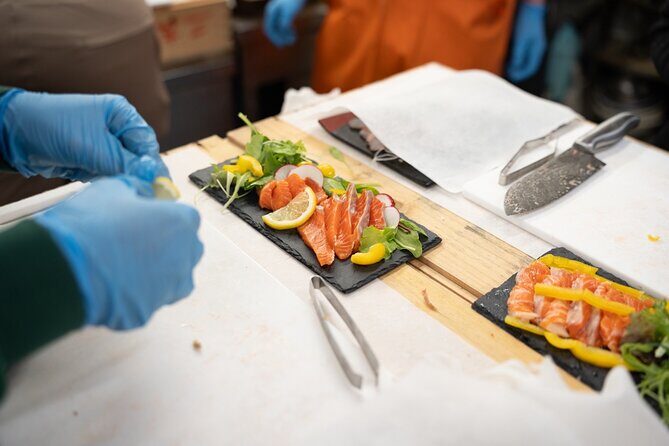
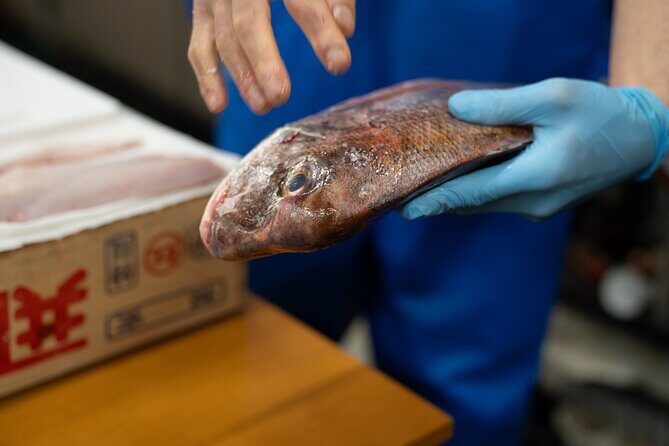
The class is taught by someone who has worked in the fish shop world for decades, and the shop’s tradition is traced back 400 years. That background comes through in the teaching approach: basic technique first, then practical repetition.
Here’s how the learning usually unfolds:
- First, you learn fish handling basics.
You get guidance on how to hold, support, and manage the fish correctly. This is the part that makes the rest feel doable. If you’ve never handled raw fish before, this step is what lets you participate without feeling overwhelmed.
- Then comes supervised cutting practice.
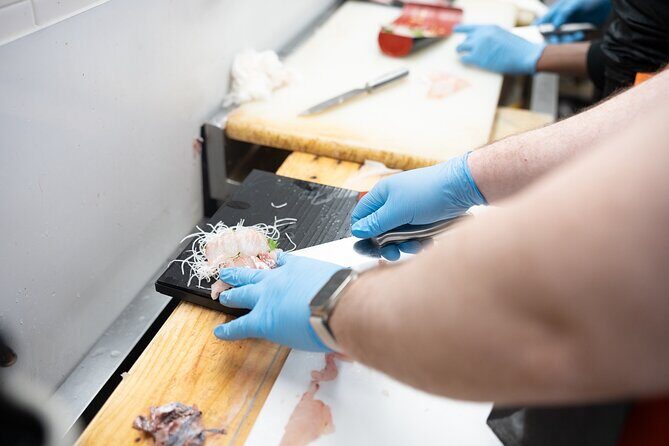
You’ll cut the fish into three pieces yourself. In the moment, it’s not about speed. It’s about getting the cuts right and understanding what the knife is doing.
- Questions get answered during the process.
If you worry about fish texture, smell, doneness (for sashimi context), or anything about what you’re seeing, you can ask. The class is set up so you don’t have to wait until the end to get clarification.
The practical value is huge. You’re learning the “why” behind the “how,” even if the lesson stays simple and direct. Sushi and sashimi can look like magic on TV. Here, it becomes a set of steps you can mentally repeat.
Cutting into sashimi portions: what you’re really learning
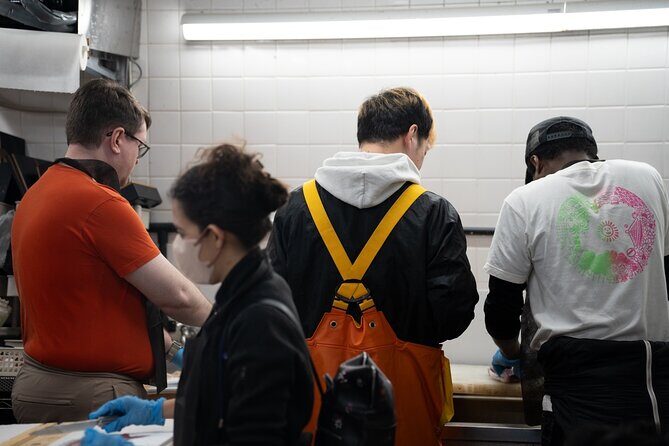
On the surface, you’re learning how to cut fish. Underneath, you’re learning control: knife angle, steady hand, and how to move through the fish without forcing it.
The workshop specifically focuses on preparing raw fish for sashimi. That means the technique is meant for clean slices and proper handling—so the result is something you can eat as sashimi at the end.
And yes, the class is built for beginners. You’ll be carefully taught how to handle the fish first, and then you’ll take your turn with close attention. When instructors stay watchful during your cutting, mistakes are easier to catch early—before they turn into a frustrating session.
If you care about cooking beyond Kyoto, this is the part that pays off later. Even if you never become a fish butcher, learning how professionals think about prep changes how you read ingredients at home.
Lunch tastes better when it’s your work
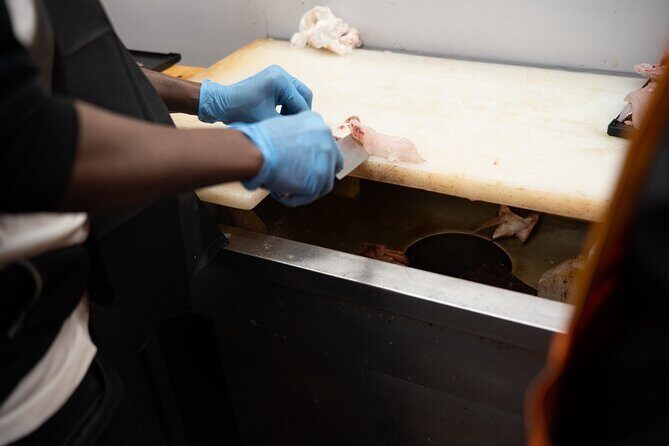
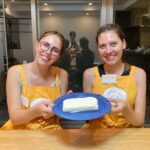
The best part is also the simplest: you eat the fish you processed. After you cut your portion(s), you sit down and enjoy a sashimi lunch made from what you prepared.
This is a big value point. Many food experiences in Japan teach you something but don’t fully connect it to your own hands-on effort. Here, the workshop ends with a meal that proves the technique worked.
Also, it’s a confidence builder. When you’ve handled raw fish, watched careful cuts, and made your own slices, you start noticing details you normally ignore. Texture. Clean cuts. How the fish should feel and taste when it’s prepared correctly.
One more practical note: the class is scheduled so you’re not left waiting forever to eat. It runs about 2 hours 30 minutes total, which feels like the right length for learning plus lunch without turning the day into a half-day project.




Small group size: why it matters more than you think
Max group size is 6 travelers. That number sounds small—until you’re the one with a knife.
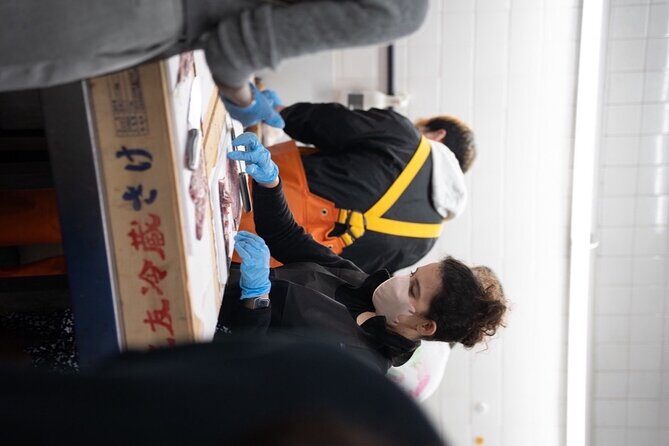
In a bigger group, you might watch more than you cut. Or you cut and don’t get much feedback. In this size class, the instructor can spot what’s happening with your hands and guide you while you’re in the middle of the cut. That’s the difference between learning “a technique” and learning “your technique.”
It also changes the tone. The workshop doesn’t feel like a lecture. It feels like a working session. You can ask fish-handling questions immediately, and you’re not waiting your turn while the class moves on.
If you like cooking, this is one of those experiences where you leave with both skills and a better sense of how food prep actually works behind the scenes.
Price and timing: is $98.53 worth it?
The price is $98.53 per person, and the workshop runs about 2.5 hours with lunch included. That’s not a bargain price. But it’s also not a random add-on class.
You’re paying for:
- Expert guidance from a fish shop professional tied to a long-standing trade
- A small group format (so you actually get attention while cutting)
- Hands-on knife work with fish handling instruction
- Lunch that comes directly from your effort
When you break it down, the included meal is part of the value, not a bonus. The time cost is also real: a two-and-a-half-hour learning session in a market setting is a full chunk of a day.
Booking averages around 48 days in advance, so don’t wait until the last minute if Kyoto is busy during your dates.
Logistics and considerations you should not ignore
A few practical points matter here:
- Age restriction: children under 8 can’t participate because they handle knives.
- Transport: private transportation isn’t included, though the meeting point is near public transit.
- What to expect: you’ll process raw fish and eat sashimi made from what you cut. If raw fish makes you nervous, this class is still beginner-friendly, but you should go in knowing that you’ll be working with it.
Also, remember that the workshop includes knives. You’re not signing up for a hands-off demo. Even with supervision, you’ll be holding the tools and learning safe technique.
Who should book this workshop
You’ll probably love it if:
- You enjoy cooking and want a real skill, not just tasting
- You want to understand how sashimi preparation works
- You like small classes where you can ask questions while doing the work
- You want a meal included that’s tied directly to the lesson
You might skip it if:
- You’re uncomfortable with knives or raw fish handling
- You want a totally passive activity (this is hands-on)
- You’re traveling with a child under 8
Should you book this Kyoto fish cutting workshop?
I think it’s an easy yes if you like learning by doing. The class hits a rare sweet spot: instruction that supports beginners, a small group that actually helps, and lunch that rewards your effort. You’re not just paying for food—you’re paying for skill, feedback, and a sashimi lunch that feels earned.
It’s also a smart Kyoto experience if you already plan to eat sushi and sashimi. This turns that “I’ll try it” mindset into “I’ll understand it.”
FAQ
How long is the fish cutting workshop in Kyoto?
It lasts about 2 hours 30 minutes.
What will I do during the class?
You’ll learn how to handle and cut fish for sashimi, and you’ll cut the fish into three pieces yourself. Then you eat the sashimi lunch you prepared.
Is lunch included?
Yes. Lunch is included.
How many people are in the class?
The workshop has a maximum of 6 travelers.
Where is the meeting point, and when does it start?
You meet at Kimura Fresh Fish, 483 Nakauoyachō, Nakagyo Ward, Kyoto, and the start time is 10:00 am. The activity ends back at the meeting point.
Can I cancel for a refund?
Yes. You can cancel for a full refund up to 24 hours before the experience’s start time. If you cancel less than 24 hours before, the amount paid won’t be refunded.