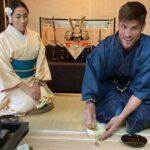
Forge a knife the old way.
Kyoto has tons of craft classes, but a hands-on blacksmithing session—where you heat and hammer glowing steel—is still rare. In this 3-hour workshop in Sakyo-ku, you go step-by-step from furnace to finished edge, and the payoff is real: you leave with a knife you can actually use.
I especially like that the instruction is practical and safety-first, with the team guiding you through tools and the correct hammering angle. I also love the fact that the finished knife (about 13–15 cm) is sized like a working kitchen blade, not a toy souvenir. One drawback: it’s physically demanding. You’ll be hammering near very hot metal, so come ready to work (stretch first, take breaks when offered, and listen closely).
In This Review
- Key things I’d bet you’ll care about
- Why Kyoto’s knife-forging workshop is such a rare find
- Getting there: Yase-Hieizan Station, Studio Shinobi YASE, and two Sakyo-ku locations
- Check-in and traditional attire: what happens before you touch the hammer
- From furnace heat to your first forging strikes
- Cooling, refining, sharpening, and getting an edge you can feel
- Polishing the finish, photos, and taking home a handmade knife (with a box)
- Price and value: what $154 gets you for 3 hours of real work
- What it’s like as a visitor: group size, energy level, and safety reality
- Knife-making expectations: difficulty, knife options, and what you might take home
- Who should book this knife-forging class in Kyoto
- Tips to make your session smoother (and less tiring)
- Should you book this Kyoto knife-making workshop?
- FAQ
- How long is the Kyoto knife making experience?
- How much does it cost?
- Where do I meet for the workshop?
- Are there multiple studios?
- What should I bring?
- Is it a small group experience?
- What languages are used during the class?
- Can children join?
- Can I bring alcohol or drugs?
- What do I take home?
- Is there a refund if I cancel?
Key things I’d bet you’ll care about
- Rare Kyoto experience: true knife forging with heated steel, not just polishing or casting
- Small-group feel: easier guidance and lots of hands-on time (often just a few people)
- Real tools and steps: hammers, tongs, grinding, sharpening stones, and final polishing
- Take-home usefulness: finished blade in a box and bag, made for everyday use or gifting
- Easy access: meeting point is about a 1-minute walk from the Yase-Hieizan Exit
Why Kyoto’s knife-forging workshop is such a rare find
If you want Kyoto craft without the museum vibe, this is one of the better directions. You’re not just learning terminology or watching a demo. You’re doing the work: heating steel, shaping it, refining it, and bringing the edge to life with sharpening tools.
The other big reason this class feels special is that it’s blacksmithing-focused. Japan has plenty of cultural crafts, but forging steel into a blade is comparatively uncommon as a visitor workshop. You’ll also get context along the way—traditional techniques for Japanese kitchen knives—so the process doesn’t feel random. It has a logic: heat changes the metal, hammering changes the shape, sharpening changes what the knife can do.
One more thing I like for “practical souvenir” seekers: the end product is designed to be used. You’re not paying to assemble something decorative. Even if your first attempt isn’t museum-perfect, the knife is meant to go into real life—daily cooking, camping prep, or a gift for someone who appreciates tools.
If you're still narrowing it down, here are other tours in Kyoto we've reviewed.


Getting there: Yase-Hieizan Station, Studio Shinobi YASE, and two Sakyo-ku locations
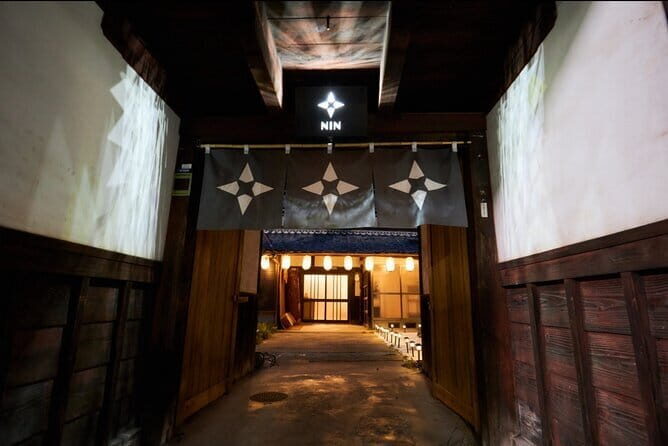
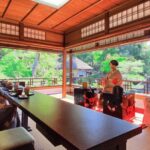
Your meeting point is Studio Shinobi YASE at 168-1 Yase-no-secho, Sakyo-ku, Kyoto (Kyoto City, Kyoto Prefecture 601-1254). It’s a one-minute walk from the Yase-Hieizan Exit of the Eizan Electric Railway.
That matters more than it sounds. Knife-making sessions can run tight on time, and this one is designed to be easy to reach. I’d plan to arrive by train, then do the short walk calmly—don’t sprint. A couple of participants noted that navigation can be a little confusing because there are two studios.
Here’s the key logistics point: the workshop operates out of two studios in Sakyo-ku—Studio NIN Yase or Studio NIN Kendo. Staff message you ahead of time to confirm which studio you should attend. So before you head out, check your messages and follow the exact studio instructions you’re given.
Check-in and traditional attire: what happens before you touch the hammer
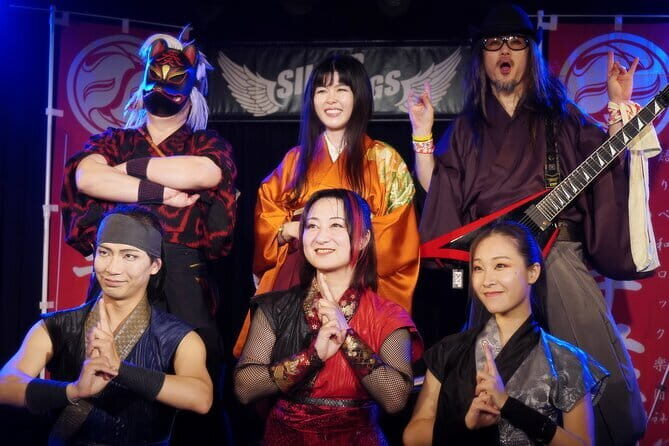
The session starts with a warm welcome when you arrive at the studio. Your instructor is Mao, a seasoned knife professional with 10+ years in the craft. You’ll be greeted by the team, then guided through what to do next.
Next comes the fun-to-take-seriously part: you change into traditional blacksmith attire. It’s not just for photos. The clothing helps you get into the right mindset, because the rest of the session is about work—heat, tools, and controlled movements.
Then you’ll go through tool handling and safety. You’ll learn how to use or hold the main gear—hammers, tongs, and grinders—and you’ll get clear instructions on what to do and what not to do. Even if you’ve never worked with metal, this is the part that sets expectations. You’re being trained for a physical, potentially dangerous environment, even with careful supervision.
If you want a tip that will genuinely help: wear simple socks (they’ll ask you to bring them). Also, go in with energy to learn fast and not rush.
From furnace heat to your first forging strikes
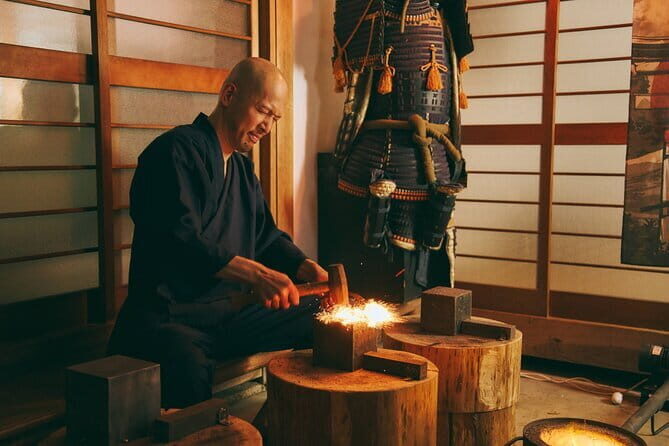
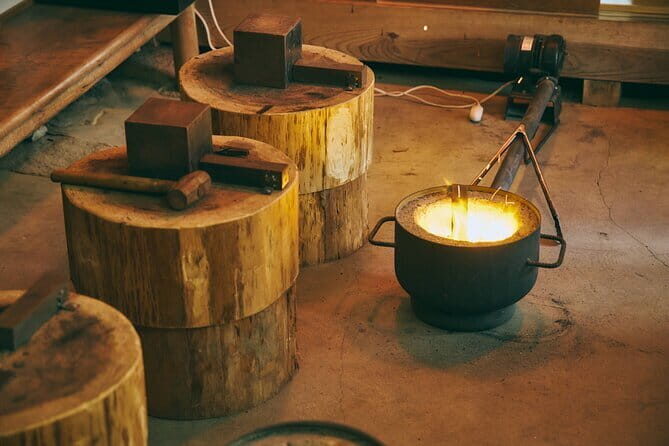
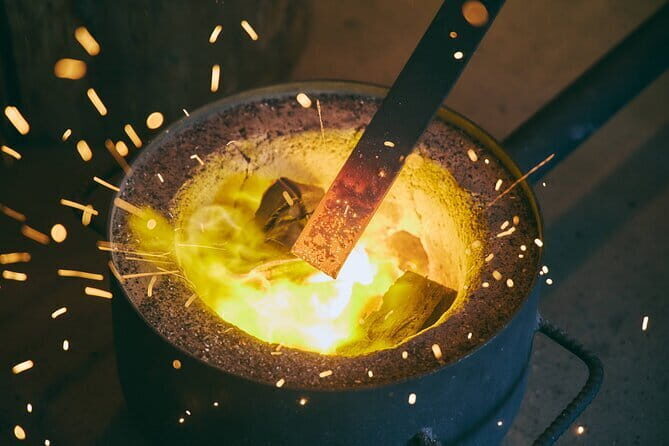
At the heart of the class is the forging sequence. You’ll see the steel get heated in a furnace until it glows red-hot. That moment is more than a dramatic visual—it’s the reason the process works. Heat makes the metal workable, and your hammering shapes the blade during that workable window.
Then comes the highlight: forging the blade. Mao closely guides you as you strike the hot metal with a hammer. You learn the correct hammering angle and rhythm, and you’ll work on shaping the blade while the instructor keeps an eye on safety and technique.
A practical reality check: you won’t just swing randomly and hope for the best. Your results depend on alignment—angle, pressure, and repeatable movement. That’s also why the class feels satisfying. When you get a motion right, you can see the metal respond.
Reviews also hint at the session’s physical pace. People mention that it’s tiring in a good way, and some recommend stretching beforehand. You’ll likely be doing a lot of hands-on work in a hot environment—some instructors even provide cooling items during the heat and furnace time, which helps you stay focused.
Cooling, refining, sharpening, and getting an edge you can feel
After forging, the metal is cooled and checked for shape. Then you move into refining: smoothing out rough edges and preparing the blade for sharpening. This stage matters because forging creates form, but sharpening creates function.
Sharpening is where you transform your “shaped steel” into something that can actually cut. Under expert instruction, you’ll use sharpening stones and grinders to bring the edge to life. Even beginners can get a functional result because the teaching is step-by-step and hands-on.
The class doesn’t stop at grinding. You’ll also do polishing and final finish, which changes how the knife looks and how clean the surface feels. By the end, your blade looks like a real handmade kitchen knife—not just a block of metal that survived a workshop.
This is also where the small-group format pays off. If your knife needs adjusting, the team is there to help you move forward, rather than leaving you stuck for the rest of the session.




Polishing the finish, photos, and taking home a handmade knife (with a box)
Once your knife is finished, you get time to celebrate. Photos and videos are welcome throughout the process, so you can record key milestones—heating, forging, and sharpening.
Your completed knife is ready to take home. It’s fully handmade and roughly 13–15 cm long. You’ll also receive packaging: a box and bag, plus all the kit that makes it easier to bring the knife safely back with you.
One fun detail from participant feedback: some finishes may look intentionally rustic rather than shiny. For example, one review mentioned a Kurouchi finish—more raw, lightly “forged” in appearance, and it’s also described as helping with anti-rust. So don’t expect everything to turn into a perfectly mirror-polished blade. Part of the charm is that it looks like something made by hand, with a purpose.
And yes, you may find extra finishing touches at the end. One note specifically encouraged trying plum wine and sausages after the experience—so if you see food or drinks offered at the close, it’s worth taking the chance.
Price and value: what $154 gets you for 3 hours of real work
At $154 per person for about 3 hours, this sits in the category of hands-on experiences where the value comes from skill + outcome. You’re not just paying for a souvenir; you’re paying for instruction, safety guidance, and the use of professional tools and materials.
A key value point: you leave with something practical. A forged knife is a tool. It’s also a story you can use while cooking: I made this. That’s the kind of memory that sticks because it keeps paying you back after the trip.
The session format is also described as a refined 2.5-hour format, even though the total time you’ll block is 3 hours. That typically means you’re spending most of the time at the core tasks—heat, hammer, and edge—rather than wasting hours on setup.
If you’re comparing options in Kyoto, treat this as a “make it for real” workshop. A cheaper class might let you paint, assemble, or do lighter crafts. This one asks for effort. And that effort is exactly why the result feels worth the price.
What it’s like as a visitor: group size, energy level, and safety reality
This workshop is set up for a small group, and that’s a huge deal for a task like forging. When there are fewer people, instructors can watch your technique and help you correct issues before they compound. That’s also how you get the feeling of personalized guidance even as a beginner.
Language support is available in English and Japanese. In practice, that helps a lot during tool instruction and during sharpening, when small technique changes matter.
About safety: some parts of the experience involve danger, and the provider notes that in the unlikely event of injury or accident, the customer is responsible. That’s not meant to scare you. It’s a reminder to take the instructions seriously and to listen when Mao or the team tells you to stop, adjust, or handle something differently.
The good news is that the instructors provide clear safety guidance and are actively helping during the dangerous-feeling steps. I’d still treat it like a workshop: don’t improvise. Do what they demonstrate.
Knife-making expectations: difficulty, knife options, and what you might take home
Let’s set expectations in a useful way.
First: it’s challenging but do-able. People describe it as physically demanding, with hammering and work near hot materials. The result won’t be mass-produced perfect—and honestly, that’s part of the value. You’re learning craft, not buying factory perfection.
Second: your knife style may have options. One review notes that you may be able to choose whether you make a knife with or without a handle, and that handle versions may cost an extra 5,000 yen (paid in cash or credit card, including Apple Pay). The base experience still ends with a take-home knife, but if you care about handle choice, ask before you start.
Third: larger knives are a different thing. The workshop uses a refined 2.5-hour format for this experience. Larger knives require over 5 hours and cost more than $400, so this class is built around a practical timeframe and a standard knife size.
Who should book this knife-forging class in Kyoto
This fits best if you want:
- A hands-on Kyoto activity that ends with a tool you can use
- A small-group craft session with English/Japanese instruction
- A rare experience you can’t easily find elsewhere in Japan
It’s also a strong match for couples, friends, and solo travelers who like learning by doing. The “take home a real knife” factor makes it especially good as a gift.
What about kids? The workshop is not suitable for children under 15. There’s also a note that children under 15 must be accompanied by a guardian. If you’re traveling as a family, plan carefully based on ages.
And if you’re an older traveler: it’s not suitable for people over 95 (so be honest about mobility and stamina).
Tips to make your session smoother (and less tiring)
A few simple prep moves can make a big difference.
- Bring socks as requested.
- Do some light stretching before you go—people specifically recommend it for this activity.
- Wear clothing you don’t mind getting warm. You’ll be in a heat-focused environment due to the furnace and forging.
- Listen closely during safety instructions. The session is hands-on, but you should still expect instructors to correct your technique.
One more practical point: plan your arrival time with buffer. Even though the meeting point is close to the station, walking directions can be confusing because there are two studios. Give yourself time to confirm which location you’re heading to.
Should you book this Kyoto knife-making workshop?
I’d book it if you want the rare kind of Kyoto craft where you leave with a functional Japanese knife made by your own hands. The value is in the full process—heat, hammer, sharpen, polish—and the fact that the finished blade is sized for everyday use.
Skip it if you’re looking for a calm, low-physical-effort experience, or if you’re uncomfortable around hot equipment and controlled risk tasks. It’s not a passive class. It’s work, guided by a skilled team—especially Mao—so you can produce something you’ll genuinely keep.
If that sounds like your kind of travel day, this is a strong choice.
FAQ
How long is the Kyoto knife making experience?
The workshop lasts about 3 hours.
How much does it cost?
The price is $154 per person.
Where do I meet for the workshop?
Meet at Studio Shinobi YASE (168-1 Yase-no-secho, Sakyo-ku, Kyoto). It’s a one-minute walk from the Yase-Hieizan Exit of the Eizan Electric Railway.
Are there multiple studios?
Yes. The activity runs out of two Sakyo-ku studios: Studio NIN Yase and Studio NIN Kendo. Staff will message you before your visit to confirm which one to attend.
What should I bring?
Bring socks.
Is it a small group experience?
Yes, it’s described as a small group available.
What languages are used during the class?
Instruction is available in English and Japanese.
Can children join?
The workshop is not suitable for children under 15. It also says children under 15 must be accompanied by a guardian.
Can I bring alcohol or drugs?
No. Alcohol and drugs are not allowed.
What do I take home?
You take home a fully handmade knife (about 13–15 cm long), and you receive a box and bag.
Is there a refund if I cancel?
You can cancel up to 24 hours in advance for a full refund.