This dojo takes katana seriously.
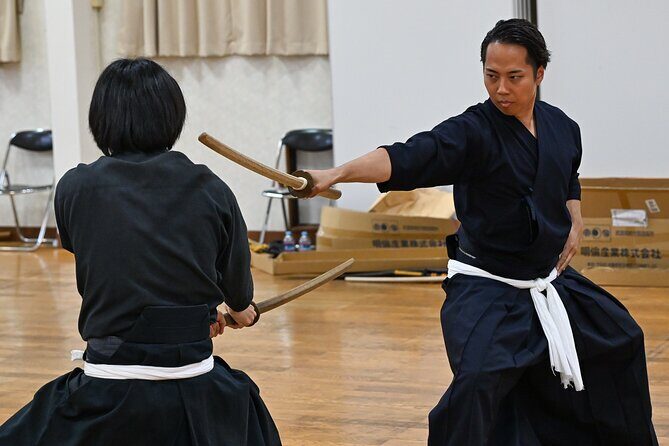
In Kyoto, you train with the Kyoto Branch of Asayama Ichiden Ryu Hyōhō, a classical kobudo tradition practiced for about 400 years. Instead of a show for tourists, this is a genuine training session with local students, focused on Iaijutsu and Kenjutsu using wooden swords (bokutō).
What I really like is the way Shogo Sensei teaches. He has the rare skill of explaining clearly in both English and Japanese, so you can actually keep up without guessing. And because the class has a small limit of just 4 participants, the practice can feel more like coaching than mass instruction.
One consideration: this is not built for total beginners. The dojo’s general rule is that they don’t accept people with no prior budo experience, and the session expects at least moderate physical readiness.
In This Review
- Key things to know before you book
- Kyoto Kobudo in a Real Dojo, Not a Sword Show
- The 3-Hour Flow: Reihō Etiquette First
- Iaijutsu Quick-Draw Basics on Bokutō
- Kenjutsu Swordsmanship and Training at Your Level
- Shogo Sensei’s Teaching Style: English, Japanese, and Calm Precision
- Gear, Body Readiness, and How to Prepare
- Meeting Point in Higashiyama and Getting There Smoothly
- Price and Value: What $45.61 Really Buys
- Who Should Book This Kyoto Katana Class
- Should You Book This Kyoto Katana Training?
- FAQ
- Where is the training meeting point?
- What time does the session start?
- How long is the experience?
- How much does it cost?
- Do I need prior budo experience to join?
- What do you practice during the class?
- Are you using real swords?
- How big is the group?
- What is the cancellation policy?
Key things to know before you book
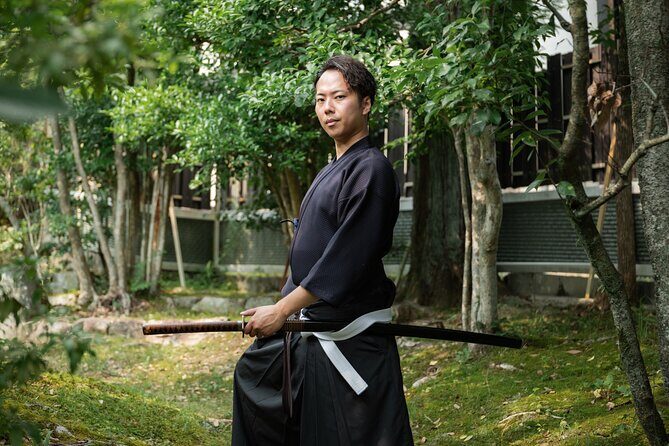
- A real kobudo class with the Kyoto Branch of Asayama Ichiden Ryu Hyōhō, not a casual demo.
- Iaijutsu and Kenjutsu practice on bokutō, taught alongside regular dojo students.
- Shogo Sensei supports both English and Japanese, which helps a lot if your Japanese is basic.
- Small group size (max 4), so your training can be paced to your level.
- It starts at 6:30 pm at Honmachi in Higashiyama Ward, and runs about 3 hours.
- Not beginner-friendly by default, with a general recommendation to have prior budo experience.
Kyoto Kobudo in a Real Dojo, Not a Sword Show
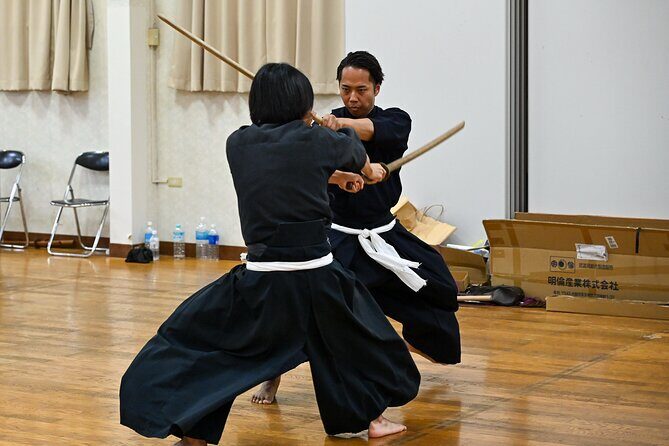
If you’re picturing a cheap sword photo-op in Kyoto, this is the opposite. The whole point here is training inside an actual dojo environment, alongside actual members of the tradition. You’re not visiting a museum display or watching someone perform. You’re doing the fundamentals the way they’re practiced day to day.
The style on offer is Asayama Ichiden Ryu Hyōhō, specifically the Kyoto Branch. The tradition traces back more than 400 years, preserving techniques from the period when samurai fought while armored. You’ll hear plenty of emphasis on form, etiquette, and correct movement, because that’s how koryū (classical schools) protect the accuracy of the art.
Now, let’s be honest: this kind of class can feel a little intimidating at first, especially if you’re used to travel activities where someone makes everything easy. Here, you’re expected to meet the dojo halfway: respect the training space, follow instruction closely, and treat the session like learning.
The prize isn’t just learning moves. It’s seeing how the dojo mindset works—quiet focus, disciplined timing, and an attention to detail that isn’t performative. If you want samurai culture as lived practice, this is the right direction.
If you're still narrowing it down, here are other tours in Kyoto we've reviewed.



The 3-Hour Flow: Reihō Etiquette First
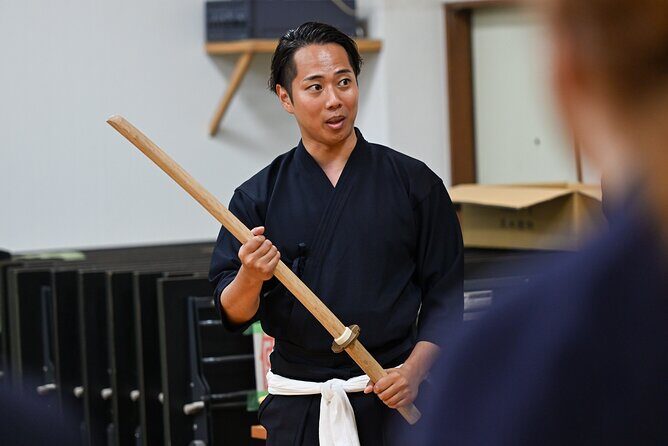
The session runs about 3 hours and follows a training rhythm built around routine. You’ll start with Reihō, the etiquette component. This matters because iaijutsu and kenjutsu aren’t only about sword technique. They’re tied to the behavior around practice—how you enter, how you prepare, and how you respond to guidance.
From there, the class moves into the two main skill areas you came for: Iaijutsu (quick-draw katana techniques) and Kenjutsu (Japanese swordsmanship). Even if you’ve studied kata or watched videos online, the etiquette and setup usually change how you think. You stop treating it like a physical trick and start treating it like a disciplined sequence.
Because the class is capped at 4 participants, the instructor can keep an eye on what you’re doing without turning it into a lecture. It also helps that Shogo Sensei communicates in both English and Japanese. That means you can get the meaning of what you’re practicing, not just the surface steps.
If you’re hoping for an action-packed session where you swing a sword nonstop, you might find it steadier than that. Koryū training tends to feel slower at the start, and then suddenly you realize you’ve been working on precision the entire time. That’s a good sign, not a problem.
Iaijutsu Quick-Draw Basics on Bokutō
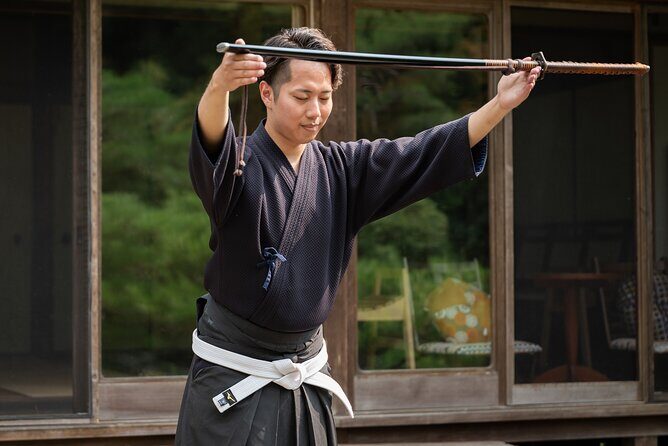
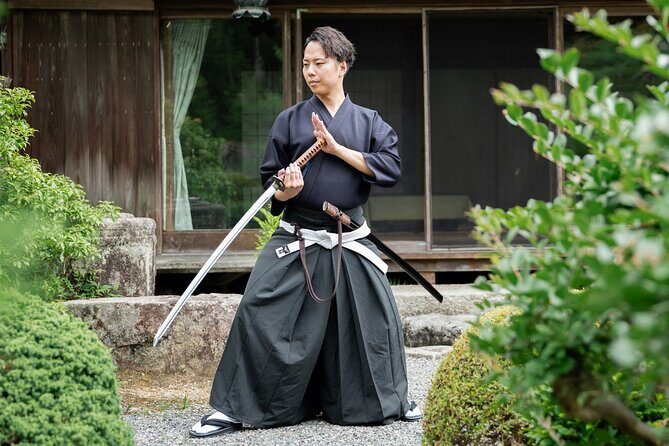
Iaijutsu is where a lot of people feel the magic of sword arts. The idea is timing: drawing and cutting with controlled intent, rather than treating the draw like an afterthought. In this class, you’ll practice Iaijutsu using bokutō, wooden swords made for training.
Using bokutō is practical. Wooden swords let you focus on mechanics—body position, draw path, and the alignment of the cut—without the sharpness risks that come with live steel. The goal isn’t to cosplay samurai. It’s to build the movements so they’re consistent and repeatable.
One thing I appreciate about a class like this is that it usually doesn’t rush past basics. You’re guided through how to move your body to support the draw, how to hold structure, and how to respond to coaching. That’s especially important in a quick-draw art, where tiny errors can throw the whole sequence off.
If you don’t bring a sword, you might still be fine. One participant specifically said Shogo provided a sword and made everything feel comfortable and easy to follow. Still, don’t assume every session has the same setup. If you’re traveling light, it’s smart to ask during booking or contact the provider to confirm.
Kenjutsu Swordsmanship and Training at Your Level
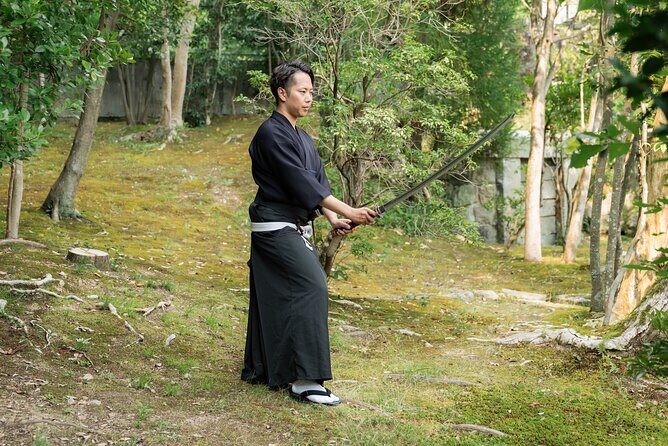
After Iaijutsu, you shift into Kenjutsu. Kenjutsu is the broader swordsmanship practice—the relationship between your stance, your sword work, distance, and the way you move through training exchanges. It’s less about one dramatic moment and more about control across sequences.
What makes this class worth your time is the way instruction can be adapted. In the feedback, people describe Shogo ensuring details are covered and that practice can be personal to your level. That doesn’t mean you’ll get a private lesson for 3 hours. It means the instructor watches what you’re doing and adjusts how you should think about the technique.
Kenjutsu in koryū traditions also tends to teach you patience. You might repeat the same movement until it stops looking like a guess and starts looking like a principle. That can be frustrating if you want instant competence, but it’s exactly what you want if you’re chasing real learning.
Also, this tradition isn’t only about sword moves. The system includes other arts like kama-jutsu (sickle techniques), bōjutsu (staff), jōjutsu (short staff), tanbōjutsu (short stick), kusarifundōjutsu (chain and weight), and shurikenjutsu (throwing darts). Your class time here focuses on sword arts, but knowing the broader system helps you understand why the dojo takes fundamentals so seriously. The techniques fit together across weapons.
Shogo Sensei’s Teaching Style: English, Japanese, and Calm Precision
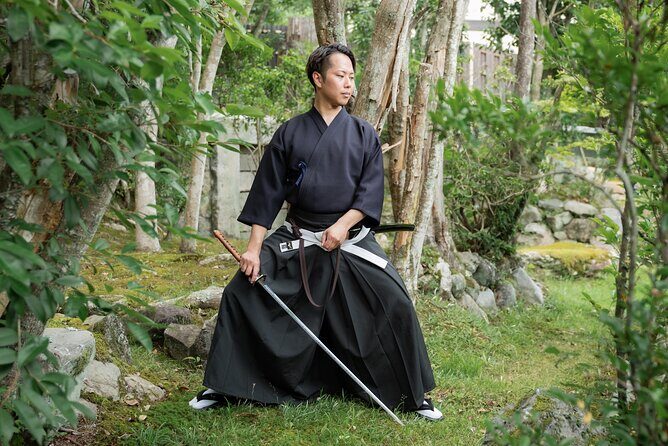
A big selling point is Shogo Sensei himself. People highlight that he’s proficient at explaining in both English and Japanese, and that he’s good at instruction and communication, not just technique. When you’re learning a classical martial art, language clarity is more than convenience. It’s how you learn the meaning behind the movement.
The feedback also points out that the session is well paced and forgiving when something isn’t landing right away. That’s huge for first-timers who might worry they’ll slow the class down. In a small-group dojo setting, you want to feel corrected without being embarrassed.
And there’s another practical benefit: Shogo’s role seems to connect dojo training to broader learning habits. One participant credited his educational videos for getting them inspired and helping them start local dojo training afterward. Even if you’re not following his videos, that kind of teaching background usually means lessons are structured and clear.
Bottom line: you’ll probably leave understanding the why behind the moves more than you would from a purely performative workshop.



Gear, Body Readiness, and How to Prepare
This experience is physical and expects moderate fitness. That doesn’t mean you need to be an athlete. It means you should be able to practice standing forms, controlled movement, and repetition for a few hours.
Because the practice is with bokutō, you’re not handling a live blade. Still, treat it seriously. Follow directions closely, especially on timing and draw/cut sequences. In dojo settings, the safest activity is the one where everyone respects the pace and instruction.
What should you bring? The info you have doesn’t spell out exact clothing rules or whether other protective gear is provided. Based on the nature of dojo training, it’s safe to plan for a movement-friendly outfit and shoes you can stand comfortably in. If you want to bring your own bokutō, that’s not mentioned, so it’s best to confirm with the provider. One review notes that Shogo provided a sword even when a participant did not bring one, which suggests you may be covered, but again, confirm for your booking.
Travel tip: this class starts at 6:30 pm. Plan your Kyoto day so you’re not sprinting across town at the last minute. You’ll be training, not sightseeing at the same time.
Meeting Point in Higashiyama and Getting There Smoothly
The meeting point is 7-chōme-27-1 Honmachi, Higashiyama Ward, Kyoto, 605-0981, Japan. It’s also described as near public transportation, which is a big deal for evening classes. Kyoto can involve walking, so give yourself a realistic window to get there.
The session ends back at the meeting point, so you’re not switching locations or ending far from where you started. That makes it easier to build the rest of your night—dinner, a short walk, or heading back to your hotel.
Group size is small (maximum 4 travelers). That makes logistics calmer, but it also means timing matters. In small classes, tardiness can throw off the rhythm for everyone.
The ticket is mobile, and you’ll receive confirmation at booking. That’s helpful when you’re juggling multiple Kyoto activities and want fewer paper hassles.
Price and Value: What $45.61 Really Buys
At $45.61 per person, this is priced like a focused lesson, not like a casual tour. The value comes from the fact that you’re training with the Kyoto Branch of a 400-year-old tradition and doing it alongside local students under Shogo Sensei’s instruction.
A lot of sword-themed experiences in Japan are entertainment first. This one is training first. That’s why the price feels fair even though you’re only in Kyoto for a few hours. You’re buying instruction time, dojo access, and disciplined practice within a structured school.
Also, the group cap (max 4) matters for value. If you were paying the same price but were crammed into a big group, you’d get less coaching and less personal correction. Here, the structure supports learning.
The only “cost” to consider is your eligibility. The dojo has a general rule against participants with no prior budo experience. If you qualify, you’re likely to get a better experience and spend less time feeling lost.
Booked about 18 days in advance on average. If you’re serious about doing this during your Kyoto window, don’t wait until the last week to try to lock in a slot.
Who Should Book This Kyoto Katana Class
This is for you if you’re serious about sword arts and want authentic dojo training in Kyoto. It’s also a good fit if you learn best by doing—because you’ll be practicing Iaijutsu and Kenjutsu rather than watching.
You’ll probably enjoy it even more if:
- You have some prior budo or at least comfort with classical discipline.
- You want instruction in both English and Japanese (Shogo Sensei supports both).
- You like small-group learning and don’t mind that the session can feel focused and intense.
On the other hand, if you’ve never touched budo training before, you may run into the dojo’s general rule. The info suggests you can contact them for consultation if you’re very eager. That’s the responsible move: ask first, rather than showing up hoping for a last-minute exception.
Finally, think about your expectations. If your goal is to feel the atmosphere of samurai discipline through training, you’re in the right place. If your goal is a casual souvenir activity, this may feel strict and slower than you want.
Should You Book This Kyoto Katana Training?
Book it if you want real practice—Iaijutsu and Kenjutsu—taught by Shogo Sensei in a small Kyoto dojo setting with bokutō training. The combination of authentic tradition, focused session time, and English + Japanese instruction makes this a strong value.
Skip or reconsider if you have zero prior budo experience and don’t want to go through consultation. Also, if the idea of etiquette and careful form stresses you out, you might prefer a more beginner-friendly class elsewhere.
If you do book, go in with humility and attention. This isn’t about performing. It’s about learning how the art thinks.
FAQ
Where is the training meeting point?
The meeting point is 7-chōme-27-1 Honmachi, Higashiyama Ward, Kyoto, 605-0981, Japan.
What time does the session start?
The start time is 6:30 pm.
How long is the experience?
The session lasts about 3 hours.
How much does it cost?
It costs $45.61 per person.
Do I need prior budo experience to join?
As a general rule, participants with no prior budo experience are not accepted. If you are very eager to join, you can contact the provider for a consultation.
What do you practice during the class?
You practice Reihō etiquette, Iaijutsu, and Kenjutsu alongside Shogo and regular dojo members.
Are you using real swords?
The training is described as using bokutō (wooden katana) for practice.
How big is the group?
The maximum group size is 4 travelers.
What is the cancellation policy?
You can cancel for a full refund up to 24 hours before the experience starts. If you cancel less than 24 hours before, you won’t receive a refund.