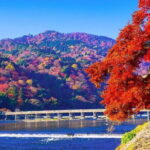
Four hours, six Kyoto moments, one easy bike route. This Discover Kyoto by Bike tour strings together major sights you’d normally scatter across the city, using a comfortable Mamachari-style bike at a relaxed pace. I love the street-smart routing that keeps you moving through the parts of town you might miss on foot, and I love how a good guide helps you feel confident at junctions and on sidewalks. One thing to consider: the bike is standard, non-electric with 3 gear shifts, so you’ll want to be comfortable riding on city surfaces for a few gentle slopes.
You’ll likely ride with an English-speaking guide, and the vibe tends to be patient and hands-on. In past departures, guides have included Alex, Nobumasa, and Miya, and the consistent theme is clear explanations plus help with photos and timing. With helmet + insurance included, it’s set up to feel like a real activity, not a bumpy scavenger hunt.
For $85 per person, you’re paying for more than sightseeing stops. You’re getting a bike rental, guide time, and covered Nanzen-ji admission, then looping back near Gojō Station when the half day is done. If you like Kyoto at human speed, this is a very workable way to do it.
In This Review
- Key highlights at a glance
- Why Mamachari biking makes Kyoto feel easier
- Getting started at Gojō Station and setting expectations
- Gion by bike: the neighborhood starts moving with you
- Nanzen-ji Zen Temple: covered admission and calm time
- Philosopher’s Path: scenic riding, not a long hike
- Ginkakuji (Silver Pavilion): where gardens meet good timing
- Shimogamo Jinja: the longest stop for a reason
- Kyoto Imperial Palace: finish with big-picture space
- Bike comfort, safety, and how the 3 gears matter
- Price and value: what $85 buys you in real time
- Who should book this bike tour (and who might not)
- Quick practical tips before you ride
- FAQ
- How long is the Kyoto bike tour?
- Where does the tour start and end?
- What is the price per person?
- Is this a private tour?
- What’s included in the tour?
- Are meals included?
- Is hotel pickup or drop-off included?
- Are temple admission fees included?
- Is the route difficult?
- What’s the cancellation policy?
Key highlights at a glance
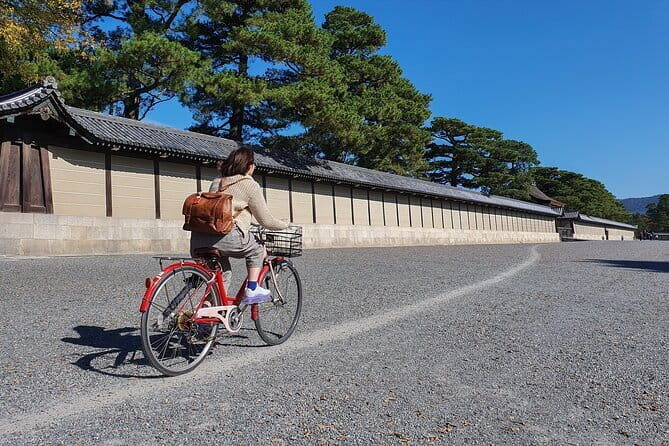
- Mamachari-style cycling across key Kyoto neighborhoods with a mostly flat route and a few gentle slopes
- Gion first, then temple and shrine stops in a logical flow that saves backtracking
- Nanzen-ji entrance fee included, plus time to slow down and look around
- Philosopher’s Path on a bike, where you can glide past the canal route without fighting crowds on foot
- Shimogamo Jinja gets the longest stop (an hour) for a calmer, slower feel
- Private tour for your group, with an English-speaking guide and included helmet + insurance
Why Mamachari biking makes Kyoto feel easier
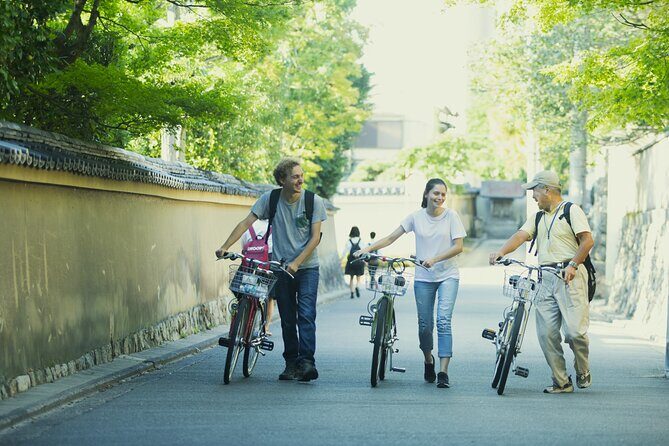
Kyoto looks complicated on a map, but it feels simple on a bike. You move at walking speed without the stop-and-go fatigue, and you can actually enjoy the streets instead of only crossing them. That matters in a city where the best moments often sit just off the main lanes.
This tour focuses on a smart mix: a famous neighborhood (Gion), a major Zen temple (Nanzen-ji), two iconic scenic areas (Philosopher’s Path and Ginkakuji), a classic ancient shrine (Shimogamo Jinja), and a big historical set of grounds (Kyoto Imperial Palace). It’s not trying to cram in everything—your 4 hours are spent on places that work well by bike.
The included equipment also changes the experience. You don’t just rent a random bike and hope for the best—you get a standard non-electric B-type bike with 3 gear shifts and a helmet. Add insurance, and you get that “I can relax” feeling even when the streets get busy.
Other cycling tours in Kyoto


Getting started at Gojō Station and setting expectations
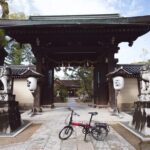
Your tour meets at Gojō Station (Osakacho, Shimogyo Ward, Kyoto 600-8177). Since it ends back at the same meeting point, you don’t need a complicated plan for getting home afterward. It’s also described as near public transportation, which makes it easier to stitch into the rest of your day.
Before you roll, you’ll have the bike basics covered: you’ll get the bike rental (standard Mamachari-style with 3 gears) and a helmet. You should treat the first few minutes as a warm-up. City riding is its own skill, even if Kyoto is generally bike-friendly, so get comfortable before you start moving with the group.
This is also listed as a private tour/activity, meaning only your group participates. That’s a real advantage if you want questions answered and photos handled without feeling rushed. For some people, private is the difference between enjoying temples and feeling like a herd.
Gion by bike: the neighborhood starts moving with you
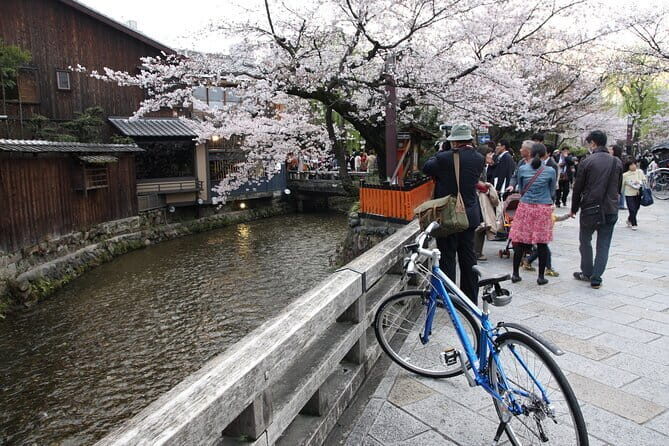
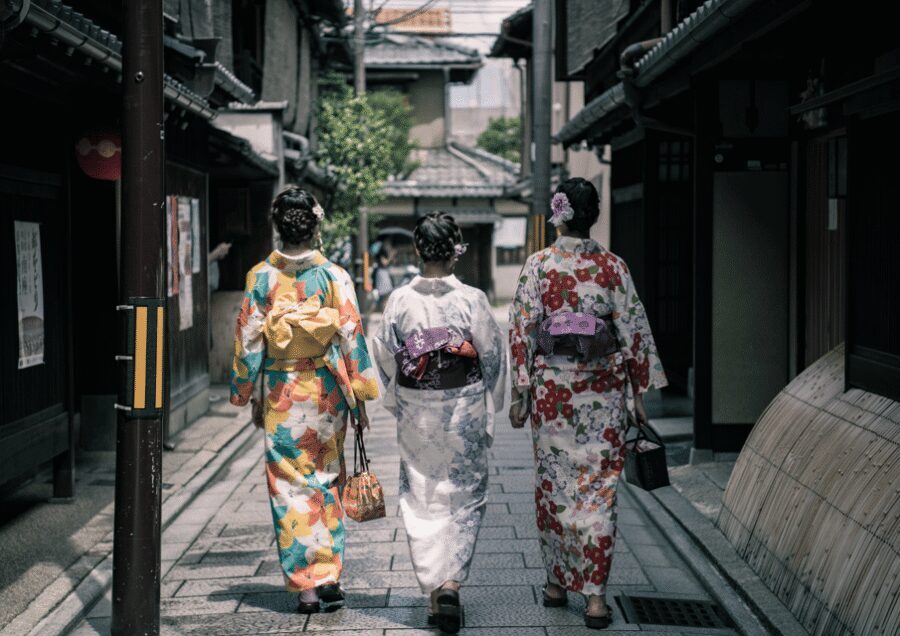
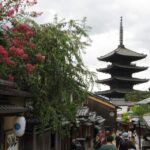
Gion is where Kyoto’s image comes to life, and arriving by bike gives you a different angle than bus drops or walking-only routes. This stop is short (about 20 minutes), so think of it as orientation and atmosphere. You’re not trying to “finish” Gion in one visit—you’re catching the mood and getting your bearings early.
One practical perk here: bikes help you stay flexible. You can slow down for details—street texture, small side lanes, the way people move through the neighborhood—without losing your place in the group. If you’re prone to lingering, having that extra motion around you keeps time manageable.
Admittedly, this first stop can feel like a teaser. Twenty minutes goes fast, and you may want more time after you understand what you’re looking at. The upside is that you still get a full sequence of other major stops to satisfy the big sights checklist.
Nanzen-ji Zen Temple: covered admission and calm time
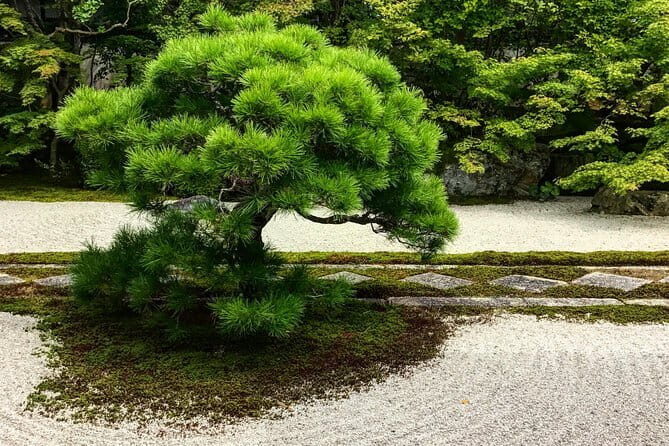
Next up is Nanzen-ji Temple, with about 30 minutes on the grounds. What I like about this stop is that it’s both iconic and functional in a tour route. It’s peaceful enough to feel like a break from street energy, yet central enough to fit into a half-day cycling loop.
You’ll also get the Nanzen-ji entrance fee included. That’s not just a savings line—it helps you avoid the small stress of figuring out what’s required and where. You can focus on the place instead of paperwork.
With a guide at your side, you’ll likely get help connecting what you see to the larger Zen setting—temple layout, visitor flow, and what’s worth your time in the areas open for visiting. For a place where silence and atmosphere matter, a guided pace can keep you from rushing the best parts.
The only trade-off: if you’re the type who wants 90 minutes at a single temple, 30 minutes will feel brief. On the other hand, if you prefer variety and hate “one and done,” this duration keeps the tour balanced.
Philosopher’s Path: scenic riding, not a long hike
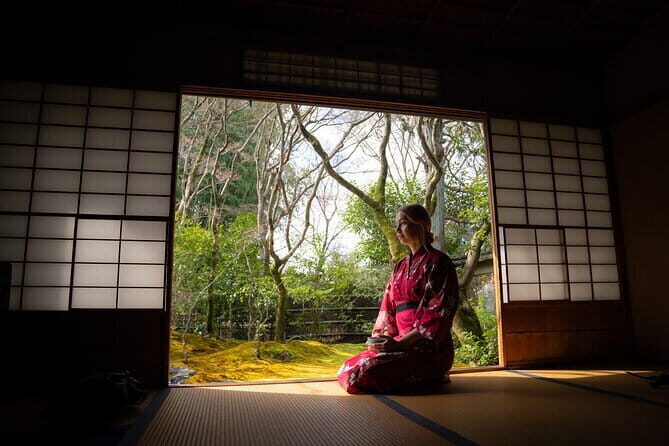
The tour then shifts to Philosopher’s Path, a canal-side route famous for its beauty. You’ll spend around 20 minutes here, and the ride format is the real appeal. Instead of committing to a long stretch on foot, you get a scenic glide that keeps you connected to the surroundings.
The tour lists admission ticket status for this stop as not included. I’d treat that as a reminder to double-check anything you might need on the day, since the tour doesn’t bundle a ticket for this particular segment. In many cases, these routes are simply public spaces, but don’t assume—if anything is required, it won’t be packaged here.
For me, this stop works best if you use it like a “reset.” You look, you breathe, you take a few photos, then you move on. If you linger too long, the rest of the day can start to feel rushed—so give yourself permission to enjoy at 20-minute speed.



Ginkakuji (Silver Pavilion): where gardens meet good timing
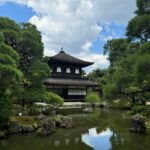
Then you’ll visit Ginkakuji (Silver Pavilion), with about 20 minutes listed. Even in a short window, this is one of those places where the gardens and temple setting do a lot of the work for you. You don’t need a long speech to get the point—the calm layout does that.
This stop is listed as free for admission on the tour schedule, which is helpful because it keeps costs predictable. More importantly, you’ll be able to see the pavilion area and take in the atmosphere without carving a whole day for it.
If you’re a photo person, keep an eye on your timing. Kyoto’s popular sights can mean people in the best angles, especially later in the day. A guided ride helps because you’re not just standing around waiting—you’re moving as the group moves, which often means better chances to catch the quieter moments.
Shimogamo Jinja: the longest stop for a reason
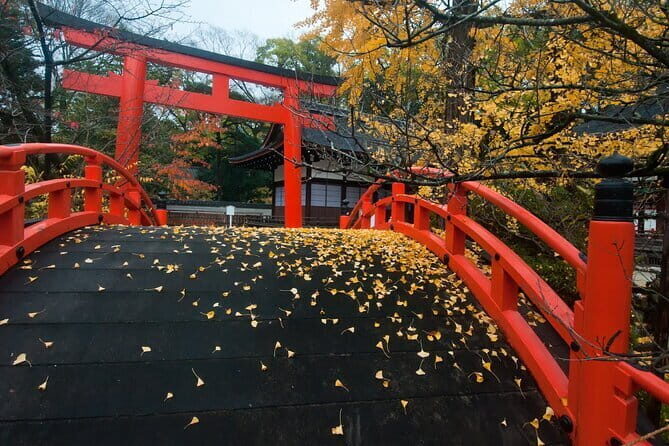
Shimogamo Jinja gets about an hour, making it the longest stop on the route. That extra time is a big deal. Shrines can be immersive, but they also reward slower wandering—wooded paths, the way the space opens up, and the feeling that you’re arriving somewhere older than the surrounding streets.
This stop is also listed as free for admission, so you’re not juggling ticket decisions while you’re trying to enjoy the grounds. One of the best ways to get value here is to let the guide’s explanations help you notice the details you might otherwise skip—ritual architecture, layout cues, and what visitors should look for first.
The one drawback to be aware of: if you only want “the highlights” and you don’t care for a calmer pace, you might feel that an hour is a lot. But if you’re tired of rushing from one famous photo spot to another, this is exactly the kind of pause that makes the tour feel complete.
Kyoto Imperial Palace: finish with big-picture space
Your final stop is Kyoto Imperial Palace, about 30 minutes. This is a great closer because it changes the texture of the day. Temples and shrines are intimate and atmospheric; palace grounds are more about scale and layout.
The tour lists admission as free here as well. That means your time is really about walking the grounds, taking in the history through space, and letting your brain file the day’s sights into one bigger story.
Thirty minutes can still feel short, but it’s a good size for ending a cycling tour. If you end too late in a half-day bike schedule, you can end up tired in crowds. Here, the tour keeps the pace controlled so you can close the day without needing a sprint to catch trains.
Bike comfort, safety, and how the 3 gears matter
The bike is described as a standard non-electric Mamachari-style rental with 3 gear shifts. That’s important for two reasons.
First, it means you’re not relying on power. If you’re used to city bikes, you’ll probably feel fine on the route, which is described as mostly flat with a few gentle slopes. Second, those 3 gears let you adjust without turning this into a workout. You won’t be racing anyone, but you should be ready to use the gears when the route nudges uphill.
Helmets are included, and insurance is included too. Those two details reduce the “What if something happens?” worries, especially if you’re riding for the first time or you’re not confident in busy streets.
If you have a sensitive back or knees, you might want to start slow and keep your posture relaxed. City cycling is easy until you start clenching or overusing one leg. A good guide will often remind you to relax your grip and keep your cadence steady, which makes a bigger difference than people expect.
Price and value: what $85 buys you in real time
At $85 per person for around 4 hours, you’re paying for a bundle of practical items plus a guided route through Kyoto’s major highlights. Here’s what you’re really getting beyond the headline number:
- Bicycle rental with helmet (you don’t have to solve bike logistics on your own)
- An English-speaking guide (you get the “what you’re looking at” layer)
- Insurance (a small but meaningful safety net)
- Nanzen-ji entrance fee included (so at least one of the stops is handled for you)
You also get a route that’s built to reduce backtracking. That saves time, and time in Kyoto is the difference between seeing a place calmly and seeing it through exhaustion. Since the tour ends back near your starting point, your day stays simpler.
There’s also a comfort factor in the pacing. This kind of half-day format can be perfect if you want a “greatest hits” dose without committing to a full day of walking.
Who should book this bike tour (and who might not)
You’ll probably love this tour if you:
- want a bike-friendly way to hit multiple Kyoto landmarks in one morning or afternoon
- like structure with enough flexibility to stop, look, and take pictures
- prefer guided help with street routing and city navigation
You might skip it if:
- you only want long, unhurried temple visits and hate having short time windows
- you’re not comfortable riding a non-electric city bike, even on mostly flat streets
- you prefer traveling fully on your own with no group pace
Private can be a sweet spot too. If you’re traveling as a couple or small group and you want personalized guidance—especially around street crossings and where to pause—that private setup can feel worth it.
Quick practical tips before you ride
- Wear something you can move in comfortably. You’re cycling, then you’re walking a bit at temples and shrines.
- Bring a water bottle. Meals and drinks aren’t included, so plan a simple snack or keep water handy.
- Keep your phone charged. You’ll likely stop for photos at multiple famous spots.
- If you’re sensitive to crowds, you’ll still see popular areas, but a bike route can help you avoid some of the worst “stand still” moments.
FAQ
How long is the Kyoto bike tour?
It’s listed as about 4 hours.
Where does the tour start and end?
It starts at Gojō Station (Osakacho, Shimogyo Ward, Kyoto 600-8177, Japan) and ends back at the same meeting point.
What is the price per person?
The price is listed as $85.00 per person.
Is this a private tour?
Yes. It’s listed as private, with only your group participating.
What’s included in the tour?
Included items are an English-speaking tour guide, bicycle rental (standard non-electric B-type with 3 gear shifts), helmet, entrance fee at Nanzenji Temple, and insurance.
Are meals included?
No. Meals and other drinks are not included.
Is hotel pickup or drop-off included?
No. Hotel pick up and drop off are not included.
Are temple admission fees included?
Nanzenji Temple’s entrance fee is included. Other stops are listed as free for admission on the tour schedule, and Philosopher’s Path is listed as having an admission ticket not included.
Is the route difficult?
The route is described as mostly flat with a few gentle slopes, and most travelers can participate.
What’s the cancellation policy?
Free cancellation is available up to 24 hours in advance for a full refund. If you cancel less than 24 hours before the start time, the amount paid will not be refunded.
Should you book this tour?
If you want a smart, half-day way to see Kyoto’s most famous stops without spending your whole trip on trains, taxis, and backtracking, I think this is a solid pick. The best part is the package: bike + helmet + guide + insurance, plus Nanzen-ji admission handled for you. Just be honest with yourself about riding comfort on a non-electric bike, and treat the 4-hour window as a “taste with great flow,” not a slow pilgrimage.