Kyoto has a way of teaching patience, fast. This Japanese archery workshop is built around Kyudo form—stances, bow hold, and the meaning behind each motion—taught by Master Yamaguchi and his team. I love that it’s small group (up to 4), so the instructor can correct you in real time. I also like that you get English support through an assistant and materials, so the experience doesn’t turn into silent staring. One possible drawback: Kyudo is physically demanding at first, and the bow can feel heavy.
What makes this session especially compelling is the teacher’s long track record. Master Yamaguchi has practiced Kyudo for 50+ years and holds Kyudo Kyoshi (teacher) 6th grade status, and you’ll see why in the way he slows everything down and fixes details. A friendly assistant helps bridge language gaps, while you learn through guided repetition and very practical hands-on coaching.
You’ll spend 1 hour doing the real work (not just watching). The price is $38, and you bring yourself—there’s no hotel pickup—plus the right clothes for moving comfortably.
In This Review
- Key things to know before you go
- Why Kyudo Feels Different From Western Archery
- Meeting からくり弓道体験場: Easy Walk, One Entrance Rule
- What’s Included in the Lesson (and What You Bring)
- Inside the 1-Hour Session With Master Yamaguchi
- The Bow Hold, Stance Corrections, and Why Beginners Improve Quickly
- The Tools, Shooting Attempts, and the Heavy-Bow Reality
- The Zen Side: Meditation Through Repetition, Not Performance
- Who This Kyoto Kyudo Workshop Is Perfect For
- Price Check: What $38 Buys You in Real Instruction Value
- Should You Book This Kyoto Kyudo Workshop?
- FAQ
- How long is the Kyoto Japanese Archery (Kyudo) workshop?
- What does the $38 price include?
- Is hotel pickup or drop-off included?
- Where do I meet for the lesson?
- How do I get there from nearby stations?
- What language is used during the workshop?
- Is the class small?
- Can I cancel and get a refund?
Key things to know before you go
- 6th-grade Kyudo kyoshi instruction from Master Yamaguchi, with decades of practice behind every cue
- Up to 4 people, which means more turns and more corrections per person
- All required Kyudo equipment provided, so you don’t have to source anything
- English support on-site via an assistant and English materials, even if the master speaks Japanese
- Hands-on guidance for stance and bow hold, plus explanations of the ethos behind the movements
Why Kyudo Feels Different From Western Archery
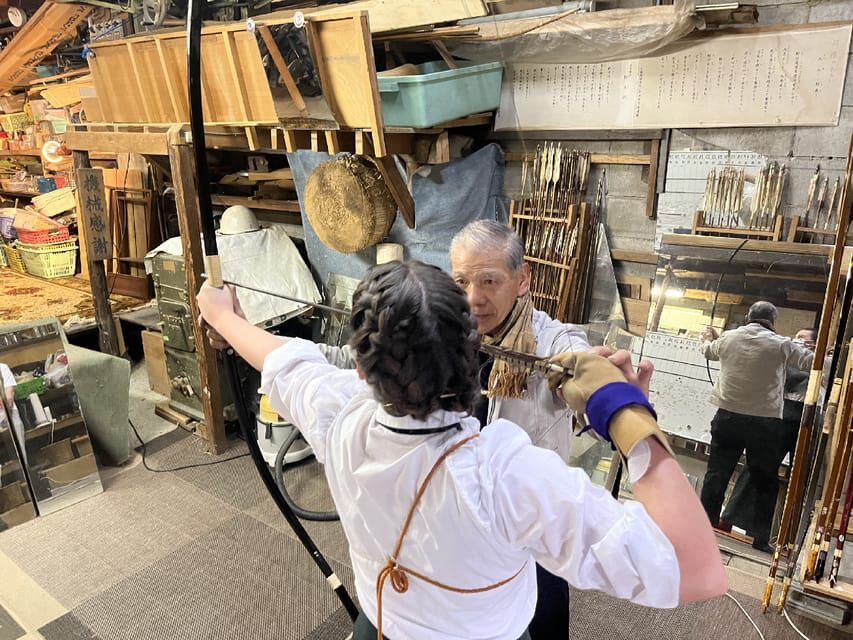
Kyudo is often described as archery, but in the training, it behaves more like a discipline. You’re not just aiming for a target. You’re building a sequence—body alignment, controlled movement, and an attitude of calm focus.
That shows up right away. Your instructor emphasizes proper form and the “why” behind motions, not just the “how.” Several people note the session can feel tricky in the beginning. That’s normal. The technique asks you to coordinate stance, grip, timing, and breathing in a way that’s unfamiliar if you’ve only done Western-style shooting.
I like that this workshop doesn’t pretend Kyudo is effortless. Instead, it works patiently from fundamentals: you learn what to do, you practice it immediately, and you get corrections so you can improve within the 1-hour format. For many first-timers, that’s the difference between a fun photo moment and a real skill you leave with.
A few more Kyoto tours and experiences worth a look


Meeting からくり弓道体験場: Easy Walk, One Entrance Rule
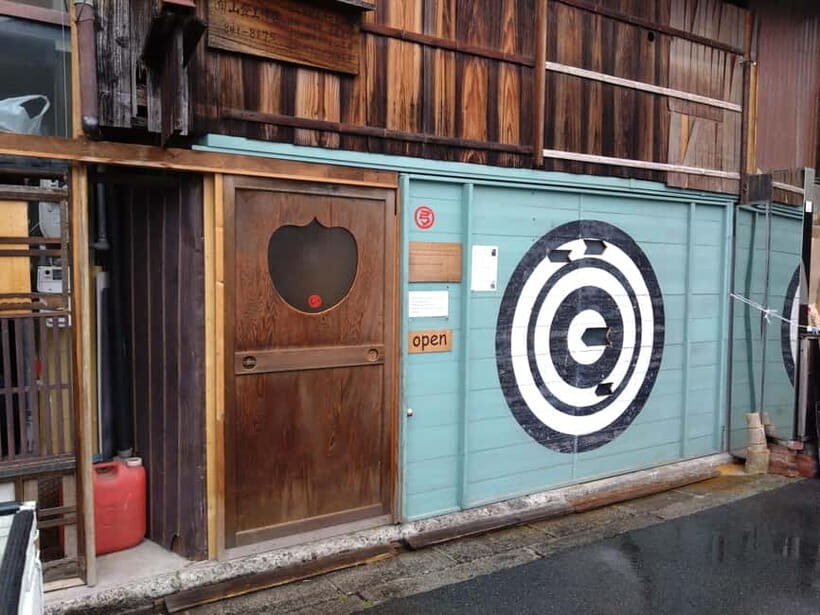
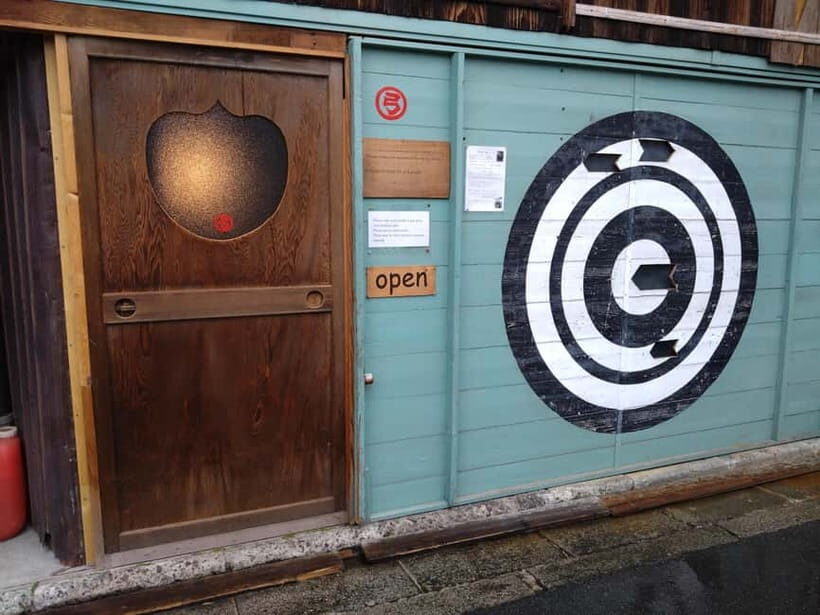
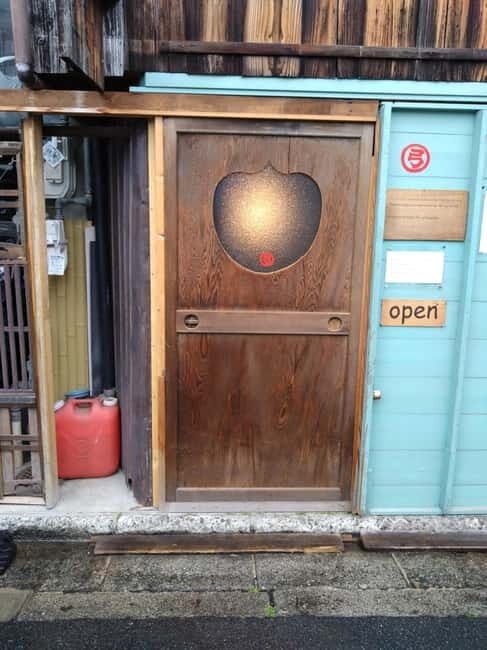
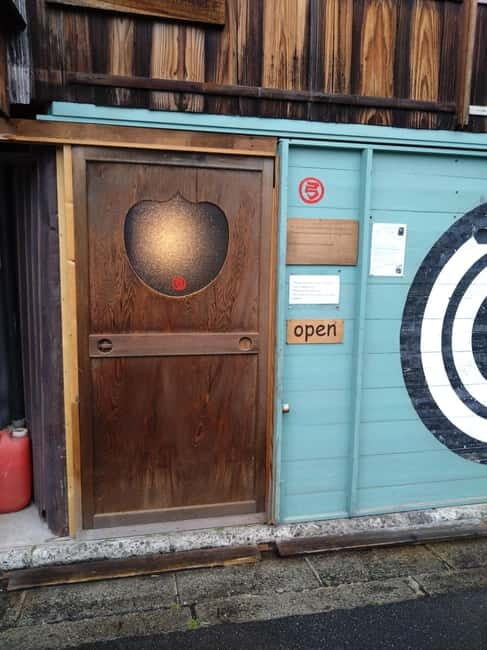
Getting there is simple, but there’s one detail that matters: there are no door bells. The entrance is on the side of the building, opposite a small parking lot. Use the Japanese name からくり弓道体験場 if you’re searching, or search for Kyudo Experience Kyoto—but always compare with the address you were given.
From transit, plan on about a 10-minute walk from JR Tambaguchi, Hankyu Omiya, or Randen Shijo-Omiya stations. If you’re using a taxi, give the driver “Mibugawa-street, Takatsuji-street” instead of the address. Small detail, big time saver.
This is also a place with limited space. You’ll want to come prepared with your group size exactly as requested. Only participants should attend the session inside the area.
What’s Included in the Lesson (and What You Bring)
This class is set up to be low-friction for visitors. The workshop includes:
- Kyudo lesson
- Experienced instructor
- All required Kyudo equipment
So you won’t need to bring your own bow, gloves, or anything like that. That matters because Kyudo gear is specific, and it wouldn’t be worth trying to “wing it” as a visitor.
What you do bring is the right outfit. Wear comfortable clothes that let you move freely. You’ll be practicing stance and controlled movement, and the workshop also includes hands-on correction. If you wear stiff or restrictive clothing, you’ll feel it fast.
If you have a preference about how much physical guidance you want, tell them in advance. The instructor provides hands-on support to demonstrate correct stance and bow hold.
Inside the 1-Hour Session With Master Yamaguchi
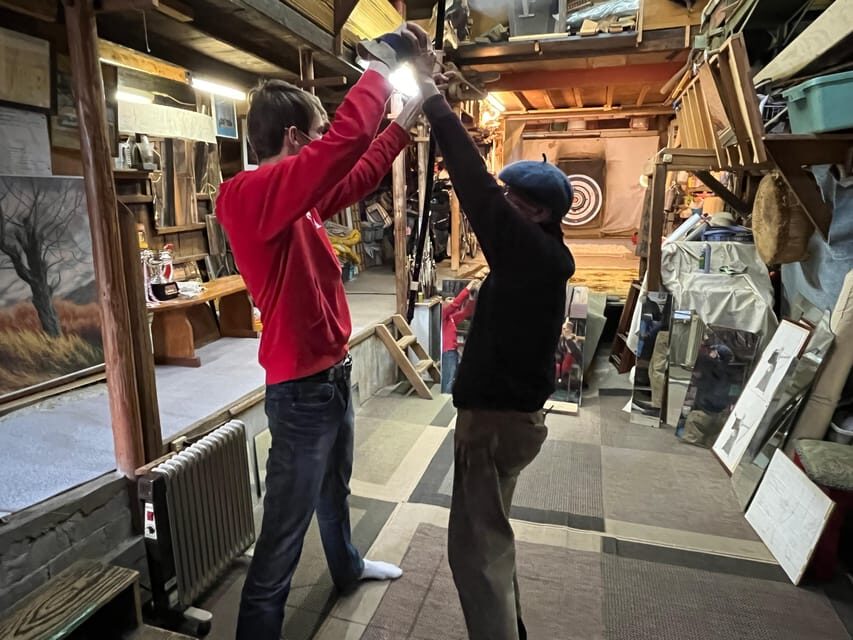
This is a genuine beginner-friendly lesson. You won’t be left to watch from the sidelines—you start doing the practice early, from posture to grip to the motion sequence.
Master Yamaguchi is the focus, and the session feels structured around clear instruction. Many people highlight how present and attentive he is during the motions—walking you through movements and encouraging you as you adjust. That’s a big deal when something feels awkward at first, because beginners often need calm repetition more than “one big tip.”
You’ll also learn the context alongside the technique. The assistant explains the history and cultural/spiritual reasons behind moves in a way that connects the form to the mindset. Even if the master communicates in Japanese, you’re not missing the thread: the assistant supports explanations continuously.
One small but meaningful detail: the practice includes moments that feel meditative. People describe it as relaxing, with a “relax” mindset that shows up after you work the steps correctly. That’s not just poetic—Kyudo demands control, and control is hard without quiet focus.
And yes, it’s physical. The bows can be heavier than what many people are used to, so you might appreciate having at least decent arm strength. If you’re comfortable doing some basic exercise, you’ll likely handle it just fine.
The Bow Hold, Stance Corrections, and Why Beginners Improve Quickly
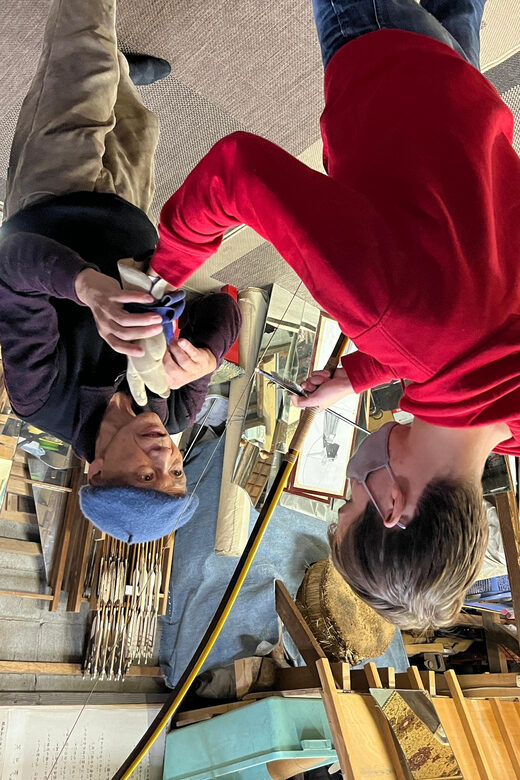
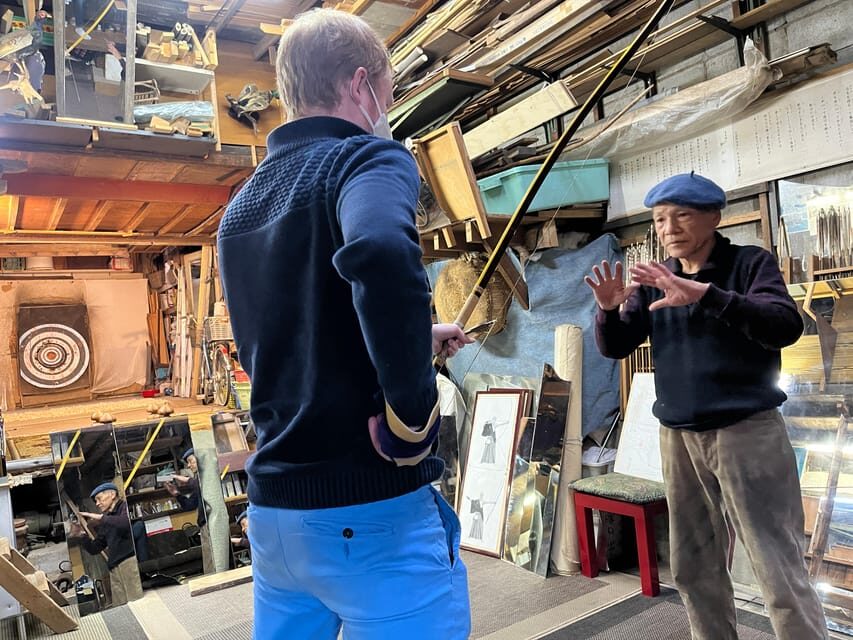
What makes this workshop work for beginners is the feedback loop. You learn a motion, you try it, you get corrected, and you try again. With a group limited to 4 participants, the instructor has time to notice what your body is doing—not what you think it’s doing.
Hands-on correction is part of the package. The instructor demonstrates the correct stance and how to hold the bow. That’s helpful because Kyudo form isn’t about one magic trick—it’s about alignment and repeatable movement.
Several people mention they got solid guidance toward shooting straight away. That may sound bold for a first session, but it’s realistic when the coaching is immediate and the group size stays small.
Also, the class tone is calm. People describe the guides as patient and encouraging, and that matters because if you get flustered, you lose the rhythm. Kyudo has a pace that rewards steady attention, not rushing.




The Tools, Shooting Attempts, and the Heavy-Bow Reality
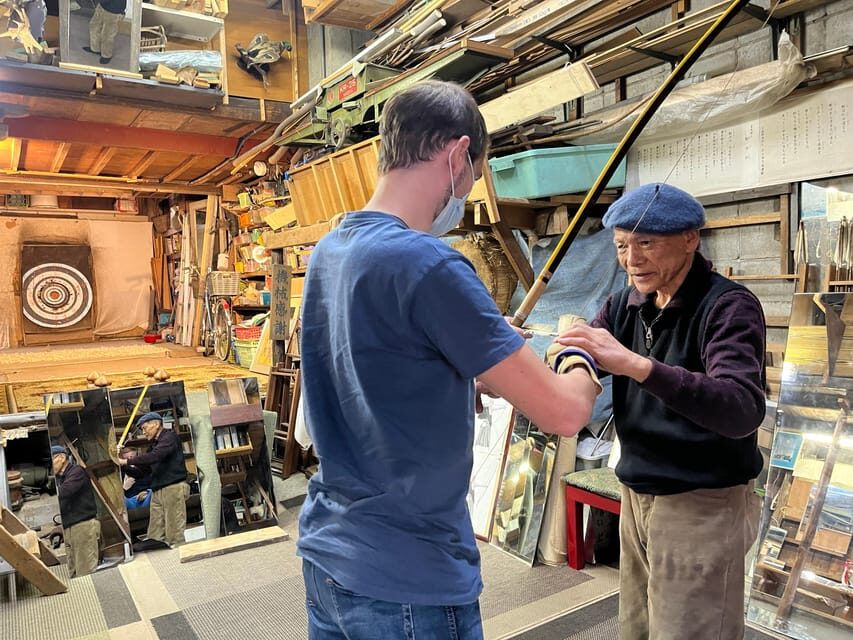
Kyudo equipment can surprise you. Even if you’ve seen archery gear in photos, the bows used in Kyudo can feel larger and heavier than you expect. One review specifically notes that the bow can feel heavy compared with European bows, and they recommend being ready for that physical reality.
Here’s how to plan around that without stressing:
- Bring clothes you can move in
- Don’t expect perfect shots on the first try
- Treat your attempts as learning reps
A good sign is that people report hitting the target at least once during the session. That doesn’t mean it’s easy. It means the instruction is effective enough to help beginners find a better form quickly.
And because the instructor teaches in a way that builds confidence step by step, the learning curve doesn’t feel like punishment. You start uncertain, then your body begins to understand the positions. By the end of the hour, many people feel they’ve gained respect for the skill behind Kyudo—not just the spectacle of shooting.
The Zen Side: Meditation Through Repetition, Not Performance
If you’re used to activities that feel like theater—pose, shoot, leave—Kyudo is different. The practice is quiet and focused, and it has an ethos that shows up in the way you move.
People describe the session as Zen-like, with meditation energy and a focus on relaxation. The assistant explains the cultural and spiritual reasons behind the movements, so the practice doesn’t feel random. It feels like a system designed to train both body and mind.
You might notice the early steps feeling like a kata sequence—organized movements you repeat with purpose. That structure is part of the calm. Instead of aiming wildly, you move through a form, and then you execute the shot within that form.
For many first-timers, the most memorable moment isn’t the arrow. It’s the feeling of getting your stance and timing to “click.” That’s when the workout becomes more like steady focus.
Who This Kyoto Kyudo Workshop Is Perfect For
This experience is best if you want something authentic and hands-on, but not overly intimidating.
You’ll likely enjoy it if:
- You want a different side of Kyoto beyond temples and markets
- You like activities where instruction is detailed and correction is part of the fun
- You want a calm, thoughtful workout for the body and mind
It also works for families with children, with at least one example of a 7-year-old participating. The studio provided a smaller-size bow for the child, which suggests they plan equipment with different body sizes in mind. If you’re traveling as a family, it’s worth booking early so you get the time slot that fits everyone.
If you hate being coached physically, bring that up before the session. The instructor provides hands-on guidance, and you’ll want to feel comfortable with that style.
Price Check: What $38 Buys You in Real Instruction Value
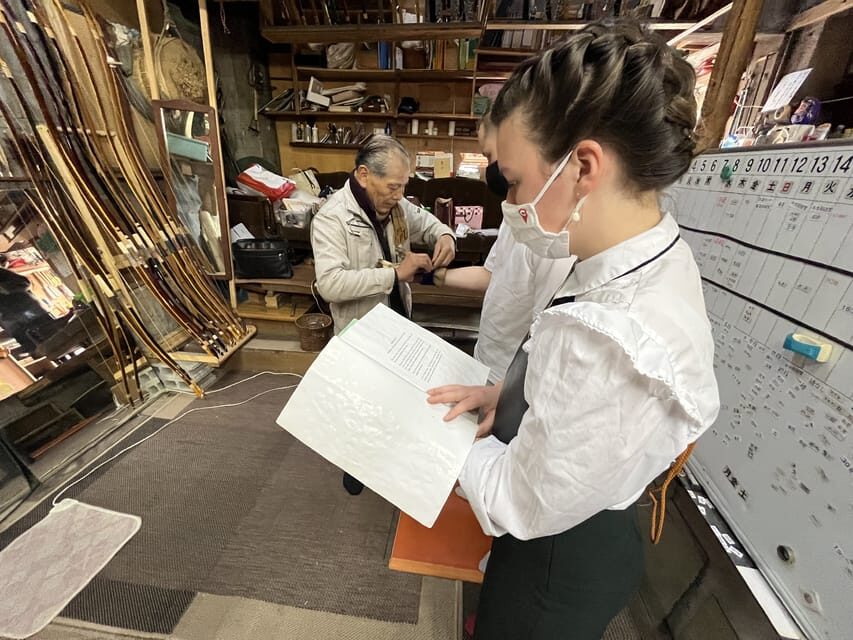
At $38 for one hour, this isn’t the kind of activity where you’re paying mainly for gear or scenery. You’re paying for instruction from a high-level Kyudo teacher and his teaching team, plus equipment.
Consider what’s included:
- The instructor (Master Yamaguchi, with 6th-grade kyoshi status)
- The full lesson
- All required equipment
- English support via an assistant and English materials
- Small group attention (up to 4)
When you compare that to typical paid experiences in big cities—where you sometimes get a quick overview—this workshop seems built around real time with the teacher. You get more than “here’s how it works.” You get guided practice and correction.
The only additional cost mentioned is transportation to the meeting point, since hotel pickup and drop-off aren’t included. If you’re staying near Kyoto’s transit lines, that’s usually easy.
Should You Book This Kyoto Kyudo Workshop?
Book it if you want a meaningful Kyudo introduction with real coaching in a calm setting. The small group format, equipment included, and hands-on instruction are the big reasons to choose it. If you like learning by doing—and you don’t mind that Kyudo takes effort early—you’ll probably leave feeling proud and a little more Zen.
Skip it only if you want an easy, low-effort activity. The bow can feel heavy, and the technique asks for focus and coordination. Also, because the instructor’s communication is mainly Japanese, you’ll want to rely on the assistant and materials rather than expecting a fully English-first teaching style.
If you’re deciding between “another Kyoto attraction” and a skill-based cultural experience, this one leans toward the second. It’s quiet. It’s practical. And it gives you something you can respect long after the hour ends.
FAQ
How long is the Kyoto Japanese Archery (Kyudo) workshop?
The lesson lasts 1 hour.
What does the $38 price include?
It includes the Kyudo lesson, an experienced instructor, and all required Kyudo equipment.
Is hotel pickup or drop-off included?
No. Hotel pickup and drop-off are not included.
Where do I meet for the lesson?
Meet at からくり弓道体験場. There are no door bells, and the entrance is on the side of the building, opposite a small parking lot. If you search on Google Maps, use the Japanese name only and compare with the address.
How do I get there from nearby stations?
It’s about a 10-minute walk from JR Tambaguchi / Hankyu Omiya / Randen Shijo-Omiya stations.
What language is used during the workshop?
The instructor’s language is Japanese, and the experience includes English materials and an assistant for communication.
Is the class small?
Yes. It’s a small group limited to 4 participants.
Can I cancel and get a refund?
Yes. There’s free cancellation up to 24 hours in advance for a full refund.